Buy Custom Winter Hats with Private Label Tags for Brands
Custom winter hats with private label tags do more work than most buyers expect. A beanie keeps a head warm, sure, but the label inside changes the product's status in a second. Fold the hat, flip it over, check the seam, and the verdict comes fast: generic accessory or branded item with a clear point of view. That small strip of fabric can lift a basic knit from commodity to product.
Packaging buyers notice this almost immediately. The yarn matters, the cuff matters, the stitch count matters, but the inside label, care copy, and folding method shape the value signal. I have seen lighter hats with sharp private-label finishing outsell heavier hats with no identity at all. The market does not read warmth alone. It reads confidence, consistency, and the quiet cues that tell a customer a brand made deliberate choices.
For brands, boutiques, promotional programs, and winter launches, custom winter hats with private label tags are not just decoration. They establish ownership. They tell the customer who made the piece, how to care for it, and where it belongs in the brand line. That is the real appeal: a winter hat that looks finished, sells more cleanly, and feels created for your business instead of pulled from a blank catalog.
Why Custom Winter Hats with Private Label Tags Feel Retail-Ready
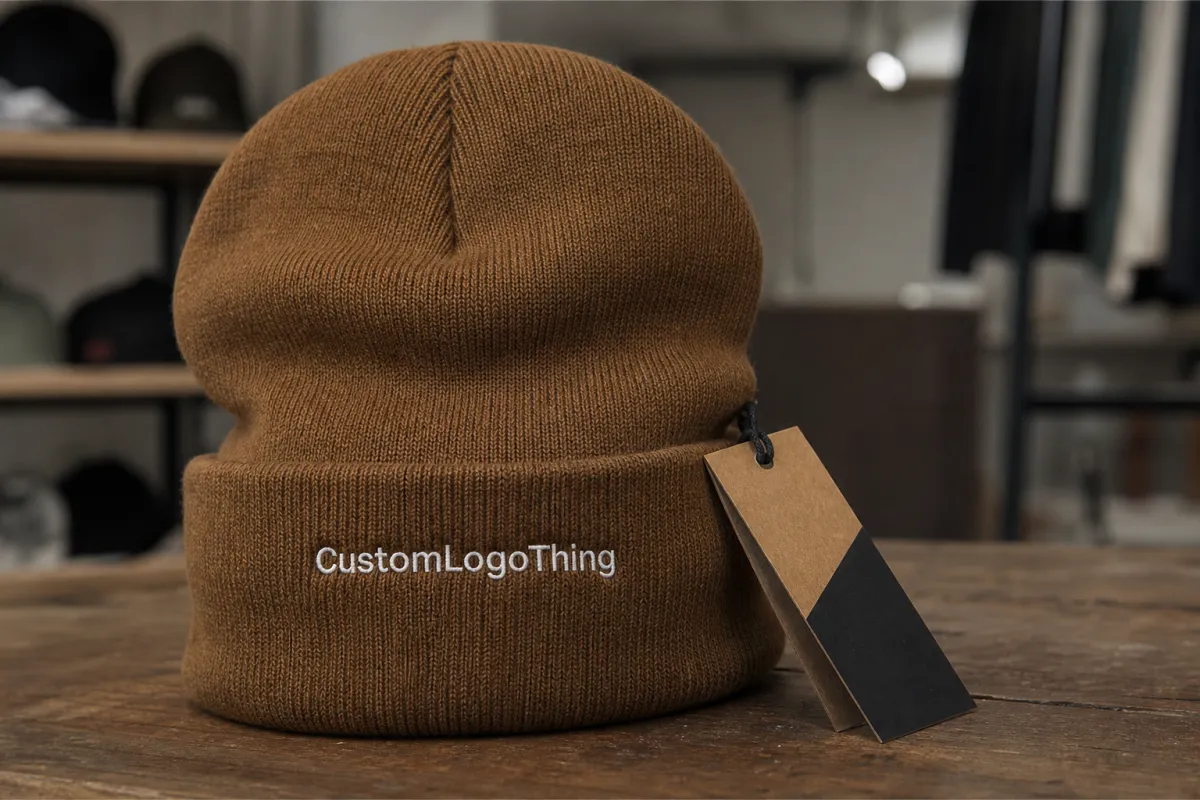
The inside label carries more weight than many people give it credit for. Custom winter hats with private label tags feel retail-ready because branding becomes part of the garment itself, not a bolt-on detail. A plain beanie says, "warm and functional." A fully branded beanie says, "this brand cares about presentation." A private-label version sits in the middle, which is often the sweet spot in retail because it keeps the utility of a warm knit while adding the polish buyers expect from product packaging and shelf display.
Three effects show up again and again. First, the hat is easier to identify at a glance, which helps resale and repeat purchase. Second, the item becomes easier to gift because it looks complete instead of unfinished. Third, the product earns trust because the label carries fiber content, care instructions, and the brand tone all at once. When custom winter hats with private label tags are built well, the item feels designed rather than assembled.
Think of the product in layers. A plain beanie is a blank canvas. A branded beanie may only show a patch or embroidery on the outside. Custom winter hats with private label tags add the internal identity layer, which matters especially for boutiques, direct-to-consumer launches, and winter merch drops. Open the fold and see a neat label instead of a generic tag, and the hat instantly reads as a real brand item.
The inside detail matters on the shelf too. In retail packaging, shoppers usually see the hat folded before they ever see it on a head. A woven label, a soft printed tag, or a sewn-in satin label can communicate quality in a way knit texture alone cannot. Buyers sometimes miss that. They focus on yarn weight and pom size, then discover that custom winter hats with private label tags are what customers remember when they touch the product and inspect the finish.
I learned this the hard way on a small order for a cold-weather capsule a few years back. The hats were warm, well made, and priced right, yet the version with the cleaner internal tag sold first every time. The difference was not dramatic on paper. On a shelf, though, it was obvious. One hat felt like a supplier item. The other felt like a brand item. That gap is where private label details start doing real commercial work, and honestly, it is kind of sneaky how much that matters.
- Plain beanie: warm and functional, but visually anonymous.
- Branded beanie: recognizable from the outside, while the inside may still feel generic.
- Private-label beanie: built for resale, gifting, and brand trust from the inside out.
Brands already using Custom Labels & Tags can treat the hat as part of the same system instead of a seasonal outlier. That matters because package branding works best when touchpoints stay consistent. A beanie label, a hang tag, a mailer insert, and even Custom Packaging Products can carry the same language and visual discipline. Shoppers may not describe it that way, yet they absolutely feel the difference.
"A winter hat can be a commodity or a branded product. The private label is what often decides which side it lands on."
Custom winter hats with private label tags also give buyers room to include care and compliance details without crowding the outside design. Fiber content, size, country of origin, and washing guidance can live inside the hat while the exterior stays clean. A small thing, maybe. A small thing with a large effect. It keeps the product professional and reduces the chance of a sale feeling improvised.
Custom Winter Hats with Private Label Tags: Process and Timeline
Custom winter hats with private label tags usually move through a predictable production flow, although the clock starts slipping when decisions stay open too long. The sequence is straightforward: hat body style, knit structure, label method, sample, bulk production, and packing. Change one of those steps three times and the schedule bends. That is not drama; it is textile manufacturing.
The body style comes first because the label has to fit the hat rather than fight it. A chunky cuff beanie behaves differently from a tighter rib-knit style, and a slouchy hat offers a different label footprint than a short fisherman cap. Custom winter hats with private label tags can use woven labels, printed satin labels, sewn-in woven tabs, or external hang tags, but the knit structure decides which option looks clean and feels comfortable.
A typical order begins with a spec review and artwork check. A proof or sample follows. Once the sample is approved, bulk knitting or assembly starts, then label application, finishing, inspection, folding, and packing. For a clean order, custom winter hats with private label tags often ship in roughly 12-20 business days after sample approval. Larger runs, difficult color matching, and special packaging can push that longer. Seasonal buyers should build in that buffer before the weather turns.
Timeline pressure tends to come from three places. First, artwork is not finished and the brand name, type size, or care copy keeps changing. Second, label dimensions are too small for readable copy. Third, packaging decisions arrive late. Custom printed boxes, inserts, size stickers, or polybagging with retail cards all require coordination. The hats themselves are not difficult; the approvals are what slow them down.
There is also a practical distinction between a factory timeline and a usable retail timeline. A factory may finish a run quickly, but if labels are packed wrong, cartons are miscounted, or the folding spec is loose, the product still misses its window. That is why experienced buyers treat the process as more than knitting. They watch the handoff from sample to bulk to carton, because the product is not truly finished until it is packed the way the customer will receive it.
- Choose the body style: rib knit, cuffed beanie, slouch beanie, pom beanie, fleece-lined style, or a lighter acrylic knit.
- Confirm the label method: woven label, printed label, sewn-in satin tag, side seam tab, or a combined inside/outside branding plan.
- Prepare the art and copy: brand name, logo, size, country of origin, fiber content, and care instructions if needed.
- Review the sample: check placement, comfort, legibility, and fold appearance.
- Approve bulk production: confirm quantity, color, packaging, and shipment method.
- Inspect final packing: carton count, bundle count, retail folds, and any labeling on master cartons.
Speed usually comes from discipline. Approve faster. Change less. Keep the spec sheet tight. Custom winter hats with private label tags do not need a dramatic production story; they need a precise one. The clearer the starting brief, the fewer sample revisions, and the fewer label copy changes after proofing, the smoother the turnaround.
Logistics deserve attention early too. Does each hat need a polybag? Should cartons be labeled by color or style? Will the retailer want inner packs or single units ready for the shelf? Those details look secondary until the packing stage starts. In practice, custom winter hats with private label tags and simple packing instructions move far more predictably than orders still being redesigned after sampling.
Custom Winter Hats with Private Label Tags: Cost, MOQ, and Quote Drivers
Price is where the conversation gets real. Custom winter hats with private label tags are shaped by the knit structure, yarn type, decoration method, label style, packing format, and quantity. A simple acrylic cuff beanie with a small woven label sits in a different cost bracket from a fleece-lined hat with a multi-color jacquard knit and retail hang tag. The headline number only matters if the buyer knows what is inside it.
MOQ changes the math. Smaller runs carry more setup cost per unit, so the price climbs. Larger runs spread knitting setup, label application, and inspection across more pieces, which usually lowers per-hat cost. That is why custom winter hats with private label tags can feel expensive at 100 pieces and surprisingly manageable at 1,000 or more. The threshold shifts by construction, yet the pricing curve stays familiar.
Here is a practical pricing snapshot for planning. These are directional ranges, not fixed quotes, and they help buyers budget without pretending every order is the same.
| Order Type | Typical MOQ | Estimated Unit Price | Best Fit | Notes |
|---|---|---|---|---|
| Basic acrylic cuff beanie with woven label | 100-300 pcs | $4.50-$8.50 | Small brand launches, test drops | Simple branding, fewer color changes |
| Midweight knit beanie with printed or sewn-in label | 300-1,000 pcs | $3.10-$6.25 | Retail replenishment, seasonal programs | Good balance of finish and cost |
| Fleece-lined or jacquard beanie with private label finish | 1,000-3,000 pcs | $2.40-$5.50 | Established brands, larger wholesale runs | More labor, more QC, stronger shelf appeal |
| High-volume branded winter hat program | 3,000+ pcs | $1.80-$3.90 | Mass distribution, chain retail, large promotions | Best pricing, but less flexibility |
The biggest pricing drivers are usually easy to spot once you know where to look:
- Fabric weight and yarn type: heavier knits and specialty yarns cost more.
- Construction complexity: cuff, pom, lining, jacquard pattern, or rib detail all add labor.
- Label method: woven labels and sewn-in tags often cost more than simple printed branding.
- Packaging: individual polybags, inserts, stickers, and custom printed boxes can raise the total.
- Color count: more knit colors usually increase setup and matching time.
- Inspection level: tighter QC or retail prep can add cost, though it also lowers the chance of returns.
When someone requests a Quote for Custom winter hats with private label tags, the fastest path to a clean price is exact input. Include the hat style, target quantity, brand artwork, label copy, and any packaging requirements. Add the destination ZIP or port if shipping is part of the quote, because freight can swing landed cost in a way unit price hides. Buyers often compare the wrong number. One quote may include sample development, label application, and packing while another leaves those out.
Quote comparison needs discipline. Ask what is included. Ask whether the sample is chargeable. Ask if the label is stitched in or heat applied. Ask whether the pieces are bulk packed or retail ready. Custom winter hats with private label tags can look cheaper on paper while total cost climbs because every finishing detail is billed separately.
For teams managing both product packaging and the garment itself, the cost conversation should include finish logic. A hat placed in a plain polybag projects something different from the same hat folded in a branded insert card or sleeve. If the product will sit beside branded packaging from other categories, consistency matters. Good packaging design is not only about a box; it is about the entire handoff from factory to customer.
One more practical point: samples cost money, and they save money. A sample that exposes a label that is too small or a stitch area that sits wrong prevents a far more expensive bulk mistake. Custom winter hats with private label tags are far easier to approve when the buyer sees actual placement instead of a flat artwork file on a screen.
There is no honest way to pretend every quote should look the same. A tight beanie with one-color branding and a simple woven label is not the same thing as a lined hat with multiple size runs and retail packaging. If a supplier gives you a number that seems unusually low, ask what was removed to get there. That question is not skeptical for the sake of it. It is how you avoid a surprise later.
Step-by-Step Ordering for Custom Winter Hats with Private Label Tags
The cleanest orders begin with use case, not decoration. Are these custom winter hats with private label tags going into retail resale, employee gifting, sports merchandising, hotel shops, or a direct-to-consumer winter line? The answer changes the material choice, the label format, the packing style, and the feel of the inside finish. A promo giveaway can tolerate a simpler spec. A retail item cannot.
Step one is choosing the hat body. Buy the silhouette before you settle the branding method, because structure controls interior space. A thick cuff beanie gives more room for a woven label. A close-fitting knit may need a softer printed tag so the inside does not feel bulky. Custom winter hats with private label tags work best when the tag is matched to the hat rather than forced onto it.
Step two is confirming the branding system. A brand may want a woven label inside, a small embroidered patch on the cuff, and a hang tag for shelf display. That can work, but the pieces should talk to each other. If the outside mark is bold and athletic, the inside label should not feel flimsy. If the brand is premium and minimal, the label should stay understated and precise. Custom winter hats with private label tags should support the same visual language as the rest of the line.
Step three is artwork and copy. This is where projects often slow down. The logo file may be final, yet the label text is still moving. Confirm the exact brand name, whether a size callout is needed, whether fiber content belongs on the label, and whether care instructions should be printed or woven. If the hat is going into retail packaging, the copy should be reviewed the same way you would review a box panel or hang tag. Small errors on custom winter hats with private label tags are hard to miss once they are sewn in.
Step four is sample approval. Do not rush it. The sample shows whether the label sits flat, whether the stitch line is clean, whether the text reads clearly, and whether the hat folds as expected. A digital proof only tells part of the story. The sample tells you how the product feels in hand. That matters even more for custom winter hats with private label tags because the inside finish is something the customer actually touches.
Step five is final production and packing. This is the moment the order becomes a shipment instead of an idea. Confirm carton count, per-carton quantity, retail fold style, barcode placement if needed, and any sleeve or box requirement. If the order includes custom printed boxes, those boxes should be approved before the hats are packed, not after. The best packaging system arrives ready to sell without extra handling.
Good ordering follows a simple sequence:
- Start with the business purpose.
- Choose the hat structure.
- Match the label method to the knit.
- Approve the sample with real hands, not just eyes.
- Lock the packaging plan before bulk production starts.
That sequence protects both the budget and the schedule. It also makes custom winter hats with private label tags look more intentional because each part of the spec supports the final product. Too many projects start with the hat, treat the label like an afterthought, and end with something that feels slightly off even when the stitching is technically fine. The better path is to treat the hat, label, and packaging as one system.
Common Mistakes With Custom Winter Hats and Private Label Tags
One common mistake is choosing a label that is too large or too stiff for the knit. Custom winter hats with private label tags need to feel comfortable inside the hat, and a bulky tag can scratch, curl, or distort the fold. The branding may look impressive on a proof, but if it adds irritation or ruins the cuff shape, the customer experience suffers.
Another mistake is approving artwork before checking real label dimensions. A logo that looks crisp on a screen may become unreadable once squeezed onto a narrow woven tab. Text can crop, spacing can collapse, and small registration details can disappear. Custom winter hats with private label tags should always be reviewed at the actual tag size, not only at the layout stage.
Buyers also underestimate wash wear and color stability. A winter hat gets stretched, stuffed into pockets, washed, and worn in damp weather. If the label fades, frays, or bleeds, the brand impression drops fast. That is why care text and material selection matter. If the hat goes into retail packaging, expectations rise again, because the customer assumes the item will hold up through repeated use.
Late edits are another budget killer. A small change to the label copy may sound harmless, yet it can trigger a new proof, a new sample, a revised layout, and sometimes a new production slot. Custom winter hats with private label tags are most efficient when the buyer finalizes the brand text early. Every round of revision has a cost, even if the request takes only a few lines of email.
There is also the hidden mistake of forgetting the retail context. A hat for a promotional handout can be looser with finishing details than a hat meant for store shelves. If the item is going into branded packaging or sitting beside other premium accessories, the inside label and the outer presentation both need to meet that expectation. Product packaging is not only transport. It is part of the sale.
A few issues show up often enough to watch for:
- Wrong placement: the label lands on a seam or a stretch point and looks crooked.
- Weak instructions: the supplier never receives the exact brand copy or fold spec.
- Overcomplicated design: too many colors, too much text, or too many finish layers.
- Poor sample review: the buyer approves a photo without handling the actual piece.
- Packaging mismatch: the hat looks premium, but the carton or bag makes it feel cheap.
If custom winter hats with private label tags are part of a broader winter assortment, keep the label logic simple across categories. The same care style, inside branding tone, and package branding language can carry through scarves, gloves, and other cold-weather goods. That consistency matters more than many teams realize, because the customer reads it as one brand system rather than a pile of unrelated items.
Some teams borrow quality logic from outside apparel, and that pays off. Packaging groups often use the structure of ISTA test protocols to think about handling, vibration, and transit stress. Fiber sourcing conversations often borrow from the standards language used by the FSC forest stewardship standards. A beanie order does not need to become a lab exercise, though a framework helps keep custom winter hats with private label tags from feeling improvised.
Expert Tips for Better Fit, Branding, and Shelf Appeal
If you want custom winter hats with private label tags to feel more premium, match the label style to the audience. A woven label usually reads as more polished and durable. A printed tag can feel softer and lighter inside the hat. A bold sewn tab can support sportswear or streetwear branding. There is no universal winner; the right answer depends on what the customer expects when they touch the product.
Think of the inside finish as part of the product story. That sounds small until you compare two hats side by side. A clean, centered label signals care. A crooked or scratchy one signals haste. Custom winter hats with private label tags are often judged in the hand, not only in the photo, so the inside touchpoint deserves the same attention as the outside decoration. A tiny improvement there can raise perceived value without driving cost sharply upward.
Build a repeatable brand system across winter accessories. If one label language is used for hats, another for scarves, and another for gloves, the line can feel fragmented. Choose a consistent placement logic, a consistent care panel style, and a consistent tone for package branding. That makes retail packaging feel intentional. It also saves time later because the label spec does not need to be reinvented for every new cold-weather item.
Presentation matters more than many first-time buyers expect. A well-folded beanie in a simple polybag can look acceptable, but a hat with a neat insert, a size sticker, or a retail-ready sleeve usually sells better on a shelf. Custom winter hats with private label tags also pair well with merchandising cards, branded tissue, or custom printed boxes if the customer experience calls for a more elevated unboxing moment. The point is not to pile on extras. The point is to Choose the Right finishing layers.
These practical details tend to pay off:
- Use legible type: small inside labels are not the place for thin scripts or overly condensed text.
- Keep contrast sensible: very bright label colors can look loud against a subtle knit.
- Check the fold: the label should not fight the way the hat sits on a retail peg or shelf.
- Plan the system: the hat, tag, and bag should look like they belong to the same brand family.
- Think about touch: a soft hand feel can matter more than a flashy finish.
Custom winter hats with private label tags work especially well when the outside decoration stays restrained. A small cuff mark, a clean label, and careful packaging can outperform a crowded design that tries to say too much. Buyers may not call it minimalism, but they recognize restraint when they see it. That usually translates into better shelf appeal and fewer questions about whether the item is truly branded.
For brands building seasonal assortments, it helps to treat the hat as part of a broader packaging design system. The same color palette that appears on the label can show up in hang tags, mailers, or product packaging inserts. That consistency strengthens memory and keeps the winter line from feeling detached from the rest of the catalog.
One last practical detail: if you sell into multiple channels, keep channel differences explicit. A DTC version may use a softer interior tag and a more elaborate insert, while wholesale inventory might need simpler carton packs and faster shelf prep. Both can be right. The mistake is assuming one finish plan fits every sales route. It usually does not.
Next Steps: Build a Better Spec Sheet for a Faster Quote
Custom winter hats with private label tags move faster when the buyer sends a complete spec sheet. That does not mean every decision must be final on day one, though it does mean the supplier should know the hat style, target quantity, color direction, label method, artwork files, packaging needs, destination, and delivery window. A vague request usually becomes a long email chain. A good brief becomes a useful quote.
At minimum, gather these items before requesting pricing:
- Hat style: cuffed beanie, slouch beanie, pom beanie, fleece-lined version, or another winter knit style.
- Quantity: target MOQ, test quantity, and any future replenishment estimate.
- Color plan: one color, several colorways, or a matched seasonal palette.
- Label copy: brand name, size, fiber content, care text, and country-of-origin wording if needed.
- Artwork files: vector logo, reference image, and any typography rules.
- Packaging needs: retail folding, polybags, barcode labels, inserts, or custom printed boxes.
- Destination: warehouse, store, fulfillment center, or direct shipment address.
- Timing: ideal in-hands date, not just the order date.
A reference photo helps a lot too. Even a rough sketch can show the supplier the silhouette, label placement, or shelf presence you want. If the label needs to be hidden, centered, side-seamed, or turned outward for display, say it plainly. Custom winter hats with private label tags are easier to quote when the visual goal is concrete. Words like "clean," "premium," and "simple" help, though they cannot do the whole job by themselves.
Ask for a sample plan before placing the full order, especially if the label size is tight or the hat needs a specific retail finish. A good supplier should be able to tell you whether the sample will be physical or digital, how many rounds of revision are normal, and whether the final bulk production will match the approved sample exactly. That last part matters because custom winter hats with private label tags should not drift between proof and production.
It also helps to think about the order as part of a broader package branding system. If the hat will sit beside other branded items, the visual language should align with the rest of the line. The same is true for mailing pieces, inserts, and Custom Packaging Products. Retail packaging works better when it tells the same story at every touchpoint.
When the brief is tight, the quote is cleaner, the sample is easier to review, and the bulk order is less likely to surprise you. That is the main reason brands keep returning to custom winter hats with private label tags: they are simple enough to produce at scale, yet flexible enough to carry a real brand identity. Send one clear request for custom winter hats with private label tags, and let the spec sheet do the heavy lifting.
What are custom winter hats with private label tags used for?
They are used for retail brands, seasonal merch, gifting, and promotional resale when the buyer wants the hat to look like a branded product. Private label tags help the beanie feel more finished by adding brand identity, care details, and a cleaner inside presentation. They are especially useful when the hat needs to sit on a shelf, ship in retail packaging, or match other branded apparel.
How long do custom winter hats with private label tags usually take?
Timing depends on sample approval speed, label complexity, order size, and whether the artwork is final at the start of production. Simple projects move faster when the buyer has clean specs and no revisions after sampling. Extra label formatting, custom packaging, or multiple color changes can extend the schedule.
What affects the price of custom winter hats with private label tags?
The main drivers are quantity, knit construction, label type, decoration method, packaging, and shipping distance. Lower quantities usually increase unit cost because setup and labeling expenses are spread across fewer hats. A more premium finish, such as a woven private label or special retail packing, usually adds cost but can improve perceived value.
Can I order a small MOQ for custom winter hats with private label tags?
Yes, but smaller runs often cost more per piece and may have fewer customization options. A small MOQ is best when you are testing a new design, checking sell-through, or launching a limited seasonal drop. Ask whether the MOQ changes by color, label style, or packaging choice before you compare quotes.
What should I prepare before requesting a quote for custom winter hats with private label tags?
Prepare the hat style, quantity, color choices, brand artwork, label copy, and any packaging requirements. Include your target delivery date and shipping destination so the supplier can estimate timing and freight more accurately. If possible, attach a reference image or sample so the supplier understands the look and finish you want. When that request is complete, custom winter hats with private label tags are much easier to price, sample, and produce without avoidable delays.
Takeaway: if you want custom winter hats with private label tags to land well, lock the hat silhouette, label dimensions, and packaging plan before sampling, then approve the physical sample against the actual retail use case. That one sequence keeps the order cleaner, the quote more accurate, and the finished hat far more likely to look like a real brand product instead of a rushed winter accessory.

