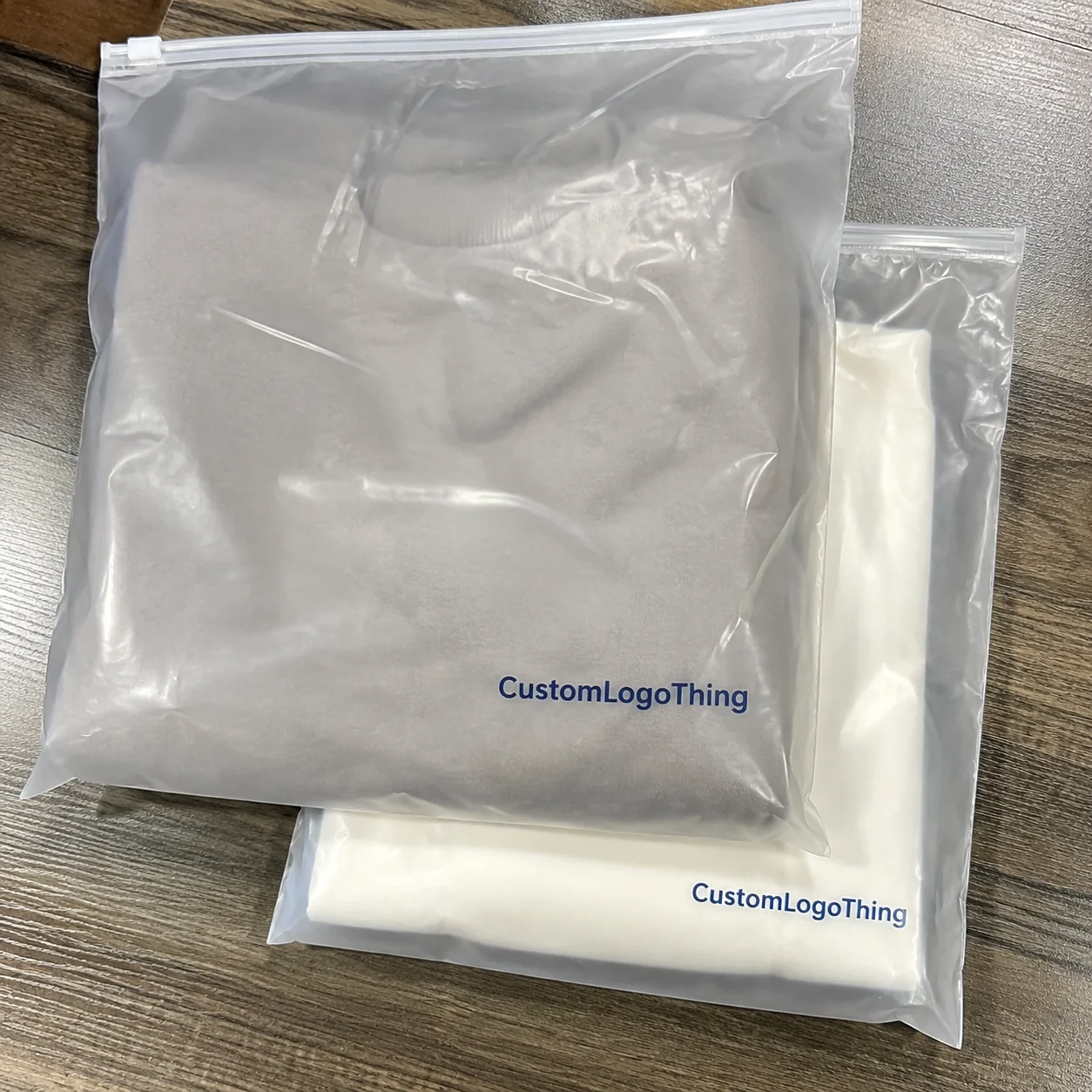
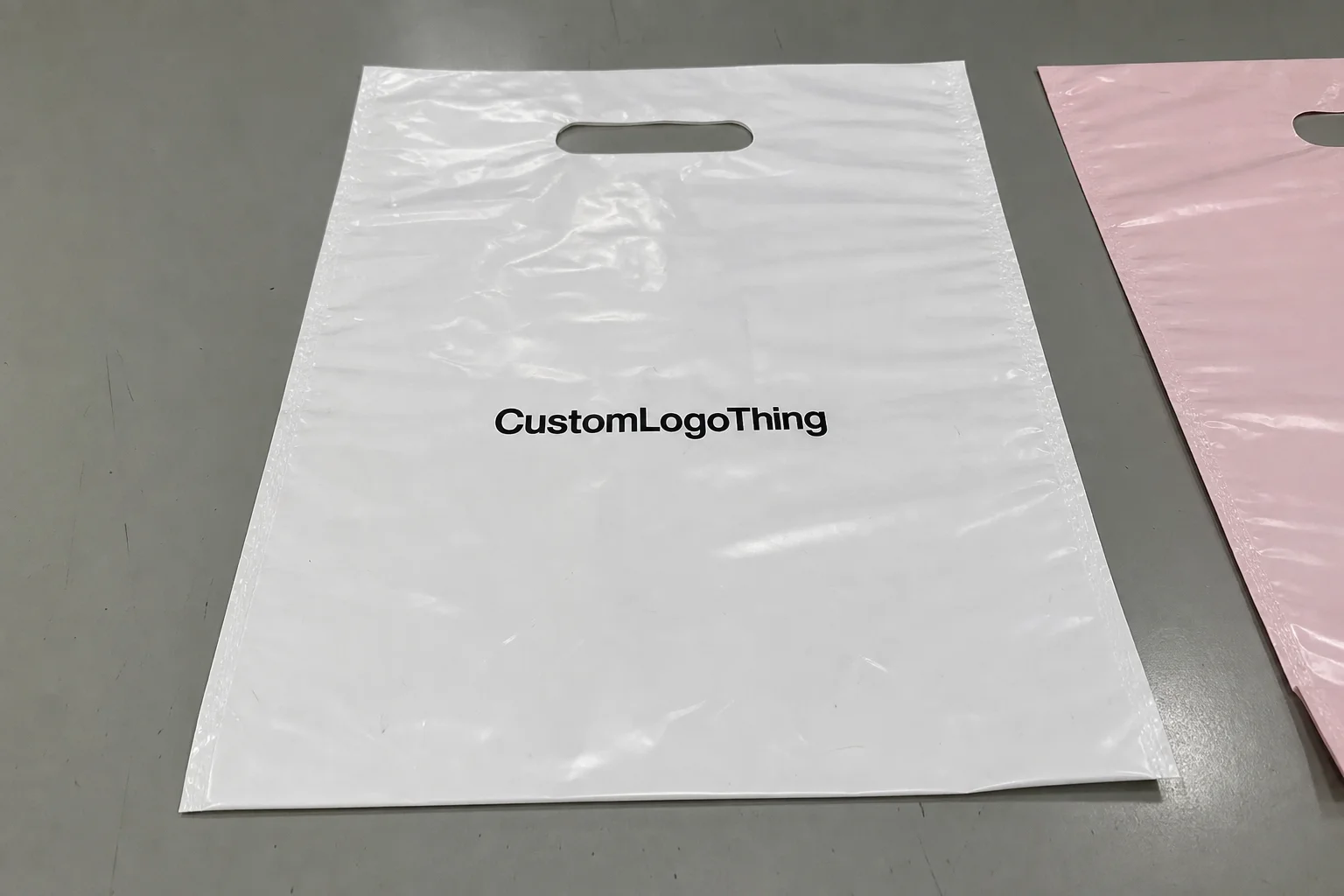
Buyer Fit Snapshot
| Best fit | Buy Heavy Duty Poly Mailers Bulk projects where brand print, material claims, artwork control, MOQ, and repeat-order consistency need to be specified before quoting. |
|---|---|
| Quote inputs | Share finished size, material target, print colors, finish, packing count, annual reorder estimate, ship-to region, and any compliance wording. |
| Proofing check | Approve dieline scale, logo placement, barcode or warning zones, color tolerance, closure strength, and carton packing before bulk production. |
| Main risk | Vague material claims, crowded artwork, missing packing details, or unclear freight terms can make a low unit price expensive after revisions. |
Fast answer: Buy Heavy Duty Poly Mailers Bulk: Pricing, Specs, Delivery should be specified like a repeatable production item. The safest quote records material, print method, finish, artwork proof, packing count, and reorder notes in one written spec.
Production checks before approval
Compare the actual filled-product size with the drawing, then confirm tolerance on folds, seals, hang holes, label areas, and retail display edges. Reserve space for logos, QR codes, warning copy, and material claims before decorative graphics fill the panel.
Quote comparison points
Review material grade, print process, finish, sampling route, tooling charges, carton quantity, and freight assumptions side by side. A quote is only useful when the supplier can repeat the same color, closure quality, and packing count on the next order.
Buy Heavy Duty Poly Mailers Bulk: Pricing, Specs, Delivery
One bad mailer can wreck a quarter of your shipping margin on a busy launch day. Cheap packaging has a way of getting expensive fast. If you want to buy heavy duty Poly Mailers Bulk the right way, the payoff shows up in fewer damages, cleaner pack-out, and a warehouse team that stops wasting time on avoidable fixes. The same logic applies whether you are comparing Bulk Poly Mailers, Custom Poly Mailers, or plain shipping bags for a repeatable fulfillment program.
This is for real fulfillment operations: e-commerce brands, subscription teams, fulfillment managers, and buyers who need buy heavy duty Poly Mailers Bulk decisions that hold up after the sample box leaves the room. You will get practical ranges, timeline expectations, and the math behind total landed cost so supplier comparisons stop turning into guesswork and last-minute reorder panic. If your team is choosing between polyethylene mailers and other mailing bags, the numbers below will help you stop arguing by instinct.
I have seen teams save a few cents on paper and lose much more once the first peak week hits. The packaging looked fine in procurement. It fell apart in the line. That kind of mismatch is annoying, and it is also expensive.
It also helps when your packaging program is not trying to be cute. It is trying to move units without drama. That is the job.
Buy Heavy Duty Poly Mailers Bulk for Lower Total Cost
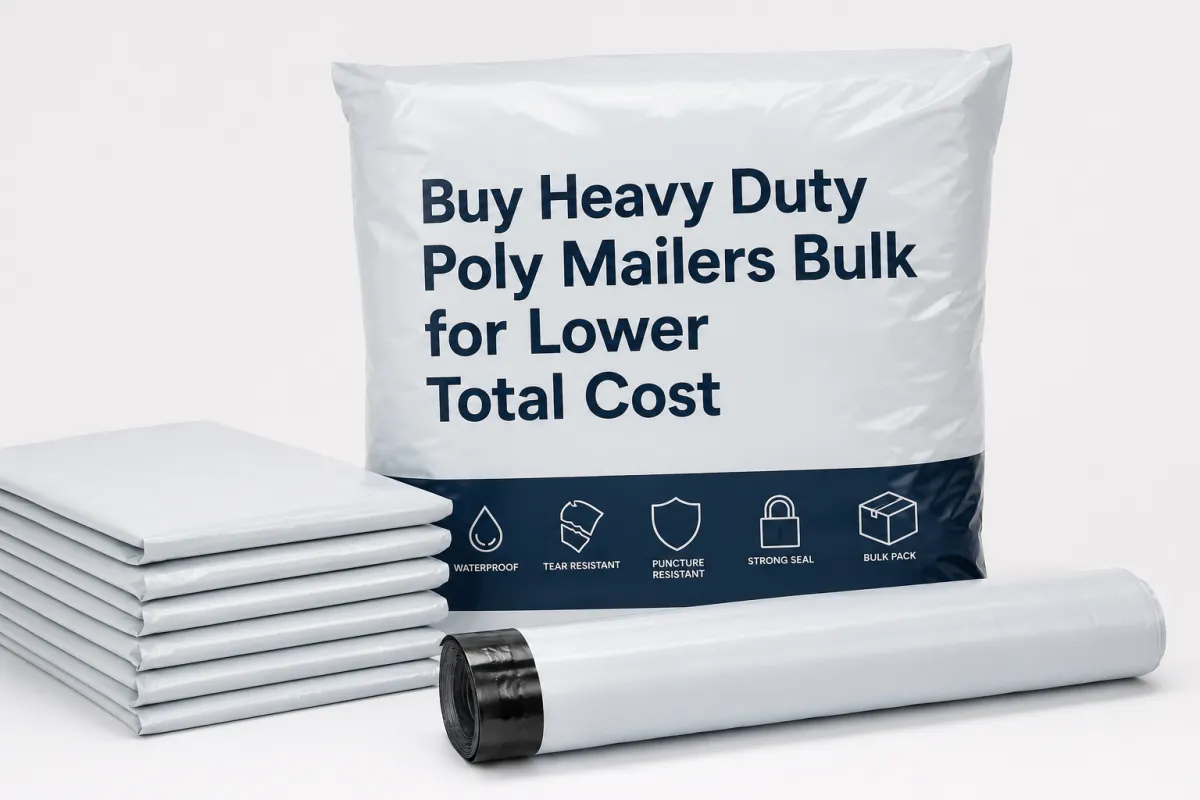
Packaging as a hidden cost center
If you are scaling soft-goods shipping, packaging turns into a hidden cost center quickly. A lot of teams stare at the printed quote and call it pricing. That misses the real bill. Labor, defect handling, rework, and warehouse friction decide what the mailer actually costs.
Here is a simple example. A program ships 25,000 lightweight apparel orders per month. Switching from a padded alternative to a well-chosen heavy poly solution at a 4-cent unit savings looks like $1,000. Fine. Not nothing. The bigger move is often labor. If packaging prep drops by 7 seconds per order because the fit is better and the bag does not need extra handling, that saves 48.6 hours a month. At $22 an hour including fringe, that is more than $1,000 in operating benefit. Add better seam reliability and the claim profile usually improves too.
That is why buy heavy duty poly mailers bulk should not be treated like a simple procurement line item. It is a workflow decision. Workflow is where margin gets protected or burned. And yes, the cheapest quote can still be the most expensive decision if it creates extra touches at the bench.
Why the packaging line, not the supplier quote, often determines ROI
Many teams assume a cheaper mailer equals a cheaper shipment. That assumption breaks a lot. A lighter or thinner mailer can cost more once pack-out time, failure rates, and transit handling get counted. I see this most often with apparel, accessories, prints, and subscription kits where the item is soft and predictable.
For programs that ship folded knit tops, scarves, tote inserts, books, cosmetic sample bundles, and other non-fragile goods, buy heavy duty poly mailers bulk can beat corrugated on total cost. The trick is not the phrase "heavy duty." The trick is the build: tear strength, gusset control, and closure reliability under repeated handling. In other words, the mailer has to survive being a mailer.
If a mailer line shows 1.7% damage claims and replacement or rework costs $5.20 per damaged order, then at 12,000 monthly orders you are leaving nearly $1,000 on the table every month before labor even enters the picture. If stronger construction cuts that claim rate to 0.8% and the unit premium is only 6 cents, the math usually tilts in your favor.
Where bulk purchasing saves the most
Buy heavy duty poly mailers bulk pays fastest in categories that are lightweight, regular-shaped, and repeatable in size. That includes:
- Apparel subscriptions and seasonal drop programs.
- Accessories: belts, jewelry trays, caps, keychain bundles, and watch inserts wrapped in protective foam.
- Printed materials, catalogs, hang tags, and documentation-heavy shipments where brand consistency matters.
- Sample packs and promotional bundles that are not rigid or sharp.
Heavy electronics, ceramic goods, and odd dense items can push even a strong buy heavy duty poly mailers bulk spec past its limit. If the product can puncture, crush, or snag itself in transit, compare the package structure before you lock in an MOQ.
Here is the practical rule: the more your fulfillment staff can repeat one load size and one seal rhythm, the better a bulk mailer program works. If your team needs five creative adjustments per order, then the problem is not packaging procurement. It is labor design. And yes, the package is usually being blamed for a warehouse process mess.
Set the buying criteria before you compare price sheets
Set objective criteria before reading quotes. I hear this from operations teams constantly: buy heavy duty poly mailers bulk based on puncture resistance, seam integrity, closure reliability, and true sizing consistency. If print style comes first, you are probably negotiating from the wrong chair.
Use a fast scoring method. Pick five categories, score each 1 to 5, and set a floor. Example: tear strength, tear propagation resistance, seal peel strength, dimensional consistency, and dimensional tolerance. A supplier who cannot give repeatable numbers for those categories is not giving you a procurement baseline. They are giving you a sales pitch with a logo on it.
That is not dramatic. It is boring. Boring wins. It is also why people who treat packaging like branding theater usually spend more on returns than they save in unit discount.
Product Details: What Heavy Duty Poly Mailers Are Made For
What "heavy duty" means in real production terms
Heavy duty poly mailers are typically multi-layer polyethylene structures. They are built for tear resistance and seam stability, not glossy surfaces and marketing photos. In plain terms, they are made to handle abrasion, stretching, and seam stress during drops, conveyor movement, and multiple handoffs. A standard mailer and a real heavy-duty version can look almost identical. The construction is where the difference lives.
For buyers who are comparing quickly, the practical test is simple: if a mailer has reinforced seam architecture or a stronger bottom seal line, it usually survives real dispatch better than a light mailer with a loud claim. That is especially true in programs where poly mailer suppliers promise a lot and then vanish when the product sees a sorting belt.
Core features that should be non-negotiable
If you buy heavy duty poly mailers bulk for soft goods, you should normally expect:
- Self-seal adhesive strips that maintain grip after temperature swings.
- Reinforced seam layouts or thicker seam overlap in the stress zone.
- Opaque walls to reduce peeking and protect privacy.
- Moisture resistance in cases where ambient humidity varies between warehouse and transit.
- Defined tear and puncture resistance aligned to the actual SKU profile.
None of that is hype. These are features you can check in incoming inspection and first-mile handling.
Common variants in the market
- Plain stock mailers: fast to procure, useful for repeatable non-branded runs.
- Branded mailers: one-color to multi-color logos for channel consistency.
- Dual-adhesive return mailers: one closure for dispatch, one for easy return processing.
- Tamper-evident designs: targeted to regulated flows where opening needs visibility.
- Recycled-content formats: useful when sustainability requirements include recycled content percentages, but require clear chain-of-custody clarity.
One thing buyers learn the hard way: if the item is sharp-edged, fragile, highly rigid, or crush-sensitive, this is not the right container class. No amount of printing or discounting fixes the wrong package architecture.
When teams run a trial of buy heavy duty poly mailers bulk with mixed SKUs, they often discover they needed two sizes, not one. That is normal. Annoying, but normal. It also explains why Bulk Poly Mailers work best when the item profile is already boring in the good sense.
Product match: what ships best in these mailers
In practice, the strongest fit is lightweight non-structural goods: folded clothing, soft accessories, flat textile blocks, sample packs, and bundles with controlled thickness. If your shipment bends, dents, or jams itself in transit because of rigid edges, the mailer spec needs to change right away.
For subscription cycles, buy heavy duty poly mailers bulk is often the answer because each shipment looks a lot like the one before it. That predictability helps with MOQ planning and cuts packaging waste.
Most people get this wrong in the same way. They overestimate the strength they need by reading the spec sheet only, then overpack with void fill. The result is bigger boxes, longer pick cycles, and sometimes worse transit shape control. Fit is strategy. Not decoration.
Specifications That Decide Fit, Strength, and Seal
Thickness, but in procurement terms you should think as load bands
Thickness language gets messy fast. Buyers hear "1.5 mil," "2.0 mil," or "3 mil," and stop there. Treat thickness as a load band, not a label. Lighter loads usually run well at the lower band. Denser, stacked, or return-heavy programs need heavier film.
A practical framework:
- Simple folded apparel and flat books: typically 1.8-2.4 mil profiles.
- Denser accessories and two-item bundles: commonly 2.5-3.0 mil.
- Return-heavy or higher abrasion routes: often 3.0+ mil, especially if the logistics chain includes heavy compression.
Do not lock to one thickness just because a competitor sold "best value." For a team that buy heavy duty poly mailers bulk for subscription kits, a mismatch here becomes a recurring re-pack cost.
Also watch standards references. ASTM-inspired tensile and tear testing, including ASTM D882-type methods for tensile direction behavior, can help you compare technical claims across suppliers even if the supplier documents it in its own format.
Dimensions and gusset logic that directly reduce damage
Dimensions matter more than people expect, especially width and gusset depth. If the width is too narrow, staff overstuff the mailer and seam stress goes up. If it is too wide, the mailer collapses or looks sloppy and can trigger carrier damage claims in manual sort hubs.
For standard garment bundles, aim for a width-to-item width ratio that avoids forced insertion. A good check is to test a short run where the filled bag lands around 60% to 75% of nominal width once closed. If the product is much smaller than that, choose a tighter size and reduce internal void load.
Why this matters when you buy heavy duty poly mailers bulk: better dimensional fit lowers packaging time and transport footprint. Warehouse space rarely gets the spotlight in procurement meetings, yet cubic reduction still helps staging and daily dispatch throughput.
Seal behavior: one-time or reclose-ready?
Seal design is where many suppliers confuse buying teams. Typical choices include pressure-sensitive strip type, closure width, and peel strength tolerance. A wider strip is not automatically better. Sometimes a 1-inch closure is enough for one-way dispatch, while 1.5 to 2 inches is better for return workflows.
Ask for exact numbers: peel force in Newtons per 25 mm, heat-age behavior if any, and whether the adhesive line is one-time lock or reusable style. If your process has returns, choose open/close cycles based on expected handling. A reclose-ready option often costs more, but it pays for itself if your return rate is above 3%.
Ask for a written seal spec. If a supplier says "strong seal," ask which test method and what force range. That one line in a buy heavy duty poly mailers bulk spec sheet is what keeps customer complaints from becoming a surprise budget line.
Print and finish variables that affect function
- Brand colors and ink density: check contrast against background.
- Logo placement: bottom-left vs middle-side can affect fold and scanner visibility.
- Interior blackout: for privacy-sensitive goods, an opaque white interior avoids product visibility.
- Matte vs gloss: matte usually hides scuffs; gloss reads brighter in high-volume mail.
- Coating and texture: minimal impact on strength but important for shelf look and tactile consistency.
If you buy heavy duty poly mailers bulk for premium-facing SKUs, finish choice becomes part of perception. For utilitarian logistics programs, print can be simpler and cheaper without hurting service outcomes.
Testing plan before full commitment
Do not buy without a sample-to-reality test plan. A serious team asks for:
- Spec sheet with film profile, seam style, adhesive type, and expected seal performance.
- At least 50 sample units for pre-production validation.
- Real packing test with your actual products, including worst-case SKU dimensions and near-max weight.
- Carrier-style drop and compression simulation if your route includes multiple sorting points.
Most failures happen in week one because buyers compared sample photos only. Test the actual product. That is the cheapest way to de-risk a full buy heavy duty poly mailers bulk commitment.
"A clean sample is not a clean rollout. Only live-pick tests with actual SKUs reveal whether a seal survives the line at speed."
Buy Heavy Duty Poly Mailers Bulk: Pricing and MOQ Breakdown
What actually drives the final quote
In most procurement cycles, price gets presented as a single number per unit. That is the least useful number in the conversation. Actual landed cost includes size, gauge, print complexity, number of color approvals, custom tooling, and whether the order is stock or fully customized.
For buy heavy duty poly mailers bulk, pricing moves in bands. Small changes in size can add 4-12% per unit, and color count can add setup and approval overhead that dwarfs film cost. The best quote is not the lowest listed price. It is the lowest landed outcome for your confirmed demand window. If you are comparing Bulk Poly Mailers from different poly mailer suppliers, normalize the setup and freight before you even look at the sticker.
| Option | Typical specification | MOQ | 5,000 | 10,000 | 20,000 | Lead time | Typical extra costs |
|---|---|---|---|---|---|---|---|
| Stock plain mailer | 3.0 mil, 6x9, no print | 1,000 | $0.16-$0.22 | $0.14-$0.18 | $0.12-$0.16 | 3-6 business days | None |
| Stock one-color logo | 3.0 mil, 6x9, 1-color front print | 2,000 | $0.24-$0.31 | $0.21-$0.27 | $0.18-$0.24 | 5-10 business days | Proof review, color pass |
| Custom size + one-color | Tailored width/gusset | 5,000 | $0.27-$0.35 | $0.23-$0.30 | $0.19-$0.26 | 7-14 business days | Digital proofing, possible dieline finalization |
| Dual-adhesive return design | Return flap + dispatch closure | 5,000 | $0.42-$0.60 | $0.36-$0.52 | $0.31-$0.45 | 8-16 business days | Additional adhesive setup, cartonization review |
| Full-color and advanced finish | 2-color/plus accent, high opacity | 10,000 | N/A | $0.43-$0.60 | $0.36-$0.50 | 12-18 business days | Plate/artwork approval, color correction |
| Recycled-content option | Recycled PE blend, certified content statement | 3,000 | $0.29-$0.42 | $0.26-$0.36 | $0.22-$0.33 | 7-14 business days | Documentation, content verification |
MOQ realities and why custom raises thresholds
MOQ is not a penalty. It is a production control point. Stock programs are usually built to run in smaller increments because dies, tooling, and artwork queue time are already absorbed. Custom size, full-color matching, and specialized seals increase setup complexity, so MOQ tends to rise.
When teams evaluate buy heavy duty poly mailers bulk, they should ask for three-tier quotes before they commit. For example, 5,000, 10,000, and 20,000 units. The 5,000 quote can look cheap per unit but lose in total landed cost if setup and freight are significant. At higher volume, the same setup gets spread thinner.
Here is a floor-level benchmark: a "good" tier usually covers about 60 to 90 days of known monthly demand. If your monthly use is 2,000 units, the 5,000 tier is often too lean. The 10,000 tier can be the most operationally rational even if the cash outlay feels heavier.
Unit price versus landed cost: a short formula you should copy into your sourcing sheet
Example 1, a common trap: 5,000 units at $0.28 each for one-color mailers = $1,400. Add setup $220, sample $95, freight $180, then tax or VAT at 8% on product and freight. The landed result is about $1,545. In total, unit landed is $0.309 per mailer.
Example 2: 20,000 units at $0.22 each = $4,400. Same setup $220, sample $95, freight $320, tax 8% = about $4,900. Landed unit is $0.245. You gained scale savings and cut admin overhead per unit. If your order horizon is 60 days or more, this is usually the stronger commercial choice.
If your buying team does not model freight and setup, it is making a decision on incomplete data. That is why teams that focus on buy heavy duty poly mailers bulk only by sticker price still get hit with cost shocks at replenishment.
Beyond base price: quality and revision overhead
There is another cost people miss: revision overhead. If you send messy artwork and need three proof rounds, the quote you thought was the winner can lose 15% of its apparent advantage through delays and extra handling. Ask clearly for sample fee policy, proof inclusion, and color matching charge structure.
Buy heavy duty poly mailers bulk gets cheaper when revisions stay low, and revisions stay low when spec ownership is clear before production lock. For brands shipping weekly, that is why repeatable templates and approved dielines matter more than a temporary discount.
Process and Timeline: From Quote to Delivery
Step-by-step acquisition workflow
Most teams that use a disciplined workflow see lower total cost. Here is the sequence that works well:
- Inquiry and routing: share SKU dimensions, expected monthly volume, target destinations, and print intent.
- Spec confirmation: confirm thickness band, size, seal format, and return policy.
- Artwork review: confirm artwork file specs (vector or high-resolution PDF), bleed area, colors, and placement.
- Sample approval: physically test at least two loads representing your heaviest and lightest item states.
- Production: supplier locks the material run and performs quality verification.
- Inspection and pre-dispatch check: random check for seal width, seam consistency, and print clarity.
- Shipment planning: book freight with arrival buffer and receiving lead in warehouse schedule.
If you skip step two and only discover a size mismatch at packout, timelines collapse right there. Not in printing. Not in the freight quote. Right at the packing bench.
Stock versus custom timing: where the real difference is
Stock mailers are fast when fit and graphics are standard. Typical timelines from approved PO to pickup can be 4-8 business days in normal periods. For fully custom programs, 10-16 business days is more common, sometimes longer if artwork approval gets dragged out.
For teams that buy heavy duty poly mailers bulk for fixed subscription calendars, that distinction is non-negotiable. Miss one internal approval milestone and a full campaign can slip by a week.
When there is no safety stock and no fixed production window, shipment delays become a service-level issue. That is a revenue issue, not just a packaging issue.
Common delay points and how to avoid them
Most delays come from predictable sources:
- Artwork files submitted in the wrong format.
- Late approvals from brand, legal, and marketing stakeholders.
- Special color matching requiring test prints and proof cycles.
- Late change requests to size or gusset depth after production lock.
- Peak-season production queues near major shipping holidays.
The fix is operational discipline. Ask for a shared timeline with named checkpoints, not just an end date. A week lost in artwork can often be recovered in warehouse sequencing. A week lost in production scheduling usually cannot.
Operational checklist before placing an order
Use this checklist before pressing "approve":
- Confirm packed dimensions with 10% tolerance margin.
- Confirm expected gross weight and the heaviest SKU at 95th percentile.
- Choose return strategy: dispatch-only or dispatch+return closure.
- Approve test-seal samples after a humidity and temperature variation check.
- Confirm freight mode, destination ports, and receiving buffer.
- Collect internal approvals from fulfillment lead, QA lead, and marketing if branding is changing.
When you buy heavy duty poly mailers bulk in this structured way, delivery risk drops and your team avoids emergency replenishment cycles.
If you sell globally, include customs and country-specific labeling requirements early. A 2-day difference in release can turn into a multi-day dock delay if documentation is sloppy.
Why Choose Us for Bulk Poly Mailers
Consistency beats the lowest first quote
My recommendation is simple: choose based on repeatability. Teams who chase only the lowest per-unit rate often discover they cannot keep color tolerance, size consistency, or seal quality stable from reorder to reorder. That inconsistency gets expensive through labor and corrective freight handling.
What procurement teams usually need is predictable output at the exact spec they approved: no surprise shifts in gauge, sealing profile, or dimensions. A supplier with tight process control can earn a premium when it removes hidden costs and rework. That is why Custom Poly Mailers are worth a serious look when your branding and fulfillment requirements keep repeating.
Quality control standards and practical inspection
On serious programs, quality checks should mirror logistics reality. A practical setup combines incoming film verification, random seam pull checks, and sealing force checks per lot. Tie those checks to clear acceptance criteria before dispatch. If a lot misses the threshold, you need replacement or escalation rights, not a polite apology and a shrug.
Standards references matter because they cut through vendor storytelling. ISTA test methods are often used as a baseline for transit resilience expectations. For broader packaging practice and sustainability context, Packaging.org has useful professional guidance that many teams ignore when picking finishes and documentation.
Support that lowers buying risk
Support is not just sales talk. For buy heavy duty poly mailers bulk, useful support means spec assistance, sample packs, and practical packing diagnostics. Good teams share where seals fail by load type and where they tighten dimension guidance after the first pilot.
Ask vendors whether they can map your shipping profile: dispatch-only, return-enabled, mixed channels, and weight bands. If they can align seal type and gusset depth to that map, you often skip one whole round of trial and error. That is a better use of time than watching another round of "premium" packaging fail in a carton test.
Inventory and reorder value
From a replenishment view, planned reorder memory is a real advantage. If your process stores approved files, approved die specs, and approved dimensional sets, each repeat cycle gets faster and cleaner. That lowers lead-time pressure when demand jumps without warning.
If you need to grow from 10,000 to 25,000 units per month, buying through a consistent program avoids pointless template renegotiation. Stable reorders also protect barcode scan quality, label placement, and packing staff comfort.
Explore supporting solutions in Custom Packaging Products and the specific category in Custom Poly Mailers. If your annual run is broad, check Wholesale Programs early so pricing tiers and replenishment cycles can be built in one planning round.
What Should You Check Before You Buy Heavy Duty Poly Mailers Bulk?
Operational input list you should finalize now
Before placing any PO, lock these variables:
- Exact packed dimensions per SKU cluster and percentage share by weight.
- Monthly volume and seasonality pattern.
- Expected returns ratio by SKU and whether returnable closure is needed.
- Preferred color and placement rules for logos, including minimum readable size.
- Desired shipping destinations and expected delivery SLA.
That is the point where buy heavy duty poly mailers bulk stops being a guess. The cleaner your data, the cleaner your quote comparison.
Build your pricing request like a sourcing manager, not a browser
When you ask for quotes, ask for at least three quantity levels and require comparable assumptions. If one quote leaves out sample costs and another handles freight differently, normalize everything before deciding. Ask for:
- Per-unit price at 5,000, 10,000, and 20,000 units.
- Exact setup and proofing fees.
- Expected freight method and per-pallet or freight class assumptions.
- Reorder pricing when your approved files are already on file.
- Any penalties for artwork revision or reruns.
If you care about reducing friction, collect lead-time commitments per tier. Some teams split the order: 60% of the next 60 days at one tier and 40% at a lower-cost higher-tier in the following cycle. That balances cash flow with price movement.
Compare total landed cost and real operational fit
Buy heavy duty poly mailers bulk is only the right move if labor savings and damage reduction are in the model. Add these categories before signing:
- Labor per order before and after implementation.
- Returns cost by type (damage, late closure, poor labeling).
- Warehouse footprint impact from dimensional changes.
- Freight efficiency per order based on packed stack density.
You are not buying just a mailer. You are buying an operational behavior.
Next step
If you are ready to buy heavy duty poly mailers bulk, the next move is simple and specific: finalize size, weight, and seal profile inputs, then request a three-tier quote package that includes sample testing and landed-cost math. You do not need a perfect setup to start. You need clear assumptions and a supplier who can confirm them before production.
Get your data pack ready and move quickly. If packaging demand rises in your next campaign cycle, early alignment on a controlled buy heavy duty poly mailers bulk approach saves more money than every sticker-rate discount you can chase after the fact. The cleanest result is pretty straightforward: lock the spec, test it with your actual SKUs, compare landed cost across 5,000, 10,000, and 20,000 units, then order the size and seal that your line can actually run without drama. That is the difference between a packaging program and a recurring fire drill.
FAQ
How many units should I buy heavy duty poly mailers bulk to get the best price?
Ask for at least three quantity tiers first, usually 5,000, 10,000, and 20,000 units. Then choose the band that supports about 60 to 90 days of steady demand. Compare final landed cost, not unit price alone, because freight and setup charges can shift the result by more than 10 cents per unit.
What thickness is best when I buy heavy duty poly mailers bulk?
Lighter folded garment programs often use a middle-thickness profile, while denser items and return-heavy shipping usually need a heavier gauge. The best choice depends on product weight, edge abrasion, and expected sorting stress. If you are unsure, test two gauges with the same packed weight before placing the full order.
Can heavy duty poly mailers bulk orders be customized with a logo?
Yes. Custom printing is common, but it usually raises MOQ and adds proofing requirements. One- or two-color branding is usually easier to launch than full-coverage or complex color matching. Ask for a proof and a sample so you can verify logo size, placement, and opacity before final approval.
How long does a bulk poly mailer order usually take?
Stock items are usually quicker because they do not need full artwork and custom set-up. Custom programs add proofing and production steps, so plan for the extra time plus transit. Always include a buffer for revisions and for peak shipping periods when production queues get longer.
Are heavy duty poly mailers bulk orders good for all products?
They work well for soft goods, flat textiles, and non-fragile products where rigid protection is not required. They are usually not suitable for sharp, puncture-prone, breakable, or crush-sensitive products. If the item could pierce or crush film, use a protective mailer architecture or a corrugated structure instead.