OPP Header Bags carton packing specification for Boutique Retailers: Buying specs that actually work
OPP Header Bags Carton Packing Specification for Boutique Retailers
A boutique orders gorgeous printed bags, approves the artwork, waits for production, then receives cartons that do not fit the stockroom shelves. Classic. An Opp Header Bags carton packing specification for boutique retailers prevents that boring little disaster before it eats a Tuesday afternoon.
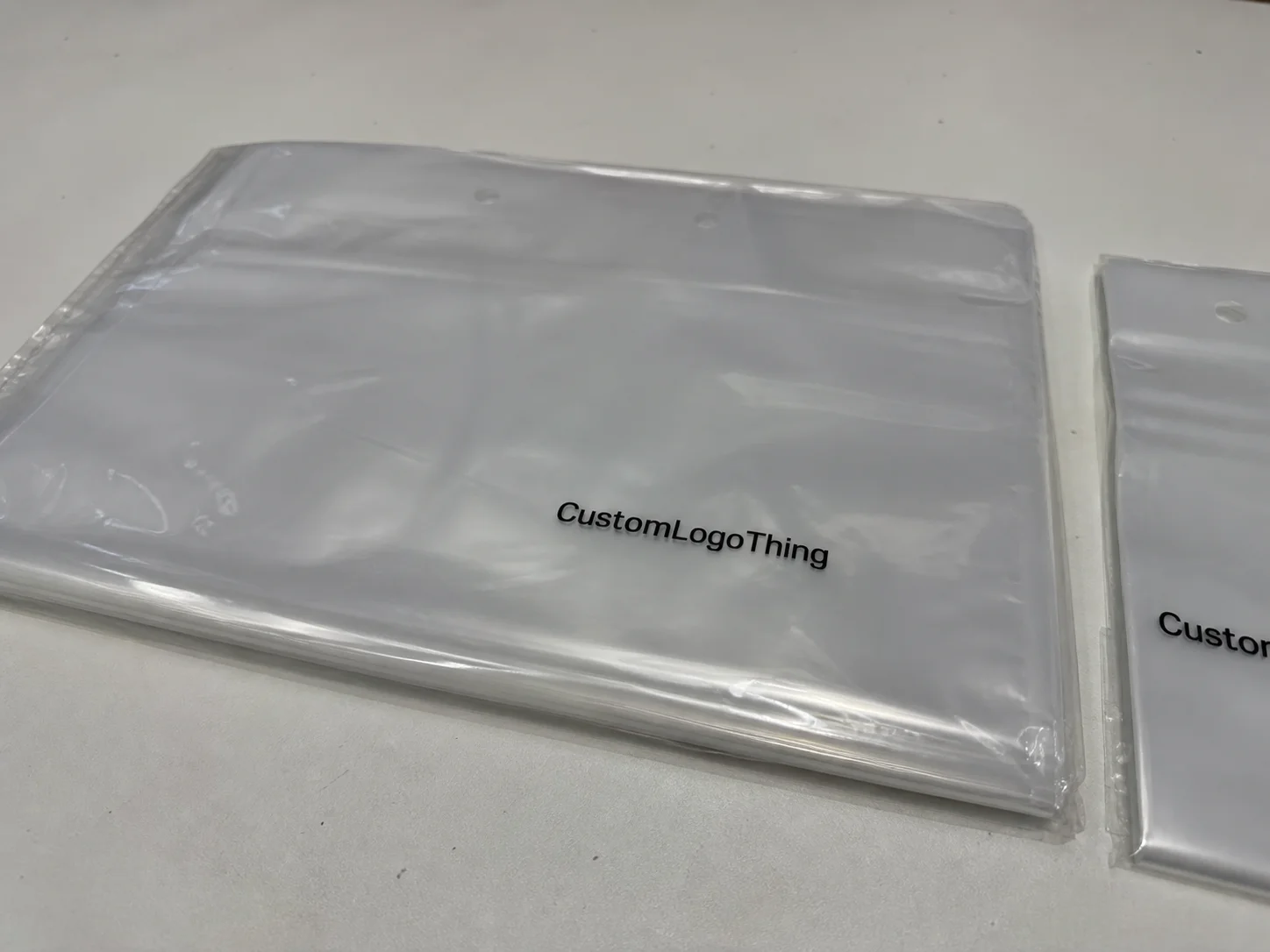
OPP Header Bags are clear polypropylene retail bags with a plain or printed header area at the top. They are common for apparel, socks, jewelry cards, stationery, hair accessories, craft kits, small gifts, and any product that needs visibility without looking like it came from a bargain bin. The header gives you branding space, hanging display options, barcode placement, and a cleaner retail face.
The carton packing specification is the practical packing plan behind the pretty bag. It tells the supplier how many bags go into each inner pack, how many inner packs go into one master export carton, the carton dimensions, gross weight, net weight, SKU labeling, stacking limits, and whether each carton is single-SKU or mixed-SKU.
Why should a boutique buyer care? Because carton specs affect freight cost, backroom storage, inventory counts, reorder planning, damage rates, and how fast staff can unpack stock without muttering things that would not look good on a brand values page.
Packaging truth: tight carton packing can lower freight cost, but overpacked cartons can wrinkle headers, split seals, scuff print, and turn receiving into a counting punishment. The cheapest carton is not always the cheapest landed cost.
For most boutique orders, the best carton plan balances freight efficiency with easy handling. A carton that saves $35 in shipping but creates two hours of staff sorting is not clever. It is just accounting theater.
How Carton Packing Works for Custom OPP Header Bags
Carton packing starts with the individual bag, then moves upward: bag, bundle, inner poly pack or paper band, optional inner carton, master export carton, and pallet if the shipment is large enough. Each level should protect the bags and make counting simple.
Common inner pack counts are 50, 100, or 200 pieces. Small jewelry header bags might pack at 200 or 500 pieces per inner pack because the footprint is tiny and the film is light. Larger apparel header bags may need 50 or 100 pieces per inner pack so the header area stays flat and staff can handle the packs without bending corners.
Master cartons are chosen based on finished bag size, header rigidity, film thickness, print finish, total order quantity, safe carton weight, and carrier limits. Boutique retailers often underestimate volume because one clear bag looks thin. Then 10,000 of them arrive, and suddenly the backroom looks like it is hosting a plastic avalanche.
A useful opp header Bags Carton Packing specification for boutique retailers should also define carton labels. At minimum, labels should show product name, bag size, color or design, SKU, quantity, purchase order number, carton number, gross weight, net weight, and carton dimensions. Decorative? No. Essential? Absolutely.
Single-SKU cartons are cleaner for inventory control. A carton marked “Black Sock Header Bag, 4 x 7 in, 1,000 pcs” is easy to receive and reorder. Mixed-SKU cartons can make sense for small boutique runs, but only if the packing list is exact. Without that, staff end up opening cartons and counting loose bags by hand. Nobody needs that little hobby.
Key Specs That Decide Carton Count, Weight, and Storage
The carton plan starts with the finished bag size, not the artwork file. That sounds obvious until someone sends only a logo file and asks for a quote. A supplier needs width, height, header height, usable product area, flap depth if any, and hanger hole placement.
Film thickness matters. Many OPP retail bags fall around 30-60 microns, though heavier custom bags may go higher depending on the product and presentation goal. Thicker film feels better and resists tearing, but it also increases carton volume and reduces the number of pieces per carton. More material takes more space. Shocking, I know.
Header construction affects packing too. A basic printed header area stacks flatter than a reinforced header with a euro slot. A round hole may be simpler than a die-cut euro slot, but retail display needs may justify the extra structure. Adhesive closures, resealable strips, and flap styles can also change how flat the bags sit inside a bundle.
Print coverage and finish can create packing constraints. Heavy ink coverage, matte varnish, metallic ink, or spot treatment may need extra curing time and gentler bundling to reduce blocking, scuffing, or ink transfer. If the header has a premium finish, do not pack it like scrap film. Premium handling costs a little more because it has to.
Carton weight should stay realistic for humans. Many boutique shipments work well with master cartons in the 10-18 kg range, depending on carrier rules and staff handling. You can technically push heavier cartons in some lanes, but a small retail team lifting awkward cartons into tight shelves will hate you by lunch.
| Bag Type | Typical Inner Pack | Typical Master Carton Range | Buyer Tradeoff |
|---|---|---|---|
| Small jewelry or accessory header bags | 100-500 pcs | 2,000-8,000 pcs | Efficient freight, but mixed sizes need tight labels |
| Sock, stationery, or gift header bags | 100-200 pcs | 1,000-4,000 pcs | Good balance of storage and easy counting |
| Apparel header bags | 50-100 pcs | 500-2,000 pcs | Lower carton count risks creased headers |
| Premium printed header bags with heavy finish | 50-100 pcs | 500-1,500 pcs | More protection, more carton volume |
Use those ranges as planning guidance, not gospel. Actual counts depend on bag dimensions, film gauge, header stiffness, and how much protection the finish needs.
Cost, MOQ, and Quote Details Hidden Inside Carton Specs
The bag price is one line item. The landed cost is the grown-up number. Carton packing affects labor, carton materials, freight volume, storage efficiency, and defect risk, even if the per-bag quote looks tidy.
Small custom OPP header bag orders may be possible at 1,000-3,000 pieces for simple specs, especially with limited colors and standard sizing. Better pricing usually appears around 5,000-10,000 pieces because printing, cutting, sealing, inspection, bundling, and carton packing run more efficiently. Low MOQ is convenient. It is rarely the cheapest unit cost.
For boutique retail packaging, common custom pricing can range from about $0.05-$0.18 per bag for simpler small formats at moderate quantities, and $0.18-$0.45+ per bag for larger, heavier, or more decorated header bags. That range depends on size, film thickness, print colors, finish, closure type, and order volume. Freight is separate unless your quote clearly says otherwise.
Ask for the complete quote details: finished bag size, film thickness, print colors, header style, inner pack quantity, master carton quantity, carton dimensions, gross weight, net weight, carton count, and estimated CBM. CBM means cubic meters, and it can make two quotes with the same unit price behave very differently during freight booking.
A supplier may quote 10,000 bags at $0.12 each, packed into 5 cartons. Another may quote the same unit price but use 8 cartons due to lighter packing or extra protection. If you are shipping by air or courier, that difference can matter more than the tiny unit price you negotiated so proudly.
A practical opp header Bags Carton Packing specification for boutique retailers should be part of quote approval, not a surprise at shipment. If a supplier cannot estimate carton dimensions before production, they are not quoting the whole job. They are guessing politely.
Process and Timeline from Artwork Approval to Packed Cartons
A clean production process usually follows this order: confirm dimensions, approve dieline, finalize artwork, produce a sample if needed, print the film or header area, cut and seal the bags, inspect, bundle, pack into cartons, label cartons, and prepare shipping documents.
Typical production timing might run 10-20 business days after proof approval for many custom OPP header bag orders, with extra time for complex samples, custom tooling, heavy print coverage, large quantities, or material shortages. Air shipment might add 3-8 business days after dispatch. Ocean freight takes longer and depends heavily on lane, port schedule, and customs clearance.
Do not confirm carton packing after bags are already made. That is how retailers discover cartons are too heavy, too bulky, or labeled like a mystery box subscription. The opp header bags carton packing specification for boutique retailers should be approved before mass production because the bag structure, bundle count, and carton selection all connect.
Pre-production samples should be reviewed for more than color. Check whether the product fits under the header, whether the hanger hole sits at the right height, whether the bag stacks flat, and whether the header bends when bundled. A sample that looks good as one piece may behave badly as 1,000 pieces in a carton.
Approve one final packing plan in writing. Include inner pack quantity, master carton count, carton size, max gross weight, label layout, and SKU split. The factory, freight forwarder, and receiving team should work from the same assumptions. Fancy concept, I know: everyone reading the same spec.
For broader packaging handling expectations, standards groups such as ISTA publish test procedures used for transport packaging performance. For paper-based cartons or certified paper components, buyers may also ask about responsible sourcing through groups such as FSC. Not every OPP bag order needs formal certification, but knowing the standards helps you ask better questions.
Step-by-Step Packing Spec Checklist Before You Order
Use a checklist before approving production. It sounds basic because it is. Basic prevents expensive messes.
- Confirm the product going inside. Measure real product width, height, thickness, and how it should sit under the header. Do not guess from a website listing unless you enjoy sad samples.
- Choose the finished bag format. Specify bag width, bag height, header height, hanger hole style, adhesive or non-adhesive closure, flap depth, and any retail display requirement.
- Set the inner pack count. Pick 50, 100, 200, or another count based on staff handling and storage habits. A boutique selling in small batches may prefer smaller inner packs even if packing labor costs slightly more.
- Set the master carton plan. Define pieces per carton, carton dimensions, maximum gross weight, and whether cartons are single-SKU, mixed-SKU, or split by size and color.
- Define carton label content. Include SKU, size, color, quantity, carton number, purchase order number, barcode if needed, gross weight, net weight, and dimensions.
- Request a packed sample photo. A short packing mockup photo or video can catch crushed bundles, weak labels, and sloppy carton sealing before goods ship.
This checklist is especially useful for small SKU runs. Boutique orders often include several bag sizes or header designs in modest quantities, which increases the chance of mixed cartons and receiving errors.
If your internal inventory system uses barcodes, say so early. Carton labels can include SKU barcodes, but suppliers need the barcode file and placement instructions before printing labels. Waiting until goods are packed is a lovely way to create hand-labeling work.
Common Carton Packing Mistakes Boutique Buyers Make
The first mistake is focusing only on artwork. Yes, the header design matters. But a beautiful bag packed into unlabeled, overstuffed cartons still creates an amateur receiving process.
The second mistake is ordering too many sizes with low quantities per size. Five sizes at 1,000 pieces each may sound tidy on a spreadsheet, but it can create fragmented carton packing, more labels, higher handling cost, and greater risk of mixed inventory. Fewer sizes often produce cleaner carton plans and better pricing.
The third mistake is accepting mixed cartons without a clear packing list. Mixed cartons can work. They just need exact contents by carton number, such as “Carton 3: SKU A, 500 pcs; SKU B, 300 pcs; SKU C, 200 pcs.” If the label only says “custom bags,” someone will be counting plastic on the floor.
The fourth mistake is pushing for the smallest possible carton count. Overpacking can warp headers, crease bags, weaken seals, and make the first impression feel cheap. For premium boutique packaging, saving one carton may not be worth the damage risk.
The fifth mistake is ignoring storage realities. Boutique stockrooms are often narrow, stacked, and shared with fixtures, seasonal product, returns, and that one mystery box nobody admits ordering. A 70 cm tall carton may ship fine but be annoying if it blocks shelves or requires immediate repacking.
The sixth mistake is not matching carton specs to freight method. Courier shipments often penalize dimensional weight. Air freight cares about volume and chargeable weight. Sea freight rewards efficient carton cube, especially at larger quantities. Palletized delivery needs cartons that stack cleanly without crushing. Same bags, different best packing plan.
A good opp header bags carton packing specification for boutique retailers accounts for the route, not just the factory floor. That is the difference between packaging that looks nice in a sample photo and packaging that behaves well in real retail operations.
Next Steps: Build a Carton Spec Your Supplier Can Actually Use
Start with a clean spec sheet. Include product type, finished bag size, usable internal area, film thickness, header style, print details, order quantity by SKU, and whether each SKU needs separate cartons. Keep it boring. Boring specs get accurate quotes.
Ask your supplier for proposed inner pack count, master carton quantity, carton size, gross weight, net weight, CBM, carton label layout, and carton count before approving the quote. If your order is large enough, request two options: one optimized for lowest freight volume and one optimized for easier receiving and storage.
The right choice depends on your boutique’s space, staffing, reorder cycle, and freight method. A small store with one stockroom shelf may happily pay for more cartons if each carton is easier to count and store. A larger retail chain may prefer tighter cube efficiency because warehouse teams can handle receiving faster.
Before shipment, approve a packing photo or short video showing bundled bags, inner packs, carton labels, and final carton sealing. This is not being fussy. This is being the person who does not enjoy preventable messes.
A clear opp header bags carton packing specification for boutique retailers turns a pretty custom bag into inventory your team can receive, count, store, and reorder without drama. Pretty packaging gets the customer’s attention. Good carton specs keep your operation sane.
FAQs
What should be included in an OPP header bag carton packing spec?
Include bag size, material thickness, header style, pieces per inner pack, pieces per master carton, carton dimensions, gross weight, net weight, carton number, SKU, quantity, and PO reference. For boutique retailers, add color or size breakdowns clearly because small SKU runs are easy to mix during packing and receiving.
How many OPP header bags usually fit in one carton?
It depends on bag size, film thickness, header structure, and whether the bags are packed flat or bundled with extra protection. Small accessory bags may fit several thousand pieces per carton, while larger apparel header bags may need much lower carton counts to avoid creasing and overweight cartons.
Does carton packing affect the price of custom OPP header bags?
Yes. Packing affects labor, carton materials, freight volume, storage efficiency, and damage risk, even when the per-bag production cost looks unchanged. Always compare unit price together with carton quantity, carton size, gross weight, and CBM before choosing a supplier.
Should boutique retailers use single-SKU or mixed-SKU cartons?
Single-SKU cartons are better for clean inventory control, faster receiving, and easier reordering. Mixed-SKU cartons can work for smaller orders, but they need exact carton labels and a detailed packing list. Otherwise, someone is counting bags by hand. Nobody wants that.
When should I confirm the carton packing specification with the supplier?
Confirm it before mass production approval, ideally at the quote or pre-production sample stage. Do not wait until shipment because carton size, weight, inner pack count, and labeling can affect freight cost, warehouse planning, and final receiving accuracy.