Buy OPP Header Bags Unit Cost Breakdown for Coffee Shops
Get an OPP header Bags Unit Cost Breakdown for coffee shops, from film and print to MOQ, freight, samples, and reorder timing Before You Buy.
Why Coffee Shops Pay More for Small Packaging Errors
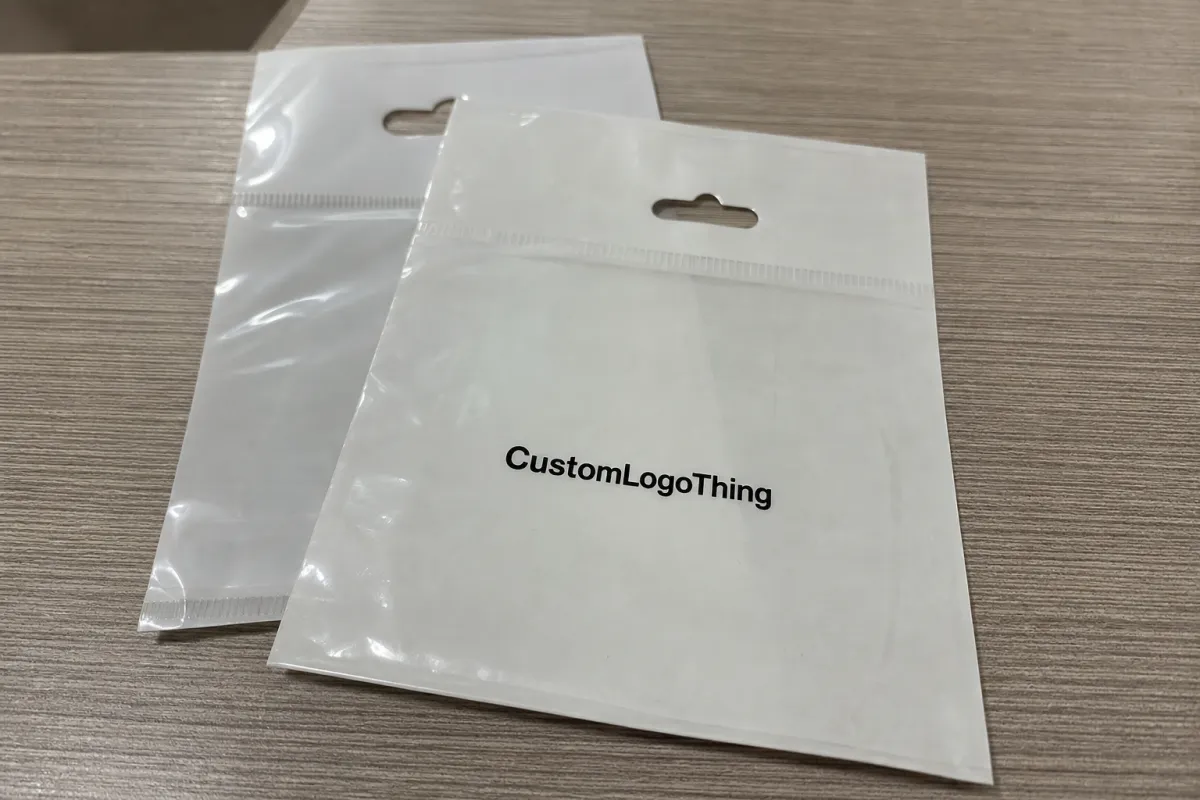
A cafe can save 3 cents on a plain bag and still lose money by Friday. That is why buyers need an OPP Header Bags unit cost breakdown for coffee shops before comparing quotes, because the lowest piece price may not be the lowest operating cost once display, labor, spoilage, and reorder pressure are included.
The pattern is familiar in small retail food programs. A shop buys generic clear bags for cookies, biscotti, tea sachets, chocolate-covered beans, or seasonal counter treats. The product is good. The package wrinkles, lies flat, hides the label, or makes a $4.50 pastry look like something packed in a hurry. If that packaging choice reduces impulse purchases by only a few units a day, the savings disappear quickly.
Coffee shops work on small transactions and repeated decisions. A 3-5 cent packaging swing across 600 packaged items a week equals $18-$30. That number is not dramatic by itself, but if stronger presentation helps sell another 20 units at a $2 margin, the math changes. Packaging is not just a wrapper; it is part of the sales surface, the handling system, and the customer’s first quality cue.
OPP Header Bags give cafes a clear product window with a structured header area for a logo, roast note, barcode label, batch sticker, allergen callout, or seasonal message. Compared with kraft pouches, they show more product. Compared with paper bakery bags, they look cleaner on peg displays and counter racks. Compared with loose generic poly bags, they usually have better clarity and a firmer retail feel.
Packaging buyer rule: compare landed unit cost, not only factory cost per piece. Print setup, carton volume, freight, spoilage, and reorder frequency can turn a low quote into a weak buying decision.
Many small food retailers underprice packaging until the first rushed reorder, the first poorly fitted batch, or the first week of staff fighting closures during the morning prep window. Then the hidden economics become obvious.
OPP Header Bags Unit Cost Breakdown for Coffee Shops
A useful cost breakdown separates every line that affects the final bill. At minimum, ask for OPP film, bag conversion, header construction, adhesive strip or fold, printing, tooling fees, setup charges, carton packing, inland freight, export freight if applicable, duties, and final delivery.
Transparent OPP film is often a major cost driver, but it is rarely the only one. Bag size, film thickness, print coverage, header height, and closure choice all move the number. A 30-micron bag for a light cookie sleeve will not price like a 50-micron bag with a printed header, hang hole, resealable strip, and white ink backing.
Header construction deserves attention because it affects both price and daily use. A plain fold-over header is usually simpler. A printed header adds artwork preparation and print control. A round hang hole or Euro slot may require tooling or an additional punching step. A resealable adhesive strip can speed packing for staff, but it adds material and process cost.
Quantity is the second big lever. Low MOQs carry setup costs heavily, while larger runs spread those costs across more pieces. The trade-off is cash tied up in inventory and space taken in the back room. For a shop with limited storage, a slightly higher unit cost can be more sensible than months of cartons stacked above dry goods.
| Bag Option | Typical Use | Common Cost Drivers | Indicative Unit Range |
|---|---|---|---|
| Stock-size plain OPP header bag | Small cookies, sachets, grab-and-go snacks | Film thickness, carton quantity, local delivery | $0.04-$0.10 per piece at modest quantities |
| Custom printed header bag | Branded bakery items, retail treats, sampler packs | MOQ, print colors, setup charges, proofing | $0.08-$0.18 per piece depending on quantity and print |
| Premium header bag with hang hole and reseal strip | Giftable products, peg displays, seasonal bundles | Tooling fees, adhesive strip, print coverage, freight volume | $0.14-$0.28 per piece for more involved specifications |
These are planning ranges, not promises. The real number depends on the final drawing, artwork, order quantity, carton count, and delivery address. A quote that says “$0.09 each” but excludes setup, freight, and duties is not comparable with a quote that includes landed delivery.
A clean quote should show the math line by line. That lets a coffee shop decide whether to spend more on thickness, save by printing only the header, change to a standard size, or order a larger run for better bulk pricing without losing sight of cash flow.
Product Details That Affect Display, Freshness, and Checkout Speed
OPP header bags are glossy, transparent polypropylene bags with a header area used for branding, hanging, labeling, or closure. They are common for dry retail goods because the product stays visible and the header gives the shop a controlled space for information.
For coffee shops, suitable uses include wrapped cookies, biscotti, chocolate-covered beans, sample cards, tea sachets, small retail accessories, loyalty gifts, granola bars, and seasonal bundles. The format works especially well near the register, where shoppers make fast decisions and visual inspection matters.
There is a limit. OPP header bags are not a primary oxygen-barrier pack for roasted coffee beans unless the beans are already inside an inner barrier pouch or the format is intended for short-use retail sampling. If aroma retention, oxygen control, grease resistance, or valve performance is required, specify the correct barrier structure first and treat the header bag as an outer presentation sleeve only.
Clarity is the selling point. Clear OPP can make a handmade bakery item look fresher and more inspectable than a matte or frosted sleeve. The trade-off is that scratches, crumbs, oil marks, and poor sizing are also easier to see. Good packaging reveals the product; bad fitting reveals the mistake.
- Self-seal strips: faster packing for teams handling 100-300 items before a morning rush.
- Fold-over headers: cleaner merchandising for branded labels, batch stickers, and ingredient notes.
- Hang holes: useful for pegboard racks, countertop spinners, and impulse displays near checkout.
Match the bag architecture to the item. A single biscotti needs different usable height and stiffness than a mini loaf. A sampler card needs a flatter presentation. A granola bar needs enough width so staff are not forcing the seal. Ten millimeters can decide whether packing feels smooth or irritating.
For products packed warm, oily, or crumb-heavy, test before scaling. OPP can look excellent on dry goods, but condensation, fat migration, or rough product edges can make a clear bag look tired faster than expected. The right answer may be a different film, an inner wrap, or a shorter shelf-life assumption.
Specifications to Confirm Before Requesting a Quote
A serious quote starts with specifications, not a guess about “small,” “medium,” or “standard.” Prepare flat width, usable height, header height, lip size, film thickness, closure type, hang-hole requirement, print colors, and desired packing quantity per carton.
Thickness should be chosen with the product in hand. Thinner OPP can reduce unit cost, but it may wrinkle or collapse around heavier items. Thicker OPP improves structure, shelf feel, and handling, yet raises material cost and freight weight. Many retail applications sit around 30-50 microns, while fragile or premium presentations may need a firmer gauge.
Do not choose thickness from a spreadsheet alone. Fill the bag, seal it, put it in the actual display, and handle it the way staff and customers will. A bag that feels crisp when empty can twist once a dense cookie or two-pack of biscotti is inside. A bag that looks strong on the counter may sag when hung from a peg.
Print choices also move pricing. Header-only printing is often more efficient than full-bag printing. Spot colors can help control brand consistency. CMYK supports photographic or seasonal artwork. White ink backing may be needed if a logo must stay bright over a transparent film area. Barcode zones need enough contrast and quiet space to scan reliably.
Food-contact assumptions must be clear. Coffee shops packaging edible products should confirm material suitability, ink placement, and whether food touches printed or unprinted surfaces. For broader responsible packaging expectations, buyers can review resources from the U.S. EPA Sustainable Materials Management program, while paperboard or mixed-material projects may also involve chain-of-custody standards such as FSC.
Artwork should be supplied as vector files when possible, with Pantone references, approved dielines, bleed margins, and legibility checks for small type. A 6-point roast note may look crisp on a monitor and disappear on a printed header, especially if the header is viewed through glare or placed below warm cafe lighting.
Dimensions should come from the filled product, not memory and not an old invoice. A bag that is 10 mm too narrow creates labor waste and torn seams. A bag that is too wide looks inflated and cheap, even if the film itself is excellent. Order samples or measure current packaging before approving production, especially for irregular bakery items and fragile snacks.
Pricing, MOQ, and Quote Variables Buyers Should Challenge
MOQ logic is not arbitrary, although it can feel that way from the buyer side. Custom printing, nonstandard dimensions, unique header styles, and special closures usually require higher minimums than blank stock bags because setup time, machine adjustment, and print preparation must be recovered.
Ask direct questions. Are setup charges included? Are tooling fees separate? Is the sample cost credited against a bulk order? Does the quote include proofing, cartons, freight, duties, and delivery to your door? A per-piece quote can hide the real cash outlay. Total landed cost exposes it.
The most useful buying conversation includes two or three quantity tiers. A cafe might request pricing at 2,000, 5,000, and 10,000 pieces. The 10,000-piece option may cut cost per piece by 20-35%, but if the shop uses only 600 bags per month, storage, damage risk, and artwork aging become part of the decision.
Small first runs reduce risk. Repeat sellers may justify larger reorders once sell-through data proves the item has staying power. Seasonal packaging needs a different calculation because a low unit cost on 10,000 holiday bags is not a bargain if 4,000 remain after the promotion ends.
- Challenge vague film specs: “clear OPP” is not enough; ask for thickness and structure.
- Challenge vague print specs: confirm colors, print area, white ink, and barcode requirements.
- Challenge missing logistics: carton count, carton size, delivery terms, and freight method affect landed cost.
- Challenge food-contact silence: edible products need material and ink-placement assumptions stated.
Red flags are easy to spot once you know the pattern: no thickness, no carton details, no delivery terms, no proofing process, and no statement of what happens if the delivered bags do not match the approved sample.
Also check how overrun or underrun quantities are handled. Some custom packaging runs may deliver a small percentage above or below the ordered quantity because of production waste and finishing tolerances. That should be stated before approval, especially if the bags support a dated launch or a strict retail program.
Process and Timeline From Sample to Reorder
The normal path is requirement review, sizing confirmation, artwork check, dieline or proof creation, sample approval, mass production, QC, packing, freight, and delivery. Each step has a job. Skipping one usually saves hours early and costs days later.
Delays often come from incomplete artwork, unclear dimensions, Pantone uncertainty, food-contact questions, seasonal production congestion, and slow proof approvals. A supplier can move quickly only after the buyer has confirmed the details that control production.
Separate sample time from full production time. A physical sample or pre-production proof may take several business days depending on the specification. Full production after proof approval may take roughly 12-20 business days for many custom retail bag projects, with shipping time added separately. Air freight can be faster and more expensive. Ocean or consolidated freight can reduce cost but adds calendar risk.
For everyday bakery packaging, routine lead times may be workable if the shop keeps a reorder trigger. For holiday gift packs, artwork should be locked earlier, because small errors in header copy, barcode placement, or seasonal color can weaken the entire launch.
Buyers control several approval points: final size, print proof, closure type, carton marking, delivery address, and reorder trigger quantity. Repeat orders usually move faster because dimensions, tooling, artwork, and quality expectations are already confirmed.
Share launch dates and sell-through expectations at the quote stage. If a cafe plans to use 1,200 bags in the first month and 400 per month afterward, that changes the recommendation on MOQ, shipment split, and reorder timing. It also makes the unit cost breakdown more useful because the quote reflects actual usage rather than a theoretical order.
Reorder timing should be tied to consumption, not panic. If lead time is four weeks landed and the shop uses 150 bags a week, the reorder trigger should sit comfortably above 600 pieces, with extra room for delays or a sudden wholesale request. Inventory that looks fine on Monday can become a problem after one busy weekend and a catering order.
Quality Checks That Protect Margin After Delivery
Unit cost only matters if the bags perform consistently. Seal failure, cloudy film, weak header folds, misregistered print, or poorly punched hang holes can create labor loss and product waste. If 3% of a 5,000-piece order is unusable, the true unit cost rises even when the invoice looks clean.
Coffee shop teams can run a simple incoming QC check in 15-20 minutes. Count cartons. Inspect random bundles from different cartons. Test closure strength. Check hang-hole alignment on a peg or rack. Confirm logo color against the approved proof. Trial-pack the real product, not an empty air test.
Carton packing affects operations too. Overpacked cartons can crease film. Weak cartons can deform in storage. Poor carton labeling slows stock rotation and reorder tracking. A bag that arrives technically usable but messy to handle still costs time.
Document the approved sample and keep it with the first delivery record. That makes quality discussions measurable rather than emotional. Compare width, height, header alignment, print position, closure performance, and film clarity. For printed orders, keep a flat approved proof or color reference where the person receiving cartons can find it.
Look at the first packed display before releasing the whole batch to staff. The package should stand, hang, or stack the way it was intended. Labels should not cover the product window. Barcodes should scan through normal checkout movement. If the first ten packed units look off, stop and adjust the process before hundreds are filled.
That practical quality layer matters because a premium pastry, single-origin sampler, or seasonal gift loses perceived value when the package looks scratched, loose, cloudy, or misaligned. Quality control is not only a supplier issue; it is also a receiving habit that protects margin after the invoice has been paid.
Next Steps Before You Approve a Custom Bag Order
Before approving custom OPP header bags, choose the exact product and measure it filled. Estimate monthly usage. Decide whether the print should sit only on the header or extend farther down the bag. Select closure style. Set a target reorder date before inventory becomes urgent.
Request a quote with at least two quantity options, stated film thickness, print method, setup charges, sample cost, carton quantity, and estimated landed delivery. If the quote does not show those lines, ask for clarification before comparing suppliers.
Send photos of your current packaging and the intended display area. A countertop basket, peg rack, pastry case, and gift shelf all create different requirements. A good packaging review can often spot fit and merchandising issues from photos before production starts.
Calculate breakeven. If a custom printed header adds 7 cents per unit but supports a 50-cent retail price lift, faster checkout handling, or stronger giftability, the math may work. If the product is low-margin and hidden behind the counter, a simpler stock-size bag may be the sharper decision.
A reliable OPP header bag quote should end with a clear spec sheet, not a vague per-piece number. The strongest buying decision usually balances material quality, packing labor, display impact, order quantity, and reorder timing rather than chasing the lowest line on the first quote.
FAQ
What is included in an OPP header bag unit cost for coffee shops?
A proper unit cost includes OPP film, bag conversion, header construction, printing, setup charges or plate costs, packing, freight, duties if applicable, and delivery to your location. Ask for both per-piece cost and total landed cost so one-time charges are not hidden.
What MOQ should a coffee shop expect for custom OPP header bags?
MOQ depends on size, printing, film thickness, and whether the bag uses a standard or custom structure. Blank or stock-size bags usually have lower minimums, while custom printed header bags require higher quantities to spread setup and tooling costs.
Are OPP header bags safe for packaging coffee shop food items?
They can be suitable for many dry bakery and retail food items when the correct food-contact material and ink placement are specified. For roasted coffee beans or products needing aroma and oxygen protection, confirm whether an inner barrier pack is needed.
How can coffee shops lower the unit cost of OPP header bags without making them look cheap?
Use a standard size where possible, print the header area instead of the full bag, limit ink coverage, and order quantity tiers that match realistic usage. Avoid cutting thickness too aggressively if it causes wrinkles, tears, or weak shelf presentation.
How long does custom OPP header bag production take after quote approval?
Timing depends on artwork readiness, proof approval, sampling needs, production queue, and shipping method. Repeat orders are usually faster because dimensions, artwork, tooling, and quality expectations are already confirmed.

