Buyer Fit Snapshot
| Best fit | Buy Sustainable Shipping Box Inserts That Cut Waste projects where brand print, material claims, artwork control, MOQ, and repeat-order consistency need to be specified before quoting. |
|---|---|
| Quote inputs | Share finished size, material target, print colors, finish, packing count, annual reorder estimate, ship-to region, and any compliance wording. |
| Proofing check | Approve dieline scale, logo placement, barcode or warning zones, color tolerance, closure strength, and carton packing before bulk production. |
| Main risk | Vague material claims, crowded artwork, missing packing details, or unclear freight terms can make a low unit price expensive after revisions. |
Fast answer: Buy Sustainable Shipping Box Inserts That Cut Waste should be specified like a repeatable production item. The safest quote records material, print method, finish, artwork proof, packing count, and reorder notes in one written spec.
Production checks before approval
Compare the actual filled-product size with the drawing, then confirm tolerance on folds, seals, hang holes, label areas, and retail display edges. Reserve space for logos, QR codes, warning copy, and material claims before decorative graphics fill the panel.
Quote comparison points
Review material grade, print process, finish, sampling route, tooling charges, carton quantity, and freight assumptions side by side. A quote is only useful when the supplier can repeat the same color, closure quality, and packing count on the next order.
Buy Sustainable Shipping Box Inserts That Cut Waste starts with a blunt truth: if a product can slide around inside the carton, the box is doing a lot of pretending and very little protecting. The insert is the part that actually earns its keep. When brands buy sustainable Shipping Box Inserts, they are usually trying to solve three problems at once: breakage, presentation, and the quiet leak of margin that happens when replacements, refunds, and reships pile up.
Why Buy Sustainable Shipping Box Inserts Now
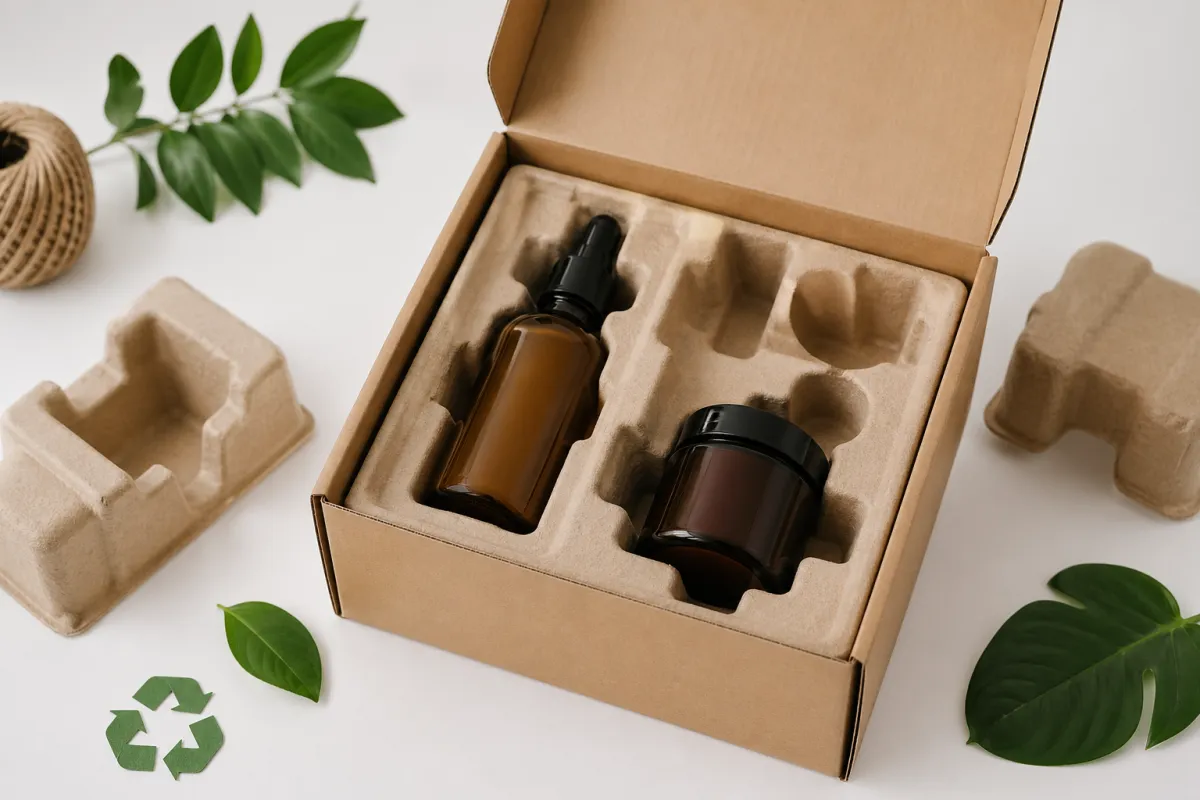
Picture a finished order on the packing table. The carton looks tidy. The product looks secure. Then the customer opens it and finds the item knocked loose, scuffed, or wedged against a wall from transit shock. That is the sort of failure that turns a normal order into a return, and it is one reason more teams buy sustainable shipping box inserts instead of treating dunnage as an afterthought.
A sustainable shipping box insert is not decoration. It is a control point. It keeps product motion in check, supports a clean unboxing, and can reduce the number of replacement shipments that quietly eat into gross margin. If the insert is designed well, packers are not stuffing void fill into gaps or improvising with tape and hope. I have seen shipping lines slow down for exactly that reason, and it is always the same story: the packaging looked fine on paper and kinda fell apart in practice.
Sustainability claims are easy to print and harder to prove. A custom-fit insert made from molded pulp, recycled corrugated, or paperboard can reduce plastic use without making the packout awkward. It can also make disposal simpler for the customer. No foam crumbs. No mixed materials that make recycling a guessing game. That matters for ecommerce shipping brands that want repeat purchases, not just one good-looking first order.
Cheap void fill can hide movement for a while. Then scale shows up and exposes the weak spot: heavier items, longer routes, rough handling, stacked cartons, humidity swings, and box sizes chosen months earlier for a different product mix. A loose insert may survive a few local deliveries and fail once the shipment goes farther or the carton is packed tighter. Low-cost transit packaging often looks acceptable right up until growth makes the flaw obvious.
From a packaging buyer’s point of view, the decision is operational. You buy sustainable shipping box inserts to cut damage, keep the box presentation clean, and make the carton work with the product instead of fighting it. If the fit is right, the line moves faster. If the fit is wrong, every other promise gets expensive fast.
The real question is not whether sustainable inserts look better. The question is whether they solve the shipping problem better than what you use now. For fragile products, multi-piece kits, or premium goods that need a neat unboxing, the answer is often yes. The rest of this article focuses on the buying criteria that actually matter, because vague sustainability language does not help anyone approve a purchase order.
How Do You Buy Sustainable Shipping Box Inserts?
If you want the short version, start with fit, then material, then workflow. To buy sustainable shipping box inserts well, measure the product, measure the inside of the carton, define how much movement is acceptable, and request samples before you commit to volume. That order matters because a beautiful insert that misses the load path is still a bad buy.
Begin by matching the insert to the failure mode you are trying to stop. If the risk is impact, Molded Pulp Inserts or hybrid protective structures are usually worth a look. If the risk is part separation, corrugated or paperboard inserts may be enough. If the box needs to feel polished at unboxing, presentation details matter too. That is how sustainable packaging works in real life: it supports the product and the brand at the same time.
Then check the production side. Ask how the insert ships, whether it nests efficiently, whether it slows the packing line, and how much storage space it needs before use. A part that prevents damage but adds a pile of labor is only half a solution. Good transit packaging should reduce work, not move the work somewhere else in the warehouse.
Finally, compare the numbers that affect total cost, not just the unit price. Material weight, tooling, freight, and returns all change the final result. A slightly higher price can still be the better decision if it cuts breakage and keeps fulfillment moving. That is usually the real math behind a smart packaging purchase.
Buy Sustainable Shipping Box Inserts: Product Types
When you buy sustainable shipping box inserts, the material choice should follow the product, not the marketing deck. Plenty of teams start with “eco-friendly” as a label and end up with a part that looks virtuous and performs badly. Useful inserts are chosen by weight, break risk, line speed, and how the carton will be handled during transit packaging.
Molded pulp is the workhorse for cushioning. It has real shock absorption, nests well, and is a strong fit when the product needs a cradle or corner support. It is common for glass bottles, small appliances, personal care items, and components that need to survive bumps more than glamour shots. If you buy sustainable shipping box inserts for fragile goods, molded pulp is often the first material worth sampling.
Corrugated inserts are the familiar choice for structure and separation. They work well for dividing parts inside one box, holding multiple SKUs in place, or creating a tight fit around rigid products. Corrugated is a solid option when you want strength without pushing cost too high. It is also easier to print than most structural materials, which matters when the insert is visible at unboxing and should feel deliberate rather than improvised.
Die-cut paperboard is the cleaner option for lighter products or premium presentation. It is not the answer for heavy shock loads, but it can be excellent for cosmetics, small electronics accessories, subscription kits, and gift sets. It folds sharply, prints well, and keeps the interior looking polished. If you buy sustainable shipping box inserts for lighter items, paperboard belongs near the top of the list.
Recycled kraft structures sit between plain corrugated and premium paperboard. They work well for brands that want a natural look without overcomplicating the design. In practice, a kraft insert often feels more honest and less overdesigned, which many customers notice even if they never say so. It also pairs well with minimalist branding and lower-ink print coverage.
Hybrid designs combine materials for different jobs. A molded pulp tray may cradle a bottle while a corrugated sleeve locks the tray inside the box. A paperboard divider may sit over a recycled corrugated base. Hybrid setups are common when one material alone does not solve the load path. That is usually the sign of a serious packaging spec, not a failure.
| Insert Type | Best For | Typical Strength | Relative Cost | Notes |
|---|---|---|---|---|
| Molded pulp | Fragile products, bottles, corner protection | Good cushioning, solid impact resistance | Mid | Strong choice when you need drop protection and recycled content |
| Corrugated insert | Separation, locking, heavier rigid items | Good structural support | Low to mid | Easy to standardize across multiple box sizes |
| Paperboard insert | Light products, presentation packaging, kits | Moderate support | Low | Best when you need a neat interior and simple print |
| Kraft structure | Natural look, simple shipping boxes, retail kits | Moderate to good | Low to mid | Useful for brands that want recycled appearance without foam |
| Hybrid build | Mixed products, fragile sets, premium kits | Very good when designed well | Mid to higher | Often the best answer when one part must cushion and another must lock |
The practical rule is simple. Match the insert to product weight, drop risk, and how much assembly time your packing line can tolerate. If the item is heavy and brittle, start with molded pulp or a hybrid structure. If the item is rigid and must be separated from accessories, corrugated usually wins. If the product is light and presentation matters, paperboard can do more than people expect.
The same logic applies to brands comparing Custom Shipping Boxes with inserts or checking whether the outer carton needs a structural upgrade too. A weak box plus a good insert is still a weak system. The best packaging set is the one where the carton, insert, and product all work together instead of competing for space.
A good insert should disappear during packing and reappear only when the customer opens the box. If it takes extra tape, extra foam, or extra labor to make it work, it is not really saving anything.
For teams building bundles or multi-item kits, the insert should reflect the order structure. A subscription box with four parts needs a different solution than a single bottle with a leaflet. That is why teams often start by reviewing their full Custom Packaging Products mix before locking in the insert design. The insert cannot be treated like a standalone part. It has to fit the workflow, the carton, and the customer experience.
Specifications to Check Before You Order
If you want to buy sustainable shipping box inserts without learning the hard way, start with dimensions. Not approximate dimensions. Real ones. Measure the product at its widest points, tallest points, and deepest points. Then measure the inside dimensions of the shipping carton, not the outside. Wall thickness matters, and a few millimeters of clearance can be the difference between a snug fit and a stream of damaged returns.
Clearance should be intentional. Too little and the insert presses on the item or slows the pack line. Too much and the product shifts every time the carton is handled. For fragile items, the design should limit movement without making packout feel like surgery. That balance is not mystical. It comes from careful sizing and sample testing.
Performance specs matter too. Ask about compression strength, stacking resistance, cushioning behavior, and whether the insert holds shape in humidity. Some materials look fine in dry storage and soften or warp once they land in a warehouse with real seasonal variation. If your cartons live in a humid region, that is not a small detail. It is the detail.
Assembly is another spec buyers ignore until the packing floor complains. Does the insert arrive as one piece or multiple parts? Are there lock tabs? Does it need glue? Does it nest well for storage? How fast can a packer place it without slowing fulfillment? If one insert saves 4 seconds and another saves 12, that difference is real on a busy shift. Over thousands of orders, it adds up quickly.
Finish and branding are not cosmetic extras. They influence perception and sometimes functionality. An uncoated natural kraft look may fit a clean sustainability story. White board can make interior print sharper and work well for premium products. A simple one-color mark can be enough if the main job is protection. Heavy print coverage, fancy coatings, and soft-touch finishes raise cost and can make little sense on a part the customer throws away right away. Good buying discipline beats vanity.
For durability and test planning, it helps to align your insert spec with established packaging standards. ISTA protocols are useful when you want to see how a package behaves under drop, vibration, and compression testing. If you are sourcing fiber-based materials, FSC certification can support responsible sourcing claims without pretending certification solves every problem. Standards do not guarantee success, but they keep everyone honest.
Do not order in volume before you request a sample or fit test. One millimeter off in the wrong place can trigger a production headache that costs more than the entire sample run. A good supplier should be willing to review product photos, shipping carton dimensions, and a physical sample if the item is unusually shaped. The best way to buy sustainable shipping box inserts is still the boring way: measure, sample, test, approve.
Also check how the insert behaves with the outer carton you already use. If the box is too large, the insert may need to do more work than it should. If the box is too small, the insert may lose its cushioning margin. In other words, the insert spec and the box spec are tied together. No one gets points for treating them like separate problems.
That is especially true in ecommerce shipping, where a clean-looking packout can still fail if the internal geometry is wrong. A well-designed insert creates package protection without adding filler, extra tape, or awkward hand assembly. A bad one becomes an argument in the warehouse and a return email from the customer.
Buy Sustainable Shipping Box Inserts: Pricing, MOQ, and Savings
People ask for price first because price is easy to say out loud. Fair enough. But if you want a meaningful quote when you buy sustainable shipping box inserts, the cost depends on several things at once: material type, dimensions, custom tooling, print complexity, part count, and whether the design needs folds, tabs, or a special die line. Those details change the math more than most buyers expect.
For simple stock styles, minimums can be relatively low and unit pricing can stay friendly. For custom sustainable shipping box inserts, the MOQ usually climbs because the setup cost has to be spread across enough pieces to make sense. There is no mystery there. A new die, new tooling, or a custom structural layout costs money before the first good piece is made. The supplier is not being dramatic. The factory is just doing arithmetic.
Here is the part buyers should watch closely: unit price drops with scale, but it does not fall forever. Material yield, nesting efficiency, and freight weight still matter on larger runs. A heavier insert may look cheap per piece and expensive per carton once shipping is added. That is where dimensional weight and material density start to matter, especially if the insert adds thickness without adding useful protection.
Spend where it matters. Save where you can. Spend on fit, protection, and production stability. Save by simplifying print, reducing the part count, and standardizing sizes across product lines. If you can use one insert across three SKUs with small internal shims, that can be smarter than three separate custom builds. If you can remove an extra fold or decorative feature that no customer notices, do it. Pretty is not a cost justification.
The savings case gets stronger when you compare the insert against losses you already know are happening. One broken order can cost the product, the outbound freight, the support time, and the replacement shipment. Add customer complaints and a bad review, and the “cheap” insert becomes a very expensive bargain. Good package protection pays for itself by preventing the obvious messes and the hidden ones.
Below is a practical buying range many teams use as a starting point. These are not promises. They are the kind of ranges that help with planning before a supplier quotes the exact job.
| Order Profile | Typical MOQ | Typical Unit Price Range | What Moves the Price |
|---|---|---|---|
| Stock corrugated insert | 250-1,000 pieces | $0.20-$0.55 | Size, board grade, and shipping carton compatibility |
| Custom paperboard insert | 1,000-3,000 pieces | $0.18-$0.48 | Print coverage, fold complexity, and number of parts |
| Custom molded pulp insert | 3,000-10,000 pieces | $0.30-$0.85 | Tooling, cavity design, material weight, and finish |
| Hybrid protective system | 2,000-8,000 pieces | $0.35-$1.10 | Multiple components, fit tolerances, and assembly time |
Those numbers change quickly with volume, but they are useful because they force a better conversation. If your current packaging is generating two percent damage and your replacement cost is high, a slightly more expensive insert can still produce a better net result. That is the part some teams miss when they compare only raw unit price and ignore labor, freight, and returns.
If you are shopping multiple packaging formats, it helps to compare the insert against other transit packaging choices, including Custom Poly Mailers for soft goods and lower-fragility orders. Not every order needs a rigid insert, and not every product belongs in a box. The smartest buyers use the simplest packaging that still protects the product and keeps shipping cost under control.
Ask for quotes at more than one quantity. That is where the real breakpoints show up. Sometimes the price drop from 1,000 to 3,000 is meaningful. Sometimes the savings from 3,000 to 5,000 are tiny because freight or tooling dominates. A good quote should make those thresholds visible so you can decide whether the savings justify the inventory commitment.
Process and Timeline for Sustainable Shipping Box Inserts
The order process should be simple enough that nobody needs a whiteboard to explain it. When you buy sustainable shipping box inserts, the basic flow is usually inquiry, product specs, material recommendation, sample or dieline review, approval, production, and shipment. If a supplier cannot explain that sequence clearly, keep looking. Confusion at the quote stage becomes delay at the factory stage.
Stock options move faster because there is less setup and fewer approvals. Custom sustainable shipping box inserts take longer because the structure has to be built around your product and carton. If tooling is required, add more time. If the design needs drop or vibration testing, add more time again. That is not a flaw in the process. That is how you avoid expensive surprises later.
Here is the typical timing pattern I would use for planning, assuming the information is complete and approvals move on time:
- Stock insert: often 7-12 business days from order to ship, depending on quantity and warehouse location.
- Custom sample approval: often 5-10 business days for simple layouts, longer for complex structures.
- Custom production: often 12-20 business days after sample signoff, with longer lead times for molded or heavily customized builds.
What slows a job down? Missing product dimensions. Unclear product weight. Late artwork. Changing box sizes after sampling starts. Those are the classics. Another common delay is approving a sample without testing it with the actual product. That saves a day and can cost a month. Do not do that to yourself.
Set approval checkpoints early. First, confirm the physical fit. Then confirm the print proof, if print is part of the design. Then give a final signoff before full production starts. If the insert is meant to work with a launch date, build in a buffer for sampling tweaks and transit delays. Logistics is not kind to unrealistic calendars, and nobody in the warehouse cares that marketing promised a hard launch date.
Ask for the dieline or structural drawing if the design is custom. That gives your team a chance to review the load path, access points, and packing sequence before anything is made in bulk. It also helps if your team is comparing one insert structure against another. Better to catch a bad tab placement on paper than on a pallet of finished goods.
Supply chain planning matters here too. If your packaging program supports multiple SKUs or seasonal drops, the insert lead time should fit your inventory rhythm. A good vendor will ask about forecast volume, carton changes, and replenishment frequency instead of quoting one number and disappearing. That question tells you whether the supplier understands production as well as sales.
For brands focused on FSC materials or documentation, ask for certificates and chain-of-custody details up front. That keeps paperwork from becoming a last-minute fire drill. It also gives procurement a cleaner file when the audit trail matters. Again, boring details. Very useful boring details.
Why Choose Us for Sustainable Shipping Box Inserts
The difference should be practical, not fluffy. If you buy sustainable shipping box inserts from us, the focus is on fit, protection, repeatable quality, and materials that make sense for shipping. Not marketing noise. Not a speech about being “green” while the product rattles around inside the box. Packaging is judged by what happens in transit, not by how nice the spec sheet sounds.
We look at the whole packaging system. That includes the product shape, the outer carton, the packing method, and the shipping lane. A stable insert needs consistent die cutting, reliable material sourcing, and tolerances that keep the product from shifting. If the insert fits well on day one and still fits well on reorder, that is the baseline. Anything less is a problem waiting to happen.
Buyers also need support that is actually useful. Sample development. Size checks. Packaging advice. Help matching the insert to the product and carton. If the order is for a premium kit, the interior should feel intentional. If the order is for a rugged ecommerce product, the design should prioritize package protection and efficient packing. The right answer depends on the job, and pretending otherwise is how bad specs get approved.
Clear quotes matter too. So does honest MOQ guidance. If a supplier tells you a number but leaves out tooling, print, or sampling costs, that is not helpful. It is sales theater. A clean quote should show what is included, what affects the unit price, and what timeline you are actually working with. No magic tricks. No “we can probably do it faster” promises that evaporate later.
Operations teams care about repeatability. They want an insert that speeds packout, cuts breakage, and makes the carton feel finished rather than improvised. Marketing cares about presentation. Finance cares about cost per shipped order. Good sustainable inserts satisfy all three without pretending they are the same priority. That balance is the point.
There is also a common operational win that gets overlooked: a better insert can reduce the need for extra shipping materials. Less void fill. Less tape. Less hand-built patching at the pack table. That saves labor, lowers waste, and makes the box more predictable under pressure. Predictability is underrated because it is not flashy. It is just profitable.
In practice, the best feedback from buyers is not “that looks nice.” It is “the line ran smoother” and “the damage rate dropped.” That is the kind of result that matters for a packaging program, especially when the budget is tight and shipment volume keeps climbing. If the insert earns its keep in the first month, the purchase gets easier to defend the next time around.
For brands building a broader packaging system, sustainable inserts can be part of a larger transition across the range. That may mean rethinking the outer carton, adding more efficient dividers, or choosing paper-based alternatives across several SKUs. The point is not to swap one item and call it a strategy. The point is to tighten the whole shipping experience.
Next Steps to Buy Sustainable Shipping Box Inserts
If you are ready to buy sustainable shipping box inserts, start with the basics and keep the process grounded. Measure the product. Measure the box. Define the protection level. Decide whether the insert needs print or branding. That information is enough to get a useful first quote instead of a vague guess that leads nowhere.
Then sort your priorities. Do you care most about lowest cost, strongest protection, fastest turnaround, or the cleanest presentation? Pick the top two. The best choice depends on the job, and no packaging structure wins every category at once. If someone tells you it does, they are probably selling something expensive and hoping you do not ask questions.
Send real product samples or good photos if the item has odd corners, fragile points, or accessories that need to sit in separate cavities. The more the supplier understands the actual load, the better the design will fit the real shipment. That is especially true for products sold through ecommerce shipping, where the box may see more handling than an internal distribution carton would.
Request a quote with quantity, material preference, target ship date, and any branding notes. Include whether the insert must work with existing shipping materials or if the box can change too. If you already know your carton size, give the inside dimensions. If you are still deciding between formats, ask for options. Good suppliers should be able to price more than one route so you can compare protection and cost honestly.
Use the quote to compare the real tradeoffs. A lower unit price is not useful if the insert slows packing, increases returns, or raises freight by adding unnecessary bulk. A slightly higher price can be the smarter move if it improves fit and reduces waste. That is usually the entire argument for sustainable packaging done properly.
So buy sustainable shipping box inserts only after the fit, MOQ, and lead time all make sense for the shipment plan. That is the cleanest way to avoid wasted material, wasted labor, and wasted customer goodwill. Done right, the insert becomes one of the most efficient parts in the box. Done badly, it becomes another cost line with a recycling symbol slapped on it.
What material should I choose when I buy sustainable shipping box inserts?
Choose molded pulp for cushioning and impact protection, corrugated for structure and separation, and paperboard for lighter products or cleaner presentation. Match the material to product weight, fragility, and how much stacking pressure the carton will see in transit. If you are unsure, start with samples and test the insert with the actual product, not a guess.
Can sustainable shipping box inserts replace foam and plastic void fill?
Yes, if the insert is designed around the product instead of stuffed in as an afterthought. A custom-fit insert usually holds the item still better than loose void fill, which is why it often performs better in transit packaging. The tradeoff is that you need proper sizing up front, but that is usually cheaper than reshipping broken orders.
How do I know the right size for sustainable shipping box inserts?
Measure the product at its widest points and then measure the inside dimensions of the shipping box. Leave clearance for cushioning, but not so much space that the item shifts during handling. A sample fit test is the fastest way to confirm the right size before production, and it saves a lot of arguing later.
What is a typical MOQ when I buy sustainable shipping box inserts?
MOQ depends on material, tooling, and whether the insert is stock or fully custom. Simple stock styles often have lower minimums, while custom die-cut or molded options usually require larger runs. Ask for pricing at multiple quantities so you can see where the unit cost drops enough to matter.
How long does it take to produce sustainable shipping box inserts?
Stock inserts move faster than custom designs because there is less setup and fewer approval steps. Custom orders usually need time for sampling, fit review, and production scheduling before shipment. If you have a launch date, share it early so the timeline can be built around it instead of guessed.
When you are ready to buy sustainable shipping box inserts, the smartest move is still the simplest one: verify the fit, confirm the MOQ, and lock the lead time before you commit. That is how you cut waste, protect the product, and keep the shipment plan under control without pretending packaging is a magic trick. If you do only one thing next, measure the inside of the carton and the product at its widest points; everything else flows from that.

