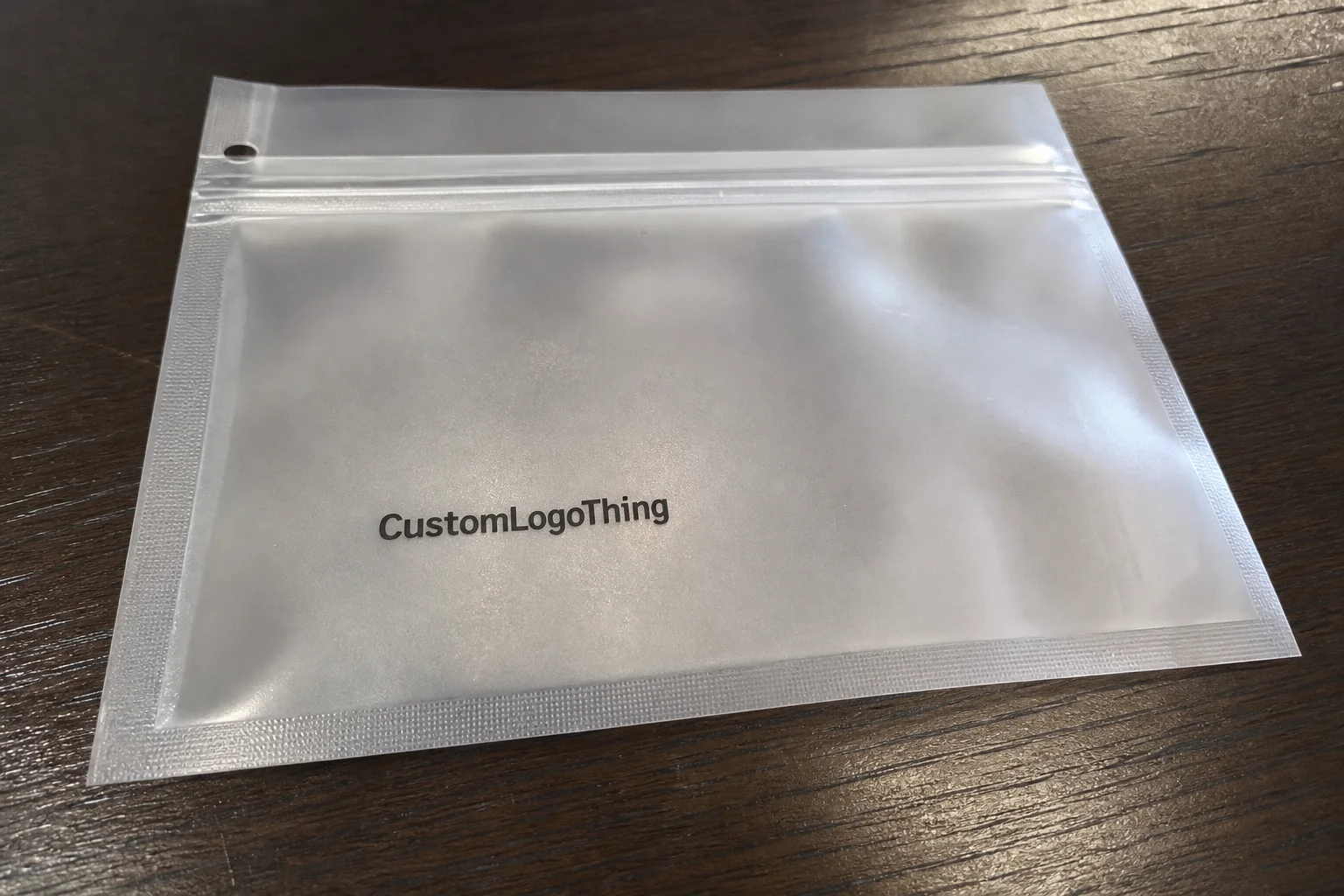
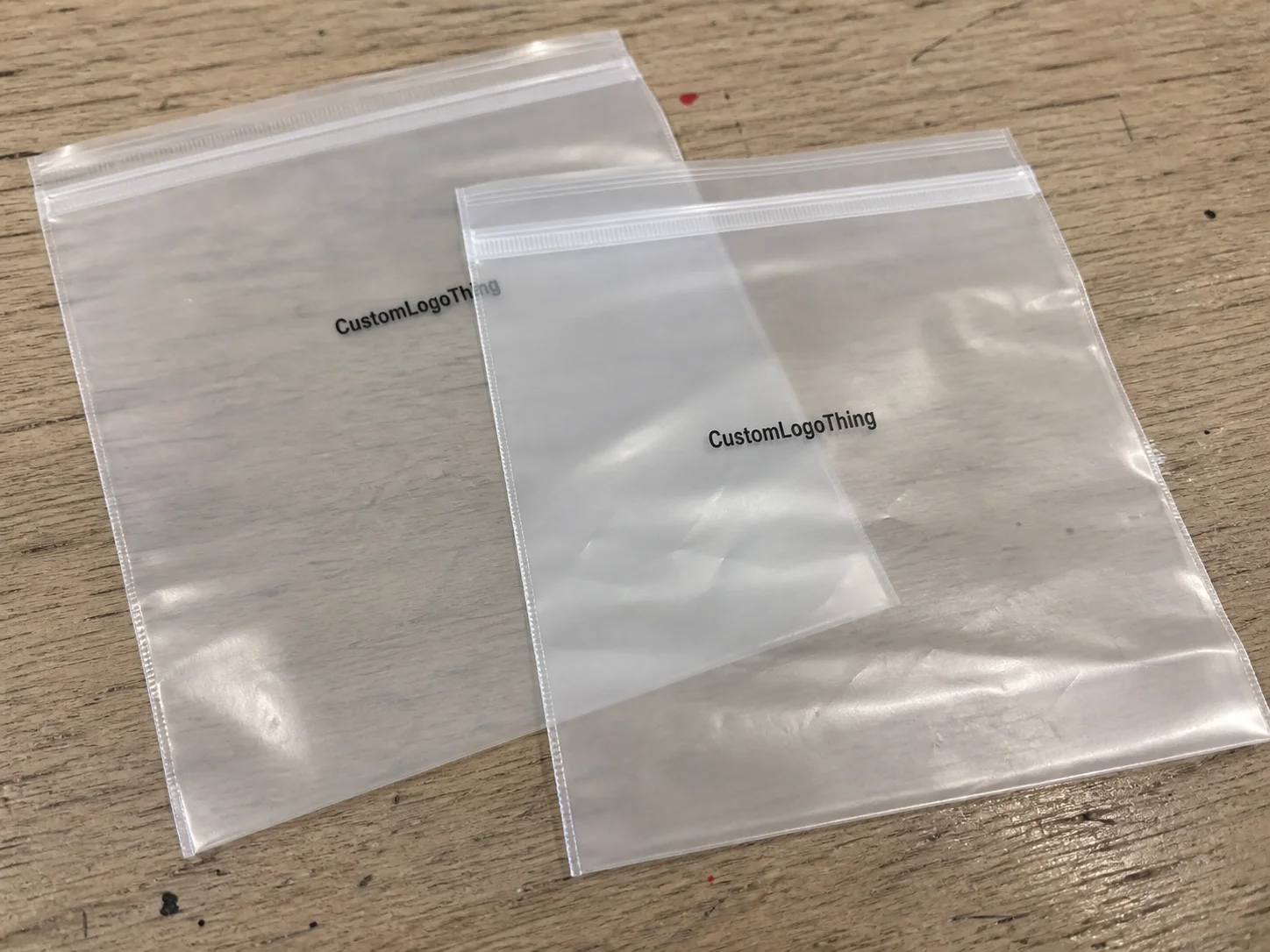
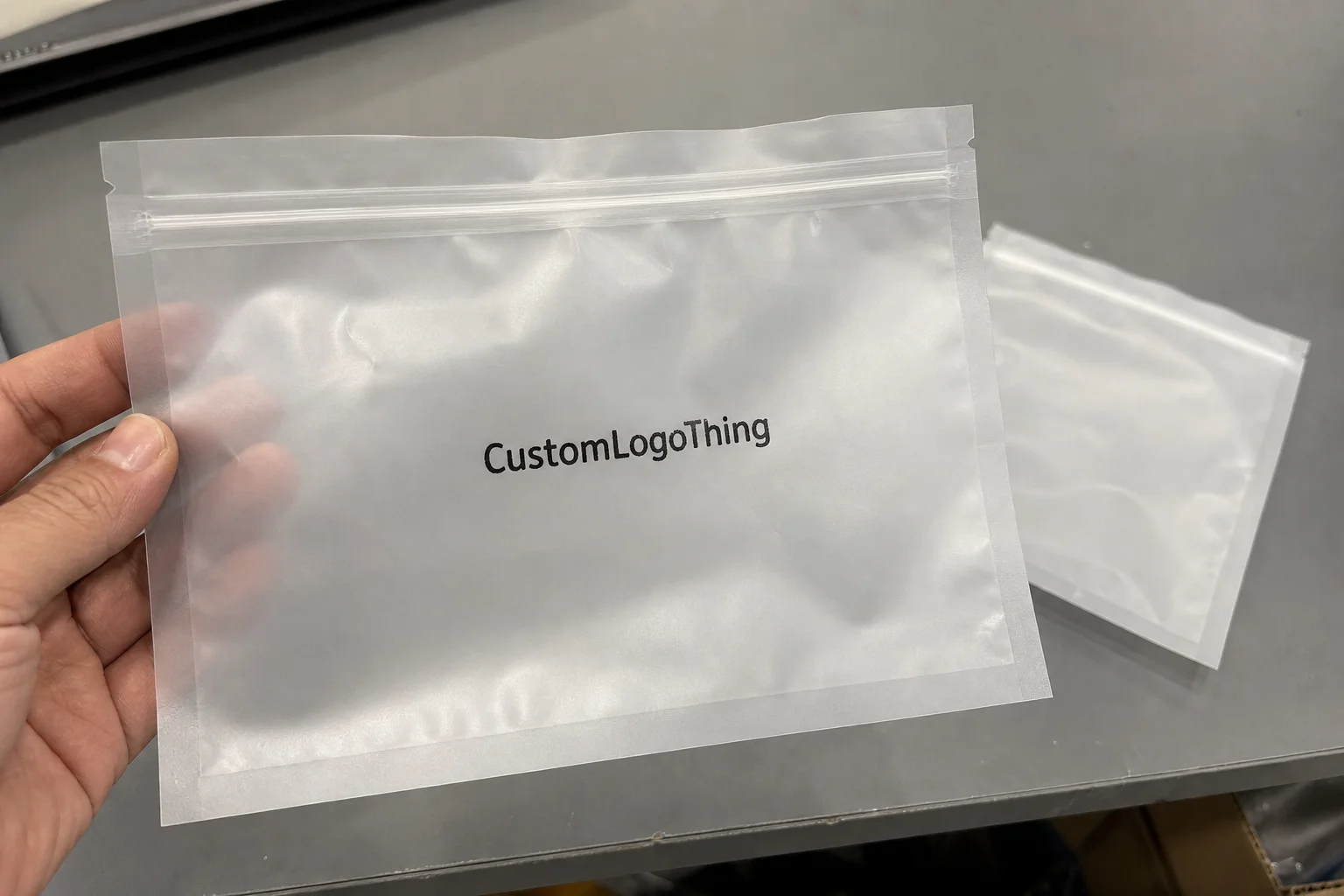
A candle brand frosted plastic bags sample order is the cheapest way to catch expensive packaging mistakes before bulk production. Artwork that looks clean on screen can fail on frosted film: logos lose contrast, white ink prints dull, handle placement crowds the design, or the bag feels weak once a glass jar is inside.
For candle brands, the sample’s job is simple: prove the bag works in real use. It should confirm fit, print readability, seal quality, handle comfort, and load performance with the actual product. That matters because candle packaging has to support both brand presentation and safe carrying.
A strong sample answers practical buying questions fast. Does a 10 oz tumbler fit without wasted space? Is 2.5 mil enough, or does the bag feel flimsy? Does the print stay readable under store lighting? Can one size cover both carryout and event gifting, or do you need two SKUs? Those decisions lock the final spec.
Why a candle brand frosted plastic bags sample order catches problems before full production
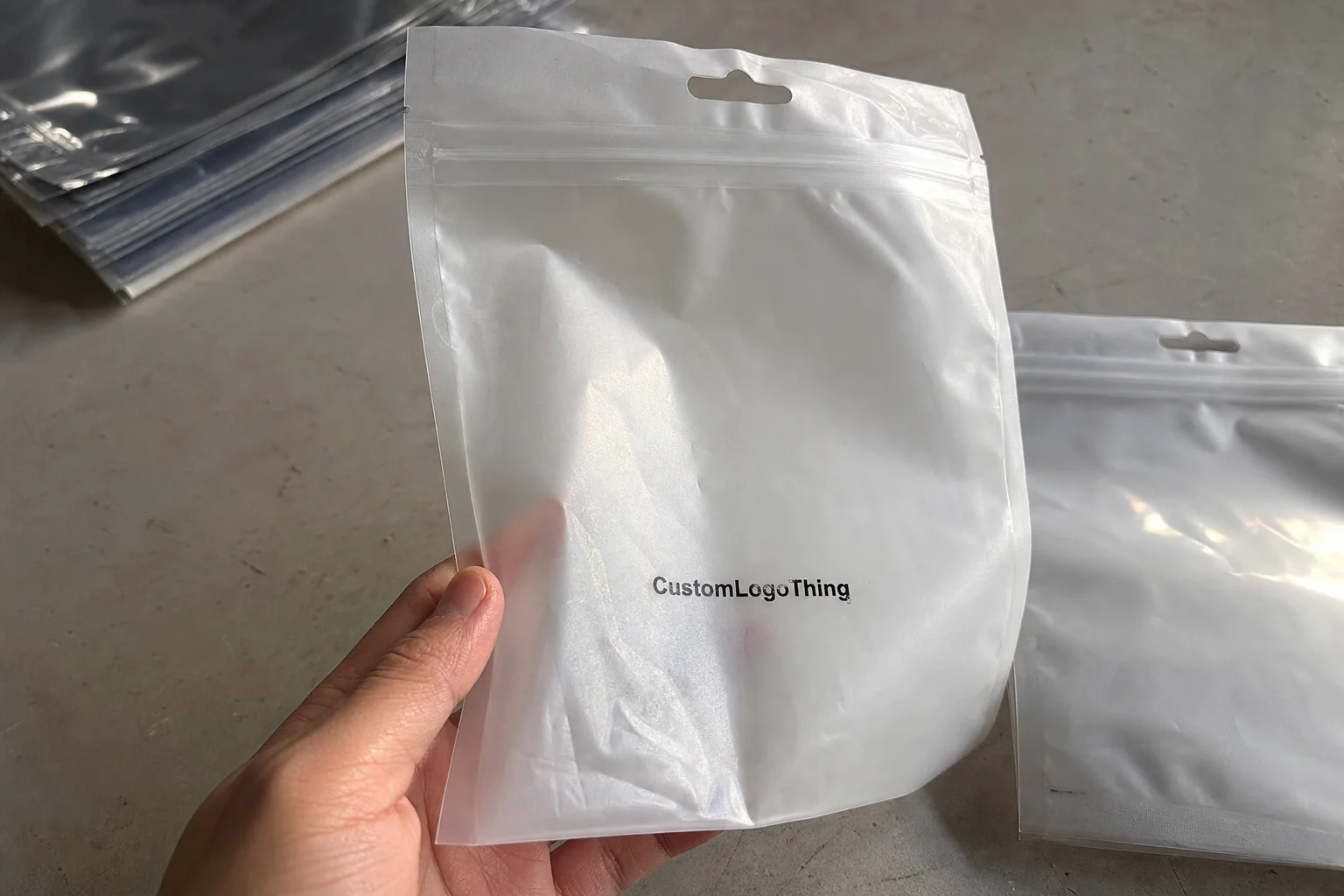
Artwork approval is necessary, but it is not final approval. Frosted film diffuses light and softens edges, so colors can print flatter than expected and fine details may lose sharpness. A dark logo without enough opacity can fade once the candle is inside, and art placed too close to the handle punch or folds may distort under load.
That is why physical sampling matters. It gives buyers a real check on the details that fail most often:
- Print readability
- Seal strength
- Film feel and thickness
- Handle comfort
- Bag proportions with the actual candle inside
The cost difference justifies the step. A custom sample often runs about $45 to $180, depending on size, setup, and print requirements. Full production may range from roughly $0.16 to $0.42 per bag for common custom formats, before freight. Approving the wrong spec on a 5,000-piece order means more than reprint cost; it can also mean delays, extra storage, and a visible downgrade in presentation.
Samples also expose a common planning mistake: forcing one bag to cover every use case. A size that works for a single 8 oz jar may look undersized for a two-candle gift set. A bag acceptable for event giveaways may not feel premium enough for boutique retail. Sampling shows whether one SKU is flexible or just a compromise.
Practical rule: If the product is in glass and sold as a premium item, do not approve the bag from a PDF alone. Put the real vessel into the real bag.
What frosted plastic bags actually do for candle retail, gifting, and event packaging
Frosted plastic bags reveal just enough. Customers can usually see the silhouette of the jar, tissue, or box inside without the fully exposed look of clear poly. That makes them a useful middle ground between basic transparent bags and more expensive paper bags or rigid gift boxes.
For candle brands, that balance works well in boutique carryout, pop-ups, seasonal launches, wholesale handoffs, and event gifting. Frosted bags store flat, resist moisture better than paper, and usually cost far less than boxed packaging.
Here is how common options compare:
| Packaging Type | Typical Unit Cost at 5,000 | Moisture Resistance | Storage Efficiency | Premium Finish | Best Use |
|---|---|---|---|---|---|
| Frosted plastic bag | $0.18-$0.34 | High | High | Moderate to high | Boutique carryout, pop-ups, events |
| Paper shopping bag | $0.28-$0.65 | Low to moderate | Moderate | High | Gift-heavy retail, heavier boxed sets |
| Clear poly bag | $0.10-$0.22 | High | High | Low | Basic protection, low-cost packaging |
| Rigid gift box | $1.20-$3.80 | Moderate | Low | Very high | Luxury gifting, PR kits |
Frosted bags are not ideal for every candle format. Large multi-wick vessels, ceramic containers, or bundles with accessories may need sturdier paper bags or boxes. Heat is another limit; poly film can soften in sustained high-temperature storage or transit. If the bags will move through rough distribution, reviewing transit testing basics through ISTA is sensible.
For many candle brands, though, frosted bags hit the practical sweet spot: cleaner presentation than clear poly, better moisture resistance than paper, low storage footprint, and manageable cost.
Material, print, and size specifications that matter for candle bags
Material selection changes both performance and perceived quality.
LDPE usually has a softer hand feel and smoother frosted finish, which often reads as more premium in boutique settings. HDPE is crisper and lighter for its strength, but it tends to feel noisier and less refined. For premium candle lines, LDPE is often the safer aesthetic choice.
Thickness and load performance
Typical thickness for candle bags runs from 2.0 mil to 4.0 mil. Lightweight accessories or wax melts may work at 2.0 to 2.5 mil. A single medium glass candle often fits best in the 2.5 to 3.0 mil range. Heavier jars, boxed candles, and two-piece gift bundles usually need 3.0 to 4.0 mil, especially with die-cut handles.
Thicker film generally improves:
- Load capacity
- Opacity and visual depth
- Print stability
- Perceived quality
It also increases cost. Moving from 2.5 mil to 3.0 mil often raises unit pricing by about 8% to 15%, depending on dimensions and resin pricing.
Handle style and comfort
The main handle options are die-cut and soft-loop. Die-cut handles look cleaner and cost less, making them common for lighter single-candle formats. Soft-loop handles are more comfortable and usually perform better with heavier glass jars or gift bundles.
If the packed product is around 1.5 to 3 pounds, soft-loop is often the safer choice. If the bag is small, the vessel is light, and the brand wants a minimal look, die-cut can still work well.
Size planning for common candle formats
Do not size bags from wax ounces alone. You need jar width, total height with lid, any carton dimensions, and actual carry weight.
- Single 8 oz to 10 oz jar: about 6 x 3 x 8 inches
- Single boxed tumbler: about 7 x 3.5 x 9 inches
- Two-candle gift bundle: about 8 x 4 x 10 inches
- Wax melt or accessory set: often under 5 x 2 x 7 inches
These are starting points only. Bottom gusset depth and opening width affect usable space more than many buyers expect. A bag can match the listed dimensions and still fit awkwardly if the opening is tight or the gusset is shallow.
Print choices on frosted film
For most projects, screen printing and flexographic printing are the main options. Screen printing often gives better opacity and cleaner solid areas on shorter custom runs. Flexographic printing is usually more efficient at higher volumes but needs tighter control over plate prep and registration.
White underprint deserves attention. On frosted film, it can make the difference between a logo that looks intentional and one that disappears. A crisp white base plus one strong dark color often performs better than a weak metallic effect.
Keep artwork away from the handle punch, side folds, and bottom weld. Oversized art that crosses folds may look bold in a flat proof but messy in use. Also ask about ink adhesion and rub resistance if candle jars, oils, or body products might leave residue on the bag.
If the broader packaging system includes paper components with sustainability claims, use verifiable standards such as FSC rather than vague language.
Pricing, MOQ, and unit cost: what changes the quote fastest
Bag quotes usually move for six reasons: size, thickness, handle type, print colors, print coverage, and quantity.
Larger bags use more film. Thicker bags use more resin. Soft-loop handles add labor and material. Two-color printing costs more than one color. Heavy print coverage costs more than a small centered logo. Lower quantities absorb more setup cost per piece.
Typical production pricing often falls into ranges like these:
| Bag Type | MOQ Range | Approx. Unit Cost | Notes |
|---|---|---|---|
| Small die-cut, 2.5 mil, 1 color | 3,000-5,000 | $0.16-$0.24 | Best for single jars or melts |
| Medium die-cut, 3.0 mil, 1-2 colors | 5,000 | $0.22-$0.31 | Common candle retail format |
| Medium soft-loop, 3.0 mil, 1-2 colors | 5,000-10,000 | $0.29-$0.42 | Better for heavier glass |
| Large soft-loop, 3.5-4.0 mil, 2 colors | 5,000-10,000 | $0.38-$0.58 | Gift sets and boxed bundles |
Sample pricing works differently. A sample order may include setup charges, plate prep, or stock conversion, so the per-piece cost looks high. That is normal; a one-off sample is not priced like repeat production.
MOQ is also an inventory decision. A lower unit cost means little if you are left with thousands of bags that do not fit next season’s fragrance launch or holiday packaging. Brands with frequent rotations should compare total inventory risk, not just unit price.
Freight and storage also belong in the quote review. Ask for carton counts, carton dimensions, packed weight, and cubic volume per 1,000 pieces. Without that, the quote is incomplete.
To get a useful quote quickly, send:
- Jar or box dimensions
- Total packed weight
- Expected use case: retail, gifting, event, or wholesale
- Preferred handle type
- Artwork in vector format if available
- Expected annual or reorder volume
Sample order process, production steps, and lead time from artwork to approval
The normal sample process is straightforward: inquiry, spec confirmation, artwork review, proofing, sample production, shipment, testing, and approval. Most delays come from incomplete files or slow internal feedback.
Three common sample methods
- Digital mockup: fast and inexpensive, but useful only for layout review.
- Stock-size printed sample: useful for checking ink, approximate placement, and material feel if a stock size is close enough.
- Fully custom pre-production sample: best for final decisions on size, handle, and finish.
Typical lead times:
- Digital proof: 1-3 business days
- Stock-size printed sample: 5-10 business days
- Fully custom sample: 10-18 business days
- Bulk production after approval: often 12-20 business days, plus transit
Unusual dimensions, low-resolution logo files, extra revisions, and custom handle constructions can extend that schedule.
When the sample arrives, test it as a working package. Put the actual candle inside. Lift it repeatedly. Check whether the base sits flat. Review the print in daylight and warm store lighting. Rub the print lightly to check scuffing. If the customer receives tissue, insert cards, or a box inside, test the full packed presentation rather than the empty bag alone.
A simple approval sheet with four categories helps keep feedback clear:
- Aesthetics
- Fit
- Durability
- Cost
Best practice: Request the production quote alongside the sample so the path to a bulk order is clear if the sample works.
What to compare in a supplier before placing a branded bag order
Many suppliers can make a custom bag. Fewer can hold the specification consistently. For candle brands, consistency matters because the bag has to carry weight safely while still supporting a premium presentation.
Start with measurable checks:
- Material consistency: Is frost level and film thickness held within a clear tolerance?
- Print registration: Does the logo stay centered across runs?
- Seal strength: Are side and bottom seals appropriate for the actual jar weight?
- Proof accuracy: Does the sample reflect likely production output?
- Communication speed: Are spec questions answered clearly within 24 to 48 hours?
Experience with candle packaging helps because suppliers who know the category tend to ask better early questions about vessel weight, cartons, inserts, and seasonal changes. That saves time and reduces rework.
Quality control should be specific, not vague. Useful checkpoints include film thickness checks, seal testing, print color reference approval, carton labeling accuracy, and count verification before shipment. For broader order-prep questions, the on-site FAQ can help frame what should be confirmed before approval.
Operationally, it also helps if tooling or plate charges are broken out clearly, reorders can follow a locked specification, and there is support for scaling through defined Wholesale Programs.
Next steps to place the right sample order without wasting budget
If you want a useful sample instead of a long back-and-forth, do the prep first.
- Measure the packed product. Include width, depth, height, and actual carry weight.
- Define the use case. Retail carryout, event gifting, PR, and wholesale handoff may need different specs.
- Decide on likely handle options. Heavy jars should be tested against soft-loop rather than assumed into die-cut.
- Send proper artwork. Vector files are ideal, with clear placement notes.
- Request sample and bulk pricing together. You need to know if the approved bag is commercially workable.
- Sample against real scenarios. If the line includes single jars and boxed sets, test both.
- Use a scoring rubric. Review appearance, fit, durability, comfort, storage efficiency, and cost.
For many brands, testing two versions is worth the extra spend. Comparing a 2.5 mil die-cut bag against a 3.0 mil soft-loop bag can quickly show the difference in structure, carrying comfort, and perceived quality.
Keep revisions narrow. If the bag fits but the print lacks contrast, change the ink treatment first. If the print is strong but the opening is tight, change the size only. Too many edits at once make it harder to see what actually solved the problem.
The goal is not endless refinement. It is a locked, production-ready specification that controls cost and still looks right after a customer puts a glass candle inside and carries it out the door.
FAQs
What is included in a candle brand frosted plastic bags sample order?
Most sample orders include a physical bag sample, artwork placement reference or proof, and a written spec covering material, thickness, size, and print method. Some are printed on a stock bag close to your dimensions, while others are fully custom. Before approving the sample invoice, check whether freight, plate charges, setup fees, and revision costs are included.
How many bags is the MOQ for custom frosted plastic bags for candle brands?
MOQ usually depends on bag size, film type, thickness, handle style, and print complexity. A common starting range is 3,000 to 5,000 pieces for Custom Printed Bags, with better pricing at higher volumes. The fastest way to get a reliable MOQ is to send dimensions, handle preference, and artwork details together.
How long does a frosted plastic bag sample order take before production starts?
Digital proofs may be ready in 1 to 3 business days. Physical custom samples often take 10 to 18 business days before shipping, depending on complexity. Bulk production usually starts only after sample feedback is closed and all specs are confirmed, so internal approval delays matter just as much as factory lead time.
What bag thickness is best for carrying glass candle jars?
There is no single best gauge for every format. For smaller single jars, 2.5 to 3.0 mil is a common starting point. Heavier vessels, boxed candles, or gift sets often need 3.0 to 4.0 mil, especially with die-cut handles. The safest check is load testing with the filled candle during the sample stage.
Can I get a quote for custom printed frosted plastic bags before placing a full order?
Yes. Ask for sample pricing and estimated production pricing at the same time. A useful quote should show unit cost assumptions, MOQ, tooling or plate charges, freight terms, lead time, and any print limitations tied to frosted film. Accurate dimensions and production-ready artwork make the quote much more dependable.