Most buyers do not need 50,000 pouches. They need a Pharmacy Frosted Zipper Bags low moq order that fits the product, the compliance copy, and the launch window without leaving piles of obsolete packaging in storage.
That is the real problem. Independent pharmacies, regional dispensary groups, nutraceutical brands, clinic retailers, and private-label wellness lines often need a few hundred or a few thousand custom bags, not a container-load. A smaller run with the right specs usually beats a giant order that looked cheap on a spreadsheet and turned into dead stock after a formula tweak, artwork refresh, or warning update.
Frosted zipper pouches sit in a useful middle ground. They look cleaner than plain poly bags, offer more discretion than fully clear film, and feel more retail-ready than a paper envelope with a label slapped on it. Better shelf presence. Better repeat use. Less waste.
The variables that matter are fairly plain: bag size, fill weight, zipper reliability, opacity, print method, compliance panel space, and reorder flexibility. Get those right and you can test a new SKU, sample pack, seasonal item, or regional rollout without overcommitting cash or warehouse space.
Pharmacy Frosted Zipper Bags Low MOQ Order: Why Small Runs Make Sense
A low-MOQ custom run is not about lowering standards. It is about limiting inventory risk.
That matters more in pharmacy-adjacent packaging than many first-time buyers expect. Formula language changes. Supplement facts panels change. Warning text gets revised. Sometimes a barcode changes because distribution changes. Any one of those can turn a large bag order into expensive clutter.
In practical terms, ordering 3,000 to 5,000 Frosted Zipper Bags at a higher cost per piece can be smarter than ordering 25,000 just to chase a lower unit number. If the bigger run saves $0.03 per bag but several thousand units become outdated before they are filled, the “savings” disappear fast.
Typical small-run buyers include:
- Independent pharmacies testing private-label supplements
- Wellness brands launching new capsule, powder, or gummy SKUs
- Regional chains running short promotional programs
- Clinic retailers assembling sample or starter kits
- Brands trying to standardize packaging across a few product sizes first, then scale later
Another reason small runs make sense: fit testing. A pouch that looks fine in a quote sheet can wrinkle, belly out, or underfill once real product goes in. Capsules settle differently than gummies. Sachets stack differently than loose softgels. A shorter run gives you room to fix the next order instead of living with 20,000 awkward-looking packs.
Frosted Zipper Bags work especially well for compact products that need a clean branded look without the cost of rigid jars, custom cartons, induction seals, and secondary labels all at once. They are not a perfect fit for every product, but for low-to-mid fill weights they are often the most efficient first step.
Simple truth: low MOQ is usually a risk-control tool, not a budget compromise.
What Buyers Actually Want From Frosted Zipper Packaging
Buyers want a pouch that looks organized, protects the contents reasonably well, prints clearly, and does not annoy people every time it opens. Not exactly a radical wish list.
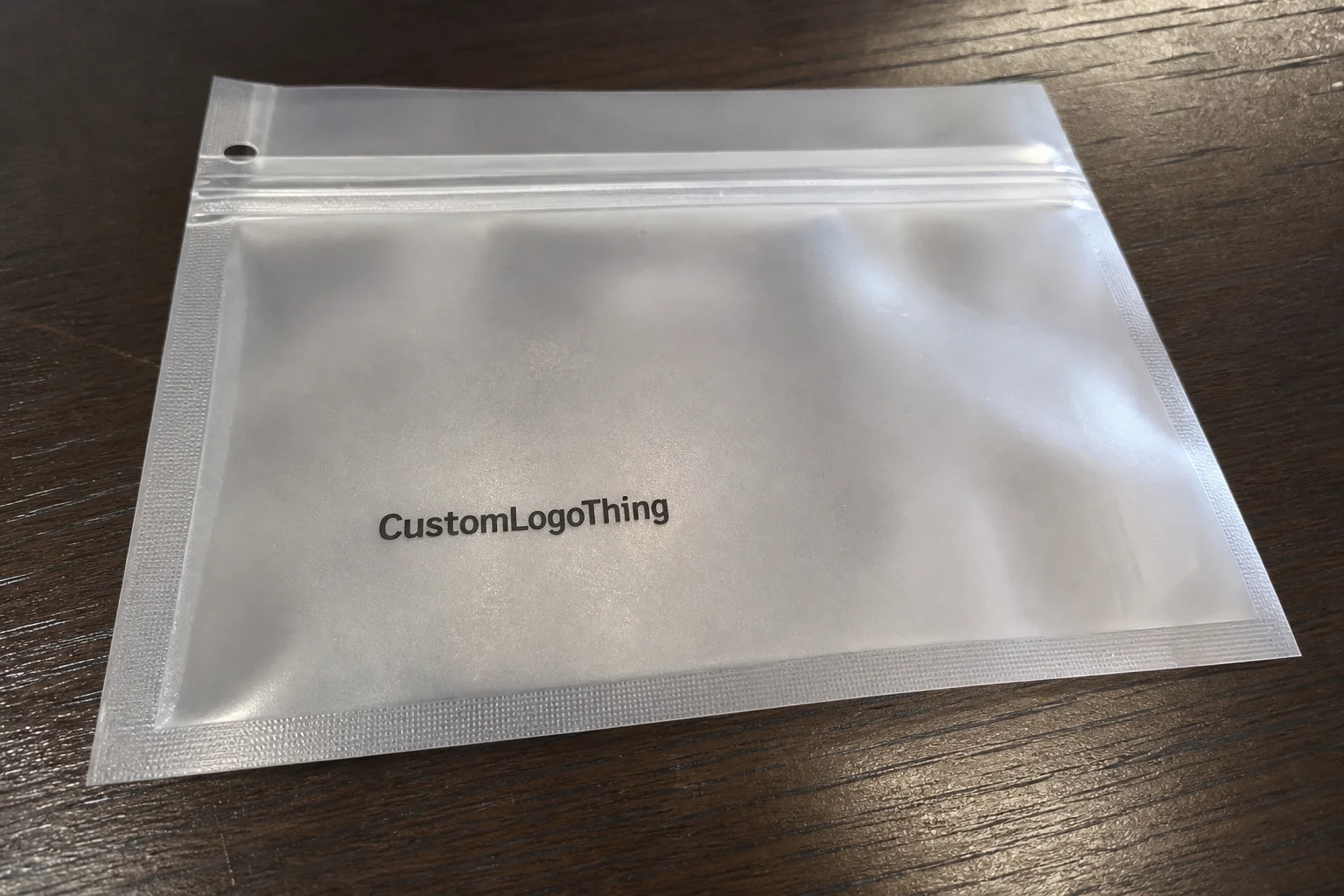
A frosted zipper bag is a flexible plastic pouch with a translucent finish, a resealable zipper, and printed branding or product information. The frosted effect softens visibility without making the pack feel heavy or blocked out. For pharmacy, wellness, and supplement products, that balance is often the point.
Common applications include:
- Capsules and tablets
- Softgels and gummies
- Herbal blends and powder sachet bundles
- Disposable accessories or topical tools
- Trial packs and sample assortments
- Secondary retail packaging for products sealed inside another primary pack
The zipper matters more than people think. Reclosable packs get handled repeatedly, and a weak zipper makes the whole package feel cheap even if the printing looks good. For multi-dose products or refill packs, buyers usually want a zipper profile with consistent track alignment, clean reseal performance, and enough stiffness that the top section does not collapse after opening.
Useful optional features include:
- Euro hang hole for peg displays
- Tear notch for cleaner first opening
- Writable panel for batch or dosage notes
- White ink backing for stronger text contrast
- Clear window strip if partial product visibility matters
- Child-resistant upgrades where regulations or channel requirements call for them
The caveat is simple. Frosted bags are not ideal for every application. If the product has sharp corners, high puncture risk, strict sterile handling requirements, or stronger oxygen and moisture barrier demands, the film structure needs to be specified carefully. Sometimes the better answer is a foil-heavy pouch, blister format, or rigid container. Packaging should fit the product, not the mood board.
For compact retail packs, moderate fill weights, and frequent design updates, though, frosted zipper pouches are a practical choice. That is why they show up so often in requests tied to a Pharmacy Frosted Zipper Bags low moq order.
Material, Print, and Size Specifications That Affect Performance
Specs drive performance. Marketing adjectives do not.
Most frosted zipper pouches use laminated film structures such as PET/PE, matte PET/PE, or all-PE variants designed for a softer finish. PET adds stiffness, scuff resistance, and print stability. PE supports seal strength and flexibility. For many pharmacy-adjacent retail applications, total thickness in the range of 120 to 180 microns is common.
Lighter film can reduce cost, but it also tends to feel flimsy and can show wrinkles more easily. Heavier film improves hand feel and puncture resistance, though it raises material cost, carton weight, and freight spend. There is always a tradeoff.
Material options in plain English
Standard PET/PE laminate: a common choice for general retail pouches, with decent stiffness and solid print performance.
Matte or frosted PE-forward structure: softer feel, lower glare, and a more understated appearance.
Higher-barrier laminate: useful for products more sensitive to moisture, oxygen, or aroma loss, but it usually adds cost and may push MOQ upward.
Size decisions buyers should not guess
Bag dimensions are more than width and height. You need to confirm:
- Overall width and height
- Flat or gusseted construction
- Zipper position
- Top seal area above the zipper
- Usable fill space below the zipper
- Expected headspace once packed
A common mistake is sizing from a generic capacity chart. Capsules, gummies, and irregular tools do not pack like liquid. A bag listed as holding “4 oz” may look overstuffed with one product and half-empty with another. Filled mockups save money because they expose those problems before production.
For supplements and pharmacy-style packs, there is also the compliance issue. The front may need room for product name, net quantity, and branding. The back often needs ingredients, directions, warnings, barcode, distributor information, lot coding area, and possibly a QR code. If the pouch is too small, one of those elements gets squeezed into unreadable text. Then everyone acts surprised.
Printing method changes the economics
For short runs, digital printing is usually the practical option. It supports lower quantities, faster artwork changes, and fewer setup costs. Many digital custom pouch runs start somewhere around 500 to 3,000 pieces, depending on size, substrate availability, and how standardized the supplier’s program is.
For larger repeat orders, flexographic or gravure printing can lower long-run cost per piece. The tradeoff is higher minimums, more prepress work, and possible cylinder or plate charges. Fine for stable programs. Not ideal for a first launch with uncertain demand.
Ink coverage affects price too. White underprint on frosted film often improves readability and helps colors hold their shape visually, especially with small type. Heavy white coverage, metallic effects, and dense solids all add cost. CMYK digital work is more flexible for low quantities, while brand-critical Pantone matching may increase both pricing and lead time.
If transport testing matters, broader guidance from the International Safe Transit Association is useful for evaluating package performance in shipping. If the overall pack system includes paper inserts or cartons, buyers sometimes also check sourcing claims through FSC.
Pricing, MOQ, and Unit Cost: What Changes the Quote Fast
Size, thickness, print coverage, quantity, zipper format, and finish options move the quote faster than most buyers expect. Math remains stubborn that way.
A Pharmacy Frosted Zipper Bags low moq order will usually carry a higher per-piece cost than a large production run. That is normal. The useful comparison is total spend and total risk, not just unit price. Spending $700 to test a SKU is often better than spending $3,000 on packaging that needs to be revised after the first reorder.
To get accurate pricing quickly, have these details ready:
- Bag dimensions or a target size range
- Estimated fill weight and product type
- Target quantity at two or three breakpoints
- Artwork files or at least panel layout direction
- Required features such as hang hole, tear notch, or writable area
- Shipping destination and required in-hands date
| Order Type | Typical MOQ | Typical Unit Price Range | Best Use | Tradeoff |
|---|---|---|---|---|
| Digital, stock size | 500-1,000 pcs | $0.28-$0.55 | Fast testing, small launches | Higher unit cost, limited size choices |
| Digital, custom size | 1,000-3,000 pcs | $0.24-$0.46 | Better product fit with moderate cash outlay | More setup time than stock sizes |
| Flexo/gravure, custom | 5,000-20,000+ pcs | $0.11-$0.24 | Stable repeat programs and larger volumes | Longer lead times and possible setup charges |
Those ranges are realistic for small-to-medium pouch formats with moderate print coverage. Thicker laminates, larger gussets, child-resistant options, and heavy white ink can push the price higher. Freight can also distort the quote more than buyers expect, especially for low-value packaging shipped by air.
Stock sizes versus custom sizes is another real tradeoff. Stock dimensions simplify sourcing and may shorten production. Custom sizing can reduce dead headspace, improve shelf appearance, and lower case-pack inefficiency. The “cheaper” option is not always cheaper once storage, freight, and presentation are included.
Ask for tier pricing at 1,000 / 3,000 / 5,000 / 10,000. That gives you a cleaner view of where the break in economics actually happens. A single quote is not enough to make a good inventory decision.
Production Process and Lead Time From Artwork to Delivery
Good packaging projects move in a straight line. Bad ones bounce around between missing specs, revised artwork, and expensive shipping upgrades.
The normal production flow looks like this:
- Specification review
- Quote based on size, material, quantity, and print method
- Artwork check
- Digital proof or mockup approval
- Sample stage if needed
- Production
- Quality inspection and packing
- Shipment and delivery
For a digital pharmacy frosted zipper bags low moq order, production often runs about 10 to 15 business days after proof approval, plus transit time. More complex jobs, custom laminations, or conventional print runs can land closer to 18 to 30 business days before shipping.
Most delays are predictable:
- Artwork supplied at low resolution
- Missing or conflicting dimensions
- No real confirmation of fill fit
- Late compliance-copy changes
- Approving visuals before checking barcode size, lot-code area, and seal margins
Proofing is where a lot of expensive mistakes can still be stopped. Check the zipper line, top seal band, tear notch placement, barcode quiet zone, legal text size, white underprint, and the area reserved for lot or expiry coding. Fixing a PDF is cheap. Fixing a production run is not.
Sample options usually include blank stock bags, printed mockups, or short pre-production tests using actual product fills. If the product is bulky, irregular, sticky, or visually sensitive to empty space, physical samples are worth the extra step.
Shipping mode matters too. Air freight shortens timelines but can make low-MOQ packaging disproportionately expensive. Ocean or consolidated freight lowers landed cost but demands more planning around customs, receiving, and scheduling. If the filling date is fixed, count backward and leave a buffer. Packaging that arrives after the product is packed is decorative, not useful.
Common Buying Mistakes With Pharmacy Pouches and How to Avoid Them
Most costly mistakes are not dramatic. They are small assumptions stacked together until the quote, proof, and final product no longer match reality.
First mistake: choosing size from a generic ounce chart. Product density, count, and shape matter more than nominal volume.
Second: leaving compliance copy until the artwork is almost finished. Then the warning text does not fit, the barcode gets squeezed, and the pouch size has to change. That affects price, packing count, and shelf layout all at once.
Third: buying on the lowest unit cost alone. That is how people end up with thin film, weak zipper performance, ugly fill presentation, or thousands of unused bags. Cheap packaging gets expensive the minute it fails.
Fourth: adding too much design complexity to a short run. Frosted film usually performs best with clean contrast, readable text, and controlled color use. Dense gradients and overloaded layouts can cost more without helping conversion.
Fifth: skipping readability checks. Small dark text over frosted material often needs white backing. A screen proof can look crisp while the printed result looks muddy if contrast has not been built correctly.
Sixth: treating zipper quality and heat-seal consistency like minor details. They are not minor. Reclosable packaging has to survive handling by staff, customers, and fulfillment teams. If the zipper misaligns or the seals look inconsistent, the whole package loses credibility.
A smarter long-term approach is to standardize a limited number of pouch sizes across related SKUs where possible. That simplifies reorders, forecasting, and artwork updates. It can also improve pricing on repeat business because volumes accumulate around fewer specifications instead of being split across five nearly identical formats.
How to Place the Right Order and Get a Usable Quote Fast
If you want a real quote instead of vague back-and-forth, send actual inputs. For a pharmacy frosted zipper bags low moq order, that usually means:
- Exact or target bag dimensions
- Product type, count, and fill weight
- Target quantities at more than one break
- Artwork files or at least front/back layout direction
- Needed features such as tear notch, hang hole, writable area, or stronger opacity
- Shipping ZIP code or country
- Required in-hands date
A sensible buying approach is to request three quote paths:
- Lowest-MOQ digital option for fastest testing
- Mid-range option with better fit, thickness, or print coverage
- Higher-volume option with lower cost per piece if demand looks stable
If size confidence is low, request physical stock samples. If print accuracy matters most, request a printed proof. Before payment, confirm the technical details that actually affect usability:
- Final dimensions
- Material structure and total thickness
- Finish and opacity level
- Zipper style and placement
- Print method
- Carton packing count
- Production lead time
The smartest first order usually covers launch volume plus a safety margin, not six months of guesswork. If the compliance copy might change, keep the first run tighter. Warehouse shelves full of outdated pouches are not evidence of smart procurement. They are expensive decor.
Done properly, a pharmacy frosted zipper bags low moq order gives you room to test fit, check market response, tighten artwork, and reorder with better confidence. That is the real value. Lower risk, cleaner branding, and fewer inventory regrets.
FAQ
What is the usual MOQ for a pharmacy frosted zipper bags low MOQ order?
MOQ depends on size, print method, and material structure. Digital printing usually supports lower custom quantities than flexo or gravure, often starting around 500 to 3,000 pieces. Stock-size custom print programs can sometimes go lower. The best approach is to compare pricing at multiple quantity breaks so total spend and cost per piece can be judged together.
How do I choose the right size for custom frosted pharmacy zipper bags?
Use the actual product count, dimensions, and fill weight rather than a generic capacity label. Leave room for the zipper, top seal margin, and a front panel that still looks balanced after filling. For capsules, gummies, sachets, and irregular items, a physical fill test is safer than guessing from volume charts.
Are low MOQ frosted zipper bags more expensive per unit?
Yes, usually. Smaller runs have less scale efficiency and often rely on digital print programs. Even so, the lower total cash outlay can make them the better business decision, especially if demand is uncertain or the artwork may change after the first launch.
What lead time should I expect for custom pharmacy frosted zipper bags?
Many digital low-MOQ jobs run around 10 to 15 business days in production after proof approval, plus shipping time. More complex structures, larger conventional print runs, or added sampling stages can extend that timeline to 18 to 30 business days or more.
What information do suppliers need to quote pharmacy frosted zipper bags accurately?
Send dimensions, quantity, product type, fill weight, artwork, and shipping destination. Also include feature requirements such as opacity level, zipper style, tear notch, hang hole, writable panel, barcode placement, and target delivery date. Good input gets a useful quote. Vague requests usually get vague pricing.