When small packaging mistakes turn into refill delays and compliance issues
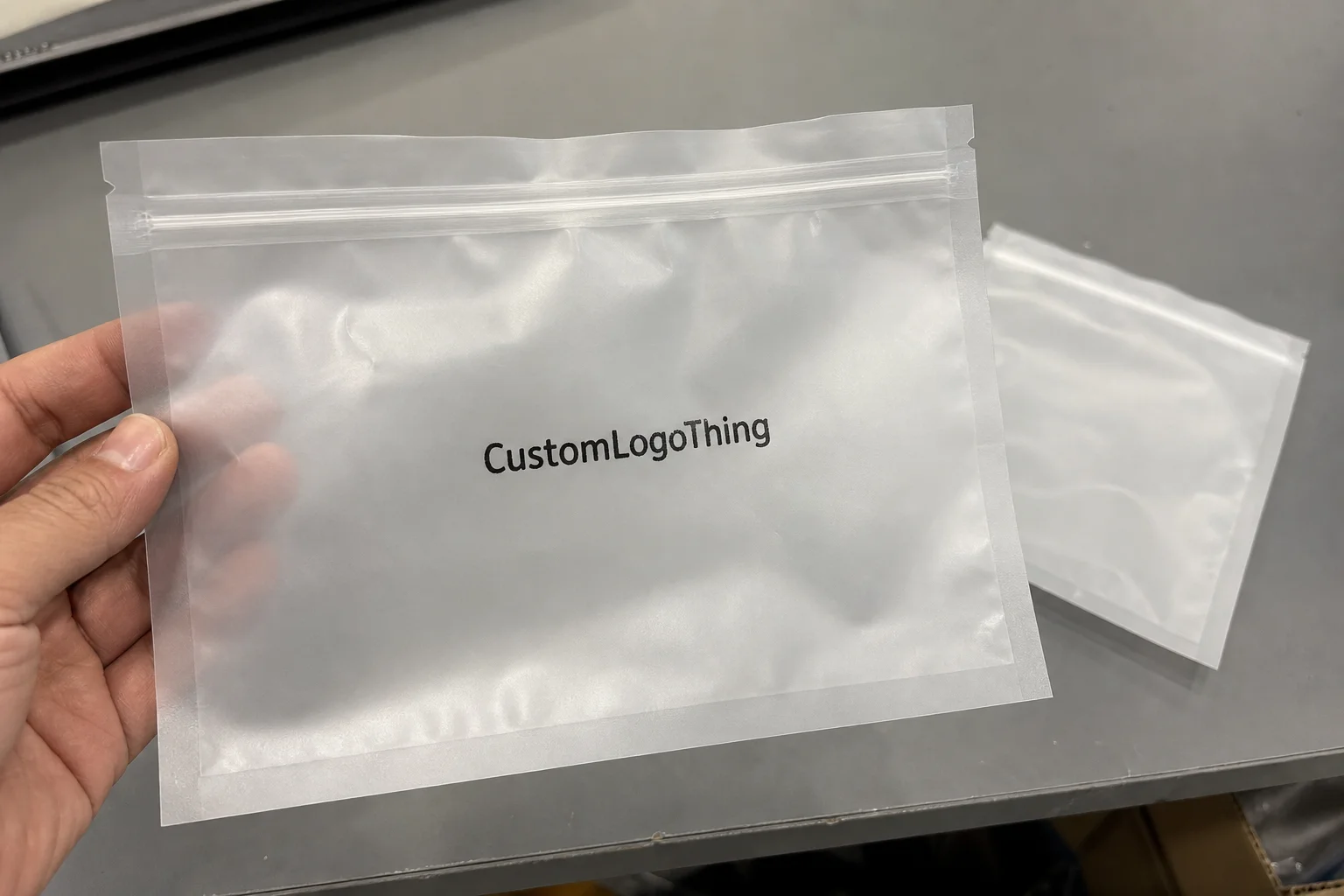
A bag can look fine in a mockup and still fail at the packing bench. Buyers asking for a Pharmacy Frosted Zipper Bags unit cost plan are not just pricing a pouch. They are pricing label fit, filling speed, carton count, storage efficiency, and the risk of rework after delivery.
Common failures are predictable: film thinner than expected, a weak zipper track, too little flat panel below the zipper for an instruction label, or inserts that buckle inside the bag. Those misses slow packing and create hand-fixes that should never be necessary.
Small spec changes can have outsized effects. A 1 mil shift in thickness changes puncture resistance and hand feel. A half-inch change in width affects usable label area, shelf fit, and case pack. A larger gusset may improve fill volume but reduce bags per carton. At 25,000 or 100,000 pieces, those details become cost drivers.
Most buyers are balancing presentation, protection, and repeatable cost. Frosted Zipper Bags can support privacy, a cleaner retail look, and resealability. They do not automatically provide child resistance, tamper evidence, odor control, or high-barrier performance. If those features matter, they must be engineered into the spec.
The practical question is simple: what is being packed, how will it be handled, and which specifications materially change cost or performance?
Where frosted zipper bags fit in pharmacy-style packaging
These bags are usually PE-based zipper pouches with a translucent frosted finish. They soften visibility of contents without making the package fully opaque, which makes them useful for privacy-minded handoff packaging and organized secondary packaging.
They generally fit best as secondary or accessory packaging rather than a universal answer for regulated primary containment. Typical uses include refill packet holders, topical product kits, wellness bundles, over-the-counter support items, accessories, instruction pack-outs, and branded handoff bags.
From a buying standpoint, the format has clear advantages. The bags ship flat, take less warehouse space than rigid packaging, and offer flexible sizing. Frosted film usually looks cleaner than commodity clear poly and hides fingerprints and small scuffs better than glossy film.
The zipper adds value because end users increasingly expect resealability. A press-to-close pouch that opens and closes cleanly feels more intentional than a simple sleeve, especially when contents will be accessed over several days.
The limit is compliance. If the application needs tamper evidence, child resistance, higher barrier properties, or a dedicated label-safe panel with strict readability requirements, those features should be specified before selecting the bag format. Starting with “we want a frosted zipper bag” often leads to revisions; starting with the actual job leads to a better package.
Material, finish, and closure details that actually change performance
The base film is commonly LDPE or a PE blend. LDPE provides softness, flexibility, and reliable heat sealing. Blends may improve stiffness, haze control, or puncture resistance. The frosted effect usually comes from resin selection or surface finish rather than a separate decorative layer.
Thickness is one of the biggest cost and performance levers. Light-duty bags may run around 2 to 3 mil for inserts or lightweight accessories. Mid-range bags often land around 4 to 5 mil, a common balance of feel and durability. Heavier builds at 6 mil or above can make sense for sharper contents, frequent reuse, or a more substantial feel.
Thicker is not always better. If contents are light and non-abrasive, extra gauge mainly raises resin cost, carton weight, and freight.
Zipper design matters too. A standard press-to-close track works for many applications. Wider tracks can improve grip and closure confidence. Double zipper styles may add security but also increase material cost and conversion complexity.
Features that can add function or cost
- Hang hole or euro hole for peg display
- Tear notch for initial opening
- Bottom gusset for more volume or limited stand-up ability
- Rounded corners to soften edge feel
- Writable block for lot notes, dates, or handling marks
- Matte or contrast print areas to improve readability on frosted film
Printing should be planned around readability, not decoration. Flexographic printing is often the practical choice for simpler artwork and moderate volumes. White underprint is commonly needed when logos, handling text, or dosage notes must remain legible over translucent film or visible contents.
Print coverage affects cost. A one-color logo on one side is a different job from two-sided artwork with heavy coverage, multiple spot colors, and white backing. Buyers usually make better decisions by separating must-have function from nice-to-have graphics.
Specs to lock before you ask for pricing
Vague quote requests produce vague pricing. Before asking for numbers, lock the physical specs:
- Finished width and height
- Usable area below the zipper
- Film thickness in mil or micron
- Whether dimensions are internal or external
- Target fill weight and product profile
The usable panel below the zipper is a common trap. Total height does not equal live label space. The zipper zone and top seal reduce printable and fillable area, especially on small bags. If the pack needs a pharmacy label, barcode, or insert card, confirm fit on the actual usable panel.
Artwork specs should be equally clear:
- Number of print colors
- One-side or two-side printing
- Approximate ink coverage
- Whether white ink is needed for contrast or opacity
- Any registration-sensitive elements such as windows or writable blocks
Then confirm the structural details:
- Bottom seal style
- Side seal width
- Zipper location and type
- Tear notch placement if used
- Corner radius if rounded corners are required
- Whether the bag must stand, hang, or sit in bins
Do not skip packing specs. Inner pack count, case count, and master carton weight affect warehouse handling and replenishment. Some teams prefer 100 bags per inner for easier counts; others want denser packing to reduce storage space.
Storage and use conditions matter as well. Oils, powders, repeated opening, cooler storage, and sharp-edged contents all influence the right film choice.
Pharmacy frosted zipper bags unit cost plan: pricing drivers, MOQ, and real quote logic
A realistic Pharmacy Frosted Zipper Bags unit cost plan starts with the full spec stack: dimensions, film structure, thickness, zipper grade, print method, color count, coverage, added features, packing style, and shipping terms.
Custom pricing follows simple manufacturing logic. Every run includes setup work such as artwork prep, plate or cylinder prep where required, machine setup, material loading, startup waste allowance, inspection, and final packing. Those fixed costs get spread across the order quantity, which is why short runs have a higher unit cost.
That is also why MOQ exists. Minimum Order Quantity is the point where setup, changeover, and normal spoilage can be absorbed without making the job uneconomical.
For many custom PE zipper bag projects, MOQs may begin in the low thousands for simpler work and rise with print complexity, special features, or fully custom sizing. Stock sizes with light custom print sometimes offer a lower entry point than a fully custom dimension.
| Cost Driver | Lower-Cost Direction | Higher-Cost Direction | Why It Changes Price |
|---|---|---|---|
| Bag size | Standardized or smaller format | Oversized custom dimensions | Uses more film and reduces material efficiency |
| Film thickness | Fit-for-purpose gauge | Heavy overbuilt gauge | Raises resin usage and shipping weight |
| Print design | One side, light coverage | Two side, high coverage, white underprint | Adds ink, setup time, and print control demands |
| Zipper style | Standard track | Wide or double zipper | Increases material and conversion complexity |
| Order volume | Planned repeat quantities | Fragmented short runs | Fixed setup cost is spread less efficiently |
| Add-on features | Minimal extras | Gussets, hang holes, notches, custom corner work | Extra converting steps add labor and waste |
Unit price alone is not enough. Buyers should compare landed cost, including proofing, setup charges, freight mode, duties where applicable, and any warehousing costs created by ordering deeper inventory to lower piece price.
Simple custom frosted PE zipper bags bought at moderate volume may land in the low cents per piece, while larger sizes, heavier gauges, and multi-color print can push costs higher. Trial runs often look expensive on a per-piece basis because the setup burden is carried by fewer bags.
A smarter quote request asks for options:
- Economy: standardized size, simpler print, lighter viable gauge
- Balanced: improved opacity and feel, practical branding, moderate gauge
- Premium: heavier film, upgraded zipper, broader print coverage
This comparison shows where money is actually being spent and whether an upgrade improves function or only appearance. Many projects save more by simplifying print than by cutting film too aggressively.
Production, proofing, and lead time from artwork to delivery
Once specs are locked, the production flow is straightforward: requirement review, material confirmation, dieline prep, artwork check, proof approval, printing, bag conversion, zipper application, sealing, trimming, inspection, packing, and shipment.
Lead time depends on how custom the order is. A stock-size bag with one-color print can move much faster than a fully custom size with multi-color artwork, white backing, gussets, and added features. Straightforward custom work often takes about two to three working weeks after proof approval, plus transit time.
Proofing deserves careful review. A digital proof confirms layout, copy, and design intent, but it does not fully predict zipper force, tactile feel, haze over the filled product, or exact color appearance on frosted film. If fit or readability is sensitive, a preproduction sample is worth requesting.
Quality checks worth asking about
- Finished dimensions against agreed tolerance
- Seal integrity and seal width consistency
- Zipper open-close function across sample pulls
- Print registration and text legibility
- Frosted haze consistency across the run
- Carton counts and packing accuracy
Some variation in color, dimensions, and registration should be expected within agreed tolerances. Frosted film can also change how dark or high-contrast contents appear. If barcode scanning or dosage text readability is critical, test actual filled samples under normal lighting before approving the full run.
Most delays are preventable: missing vector artwork, late size changes, unclear safe zones, and indecision about zipper style. First orders run better when the team locks the size, film, zipper, and required print early.
For broader transport testing guidance, ISTA remains a useful reference if the finished package will move through parcel networks or mixed distribution channels.
How to compare suppliers without getting distracted by the cheapest number
A low quote matters less than a bag that performs consistently through labeling, filling, storage, and reorder cycles.
Start with spec clarity. The supplier should be able to explain the material structure, thickness recommendation, print method, and normal tolerances in plain language. They should also show how price changes if you adjust width, gauge, or color count.
Ask for construction details, not just a sales sheet. Buyers should be able to review resin type, target thickness, intended use range, and known limitations of the structure. A credible supplier should also say when a basic frosted zipper bag is the wrong solution.
Reorder stability matters more than a good-looking first sample. Variation in opacity, haze, or registration can create shelf inconsistency and interfere with barcode readability or label contrast.
It also helps to understand what quality control actually happens. Are dimensions checked during production? Is zipper function tested by sample pull? Are carton counts verified?
Practical check: A useful supplier does not just price the bag you asked for. They flag where artwork, film, zipper choice, and compliance needs may conflict.
Price transparency matters too. Tooling charges, proofing costs, packing assumptions, and freight terms should be visible in the quote.
If your broader packaging program includes paperboard inserts, labels, or cartons with chain-of-custody requirements, FSC is still a useful reference point for paper-based sourcing standards. It does not validate the PE bag itself, but it can matter for related secondary packaging components.
What to request for samples, quotes, and reorders
If you want an accurate quote, send complete information in one pass: product dimensions, fill weight, target quantity, artwork files, desired features, and delivery location.
A practical request format looks like this:
- Finished size: width x height x gusset if applicable
- Thickness: mil or micron
- Material and finish: PE frosted, matte preference if relevant
- Zipper type: standard, wide track, or double zipper
- Print details: color count, one side or two side, white underprint if needed
- Quantity: trial quantity plus expected monthly or annual volume
- Packaging preference: inner pack count and carton weight target if important
- Delivery window and ship-to location
Request more than one version. Economy, balanced, and premium options give operations, finance, and marketing a clearer view of tradeoffs than a single price point.
For samples, use a review checklist. Check opacity with the real filled contents. Open and reseal the zipper several times. Confirm seal integrity. Apply the actual label. Scan the barcode. Review the bag under normal retail or dispensing lighting.
For reorders, stable dimensions and stable artwork improve efficiency over time. Quarterly forecasting can help reduce cost without creating excess inventory. A good plan should produce not just a first-order price, but a repeatable packaging spec that stays reliable and readable across future runs.
FAQ
What affects a pharmacy frosted zipper bags unit cost plan the most?
The biggest drivers are bag size, film thickness, film structure, zipper type, print coverage, color count, add-on features, order volume, and freight terms. Small runs cost more per piece because setup, startup waste, and inspection time are spread over fewer bags.
What MOQ should I expect for custom frosted pharmacy zipper bags?
MOQ depends on size, print complexity, and whether the bag is stock-size or fully custom. Simpler custom jobs may start in the low thousands, while more complex printed bags usually require higher minimums. If you are testing a format, ask whether a stock size with custom print can lower the entry quantity.
Are frosted zipper bags suitable for prescription or regulated pharmacy products?
They can work well as secondary, organizational, or handoff packaging, but suitability depends on the product and regulatory requirements. A basic frosted zipper bag is not automatically child-resistant, tamper-evident, or high-barrier. Those features need to be specified and engineered if the application requires them.
How long is the lead time for custom pharmacy frosted zipper bags?
Lead time varies with artwork readiness, custom sizing, print complexity, and shipping method. Straightforward custom work often runs about two to three working weeks from proof approval, plus transit time. Late artwork changes and unclear specs are common causes of delay.
What information should I send to get an accurate quote for frosted zipper bags?
Send finished dimensions, thickness, product use, target quantity, artwork files, print details, required features, packing preferences, and delivery location. Include whether the dimensions are internal or external and whether the bag must accommodate labels, inserts, or scannable barcodes.


