If you need a candle makers Hang Tags Custom size quote, the starting point is not the artwork. It is the package. A candle tag has to fit a jar, box, ribbon, or neck band while still carrying scent names, safety copy, brand marks, and sometimes barcode or batch information. That is a small object doing a surprising amount of work.
Buyers often ask for “something premium” and expect the spec to follow from that. It does not. A printer needs dimensions, stock, finish, quantity, and assembly method. Without those details, the quote is a guess, and guesses are expensive once the order hits production. A tag that is slightly too wide can cover a label. A tag that is too narrow can force unreadable type. In candle packaging, the wrong proportion is rarely subtle.
The best tag is the one that makes the candle look intentional at shelf distance and still holds up in the hand. That usually means sizing around the container first, then building the artwork to suit the space. It sounds simple. It is not, because candle brands tend to pack more information into a tag than the format can comfortably hold.
Why custom hang tags matter on candle shelves
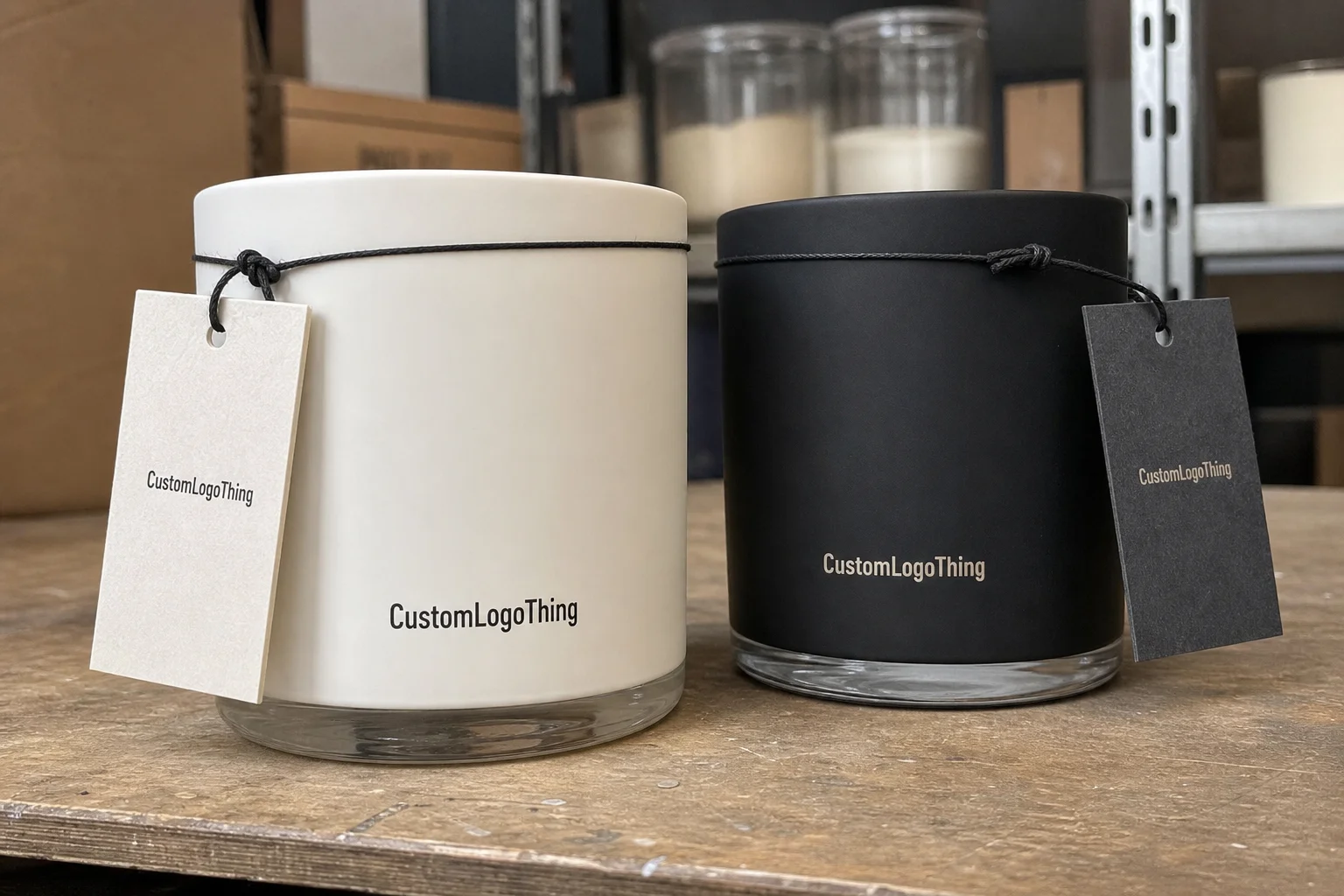
A hang tag is a small piece of packaging, but it can change how a candle is read on shelf. It can introduce the scent, reinforce the brand, carry compliance text, and add a gift-ready finish that makes the product feel complete. For small brands, it may be the only place with room for a short story. For larger lines, it helps keep multiple SKUs organized and consistent.
Standard sizes are workable until they are not. Narrow tags can make body copy microscopic. Oversized tags can hang awkwardly, especially on small jars or short tins. If the candle uses a lid, ribbon tie, or box insert, the tag needs to work with those elements instead of fighting them. Good packaging is usually a matter of proportions, not decoration.
There is also a practical reason to size carefully: candle tags often have to do double duty. Many brands want scent notes, burn time, care instructions, ingredient language, or a web address in the same space. If the design has to hold more than a logo and a scent name, custom size usually gives the layout room to breathe. That is not a luxury. It is a readability issue.
Practical rule: if the tag needs to carry more than a short brand mark and one line of scent text, a custom size usually reduces compromise and lowers the chance of rework.
A proper candle makers hang tags custom size quote should reflect the real production spec rather than vague marketing language. “Luxury” is not a measurement. “Artisanal” is not a dieline. The numbers matter more than the adjectives.
If your candle line shares a visual system with cartons, inserts, or labels, keep the tag aligned with the rest of the Custom Packaging Products range. Consistent stock, color, and finish choices make the shelf presentation feel deliberate instead of pieced together from separate orders.
Custom size options for candle hang tags that fit real packaging
There is no universal best size for candle hang tags. The right format depends on copy length, jar shape, and attachment method. Still, a few dimensions keep showing up because they solve common layout problems without creating new ones.
- 2 x 3.5 in — compact and tidy for minimal copy.
- 2.5 x 4 in — useful when scent notes or care text need more breathing room.
- 2 x 4 in — a practical fit for narrow jars and neck ties.
- Square tags — good for modern branding and bold logo placement.
- Die-cut shapes — helpful for signature collections, though tooling adds cost.
Size selection is usually a balancing act between the logo, the copy block, and the hanging space available on the container. A round label plus a square tag can feel balanced. A detailed tag with multiple paragraphs of copy needs more room than most buyers expect. Once the type is reduced to fit a cramped space, the tag starts to look like a compliance sheet instead of a retail component.
Hole placement matters just as much as overall size. A top-centered hole suits most ribbon ties. Corner punching gives a more casual, handmade feel. Two-hole formats can keep a tag from rotating when it hangs from a neck band or gift box ribbon. If the ribbon width is part of the presentation, the tag and ribbon should be specified together so the final assembly does not twist or drift off center.
Stock choice changes the result too. Smooth cardstock gives a cleaner retail look. Kraft stock supports earthy or minimalist branding. Textured uncoated paper adds tactility, which can help when the candle is sold through boutiques that rely on touch as part of the buying experience. Thicker boards feel substantial, but they also cost more and can need more careful scoring if the design includes folds.
For Brands That Sell jar candles, wax melts, and gift bundles together, custom sizing helps the whole line stay visually connected. A tag that matches the box proportions and label scale makes the product set look planned. Without that alignment, even strong artwork can feel slightly off.
| Tag style | Best for | Typical look | Tradeoff |
|---|---|---|---|
| Small rectangle | Minimal scent info | Clean and unobtrusive | Limited copy space |
| Mid-size rectangle | Most candle SKUs | Balanced and readable | Uses more paper than a smaller format |
| Square | Bold branding | Modern and compact | Can feel tight with long text |
| Die-cut | Signature collections | Distinctive and memorable | Higher setup and tooling cost |
If your candle packaging relies on a very specific shelf silhouette, ask for a dieline before final approval. That one file can save a round of revisions after the proof comes back. It is much easier to move a hole position on paper than to discover too late that the tag blocks a label or hangs below the base line of the jar.
Specifications that affect your candle tag quote
A candle makers hang tags custom size quote is driven by production details. The biggest cost factors are size, stock thickness, print method, finish, hole punching, assembly, and order quantity. If one of those changes, the price changes too. That is normal, and it is why a one-line request rarely produces a useful number.
- Size: larger tags use more paper and often require larger sheets or more efficient nesting.
- Stock thickness: heavier boards cost more, especially at premium weights such as 350gsm and above.
- Print sides: single-sided printing is cheaper; double-sided printing expands layout space but adds cost.
- Color count: full color, spot colors, and black-only runs are priced differently.
- Finish: matte, soft-touch, foil, spot UV, and lamination each change the quote.
- Assembly: pre-punched, pre-strung, or ribbon-tied tags require extra labor.
For smaller or seasonal runs, digital printing often makes sense because it handles lower quantities and faster proof-to-production cycles. Offset printing is usually the better fit when the quantity climbs and the unit cost needs to come down. That tradeoff shows up across package branding work, not just candle tags. Lower per-unit pricing only helps if the setup and finishing charges do not erase the savings.
Finish selection deserves real attention. Matte gives a soft, modern feel and usually scans well under retail lighting. Soft-touch adds a richer handfeel, though it can scuff more easily when tags are handled often. Foil accents can lift a logo or scent name, but only if the artwork has enough contrast to support it. Spot UV is effective on the right design, though it is easy to overuse. A little shine can look sharp; too much can make the tag feel busy.
Durability matters more than many buyers expect. Candle tags travel through packing, shipping, retail shelving, and customer handling. Thin stock can curl. Poorly positioned holes can tear. Lamination can protect the surface, but it may also remove the natural feel that some candle brands want. The right choice depends on how the product is sold and how often the tag will be touched.
Special structures increase complexity quickly. Custom dies, variable data, multiple scent names, or bundles with mixed SKUs all add production steps. If you need eight scents with separate names, fragrance descriptions, and safety lines, that is not one order in practice. It is a small production system. The quote should reflect that reality.
Compliance copy also affects layout. If the tag must include warning text, burn instructions, ingredient details, or a barcode, the usable design area shrinks. In many cases, the correct answer is a larger tag rather than forcing the information into a cramped space. That is a production decision, not a design failure.
Brands that care about sourcing often ask about paper origin and shipping performance. FSC-certified stock can support a more documented materials story; the FSC site is a useful reference point for certification basics. For packed sets and e-commerce bundles, transport testing standards from the ISTA ecosystem are worth reviewing as well, especially if the hang tag is part of a boxed gift set that needs to arrive clean and intact.
Pricing, MOQ, and unit cost for candle hang tags
Most buyers want the price before they want the spec sheet. Fair enough. The challenge is that candle tag pricing breaks into several pieces: setup, printing, finishing, and assembly. If the tags ship flat, the order is usually cheaper. If they are pre-strung, ribboned, or packed in custom counts, labor adds up fast.
For rough planning, simple custom candle hang tags may land around $0.10-$0.25 per unit at larger quantities. Add foil, soft-touch, a custom die-cut shape, or more elaborate assembly, and that can move to $0.25-$0.60+ per unit. Smaller runs generally sit higher because setup costs are spread across fewer pieces. That is not a penalty. It is how production math works.
MOQ depends on the print method and the finishing requested. Digital production often supports lower minimums, which is useful for trial scents, seasonal launches, or limited editions. Offset production tends to make more sense at higher quantities because the unit cost drops as volume increases. If a scent is still being tested, a smaller order is usually the safer move. If it is already a repeat seller, buying in volume can be more efficient.
| Run type | Typical MOQ | Best use case | Cost behavior |
|---|---|---|---|
| Digital print | Low to moderate | Seasonal or test launches | Higher unit cost, lower setup burden |
| Offset print | Moderate to high | Core collections and repeat sellers | Lower unit cost at volume |
| Premium finish run | Usually higher | Gift lines and flagship SKUs | Higher total cost, stronger shelf impact |
Ask for an itemized quote. That one step prevents a lot of confusion later. A quote that folds finishing into a single line may look lower than a competitor’s line-item estimate, but the actual order may be more expensive once assembly, packing, or shipping are added. Compare the same scope each time: paper, print, finish, hole work, assembly, packing, and delivery.
If you are building matching labels or outer packaging, it can help to review Custom Labels & Tags alongside the hang tag spec. Keeping the tag, label, and box language aligned often improves the retail presentation more than upgrading any single item by itself.
Production steps and turnaround from proof to delivery
The production flow should be straightforward: quote request, artwork review, proof, approval, production, finishing, packing, shipping. If any step is vague, the project usually slows down. Most delays come from incomplete information, not from the press itself.
To speed up a candle makers hang tags custom size quote, send the following from the start:
- Exact finished size
- Quantity needed
- Artwork files, preferably print-ready
- Stock preference
- Finish preference
- Hole punch or stringing method
- Deadline or launch date
If the tag needs to fit a jar neck, box insert, or ribbon tie, include a sample photo or dieline. One image often prevents a wrong-size assumption. It also helps determine whether the tag should be narrow, square, or oversized for readability. Good packaging design starts with fit, not with decoration.
Turnaround depends on complexity. Simple flat tags can often move in about 7-12 business days after proof approval in many production setups. Foil, soft-touch, custom die-cuts, and stringing add time. For more involved orders, plan closer to 12-18 business days, sometimes longer if the quantity is large or the artwork needs revisions. Shipping time is separate from production, and that separation is where buyers often misjudge the calendar.
Proofing deserves a careful review. Check spelling, scent names, SKU codes, hole placement, and compliance copy line by line. If the punch is too close to the edge, the tag can tear. If text sits too near the hole, the layout looks crowded. Once the tags are printed, small mistakes become obvious. Under bright retail lighting, they become impossible to ignore.
How to request the right quote and place your order
If you want a quote that actually reflects the job, send production facts instead of broad requests. “Need Tags for Candles” does not tell anyone how large the tag should be, how it will hang, or how much copy has to fit inside the layout. The clearer the brief, the more useful the number.
Before you request your candle makers hang tags custom size quote, prepare this list:
- Finished tag dimensions
- Estimated quantity
- Paper stock or finish preference
- Single-sided or double-sided print
- Hole punch location
- String, ribbon, or no assembly
- Target delivery date
If the tag has to match a jar neck, box insert, or gift set, send one sample photo or dieline. That single file can keep the quote from drifting toward the wrong format. It also helps the packaging team judge whether the tag needs to be slender, square, or slightly oversized for readability. Size decisions belong in the spec stage, not after the proof has already been built.
When comparing quotes, check what is included. Some prices hide setup or assembly. Others include shipping. Some do not. If two estimates look far apart, the difference is often in the scope rather than the paper. Ask for a line-item breakdown so the comparison is real.
If the line is seasonal or still being refined, a smaller proof run is usually a sensible first step. That gives you a chance to confirm color, hole position, stock feel, and overall balance under actual lighting. If the format is already proven and the SKU will repeat, scaling up can lower unit cost and simplify replenishment. Either way, a solid quote starts with real dimensions, not adjectives.
FAQ
What information do I need for a candle makers hang tags custom size quote?
Send the finished dimensions, quantity, artwork file, stock preference, finish choice, and whether you need hole punching or stringing. If the tag must fit a jar, box, or ribbon, include a sample photo or dieline so the quote reflects the real setup.
What is the usual MOQ for custom candle hang tags?
MOQ depends on the print method and the finishing. Digital production can support lower quantities, while offset and premium finishes usually make more sense at higher volumes because the unit cost drops as quantity increases.
How do I choose the best size for candle hang tags?
Base the size on how much information has to fit and where the tag will hang. Smaller tags work for minimal branding; larger tags are better when you need scent notes, safety copy, or gifting details.
What affects the price of custom candle hang tags the most?
The biggest cost drivers are size, quantity, stock, print sides, finishing, and assembly. Special shapes, foil, soft-touch, and pre-stringing raise the price more than simple flat printed tags.
How long does production usually take after I approve the proof?
Turnaround depends on complexity and quantity. Simple tags can move faster, while custom dies, foil, and assembly add time. Shipping is separate from production, so both timelines should be planned together.


