Candle Makers Poly Mailers MOQ: How to Spec the Right Mailer Without Paying for Reprints
For Candle Makers Poly Mailers moq, the real decision is not just how many bags you need. It is whether the mailer actually lowers total shipping friction enough to justify the run. A candle brand can spend real money moving air instead of product when it uses an oversized carton for flat inserts, accessory kits, or sample packs. That waste shows up in freight, warehouse space, packing time, and avoidable damage. A good mailer spec should cut those costs, not just look cheaper on a quote sheet.
MOQ is rarely fixed in practice. It moves with size, film thickness, print coverage, tooling, and whether the order is stock or custom. That is frustrating if you want a neat answer, but it is also normal. Packaging is a production system, not a vending machine.
Why Poly Mailers Beat Boxes for Candle Shipments
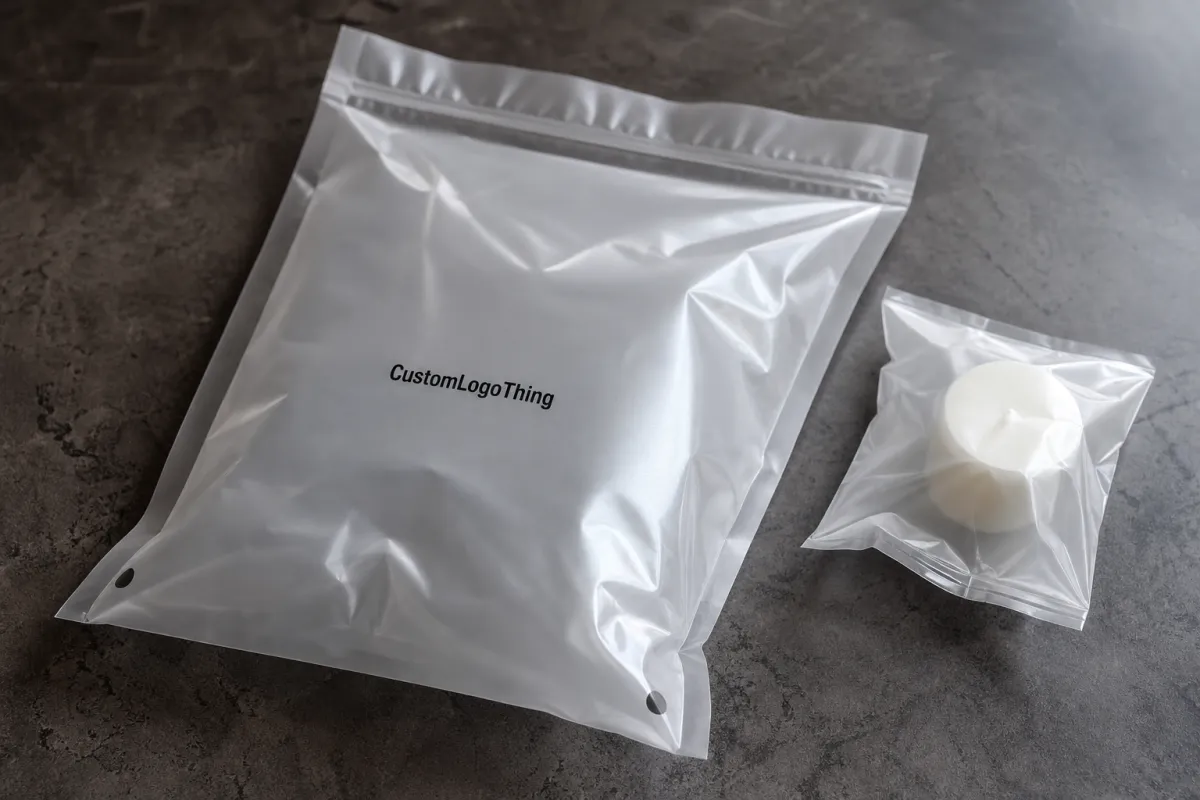
Poly mailers make sense when the packed item is light, flat, and stable enough to travel without rigid crush protection. That usually includes candle accessories, insert cards, sample sets, wick kits, and flat-packed SKUs that sit neatly inside a sleeve or pouch. If the product is a glass jar, a tall tin, or anything with sharp edges that can puncture film, a mailer can still work, but only after the loaded pack is tested. Guessing is expensive. So is fixing returns after launch.
The strongest argument for mailers is not only unit price. It is the way they simplify the outbound process. They store in less space, require fewer packing motions, and usually let the team finish orders faster than a corrugated build. For candle sellers shipping hundreds or thousands of small parcels, that labor difference matters. So does presentation. A branded poly mailer lands as a deliberate brand touch instead of a generic shipping layer, especially when the print coverage is clean and the seal line sits straight.
Boxes still win on crush resistance. That part is not debatable. But boxes also cost more to store, often cost more to ship, and usually take longer to pack. Poly mailers are cheaper only when the product size and fragility profile fit the format. The goal is not to choose the lowest-cost material on paper. The goal is to match the pack to the risk. For some candle programs, that means a mailer for flat accessories and a box for fragile glassware. Mixed formats are not a compromise. They are how real programs stay efficient.
That is why many packaging teams look at total cost per shipped order rather than the price of the bag alone. If a supplier can help you spec the right size and print format, the result is usually fewer packing steps, fewer void fills, and cleaner shelf-to-door branding. Buyers comparing Custom Poly Mailers against cartons should ask one blunt question: does the format reduce landed cost without increasing claims?
Mailer Materials, Seal Strength, and Branding Details
The starting point is the film. Most retail-grade custom mailers use LDPE or coextruded polyethylene. Thickness is usually discussed in mils or microns, and the range matters more than the buzzword. A lighter film can be economical, but a heavier gauge usually improves puncture resistance and gives the mailer a more substantial hand feel. Thicker is not automatically better, though. It can raise cost, change shipping weight, and make tight size control more important. A mailer that is too stiff can also fight the fold line during packing.
Finish matters more than many first-time buyers expect. Matte stock usually looks calmer and more premium under store lighting. Glossy film pushes color harder and tends to make bright artwork pop. Opaque stock hides the contents. Translucent film can help with internal organization or lower-spec shipments, but it rarely looks as polished. The adhesive strip deserves the same attention as the print. A weak seal is not a cosmetic defect. It is a failure point that shows up after vibration, heat, or rough handling.
Branding should support the selling cycle, not fight it. Full-color printing can handle seasonal launches, scent collections, warning copy, and retail-ready visuals. Logo placement should be checked against the flap, edge, and safe print zone so the mark does not drift into the seal or disappear when the pack folds. If your candle brand changes artwork often, ask whether the supplier can update the design without rebuilding the full structure. That is where clean file control saves money.
On sustainability, stay precise. If a supplier mentions recycled content or downgauged film, ask for documentation. Buyers are asking harder questions now, and they should. If a claim sounds vague, it probably is. For general background on packaging claims and material recovery, the packaging.org resources are a useful reference point. The point is not to collect green language. The point is to keep claims tied to real specs.
Material choices buyers usually compare
- Film thickness: lighter gauges for low-risk inserts, heavier gauges for sharper edges or higher parcel stress.
- Finish: matte for a softer premium look, glossy for stronger color saturation.
- Opacity: opaque for privacy and branding, translucent only when visibility helps operations.
- Closure: pressure-sensitive adhesive that holds through sorting, temperature swings, and repeated handling.
- Surface: confirm whether labels, stamps, or barcode stickers will stick cleanly to the chosen finish.
Sizing, Fit, and Performance Specifications to Confirm
Good sizing starts with the packed item, not the empty product. Measure the jar diameter, box dimensions, insert cards, protective wrap, and any tissue or paperboard that changes the final footprint. A mailer that fits the product before the insert goes in can fail once the final pack is assembled. In practice, candle brands lose more time to bad fit than to bad artwork.
Ask for the usable internal width, not just the outside dimension. Confirm the flap length and seal strip area as well. A mailer that barely closes may pass a bench test and fail in production, especially when operators are packing fast. Film thickness should be stated clearly. If the pack needs tamper evidence or a stronger closure, that needs to be discussed before artwork is approved. Those details are not optional. They decide whether the packaging line runs cleanly or turns into a series of workarounds.
Performance checks should match the real route. A mailer for local delivery can be more forgiving than one moving through a national carrier sortation system. That is why some buyers reference ISTA drop and distribution procedures when they discuss risk. You do not need a lab report for every order, but you do need enough information to avoid guesswork. If the item has a sharp corner, a glossy printed surface, or a heavy label stack, test those conditions instead of assuming the bag will hold.
One overlooked issue is how the mailer behaves once the product is inside it. A tight pack can wrinkle or bow the seal area. A loose pack can slide and bruise the corners. The best fit usually leaves enough room for easy insertion while keeping the item from drifting around inside the pouch. That balance is hard to describe on a spec sheet and easy to get wrong if nobody checks a sample.
A practical checklist keeps ordering moving:
- Confirm the packed dimensions, not just the product dimensions.
- Request the printable area and bleed limits.
- Check whether the flap can close without stretching the film.
- Verify the seal strength and film gauge in writing.
- Ask for a sample fit if the pack is new, fragile, or unusually shaped.
Candle Makers Poly Mailers MOQ, Cost, and Quote Drivers
Candle makers poly mailers MOQ changes with the spec. A small one-color run on a common size may have a lower minimum. A fully printed, heavy-gauge mailer with multiple artwork changes is a different calculation. Buyers should expect the minimum to move when the size, film, or print method moves. That is not a trick. It is how setup costs and material usage work.
The biggest quote driver is usually volume. After that come print coverage, number of colors, proofing steps, and destination freight. If a supplier uses flexographic printing, plate or tooling charges may appear in the quote. Those charges are often in the low hundreds per color, depending on the format and supplier setup. Digital printing can reduce setup friction and make smaller runs easier to approve, but the unit price is often higher. There is no free lunch. The economics just shift.
Freight matters more than many buyers expect. A quote that looks cheaper by a few cents can become more expensive once the pallet is on the dock. If the order ships from overseas, customs time, port delays, and carton rework can change the landed cost in a way the factory price never shows. For domestic runs, the issue is usually less dramatic, but the same rule applies: compare total landed cost, not the pretty number in the first email.
Here is a realistic way to think about pricing. Stock mailers are usually the easiest to buy fast and cheap, but they do little for branding. Custom printed mailers cost more because setup, plates, and proofs need to be paid for somewhere. Heavy-gauge or reinforced options add material cost and can raise freight. None of that is surprising. What catches buyers is the reprint. A bag that fails fit, color, or seal checks becomes a second purchase, and the second purchase is the one people remember.
| Mailer option | Typical MOQ | Indicative cost per piece | Best use | Watch-outs |
|---|---|---|---|---|
| Stock unprinted mailer | 250-500 | $0.06-$0.12 | Internal shipping, quick replenishment | Low branding impact, limited differentiation |
| One-color custom print | 1,000-3,000 | $0.10-$0.20 | Simple logo runs, starter launches | Plate or tooling charges may apply |
| Full-color custom mailer | 3,000-5,000+ | $0.15-$0.30 | Retail, seasonal promos, premium presentation | Artwork proofing and print consistency matter more |
| Heavy-gauge reinforced mailer | 3,000+ | $0.20-$0.36 | Sharper edges, higher parcel stress, longer routes | Higher freight weight and storage cost |
If the mailer saves three cents but creates a reprint every fourth run, it is not the cheaper option. The real comparison is landed cost plus risk.
Production Steps, Proofing, and Lead Time
The production path should be simple enough to explain in one pass. It usually starts with spec confirmation, then artwork submission, then a digital proof. If a sample is needed, that comes next. After approval, production begins, then quality checks, packing, and freight booking. Each handoff can add time if the buyer is still deciding on size, artwork, or quantity split. The fastest projects are the ones that arrive with complete information.
What helps most is clarity. Final dimensions, print-ready files, Pantone references, shipping destination, and the split by SKU or design variant let the factory quote and schedule correctly. If the buyer is still choosing between two mailer sizes, a sample or mockup usually saves time later. If the artwork is incomplete, the timeline stretches even when the factory queue is moving well. Missing art slows the order more often than machine capacity does.
Quality control should not be a mystery. A useful production check includes seal alignment, print registration, film gauge, adhesive performance, and finished size. If the mailer is printed edge to edge, ask how the supplier handles color drift near the seam and flap. If the run is large, ask whether the factory pulls samples from the line or only checks the first piece. That sounds small until a pallet arrives with a shifted print zone.
Typical lead times for custom printed mailers are often around 12-15 business days after proof approval. Larger runs, more colors, or heavier material can push that longer. Sampling adds time. So does a late change in the ship-to address or packaging spec. A good supplier separates proofing time from manufacturing time so the buyer knows where the clock is actually running. That distinction matters when a launch date is fixed and the calendar is not interested in excuses.
If you are working against a deadline, the fastest way to slow the job down is to send partial information. The second fastest is to approve artwork before the size is locked. A clean brief on the front end is still the cheapest production tool in the room.
What a Reliable Mailer Supplier Should Handle for Candle Brands
The right supplier should do more than send a price. It should translate a candle packaging need into a spec that can be reordered without rebuilding the file set every time. That means the size is recorded correctly, the print area is clear, and the buyer is not forced to renegotiate basic details on the next run. Reorders should feel like a repeatable process, not a new project every time.
Operational support matters because candle brands rarely ship one product in one format. Seasonal artwork changes, scent collections, gift packs, and small retail launches all create different packaging needs. A supplier that tracks those changes well can protect color consistency across repeat runs and help the buyer manage revision cycles. If the brand needs samples, mockups, or advice on fragile SKUs, those are not extras. They reduce reprint risk.
There are also boring details that matter more than they sound. Can the supplier keep the same adhesive profile across repeats? Can it document the film spec in a way your team can reorder six months later? Can it note whether a particular finish works better with thermal labels or direct printing? If the answer is no, the order might still ship, but future runs will waste time reconstructing the same decisions.
That is also where broader packaging support pays off. If your program includes inserts, labels, cartons, or outer packs, a partner that can coordinate across categories may save time and keep the visual system consistent. For teams building a larger packaging lineup, the Custom Packaging Products catalog can help compare formats side by side. For common ordering questions, the FAQ page is a useful backstop before you Request a Quote.
Here is the practical test I use: does the supplier reduce spec errors, or does it only quote numbers? Candle packaging is not hard, but it does reward discipline. The best vendors help a buyer avoid reprints, avoid delay, and avoid the invisible mistakes that show up only after freight has shipped.
Common Shipping Mistakes That Increase Damage and Returns
The first mistake is oversizing. A mailer that is too large lets the product shift inside the package, which creates wear at the corners and extra stress at the seal edge. Buyers sometimes assume a larger bag is safer because it feels less cramped. Often the opposite is true. Too much internal movement is a damage multiplier, especially when the pack travels through long parcel routes.
The second problem is under-spec film. Weak adhesive and thin film can survive a calm desk test and fail after a hot trailer, a cold warehouse, or several compression points in a sortation network. That failure is expensive because it is usually invisible until the return rate starts climbing. A stronger gauge or better closure can cost more on paper, but those cents may be cheaper than the claims they prevent.
The third mistake is treating print as decoration instead of structure. Dense ink coverage, muddy art, or unreadable copy can turn a decent mailer into a reprint. The print area needs room to breathe, and the artwork needs enough resolution to hold up on film. It is a bad sign when a supplier cannot explain how the art will sit on the seam, flap, and safe zone. That is not branding strategy. That is avoidable risk.
A fourth mistake shows up in fulfillment. If labels are applied after sealing, the adhesive surface and finish need to accept the label cleanly. Some glossy films repel labels better than buyers expect. Some matte films scuff more easily during packout. If barcodes, shipping labels, or return labels will be applied to the mailer, test that before placing the full order. A bag that looks perfect on screen can become awkward on the packing bench.
The most useful packaging spec is the one that balances protection, print clarity, and packing speed. Do not optimize only for the lowest upfront price. If the format saves a penny and creates a return, the math has already gone the wrong way.
Next Steps Before You Request a Quote
Before you ask for pricing, gather the details that shape the order: product dimensions, quantity, artwork files, target ship date, destination zip codes, and whether you need samples or a digital mockup first. That short list speeds the conversation up more than any sales pitch ever could. It also helps the supplier avoid quoting the wrong size, which is the fastest route to revision cycles.
If you are comparing two mailer sizes, ask for both. If you are weighing a lighter gauge against a heavier one, compare them side by side. One spec may win on unit cost. The other may win on print coverage, seal strength, or shipping reliability. A real buying decision should show where each option makes money or loses it.
For teams that need a broader packaging review, it helps to treat the mailer as one part of the system rather than a standalone item. The outer pack, insert, and unboxing path all influence damage risk and customer perception. The best candle mailer is the one that fits the product, fits the process, and fits the budget without forcing compromises elsewhere.
Before you lock the order, confirm these basics:
- Final packed size, including inserts or protective wrap.
- Print method, color count, and safe print zones.
- Seal type, adhesive strength, and label compatibility.
- MOQ, sample policy, and written lead time after proof approval.
- Landed cost, including freight and any setup charges.
FAQ
What is the usual MOQ for candle makers poly mailers?
MOQ depends on size, film thickness, and print complexity, so the minimum can change from one spec to another. Smaller or simpler runs may be available at lower counts, while fully custom printed orders often need a higher threshold to stay cost-efficient. The fastest way to confirm MOQ is to send the exact dimensions, artwork needs, and estimated annual usage.
Can candle products safely ship in custom poly mailers?
Yes, if the SKU is flat, lightweight, and packaged in a way that does not require rigid crush protection. If the item includes glass, loose components, or fragile inserts, the mailer should be tested against the actual packed product before ordering. A sample fit check is the safest way to confirm whether the mailer is appropriate.
What affects the price of branded candle mailers the most?
Order quantity is the biggest driver because larger runs usually reduce the per-piece price. Print coverage, number of colors, material thickness, and setup work also move the quote up or down. Freight can change the landed cost even when the unit price looks similar.
How long does production usually take after artwork approval?
Lead time depends on the order size, print method, and whether a sample or proof is required before release. Once artwork is final, production moves faster when the buyer has already confirmed dimensions, quantity, and shipping details. Ask for a written timeline that separates proofing time from manufacturing time so there are no surprises.
Can I order samples before placing a larger MOQ order?
Yes, and it is often the smartest move when you are choosing between two sizes or comparing film thicknesses. A sample helps verify fit, seal quality, print placement, and how the mailer feels during packing. Use the sample stage to catch costly mistakes before the full run is approved.
Should a candle brand choose matte or glossy poly mailers?
Matte usually reads more restrained and premium. Glossy tends to make colors brighter and can look more promotional. The better choice depends on the artwork, the brand style, and whether the mailer needs to hide contents or resist scuffing during packout.