Custom Poly Mailer Bags Bulk Order
A mailer does more than move a product from one place to another. It affects pack speed, shipping weight, transit protection, and how consistent the warehouse runs on busy days. That is why buyers usually start a custom Poly Mailer Bags bulk order with practical questions about size, film, print, and lead time rather than design alone.
For most programs, the best bag is the one that fits the product cleanly, seals reliably, and prints clearly without slowing the line. Logo placement matters, but so do opacity, gauge, and how the bag behaves during packing. Buyers comparing Custom Poly Mailers with other branded packaging options usually find that mailers are the better fit for flat goods, apparel, and repeat shipments where speed matters more than structure.
Why bulk mailer buying lowers cost per shipment
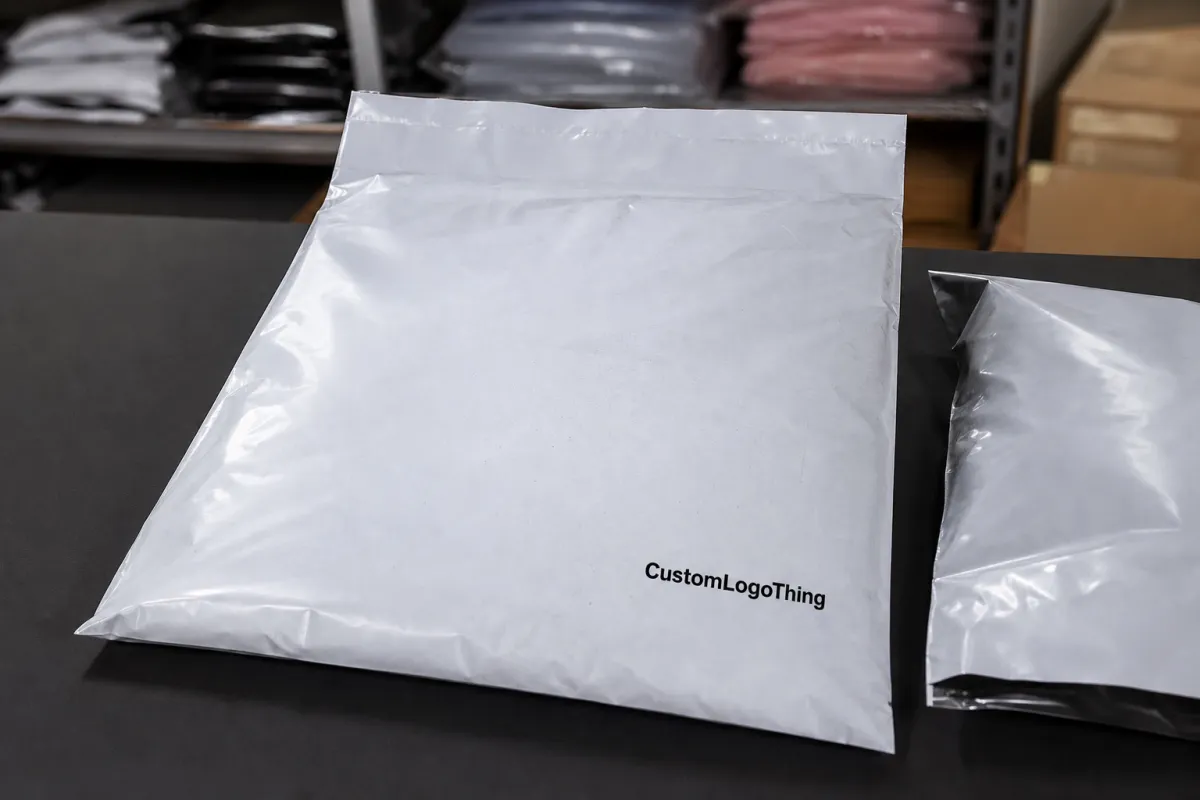
Buying in bulk lowers cost because the same shipping task repeats. Once the warehouse learns one mailer size, one closure style, and one loading pattern, pack-out gets faster and mistakes go down. That matters for apparel, subscription kits, returns, and light hardgoods that ship every day.
A well-sized mailer can reduce void fill, avoid oversize cartons, and cut parcel weight. It also keeps soft goods from shifting in transit. In practice, the best spec is usually the one that keeps packing simple on a normal day and still holds up during peak volume.
- Apparel: folded garments ship neatly in opaque bags that hide color and print.
- Returns: dual-seal mailers can simplify reverse logistics and reuse.
- Subscription kits: one fixed size and one artwork file keeps replenishment simple.
- Light hardgoods: slim accessories and small boxed items fit best in close-fitting bags.
Bulk buying also helps inventory planning. If one mailer works across several SKUs, purchasing is easier and the warehouse is less likely to grab the wrong carton during a rush. That is a small advantage until it prevents a shipment delay.
Material and print choices for custom mailer bags
Most custom mailer programs use LDPE or co-extruded polyethylene. LDPE is flexible and easy to seal, so it works well for standard e-commerce shipping. Co-extruded film gives more control over print quality, toughness, and opacity by layering different performance traits into the bag.
Thickness changes durability and cost. A 2.5 mil bag can work for light apparel and flat accessories. A 3 mil or 4 mil bag adds more resistance to puncture, stretching, and abrasion, but it also raises price and can feel stiffer. Thicker is not always better; the right gauge depends on the item, handling path, and expected transit stress.
Finish matters too. White opaque bags look clean and retail-ready. Gray and black hide contents better. Clear mailers are useful when visibility helps operations, but they are not always the best choice for package branding because the product becomes part of the visual presentation. Matte reads more restrained, while gloss usually makes simple logos stand out more sharply.
Print choices should match the pack line as well as the artwork. One-color logos are usually the most economical. Two-color or full-color art adds setup complexity and can complicate proofing, especially if folds or seams cover key elements. Return messaging, peel-and-reseal strips, and tear notches also matter because they affect the actual workflow.
For broader packaging programs, paper inserts and carton components may be part of the sourcing plan too. FSC-certified paper materials can support that side of the system; see FSC certification for more on responsible forestry standards.
Size, gauge, seal, and finish specifications
Size should start with the packed product, not the loose item. A folded garment, kit, or accessory bundle needs room for fast insertion and a clean seal. Too small, and the pack line slows down. Too large, and the bag looks sloppy and wastes material.
Many buyers begin with about 0.5 to 1 inch of width allowance and 1 to 2 inches of length allowance, then confirm with a sample. Bulky, rigid, or irregular items may need more room. If the product has hardware, sharp edges, or a strong shape memory, a sample is worth requesting before final approval.
The quote should show flat width, length, flap allowance, and usable interior space clearly. Two bags with the same printed dimensions can still perform differently if the seal area is short or the weld reduces the interior. That difference usually shows up as slower packing and rework.
Gauge and mil thickness affect both strength and handling. Thicker film resists stretching and corner puncture better, but it can also feed differently through the line. For repeat apparel programs, 2.5 to 3 mil is often practical. For heavier soft goods, long shipping lanes, or reuse, 3 to 4 mil may be the better choice. Ask for ASTM D882 tensile data or a similar film spec sheet if you want a cleaner technical comparison.
Seal quality deserves the same attention. Side seals should be straight, welds should be consistent, and the print-safe zone should stay away from the closure. If the contents are irregular or likely to crush, request a sample or dimensional mockup before approving the run. That one step can prevent the most expensive mistake in a custom Poly Mailer Bags bulk order: approving artwork on a bag that packs badly.
Pricing, MOQ, and quote factors for bulk orders
Pricing usually depends on size, film thickness, print colors, surface finish, closure style, packaging format, and total quantity. A standard one-color job on a common size can be economical. Add metallic film, multiple colors, specialty adhesive, or a custom size, and the quote rises quickly. Ask for an all-in price so you can compare bids cleanly.
For simple one-color runs at around 5,000 pieces, unit pricing is often in the broad range of $0.14 to $0.40 per bag, depending on the spec. Setup or plate charges may add $75 to $250 per color on smaller programs, though larger orders sometimes absorb part of that cost. Freight is often separate, and rush service can change the total fast.
| Spec at 5,000 pieces | Best fit | Typical unit range | Notes |
|---|---|---|---|
| 2.5 mil white opaque, one-color print | Light apparel, basic branded packaging | $0.14-$0.22 | Lower weight and simpler setup |
| 3.0 mil co-ex gray, one-color plus return text | Returns, mixed apparel, subscription kits | $0.18-$0.28 | Better puncture resistance and privacy |
| 4.0 mil matte or metallic, two-color print | Premium presentation, heavier handling | $0.24-$0.40 | More visual impact, higher cost |
MOQ tiers matter because fixed costs are spread across the run. A 2,000-piece order can look expensive next to a 10,000-piece order even if the film is the same. That said, the lowest unit price is not always the best buy. If storage is tight or demand is uncertain, a smaller run may be smarter than filling the warehouse with excess inventory. This is where Wholesale Programs help buyers compare volume, cash flow, and reorder pace.
A useful quote also says how the bags are packed. Cartons by size? By print run? By pallet layer? That information affects receiving time, storage planning, and how quickly the team can unload the shipment.
Production steps, proofing, and lead time expectations
The production path usually starts with artwork review and a dieline check. Then comes proof approval, film sourcing, printing, conversion, inspection, packing, and freight coordination. Clean art files and standard dimensions move faster. Custom sizes, specialty finishes, or multiple ink passes add more back-and-forth before the job starts.
For straightforward specs, production after proof approval often runs about 12 to 15 business days. More complex jobs can take 18 to 25 business days, especially if the supplier is waiting on film stock or the order uses specialty inks, heavier gauge film, or a nonstandard seal. Transit time is separate, so the arrival date depends on freight as much as on production.
That split between production and delivery causes confusion. Buyers sometimes hear “two weeks” and assume the pallets are already on the dock. They are not. The clock starts with proof approval and ends with freight delivery. If the timeline is tight, ask whether the quote includes standard shipping, expedited freight, or a repeat-order path that reduces artwork review.
For performance testing, ISTA methods can help on programs that need shipping durability checks, especially subscription kits, bundled goods, or soft items that can crush in transit. For film conversations, ASTM references such as D882 or dart impact tests give buyers and suppliers a shared language for strength.
Repeat orders move faster when the original proof, color references, and carton spec are stored well. That can shave real time off the next run, which matters when a promotion lands late or inventory moves faster than planned.
Quality controls and vendor fit for repeat orders
Repeat programs live or die on consistency. Color should match from run to run. Seals should stay clean. Film opacity should stay stable. Count accuracy matters too, because a short carton can stop a shipping day and create avoidable paperwork.
A strong packaging partner should help with the practical side of the job. That means guiding size choice, flagging artwork that will disappear into a fold, and being honest about tradeoffs between finish, cost, and lead time. A low headline price is not useful if the bag packs slowly or arrives with muddy print.
Warehouse details matter as well. Ask how many cartons are packed per case, how the cases are labeled, whether the pallet is wrapped for carrier handling, and what receiving notes should appear on the paperwork. If your dock has strict rules, get them into the quote early.
For a one-time promotion, the main test is speed and cost. For a long-run replenishment plan, consistency matters more. A custom mailer should support the operating rhythm, not fight it. If the spec holds and the supplier communicates clearly, the next reorder is usually easier than the first.
How to place a custom poly mailer bags bulk order
Start with the basics: product dimensions, approximate weight, target quantity, artwork, finish preference, closure style, and the date the bags need to arrive. If the item has corners, folds, hardware, or a return use case, include that too. Those details affect the size recommendation and may change the film choice.
Ask for two or three quote options. One can be the economical spec. One can be the mid-grade option. One can show a premium finish or heavier gauge. That side-by-side view makes tradeoffs easier to compare. If you also need other formats, compare the mailer plan with the rest of your Custom Packaging Products so the packaging system stays consistent across shipments.
Before production starts, approve the proof, confirm freight details, and make sure receiving space is ready. If a pallet is arriving during a busy sales window, reserve dock time first. That small step helps avoid delays and makes the next reorder cleaner because the same dimensions, print file, and pallet plan can be reused.
Done well, a custom Poly Mailer Bags bulk order is more than a purchase order. Match the size to the product, choose the film for the handling path, keep the quote honest, and plan the reorder before stock gets tight. That is how the mailer becomes a dependable part of the program instead of another packaging problem waiting to happen.
Frequently Asked Questions
What do I need ready for a custom poly mailer bags bulk order?
Have the product size, approximate weight, print artwork, and target quantity ready before you request a quote. Add your preferred closure type, finish, and any branding limits so the spec is accurate from the start. If timing matters, include the in-hand date and shipping ZIP so lead time and freight can be estimated correctly.
How do I choose the right size for custom poly mailer bags in bulk?
Measure the packed product, not the loose item, because folded garments or bundled kits need room for insertion and sealing. Choose a size that leaves enough clearance for fast packing but not so much empty space that the bag looks oversized. If the item is bulky, rigid, or likely to shift, request a sample or sizing suggestion before approving the run.
What affects pricing on custom poly mailer bags bulk orders?
The main price drivers are size, film thickness, print colors, finish, adhesive options, and total quantity. Setup, proofing, freight, and rush service can change the all-in number, so ask for a quote that lists each piece clearly. Higher quantities usually reduce unit cost because the setup is spread across more bags.
How long does a bulk order usually take after artwork approval?
Timing depends on the print method, material availability, quantity, and whether the order needs a custom size or specialty finish. Straightforward runs often land around 12 to 15 business days after proof approval, while more complex jobs can take longer. After production, inspection, packing, and freight transit determine the actual arrival date.
Can I reorder the same custom poly mailer bags later?
Yes, repeat orders are easier when the original size, artwork, and material spec are saved and approved. Keep the proof, order quantity, and color references on file so the next run matches the first one closely. Reordering with the same spec usually saves time because artwork review and setup are reduced.

