A shopper may never praise a perfect care label. They will notice, though, when a blouse shrinks, a dye bleeds, or a neckline scratches because the label was unclear, poorly placed, or missing the information needed after purchase. A care labels Bulk Order for Boutique Retailers is not just a trim purchase; it is a way to standardize garment presentation, reduce reorder friction, and keep every SKU looking intentionally finished.
For boutique buyers, bulk ordering can align label size, typography, fiber-content formatting, wash symbols, brand tone, and sew-in placement across seasonal runs, capsule collections, private-label basics, and limited drops. Generic care tags may cover the bare minimum. Custom Boutique Care Labels can carry your brand name, logo, website, size details, country of origin, care instructions, fiber content, RN number if applicable, and batch-specific details without making the garment feel improvised.
When a Care Labels Bulk Order for Boutique Retailers Pays Off
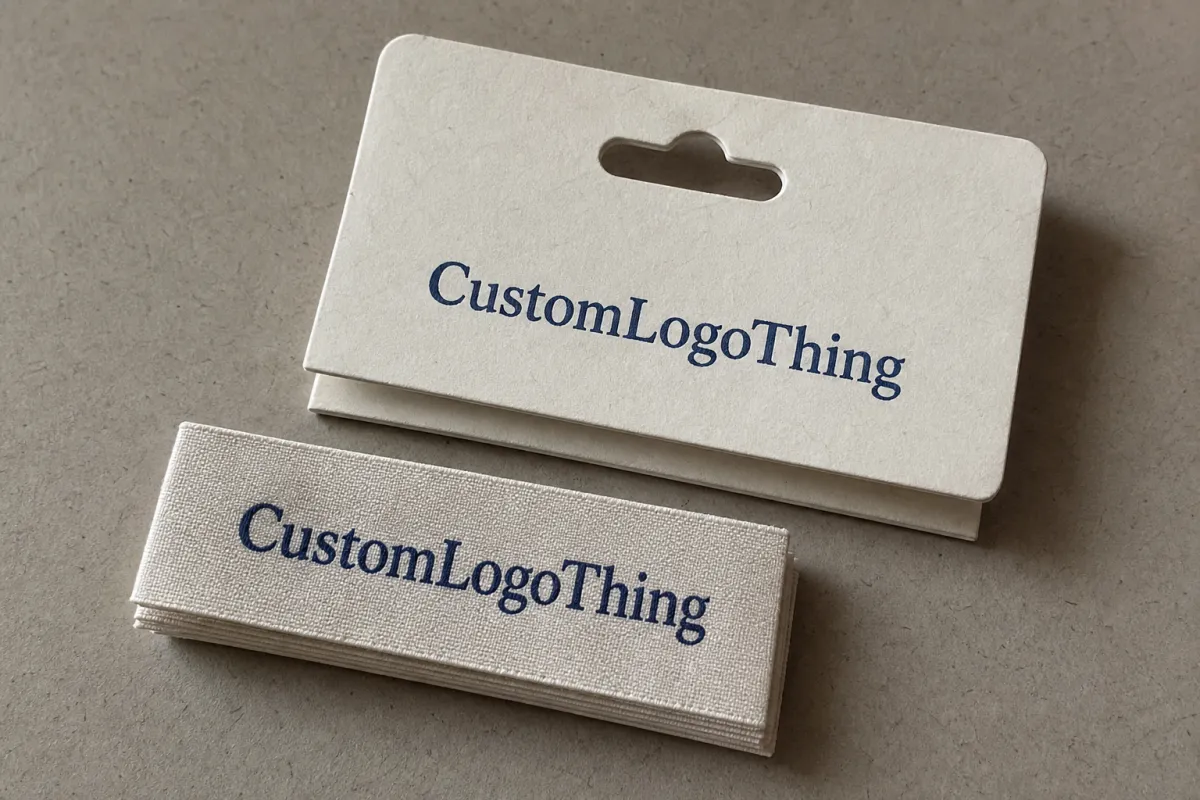
A smart label order starts with the garment, not the catalog page. Delicate lingerie, babywear, swimwear, denim, knitwear, outerwear, and handmade goods all put different pressure on label softness, wash durability, print clarity, and edge finish. Purchasing managers, boutique owners, apparel startups, and production coordinators get better quotes when they build the order around actual use cases instead of guessing at material and quantity.
Care labels are small, but production treats them like any other component. They pass through artwork setup, material selection, printing or weaving, cutting, folding, packing, and usually sewing at the garment factory or workroom. If the labels arrive late, too stiff, too wide, or printed with cramped care copy, sewing can slow down. A two-cent trim problem can turn into a schedule problem.
A bulk order pays off most clearly when a brand repeats core garments. Think of a boutique selling the same ribbed tank in four seasonal colors, or a private-label denim short with the same fabric content across several size runs. One approved label format can serve multiple deliveries as long as the care wording and legal details are correct.
Practical rule: if the garment will be reordered, photographed for e-commerce, sold under your store name, or produced in more than one colorway, specify the care label properly from the start.
There is also a brand-control benefit. A clean satin or woven label tells the customer the garment was intentionally made, not assembled from whatever trim happened to be available. That does not mean every boutique needs an expensive label. It means the label should match the garment category, selling price, and care cycle the customer will actually use.
The opposite problem is familiar: a small label chosen only for cost, sewn into a soft knit dress, printed in pale gray ink, and impossible to read after three washes. Technically, the label existed. Functionally, it failed.
Care Label Materials That Match Boutique Garments
Material choice affects comfort, durability, print clarity, and perceived quality. Satin polyester is a strong all-around option because it has a smooth retail feel and prints fine text cleanly. It works well in dresses, blouses, loungewear, sleepwear, and premium basics, especially where the label may touch skin.
Nylon taffeta is more economical and durable for higher-volume apparel. It is common in basics, uniforms, promotional apparel, and garments where function matters more than a soft luxury hand. Cotton labels suit artisan, organic-positioned, and natural-fiber brands, but they should be tested for shrinkage, edge behavior, and print sharpness. Woven polyester labels are excellent when the care label also carries visible brand value, although dense wash instructions are usually easier to manage with printing.
| Material | Best Use | Typical Strength | Buyer Watch-Out |
|---|---|---|---|
| Satin polyester | Dresses, blouses, lingerie, loungewear | Soft feel, crisp printed copy | White-on-black printing needs careful opacity proofing |
| Nylon taffeta | Basics, high-volume apparel, workwear | Economical and wash-resistant | Can feel rough on necklines or children’s garments |
| Cotton | Natural, handmade, boutique artisan goods | Natural handfeel and matte look | May shrink or fray depending on finish |
| Woven polyester | Brand-forward labels with simple care text | Long-lasting logo presentation | Not ideal for very dense legal or multilingual copy |
| TPU or heat transfer | Tagless activewear, compression garments, swimwear | No sewn label edge against skin | Must be matched to fabric, heat, stretch, and wash conditions |
The tactile factor is not minor. A technically correct label that scratches the wearer can create returns, especially on waistbands, necklines, children’s clothing, intimate apparel, and lightweight knits. Label softness should be checked against the actual garment fabric, not only between your fingers at a desk.
Printed care labels are usually best for dense wash instructions, fiber percentages, country of origin, and variable product information. Woven care labels are stronger for logos, simple brand wording, and an elevated trim package. If the garment will face hot water, detergent, abrasion, dry cleaning, bleach warnings, or repeated tumble drying, the ink system, substrate, and finishing method should be selected around that care cycle.
For a care Labels Bulk Order for Boutique retailers, grouping SKUs by material need is often smarter than forcing everything into one format. One boutique may need soft white satin for dresses, black satin for dark garments, and compact nylon labels for basics. That structure tends to quote more cleanly than a vague mixed order full of compromises.
Specifications to Confirm Before You Request a Quote
A quote is only as accurate as the specification behind it. Before requesting pricing, prepare the label dimensions, finished fold style, material, print color, background color, exact text content, logo file, care symbols, quantity, packing preference, and desired delivery date. If one of those details is unknown, say so directly; a good production team can usually help narrow the choice.
Fold style matters because it affects sewing, comfort, and visible area. Straight-cut labels are common for simple side-seam insertion. Centerfold labels work well for brand-and-care combinations because the fold creates a clean top edge. End-fold labels tuck raw ends under for a neater appearance. Loop-fold labels suit hanging or seam applications. Book-fold labels create extra panels when multilingual instructions or longer care copy require more space.
Small labels look refined until the copy becomes unreadable. Fiber content, care symbols, origin, and manufacturer or distributor identification can eat up space quickly. A slightly taller label or folded format often protects legibility without changing the garment design. As a rough planning point, many boutique printed care labels land between 25 mm and 40 mm wide, but the final size depends on copy length, fold, seam allowance, and font size.
Color affects cost and clarity. Black ink on white or ivory satin is readable and cost-efficient. White ink on black satin can look premium, but opacity and fine text need closer proofing. Metallic inks or specialty effects may look attractive in a trim deck, yet they are rarely the best choice for tiny care symbols or dense wash instructions.
Artwork files should be production-friendly. Vector logo files such as AI, EPS, or editable PDF are preferred because they scale cleanly. A high-resolution PNG may work for a simple printed label if the image is clean, correctly sized, and not pulled from a low-quality web upload. Care symbols should be clear and consistent with the written instructions.
Compliance-sensitive content deserves careful review. Fiber content, country of origin, care instructions, and manufacturer or distributor identification should be approved by the retailer or a qualified compliance professional before production. Custom Logo Things can help prepare the physical label, but the brand owner is responsible for confirming the wording fits the garment and the market where it will be sold.
Pricing, MOQ, and Unit Cost Factors for Bulk Care Labels
Bulk care label pricing is driven by quantity, material, size, print method, number of colors, fold style, cutting method, packaging requirements, and whether the order includes variable versions. A one-color printed satin label in one size and one artwork version will generally price lower than a multi-version order with different fiber contents, specialty materials, custom folding, or individually sorted packs.
MOQ, or minimum order quantity, protects setup efficiency. Even a small care label requires file preparation, material loading, print calibration, cutting, folding, inspection, and packing before it ships. That is why the first few hundred pieces can feel expensive per unit, while larger runs usually become more efficient.
As a planning range, simple printed satin or nylon labels may fall around $0.05 to $0.18 per piece at higher quantities, depending on size, color count, and finishing. Smaller custom runs can land higher because setup time is spread across fewer labels. Woven labels, specialty substrates, multi-panel folds, or versioned packing can move beyond that range. These figures are not a universal quote; they are a budgeting checkpoint.
A practical boutique strategy is to consolidate evergreen basics into a larger run, then order smaller versioned batches only for garments with different care instructions, fiber blends, or legal wording. If your store carries a core cotton tee, a rayon dress, and a recycled nylon swim piece, those should not blindly share one care label just to reduce the number of versions.
- Target quantity: total pieces and quantity per version.
- Number of designs: one master label or several care versions.
- Label size: flat size and finished folded size if known.
- Material preference: satin, nylon taffeta, cotton, woven, TPU, or heat transfer.
- Fold style: straight cut, centerfold, end-fold, loop-fold, or book-fold.
- Ink colors: include background color and print color.
- Destination: ZIP code or country for freight planning.
- Proof needs: digital proof, physical sample, or both.
The cheapest label is not always the best value. If it fades, curls, irritates the wearer, or forces a reorder because the care copy was too cramped to read, the saved pennies disappear quickly. Bulk care labels should balance unit cost with garment quality, customer comfort, and operational reliability.
Process and Timeline from Artwork to Finished Labels
The typical path is straightforward: request submission, specification review, quote confirmation, artwork cleanup, digital proof, customer approval, material preparation, printing or weaving, cutting and folding, quality inspection, packing, and shipment. Each step is simple on its own. Delays usually start when information is missing at the beginning.
Missing care copy, unclear fold direction, low-resolution logos, or late text changes can add days that nobody budgeted for. A digital proof should be checked for spelling, care symbols, fiber percentages, label orientation, fold placement, finished size, contrast, and seam allowance. If the label is sewn into a side seam, part of the label disappears into the seam. Plan for that space.
Digital proofs are faster and useful for layout approval. Physical samples give better confidence on handfeel, opacity, edge finish, and readability on the actual material. For a first-time care label bulk order, a sample can be valuable if the garment is intimate apparel, babywear, sheer fabric, activewear, or any item where comfort is part of the selling point.
Lead time depends on the production method and order complexity. Printed satin labels may move faster than woven labels. Multi-version orders take more coordination than a single master artwork. Specialty substrates, peak production periods, physical sampling, and shipping method can all affect turnaround. Many straightforward printed label orders are often planned around 10 to 15 business days after proof approval, while more complex or sampled orders should allow additional time.
The best timing advice is blunt: place care label orders before cutting and sewing begins whenever possible. Labels are usually needed during garment assembly, not only at the packing table. If a sewing team is waiting on labels, cartons of cut fabric can sit idle while everyone chases a small trim component that should have been ordered earlier.
Approving one master format also helps repeat orders. Once dimensions, material, fold style, logo scale, font size, and artwork standards are established, reorders are usually smoother because only quantities or versioned care text need updating. Keep that approved file organized with the garment tech pack or production notes.
Quality Checks That Protect Boutique Brand Presentation
Care labels touch several parts of the customer experience: comfort, durability, brand trust, resale perception, and whether the shopper can care for the garment correctly. That is a large job for a small piece of trim.
Inspection should cover print sharpness, correct text, consistent cutting, clean folds, readable symbols, proper ink adhesion, material softness, color consistency, and pack counts that match the purchase order. For versioned orders, the packing labels matter too. If three nearly identical labels have different fiber content, they should be separated and marked clearly.
Common mistakes are easy to prevent. Labels may be too small for required wording. A rough substrate may be used on a delicate garment. Low-contrast ink may get approved because it looked attractive on screen. Seam allowance may be forgotten. Size labels may be mixed with care labels. Similar versions may be packed together without clear separation by SKU.
Before sewing the full run, test a sample. Wash it with a comparable garment, check for curling or fading, feel it against the skin, and confirm that the care symbols remain readable after drying. For garments making environmental or fiber claims, documentation and sourcing details should be handled carefully; standards such as FSC apply to responsibly sourced forest-based materials, while packaging transit testing resources from ISTA can be useful when labels are part of a broader shipped retail program.
Sewing placement matters as much as label construction. A label should be placed where the customer can read it, but not where it irritates the wearer. Side seams work for many tops and dresses. Waistbands need more care because the label can rub. Children’s clothing and intimates require extra attention to softness, edge finish, and placement.
Operations benefit too. Clear version labels and organized packing reduce mix-ups when the same boutique collection includes similar garments with different fiber blends or care instructions. That is one of the quieter advantages of ordering through a production path built for repeatable custom labels rather than buying generic tags in a hurry.
How Custom Logo Things Supports Boutique Label Orders
Custom Logo Things supports boutique retailers that need custom care labels with clear specifications, repeatable production, and practical guidance grounded in real materials and processes. The goal is not to make the order sound complicated. The goal is to get the important choices right before production starts.
The team can help evaluate material choices, label size, fold style, artwork setup, and production suitability based on garment category and quantity requirements. First-time buyers may need help translating a label idea into a production-ready spec. Returning buyers often need reorder consistency, updated care text, or expanded versions for new product lines.
Organized quoting saves time. If a retailer sends complete details, Custom Logo Things can respond with clearer options for material, quantity, finishing, and production path instead of forcing the buyer through vague pricing guesses. For buyers building a coordinated trim package, Custom Labels & Tags can be planned alongside size labels, brand labels, hang tags, and care labels.
Boutique-friendly flexibility matters because not every order looks the same. One store may need a single master satin label. Another may need six fabric-content versions packed separately. A growing private-label program may benefit from Wholesale Programs that support repeat purchasing and more consistent trim planning.
Here is the honest boundary: disciplined production preparation, material knowledge, proofing, and clear communication reduce unnecessary back-and-forth. They do not replace the buyer’s responsibility to approve care wording, legal details, and garment-specific instructions. They do make the physical label order easier to manage.
Next Steps to Place a Bulk Care Label Order
Start by gathering your current care label sample if you have one. Confirm which garments the labels will be sewn into, list each fiber-content version, decide on label placement, and identify any deadline tied to sewing, packing, or retail launch. A simple spreadsheet with SKU, fabric content, care wording, quantity, and label version can prevent a surprising amount of confusion.
Send the logo file, desired label dimensions, material preference, fold style, print colors, quantity per version, care wording, care symbols if already selected, shipping destination, and whether you need a digital proof or physical sample. If exact specs are unknown, photos help. A picture of an existing label, garment seam, or reference trim can communicate fold type, size range, and finish preference, although final artwork still needs to be production-ready.
For a more accurate quote, avoid asking only for a per-piece number without quantity, size, material, and version count. Those details directly affect setup, material usage, press time, folding, inspection, and packing. If you are unsure about the right structure, send the garment categories and expected quantities, then ask for the most practical options.
A smart purchasing rhythm is to order more of evergreen brand-and-care formats, keep a reorder file for approved artwork, and review care copy before every new fabric blend enters production. If questions come up during planning, the FAQ can help with general order preparation before you request a formal quote.
If your boutique is preparing a care labels Bulk Order for Boutique retailers, the fastest path is to send complete specs, approve the proof carefully, and build the order around the garments already moving through production.
FAQs
What is the best material for a boutique care label bulk order?
Satin polyester is a strong all-around choice because it offers a soft handfeel, clean printing, and a polished retail look. Nylon taffeta is often more economical for larger apparel runs and holds up well in repeated washing. Cotton works nicely for natural, handmade, or organic-positioned garments, but it should be tested for shrinkage and print clarity. The best material depends on garment type, label placement, care cycle, and whether comfort or lowest unit cost is the higher priority.
How much does a care labels bulk order for boutiques usually cost?
Cost depends on quantity, material, label size, print colors, fold style, number of artwork versions, and packing requirements. Higher quantities usually reduce the unit cost because setup and production preparation are spread across more labels. A simple one-color printed satin label will price differently than a multi-version order with specialty materials or complex folding. For an accurate quote, provide dimensions, quantity, material preference, fold style, artwork, and shipping destination.
What MOQ should boutique retailers expect for custom care labels?
MOQ varies by material, production method, and finishing requirement. Printed labels often have a different minimum than woven labels because setup, machine time, and material handling are different. If you need multiple care versions, ask whether the MOQ applies per design, per material, or to the combined order. Boutiques can often improve value by ordering a larger run of evergreen labels and smaller quantities only for version-specific care content.
Can I order several care label versions in one bulk order?
Yes, multiple versions can usually be quoted together when they share the same material, size, fold style, and print setup. Version changes may include fiber content, care instructions, country of origin, size, or SKU-specific details. Clear file naming and version counts are important so labels are produced, inspected, and packed correctly. Ask for labels to be separated and marked by version if they will be distributed to different sewing lines or garment batches.
How do I avoid delays when ordering care labels in bulk?
Send complete specifications at the beginning: size, material, fold, quantity, artwork, care text, version count, and deadline. Use production-ready logo files whenever possible, preferably vector formats such as AI, EPS, or editable PDF. Review the proof carefully for spelling, symbol accuracy, fold orientation, seam allowance, and readability before approval. Place the order before sewing begins when possible, because labels are often needed during garment assembly rather than at final packing.


