Placing a woven labels Bulk Order for Boutique Retailers sounds simple until the small details start multiplying. A label is only a few square centimeters of fabric, but it affects margin, product feel, brand consistency, and even how a garment is perceived on the rack. Retail buyers notice that kind of thing. So do customers, usually without being able to explain why one item feels more finished than another.
The economics are equally unforgiving. Reordering in small batches often means higher unit cost, extra setup fees, and more risk of batch-to-batch variation in color or finish. For a boutique brand, that can mean one run that looks polished and the next that looks slightly off. The difference may be subtle in a warehouse box, but it becomes obvious when products are displayed side by side.
That is why bulk ordering woven labels is less about “getting labels” and more about standardizing the part of the product that quietly signals quality. It is one of the few trims that can improve presentation and simplify operations at the same time.
Why boutique retailers switch to woven labels in bulk
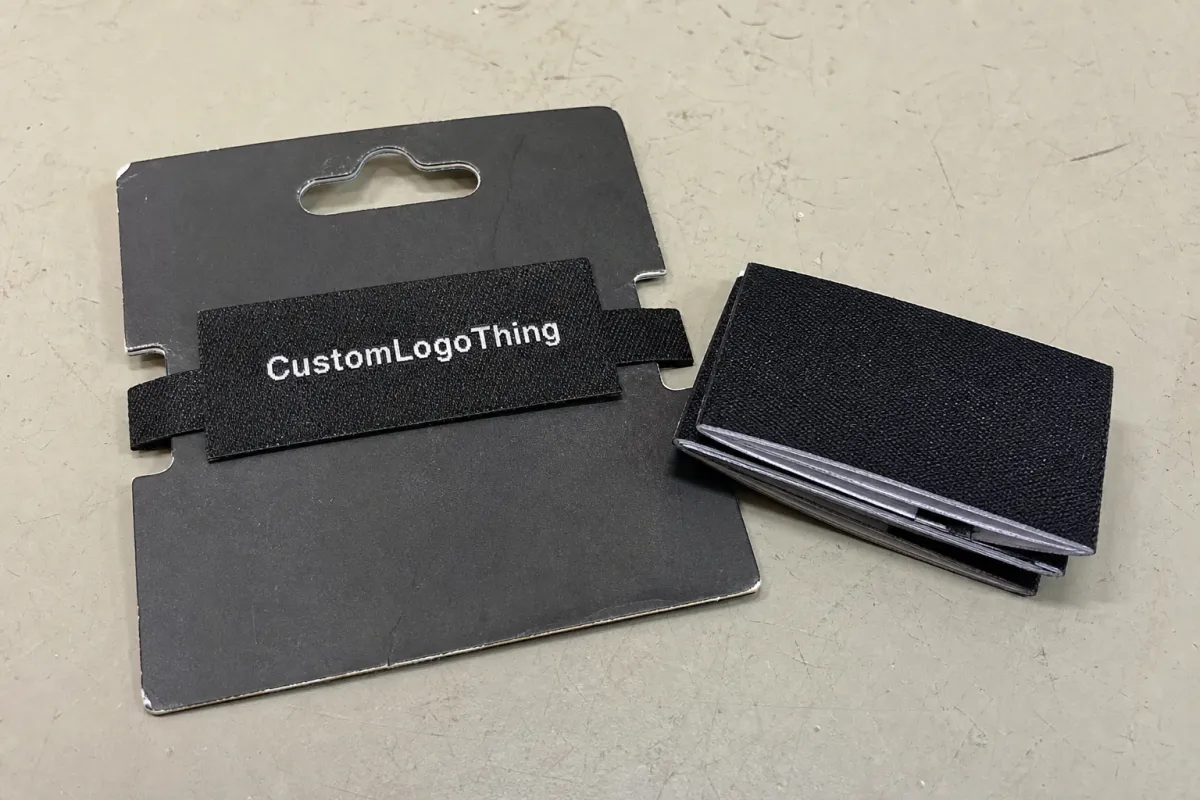
Small orders are expensive because setup costs do not shrink just because the quantity does. A 500-piece run may carry nearly the same production steps as a 5,000-piece run, only spread across fewer units. That is why boutique retailers often see the price per label drop sharply once they move beyond testing quantities.
There is also a quality reason to buy in bulk. When a brand splits orders across multiple small runs, color matching can drift from one batch to the next. Thread shade, weave density, and even edge finish can vary enough to be noticeable, especially on darker garments or labels with fine type. A larger, single run usually gives tighter consistency.
Woven labels are especially useful for premium apparel because they keep their look through wear and laundering better than many printed alternatives. A good damask label can hold detail cleanly and feel smooth against the skin. Satin woven labels offer a softer sheen. Taffeta sits lower on the cost ladder and can work well for simple designs, but it is less forgiving when artwork includes tiny lettering or thin strokes.
For boutique retailers, consistency across collections is another quiet advantage. If the same brand label appears on core basics, seasonal capsules, and special releases, the line looks deliberate. That kind of continuity matters on shelves, in product photos, and in wholesale line sheets. A brand with repeating trim standards reads as organized. A brand with changing labels reads as improvised.
Buyer reality: the expensive mistakes are usually not dramatic. They are the ones that seem minor during approval: a label that is two millimeters too small, a color that shifts slightly in the reprint, or a fold style changed after proof sign-off. Those issues cost time, and time is where margin disappears.
Bulk ordering also helps when multiple trim types need to coordinate. Brand labels, care labels, and size labels become easier to manage once the base specs are established. Instead of chasing a new order every time inventory runs low, the production calendar becomes predictable. Predictability is underrated in fashion production; it is often worth more than a slightly lower quote.
Woven label styles, folds, and finish options
Not every woven label serves the same purpose. The format has to match where the label will sit, how visible it should be, and how much information it needs to carry. A label that works well in a neckline may be awkward on a waistband. A clean-looking external tab can feel irritating if the edge finish is wrong. The choice is practical, not decorative.
- Straight cut labels are useful for seam insertion or cut-and-sew applications where the edges will be sewn down.
- End fold labels are common for side seams, waistbands, and visible branding tabs because the folded ends keep the finish tidy.
- Center fold labels are often used at necklines or in looped attachment points where the label needs to fold over a seam.
- Loop fold labels work well for hang loops or folded attachments where both sides of the label may remain visible.
- Book fold labels are chosen when the design needs to read clearly on both sides after stitching.
For a brand label inside the neck, end fold and center fold are the most common choices because they sit cleanly and are less likely to curl. Care labels often use straight cut or center fold formats so the text has enough room to remain readable. External branding tabs benefit from a fold that hides raw edges and keeps the label from looking bulky.
Material choice affects both appearance and production detail. Damask is typically the best option when the logo includes fine lines, small text, or subtle borders. Satin woven labels have a smoother, slightly glossier surface and can suit softer fashion aesthetics. Taffeta is usually the budget option, but it is not ideal for very detailed artwork. The more intricate the design, the more important it becomes to review an actual proof rather than assume the logo will translate cleanly.
Finish matters more than many first-time buyers expect. Heat-cut edges can reduce fraying on straight cut labels. Softer edges improve comfort when the label touches skin. The visible area is also smaller than the flat artwork size once folds are added, so artwork needs to be planned around the finished dimensions, not the open template. A design that looks balanced on screen can become cramped once it is woven and folded.
The rule of thumb is straightforward: the more exposed the label, the more attention it needs for comfort and edge quality. The more information it has to carry, the more careful you need to be about weave density and label size. In practice, the best label is the one customers never notice for the wrong reason.
Specs buyers should confirm before ordering
A precise quote starts with precise information. Sending only a logo usually leads to rounds of clarification, and every extra round slows the order. If you are preparing a woven Labels Bulk Order for Boutique retailers, the best starting point is a clear spec sheet with the essential production details.
- Label size in inches or millimeters.
- Fold type or cut style.
- Quantity by style or SKU.
- Color count for threads and background.
- Placement on the garment.
- Care text or compliance text, if needed.
Artwork files matter more than many buyers realize. Vector files such as AI, EPS, or PDF are ideal because they preserve clean edges during digitizing. A high-resolution PNG may still work for quoting, but the final outcome depends on how much detail the weave can hold at the finished size. Tiny lettering, thin outlines, and complex icons are the most likely details to blur or simplify when translated into woven form.
Color count affects cost and production complexity. A two-color label is usually easier and cheaper than a five-color label of the same size. More thread colors mean more setup, more weaving steps, and a higher chance of slight inconsistency between colors. If a brand mark can be simplified without losing identity, the production side usually benefits. The design does not have to be minimal, but it does need to be feasible.
Placement should never be an afterthought. A neck label for a T-shirt, a waistband label for trousers, and a seam label for knitwear are not interchangeable. Tell the supplier exactly where the label will sit and whether it will be exposed or hidden. That changes the fold style, the size, and sometimes the material choice.
If the label needs to carry compliance information, say so early. Fiber content, care symbols, garment size, and country of origin may require a separate care label if the brand label is already full. Crowding too much text into a tiny woven tag usually creates legibility problems. The label might technically contain everything, but if nobody can read it, the information is wasted.
| Spec | Best for | Buyer note |
|---|---|---|
| 2-color damask, center fold | Premium neck labels | Strong detail-to-cost balance for most boutique apparel |
| 3-4 color satin, end fold | Visible brand tabs | Softer look, but detail and wash performance should be checked |
| Simple taffeta, straight cut | Budget-minded inner labels | Lower cost, though less refined for premium garments |
| Damask with compliance text | Care and content info | Needs enough width for small text to remain readable |
Pricing, MOQ, and unit cost without the fluff
Bulk pricing follows a familiar pattern: as quantity rises, unit cost falls. What complicates the quote is the combination of size, fold style, weave detail, and thread count. A small label with multiple colors can cost more than a larger label with a simpler design because the production work is not linear. Complexity has a price.
MOQ gets all the attention, but unit cost is what affects the budget. A low minimum order can be useful for testing a new brand mark or a seasonal capsule, yet the best per-unit pricing usually appears in higher volume bands. If the design is stable and the brand is already selling, ordering in bulk often makes more sense than repeatedly buying small replenishment runs.
A realistic pricing range for woven labels depends on the spec, but these ballpark figures are useful for planning:
- Simple woven labels: about $0.06-$0.12 per unit at higher quantities.
- Mid-detail damask labels: about $0.10-$0.22 per unit depending on size and color count.
- More detailed or folded labels: about $0.18-$0.35 per unit, sometimes higher for smaller runs.
Those numbers are not universal. Shipping terms, supplier location, artwork complexity, and rush fees can push them up or down. Still, they are far more useful than vague labels like “cheap” or “premium,” which say almost nothing about actual production cost.
One useful buying habit is to compare cost per usable label, not just the invoice total. A lower quote can be misleading if the labels arrive late, fray at the edges, or need reprinting after a proofing miss. The cheapest option on paper is not always the least expensive once errors are included.
For boutique retailers, a smart bulk order usually covers one season plus a modest buffer. That buffer absorbs reorders, size repeats, and unexpected sales velocity. Ordering exactly what seems necessary often sounds efficient, then turns into a rush reorder at the worst possible time. The extra stock is not waste if the label design is stable.
If you are comparing larger order tiers, it helps to review broader trim options as well. Wholesale Programs can be useful for volume planning, while Custom Labels & Tags can help you compare label formats before locking a production spec.
Production steps, turnaround, and lead time
The production flow is usually predictable: quote, proof, approval, weaving, finishing, quality check, and shipment. The stage that creates the most delay is usually proofing, which is also the stage that saves the most money if handled carefully. A typo or layout issue caught there is inconvenient. Caught after production, it becomes a reprint.
Typical lead times depend on the supplier and the time of year, but a practical planning range looks like this:
- Proof turnaround: often 1-3 business days when artwork is ready.
- Production: often 7-15 business days after approval.
- Shipping: varies by method, destination, and shipment size.
If the artwork needs cleanup or the fold is changed after proof approval, the timeline stretches. Peak retail seasons can also slow production. That is why experienced buyers do not wait until inventory is nearly gone before placing the next run. A label order is easier to manage when it sits ahead of the garment schedule, not behind it.
The proof should show more than the logo. It should clarify the finished size, thread colors, fold position, and the exact placement of text. Review it carefully. A woven label can look fine at a glance and still fail at the details that matter: tiny type, cramped spacing, or a slightly wrong shade. Those are the mistakes that appear small in production and large on the sales floor.
Practical rule: if the labels are tied to a seasonal launch, place the order before the garment run is locked. Waiting until stock is low often forces rush freight, rushed approvals, and less room to correct mistakes.
For multi-SKU orders, ask how labels are packed. Mixed cartons create avoidable sorting work if styles are not clearly separated. Good packaging is not glamorous, but it protects counts and prevents confusion when several colors or label types are shipping together.
On the packaging side, standards from the ISTA are often used to think through transit risks, even though woven labels themselves are not usually treated like fragile cartons. If packaging includes cards, cartons, or inserts, the FSC can be relevant for paper-based materials. And if sustainability language is part of the trim set, the EPA is a better reference point than marketing copy.
Quality checks boutique retailers should ask for before shipment
Quality control for woven labels should be plain, not ceremonial. Start with color consistency. If a thread color or Pantone reference was approved, the run should stay visually close to that standard. Small variation happens in textile production. Large variation usually means the proof was not followed closely enough or the run was not controlled well.
Edge finish is next. Labels should not fray, snag, or feel abrasive where they touch the skin. This matters more on neck labels and children’s items, but even hidden labels can create a poor hand-feel if the finish is rough. A premium garment loses credibility fast when the trim feels cheap.
Size tolerance also deserves attention. A label that is only slightly off can still cause trouble in sewing or placement. On a seam tab, a few millimeters may be visible. On a neckline label, it can affect how centered the garment appears. Those are the kinds of details that separate a clean production run from one that looks a little off in-store.
Readability is another common weak point. Artwork that seems clear on a monitor may become muddied once woven at actual size. Tiny text, care notes, and icons need to be checked in the finished format. If the proof is hard to read, the label will be hard to read in the garment. The woven structure does not forgive overpacked information.
Count and packing checks matter just as much. If you ordered three styles, you should receive three clearly separated styles in the correct quantities. Mixed packs waste time and create preventable errors during production intake. Sorting labels by hand is not a value-add.
For brands bundling labels with paper packaging or inserts, FSC-certified paper can support a cleaner sourcing story. That does not automatically make the full trim package sustainable, but it does reduce confusion about the materials around the label itself.
How to place a smart order and avoid rework
The cleanest orders start with a complete spec sheet. Include the label style, final size, quantity, thread colors, fold type, and placement. A woven labels Bulk Order for Boutique retailers goes much faster when the supplier does not have to chase basic details.
Then explain the garment type. A knit tee, a structured jacket, and a soft infant item all behave differently. The same woven design may need a different width or fold depending on whether it is going into a neck seam, a waistband, or an outer tab. Context changes the spec more than many first-time buyers expect.
If the design is new or detailed, ask for a digital proof or woven sample before the full run is approved. That is especially useful for logos with small text, multiple thread colors, or fine borders. One proof is cheap compared with a reprint, and a reprint is always more expensive than the original order.
Bundling similar SKUs into one run can also improve efficiency. If multiple products share the same core logo and only differ by color or fold, grouping those orders may reduce setup waste and help the per-unit cost. It is not always possible, but when it is, the math usually improves.
- Confirm the label style and size.
- Send vector artwork or a clear logo file.
- State colors, quantity, and placement.
- Review the proof carefully.
- Approve production only after every detail is locked.
- Plan the next reorder before stock gets tight.
The best order is not the cheapest one. It is the one that fits the product, holds up in wear, and arrives in a quantity that protects margin without tying up cash unnecessarily. That is the practical value of a well-planned bulk label run: fewer surprises, cleaner branding, and less time spent patching preventable mistakes.
FAQ
What is the best MOQ for woven labels bulk order for boutique retailers?
The best MOQ is the lowest quantity that still gives you a workable unit cost for your sales volume. For boutique retailers, that usually means enough labels for one seasonal run plus a buffer for reorders and size repeats. If you are testing a new logo, start smaller; if the design is already established, move into a higher tier for better pricing.
How much do woven labels cost in bulk for small fashion brands?
Price depends on size, weave detail, fold style, quantity, and the number of colors. Simple labels can land near the low end of the range, while detailed damask labels or folded designs cost more. A rough planning range is $0.06-$0.35 per label, depending on the spec and quantity, but shipping and rush timing can change that.
How long is the turnaround for woven labels in bulk?
Many orders move through proofing in 1-3 business days, then production in roughly 7-15 business days after approval. Shipping adds time based on the method and destination. Artwork changes, peak seasons, and late approvals can extend the schedule.
Can woven labels bulk order for boutique retailers include care instructions?
Yes, but only if the label has enough space for the text to stay readable. Short care lines can sometimes fit on a woven label, but longer compliance details are usually better on a separate care label. Always check the finished proof at actual size before approving.
What artwork is needed for a custom woven label quote?
A vector file is best, but a clear logo file can often be used for quoting and proofing. You should also provide size, fold type, color count, quantity, placement, and any compliance text. The more precise the brief, the faster and more accurate the quote.


