Buy 200 blank denim jackets, canvas totes, or caps and the math looks ordinary. Add a disciplined patch program and the same base stock can become four small collections: a core logo run, a local capsule, a holiday display, and a staff uniform set. That is why an embroidered patches Bulk Order for Boutique retailers is often less about decoration than inventory control.
A boutique does not always need fully custom cut-and-sew inventory to create exclusivity. Patches let a retailer test a local slogan, seasonal graphic, maker mark, staff badge, or limited drop without committing to thousands of finished garments. Direct embroidery locks the logo into one product style. Loose, sew-on, or heat-applied patches can move across hats, hoodies, kidswear, bags, aprons, uniforms, gift packaging, and event merchandise.
From an operations angle, patches behave like modular brand components. They raise perceived value, keep presentation cleaner, simplify replenishment, and help small labels avoid tying up cash in slow-moving decorated stock. The strongest return usually comes from clear artwork, repeatable sizes, and ordering enough pieces to spread digitizing and setup costs across the run.
Why Small Labels Use Patches to Make Inventory Work Harder
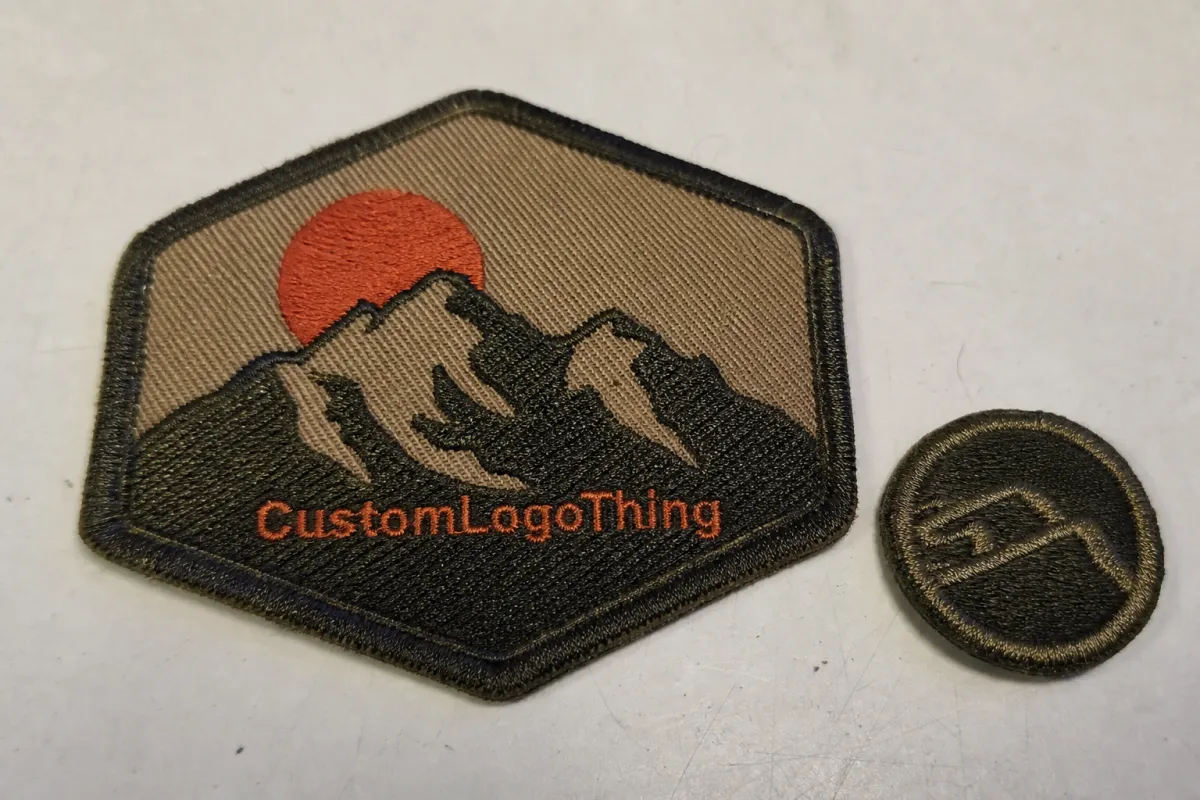
Boutique inventory is unforgiving. A single weak graphic can leave a rack full of marked-down product. A plain garment, however, can still be redirected. That is the commercial strength behind an embroidered patches Bulk Order for Boutique retailers: the retailer buys flexible base inventory first, then applies identity as demand becomes clearer.
Consider a practical setup. A shop sources 100 pigment-dyed caps, 60 canvas totes, and 40 denim jackets. Instead of ordering three separate fully embroidered product lines, the buyer commissions one 2.5-inch logo patch, one 3-inch local slogan patch, and one limited seasonal patch. The blanks can support a core collection, a tourist capsule, a holiday display, or a staff uniform program.
Direct embroidery still has a place. It looks permanent, clean, and premium on the right garment. It also commits the design to that item forever. Patches allow late-stage customization, which matters when demand is uncertain or when a boutique wants to rotate small drops every few weeks.
Retail reality: patches are low-risk inventory modifiers. They let boutiques test ideas without turning every blank garment into a finished SKU before the customer has voted with a purchase.
There is a presentation benefit as well. A raised embroidered badge can make a simple tote feel more giftable. A sleeve patch can make a basic hoodie feel closer to a private label piece. A back patch can turn a jacket into a collectible item. None of that requires a 1,000-piece garment order.
The patch is not the whole product. It is the conversion tool. Used well, it increases perceived value while keeping base inventory flexible.
Embroidered Patches Bulk Order for Boutique Retailers: What You Actually Receive
A custom embroidered patch is built from thread stitched onto a twill or fabric base, then finished with an edge and backing selected for the final use. A typical retail patch specification includes size, shape, thread colors, stitch coverage, border type, backing type, quantity, packaging preference, and attachment method.
For boutique retailers, common uses include private label apparel, branded uniforms, souvenir capsules, loyalty gifts, staff aprons, kids’ accessories, market-event merchandise, repair-style embellishments, and add-on gifts. A patch can sit on a garment, but it can also be packed with a product as a collectible trim or attached to a branded hang tag.
Visible quality comes from several details working together. Thread color should be close to the approved artwork. Stitch density should be full enough to avoid gaps but not so heavy that the patch becomes rigid. Borders need to be clean. Shapes should repeat consistently from unit to unit. Backing should match the application method, not merely the buyer’s habit.
Embroidery has texture and depth. That is its advantage. It is not ideal for every artwork style.
Tiny gradients, photographic detail, hairline outlines, and lettering under roughly 4–5 mm high may need simplification. Some designs are better as woven patches, printed patches, PVC patches, or hybrid construction. A good production review should say that plainly, before money is spent on the wrong method.
Think beyond the first placement. Can the same 2.75-inch patch work on caps, totes, jackets, hang tags, and gift packaging? If yes, the order has more commercial value because the patch becomes a reusable brand asset rather than a one-off trim.
Patch Specifications That Affect Retail Quality
Patch quality starts with size planning. Small patches, often 1.5 to 2.5 inches wide, suit caps, sleeves, kidswear, accessory tabs, and small bags. Medium patches, around 2.5 to 4 inches, work well for chest placements and tote fronts. Larger pieces can create statement back graphics, but they cost more, take longer to stitch, and may feel stiff on light garments.
Stitch coverage changes both price and hand feel. Partial embroidery leaves some twill visible and can be cost-efficient for clean logo marks. High-coverage embroidery creates a richer surface but adds thread, machine time, and density. On thin cotton, jersey, or lightweight nylon, too much density can pull, curl, or feel board-like.
Border and backing choices
Merrowed borders are the classic raised edge used on many round, square, oval, and shield-shaped patches. They are durable and cost-effective for simple shapes. Laser-cut or satin-stitched borders are better for custom silhouettes, interior cuts, and detailed outlines. If your boutique logo has an irregular shape, confirm the edge treatment before assuming a merrowed border will work.
| Backing option | Best use | Retail caution |
|---|---|---|
| Sew-on | Premium apparel, denim, jackets, dry-clean garments | Requires stitching labor but usually gives the strongest long-term finish |
| Heat-seal | Faster application for caps, totes, uniforms, and casual apparel | Fabric must tolerate heat, pressure, and dwell time |
| Hook-and-loop | Uniforms, tactical styles, interchangeable patches | Adds thickness and may not suit refined boutique garments |
| Adhesive | Temporary use, display samples, event badges | Not a durable wash solution |
Thread decisions matter too. Polyester and rayon threads cover most retail needs. Polyester is common for durability and wash resistance. Rayon can have a soft sheen. Metallic thread adds visibility, but it can make tiny details less forgiving and may require design adjustments. PMS matching should be treated as an approximation because thread reflects light differently than ink on paper or pixels on a screen.
Actionable artwork rules are simple: avoid hairline text, simplify gradients, thicken outlines, reduce excessive tiny elements, and request a digital proof before production. If the graphic must remain extremely detailed, ask Custom Logo Things whether a woven or printed patch would reproduce it more cleanly.
MOQ, Pricing, and Unit Cost: What Drives the Quote
Patch pricing is not random. It is usually driven by size, stitch count, thread count, backing, border style, shape complexity, order quantity, packaging, and shipping destination. Larger orders reduce unit cost because setup, digitizing, and machine preparation are spread across more pieces.
For an embroidered patch bulk order, the smartest quoting method is to compare several quantity breaks. Ask for 50, 100, 250, 500, and 1,000 pieces if the design has repeat potential. The useful question is not “What is the cheapest patch?” It is “Where does the unit cost drop enough to justify the extra inventory?”
Indicative pricing can vary widely, but buyers often see the curve clearly: very small runs carry the highest unit cost because setup is spread across fewer pieces; mid-size runs improve quickly; large runs improve more gradually. A 2.5-inch patch with a simple border, standard thread, and sew-on or heat-seal backing will quote very differently from a 5-inch dense embroidery patch with metallic thread, custom cutting, and retail packaging.
Low MOQs help when a boutique is testing a new design or a seasonal slogan. Higher first runs can make sense for evergreen logo patches used on core merchandise, staff uniforms, gift-with-purchase programs, and reorderable apparel. This depends on sell-through data, storage space, and cash flow. Not every retailer should buy deep on the first run.
Hidden cost drivers deserve scrutiny. Multiple backing types can split production. Individual retail packaging adds labor. Rush production increases pressure on scheduling. Complex cut lines take more finishing work. High stitch coverage raises machine time. Frequent artwork revisions slow the job and may add fees if the design is re-digitized.
Ask for an itemized quote that separates patch production, digitizing or setup, backing upgrades, proofing, packaging, shipping, and rush charges. Custom Logo Things can help compare practical options instead of steering buyers toward the most expensive construction. For broader order planning, boutique buyers can also review Wholesale Programs to align patch quantities with repeat purchasing needs.
Production Steps and Timeline from Artwork to Delivery
A typical patch order follows a clear sequence: inquiry, artwork review, specification selection, quote, digitizing, digital proof, optional sample, production approval, embroidery, quality check, packing, and shipment. The path is predictable. Delays usually come from missing details.
Clean artwork shortens the timeline. Vector files such as AI, EPS, or editable PDF are preferred. A high-resolution PNG or JPG can work for simple marks, but the file should be sharp and large enough to review details. Send the desired dimensions, quantity, backing preference, border preference, delivery location, and deadline at the start.
Digitizing is where the artwork becomes a stitch file. The digitizer sets thread path, stitch direction, density, underlay, pull compensation, and detail handling. A logo that looks crisp on a laptop can behave differently once converted into thread. Curves thicken. Fine gaps close. Small lettering may lose clarity.
Sampling depends on risk. A digital proof may be enough for a simple two-color logo patch. A physical pre-production sample is wiser for retail-critical launches, tiny text, premium garments, color-sensitive branding, or high-volume orders. That extra step can add time, but it can prevent a full batch of unsellable patches.
Lead time is shaped by artwork complexity, number of sizes, special thread, custom packaging, approval delays, production capacity, and freight conditions. If the patches will be applied to garments, schedule the order before garment production or in parallel with blank sourcing. Idle inventory costs money. So does a launch date missed by one trim component.
The fastest orders are usually the most organized, not necessarily the simplest. A buyer who sends final artwork, exact dimensions, and application details can often move faster than a buyer with a basic logo but uncertain placement, backing, and quantity.
How Boutique Retailers Should Plan Designs for Sell-Through
A patch has to read quickly. From a rack. In a product photo. On a social media post. If the message only works from six inches away, it may underperform on the sales floor.
Design families usually work better than scattered one-offs. A boutique might build one core logo patch, one seasonal graphic, one location-based patch, and one limited-edition statement piece. That structure creates variety without splitting production into too many tiny runs.
Placement changes perception. Chest patches feel branded and familiar. Sleeve patches feel more premium because they mimic outerwear and uniform detailing. Back patches feel collectible and can carry a bigger story. Accessory patches can make lower-cost items, such as totes or pouches, feel giftable.
Over-customization is a quiet margin killer. Ordering five colorways, three shapes, and two backings before demand is known can dilute volume and raise unit cost. Better logic: start with a controlled assortment, track sell-through by design and placement, then reorder the winners using the same stitch file.
Here is the unexpected connection: patches can function like physical SKUs for storytelling. A local landmark patch turns a standard cap into a souvenir. A maker-themed patch gives a plain apron a narrative. A limited capsule patch creates urgency without changing the garment pattern. That is useful retail architecture.
For an embroidered Patches Bulk Order for Boutique retailers, Custom Logo Things can review the artwork with production reality in mind: what will stitch cleanly, what should be simplified, and what may need a different patch type. That review protects both brand appearance and sell-through potential.
Quality Checks That Prevent Retail Returns and Rework
Quality control should not wait until the patches arrive at the store. Inspection points include size tolerance, border consistency, thread trimming, backing adhesion, color accuracy, shape alignment, loose threads, packaging count accuracy, and carton labeling.
Do not approve only from a screen mockup if the launch is high value. Digital proofs show layout, but thread texture, density, and small lettering behave differently during production. A 3 mm gap on screen may close once stitched. A thin serif font may look elegant in print and weak in embroidery.
Patch compatibility with the final garment is another common failure point. Heat-seal backings need fabric, coating, temperature, pressure, and dwell-time compatibility. Some coated nylons, delicate synthetics, or textured fabrics may not bond cleanly. Sew-on patches need enough garment stability for clean stitching without puckering.
Durability expectations should match use. Patches for outerwear, workwear, uniforms, and frequently washed garments should be specified differently than decorative patches for occasional-use accessories. If care labels matter, align patch construction with the garment’s wash instructions and testing plan. For packaging and transit, retailers shipping embellished goods can review distribution testing concepts through ISTA, while paper-based retail packaging decisions may connect to responsible sourcing programs such as FSC.
Batch consistency matters during reorders. Reference the previous order number, artwork file, thread choices, backing, size, and border type. Without those details, a reorder can drift. Slightly different thread sheen or border thickness may be acceptable for casual goods, but it can look careless in a premium boutique display.
Custom Logo Things helps prevent common failures before production begins: unreadable text, wrong backing, overly dense embroidery, and designs that cannot be cut cleanly. That is where a fact-first production review earns its keep.
Before You Place a Boutique Patch Order
Before requesting a quote, tighten the basics. Choose final artwork. Decide the target patch size. Confirm garment or product placement. Select backing. Choose border type. Estimate quantity. Identify whether the patches need individual bags, barcode labels, header cards, or other retail packaging.
For the fastest quote, send:
- Vector logo or high-resolution image
- Desired dimensions in inches or millimeters
- Quantity tiers, such as 100, 250, 500, and 1,000 pieces
- Backing preference: sew-on, heat-seal, hook-and-loop, or adhesive
- Border preference: merrowed, satin stitch, or laser-cut edge
- Delivery location and deadline
- Photos of the intended garment, bag, cap, or packaging if available
If you are undecided, request side-by-side options. Compare sew-on versus heat-seal. Compare 100 versus 250 pieces. Compare a merrowed border against a laser-cut edge. These comparisons expose the trade-offs quickly, and they keep the discussion grounded in cost, application speed, and retail quality.
Also decide what kind of order you are placing. A test run can tolerate smaller quantities and lighter sampling. A replenishable core trim may justify a larger buy and a more controlled specification. A launch-critical retail component deserves sample approval and a production calendar with buffer time. For common ordering questions, the Custom Logo Things FAQ is a useful next stop.
The best patch orders do not begin with decoration. They begin with a merchandising question: where can one well-made trim create the most flexible retail value? Compare specifications, cost tiers, artwork limits, and production timing before approving the run. That discipline is what separates a useful boutique patch program from a box of nice-looking extras.
FAQ
What is the best MOQ for custom embroidered patches for boutique retailers?
The best MOQ depends on whether the patch is a test design or a repeatable brand trim. Ask for quotes at several quantity breaks, such as 50, 100, 250, 500, and 1,000 pieces, to see where the unit cost drops enough to justify the larger order. For evergreen logo patches, a higher quantity often makes sense; for seasonal artwork, a smaller test run can reduce unsold inventory risk.
How much does an embroidered patch bulk order usually cost?
Cost is driven by patch size, stitch coverage, backing, border type, quantity, artwork complexity, packaging, and shipping. Larger quantities usually lower the unit cost because setup and digitizing are spread across more patches. Request an itemized quote so you can compare production cost, setup, backing upgrades, packaging, and freight separately.
Can boutique retailers order heat-seal embroidered patches in bulk?
Yes, heat-seal backing is available and can speed up application for many apparel and accessory programs. The final fabric matters; some textiles, coatings, or delicate materials may not tolerate heat application well. For premium garments or high-wash products, sew-on or a combination of heat-seal plus stitching may be recommended.
What artwork file is needed for a bulk embroidered patch order?
Vector files such as AI, EPS, or PDF are preferred because they allow cleaner sizing and digitizing. High-resolution PNG or JPG files may work if the design is simple and clear. Small text, gradients, and very thin lines should be reviewed before production because embroidery cannot reproduce every print detail exactly.
How long does a boutique embroidered patch order take from proof to delivery?
Timeline depends on artwork readiness, sample requirements, order quantity, complexity, approval speed, and shipping method. Straightforward designs with quick approvals move faster than complex patches requiring physical sampling or multiple revisions. To avoid launch delays, send artwork and specifications early and build patch production into the same calendar as garment sourcing.