Care Labels Material Guide for Ecommerce Brands: Buy Smart
Care Labels Material Guide for Ecommerce Brands: What Most Buyers Miss
A return can start with something smaller than a postage stamp: a scratchy neck label, fading wash text, a missing fiber line, or a tag that makes a $68 hoodie feel like a cheap blank. That is why a Care Labels Material guide for ecommerce brands matters, especially for apparel sold before the customer has touched a seam, rubbed the fabric, or checked the inside finish.
Care labels are the sewn-in, looped, folded, or heat-applied labels that carry the technical truth of the garment. They may include fiber content, washing instructions, country of origin, size, brand identification, manufacturer or importer details, warnings, QR codes, batch references, or product traceability information. Decoration is optional. Permanence is not.
Ecommerce apparel has a harder job than store retail. The buyer cannot compare trims at the rack. The unboxing, first try-on, and first wash have to prove that the product was worth keeping. A stiff label can quietly undo the work of polished photography, careful packaging, and paid traffic.
Material choice affects comfort, wash resistance, print clarity, sewing behavior, sustainability claims, and total landed cost. It also affects how the garment factory handles the trim at the sewing table. A 30 mm center-fold satin label behaves differently from a 55 mm cotton loop-fold label, and a TPU heat transfer brings its own pressure, temperature, dwell time, peel, and fabric-recovery requirements.
The common material families include polyester satin, nylon, cotton, organic cotton, recycled polyester, TPU, woven labels, heat-transfer labels, and printed fabric tapes. The best choice is not always the softest or the cheapest. It is the material that matches the garment, wash cycle, legal content, placement, and brand promise.
How Care Label Materials Work After Sewing, Washing, and Wearing
A care label is a small technical component with a rough life. It rubs against skin, detergent, sweat, dryer heat, seam tension, abrasion, and repeated folding. A label that looks clean on a PDF proof can curl, bleed, fray, crack, or feel sharp once it is sewn into a side seam and washed ten times.
Printed labels place ink onto a substrate such as satin polyester, nylon, cotton tape, or recycled polyester. They are usually the strongest option for dense information: care symbols, multilingual text, fiber percentages, RN-style identifiers, QR codes, and origin statements. Woven labels build the artwork into yarns. They last well and can look more premium, but tiny care text can lose sharpness because yarn has physical thickness.
Satin polyester remains common for good reasons. It has a smooth face, accepts crisp thermal-transfer or flexographic printing, folds neatly, and performs reliably through typical household wash cycles. For many ecommerce apparel programs, a white or black polyester satin label in the 20 mm to 45 mm width range is the practical starting point.
Nylon can be durable and economical, especially for utility apparel, uniforms, and industrial garments. The tradeoff is hand feel. Depending on the finish and edge cut, nylon may feel glossier, stiffer, or sharper than satin polyester. For neck placements, use caution unless the finish is soft and the folded edge has been tested on the body.
Cotton and organic cotton labels feel more natural. They suit premium basics, babywear, loungewear, and sustainability-positioned products. They also demand more attention. Cotton can shrink, absorb ink differently, and show less razor-sharp small text than coated synthetic substrates. If the garment ships with kraft paper hang tags, corrugated cardboard mailers, or low-plastic packaging, a cotton label may support the same earthy brand language. It still has to survive laundering.
Recycled polyester is often chosen by brands that want the clarity and stability of synthetic satin while reducing reliance on virgin inputs. Ask for documentation if you plan to make a recycled-content claim. The label’s appearance alone does not prove anything, and vague sustainability wording can create more risk than value.
TPU and heat-transfer labels are popular for activewear, intimates, compression garments, and tagless tees. They remove the sewn edge entirely, which can be a comfort advantage. Test them on the exact fabric finish, though. Silicone softeners, water-repellent coatings, high elastane content, brushed surfaces, and textured knits can all affect adhesion.
Edges matter more than buyers expect. Straight cut, hot cut, ultrasonic cut, center fold, end fold, loop fold, book fold, and Manhattan fold all change comfort and installation speed. A hot-cut edge may seal synthetics cleanly. A folded edge hides the cut edge inside the seam. Small detail. Large downstream effect.
Key Material Factors: Comfort, Compliance, Wash Durability, and Brand Feel
Comfort comes first for neck labels, underwear, kidswear, sleepwear, and base-layer placements. One stiff corner against the neck can send a customer looking for scissors within the first hour. Once the label is cut out, the garment loses washing instructions and traceability. Your support team may be left guessing after a shrinkage complaint.
Print readability is a technical requirement, not a design preference. Fiber content, care symbols, warnings, and country-of-origin text need to remain legible after wear and washing. For small labels, simple fonts, high contrast, and enough spacing between lines usually outperform delicate typography. Fine gray print on white satin may look refined on screen and weak after abrasion.
Wash durability depends on the garment category. Denim and workwear need better abrasion resistance because heavy seams and coarse fabrics beat up the label. Swimwear faces chlorine, saltwater, sunscreen, stretch, and repeated wet-dry cycles. Activewear deals with sweat, body heat, elastane recovery, and frequent laundering. A dry-clean-only silk blouse lives in a completely different label environment from children’s cotton pajamas washed twice a week.
Compliance cannot be treated as an art-file task. Apparel care labels often need fiber content, care instructions, country of origin, manufacturer or importer identity, and market-specific details. Requirements vary by selling region, so brands should confirm with a compliance professional or the relevant authority before bulk production. For U.S. care labeling guidance, the Federal Trade Commission is a useful reference, while packaging and environmental claims may also connect to broader guidance from the EPA.
Color and finish influence perceived value. White satin feels standard and clean. Black satin feels more elevated, although reversed white text must be tested for clarity. Cotton feels soft and earthy. Matte recycled polyester can support a modern sustainability message, especially if the rest of the brand system uses recycled mailers, FSC-certified paper components, or post-consumer-waste packaging.
Practical rule: choose the label by placement and wash exposure first, then refine the look. A beautiful label that scratches the wearer or fails after five washes is not premium; it is expensive trouble.
Fabric compatibility deserves real attention. Sheer garments may show dark labels through the outside. Stretch knits may distort around a rigid woven label. Coarse canvas can abrade a soft printed tape. Waterproof coatings and flame-resistant finishes may limit heat-transfer options. Delicate silks can pucker if the label is too heavy for the seam.
That is the buyer’s challenge behind every serious care labels material guide for ecommerce brands: the label stays with the garment for its full life. It affects reviews, returns, repeat purchases, and brand trust long after the first shipment leaves the warehouse.
Cost, Pricing, MOQ, and Unit Cost Tradeoffs for Care Labels
Care label pricing is usually driven by material, size, print method, number of colors, fold type, order quantity, finishing, packaging, testing, and shipping. A simple 25 mm x 50 mm black-on-white satin center-fold label may be inexpensive at scale. A multi-version organic cotton label with dense multilingual text, QR codes, and special packing will cost more.
Unit cost drops as volume rises because setup time is spread across more pieces. Artwork preparation, press calibration, material roll changeover, ink setup, folding, inspection, and packing all require labor before the first usable label ships. The same setup cost divided across 500 labels feels heavy; across 20,000 labels it becomes much lighter.
| Label Type | Typical Use | Approximate Unit Range | Main Tradeoff |
|---|---|---|---|
| Printed polyester satin | General apparel care labels, tees, hoodies, dresses | $0.03-$0.10 at mid-volume quantities | Versatile and clear, but edge comfort depends on cut and fold |
| Printed nylon | Utility apparel, uniforms, economy labels | $0.02-$0.08 at mid-volume quantities | Durable and economical, but can feel sharper or glossier |
| Cotton or organic cotton | Babywear, premium basics, natural-fiber collections | $0.06-$0.18 depending on width and print | Soft and natural, but print detail and shrinkage need review |
| Woven label | Brand marks, size tabs, premium trim | $0.07-$0.25 depending on yarn count and complexity | Durable and premium, but not ideal for tiny care text |
| TPU or heat-transfer label | Activewear, intimates, tagless tees | $0.05-$0.20 depending on ink and adhesive system | Excellent comfort, but fabric-specific adhesion testing is critical |
These ranges are directional, not a quote. Actual pricing depends on dimensions, artwork, order quantity, freight, and material availability. For a startup ordering 500 pieces, the unit price can sit well above the mid-volume ranges because setup is still required.
MOQ is the practical lever. Low minimums help ecommerce brands test a new product, but they may come with fewer material choices, higher per-unit cost, or less efficient replenishment. If you sell one hoodie in six colors and five sizes, build the label plan around the full garment program instead of treating labels as loose accessories.
Hidden costs often exceed the label cost. Compliance mistakes create reprints. Expedited air freight can wipe out unit savings. Difficult folds slow sewing operators. Uncomfortable labels create returns, bad reviews, and support tickets. Saving $0.02 on a rough label does not help if it damages a $42 average order.
Before requesting a quote from Custom Labels & Tags, prepare the basics: dimensions, material preference, artwork, exact care text, fold type, quantity, garment category, deadline, and delivery destination. If you need recycled polyester, organic cotton, FSC-certified paper packaging, QR codes, variable data, or multiple versions by SKU, say so early.
Process and Timeline: From Label Artwork to Finished Production
A clean care label process has a predictable path: confirm the label purpose, choose the material, finalize size and fold, prepare artwork, review the digital proof, approve a physical sample if needed, produce bulk labels, inspect, pack, and ship. Tight inputs reduce surprises at the sewing line.
Artwork quality matters. Vector files are best for logos and icons. Care symbols should be readable and properly spaced. Fonts should either be outlined or supplied. Fiber content should match the confirmed fabric composition, not an early development estimate.
Placement instructions need to be specific: neck, side seam, waistband, hem, pocket bag, or heat-transfer location. The same material can feel different in each position. A label that works in a side seam may feel irritating at the center back neck.
A digital proof checks layout, spelling, dimensions, fold placement, seam allowance, and print position. A physical sample checks what a PDF cannot: hand feel, edge finish, print sharpness, opacity, folding behavior, and how the label feeds under the sewing foot. If the label is heat-applied, sampling should include application temperature, pressure, dwell time, peel method, and fabric recovery after stretching.
Timelines depend on material availability, quantity, print complexity, sampling needs, approvals, and shipping destination. A straightforward printed satin reorder can move quickly once proofs are approved. A new TPU transfer for performance fabric deserves more testing time. Many standard printed label orders are planned around roughly 7-15 business days after proof approval, while sampling, specialty materials, production queues, or freight delays can extend that window.
Do not order care labels at the last minute. Garment factories often need trims in hand before final sewing, and a missing care label can hold an entire production run. A trim calendar should work backward from the launch date and include compliance review, proof corrections, sample approval, production, freight, receiving, and buffer time at the cut-and-sew location.
Keep approved reorder specs on file. A useful trim sheet shows dimensions, material, color, print method, fold type, artwork version, care content, placement, and vendor item number. That one document can prevent a future reorder from drifting from soft satin to stiff nylon by mistake.
Step-by-Step Guide to Choosing the Right Care Label Material
A care labels material guide for ecommerce brands becomes useful when it turns into a decision process. Use the sequence below before approving bulk production.
- Identify the garment category and placement. A denim side-seam label can be sturdier than a label touching the neck on a 140 gsm lightweight tee. Neck, waistband, underwear, kidswear, and base-layer placements need extra comfort checks.
- Match the material to the wearer experience. Choose softer substrates for babywear, intimates, loungewear, and base layers. Use stronger or more abrasion-resistant options for outerwear, denim, workwear, and utility garments.
- Confirm the care environment. Machine wash, tumble dry, dry clean only, bleach exposure, chlorine, heat, sweat, and repeated stretching all change material performance. Swimwear and activewear deserve stricter testing than occasional-wear fashion pieces.
- Choose printed, woven, or heat-transfer construction. Printed labels usually carry dense care information best. Woven labels are excellent for branding and durability. Heat transfers help with tagless comfort but require fabric-specific adhesion testing.
- Set the size and fold carefully. Leave enough white space for readable text. Build the artwork around the final fold and seam allowance, not the flat label only. A 5 mm sewing allowance can swallow a surprising amount of copy.
- Test the label on the real garment fabric. Do not judge comfort from a loose label in your hand. Sew or apply it in the intended position, then bend, stretch, sit, sweat, and move.
- Wash test before bulk approval. This is especially important for dark ink, cotton substrates, specialty coatings, high-stretch knits, and heat-transfer labels. Check fading, curling, shrinking, cracking, edge feel, and adhesion.
- Lock the approved specification. Record dimensions, material, color, fold, artwork version, placement, print method, care content, and approved sample date in the trim sheet.
If your brand is refining packaging at the same time, keep the trim language consistent with the outer presentation. A recycled polyester label may pair well with recycled mailers, kraft paper inserts, and corrugated cardboard shippers. A luxury satin label may support a more polished apparel experience. Be careful with sustainability claims. “Recycled,” “organic,” “biodegradable,” and similar terms should be backed by material documentation, not assumed from appearance or supplier shorthand.
Common Care Label Material Mistakes That Create Returns and Reprints
The cheapest label often costs more later. One rough hot-cut edge at the neck can make customers cut the label out. After that, the care information is gone. If the garment shrinks or the print cracks, the customer may blame the product even if the missing instructions would have prevented the problem.
Tiny text is another classic mistake. Brands try to squeeze fiber content, symbols, warnings, multiple languages, origin text, and brand copy into a label that is too small. For dense content, increase the label length or split information across a main care label and a secondary size or batch tab.
Do not copy care instructions from a similar garment without confirming the actual fabric, dye, trim, finish, and construction. A cotton tee with pigment dye, a cotton tee with spandex rib, and a cotton tee with foil print may need different care directions. Heat, bleach, and drying instructions can be especially sensitive.
Poor contrast creates avoidable trouble. Gray ink on white satin can look elegant before washing and weak after abrasion. Fine reversed text on black satin can fill in if the ink system or print resolution is not right. QR codes need enough size and contrast to scan after folding, sewing, and laundering.
Fold allowance and seam allowance must be built into the artwork. If a label is center folded, the top half and bottom half need correct orientation. If it is sewn into a seam, keep required text away from the stitch line. Buyers sometimes approve beautiful flat artwork that becomes unreadable once folded. The proof must show the finished format.
Skipping wash testing is risky for dark inks, coated fabrics, performance knits, and heat-transfer labels. A TPU transfer may look excellent on a flat panel and then crack after repeated stretch recovery. A cotton label may soften beautifully but shrink enough to curl. Testing does not remove every risk, but it catches obvious failures before thousands of garments are finished.
One generic label for every garment is dangerous. Different blends, care methods, origins, and size ranges may require separate versions. A simple label matrix can save hours: one row per SKU, with columns for material, dimensions, fold, artwork, care text, quantity, language version, and placement.
Proofread legal names, country of origin, fiber percentages, care symbols, sizes, and QR codes before approval. Have one person read for compliance, another for spelling, and another for layout. Boring? Yes. Cheaper than reprinting 12,000 labels? Also yes.
Next Steps: Build a Label Spec That Your Garment Factory Can Use
Start by gathering the facts your label supplier and garment factory actually need: fabric composition, confirmed care instructions, size range, production quantity, label placement, launch deadline, and delivery destination. If the garment uses special finishes, waterproof coatings, flame-resistant treatments, garment dye, or high elastane content, include that information upfront.
Create a label matrix if you sell multiple products. Rows can represent each SKU or garment family. Columns should include label material, dimensions, fold, artwork file, care text, quantity, language version, placement, and approval status. That simple document reduces confusion between product development, compliance, purchasing, and the sewing factory.
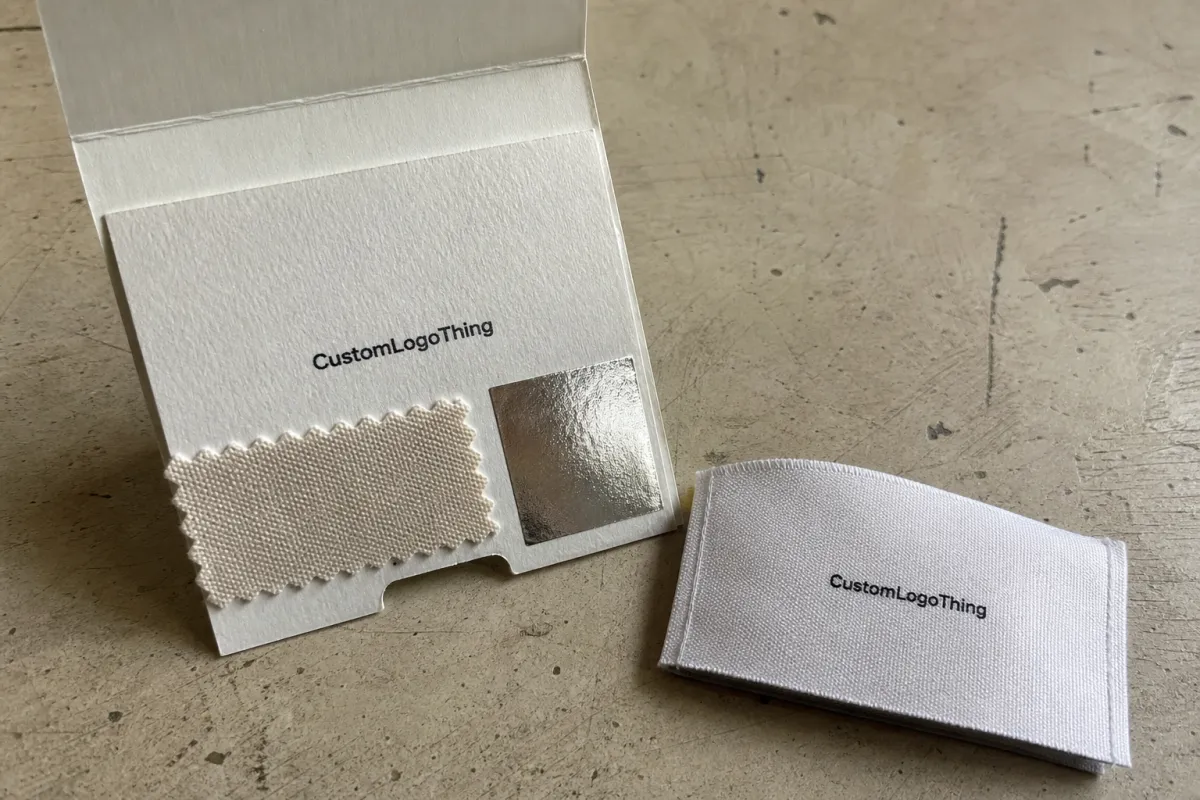
Request material swatches when comfort or brand feel matters. Swatches are especially useful for premium basics, kidswear, intimates, activewear, and sustainability-led apparel. Touch the satin, cotton, recycled polyester, TPU, and woven options side by side. Then test the short list on the real garment.
The most useful sample review has three checks. First, how does the label feel on the body? Second, how does the text read after folding and sewing? Third, how does it behave after laundering or heat application? If a label passes those checks, the bulk order has a much better chance of running cleanly.
Plan reorders early by keeping approved proofs, production notes, wash-test comments, and vendor item numbers in your product development folder. If you are comparing trim programs or building a larger apparel line, the Case Studies section can also help frame how labels, packaging, and product presentation work together.
A strong label specification is not about picking the fanciest tag. It is a production tool: choose the material that protects the customer experience, keeps care and compliance information readable, fits the garment fabric, and supports clean manufacturing from first launch to reorder.
FAQ
What is the best material for care labels for ecommerce apparel brands?
Polyester satin is usually the most versatile starting point because it prints clearly, feels smooth, folds well, and holds up through normal household washing. Cotton or organic cotton can be better for premium basics, babywear, and natural-fiber garments where softness and brand positioning matter. Heat-transfer or TPU labels are often best for activewear, intimates, and tagless comfort, but they should be tested on the exact garment fabric before bulk approval.
How should a care labels material guide for online clothing brands handle wash testing?
Test the approved label on the actual garment, not only as a loose sample. Run laundering conditions that match the garment care instructions, then check print clarity, edge feel, shrinking, curling, fading, and adhesion if the label is heat applied. For high-wash products such as basics, uniforms, kidswear, and activewear, test more than one cycle before approving bulk production.
Are woven care labels better than printed care labels?
Woven labels are durable and premium-looking, but they are not always best for dense care instructions because very small text can lose clarity in yarn. Printed labels usually handle fiber content, symbols, multilingual care text, and compliance information more cleanly. Many brands use woven labels for branding and printed satin or cotton labels for the technical care information.
What details do I need to get an accurate care label quote?
Provide label size, material, fold type, quantity, print colors, artwork, exact care text, garment category, and delivery destination. Also mention sampling, wash testing, recycled or organic materials, QR codes, variable data, and multiple label versions if needed. If you are unsure about material, share the garment fabric type and label placement so the manufacturer can recommend suitable options.
How early should ecommerce brands order care labels before a clothing launch?
Order care labels before final garment sewing begins so missing trims do not delay production. Allow time for artwork review, proof corrections, sampling if needed, bulk production, quality checks, and shipping to your sewing facility. For new materials, new suppliers, or heat-transfer labels, build in extra time for testing and approval.