The Tiny Label That Can Delay an Entire Apparel Launch
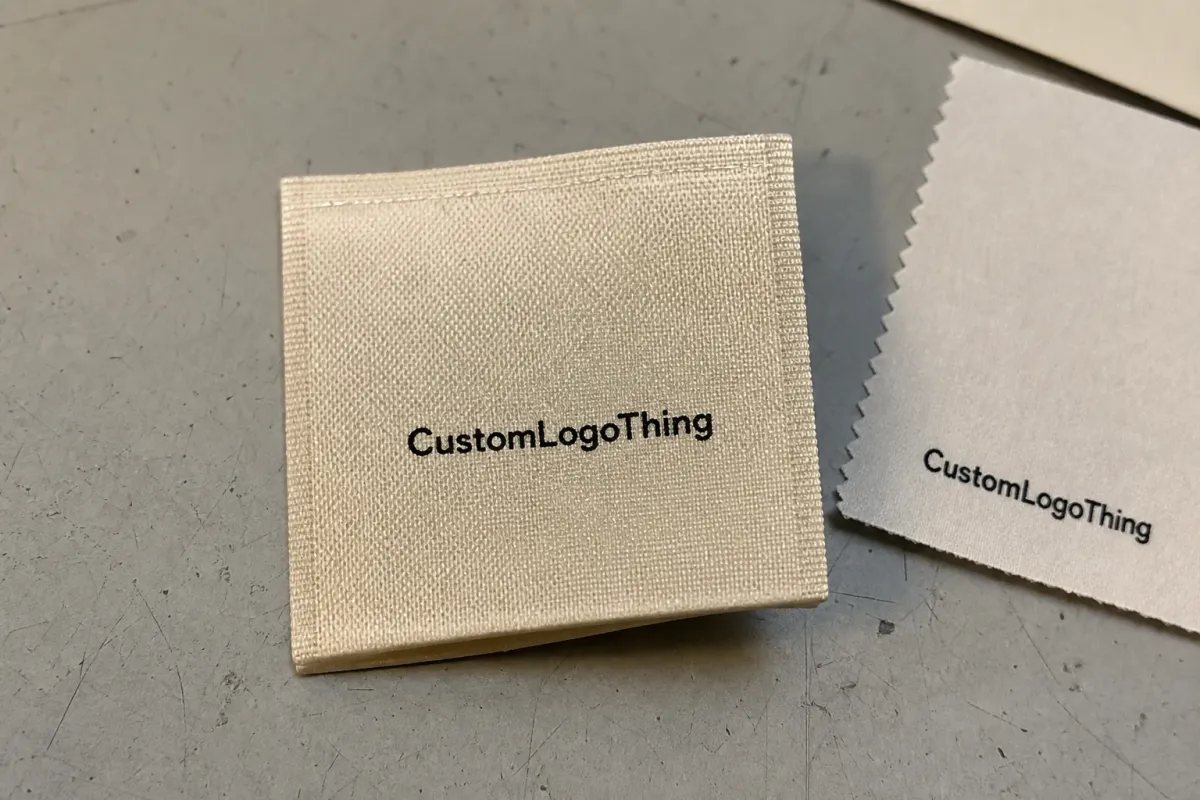
The hoodies are folded. Product photos are live. Ads are scheduled. Then someone notices the care label has the wrong fiber content, no origin marking, or text so tiny it looks like a barcode had a panic attack. Care Labels Unit Cost for ecommerce brands matters because labels touch compliance, customer trust, returns, production timing, and landed product margin.
Funny how the cheapest component can create the loudest headache.
A custom care label is not just washing instructions. It may carry fiber content, country of origin, size, brand name, RN or manufacturer details, batch organization, SKU sorting, and customer-facing care language. On apparel, loungewear, activewear, kidswear, accessories, and private-label collections, that small strip of polyester or satin works as compliance tool, production control, and brand touchpoint at the same time.
Most ecommerce buyers are not browsing labels for entertainment. They need practical answers before a purchase order gets approved: What is the realistic unit cost? What is the MOQ? Are setup charges included? How long does proofing take? Will the print survive washing? Can the supplier hit the delivery window before garments move to sewing or packing?
The cheapest label is not always the lowest-cost label. If it frays, bleeds, scratches the neck, fails wash testing, arrives late, or forces a reorder, that “cheap” label just became expensive. Very impressive. In the worst way.
This guide is for ecommerce clothing brands ordering woven, printed satin, cotton, TPU, nylon, or polyester care labels. The aim is simple: Buy the Right label at the right cost per piece without creating compliance problems, production delays, or boxes of useless leftovers.
Care Labels Unit Cost for Ecommerce Brands: What You Actually Pay
Care Labels Unit Cost for ecommerce brands depends less on one magic number and more on the full quote structure. Small trial runs cost more per label because setup, proofing, machine calibration, and production handling are spread over fewer pieces. Larger repeat programs usually get better bulk pricing because the supplier can run material, print, cut, inspect, and pack more efficiently.
Here are workable buying ranges. Basic printed polyester care labels at higher volumes often land around $0.03-$0.12 each. Printed satin, cotton, recycled polyester, nylon, and woven labels often run around $0.08-$0.35+ each, depending on size, color, finish, print durability, and fold style. Specialty labels, TPU heat transfers, multi-color woven pieces, or very small batches can climb above that.
| Order Type | Typical Quantity | Common Unit Cost Range | Best Use |
|---|---|---|---|
| Small trial run | 300-1,000 pcs | $0.12-$0.45+ each | Testing a new SKU, capsule drop, or supplier |
| Mid-volume ecommerce run | 2,500-5,000 pcs | $0.06-$0.22 each | Core apparel launches with repeat potential |
| Larger repeat program | 10,000+ pcs | $0.03-$0.15 each | Stable care copy, stable fiber content, ongoing replenishment |
Those ranges move because care labels are not all the same product. Material type, label dimensions, print method, number of colors, cut or fold style, wash durability, compliance copy, packing method, rush timing, and shipping destination all affect the final cost. A 20mm x 50mm one-color printed polyester side-seam label is not priced like a soft satin center-fold neck label with a logo, size, icons, QR code, and two-sided printing.
Quote format deserves attention. Some suppliers include setup charges in the unit price. Others separate plate fees, screen fees, digital setup, sampling, or artwork adjustment. Neither structure is automatically wrong. The trap is comparing a low unit number from one quote against a fully loaded price from another.
Buyer rule: compare total landed cost per usable label, not the prettiest unit price on the PDF.
MOQ changes the math fast. Low MOQ labels are useful for market testing, limited editions, or brands still validating sizing and fiber content. But if the 500-piece price is $0.28 and the 2,500-piece price is $0.11, the larger run may make sense if the label copy is stable. Do not overbuy if size, country of origin, care instructions, or fiber content may change next month. A closet full of obsolete care labels is not inventory. It is confetti with a spreadsheet attached.
For practical buying, treat care-label cost as a margin line, not a decoration line. A $0.09 label on a $68 hoodie is tiny. A delayed label that holds 2,000 finished garments is not tiny.
Label Materials, Print Methods, and Finish Options That Change Price
Material choice drives both price and customer experience. Polyester is the workhorse: affordable, durable, and good for dense text. Satin polyester feels smoother and looks more premium, which helps for neck labels and soft garments. Nylon can be strong and flexible, though it may feel less elevated. Cotton has a natural look but can cost more and may not hold tiny printed details as sharply as coated synthetic materials.
Recycled polyester is an option for brands with sustainability goals, but claims need to be accurate. If you use FSC-certified paper hang tags or recycled packaging claims elsewhere, align your label language carefully. Buyers checking sourcing language can review standards from FSC and environmental packaging guidance from the EPA. Claims are not decoration. They are claims.
TPU heat-transfer labels remove the sewn-in tag feel and work well for activewear, compression pieces, underwear, and performance basics. They can cost more, and application requires correct heat, pressure, and dwell time. Too little pressure, too much heat, or the wrong fabric finish can cause lifting, shine marks, or poor stretch recovery.
Woven damask labels look premium and hold up well, but very small legal text can get muddy unless the label is large enough and the weave density supports it. Woven is excellent for brand labels. For a dense care label with fiber percentages and five care symbols, printed material is often the cleaner choice.
Printed Labels
Printed labels are usually the best option for detailed care symbols, fiber content, compliance copy, multiple sizes, and affordable ecommerce production runs. A clean one-color print on white or black polyester can keep the cost per piece low, especially at 2,500 pieces and above. Digital or thermal transfer methods may suit smaller batches, while screen or rotary production can make sense at volume.
Print clarity depends on more than the machine. Coating, ink system, fabric texture, font weight, and line spacing all matter. Tiny reversed text on black satin may look sophisticated in a mockup and miserable in production. Dense care copy needs contrast, breathing room, and enough material width to remain legible after folding and sewing.
Woven Labels
Woven labels deliver better perceived quality and strong durability. They suit brand labels, neck labels, outerwear details, and premium goods. For care labels, though, woven is not always ideal if you need five care icons, fiber percentages, origin text, and manufacturer information on a narrow strip. Readability wins. A beautiful unreadable label is still a failure.
Cut and Fold Styles
Fold style affects sewing labor, presentation, and price. Straight cut is simple. End fold tucks the edges under for a cleaner sew-in. Center fold works well for side seams and neck seams. Loop fold can hold branding on one side and care copy on the other. Manhattan fold and book fold give a polished garment-label look but may increase handling. Heat cut helps seal synthetic edges, while soft edge finishing matters for neck comfort.
Comfort deserves real attention. Neck labels need softer materials and edges. Side-seam labels need durability. Kidswear and activewear may require softer, less scratchy options because customers complain quickly. They do not write poetry about labels that feel fine, but they will absolutely leave a review if the tag scratches their kid’s neck.
Ink and material pairing matter under repeated washing, drying, sweat exposure, friction, and detergent. Cheap ink that fades after three washes is not a bargain. If the label carries required care information, wash durability is part of the product’s risk profile.
Specifications Buyers Should Lock Before Requesting a Quote
A clean quote needs clean specs. Send vague information and you get vague pricing. Then everyone acts surprised. Don’t.
Before requesting pricing, lock the label size, material, fold style, print color count, quantity, artwork file, care text, symbols, fiber content, country of origin, and delivery location. If there are multiple versions, separate them clearly. A supplier cannot price ten SKUs accurately if three use cotton, four use polyester-spandex, two are imported from different origins, and one still says “TBD.”
- Label size: include flat size and finished folded size, such as 25mm x 60mm flat, center fold to 25mm x 30mm.
- Material: polyester, satin polyester, cotton, nylon, woven damask, TPU, or recycled polyester.
- Fold style: straight cut, end fold, center fold, loop fold, book fold, or other construction.
- Print details: one-color, two-color, black on white, white on black, double-sided, or full-color where supported.
- Compliance text: care instructions, fiber composition, origin, size, RN or manufacturer information where applicable.
- Quantity: list each label version separately and ask for price breaks.
Size planning is where buyers often cut too aggressively. A label may look great in a mockup at 400% zoom. Once folded, sewn into a seam, and viewed under real lighting, the same text may become useless. Allow enough width and height for legal copy, care symbols, brand mark, size, and seam allowance.
Care copy basics usually include washing, bleaching, drying, ironing, and dry-cleaning instructions, plus fiber composition and origin marking. Requirements vary by destination market and product type, so regulated claims should be reviewed by a qualified compliance resource. Not every supplier is your legal department. Honest but true.
Vector artwork is best for logos. Editable text helps prevent typo disasters and allows the production team to adjust spacing without redrawing the entire file. High-resolution PDFs can work if clean, but flattened artwork with tiny text can slow proofing. Standardized care symbols need enough spacing and contrast to remain readable after printing and washing.
Ecommerce SKU planning can lower label costs quickly. If five hoodie colors share the same fiber content, origin, and care instructions, one shared label version may work. If every colorway gets unique copy, expect higher setup time, more versions, more counting, and more inventory management.
Create a simple label matrix before quoting: SKU, garment style, size range, fiber content, care text, origin, label quantity, and label placement. It is not glamorous. It saves money.
MOQ, Quote Structure, and the Real Price Breaks to Ask For
Custom label MOQs often start around a few hundred to 1,000 pieces, depending on material, print method, and supplier setup. Woven labels, specialty finishes, custom colors, and multi-version jobs may require higher minimums. Printed polyester labels are usually more flexible, which is why many ecommerce brands start there.
Ask for price breaks at 500, 1,000, 2,500, 5,000, and 10,000 pieces if growth is likely. Those tiers show where the real savings appear. Price breaks are not magic. They happen because setup, calibration, material waste, QC, packing, and production handling get spread across more labels.
Combined-volume pricing may help if multiple label versions use the same material, size, print method, and fold. For example, three size versions of the same satin label may be easier to group than three different materials in three different sizes. Ask the question. Good suppliers will tell you what can be combined and what cannot.
Hidden costs matter. Sampling, revisions, rush production, split shipments, special packaging, barcoded bundles, import duties, and domestic freight can change the total. So can defect rates. A factory unit price means very little if 8% of labels are miscut, poorly printed, or late.
Order a buffer of 3%-10% extra for sewing waste, QC pulls, repairs, influencer samples, and replacements. For simple side-seam labels on a stable garment program, 3%-5% may be enough. For multi-location sewing, complex trims, or new production teams, 8%-10% is safer.
That buffer is not waste. It is insurance against stopping a sewing line over a label that costs less than a sip of coffee.
Production Process and Timeline From Artwork to Delivery
The usual process is straightforward: quote request, artwork review, care copy check, digital proof, optional physical sample, approval, production, quality inspection, packing, and shipping. The problems usually start when steps get skipped because everyone is “in a rush.” Very fashionable. Very risky.
Digital proofing often takes 1-3 business days after complete artwork and specs are submitted. Sampling can add several days, sometimes longer for woven, specialty, or heat-transfer labels. Standard production often takes 7-15 business days after proof approval, depending on order size, material, current capacity, and version count. Shipping then depends on method and destination.
Orders get delayed by missing care text, blurry logos, last-minute fiber changes, unapproved proofs, unclear fold direction, and too many label versions arriving in scattered emails. Rush requests during peak season can also stretch timelines. Production calendars are not elastic just because a launch date was picked before trims were ordered.
Physical samples are worth it for new materials, premium garments, sensitive-skin products, baby or kidswear, activewear, and brands switching suppliers. They are less necessary for repeat orders using approved specs. A sample lets you check hand feel, edge softness, print clarity, fold accuracy, and wash durability before committing to bulk.
Approval responsibility matters. Production should not start until the buyer signs off on spelling, symbols, fiber content, size, color, fold, and placement direction. If the proof says “100% coton” and nobody catches it, the typo is not going to feel better at 10,000 pieces.
Rush reality: cheap, perfect, and overnight rarely travel together. Pick two. Sometimes pick one.
The smarter move is ordering labels alongside garment production, not after garments are finished and waiting. For ecommerce brands, that timing protects cash flow and launch dates. It also keeps label cost from turning into emergency freight plus rush fees.
How Custom Logo Things Helps Brands Avoid Label Reorders
Custom Logo Things supports ecommerce teams that need custom labels built around real production requirements, not vague catalog promises. Through Custom Labels & Tags, brands can source printed satin, polyester, cotton, woven, and heat-transfer options based on garment type, margin target, MOQ, and customer expectations.
The useful work happens before production. Material recommendations prevent scratchy neck labels. Print method guidance helps keep small text readable. MOQ planning shows whether a test run or larger price break makes better financial sense. Digital proofing catches layout problems before ink hits material. Sampling support helps buyers validate hand feel and wash performance when risk is higher.
Quality control should be practical, not theatrical. Review artwork readability. Check fold direction. Verify size tolerance. Inspect print clarity. Pack labels in bundles that make sense for sewing or fulfillment teams. A label order should arrive ready to use, not as a mystery pile that someone has to decode on a warehouse table.
Brand consistency also matters. Care labels can coordinate with hang tags, mailer bags, tissue paper, stickers, garment bags, boxes, and other ecommerce packaging. If your packaging system is already planned, labels should not look like they wandered in from another brand. For examples of coordinated packaging decisions, see the Custom Logo Things Case Studies.
Repeat orders are where good specs pay off. Once label size, material, fold, color, copy, and packaging are approved, reorders move faster and with fewer questions. That matters when a product suddenly starts selling instead of politely sitting in Shopify purgatory.
The sales case is not complicated. The right supplier lowers friction, reduces avoidable rework, and gives ecommerce brands a more predictable cost per garment. That is the practical value behind understanding care label pricing: not just saving two cents, but removing the dumb problems that cost far more.
Build a Label Quote That Will Not Waste Your Time
Start with the job details. Confirm garment type, label location, material preference, flat size, finished size, fold style, print colors, care copy, fiber content, origin text, quantity, target delivery date, and shipping address. If you have multiple SKUs, build a matrix instead of sending six screenshots and a prayer.
Gather artwork before requesting pricing. Vector logo files, editable text, and a rough label layout speed up quoting and reduce mistakes. If the logo only exists as a 72 dpi PNG pulled from a website header, expect delays. Production files are not the same as marketing files.
Ask for one to three quantity tiers so you can compare immediate cash flow against lower unit cost. A 1,000-piece run may protect cash. A 5,000-piece run may reduce the cost per piece. The right answer depends on sell-through confidence, label stability, storage, and launch timing.
Flag special requirements upfront: kidswear, activewear, swimwear, organic claims, recycled content, high-heat washing, industrial laundry, export markets, or sensitive-skin positioning. These details affect material choice, print method, testing, and sometimes MOQ. They should not appear after the proof is approved.
- Send specs and artwork.
- Request material and print recommendations.
- Review quote tiers and landed cost.
- Approve a digital proof.
- Approve a sample if the garment or label risk justifies it.
- Place the production order and align delivery with sewing or packing.
Knowing Care Labels Unit Cost for ecommerce brands before ordering helps protect margin, avoid delays, and buy labels that actually fit the product. The best quote is not the lowest number in isolation. It is the one that matches the garment, the compliance copy, the production schedule, and the number of labels you can realistically use.
FAQs
What is a typical care label unit cost for ecommerce clothing brands?
Basic printed polyester care labels can be around $0.03-$0.12 each at higher quantities, while satin, cotton, woven, or specialty options can run about $0.08-$0.35+ each. Small orders usually cost more because setup, proofing, and handling are spread over fewer pieces. Compare total landed cost, including setup charges, sampling, shipping, and usable label quality.
What MOQ should ecommerce brands expect for custom care labels?
Many custom care label orders start around a few hundred to 1,000 pieces, depending on material and print method. Better price breaks often appear around 2,500, 5,000, and 10,000 pieces. If fiber content, origin, or care instructions may change soon, avoid overbuying just to chase a lower unit cost.
How do I lower custom care label pricing without hurting quality?
Use one shared label across multiple SKUs when fiber content, care instructions, and origin are identical. Choose standard sizes, common materials, and simple print colors where possible. Order at sensible price breaks, ask about combined-volume pricing, and keep a small overage for sewing waste and replacements.
How long does care label production take after proof approval?
Digital proofing usually takes 1-3 business days after complete artwork and specs are submitted. Standard production often takes 7-15 business days after approval, depending on order size, material, and current capacity. Physical samples, rush production, complex versions, or international shipping can extend the timeline.
What information is needed to quote care labels for an ecommerce brand?
Provide label size, material, fold style, quantity, print colors, artwork, care instructions, fiber content, country of origin, and delivery location. Include garment type and label placement so the supplier can recommend a comfortable and durable option. For multiple versions, send a simple matrix showing each SKU, version, and quantity.


