Soap Brands Lose Shelf Impact When the Label Feels Disposable
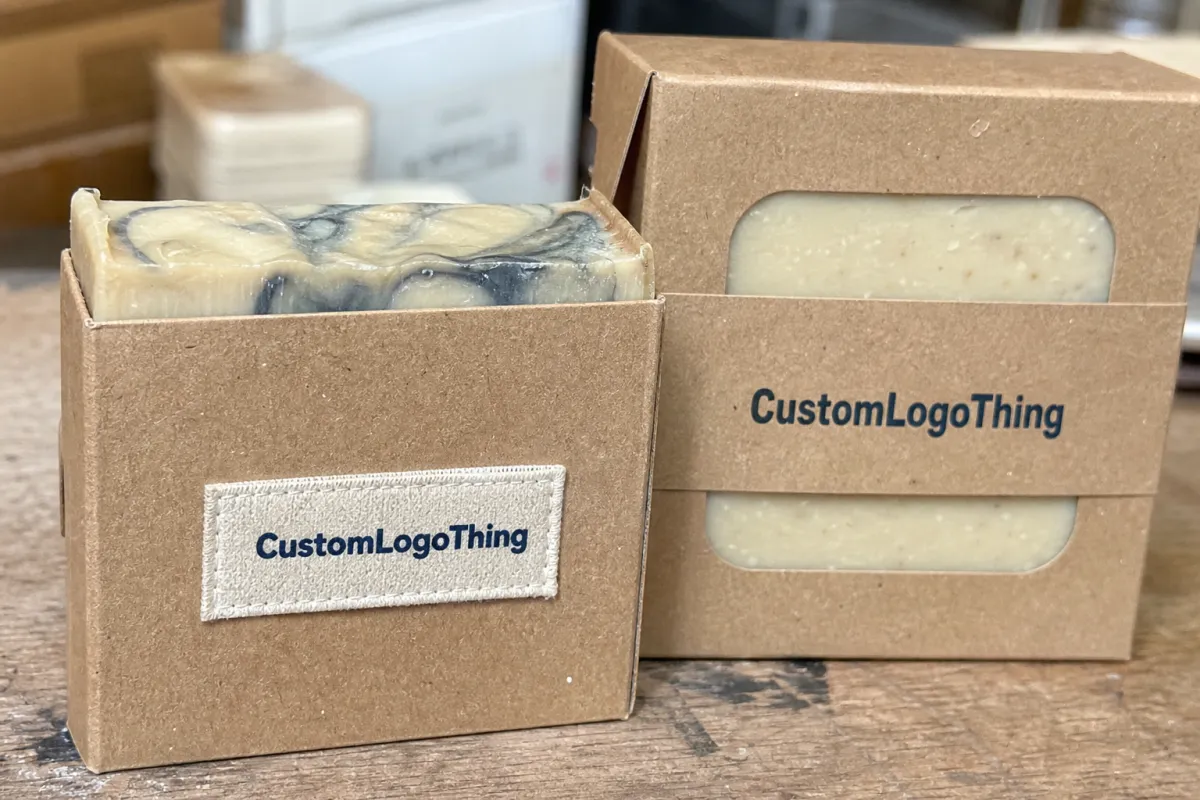
The soap is cured. The scent is right. The lather has been tested, the ingredient deck is clean, and the bar looks good in the hand. Then the gift set gets finished with a thin paper sticker that feels temporary. A Logo Patches Supplier Quote for soap makers answers a practical question: can a tactile brand label improve presentation without damaging margin?
Handmade soap is often judged before it is smelled. Unfair, yes. Also true. Texture, weight, stitching, weave, edge finish, and the way a mark sits on fabric can signal craft value faster than a paragraph about olive oil, shea butter, goat milk, or lavender essential oil.
Logo patches are not only for jackets and caps. They can be sewn, heat-pressed, tied, riveted, or displayed on muslin soap bags, linen wraps, cotton gift pouches, spa robes, maker aprons, boutique display runners, sampler kits, and event merchandise. For small soap brands, that flexibility matters. One branded component can support several product lines instead of one short-lived wrap.
A paper label usually does one job: identify the product before it is discarded. A woven, embroidered, PVC, leatherette, or printed patch behaves differently. It can make a drawstring bag feel reusable. It can turn a plain kraft-style bundle into a branded object. It can help a wholesale buyer read a product as giftable before the price sheet comes out.
That does not mean every bar needs a patch. Many packaging upgrades fail because the brand buys the fanciest component before calculating assembly time, storage needs, and retail handling. The safer commercial path is slower: select the right construction, quote practical quantities, test it on the actual packaging material, then scale.
The variables that matter are not mysterious, but they do need to be named: patch type, artwork, size, backing, border, minimum order quantity, sampling, production timing, and quality checks. A useful quote should expose trade-offs, not hide them behind a single low unit price.
Patch Types That Work Best on Soap Bags, Wraps, and Gift Sets
Patch selection starts with the logo, but it should not end there. Soap packaging has its own stresses: fragrance exposure, oils, humidity, repeated market-table handling, storage bins, and gift-box compression. A patch that looks excellent on a denim jacket may perform poorly on thin muslin or waxed kraft wrap.
Woven patches are usually the strongest option for fine detail. If your logo has thin serif type, small botanical linework, or a curved apothecary emblem, woven construction can hold detail better than embroidery at small sizes. A 1.25-inch woven patch on a cotton drawstring bag can remain readable if contrast is strong and the artwork is simplified.
Embroidered patches bring raised texture. They feel handmade, which can fit cold-process soap, rustic shave bars, and farmers market branding. The trade-off is detail. Dense stitching on a small patch can swallow tiny letters, and on lightweight muslin it may create puckering unless the fabric is stabilized.
Printed fabric patches suit gradients, watercolor-style illustrations, seasonal graphics, or low-MOQ tests where the artwork has too many colors for thread. They can be useful for limited holiday bundles or scent launches. They may not deliver the same perceived permanence as woven or embroidered options, but they solve real budget and color-count problems.
Leatherette patches work well for rustic apothecary branding, beard soap kits, bathhouse collections, and kraft-style packaging. They pair nicely with canvas totes, belly bands, and gift wraps. PVC patches are better for waterproof spa kits, gym-bag sets, travel soap cases, or modern wellness branding. Chenille belongs in a narrower lane: bold lifestyle merchandise, not delicate ingredient-led soap packaging.
| Patch type | Best soap packaging use | Strength | Watch-out |
|---|---|---|---|
| Woven | Muslin bags, linen wraps, small boutique pouches | Fine text and line detail | Thread colors may not match printed labels exactly |
| Embroidered | Aprons, canvas totes, premium gift bags | Raised craft texture | Small lettering can fill in |
| Printed fabric | Seasonal launches, illustrated scent collections | Gradients and many colors | Less tactile than stitched constructions |
| Leatherette | Kraft-style wraps, rustic gift sets, canvas accessories | Apothecary look and strong shelf cue | Heat and attachment method must be tested |
| PVC | Spa kits, travel soap bags, wet-area bundles | Water resistance and modern finish | Can feel too technical for botanical brands |
Attachment matters as much as construction. Sew-on backing is safest for reusable fabric bags. Iron-on backing can work on compatible fabrics if temperature, pressure, and dwell time are controlled. Adhesive backing is better for temporary placement or short-run presentation, not long-term fabric use. Hook-and-loop suits removable display patches. No backing can be the right choice when a brand plans to attach patches with twine, rivets, or a stitched border.
Here is the buying detail that gets missed: the cheapest patch is not always the cheapest packaging system. If a low-cost patch adds 40 seconds of assembly labor per unit or creates a 6% reject rate on wholesale orders, the saving disappears quickly. A good quote accounts for use, not just unit price.
Artwork and Specification Details a Supplier Needs Before Pricing
A supplier cannot price accurately from “I need a logo patch” and a screenshot. The quote needs dimensions, quantity, construction, and application details. Without those, the estimate is only a guess dressed up as a number.
Prepare these specifications before requesting a Logo Patches Supplier Quote for soap makers:
- Patch size: width and height in inches or millimeters.
- Shape: rectangle, circle, oval, shield, arch, custom botanical silhouette, or irregular logo outline.
- Quantity: at least two or three price-break quantities, such as 100, 300, and 500 pieces.
- Patch type: woven, embroidered, printed fabric, leatherette, PVC, chenille, or supplier recommendation.
- Backing: sew-on, iron-on, adhesive, hook-and-loop, or no backing.
- Border: merrowed, laser-cut, hot-cut, stitched edge, or raw-style finish if appropriate.
- Color count: thread colors, printed colors, Pantone references, or single-color debossing.
- Packaging use: muslin bag, kraft wrap, linen band, soap box, canvas tote, apron, robe, or display accessory.
- Delivery details: destination, deadline, and whether rush production is being considered.
Vector artwork is preferred. AI, EPS, SVG, or a high-resolution PDF gives the production team clean curves, scalable type, and workable outlines. PNG or JPG files can be reviewed, but if the edges are fuzzy or the lettering is unclear, a redraw service may be needed before proofing. That fee should be listed separately.
Size is not a cosmetic detail. Small patches around 1 to 2 inches can work on individual soap bags, especially if the logo is simple. Patches in the 2.5 to 4 inch range are usually more appropriate for gift totes, sampler kits, aprons, retail display cloths, or spa bundles. A 0.75-inch line of curved text that looked elegant on a website header may become unreadable in thread.
Border choice affects both appearance and durability. Merrowed borders suit circles, ovals, rectangles, shields, and classic label shapes. Laser-cut or hot-cut borders are better for custom silhouettes, botanical outlines, irregular apothecary emblems, and small patches where a thick merrowed border would crowd the logo.
Color needs discipline. Pantone references help consistency, but woven and embroidered threads may not match printed soap labels exactly. Thread reflects light differently than ink on paperboard. On small patches, contrast matters more than obsessive color matching. If the logo must remain legible at 1.5 inches, cream thread on tan fabric may be too quiet, even if the palette looks refined on screen.
Share the substrate. A patch intended for thin muslin behaves differently from one going on waxed canvas, linen, kraft wrap, or a promotional tote. Photos help. Physical samples help more. If the final packaging has a drawstring channel, folded edge, belly band, or box compression point, the supplier should see that before sampling. One overlooked seam allowance can make an otherwise good patch feel misplaced.
Logo Patches Supplier Quote for Soap Makers: Cost, MOQ, and Unit Price
Patch cost is driven less by the word “custom” and more by the actual build: size, construction, stitch density, material, backing, border, color count, sampling, quantity, and freight. A Logo Patches Supplier Quote for soap makers should separate those drivers so the buyer can compare options cleanly.
Minimum order quantity varies by patch type. Printed and woven patches may be more flexible for smaller trial runs. Embroidered, PVC, or specialty leatherette patches can carry higher minimums because setup, material calibration, molds, stitch programming, or press testing takes time. Not always, but often enough that buyers should ask early.
A buyer-friendly quote separates setup fees, digital proofing, physical sample fees, per-unit pricing, rush charges, freight, and optional packing. If one supplier includes sampling and another does not, the lower quote may not be lower. If one quote uses adhesive backing and the other includes sew-on construction, they are not equivalent.
| Quantity | Typical buyer use | Common pricing behavior | Packaging risk |
|---|---|---|---|
| 100 pieces | Market launch, scent test, gift-set trial | Higher unit cost because setup is spread across fewer patches | Good for validating look before wholesale scale |
| 300 pieces | Small wholesale run or seasonal bundle | Moderate price break on many woven or printed patches | Assembly method should already be tested |
| 500 pieces | Core product line, repeat retail packaging | Lower unit cost if specs are stable | Wrong size or backing becomes expensive if untested |
| 1,000+ pieces | Wholesale-ready program or multi-channel merchandise | Best setup efficiency and freight planning | Requires proof discipline and quality approval |
For context, simple small woven patches can sometimes price in the low cents to low dollar range depending on quantity, size, thread count, and backing. Dense embroidered patches, larger leatherette pieces, and molded PVC usually move higher. Exact pricing depends on the final specification, but the commercial pattern is consistent: 100 pieces proves the concept; 500 or 1,000 pieces usually improves the math.
Hidden costs deserve more attention than they get. Assembly labor is the big one. Sewing a patch to a reusable bag can produce a better final product, but it adds time. Adhesive backing may reduce labor, but if it fails on textured fabric after fragrance exposure or humidity, the reject rate becomes the real cost. A mismatched 3-inch patch on a 4-inch soap pouch can look crowded and force a reorder.
Ask for two or three quantities at once. A quote at 100, 300, and 500 pieces reveals the price break instead of forcing a guess. Also ask whether the same setup can support future reorders. If your core patch will be used on muslin bags, gift sets, and event merchandise, reordering becomes easier when the first specification is clean.
A transparent quote should include patch type, dimensions, material, backing, border, MOQ, sample cost, production lead time, shipping method, payment terms, and revision policy. If any of those are missing, ask. Fact-based buying beats optimistic buying.
Process and Timeline from Artwork Review to Finished Patches
The process is straightforward when the specifications are complete. It becomes slow when every decision is discovered after proofing. A reliable production path usually follows eight steps: quote request, artwork review, specification confirmation, digital proof, sample or pre-production approval, bulk manufacturing, quality control, packing, and shipping.
A supplier cannot give a reliable timeline from a logo alone. The clock depends on whether the artwork is usable, whether the patch type is simple or complex, whether a physical sample is needed, and how quickly the buyer approves the proof. Artwork review may take a few business days. Sampling adds time. Bulk production depends on quantity, material, and construction complexity.
The digital proof is not a formality. Check size, shape, color placement, border, backing, logo position, and text legibility. If the patch will be sewn onto a 3-by-4-inch muslin bag, confirm the patch size against that bag, not against a blank white PDF. Scale errors are common because logos often look more readable on screen than they do in thread.
Physical samples are recommended for wholesale launches, premium gift sets, first-time patch orders, or complex constructions such as PVC, leatherette, and detailed embroidery. A sample lets you test the patch on the real packaging: pull the drawstring, stack it in a gift box, rub it against tissue paper, and handle it the way shoppers will.
Practical rule: skip sampling only when the artwork is simple, the patch type has already been tested, and the attachment method is low-risk. Saving several days is not a bargain if the patch arrives at the wrong scale.
Rush orders carry risk. They can be appropriate for a simple woven patch using approved artwork and standard backing. They are less sensible for a detailed embroidered crest, a custom PVC mold, or a leatherette patch going onto a packaging material that has never been tested.
Order patches before final soap wrap printing if the patch color or size influences the rest of the packaging system. That tactic helps avoid a common mismatch: a beautiful patch that clashes with the belly band, tissue, or box insert. Packaging is a system. Every component either argues with or supports the others.
Quality Checks That Prevent Patch Failures on Handmade Soap Packaging
Quality control for soap packaging is not identical to quality control for apparel. Clothing patches face washing, abrasion, and wear. Soap packaging patches face fragrance oils, humidity, storage bins, handling at markets, gift-box pressure, and sometimes oil transfer from the bar or wrap. Different stress. Different inspection.
Start with the visible checks: clean edges, stable backing, accurate size, readable small text, correct border, consistent thread or material color, no loose stitches, no scorch marks, no warped PVC, and no adhesive bleed. Measure a few pieces from the bulk run. A small variation may be acceptable; a patch that is visibly off-size can create assembly problems.
Legibility is measurable. Many soap logos include botanicals, curved type, ingredient cues, stars, moons, leaves, or fine apothecary lines. If those details collapse at the chosen patch size, the patch becomes decoration instead of branding. That may still look attractive, but it is not the same commercial outcome.
Run a basic rub test. Handle the patch against the actual bag, wrap, or box insert. Check whether it snags, peels, discolors, or transfers residue under normal retail handling. For fragranced products, let the finished package sit for a short test period before evaluating adhesion and surface appearance. Some materials behave differently after exposure.
For sewn patches, test needle tolerance on the final fabric. Thin muslin can pucker under dense embroidery. Loose-weave cotton may distort if the patch is too stiff. Heavier canvas can support thicker embroidery, leatherette, or PVC, but needle size and stitch placement still matter.
For heat-press or adhesive applications, confirm temperature, pressure, dwell time, and substrate compatibility before bulk assembly. Heat that works on a cotton tote may damage a coated wrap or distort a synthetic pouch. Adhesive that looks secure on smooth paper may fail on textured linen.
Custom Logo Things asks packaging-use questions early because patch success depends on how the finished product is handled, not just how the patch looks by itself. If you are building reusable soap bags or wholesale gift sets, share that context through Contact Us before proofing. The quote will be more accurate, and the production risk will be lower.
For broader packaging performance thinking, the International Safe Transit Association is a useful reference point for transit testing discipline, while the Forest Stewardship Council is relevant if your soap packaging system also includes paperboard, hang tags, or certified fiber components.
How to Compare Supplier Quotes Without Buying the Wrong Patch
Do not compare supplier quotes by unit price alone. Two quotes can both say “custom embroidered patch” while using different stitch density, backing, border type, thread quality, sample policy, and freight method. The lower number may be a real saving. Or it may be a missing specification.
Use a line-by-line checklist:
- Exact dimensions
- Patch construction
- Material and thread details
- Backing type
- Border style
- Quantity and MOQ
- Setup cost
- Sample fee
- Production time after approval
- Shipping cost and method
- Revision limits
- Artwork redraw cost
- Packing method for finished patches
Vague terms are red flags. “Standard backing” can mean sew-on to one supplier and iron-on to another. “Normal border” may mean merrowed on a circle but hot-cut on an irregular shape. Those differences affect performance on soap bags and gift packaging.
A cheaper embroidered patch may use lower stitch density, leaving gaps in coverage. A cheaper woven patch may blur small lettering or simplify botanical details too aggressively. A low-cost adhesive patch may look fine on the first day and start lifting after exposure to fragrance, humidity, or textured fabric.
Ask for photos of similar patch styles, not random portfolio images. Similar size, edge type, material, and backing matter more than a beautiful sample that has nothing to do with your use case. If you need a 1.5-inch woven patch for a drawstring bag, a 5-inch jacket back patch does not prove much.
Request the supplier’s recommendation in writing. If they suggest woven instead of embroidered, ask why. A useful answer will mention text size, line detail, fabric behavior, border constraints, or attachment method. A weak answer will only mention price.
A good Logo Patches Supplier Quote for soap makers makes trade-offs visible: what is being saved, what is being upgraded, and what risks remain. That is the difference between buying a patch and buying a packaging component that can survive real handling.
Next Steps to Request a Ready-to-Produce Patch Estimate
Before contacting a supplier, gather the practical details. You need the logo file, desired size, preferred patch type, target quantity, packaging material, attachment method, deadline, shipping location, and reference photos. If you are unsure about construction, say so. A capable supplier can compare two or three options.
A simple ordering path looks like this:
- Send vector artwork or the highest-resolution logo file available.
- Share photos of the soap bag, wrap, box, tote, apron, or gift set.
- Choose two or three patch styles for comparison.
- Request price breaks at multiple quantities, such as 100, 300, and 500 pieces.
- Review the digital proof for size, border, backing, and legibility.
- Approve a physical sample if the order is premium, complex, or new to your brand.
- Schedule bulk production after the proof or sample is approved.
For a first order, test one versatile patch size before creating five seasonal variations. A 1.5-to-2-inch woven or printed patch may work across muslin bags, small gift sets, and market merchandise. A larger 3-inch patch may be better for totes, robes, or display accessories. The best first order is not always the most exciting design. It is the one that gives you the most packaging flexibility.
A basic specification sheet reduces quote revisions. Include dimensions, colors, backing, border, application notes, and target quantity. Even a one-page sheet can shorten the quoting cycle because the supplier is not guessing. Ask for both the best-value option and the premium option. That makes the decision measurable instead of emotional.
If you are ready to price patches for soap bags, gift bundles, wholesale displays, or branded merchandise, send your artwork and packaging notes through Contact Us. Include the packaging application and quantity goals so Custom Logo Things can price the patch that fits your product, timeline, and margin.
FAQs
What information is needed for a logo patch quote for soap makers?
Send your logo file, patch size, preferred patch type, quantity, backing, border style, packaging material, attachment method, deadline, and shipping destination. If you are unsure about patch type, include photos of your soap bags, wraps, boxes, or gift sets so the supplier can recommend the best construction.
What is the typical MOQ for custom logo patches for handmade soap packaging?
MOQ depends on patch type, size, and production method. Printed and woven patches may be more flexible, while embroidered, PVC, and specialty patches can require higher minimums. Ask for price breaks at several quantities so you can compare a trial-order cost against larger wholesale-ready runs.
Are woven or embroidered logo patches better for soap makers?
Woven patches are usually better for small text, fine lines, and detailed botanical logos. Embroidered patches are better when raised texture and handmade character are more important than tiny detail. The best choice depends on logo complexity, patch size, and the material it will attach to.
How long does production take after approving a custom patch proof?
Timeline depends on artwork readiness, sample requirements, order quantity, patch type, and shipping method. A physical sample adds time but is recommended for premium soap gift sets, first orders, or complex designs. Fast approvals and complete specifications help prevent avoidable delays.
Can logo patches be attached to muslin soap bags or kraft-style gift packaging?
Yes, patches can be sewn, heat-pressed, tied, riveted, or applied with adhesive depending on the patch backing and packaging material. Sew-on patches are often safest for reusable fabric bags, while adhesive may be better for temporary displays or short-run presentation pieces. Always test the attachment method on the actual packaging material before bulk assembly.


