Custom Woven Labels for skincare brands do more than identify a product. They shape the first physical impression a buyer gets from the package, often before the carton copy, ingredients, or claims have a chance to work. A small woven label can make a cleanser feel more deliberate, a serum set feel more refined, and a body-care line feel like it belongs in a structured retail program rather than a one-off launch.
That effect comes from texture as much as color. Buyers in beauty and wellness tend to notice finish, edge quality, stitch feel, and whether the packaging system looks consistent from SKU to SKU. Those details are easy to overlook in a spreadsheet, but they show up immediately once the product is on a shelf or in a customer’s hands. A label is a small component, yet it often carries a surprising amount of brand weight.
For teams building branded packaging, the woven label sits at the intersection of design intent, durability, and production limits. It has to look considered, survive handling, and fit the actual packaging structure. That is why sourcing Custom Woven Labels for skincare brands usually involves more than choosing a logo and asking for a quote.
Why woven labels can change how skincare packaging is perceived
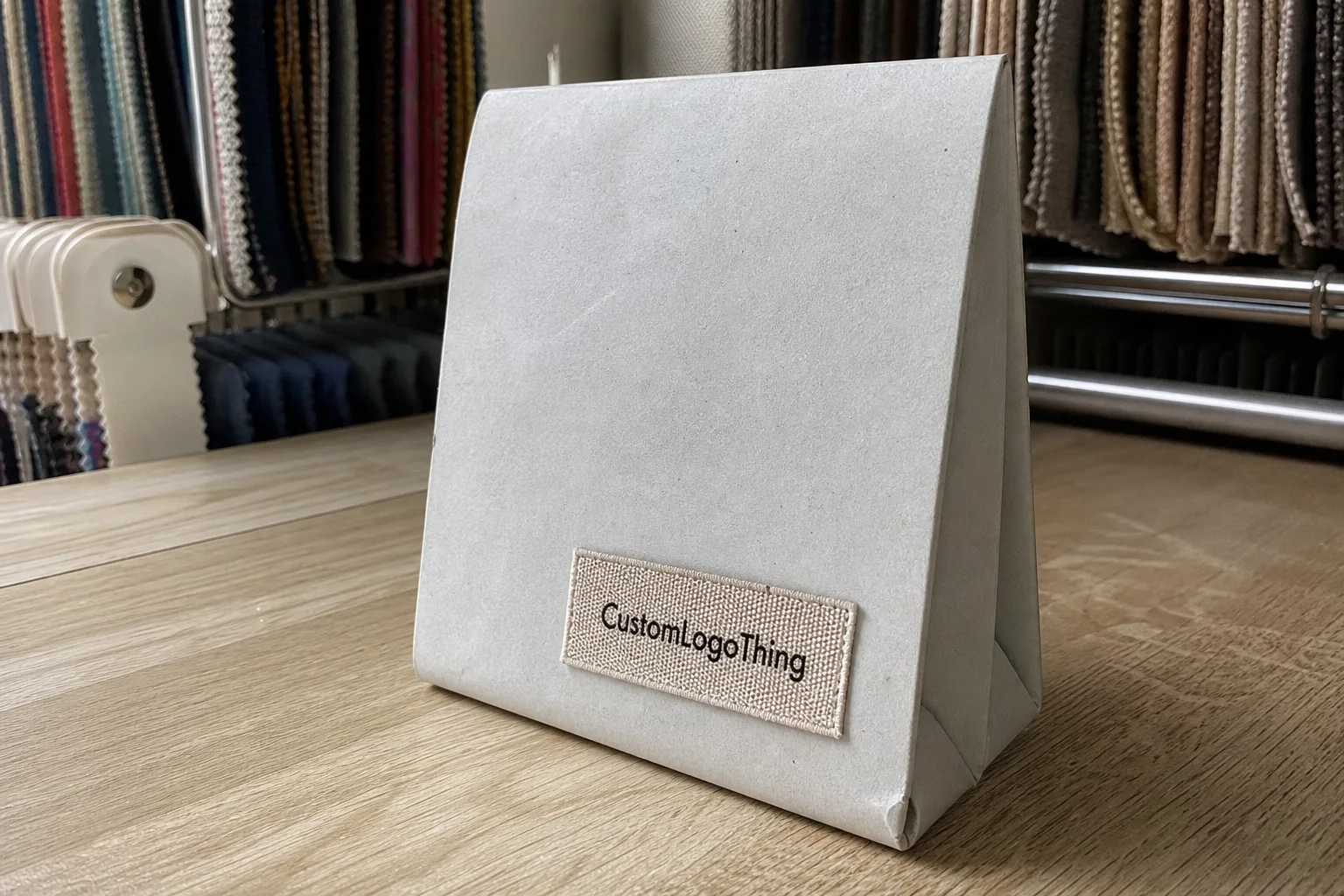
Woven labels are created by weaving thread into the artwork itself rather than printing ink on top of a flat substrate. That difference matters. The result is a textured, cloth-like piece with a tactile quality that many brands use to signal care, craft, or a more premium tier of presentation. They are not interchangeable with hang tags, pressure-sensitive labels, or paper stickers, even if the branding on them is identical.
In skincare, that distinction can be useful across several packaging formats. A woven label may sit on a fabric pouch, a gift set sleeve, a closure band, a gift box tie, or another secondary packaging element where tactile branding helps the line feel cohesive. It can also work as a recognizable brand marker across sample kits and retail-ready accessories, especially when a brand wants a repeatable detail that can carry through multiple product types.
There is also a perception issue that comes up repeatedly in buyer conversations: texture is often read as quality. That does not mean woven is always the right answer. It means the material and finish of the label can influence how the product is judged before the consumer has opened it. For smaller skincare brands trying to build recognition without overcomplicating the package, Custom Woven Labels for skincare brands can be a practical way to add presence without adding clutter.
“Consumers often read finish before they read copy. If the packaging feels thoughtful, the brand feels more credible.”
Woven labels are especially effective when the packaging system needs one dependable visual anchor. If the line will appear in retail, online, and in sampling programs, the label can help the brand stay recognizable without relying on oversized graphics or excessive copy.
How woven label production works from artwork to finished rolls
The production path is structured, and there is a reason for that. Woven labels are physical components, not digitally printed sheets, so the process moves from file preparation to loom setup, thread selection, weaving, cutting, folding, and finishing. Even a simple label involves several steps because the artwork has to be translated into thread logic before anything is made.
Artwork preparation is usually where the quality of the final piece is decided. Logos with ultra-thin strokes, tiny lettering, gradients, or crowded details often lose clarity once they are converted into a woven format. Thread count, weave density, and color separation all matter. A design that looks polished on screen can become muddy or cramped when reduced to 18 mm wide, which is a common size for small-format branding.
Most suppliers will ask for a final logo file, Pantone references, dimensions, quantity, attachment method, and the finish you want. Those requests are not filler; they are the minimum information needed to estimate what can be woven cleanly and how the finished labels will be used. If you are ordering custom woven Labels for Skincare brands, it is worth confirming whether the supplier prefers vector artwork, how they approximate color matching, and wHat Size Tolerance they hold during finishing.
Common constructions include:
- Sew-on labels for textile pouches, cosmetic bags, and fabric accessories.
- Adhesive-backed labels for select packaging applications where stitching is not practical.
- Folded labels such as end fold, center fold, or mitre fold for cleaner attachment edges.
- Cut-to-size labels for branding inserts, presentation pieces, or simpler applications.
Quality control usually happens in three stages: artwork approval, first sample, and final production inspection. That sample stage is worth protecting. It tells you whether the logo still reads clearly at actual size and whether the chosen finish behaves the way you expected. For packaging buyers, a sample is not a formality; it is often the cheapest way to avoid a costly correction.
Key design and material factors that affect performance
Material choice affects both appearance and readability. Three constructions come up frequently in beauty and wellness packaging: damask, satin, and taffeta. Damask typically gives the sharpest reproduction because it uses a tighter weave, so it handles fine type and small logo details better than most options. Satin has a smoother face and a more polished visual feel. Taffeta is lighter and usually more economical, which can make sense for simple branding or lower-cost applications.
If the goal is a premium presentation, satin or damask generally make the strongest case. If the label only needs to identify the line without adding much visual weight, taffeta may be enough. The right choice depends on the product tier, the package type, and what else is already doing the visual work on the box or container. A woven label should support the system, not compete with it.
Color strategy matters just as much as material. High contrast usually improves readability, especially once the label is reduced to a compact size. A deep navy logo on a pale background will often reproduce more cleanly than two low-contrast shades fighting for separation. For clean beauty branding, restrained palettes often look more expensive because they reduce visual noise and hold up better across a full product family.
Size is where many teams underestimate production limits. On a narrow tube seam or a compact jar accessory, a label that is too wide looks forced, while one that is too small can disappear completely. The label should be scaled to both the surface area and the viewing distance. A label meant for shelf display should not be specified the same way as one used inside a gift box or on a sample pouch.
Durability matters too. Skincare packaging deals with handling, carton compression, moisture, shipping vibration, and repeated contact during fulfillment and retail display. A label that looks clean in a sample tray can fray or lift if the construction is too light for the application. It helps to ask how the label performs under abrasion and humidity, not just how it looks on approval. Distribution testing frameworks such as ISTA are useful because they remind brands to think beyond shelf appearance.
| Label type | Visual impact | Typical cost level | Best fit |
|---|---|---|---|
| Damask woven | High detail, sharp edges | Medium to higher | Premium skincare, fine logos, compact branding |
| Satin woven | Soft sheen, polished look | Medium | Luxury positioning, gift sets, branded packaging |
| Taffeta woven | Cleaner and simpler | Lower | Entry-tier product packaging, practical line extensions |
That comparison becomes especially useful when a brand is managing multiple SKUs at different price points. The label does not need to be the most expensive component in the system; it needs to match the product’s role in the line. In many cases, a clean, well-proportioned woven label does more for perceived quality than a more complex version that is difficult to read or expensive to repeat.
Custom woven labels for skincare brands: cost, MOQ, and unit pricing
Pricing usually comes down to six variables: label size, thread count, color count, finish, quantity, and construction style. A simple one-color cut label costs less than a folded, multi-color label with tighter detail. Add adhesive backing, and the pricing changes again because the application method and finishing steps change with it.
MOQ, or minimum order quantity, affects price in a straightforward way. Lower quantities usually mean a higher unit cost because the setup work is spread across fewer pieces. If a supplier quotes 1,000 pieces and 10,000 pieces, the higher run will usually produce a lower per-unit price. That is standard production economics, not a pricing anomaly.
For budgeting purposes, it helps to think in broad ranges rather than precise assumptions. Custom woven labels for skincare brands often fall into these rough bands:
- Indie launch runs: roughly $0.12-$0.30 per label at lower quantities, depending on size and complexity.
- Mid-sized launches: roughly $0.06-$0.18 per label once quantity rises and artwork stays simple.
- Large retail programs: pricing can fall further, but only when specs are standardized and the artwork stays consistent.
Those are working ranges, not guarantees. A tight satin label with several thread colors will not price the same way as a simple damask version. Rush orders can also increase cost quickly, especially if there is limited production capacity or the schedule leaves little room for revisions.
Printed alternatives are worth comparing before the budget is finalized. Printed labels usually win on fine detail, faster setup, and lower cost at very small runs. Woven labels win on tactile feel, durability, and brand character. If the packaging needs detailed ingredient copy or strict regulatory information, print may be the better format. If the goal is to reinforce premium positioning, woven often earns its place.
Before you request quotes, ask about the items that tend to get missed in early budgeting:
- Sampling or prototype fees
- Artwork revision charges
- Rush production fees
- Application labor if labels are attached during kitting
- Shipping, especially for time-sensitive launches
For brands managing multiple packaging components at once, it can help to source labels alongside other Custom Packaging Products so the total budget is easier to see in one place instead of scattered across separate quotes.
Step-by-step process and timeline for ordering labels
The order process usually starts with a quote request and ends with delivery, but the time in between is where most project risk lives. A clear workflow makes the process easier to control and reduces the chance of late-stage changes that slow the job down.
- Request a quote with size, quantity, artwork, construction, and attachment method.
- Review the proof to confirm dimensions, fold style, text clarity, and color placement.
- Approve a sample or pre-production mockup if the supplier offers one.
- Move into production after final sign-off.
- Ship and inspect the first delivered lot before expanding the label across the full line.
Lead time varies with capacity and complexity. A simple run may move from proof approval to finished goods in about 12-15 business days, though sampling, revision rounds, and shipping method can extend that. International freight can add several days or longer. None of that is unusual; it is simply how production scheduling works when multiple steps have to line up in sequence.
If you want to keep the schedule under control, submit final artwork, confirm dimensions early, and approve mockups quickly. Most delays come from avoidable issues: a logo file that is not ready, a fold style that was never specified, or a last-minute change to the label size after the proof has already been prepared.
A practical checklist keeps the order moving:
- Final vector logo file
- Exact label dimensions in millimeters or inches
- Target quantity by SKU
- Thread color preferences or Pantone references
- Construction type: sew-on, cut, folded, or adhesive-backed
- Packaging substrate and attachment method
- Launch date and receiving deadline
If you need to compare woven specs with other packaging elements, review Custom Labels & Tags alongside the rest of the system. It is easier to catch an incompatibility before cartons are printed than after the packaging line has already been locked.
Common mistakes brands make when choosing label specs
One of the most common mistakes is compressing the logo until the woven detail no longer reads properly. Teams often want more information inside the label than the format can support. Once that happens, the brand mark turns fuzzy, the spacing feels off, and the finished piece looks less premium than expected.
Another frequent problem is choosing a format that does not fit the packaging surface. A bulky folded label on a slim tube seam can create lift or visual clutter, while an attachment method that works on a fabric pouch may fail on a coated carton or curved plastic component. The label has to fit the material it will live on, not just the mockup it was designed on.
Color overcomplication causes trouble too. Too many shades can make a woven label harder to reproduce and harder to read. Cleaner palettes usually look more refined anyway. In packaging, restraint often signals confidence more effectively than complexity.
Planning mistakes can cost just as much as design mistakes. Brands order too late, skip samples, or fail to align label specs with cartons, closures, inserts, and shipping packs. The result is a package that may look fine in isolation but feels inconsistent once it is assembled, shipped, and displayed across a full line.
Distribution conditions should be part of the spec review as well. Packaging needs to survive handling, carton compression, humidity, and transit vibration. If the brand is making sustainability claims, material choice also deserves scrutiny. The EPA recycling guidance can be useful when teams are weighing post-use expectations and broader material decisions.
Expert tips to make woven labels work harder across your line
The strongest packaging systems are usually the ones with a few disciplined rules, not the ones that change dramatically from SKU to SKU. A single woven label system can often scale across cleanser, serum, lotion, and body care with only minor changes in color or size. That keeps artwork manageable and helps the line feel connected.
A practical strategy is to let woven labels handle the brand cue while printed cartons or outer wraps carry ingredient copy, claims, and compliance information. That division usually produces a cleaner package. Woven is not a replacement for required information; it is a brand-building component that works best when it has a clear role.
Testing matters more than many teams expect. Put the labels through bathroom humidity, bag abrasion, and shipping compression. A finish that looks excellent in a studio proof can still loosen, fray, or lose clarity once it meets real handling. Packaging only earns its keep when it survives use.
Consistency is also a quiet sign of maturity. A small brand can look far more established when the closure, box, label, and insert follow the same visual logic. That does not mean every piece has to match exactly. It means the system should feel intentional and repeatable, with no single component pulling the package in a different direction.
For custom woven labels for skincare brands, the best results usually come from a simple goal: use the label where tactile branding adds value, and avoid forcing it to do the work of a long-form information panel. If the package needs a lower-cost, more detailed, or more regulated format, a different label type may be the better fit.
For practical packaging execution ideas, it can help to review Case Studies and compare how different retail packaging systems balance appearance and production constraints.
Next steps: get a realistic spec sheet before requesting quotes
The fastest way to get useful pricing is to prepare a short spec sheet before contacting suppliers. Include dimensions, quantity by SKU, logo files, attachment method, and finish requirements. If you already know whether the label will be sewn, folded, cut, or adhesive-backed, state it clearly. Vague requests usually lead to vague quotes.
Then compare two or three label constructions side by side. That makes it easier to weigh appearance against cost. One version may look slightly stronger but add enough cost to affect the launch budget. Another may be simpler and still fit the product tier without creating unnecessary production risk.
Request a sample or proof before approving the full run. That step is inexpensive compared with correcting a finished batch. It also shows how the label behaves on the actual substrate, not only in a mockup. A woven label can look elegant on paper and still behave differently on coated board, fabric, or a curved surface.
Finally, align the choice with the launch schedule and distribution channel. An e-commerce-only roll-out has different packaging pressure than a wholesale program, and a retail launch usually asks more from every component. If the label is going into retail packaging, it should support shelf appeal, durability, and the broader brand story without asking the package to do too many jobs at once.
Used well, custom woven labels for skincare brands are not decorative afterthoughts. They are part of the packaging system, part of the perceived value, and part of the brand memory. The best results come from treating them like any other critical packaging component: specify them carefully, sample them early, and choose a construction that fits the line instead of forcing the line to adapt to the label.
What makes custom woven labels for skincare brands different from printed labels?
Woven labels are made by weaving thread into the design, which gives them a textured, tactile finish. They are generally more durable and feel more premium, while printed labels can be better for very fine detail or tighter budgets.
Are woven labels a good fit for small skincare jars and tubes?
Yes, but the label size and layout need careful planning so the logo stays readable at small dimensions. Simple artwork, strong contrast, and the right fold or cut style usually work best on compact packaging.
What affects the price of woven labels most?
Quantity, size, color count, label construction, and finish are the biggest price drivers. Rush orders, sampling, and complex artwork can also raise the total.
How long does it take to produce woven labels for skincare packaging?
Timeline depends on sampling, proof approval, production capacity, and shipping method. If artwork is final and dimensions are confirmed early, delays are less likely.
What should I send to get an accurate quote for woven labels?
Send your final logo artwork, label dimensions, quantity, preferred construction, backing type, and any fold or finish requirements. It also helps to include the packaging type and how the label will be applied.