Custom Plastic Garment Bags look simple because they are doing their job well. The minute apparel arrives dusty, wrinkled, or scuffed, the package has already lost part of the sale. That matters whether the garment is headed to a retail floor, a wardrobe rack, or a customer’s doorstep. Custom plastic garment bags are one of those unglamorous items that quietly protect margin, presentation, and brand perception at the same time.
The buyer mistake is treating a garment bag like a commodity with one obvious spec. It is closer to a small packaging system. Film thickness, dimensions, hanger opening, venting, closure, and print all affect cost and performance. Leave one of those out of the discussion and the quote will either look better than the final order or worse than it needs to be.
What custom plastic garment bags actually do for apparel brands
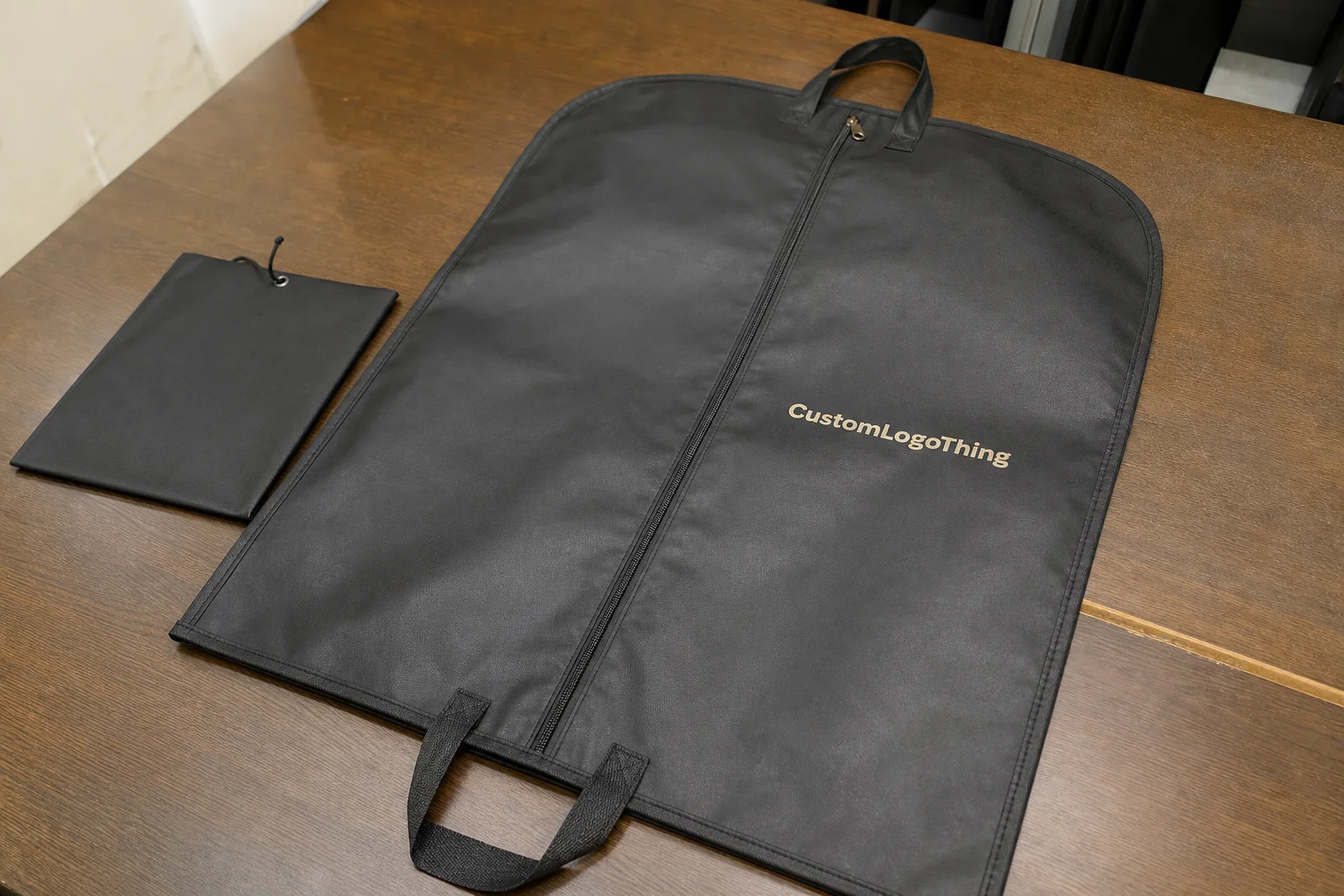
Garments pick up damage in small ways that are easy to miss until they show up on the product. Dust settles on dark fabric. Coats rub against rough surfaces. Dresses cling to static-prone plastic. Suit jackets lose shape during transport. None of that sounds dramatic, but it changes how the item is judged before anyone tries it on.
Custom Plastic Garment Bags protect apparel during storage, transport, and handling. They help keep items cleaner in the back room, reduce friction during packing, and preserve a more polished look when products are shipped or displayed. For bridal labels, outerwear brands, uniform suppliers, and premium event apparel, the bag often becomes part of the product presentation rather than just a protective sleeve.
There are several common formats. Plain poly covers are used for basic storage and low-cost shipping protection. Printed Garment Bags add brand identification and can include size markers or care information. Heavier retail versions use thicker film, cleaner sealing, and better print quality for products that need a more finished presentation. The difference is not just cosmetic; it affects durability, folding behavior, and how the customer perceives value.
The branding function is easy to underestimate. A garment bag is visible on a hanger, inside a box, and sometimes even in transit. That makes it a packaging touchpoint, not just a cover. If the garment bag looks flimsy or generic, the product feels less intentional before the customer ever sees the garment itself.
“A good garment bag should protect the garment first and support the brand second. If it fails at either job, the spec needs work.”
How custom plastic garment bags work in production and daily use
Most garment bags are made from polyethylene film, though suppliers may describe thickness in mils or microns depending on their market. For light dust protection or short-term storage, thin film can be enough. A common entry point is around 0.5 to 1.0 mil. For retail use, shipping, or repeated handling, buyers usually move to roughly 1.25 to 2.0 mil. Thin film lowers cost, but it also lowers forgiveness when the bag is folded, taped, packed, or reused.
Production is fairly straightforward, which is why the details matter so much. Buyers usually specify material, gauge, dimensions, hanger opening, vent holes, closure style, and print area. If the spec is vague, the supplier has to fill in the gaps, and that is how two similar quotes end up meaning two very different products.
Use case matters more than category labels. A dry cleaner needs simple protection and quick access to the hanger. A fashion brand may want a printed garment bag that coordinates with branded boxes or inserts. Uniform buyers care about repeatability and order accuracy. E-commerce shipments have to survive folding, boxing, and conveyor handling without tearing or looking crushed on arrival.
Size should be based on the garment on its hanger, not on a generic number from a catalog. A men’s suit needs extra width and length compared with a shirt. Outerwear needs room at the shoulders and hem. Dresses may be less bulky, but they often need more attention to wrinkle control and static. Too small and the garment bunches. Too large and the bag starts looking sloppy and wastes film.
Closure style changes daily use more than many buyers expect. Open-bottom bags are simple and fast, but they offer less control during transit. Zipper or adhesive styles can keep the garment enclosed more reliably. Vent holes help reduce trapped air and make folding more manageable. A reinforced hanger opening matters if the bag will be lifted, moved, and re-hung repeatedly. Small design choices like these determine whether the bag feels dependable or annoying.
Print placement also deserves more thought than it usually gets. A logo placed near the upper front is visible on a hanger and in transport. Full-coverage print can look premium, but it adds cost and can make thin film feel visually heavy. On translucent plastic, a clean one- or two-color logo usually reads better than complex artwork with too much detail. If the graphic has to fight the material, the design loses.
For buyers who also order Custom Packaging Products, garment bags should be treated as one piece of a larger packaging system. Boxes, inserts, hangtags, and garment covers do not need to match perfectly, but they should feel as though they were planned together. Inconsistency across packaging often shows up first in color and logo usage, and that is where brand trust gets quietly damaged.
Cost, pricing, and MOQ factors that change your quote
Garment bag pricing moves for reasons that are predictable once you know what suppliers are paying for. Material choice, film thickness, custom dimensions, print colors, closure style, and quantity all affect the final number. A plain clear poly bag with one-color print will usually cost less than a thicker custom-sized bag with multiple colors, extra vent holes, and a reinforced hanger opening. The spread can be wider than buyers expect because the film itself is only part of the bill.
For planning purposes, medium-to-large runs of standard printed garment bags often fall roughly in the $0.18 to $0.45 per unit range. Heavier-duty or highly customized bags can go above that, especially at lower quantities. Small orders are where the math gets less friendly, because setup costs, print preparation, and production waste have less volume to absorb them. A low MOQ usually carries a higher unit cost; that is not a penalty, just how the economics work.
MOQ means minimum order quantity. Suppliers use it because custom film, printing plates, setup time, and quality checks cost money whether the run is 1,000 units or 10,000. On very small orders, the fixed costs are spread across fewer bags, so the per-unit price rises quickly. A buyer asking for a short run, special size, and multiple print colors is usually paying for flexibility more than material.
| Bag type | Typical use | Approx. unit price | Tradeoff |
|---|---|---|---|
| Plain stock-style poly cover | Storage, basic transit | $0.06-$0.14 | Lowest cost, minimal branding |
| Printed standard-size garment bag | Retail, e-commerce, uniforms | $0.18-$0.45 | Better presentation, moderate setup cost |
| Fully custom size and print spec | Premium apparel, event delivery | $0.32-$0.80+ | Best fit, higher MOQ sensitivity |
If budget is tight, prioritize in this order: fit, strength, then print complexity. A bag that tears or wrinkles the garment is wasted spend no matter how good the artwork looks on the proof. A simpler print can still look premium if the film, size, and closure are right. A fancy design on flimsy plastic usually looks worse than a clean logo on a well-made bag.
Ask what the quote includes before comparing numbers. Setup charges, printing plates, proofs, sample fees, and freight can be wrapped into the base price or listed separately. Two quotes that look close on paper can differ materially once all the extras are added. That is the point where “cheap” starts becoming expensive.
Process and lead time: from artwork approval to delivery
The order sequence is usually simple: inquiry, spec confirmation, artwork proof, sample if required, production, then shipping. The delays usually happen in the handoff between those stages. A wrong size estimate or a low-resolution logo can slow everything down because the supplier has to stop, confirm, and revise before tooling or printing begins.
Standard jobs often run about 12 to 20 business days after proof approval. Fully custom sizes, specialty printing, or sample approvals can extend that to 3 to 5 weeks, and larger orders may take longer. Rush production is possible in some cases, but it tends to cost more and leaves little room for correction if something is off in the artwork or measurements.
There are a few common schedule killers. Vague dimensions. Missing dielines. Artwork that was resized too many times and lost resolution. Endless proof revisions. Production equipment does not adapt to uncertainty; it responds to exact instructions. The more guesswork the buyer puts into the spec, the more time the order tends to consume.
For seasonal launches, trunk shows, showroom openings, and inventory resets, building in an extra week is a practical move. Two is safer if the bags are customer-facing or tied to a fixed event date. That buffer gives room for one sample review, one final proof check, and a correction window if the logo placement or print color does not read the way it was supposed to.
If the garment bag is part of a broader packaging refresh, check it against other branded components before approval. Logos, colors, and messaging should be reviewed alongside your custom printed boxes and labels. Misalignment usually shows up as inconsistent color temperature, mismatched logo scale, or a “close enough” feeling that customers notice even if they cannot explain why.
Step-by-step: how to choose the right spec without overpaying
Step 1: define the garment and how it will be handled
Start with the item itself. Is it a suit, coat, dress, shirt, uniform, or folded apparel piece? Will the bag be reused, or is it meant for one-way shipping? A garment that moves through retail backrooms has different needs from one packed for seasonal storage. Reuse usually justifies stronger film and a more reliable closure.
Step 2: choose thickness based on real protection needs
Thin film works for light dust protection and short storage cycles. If the garment will travel, be handled repeatedly, or carry more weight, thicker film is usually the better call. In practice, 1.0 mil is a common baseline, while 1.5 to 2.0 mil fits more premium or reusable packaging. If two thicknesses feel similar on paper, request samples; the handling difference is often obvious in hand.
Step 3: confirm dimensions and functional details
Measure the garment on its hanger, not just flat across the fabric. Allow enough length to cover the hem with clearance and enough width for the shoulders to sit naturally. Check hanger opening size, vent holes, and whether you need a zipper, adhesive strip, or open-bottom design. A closure that works for showroom display may be frustrating in transit, and the reverse is just as true.
Step 4: decide what the print must accomplish
Some bags only need a logo. Others need care information, size markers, or a stronger branding message. Simple print is cheaper and often easier to read. Multi-color or full-coverage artwork can look premium, but only if the film color and print method support it. On translucent plastic, complex graphics can blur into noise faster than buyers expect.
Step 5: request quotes using one exact spec
This is where buyers save the most money. Send each supplier the same material, thickness, dimensions, print count, quantity, and closure style. Compare like for like. If one quote is unusually low, find out what was omitted: plate charges, freight, sample costs, or a real match on gauge. The cheapest price is not always the lowest landed cost.
The best spec is usually the lightest one that still protects the garment correctly. Extra plastic does not improve the buyer experience by itself. It only helps if it solves a real handling problem.
Common mistakes buyers make with garment bag specs
The first mistake is ordering the wrong size. Too small, and the garment wrinkles or the hem gets crushed. Too large, and the bag looks loose and wasteful while using more material than necessary. Either way, the result feels less deliberate than it should.
The second mistake is choosing the lightest film available just to reduce price. Thin bags tear more easily, create static issues in some environments, and can make the garment inside feel less valuable. Packaging has a habit of shaping product perception before the customer touches the product itself.
The third mistake is ignoring the closure. A bag that opens during transit is not protecting anything. If the piece will be moved often, the closure has to stay put. If the bag is only for short-term display, that spec can be simplified. The point is to decide on purpose, not by accident.
The fourth mistake is sending poor artwork files. Low-resolution logos, stretched graphics, and images pulled from random web pages do not print well. Proper vector files are the safer option, and color expectations should be confirmed before production begins. Proofing exists because good intentions do not fix bad source files.
Expert tips for getting better custom plastic garment bags
Keep the design restrained. A strong logo in the correct position does more for branded packaging than crowding the bag with extra copy. The more text you add, the more likely the print becomes hard to read on a translucent or reflective surface.
Request samples or photo proofs before the full run, especially if the bags will go directly to customers. A digital mockup is useful, but it will not show how the ink sits on the actual film or how the color reads once the bag is folded. The difference between screen and finished plastic is often larger than buyers expect.
Standardize where you can. If coats, suits, and dresses all use slightly different bag specs for no practical reason, reorder mistakes become more likely and inventory management gets harder. Fewer variations usually mean better pricing, cleaner forecasting, and fewer corrections during purchasing.
Use only as much plastic as the product needs. If sustainability is part of the buyer conversation, ask about recycled content, recyclability guidance, or disposal instructions before making claims. Plastic disposal rules vary by region, so broad environmental language should be checked rather than assumed. For general materials and waste guidance, the EPA has reference information at epa.gov. For packaging standards and industry context, packaging.org is a useful reference point.
If the bags need to move through retail or shipping tests, ask whether the packaging should be checked against relevant performance standards such as ISTA protocols. If the apparel line also includes paper components, FSC-certified paper items can support a more consistent sourcing story. None of that replaces a well-made bag, but it helps the packaging program look more credible.
“The best garment bag spec is usually the one that fits correctly, prints cleanly, and survives the trip without drama.”
Next steps for ordering custom plastic garment bags
Before requesting quotes, gather four things: garment measurements, closure preference, quantity target, and logo files. That is the minimum needed for a supplier to quote accurately. If those details are missing, expect back-and-forth and a price that reflects uncertainty instead of a real spec.
Ask each supplier for a spec sheet showing material, thickness, size, print method, MOQ, lead time, and freight assumptions. Compare at least two or three quotes on the same terms. A lower price only matters if the bag is built to the same standard. Otherwise, you are comparing different products that happen to share a category name.
Approve the proof only after checking size, copy, logo placement, and delivery timing. Small errors have a habit of becoming expensive once they are repeated across a full production run. If something looks wrong on the proof, it will not improve on 5,000 units.
For a launch, restock, showroom order, or seasonal push, start with the actual use case instead of guessing from a stock template. The right bag protects the garment, supports retail packaging, and stays within budget without forcing the brand into avoidable compromises.
FAQ
What size should custom plastic garment bags be for suits or coats?
Measure the garment on a hanger from shoulder to hem and allow room for movement. Coats and suits usually need more width and length than shirts or dresses. A supplier should confirm the fit based on garment type and hanger style, not just a generic chart.
How much do custom plastic garment bags usually cost?
Pricing depends on size, thickness, print colors, closure style, and quantity. Higher MOQs usually reduce unit cost, while small custom runs cost more per bag. Ask for quotes using the same spec so you can compare real differences rather than estimates.
What is the normal lead time for custom plastic garment bags?
Standard production often takes a few weeks after artwork approval, depending on quantity and complexity. Custom sizes, specialty printing, and sample approvals can extend the timeline. Build in extra time if the bags are tied to a launch, event, or seasonal change.
Can I print a logo on custom plastic garment bags?
Yes, most buyers use them for logos, care messages, sizing information, or retail presentation. Print clarity depends on artwork quality, ink coverage, and film color. Simple, high-contrast designs usually print more cleanly.
Are custom plastic garment bags reusable?
Many are reusable if the film thickness and construction are strong enough. Reuse depends on how often the bag is opened, moved, or shipped. If reuse matters, ask for a sturdier spec instead of selecting the lightest option available.


