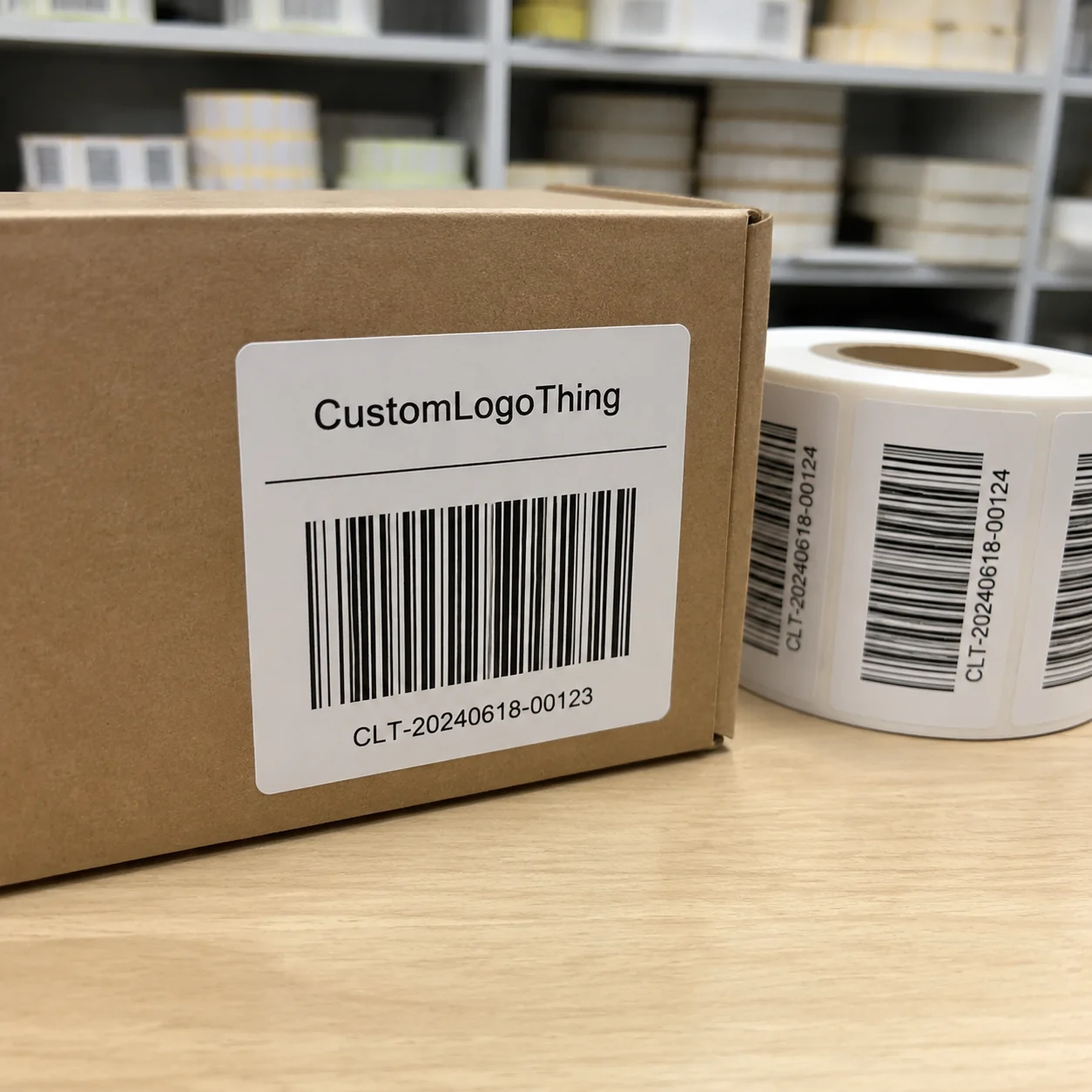
For electronics sellers, Care Labels Unit Cost for electronics sellers is not a side note. It is a sourcing decision with real margin impact. The label may look insignificant next to the device, the charger, or the retail carton, but a few cents per unit can become a noticeable expense once a product scales into thousands of orders. Add setup fees, spoilage, shipping, and one avoidable reprint, and the “cheap” label often stops being cheap.
That is why label buying should be treated like any other supply chain item: measured, specified, and checked before production starts. A label that fits a smooth carton may fail on matte-coated packaging. A clean barcode on screen may print too small for warehouse scanning. A decorative finish may look good in proof and still crease badly in transit. Most of the cost mistakes come from weak specifications, not from the supplier itself.
Electronics packaging also carries more jobs than buyers sometimes admit. A label can show care instructions, product identifiers, safety warnings, recycling marks, country-of-origin text, and traceability information. In some cases, it also needs multilingual copy or retailer-specific formatting. If the label is doing compliance work, not just branding work, the buyer should care about both unit cost and failure risk.
Practical rule: if the label touches the product, carton, or retail shelf, buy it as a functional supply item with measurable specs. Decorative assumptions tend to create expensive rework.
That’s the real reason Care Labels Unit Cost for electronics sellers should be built from requirements, not gut feel. Clear specs lead to cleaner quotes. Cleaner quotes lead to fewer surprises. It is a plain process, but it is still where many packaging budgets leak.
Why electronics sellers should price care labels like a real supply item
Electronics sellers sometimes borrow habits from apparel or general consumer goods and treat care labels as a minor compliance add-on. That approach misses how much these labels actually do. They help reduce returns by clarifying handling instructions, support SKU control and fulfillment scanning, and make the package feel complete instead of improvised. In a crowded category, even a modest label can affect how organized a product line appears.
There is also a basic operational issue: labels fail in ways that are easy to overlook during quoting. A pressure-sensitive label may lift on a glossy carton. A barcode may scan perfectly on a proof but fail once printed smaller to save space. A paper stock may hold up in storage but scuff badly in a busy warehouse. Those are not rare edge cases; they are common production realities.
The financial impact is easy to underestimate. A buyer may choose the lowest quote and only later discover hidden costs: tooling fees, special packing, proof corrections, or a material that needs to be replaced after testing. Then the savings vanish. That is why pricing should be judged as landed cost, not just unit price.
There is also the matter of compliance. Depending on the market and product type, labels may need safety icons, recycling marks, origin text, or retailer-required identifiers. For sellers navigating packaging and waste expectations, public references from organizations such as The Packaging School / Packaging Association resources and the EPA’s packaging waste guidance at epa.gov are useful starting points. Not every label needs a thick compliance dossier, but ignoring requirements can leave inventory stranded.
The shortest version is this: label cost is not just what you pay per piece. It is what you pay after setup, shipping, spoilage, and any reprint caused by a specification gap. That is how electronics buyers should think about it.
Care label formats and materials that actually work on electronics packaging
Not every electronics product needs the same label format. A charging cable, a smart speaker, and a soft accessory pouch do not travel through the supply chain in the same way. One may be handled repeatedly. Another may be boxed once and untouched until delivery. The right format depends on surface, use cycle, and how much information the label must carry.
Peel-and-stick labels are the most common option. They are fast to apply, cost-efficient at moderate volumes, and suitable for cartons, accessory boxes, and smooth product surfaces. For many electronics sellers, they are the easiest route to a predictable cost per piece.
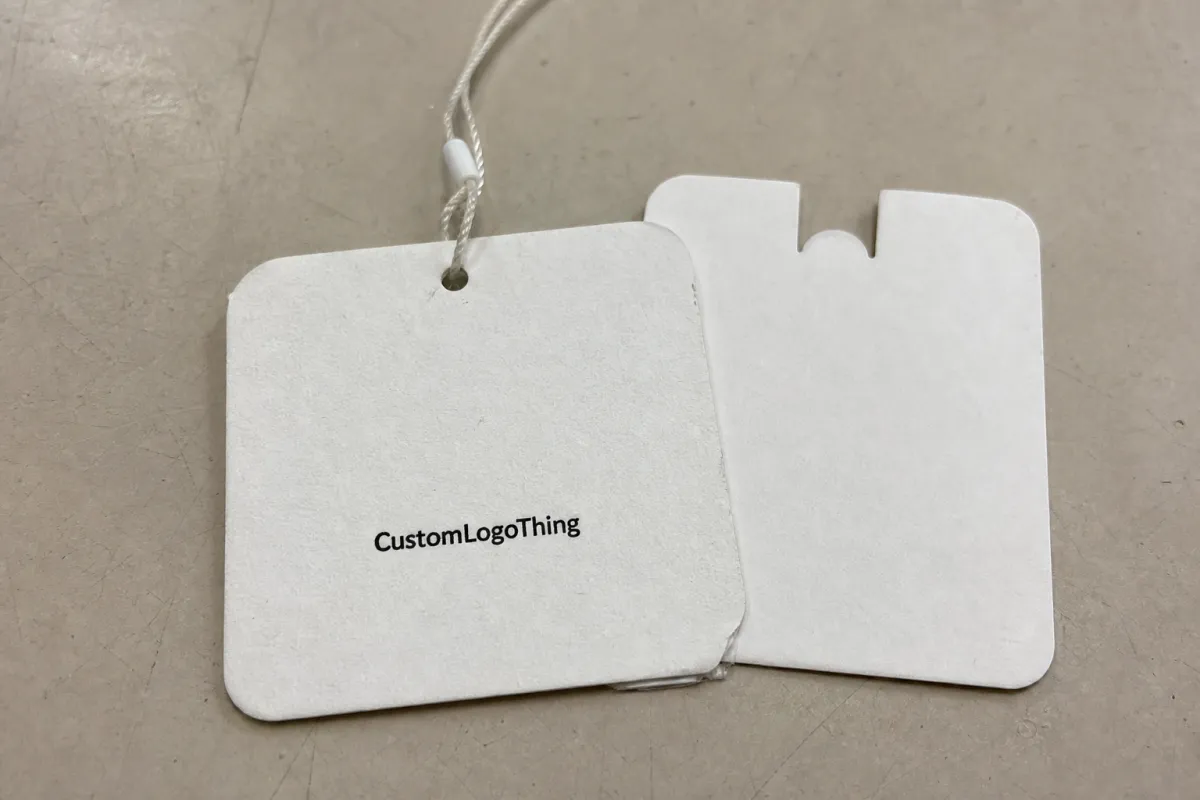
Hang tags are a better fit when branding and removable information need to sit together. They are common on premium cables, accessory bundles, and retail-ready items where presentation matters. They cost more than a standard adhesive label, but they can look cleaner on shelf and reduce the risk of adhesive residue on the product.
Stitched labels are less common in electronics, but they matter on soft pouches, sleeves, and textile-based accessory cases. If the package includes fabric, stitching can outperform a simple adhesive label in repeated handling. It is not the cheapest option, though it can be the most durable for that specific use case.
Multi-layer instruction labels work well when there is not enough space for all the required copy. They are useful for multilingual warnings, installation notes, or short care steps that must remain readable without turning the package into a wall of text.
Material choice affects both price and performance. Paper is the lowest-cost option and works well for dry, short-life cartons. Coated paper improves print sharpness and scuff resistance. Synthetic films such as polypropylene or polyester cost more but hold up better against friction, moisture, and handling in fulfillment centers. If a package is likely to be rubbed, stacked, or stored for long periods, a synthetic option usually gives better value than paper that needs replacing.
- Paper: lowest cost, suitable for dry cartons and short-cycle packaging.
- Coated stock: sharper print and stronger abrasion resistance than plain paper.
- Synthetic film: better for moisture, scuffing, and longer handling cycles.
- Weather-resistant stock: useful when storage conditions are uncertain or long.
Readability matters more than visual polish. Electronics labels often need room for barcodes, SKUs, warnings, certification symbols, and multilingual text. If the design gets too dense, scanning quality suffers and the label becomes difficult to use in a warehouse. Small type and busy layouts may save space on paper, but they usually cost more in errors later.
In practice, small accessories like earbuds, charging cables, adapters, and dongles usually work well with peel-and-stick labels or compact hang tags. Higher-value products often need a cleaner carton label with better adhesive performance and more durable stock. Products that pass through rough fulfillment networks are stronger candidates for synthetic materials because the extra cents can prevent a costly failure.
| Label format | Typical use | Relative cost | Durability |
|---|---|---|---|
| Peel-and-stick | Cartons, accessory boxes, retail packs | Low | Medium |
| Hang tag | Retail presentation, premium accessories | Medium | Medium |
| Stitched label | Pouches, sleeves, soft cases | Medium to high | High |
| Multi-layer instruction label | Multilingual guidance, warnings, installation notes | Medium to high | High |
Specification checklist for cleaner quotes and fewer reprints
Clear quotes start with clear specs. “Need labels for electronics” is not enough information for a useful estimate. A supplier needs dimensions, material, adhesive, finish, print method, and the exact content that must appear on the label. Otherwise every assumption has to be guessed, and every guess creates risk in pricing.
Before requesting pricing, confirm these basics:
- Size and shape: rectangle, square, circle, or custom die-cut.
- Material: paper, coated stock, synthetic film, or specialty stock.
- Adhesive: permanent, removable, freezer-grade, or high-tack.
- Print method: digital, flexographic, or thermal transfer depending on volume and detail.
- Finish: matte, gloss, soft-touch, or none.
- Color count: one-color, full color, or spot colors.
- Print side: single-sided or double-sided.
The copy matters just as much as the physical build. Include care instructions, safety warnings, country of origin, SKU, batch code, barcode, and any mandatory compliance text. If the product needs multilingual labeling, put that on the table early. Adding it after the proof stage often means a second round of layouts, more lead time, and a higher chance of mistakes.
Artwork quality changes cost and speed. A clean vector file, outlined fonts, and proper bleed usually reduce corrections. A blurry screenshot or a low-resolution image can still be used in some cases, but it slows the process and may force extra proofing. Good suppliers can help, though they cannot fix weak source files without a cost in time.
One point that is easy to miss: a label spec that works on one product rarely transfers perfectly to all products in a line. A label that sticks cleanly to a smooth carton may fail on a textured pouch or curved shell. A barcode that scans fine on a wide box may look cramped on a slim accessory pack. Different surface, different behavior. The quote should reflect that.
If your catalog has multiple SKUs, it helps to define one master spec and one backup option. That gives you room to compare pricing while keeping the design system consistent. For teams that want a starting reference, Custom Labels & Tags can be a useful category to standardize dimensions and finishes before quoting.
A tighter spec sheet usually means fewer surprises later. Buyers who send complete dimensions, artwork, and surface details tend to get better numbers, fewer proof cycles, and fewer reprints. That is not a trick. It is the normal reward for good preparation.
Care labels unit cost for electronics sellers: what changes the price
Care Labels Unit Cost for electronics sellers is driven by a handful of variables that are simple on paper and expensive in real life if ignored: quantity, substrate, print complexity, finish, and packing method. None of these is mysterious. Each one changes how much labor, material, and setup the order requires.
Quantity is usually the biggest cost lever. Setup charges are spread across every unit, so a small order often looks expensive on a per-piece basis. As volume rises, the unit cost usually drops. That is why one quote might show $0.22 per label at 5,000 units while another lands at $0.11 at 20,000 units for the same basic construction. Same label, different math.
Material choice comes next. Plain paper keeps cost low, but it is not ideal when the label needs abrasion resistance or moisture tolerance. Synthetic film costs more and tends to justify itself when labels face rough handling, longer storage, or repeated touch points. For secondary cartons that never face hard wear, premium film can be unnecessary overspend.
Printing complexity also affects price. A one-color black label on white stock is easier to produce than a four-color label with icons, regulatory text, and variable data. Die-cuts, double-sided printing, special finishes, and multiple versions all add work. If the label needs a barcode plus multilingual content plus warning symbols, the quote should reflect that extra setup.
Then there are the quiet costs. Tooling, plate charges, proofing, packing, and shipping can all sit outside the headline unit price. Some suppliers include them in one figure; others split them out to make the quote look smaller. Buyers who compare only the per-piece number often miss the real total. That mistake is common and avoidable.
| Order profile | Typical unit cost | What drives it | Buyer takeaway |
|---|---|---|---|
| Small run, simple paper label | $0.18-$0.35 | Setup charges, low MOQ, basic print | Useful for launches, but weak on unit economics |
| Mid run, coated label with barcode | $0.08-$0.18 | Better spread of setup, moderate print complexity | Often the best balance for steady sellers |
| Large run, synthetic durable label | $0.05-$0.12 | Volume discounts, efficient production, lower setup burden per piece | Strong option when demand is predictable |
These ranges are broad, not promises. Final numbers depend on size, adhesive, color count, quantity, and whether the label needs special finishing. Still, the pattern holds: low MOQ usually means higher per-unit cost, and higher volume usually improves pricing.
That creates a practical decision point. If demand is stable, a larger run may lower total cost enough to justify the inventory. If the product is still being tested, a smaller MOQ may be the smarter move even with a higher unit price. Buying low-cost labels that become obsolete after a packaging update is not savings; it is dead stock.
So the right question is not, “What is the cheapest quote?” It is, “What is the best total cost for this product cycle?” For electronics sellers, Care Labels Unit Cost for electronics sellers should be judged against launch timing, reorder likelihood, and how often the packaging design might change. That is the difference between a quote and a decision.
Production steps, lead time, and reorder planning
The production path is usually simple: inquiry, artwork review, proof, sampling if needed, production, inspection, and shipment. The part that slows things down is rarely the press run itself. Proof approval tends to be the bottleneck, especially when several stakeholders want to tweak copy after the design is already close to final.
Lead time depends on complexity. A straightforward one-SKU label order can often move in about 8-12 business days after proof approval. Multi-SKU jobs, custom finishes, or variable data typically stretch closer to 12-18 business days. Shipping time sits on top of that, so the full timeline can feel longer than the production schedule suggests. If the label is tied to a launch window, artwork readiness matters more than most buyers expect.
Sampling is worth the extra step when the label will touch a real product surface. Adhesion on a smooth carton is not the same as adhesion on matte-coated packaging, textured poly bags, or a curved plastic shell. A sample lets buyers test whether the adhesive leaves residue, whether the print holds up to rubbing, and whether the barcode scans at the expected speed. Those checks are cheap compared with a full reprint.
For repeat orders, reorder planning matters almost as much as the first quote. Keep approved files in a stable format, lock the approved spec, and identify a backup material if the main stock becomes unavailable. That way a reorder is a procurement task, not a fresh design project.
Inspection should not be treated as a formality. Basic visual checks are useful, but labels tied to traceability or regulated packaging may need tighter tolerances, color consistency, and barcode readability checks. For transport and handling references, the International Safe Transit Association has useful guidance at ista.org. A label is not a parcel, but it often has to survive the same distribution chain.
A small buffer stock can help too. Not a warehouse full of labels, just enough to avoid rush fees when demand spikes or a reorder arrives late. That is boring planning, which is usually the cheapest kind.
What to check before you approve the final quote
Before approving a final quote, make sure the pricing table shows the full cost structure. You want the unit price, setup or tooling charges, proofing costs, shipping terms, and any testing or compliance support that may apply. If one of those items is missing, it may show up later as an extra line. That happens often enough to warrant caution.
Check that the label type matches the actual job. A carton label, a product label, and a retail display label can have very different requirements. Carton labels tend to prioritize barcode clarity and low cost. Product labels usually need stronger adhesion and more durable stock. Retail labels may need a cleaner finish and better visual presentation. Same broad category, different technical needs.
Do not approve based on a flat sample if the real surface is curved, textured, oily, or glossy. Test the sample on the actual packaging. Leave it in place. Rub it. Handle it. If it fails in hand, it will fail in the field. There is no reason to gamble on that step.
A short checklist keeps comparisons honest:
- Confirmed size and die-line
- Confirmed substrate and adhesive
- Final copy checked for warnings and SKU text
- Barcode scanned successfully
- Proof approved in writing
- Shipping terms and delivery date confirmed
For recurring buyers, it helps to keep a master spec file and compare new quotes against it line by line. That prevents the classic trap of accepting a low headline number that quietly removes print quality, durability, or compliance detail. If the quote is cheaper because it is missing part of the job, it is not really cheaper.
Next steps to order the right label run without guesswork
Before requesting pricing, gather the product list, label dimensions, copy, quantity target, and required delivery date. That single step usually improves quote quality more than anything else. Suppliers can only price cleanly when they know exactly what they are making.
Ask for two options. One should aim for the lowest unit cost. The other should prioritize lower MOQ or faster turnaround. Those two quotes give a better read on trade-offs than a single number that tries to cover every possibility. If the launch is uncertain, the lower-MOQ path may be safer. If demand is stable, the bulk option is often the smarter long-term move.
For higher-value electronics lines, request a digital proof and one physical sample before committing to full production. That is especially useful if the label contains compliance text, fine barcode detail, or a surface-sensitive adhesive. A sample costs less than a full reprint and usually catches more than one problem at once.
Then make the decision using the full cost picture: unit price, shipping, setup, and how many labels you will realistically consume before the next packaging change. That is the point of treating care labels unit cost for electronics sellers as a serious sourcing question instead of a minor admin line. Compare landed cost. Confirm the proof. Test the label on the actual surface. Buy the run only after the spec matches the product.
What affects care labels unit cost for electronics sellers the most?
Quantity is usually the biggest driver because setup charges get spread over more units at higher volumes. Material, adhesive, print colors, finish, and packing method also change pricing. If the artwork needs repeated corrections, the quote usually climbs from there.
Can electronics sellers order care labels with low MOQ?
Yes. Low MOQ is common for launches, small accessory lines, and test orders, but it usually comes with a higher unit price. That trade-off can still make sense if you want to avoid excess inventory or expect the design to change soon.
How do I choose the right material for electronics care labels?
Use paper for low-cost cartons and short-life packaging. Use coated stock or synthetic film when the label needs better durability, moisture resistance, or scuff protection. The best material is the one that survives the handling environment, not the one that looks cheapest on a quote.
What is a normal turnaround for custom care labels?
Simple orders can move in about 8-12 business days after proof approval, while more complex orders often take 12-18 business days. Shipping time adds to that. Proof delays usually matter more than press time, so artwork readiness has a real impact on schedule.
Should I request samples before placing a full order?
Yes, especially for products with smooth, curved, or textured surfaces. A sample helps confirm adhesion, readability, and print quality before you commit to production. That check is much cheaper than discovering a problem after the whole run is packed.