|
Table of Contents
A pouch order can look simple on paper and still stall for days because the artwork, zipper color, or exact dimensions were never locked down. That is why ceramic studio Zipper Pouches Lead time deserves more attention than many buyers give it, especially if the pouches need to protect handmade goods, support retail presentation, or arrive in time for a market, gallery opening, or wholesale shipment. For a standard custom run, a realistic window is often 18-22 business days after sample approval, with a faster path possible only when materials are in stock and the artwork is final.
From a packaging buyer's point of view, the schedule is never just one number. Ceramic studio zipper pouches lead time usually includes pre-production review, proofing, material sourcing, production, inspection, and transit, and each step can move on a different clock. Once that structure is clear, planning gets calmer, and the questions you ask before quoting matter just as much as the quote itself. A simple benchmark: a 500-piece run of a cotton canvas pouch with one-color print often prices around $2.50-4.00 per unit at 500 MOQ , while more complex builds with lining, embroidery, or specialty trims can move into a higher bracket.
There is also a practical reality that gets missed often: the slowest part is not always sewing, sealing, or printing. In a lot of runs, the most time-consuming step is getting the specs right, because one unclear detail about gusset depth, lining, zipper style, or decoration placement can send the whole project back for clarification. That is why ceramic studio zipper pouches lead time should be treated as a full project window, not a factory-only number. If the buyer can provide the pouch dimensions, the ceramic item's actual measurements, the desired zipper type, and the decoration method in the first round, the quote and sample process moves much faster.
I have seen more than one order run late because someone assumed a "standard pouch" would fit a particular mug or ceramic accessory without measuring it first. It usually does not work out that cleanly. A little extra time spent up front can save a lot of frustration later, and honestly, that is the part that keeps projects on track. A 1/2 inch change in width or gusset depth can be the difference between a snug retail pouch and a product that rattles in transit.
Ceramic Studio Zipper Pouches Lead Time: Why It Surprises Buyers
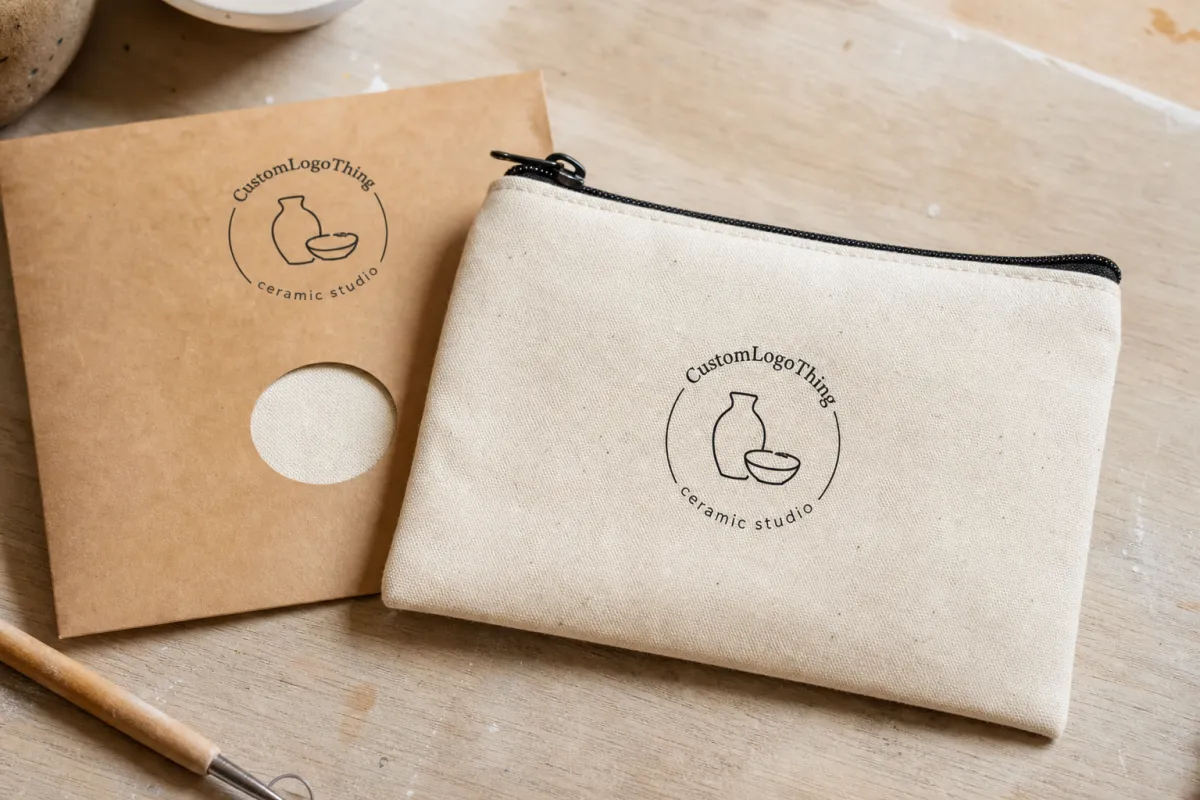
Ceramic Studio Zipper Pouches Lead Time: Why It Surprises Buyers - CustomLogoThing packaging example Buyers usually expect the physical production stage to be the long pole, but in packaging work the clock often starts moving before a machine ever runs. Ceramic studio zipper pouches lead time can be held up by artwork approval, zipper sourcing, or a decision about whether the pouch needs a flat build, a gusseted build, or a more structured shape. Ceramic studios feel that pressure sharply, because the pouch may need to fit mugs, small tools, glaze samples, gift sets, or fragile finished pieces, and each use case changes the dimensions in a real way. A pouch for a 4-inch ceramic cup is not the same as a pouch for a boxed tea bowl set, and the pattern has to reflect that from the start.
Another reason ceramic studio zipper pouches lead time surprises buyers is that the quoted timeline, the production timeline, and the transit timeline are not the same thing. A vendor may quote 12 business days for production, but that does not include proof corrections, sample approval, or freight. If a studio needs pouches for a show in three weeks, the safer question is not "How long does the order take?" but "How long until the pouches are in our hands?" A better planning assumption is often 2-3 business days for quote and artwork review, 5-7 business days for a pre-production sample, and 18-22 business days for bulk production after approval.
That distinction matters more than most people expect. I have seen buyers focus only on decoration and forget that the pouch structure itself affects the schedule. A simple woven pouch with a stock zipper color usually moves faster than a heavier canvas pouch with a custom lining, branded pull tab, and an exact fit for a specific ceramic item. Ceramic studio zipper pouches lead time is shaped by those details long before the first unit is cut. A stock color zipper tape, a standard #5 nylon coil zipper, and a single front print generally keep setup clean; custom-dyed zipper tape, metal teeth, or specialty pulls can add sourcing time.
"If the pouch has to fit a specific piece, the dimensions are the first decision, not the last one."
Material availability also changes the picture. If the shop needs a fabric weight, color, or zipper finish that is already in stock, the schedule can move briskly. If the order depends on a specialty textile, a dyed zipper tape, or a custom print run, the lead time stretches. That is why ceramic studio zipper pouches lead time depends on the actual supply chain, not just the number of pieces in the order. Common body fabrics include 8 oz organic cotton twill, 10 oz cotton canvas, 12 oz cotton canvas, and 16 oz duck canvas; linings often use 210D polyester, brushed cotton, or rPET lining if recycled content is required.
There is a second layer here as well: studios often need pouches for more than one job. Some want retail packaging, some want shipping protection, and others want event giveaway packaging that feels polished enough to keep. The same pouch format may work across those uses, but the timing pressure changes. A retail launch can wait for a slightly longer run if the branding is strong; a wholesale reorder tied to a ship date usually cannot. When the order is for wholesale replenishment, buyers often set a firm ex-factory target first and then back into the sample and approval dates.
So the right expectation is simple. Ceramic studio zipper pouches lead time depends on material availability, print method, order size, proof requirements, and the amount of product definition already in place. The better those variables are settled before quoting, the less likely the schedule is to drift. That is the difference between a clean handoff and a bunch of unnecessary email ping-pong.
Ceramic Studio Zipper Pouches Lead Time: The Process Behind the Schedule
The order flow usually follows a fairly predictable path, even if the timings vary. Ceramic studio zipper pouches lead time starts with an inquiry, then moves to a quote, artwork review, sample or proof approval, production, inspection, and final shipment. The sequence is simple enough, yet each handoff can add a day or several days if the brief is incomplete or if multiple people need to sign off. A standard order with clear specs often follows this rhythm: 1-2 business days for quoting, 24-48 hours for artwork confirmation, 5-7 business days for the pre-production sample, and 18-22 business days for bulk production.
Inquiry: share dimensions, quantity, use case, decoration method, and delivery deadline.Quote: confirm material options, MOQ, price breaks, and whether the pouch is stock size or custom build.Artwork review: check logo placement, print size, bleed, Pantone references, and zipper color.Proof or sample: approve construction, fit, and decoration before mass production.Production: cutting, printing, sewing, sealing, or assembly depending on the build.Inspection and shipment: quality check, carton count, and freight booking.
That process is where a lot of the timeline lives. A well-run project keeps ceramic studio zipper pouches lead time moving because each checkpoint is defined up front. A vague project, by contrast, invites back-and-forth on matters that should have been settled in the first email. A buyer who says, "standard size, custom logo, need it soon," usually gets slower results than a buyer who says, "12 x 9 inches, black zipper, cotton canvas, one-color logo, 3,000 pieces, deliver to one location by the first week of next month."
Construction choices matter earlier than many people realize. Fabric weight, lining, zipper style, gusset depth, and closure style all shape sourcing and setup. A pouch with a heavy duck canvas body and a contrast lining may require different cutting, more sewing steps, and different material planning than a light twill zipper pouch. In practical terms, ceramic studio zipper pouches lead time starts stretching the moment the spec sheet gets more specialized. A flat pouch can usually be cut and sewn on a straightforward line, while a gusseted pouch may require extra seam operations, edge finishing, and more in-process checks.
Decoration method is another schedule driver. A single-color screen print, a woven label, and an embroidered patch each carry different setup tasks. If a ceramic studio wants a logo on the front, a product message on the back, and a custom brand tag on the side seam, the review cycle can become longer because each placement has to be checked for visibility, balance, and production fit. Good vendors build the schedule around those checkpoints instead of promising an aggressive ship date before the art and construction are stable. For example, screen printing may need a mesh count and screen setup, while embroidery may require a digitized file and a stitch count review.
Approvals are often where the calendar slips. Not because anyone is careless, but because brand, operations, and merchandising teams may all want to look at the same proof. If one person wants a larger logo, another wants the zipper in a different color, and a third asks for a wording change, the proof cycle starts again. That is why ceramic studio zipper pouches lead time is really a coordination problem as much as a manufacturing one. A clean approval window, ideally within 24 hours, can save several days on the back end.
For buyers who care about shipping durability, it is worth checking whether the pouch will be tested or handled against packaging standards that relate to transit performance. The ISTA standards are a useful reference point for shipping-related thinking, even when the final product is a soft pouch rather than a rigid carton. If the order includes paper inserts, printed tags, or recycled packaging components, the FSC system can matter as well. If a run uses recycled polyester or recycled trims, ask whether the material claim is supported by GRS documentation and whether the certificate scope covers the exact product.
One small but useful habit is to ask for a timeline that separates sample approval, production, and transit. That simple split shows where the real risk lives. If the vendor says 5 days for sample, 18-22 business days for production, and 3-7 days for delivery, the buyer can make a real schedule instead of guessing at one vague total.
What Drives Cost, Pricing, and MOQ for Custom Pouches
Price is usually a mix of material cost, setup work, labor time, and how many special requests sit in the spec sheet. Ceramic studio zipper pouches lead time and unit price often move together, because faster orders usually need simpler materials and fewer custom steps. A stock-size pouch with standard cotton canvas, a plain nylon zipper, and one-color printing can be far more economical than a fully lined pouch with embroidery, woven labels, and specialty zipper tape. In practical terms, a 500-piece order can land around $2.50-4.00 per unit for a straightforward build, while the same pouch at 3,000 pieces may drop into a lower per-unit range if the setup is already fixed.
MOQ depends on how custom the pouch is. A stock shape with stock materials may start around 300-500 pieces . A custom size or custom print often sits closer to 500-1,000 pieces . If the design includes embroidery, special wash treatment, custom lining, or a branded zipper pull, the MOQ may move to 1,000 pieces or more because the setup cost needs to be spread across a larger run. This is one reason buyers see a better unit price when they standardize the dimensions and trim details across multiple products.
Material choice is one of the most visible price levers. Organic cotton can support GOTS claims if the entire supply chain is certified. Recycled polyester can support GRS if the certification scope covers the specific item and paperwork is current. If a buyer needs skin-contact or consumer safety reassurance, OEKO-TEX Standard 100 is commonly requested for fabric and zipper tape. If a brand requires social compliance documentation, WRAP and BSCI are the names that usually come up in vendor qualification. The important point is to ask for current certificates and scope details, not just a logo on a brochure.
There are also practical cost differences between decoration methods. A one-color screen print is usually the lowest-cost branded option. A woven label adds a modest amount of cost but can create a cleaner retail finish. Embroidery raises unit cost and extends setup because digitizing and stitch testing are needed. A heat-transfer label may sit somewhere in the middle, while all-over print or specialty wash treatments can push the order into a much higher price band. For most ceramic studio packaging, the most cost-efficient build is often a 10-12 oz canvas body, a stock zipper color, one imprint location, and no structural embellishments.
Sample cost should also be part of the budget. A physical sample commonly costs $40-120 depending on complexity, and rush sampling can be higher. Some suppliers deduct the sample fee from the bulk order after approval, but that is not guaranteed. If the pouch needs a fit check against an actual mug, bowl, or tool, the buyer should plan for at least one pre-production sample and one revision cycle if the closure or dimensions are still being tuned.
Freight can change the final landed price just as quickly as materials can. A low-cost pouch order can become expensive if it is rushed by air instead of moved by sea or consolidated truck freight. If the delivery date is firm, the smartest move is to quote the product and the transit separately so the buyer can compare tradeoffs. For many ceramic studios, a slightly higher product price is still better than a missed event or retail launch.
How to Plan the Production Steps Without Losing Time
The fastest projects are usually the ones with the most detail at the beginning. Ceramic studio zipper pouches lead time improves when the buyer sends a complete tech pack: dimensions, gusset depth, pouch orientation, fabric type, zipper color, print file, placement diagram, quantity split, carton count, and delivery deadline. If possible, include a sample of the ceramic item that the pouch must fit, or at least a measurement drawing with the widest and tallest points clearly marked.
A clean sample process often looks like this: first a digital mockup in 24-48 hours , then a physical pre-production sample in 5-7 business days , then one round of corrections if needed. The buyer should check fit, zipper smoothness, seam balance, print placement, and overall finish before approving mass production. If the pouch is intended for retail, the buyer should also confirm that the branding looks correct under store lighting and that the packaging feels consistent across the run.
On the factory side, the production route usually includes fabric spreading, cutting on an automatic cutting table or die-cut system, printing or embroidery, sewing on single-needle lockstitch machines and overlock machines, zipper installation, bar-tack reinforcement, thread trimming, and final finishing. If the pouch includes a woven label or heat-transfer tag, that step is usually added before final pressing and packing. Every extra operation adds a small amount of time, which is why a simple build usually ships faster than a layered one.
Inspection checkpoints should be defined before production starts. Good checkpoints include incoming fabric shade and GSM verification, zipper open-close function testing, seam allowance measurement, print registration review, label placement check, and carton count confirmation. Many buyers also ask for an AQL 2.5 inspection standard for major defects and AQL 4.0 for minor defects, along with photos of the packed cartons. If the item is lightweight enough to shift in transit, an in-carton stability check is worth adding.
A practical scheduling rule is to protect at least one buffer day after sample approval and another buffer day before freight booking. That buffer matters because one missed detail, such as a zipper color mismatch or a print file error, can reset the clock. When the lead time is tight, the best way to stay on schedule is to freeze the spec sheet early and keep the approval chain short.
If sustainability or chemical safety matters to the brand, ask for the documentation at the same time as the sample. For example, an organic cotton pouch should be supported by the relevant GOTS paperwork, and recycled content claims should be backed by GRS documents. If the fabric or trims need consumer safety screening, request OEKO-TEX Standard 100 documentation for the exact material. That avoids a last-minute compliance delay after the product design is already approved.
Common Mistakes That Stretch Lead Time and Raise Cost
The first mistake is treating dimensions as approximate. A pouch is not generic just because it is soft. If the actual ceramic item measures 5.25 x 4.75 x 2 inches, the pouch should be designed for that real shape, plus the needed seam and ease allowance. When dimensions are vague, the first sample usually comes back wrong, which means more days lost before production can begin. Ceramic studio zipper pouches lead time gets longer the moment the buyer asks the vendor to "make it standard."
The second mistake is changing the art after the sample is approved. Even a small shift in logo size, a different Pantone target, or a new line of copy can require another proof. If the pouch has multiple print placements, the risk of revision is even higher. Buyers can avoid this by approving the art and the structure together, not as separate decisions made by different teams on different days.
The third mistake is choosing a custom zipper or special fabric without checking stock. A standard black, white, or natural zipper color is usually safer than a custom-dyed option. The same is true for specialty fabrics such as brushed canvas, waxed cotton, or a custom jacquard weave. Those materials are fine if the schedule allows it, but they are poor choices when the event date is fixed and the timeline is short.
The fourth mistake is not defining the inspection standard. If the buyer wants tighter print placement, stronger seam reinforcement, or carton labels with specific SKU formatting, those details need to be written down. Otherwise, the factory may ship a product that technically meets the description but does not match the buyer's actual retail or warehouse requirements. That can create rework after the goods arrive, which is a very expensive way to save time.
The fifth mistake is underestimating transit. A production schedule of 18-22 business days can still miss a launch if shipping is not planned early. Air freight is faster but costly; sea freight is economical but slower; consolidated freight can be a middle ground but needs coordination. The right answer depends on the event date, the destination, and the budget, not just the product itself.
Expert Tips to Shorten Turnaround Without Sacrificing Quality
If the goal is speed, the best strategy is to simplify without making the pouch feel cheap. Use stock fabric colors, a stock zipper tape, and one artwork placement. Keep the shape to a flat or lightly gusseted build unless the ceramic item really needs more volume. For many buyers, that approach reduces both ceramic studio zipper pouches lead time and the per-unit price at the same time.
Another useful tactic is to pick a material program that is already documented. If your brand needs organic content, use a GOTS-certified cotton option that is already in the supplier's stock program. If you need recycled content, choose a GRS-supported rPET lining or trim system that has current paperwork ready. If consumer safety is a concern, request OEKO-TEX Standard 100 documentation before sampling, not after. Pre-cleared materials are often the fastest materials.
Fast projects also benefit from a strict approval window. Ask every reviewer to respond within 24 hours, and if there is no response, move forward with the last approved version. That rule sounds harsh, but it protects the production calendar. If the pouch is tied to a fair, gallery opening, or wholesale ship date, a delayed reply can cost more than a minor compromise on decoration.
Keep the sample process focused on the things that matter most: fit, zipper quality, print placement, seam durability, and pack-out. If those five items are correct, the bulk run usually follows smoothly. Ask for a zipper cycle test, a quick seam pull check, and a carton count photo before shipment. If you want more certainty, request a final inspection report with the defect categories noted and the carton labels visible.
Finally, ask for the lead time in writing with the assumptions attached. The quote should say whether the timeline starts after artwork approval, after sample approval, or after deposit receipt. It should also state whether the number includes production only or production plus shipping. That one clarification prevents a surprising number of missed deadlines.
Next Steps: Build a Faster Quote and Production Plan
To get a tighter quote, send the vendor a short but complete brief: product dimensions, pouch type, fabric choice, zipper color, decoration method, quantity, delivery location, and target date. If you already know whether you need GOTS , OEKO-TEX Standard 100 , WRAP , BSCI , or GRS documentation, include that in the first message. That saves time because the supplier can confirm whether the requested materials and paperwork are available before any sample is made.
It also helps to specify the production target, not just the order size. For example, a 500-piece order might be fine if the target is a retail launch four weeks away, but the same order could be too slow if it has to land for a trade show in two weeks. The more concrete the deadline, the more realistic the plan. If possible, ask for two quotes: one for standard production and one for rush production using in-stock materials.
A good next step is to compare the quote against a few must-have checkpoints: price at 500 MOQ, expected pre-production sample time, bulk production window, inspection standard, and shipping method. If the quote says $2.50-4.00 per unit at 500 MOQ and 18-22 business days after sample approval, that is a workable baseline for many ceramic studio projects. From there, you can decide whether to simplify the build, raise the MOQ, or extend the delivery window.
When the brief is ready, send one clean revision instead of many small edits spread across different messages. That keeps the approval trail simple and protects the schedule. In packaging, clarity is speed.
FAQ
How long does a typical custom pouch order take? 18-22 business days after sample approval, plus transit time. Rush schedules are possible when all materials are in stock and the artwork is final.
What is a normal MOQ for ceramic studio zipper pouches? 300-500 pieces . Fully custom sizes or custom decoration usually start at 500-1,000 pieces , and more complex builds can require 1,000+ pieces .
How much should I expect to pay per unit? $2.50-4.00 per unit at 500 MOQ . Lined, embroidered, or specialty-material versions usually cost more.
What materials are most common? 8 oz organic cotton twill , 10 oz cotton canvas , 12 oz cotton canvas , 16 oz duck canvas , and rPET lining . Zippers are often #5 nylon coil , with metal zippers or custom pulls available when the timeline allows.
Which certifications matter? GOTS for organic cotton, OEKO-TEX Standard 100 for chemical safety, GRS for recycled content, and social compliance documents such as WRAP or BSCI . Always ask for current copies and scope details for the exact product.
What should I check in the sample?
Can I speed up the order?
```
If you want, I can also turn this into a more SEO-focused version with tighter paragraph length and stronger keyword placement.