Ceramic Cuffed Knit Beanies Thickness Guide for Buyers
A ceramic Cuffed Knit Beanies Material Thickness guide is useful because two samples can look almost identical on a table and still wear very differently once they hit a cold morning, a crowded event, or a retail shelf. In practice, thickness is not just “thin” or “thick”; it is the combined effect of stitch density, yarn weight, loft, and the extra fabric created by the cuff. That mix changes warmth, stretch, logo placement, and even how clean the beanie feels in hand.
If you are buying in bulk, that detail matters. A slightly denser knit may hold its shape better and give embroidery a cleaner base, while a looser build may stretch more easily and fit a wider range of heads. The right spec depends on who is wearing it, how it is decorated, and where the price needs to land. The sections below break that decision down the way a production buyer would actually use it.
What Thickness Really Means in a Cuffed Knit Beanie
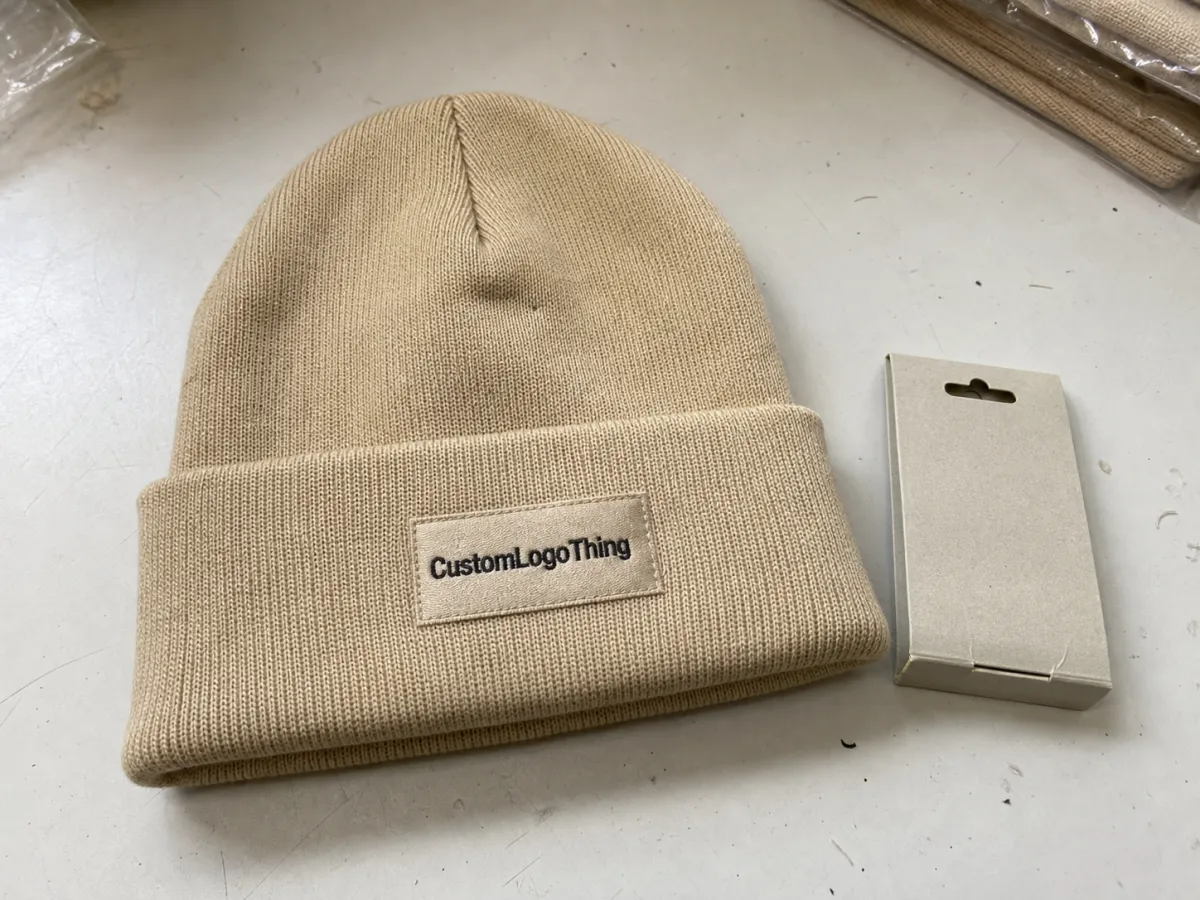
Thickness starts with the knit itself. A cuffed beanie can be made with a finer gauge that creates a tighter, smoother surface, or with a lower gauge that gives the hat more body and a more visible stitch pattern. Those two hats may weigh close to the same, but they will not feel the same on the hand or on the head. That is why a ceramic cuffed knit Beanies Material Thickness guide should focus on structure, not just weight.
Buyers often think of thickness as a single number, but it is really a bundle of traits. Stitch density controls how open or compact the fabric feels. Yarn ply changes firmness and visual fullness. Loft affects whether the beanie sits flat or feels cushioned. Then the cuff adds another layer, which means the forehead area is usually thicker than the crown, even on a “midweight” style. That is why a beanie can feel warmer than expected without looking bulky from the outside.
Thickness also changes how a logo sits. On a tighter knit, embroidery usually looks cleaner because the needle has a more stable base. On a looser or bulkier knit, the same logo may need a larger sew field, thicker backing, or a simpler stitch count to avoid distortion. Labels and patches behave differently too. A woven label can disappear into a very textured knit, while a molded patch can feel stiff if the front panel is already dense.
From a buyer’s point of view, the right question is not “Is this thick enough?” It is “Does this thickness match the job?” A retail winter beanie, a field uniform piece, and a giveaway hat should not all be spec’d the same way. The best ceramic Cuffed Knit Beanies material thickness guide starts with the use case and works backward to the construction.
Practical rule: if you can only ask for one sample note, ask for measured dimensions, yarn composition, and stretch recovery together. Thickness without recovery data is only half the picture.
How Gauge, Yarn, and Cuff Structure Change the Feel
Gauge is one of the biggest drivers of feel. A finer gauge usually creates a smoother surface with tighter stitches, which can make the hat feel more polished and less bulky. Lower-gauge knits tend to show more texture, more air between loops, and a softer, fuller hand. Neither is automatically better. A smoother knit can look cleaner for retail, while a more open knit may be easier to wear for longer stretches because it breathes a little more.
Yarn choice matters just as much. 100% acrylic is common because it is predictable, color-consistent, and cost-effective. Wool adds warmth and a more natural hand, though it can feel scratchy if the blend is not balanced well. Acrylic-wool blends often give buyers a good middle ground: enough softness, enough resilience, and less risk of the hat feeling flat after repeated wear. Brushed yarns can add loft, which makes a medium-density knit feel thicker than the numbers suggest.
The cuff changes the experience again. A cuff is not just a folded edge; it is a second layer of knit sitting at the forehead, where the body gets the most contact. That means a hat with a 3-inch cuff can feel more substantial than a non-cuffed hat with the same body weight. If the cuff is very deep, the front panel may also become the primary decoration zone, so the structure there needs to stay even and stable.
Fit and recovery are the real test. A beanie that stretches easily but does not spring back will start looking loose after a short wear cycle. One that is too dense may feel secure but can lose comfort quickly. In bulk orders, I usually tell buyers to check three things at once: crown stretch, cuff rebound, and whether the beanie still sits flat after it has been worn and removed a few times. That is the difference between something that just measures well and something people actually keep wearing.
For packaging teams and merch buyers, the spec matters beyond the hat itself. If the beanies are going into corrugated cardboard cartons with kraft paper inserts, the fold behavior and surface texture affect how many units fit per case and how well they recover after packing. For brands using recycled materials or FSC certified paper components, the hat thickness can also influence how tightly the units can be compressed without leaving permanent crease marks.
Specs That Matter Most Before You Request Quotes
Before you ask for pricing, lock the use case. A cold-weather retail program needs a different build than a giveaway for a trade show, and workwear often needs stronger recovery than fashion merch. The ceramic cuffed knit beanies material thickness guide becomes much more useful once you decide whether the hat needs to feel premium, warm, casual, or promotional. That decision shapes the whole quote.
The measurements that matter most are the ones a factory can actually build to. Ask for flat width, crown height, cuff depth, and the expected stretch range. If the supplier gives you only “adult size” or “one size fits most,” keep pressing. A good spec sheet also states whether the beanie should feel snug, medium, or relaxed on head circumference. That sounds simple, but it prevents a lot of fit mistakes later.
| Thickness tier | Typical construction | Hand feel | Best decoration fit | Typical bulk impact |
|---|---|---|---|---|
| Light | 7-9 gauge, lighter yarn, lower loft | Smooth, flexible, less bulky | Small embroidery, woven label, simple patch | Often lower unit cost and easier packing |
| Midweight | 5-7 gauge or balanced 2-ply knit | Soft, stable, comfortable all-around | Most logos, embroidery, and woven patches | Usually the best balance of price and fit |
| Heavy | 3-5 gauge, higher loft, denser cuff | Warm, cushioned, more structured | Bolder embroidery, larger patches, simpler artwork | More yarn, more machine time, higher cost |
Decoration method should be decided early, not after sampling. Embroidery needs enough fabric stability to avoid puckering, but a very dense knit can still create drag if the stitch count is too high. Woven labels are clean and low-profile, yet they may look undersized on a chunky beanie. Heat-applied elements work on some knits, but they can sit awkwardly if the surface is too textured. In bulk, the best result usually comes from matching the logo method to the knit structure instead of forcing one decoration across every thickness tier.
Ask for pre-production samples in the exact color and construction you plan to order, then compare them under the same lighting. Natural daylight and indoor warehouse light can make the same knit look surprisingly different. If the factory can also show you the beanie with the actual decoration method applied, even better. That is the cleanest way to judge whether the spec is real or just pretty on paper.
Production Steps and Timeline From Sample to Ship Date
A normal knit beanie program follows a predictable path: spec review, yarn selection, knit sampling, fit approval, decoration approval, bulk knitting, finishing, inspection, and packing. That sequence sounds linear, but in real production it often loops back once or twice because one measurement changes after a sample is worn or one logo looks too large on a thicker cuff. A solid ceramic cuffed knit beanies material thickness guide helps keep those revisions short.
Timeline changes usually come from the same few places. Custom yarn sourcing can add time if a blend or color is not already in stock. Special cuff dimensions can require a fresh knit setup. Color matching may need a second lab dip or re-knit. Multiple sample rounds can also extend the calendar, especially when buyers are comparing a light, midweight, and heavier option side by side.
Thicker builds can run slower because they consume more yarn and machine time. They may also need extra finishing checks to keep the cuff even and the crown from tipping. A dense knit hides some irregularities, but it can also hold shape errors if the line is not monitored carefully. Thin knits are faster in some cases, yet they are less forgiving when the yarn tension drifts. There is no free lunch on either side.
For buyer planning, these are the common timing ranges I see most often:
- Sample development: often 5-10 business days after spec approval, depending on yarn availability.
- Bulk production: commonly 12-20 business days after sample sign-off for standard constructions.
- Custom yarn or complex decoration: can stretch to 3-5 weeks before shipment if revisions or sourcing are involved.
If the beanies are shipping in branded cartons, packaging choice affects both protection and lead time. Many buyers use FSC certified outer packaging or inserts, and some choose biodegradable packaging or recycled mailers for retail-direct fulfillment. If you need transit testing, the ISTA procedures are a good reference point for distribution risk, while the FSC standard is useful when the paperboard or hangtag program needs an environmental claim that can hold up under review.
Approvals are where buyers save the most time. Lock artwork early, confirm cuff depth and finished width before sample approval, and keep the decoration method consistent across revisions. A small change in stitch count or logo size can create a fresh approval cycle, and that is usually where schedules slip.
Cost, MOQ, and Unit Pricing by Thickness
Thickness affects cost in more ways than most buyers expect. More yarn means more material cost. More stitches mean more machine time. Heavier knits may also need more hand finishing to keep the cuff even and the shape consistent. On paper, two beanies can look similar; in the line, one may take noticeably longer to run. That is why the ceramic cuffed knit beanies material thickness guide should be tied directly to the quote request.
MOQ and unit price often move together. A lighter beanie may be easier to run in smaller quantities, while a dense or highly customized style may need a larger order to hit a workable price point. Many suppliers start around 100-300 pieces for simple cuffed knits, while more complex specs can land closer to 300-500 pieces or more. The exact number depends on yarn, decoration, and whether the factory needs to set up a dedicated knit program.
Hidden costs show up in the details. Custom Woven Labels, embroidery complexity, specialty fibers, private packaging, and extra sample rounds can add more to the final unit cost than the knit itself. Buyers sometimes focus so hard on the hat that they forget the label, carton, and poly-free packaging plan. If you are using post-consumer waste paper inserts or lighter kraft paper wraps, that can help with sustainability goals, but it still needs to be budgeted properly.
For a rough ordering conversation, these are common bulk tendencies for a standard custom logo program:
- Light knit: often the lowest cost, with less yarn and easier packing.
- Midweight knit: usually the best value, especially for retail and team merch.
- Heavy knit: higher unit cost, but often easier to sell as a premium winter piece.
Buyer reality: if the first quote looks high, compare the same artwork across two or three thickness tiers before you reject the program. You will usually see the price difference much more clearly that way than by chasing a single sample.
The table below is the easiest way to brief a sourcing team or get cleaner quotes from Custom Logo Things. Ask for all three tiers in the same request, with the same logo size, same color count, and the same packing spec. Once the decoration and packaging stay constant, the thickness difference becomes obvious and easier to defend internally.
| Option | Typical MOQ | Rough bulk price signal | Best for |
|---|---|---|---|
| Light cuffed knit | 100-300 pcs | About $2.10-$3.25 per unit | Promotional use, mild climates, tighter budgets |
| Midweight cuffed knit | 100-300 pcs | About $2.60-$4.10 per unit | Retail, team merch, all-purpose winter wear |
| Heavy cuffed knit | 300+ pcs | About $3.25-$5.50 per unit | Premium cold-weather programs, larger logos, softer hand |
Common Thickness Mistakes That Create Poor Fit
The first mistake is choosing by weight alone. Grams tell you something, but they do not tell you everything. Two beanies with the same weight can feel different because one has a tighter stitch count and the other has a bulkier yarn with more loft. If you skip the thickness conversation, the first sample may look fine in photos and still fail in fit or decoration.
The second mistake is ignoring rebound. A beanie can stretch enough to fit almost anyone, yet still look tired after an hour if it does not recover well. That problem shows up fast on thicker knits if the cuff is too loose or the yarn has poor memory. A good sample should bounce back after several stretch cycles and still sit level at the forehead.
Another issue is decorating too aggressively on a dense front panel. Heavy embroidery on a compact knit can crowd the surface, distort logo proportions, or make the front feel stiff. On the other hand, very light knit fabric may not support a large patch without showing the outline of the adhesive or backing. Matching art size to structure matters more than people realize.
Do not approve a sample without wearing it. I mean actually wear it for ten minutes, remove it, put it back on, and check the shape again. A beanie can look perfect on a table and still feel too shallow, too warm, or too tight on the temples. That is especially true when the cuff is deep or the crown is short. A sample should pass the hand test and the wear test before anyone signs off on bulk.
Packaging can create mistakes too. If the units are folded too tightly in corrugated cardboard cartons, the cuff may hold a crease that shows up on arrival. If inner wraps use the wrong paper weight or a non-recovering plastic sleeve, the fabric can lose some loft before it even reaches the customer. For brands aiming at lower-waste presentation, biodegradable packaging or recycled paper wraps are worth considering, but only if the beanie still arrives with enough shape to sell well.
Next Steps for Locking the Right Beanie Spec
Start with four decisions: target climate, wearer type, decoration method, and the first-touch look you want. Those four points will tell you whether you should stay light, go midweight, or push into a heavier build. Once those are set, the rest of the ceramic cuffed knit beanies material thickness guide becomes a simple filter instead of a guessing game.
Next, request a side-by-side sample set with measured dimensions, clear photos, and notes on stretch recovery. Ask the supplier to keep the logo size, yarn color, and cuff depth consistent across samples so you are comparing structure rather than artwork. If the hats are for retail, ask for folded pack-out photos too, because thickness can change how they stack in a carton and how they present on arrival.
Then confirm the commercial details before approval. Lock the MOQ, unit price breaks, sample fee, packaging spec, and shipment window in writing. If the packaging includes FSC-certified paperboard, recycled inserts, or kraft paper wrapping, make sure the claim language is approved before production starts. That avoids a lot of rework later.
Final check: compare the sample in hand, the spec sheet, and the decoration method against each other one last time. If all three agree, you are probably ready to approve bulk. If they do not, slow down and fix the mismatch before the order goes into production, because thickness mistakes are cheaper to solve on the sample table than in a finished carton.
Used well, a ceramic cuffed knit beanies material thickness guide gives you a cleaner buying decision, fewer fit surprises, better decoration results, and a much more predictable bulk order.
What does thickness mean in ceramic cuffed knit beanies?
It usually refers to knit density, yarn weight, loft, and cuff construction rather than only the finished weight of the hat. A thicker-feeling beanie often has more body in the cuff and crown, which changes warmth, fit, and decoration behavior. Ask for flat measurements and stretch recovery so you can compare samples accurately.
How thick should cuffed knit beanies be for embroidery?
Medium-density knits usually give embroidery the best balance of stability and comfort. Very thick knits may need backing, larger lettering, or a simpler logo to avoid puckering. Always test the actual logo size and placement on a sample before approving bulk production.
Does a thicker ceramic cuffed knit beanie always cost more?
Usually yes, because thicker knits use more yarn and machine time. Decoration, finishing, and packaging can add just as much cost as the knit itself. The unit price often improves with volume, but heavier specs can still keep the cost above lighter versions.
What affects lead time when ordering custom thickness?
Custom yarns, new gauges, or special cuff dimensions usually add time before bulk production begins. Sample approval rounds can extend the schedule if measurements or decoration need revision. Seasonal demand can also slow timelines, so lock the spec early if you need a firm delivery window.
How do I compare material thickness samples fairly?
Compare samples in the same lighting and after the same stretch test so the hand feel is consistent. Measure cuff depth, crown height, and recovery instead of relying on visual thickness alone. Wear-test each sample with the intended decoration method and target climate in mind.


