For sponsor kits, VIP welcome bags, conference retail, and the kind of "we need these before badge pickup" scramble that starts once the inbox has already gone quiet, event merch Zipper Pouches Lead time is the number that decides whether the project feels organized or expensive. A pouch looks small, which makes the schedule look small too. In practice, it usually takes more patience than people expect, especially once sampling, print approval, and freight are added to the calendar.
The smoothest orders treat event merch zipper pouches lead time as a chain of linked steps instead of a single factory window. Artwork approval, material sourcing, zipper selection, stitching, print registration, packing, quality control, and freight all take their turn. Skip one handoff and the calendar can start slipping before production even begins. A missing dieline, a late zipper color decision, or a revision to seam allowance can easily add 2-5 business days before bulk production starts.
That is why buyers should plan around the event date instead of the factory calendar. A supplier can have open capacity and still miss the deadline if the proof sits in someone else's inbox for three days. That happens more often than anyone likes to admit, especially when five people need to weigh in on the zipper color, pull tab, and logo placement.
What Event Merch Zipper Pouches Lead Time Actually Means
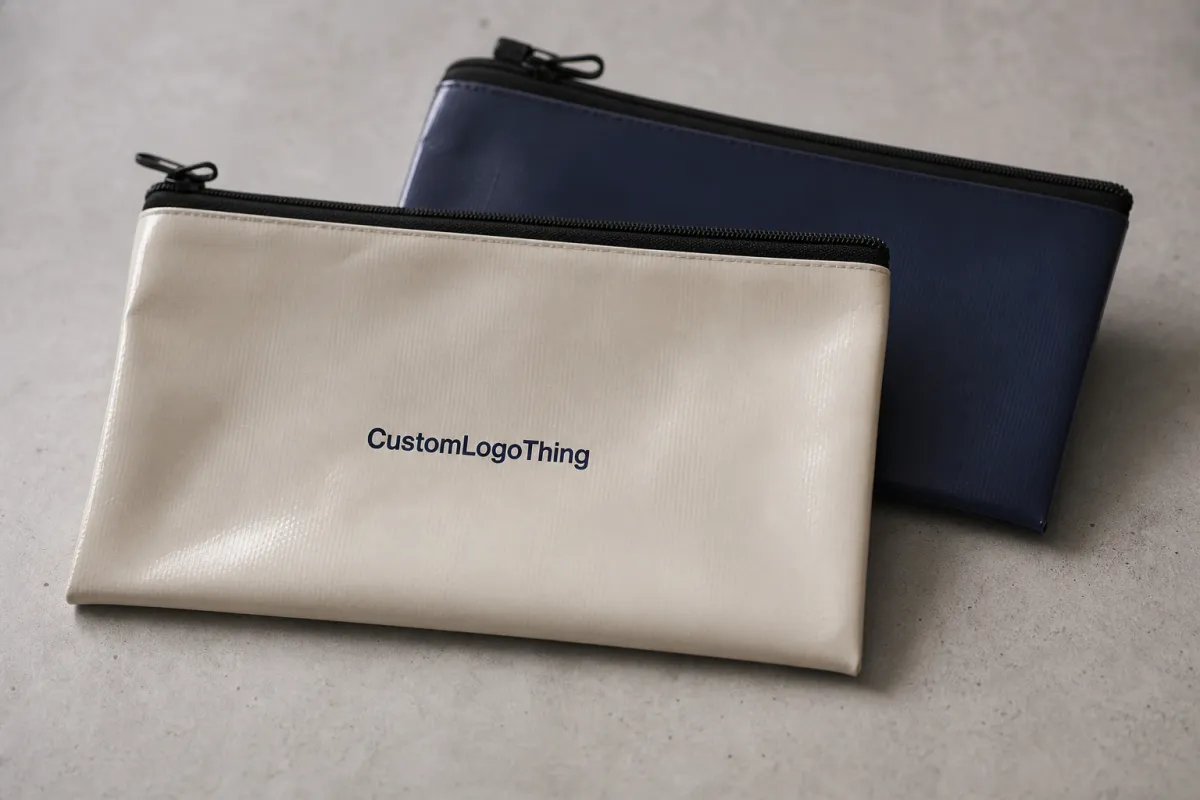
Event merch zipper pouches lead time is the full stretch of time from a usable quote to finished product in hand. Not a mockup. Not a file upload. A real order that can be handed out at a show, packed into a sponsor kit, or placed on a retail table without anyone wondering what still has to happen.
That timeline usually includes spec confirmation, dieline setup, artwork prep, proofing, production, packing, inspection, and shipping. Add a printed insert card, specialty film, recycled materials, or extra branding steps and the process picks up more handoffs. The pouch may be compact, but the work behind it is not. A zipper needs to sit straight, the top edge needs to stay flat, and the stitching needs to hold consistent seam spacing or the pouch looks off before it ever reaches an attendee.
The biggest misunderstanding is easy to spot: people blame production while the file is still waiting on approval. In many projects, proof delays consume more time than the factory run itself. A supplier can usually begin once the art is locked. If the artwork keeps changing every few hours, event merch zipper pouches lead time turns into a moving target. A one-line approval can save a day, while a late logo revision can reset the whole production queue.
From the buyer's side, the goal is not just to get the pouch made quickly. The real goal is to align the schedule with the event date, the shipping lane, and the approval rhythm inside your own team. That means accounting for sample review, carton labeling, customs paperwork, and the time needed for sign-off from marketing, procurement, and legal if required.
If the artwork is still changing, the schedule is changing too. The press is rarely the real problem.
Another point buyers often overlook: zipper pouches are not all the same thing. Closure style matters. So does film thickness, seam allowance, zipper color, print coverage, and whether the pouch needs a gusset to stand upright on a table. Every one of those choices can affect event merch zipper pouches lead time because each choice can trigger a separate sourcing or production step. Even a small shift in size can change the dieline, which means the art has to be rechecked from scratch.
Common materials include 0.20-0.35 mm clear PVC-free TPU, 0.25-0.40 mm soft EVA, 210D or 300D recycled polyester, 600D polyester, cotton canvas, and nonwoven polypropylene. For sustainable programs, buyers often ask for GRS-certified recycled PET fabric, GOTS-certified organic cotton, or OEKO-TEX Standard 100 compliant lining and trim. Those certifications do not automatically shorten lead time, but they can affect sourcing because the mill or trim supplier may need extra documentation before cutting begins.
The right expectation matters here. The goal is not to ask a factory to do the impossible. The goal is to match the pouch schedule to the event, even if that means choosing a simpler format, a stock material, or a more direct freight lane. A smart order often looks plain on paper. Plain is usually what ships on time.
How the Timeline Works From Artwork to Delivery
A normal custom pouch order moves through a predictable sequence, and event merch zipper pouches lead time becomes easier to manage once the sequence is clear. First comes spec confirmation: size, quantity, print sides, zipper style, material, closure type, and destination. Then comes dieline setup, the technical flat layout that keeps the art from landing in the wrong place. After that, the buyer reviews the proof, requests changes if needed, and signs off.
Typical sample steps are straightforward: request quote, confirm the dieline, approve digital artwork, review a pre-production sample or photo sample, then release bulk production. For a standard order, a digital proof can be turned around in 24-48 hours, while a physical sample usually takes 5-8 business days depending on material availability and shipping method. If a buyer wants a sewn pre-production sample with the final zipper, puller, and print method, plan on another 3-7 business days after the sample request is confirmed.
Only after approval does the actual production window begin. For a straightforward run, domestic production often lands in the range of 7-15 business days after proof approval, depending on quantity and detail level. Offshore orders can be less expensive, but the calendar is usually longer because the process includes more freight time, more customs exposure, and more room for paperwork delays. A realistic offshore window is often 20-40 calendar days, and that is before anyone starts trimming shipping time. If you are dealing with a holiday week, add more cushion.
The part buyers should not brush past is sample approval and artwork approval. Those steps are where the schedule usually slips. If the sample takes a week to review because multiple people want to comment on the zipper color, event merch zipper pouches lead time expands whether the factory wants it to or not. The production slot may still be waiting, but the calendar has already leaked days.
External delays matter as well. Holidays, port congestion, carrier slowdowns, customs inspection, weather disruptions, and last-mile issues can all move the delivery date. A domestic order is not immune either. If the freight line misses a pickup, the carton does not care that the event is tomorrow. That is why a short shipping window can be just as risky as a long production window.
For transit testing and packaging durability, the International Safe Transit Association is a useful reference point at ISTA, and FSC explains paper and board certification if your inserts or cartons need certified material at FSC. Those standards will not shorten event merch zipper pouches lead time by themselves, but they do help you ask sharper questions before production starts. If the insert card or outer carton has to meet a spec, it is better to find that out early than to discover it while the order is already on the water.
Inspection checkpoints should be defined before production starts: incoming fabric width and GSM check, zipper pull test, first-article approval on the first 10-20 units, inline seam inspection every 30-50 pieces, print registration check after machine setup, and final random inspection using an AQL 2.5 standard for major defects and AQL 4.0 for minor defects. For sewn pouches, factories often use flat-bed lockstitch machines, overlock machines for edge finishing, bartack machines on stress points, and heat-seal or ultrasonic machines for nonwoven and TPU builds. A good supplier will also confirm carton count, polybag quantity, label accuracy, and master carton dimensions before the shipment closes.
The simplest rule is to work backward from the event day, then add buffer days for proofing and freight. If the event is on Friday and setup begins Wednesday, the order should not still be "almost ready" on Tuesday. That is how people end up paying rush fees and still standing at a service desk wondering where the cartons are.
Event Merch Zipper Pouches Lead Time: Cost, Pricing, and MOQ
Event merch zipper pouches lead time and pricing are tied together more closely than most buyers expect. The simpler the pouch, the easier it usually is to schedule and the lower the cost usually is. Add larger sizes, thicker film, metallic ink, custom zippers, soft-touch lamination, or a printed insert card, and both the price and the calendar can grow.
For a rough planning range, a basic stock-material pouch with simple print coverage might land around $0.18-$0.35 per unit at 1,000 units, while a more custom build can move into the $0.40-$0.85 range or higher depending on size, print coverage, and finishing. For a lower MOQ of 500 units, a common custom range is $2.50-4.00 per unit for heavily branded, small-run, or specialty-material builds. Setup fees, plate costs, sampling, packing, and freight are separate. A quote should make the whole job legible, not just the unit price.
| Option | Typical Unit Price | Typical MOQ | Typical Lead Time | Best For |
|---|---|---|---|---|
| Stock clear TPU pouch, 1-color print | $0.18-$0.35 | 1,000 units | 7-15 business days | Fast event giveaways and sponsor kits |
| Custom recycled PET pouch, 2-color print | $0.32-$0.65 | 500-1,000 units | 12-18 business days | Retail-ready merch and brand programs |
| Gusseted canvas or 600D pouch, woven label, zipper puller | $0.85-$1.80 | 300-500 units | 15-25 business days | Premium kits and higher-value gifting |
| Specialty build, custom zipper, lining, insert card, packaging | $2.50-$4.00 | 500 units | 18-22 business days | High-touch VIP events and retail launches |
MOQ usually depends on the construction. Simple stock pouches may start at 300-500 units, while fully custom sewn or laminated pouches often start at 500-1,000 units. If the order needs a special zipper pull, debossed patch, or custom packaging, the MOQ can rise because the supplier has to cover trim minimums and setup time. Buyers planning multiple event dates can often combine runs by size or color to keep the unit price closer to the lower range.
Certifications can also affect cost. A GRS-certified recycled polyester pouch may cost slightly more than a virgin polyester version because the supplier has to maintain chain-of-custody documentation. GOTS-certified organic cotton generally adds cost versus conventional cotton because the fiber, processing, and downstream handling must stay within certified requirements. WRAP, BSCI, or OEKO-TEX Standard 100 certifications do not always change unit price dramatically, but they can change which factories qualify and how quickly documentation can be supplied.
What Actually Slows Event Merch Zipper Pouches Lead Time Down
Most delays come from a small number of predictable causes. The first is artwork churn. A logo moved 3 mm, a typeface changed after proofing, or a color corrected from Pantone to CMYK can force another round of approval. The second is sourcing. A custom zipper tape color, metal puller, or certified fabric may not be on hand and needs to be ordered. The third is freight. Even if production finishes on time, the cartons still have to move through consolidation, export, customs, and delivery.
Order complexity is another driver. A flat pouch is faster than a gusseted pouch. A one-sided print is faster than a front-and-back all-over print. Heat-sealed TPU is different from sewn canvas, and each process has its own setup time. A pouch with a woven label, hangtag, and insert card adds three more operations, which means three more opportunities for delay. None of that is mysterious, but it is easy to underestimate when the product looks simple on screen.
Materials matter too. TPU and EVA can be quick if the supplier stocks the sheet goods, but GRS recycled fabric or GOTS organic cotton may require incoming documentation before cutting. Metal zippers can add 3-7 days if the exact puller finish is not in stock. Screen printing can be faster for bold one- or two-color logos, while heat transfer or digital print may be better for full-color art but add setup or cure time. The print method should match the art, not just the mood board.
Quality issues are another hidden source of lost time. If the first piece off the line fails on seam alignment, print placement, or zipper action, the line may need to stop for correction. For zipper pouches, common inspection checkpoints include stitch density, zipper cycle testing, puckering at corners, print bleeding, and label placement. If the buyer waits until the final shipment to check those points, corrections become expensive fast.
Freight is the last big variable. Air freight can compress delivery into 3-7 days once production is done, but it costs more. Sea freight is cheaper on larger shipments, but the transit window can be 18-35 days depending on lane, with more exposure to port delays and customs holds. For short-event deadlines, choosing the wrong lane can erase any savings from a lower unit price.
Step-by-Step Planning to Protect the Timeline
The safest way to protect event merch zipper pouches lead time is to lock the process before the process locks you. Start with a working-back schedule from the event date. Then assign a deadline to each stage: quote approval, artwork approval, sample approval, production release, inspection, and freight booking. If the event is in six weeks, the calendar should already know that the sample cannot sit untouched for a week.
Use a simple sequence. First, confirm size, material, print count, zipper style, color, and packaging. Second, request a quote with unit price, MOQ, tooling, sample cost, and freight estimate. Third, approve the dieline and submit final vector art with fonts outlined and colors referenced by Pantone where possible. Fourth, review the digital proof or physical sample. Fifth, release bulk production only after every stakeholder signs off.
For sample planning, ask for one of three options: a digital proof, a blank physical sample, or a pre-production sample. Digital proofs are quickest but only show layout. Physical samples confirm the feel of the material. Pre-production samples are best when the order has custom print, custom zipper color, or special finishing because they show the final build before bulk begins. If a supplier cannot explain which sample type they are offering, that is a warning sign.
Inspection should also be written into the order. A clear checklist should include material thickness, color tolerance, zipper function, seam strength, print alignment, packaging count, and carton labeling. If the buyer wants certification support, request copies of the current certificate, scope, and transaction documents before production starts. That matters for GOTS, OEKO-TEX Standard 100, GRS, WRAP, and BSCI programs because the paperwork needs to match the actual factory and product scope.
A practical buffer is not optional. For a local event, hold at least 5-7 business days of cushion after expected delivery. For a traded show or sponsored launch, hold 10-14 days if the freight lane is international. That buffer is not wasted time. It is the difference between a controlled delivery and a last-minute scramble.
Common Mistakes That Blow Up Lead Time and Budget
The most common mistake is under-specifying the pouch. A buyer asks for a "small zipper pouch" without defining size, material, zipper type, print area, or closure style. The supplier then has to guess, and every guess becomes a revision later. A second mistake is treating the proof as a decoration instead of a production document. If the art is not final, the factory cannot commit to the build.
Another frequent problem is choosing a custom finish too late. Metallic ink, soft-touch lamination, blind debossing, custom woven labels, and matched zipper tape all sound simple in a meeting. In production, each one can add lead time and minimums. A better rule is to decide whether the pouch needs to be premium or fast. Trying to make it both can create avoidable cost.
Buyers also lose time by splitting approvals across too many people. One person wants the zipper color, another wants a larger logo, and a third wants to change the insert card after the proof is already signed. That kind of fragmentation is expensive because the factory has to stop, revise, and re-quote. One decision owner usually saves more time than a dozen opinions.
Freight mistakes are just as costly. Orders that are ready to ship still miss events when the team books the wrong lane, ignores cutoff dates, or fails to confirm the delivery address and receiving hours. A carton that arrives on time but cannot be received is not on time. The same goes for missing customs details, improper carton labels, or incomplete commercial invoices.
Finally, some teams forget to match the certification requirement to the product. If a program needs organic cotton, ask for GOTS. If it needs recycled content, ask for GRS. If the buyer wants tested material safety, ask for OEKO-TEX Standard 100. If the factory claims compliance, ask for the current document, scope, and expiration date. That one check can prevent a lot of trouble later.
Expert Tips and Next Steps Before You Place the Order
If the event date is fixed, choose the pouch format that gives you the cleanest approval path. Stock TPU, standard recycled polyester, and simple sewn canvas usually move faster than fully custom mixed-material builds. If the branding call is more important than the hand-feel, keep the construction simple and put the budget into print clarity, neat edge finishing, and strong packaging.
Ask suppliers for a quote that separates unit price, tooling, sample fee, freight estimate, and inspection method. A useful quote should tell you whether the order is based on a 300, 500, or 1,000 unit MOQ, what the expected lead time is after proof approval, and whether the factory can support AQL inspection before shipment. If those numbers are missing, the quote is not ready for decision-making.
For branded event runs, it also helps to request a packaging mockup. A pouch that ships in a polybag with a barcode label is a very different plan from a pouch that ships with an insert card, hangtag, or retail sleeve. Those details matter because they add labor, materials, and sometimes another approval cycle. The same is true for master carton markings and pallet labeling.
The smartest buyers also keep a second option on standby. If the first-choice custom build is too slow, a simpler stock version can often save the program. That backup plan is not a compromise. It is a way to protect the event from a production schedule that is running too close to the edge.
One final check before release: confirm the event date, delivery address, receiving hours, print proof, sample approval, carton count, and freight method in writing. Then ask for the production start date, estimated completion date, and ship date. If those three dates are not visible, event merch zipper pouches lead time is still a guess.
FAQ
How long does a custom zipper pouch usually take?
A simple custom run can take 7-15 business days after proof approval if materials are in stock. More custom builds usually take 18-22 business days or longer, especially if they need special zippers, custom packaging, or certified materials.
What is a realistic MOQ for event merch zipper pouches?
Stock-style pouches often start at 300-500 units. Fully custom sewn or laminated pouches commonly start at 500-1,000 units, and specialty finishes can push the MOQ higher.
What certifications should I ask for?
For materials, ask for OEKO-TEX Standard 100 if you need tested textile safety, GRS for recycled content, and GOTS for organic cotton. For factory social compliance, ask for WRAP or BSCI documentation if those are required by your program.
Which materials are fastest to produce?
Usually stock TPU, EVA, 210D polyester, or nonwoven polypropylene are faster than fully custom mixed-material builds because they are easier to source and cut. Simpler print coverage also shortens setup time.
What should be checked before bulk production?
Confirm the dieline, final art, zipper type, material thickness, seam allowance, color target, sample approval, carton count, and inspection plan. A first-article check plus final AQL inspection helps catch issues before shipment leaves the factory.


