Logo Patches Material Guide for Jewelry Brands: What Actually Matters
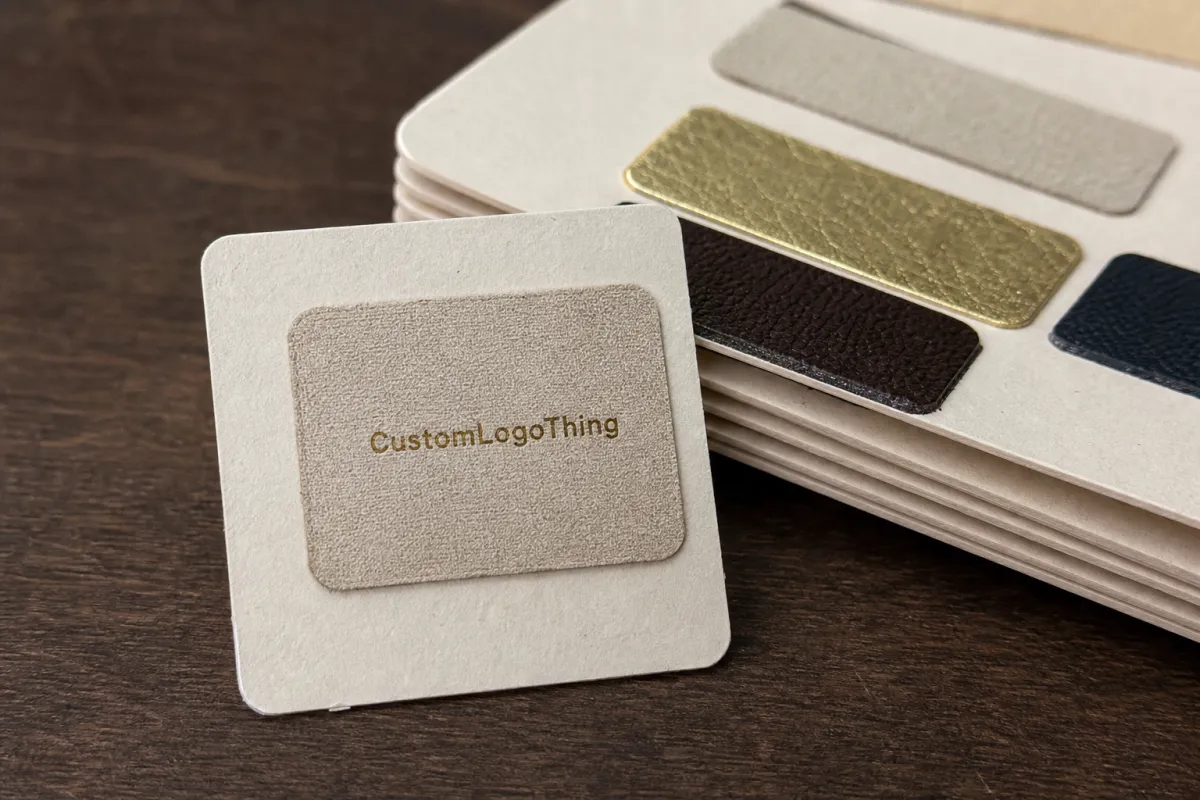
Jewelry buyers notice the pouch, box, tag, ribbon, and small sewn-on label before they read the care card. That little branding detail does more work than its square inches suggest, which is why this Logo Patches Material guide for jewelry brands focuses on fit: fit with the product, packaging surface, price point, and production method.
Logo patches are small branded pieces attached to jewelry pouches, travel rolls, velvet bags, dust bags, display cards, ribbon tabs, rigid gift boxes, and occasionally apparel-style merch. They may be sewn, glued, riveted, heat-pressed, or mounted with prongs. Tiny object. Many ways to get it wrong.
Jewelry brands use patches because print is not always enough. A printed logo can look clean, but a woven label or debossed faux leather patch adds texture. A metal badge adds weight and shine. A satin patch can make a simple drawstring bag feel more finished. The point is not decoration for decoration’s sake. The point is perceived value, and perceived value is unusually sensitive in jewelry packaging.
The main material families are woven labels, embroidered patches, faux leather patches, genuine leather patches, metal badges, PVC or silicone patches, chenille patches, and printed fabric patches. Each behaves differently at small sizes. Each has a different cost curve. Each has its own tolerance for tiny lettering, foil, sharp corners, curved logos, and real handling.
Practical rule: there is no single best patch material. There is a best match for your jewelry style, packaging surface, order size, attachment method, and tolerance for fussy production details. Glamorous, I know.
For example, a 0.85-inch woven patch on a velvet pouch can look refined and stay flat. A 0.85-inch embroidered patch with thin script may look like someone trained a caterpillar to write cursive. Same logo. Different process. Very different result.
How Patch Materials Behave on Jewelry Packaging
Start with woven patches if your logo has fine serif type, delicate monograms, small icons, or minimalist marks. Woven construction uses thread to create the design, but it sits flatter and cleaner than embroidery. For jewelry packaging, common sizes run from about 0.75 to 1.5 inches wide. Damask weave is often used when detail matters. It is thin, lightweight, and easy to sew onto fabric pouches without creating a bulky lump.
Embroidered patches have more dimension. That can be beautiful on bold icons, crests, initials, and boutique-style branding. The tradeoff is thread thickness. Very small letters fill in quickly, especially below roughly 0.25 inches tall. If your logo has a hairline script font, embroidery is probably not your friend.
Faux leather patches are common on travel cases, suede-like pouches, jewelry rolls, and mid-premium packaging. They can be debossed, embossed, foil stamped, or laser engraved depending on the coating. A typical faux leather patch may be around 0.6mm to 1.2mm thick. It gives structure without the batch-to-batch variation of real hide, although cheap polyurethane can crack or peel if flexed hard.
Genuine leather feels richer, but it behaves like a natural material because it is one. Color, grain, thickness, and deboss depth can shift from batch to batch. That variation can suit artisan, western, heirloom, or luxury-adjacent jewelry lines. It is not ideal for vegan brands, strict uniformity, or every compliance requirement. If the brand language is clean and cruelty-free, forcing real leather into the packaging sends the wrong signal.
Metal patches and badges suit rigid gift boxes, display trays, and premium retail packaging. Zinc alloy, brass, stainless steel, and aluminum are common choices. Finishes may include gold, rose gold, nickel, antique brass, gunmetal, matte black, enamel fill, or screen printing. They feel expensive because they usually are. They also add weight, require hardware or strong adhesive, and can scratch softer surfaces if placement is careless.
PVC and silicone patches fit waterproof, colorful, playful, sporty, or youth-focused jewelry brands: charm lines, festival jewelry, kids’ accessories, enamel-inspired pieces. They are durable and color-rich, but they can read too casual for fine jewelry. A rubber patch on a diamond tennis bracelet box? Bold. Possibly not in a good way.
Printed cotton, satin, or polyester patches are practical for full-color artwork, watercolor logos, gradients, and illustrations. If woven detail cannot capture the art cleanly, printing may be the better route. Printed satin can look polished on small pouches. Printed cotton feels more natural on kraft paper, linen, recycled mailers, and handmade-style packaging.
Key Factors: Logo Detail, Texture, Durability, and Brand Fit
Logo complexity comes first. Fine lines, tiny lettering, and delicate jewelry marks usually perform better as woven, printed, debossed, or metal patches than as embroidery. A 1-inch patch is not a billboard. It is barely a postage stamp with ambition.
Minimum readable size matters more than most buyers expect. If the brand name turns into a fuzzy smudge at 0.5 inches wide, the material may not be the problem. The logo is too small for that technique. For readable text, keep letter height around 2mm or higher for woven and printed patches, and closer to 3mm or higher for embroidery. These are guardrails, not laws, but they prevent expensive disappointment.
Texture should match both the jewelry and the packaging surface. Velvet pouches pair well with woven, faux leather, satin, or small metal details. Linen pouches suit woven and leather. Rigid boxes can handle metal badges, debossed leather, specialty adhesive patches, or inset labels. Corrugated or kraft shipping inserts usually need lighter, flatter patches so the mailer still closes cleanly.
Durability depends on use. A pouch customers carry in handbags needs abrasion resistance, secure stitching, and edges that will not fray after three weeks. A one-time gift box can prioritize beauty over long wear. Travel rolls need stronger attachment because they flex and rub. Display trays need finishes that survive staff handling, wholesale appointments, and the occasional person with lotion on their hands.
Watch for tarnish and transfer risks. Metal badges, foil finishes, dyed leather, and heavily colored patches should be tested against light pouches, white boxes, tissue paper, and delicate inserts. Cream, blush, champagne, and pale gray packaging show every mark. Black velvet hides more sins, but it also collects lint like it is being paid to do it.
Color accuracy is not universal across materials. Woven and embroidered patches use thread colors. PVC uses molded color. Printed patches use ink. Leather uses foil, debossing, pigment, or laser engraving. Metal uses plating, enamel, or screen printing. The same Pantone target can look different on every one of those surfaces. If brand color matters within a narrow range, ask for physical samples.
Sustainability claims need skepticism. Recycled Polyester Woven patches, organic cotton bases, vegan leather, biodegradable packaging, and plastic-free mailers can all support a better materials story. Attachment matters too. A recycled patch glued with a permanent adhesive to a non-recyclable laminate is not exactly a sustainability victory lap. For paper-based packaging, FSC-certified materials are a useful starting point; the Forest Stewardship Council explains chain-of-custody certification clearly.
Brand fit beats trend-chasing. Minimal gold vermeil line? Try woven, satin, debossed faux leather, or a tiny metal badge. Beaded festival jewelry? PVC may work. Handmade silver? Leather or woven can feel right. High-polish bridal? Keep it restrained.
Cost, Pricing, MOQ, and Unit Cost by Patch Type
Pricing depends on supplier, quantity, artwork, size, and finishing. Still, buyers need ranges. Otherwise every quote feels like a magic trick with shipping added at the end.
| Patch Type | Typical MOQ Range | Approx. Unit Cost at Mid Quantities | Best Use | Watchouts |
|---|---|---|---|---|
| Printed fabric | 100–300 pcs | $0.12–$0.45 | Full-color logos, gradients, watercolor art | Ink durability and color shift |
| Woven | 100–500 pcs | $0.18–$0.65 | Tiny logos, fine type, minimalist pouches | Limited texture and thread color matching |
| Embroidered | 100–300 pcs | $0.30–$0.95 | Bold icons, crests, boutique branding | Poor detail at very small sizes |
| Faux leather | 100–500 pcs | $0.35–$1.20 | Travel cases, jewelry rolls, premium pouches | Heat, cracking, and adhesive testing needed |
| Genuine leather | 100–500 pcs | $0.75–$2.50+ | Artisan, heirloom, western, premium collections | Natural variation and vegan concerns |
| Metal badge | 300–1,000 pcs | $0.80–$3.50+ | Rigid boxes, luxury trays, premium gift packaging | Tooling, weight, scratching, attachment |
| PVC or silicone | 300–1,000 pcs | $0.60–$2.00+ | Playful, waterproof, colorful jewelry lines | Mold costs and casual appearance |
Printed fabric and simple woven patches are usually the most budget-friendly. Embroidered and faux leather patches sit in the middle. Metal, genuine leather, and complex PVC cost more because tooling, molding, plating, or hand finishing gets involved.
Main cost drivers include patch size, material, number of colors, backing type, mold or die fees, edge finish, attachment method, artwork cleanup, sampling, and packaging integration. A 1-inch woven patch with two thread colors is not in the same pricing universe as a plated metal badge with enamel fill and prongs.
Small custom runs cost more per piece because setup labor does not disappear just because the patch is tiny. A 100-piece run may feel painful. A 1,000-piece run often drops sharply. A 2,500-piece run may get you into a cleaner production rhythm, especially for woven labels and printed fabric.
MOQ varies. Woven and printed patches can often work at lower quantities than custom metal or molded PVC patches. Metal badges may require die charges of roughly $80–$300 or more, depending on shape and detail. PVC molds may land in a similar setup range. Not always, but often enough to budget for it.
Setup fees versus unit cost deserve attention. A metal badge might have a higher upfront die charge but look premium at scale. A woven patch may have lower setup cost and better flexibility for seasonal drops, limited capsule collections, or packaging tests.
Do not choose only by lowest unit price. If the cheap patch makes a $200 necklace pouch look like event swag, congratulations, you saved twelve cents and damaged the product experience.
Ask suppliers for pricing at 100, 300, 500, 1,000, and 2,500 pieces. You want to see where the real price breaks happen. For examples of how branded details show up across finished products, browse the Custom Logo Things Case Studies and compare how material choices change the final feel.
Process and Timeline: From Artwork to Finished Patches
The standard process is simple on paper: submit the logo file, confirm size and material, choose colors and backing, receive a digital proof, approve a sample if needed, start bulk production, inspect, then ship. The drama usually hides in the words “approve” and “if needed.”
Vector artwork is best for woven, metal, PVC, debossed, and embroidered patches. Send AI, EPS, SVG, or clean PDF files when possible. High-resolution raster files may work for printed patches, especially at 300 DPI or higher, but vector still avoids drama. Screenshots from Instagram are not production art. They are evidence.
Sampling is worth it for premium jewelry packaging, color-sensitive launches, metal finishes, leather textures, and retail programs. A digital proof can show layout and proportions, but it cannot show how rose-gold plating reflects light against a champagne box. It cannot prove whether a faux leather deboss reads clearly at 0.9 inches wide.
Typical timing looks like this: digital proofing may take 1–3 business days, sampling can take 7–14 business days depending on material, and bulk production often takes 2–5 weeks after approval. Metal, PVC, genuine leather, and special foil work tend to sit toward the longer side. Rush work costs more and leaves less room to fix issues. Shocking, I know.
Lead time variables include holidays, custom dyeing, imported materials, mold creation, foil availability, hand finishing, and whether the patch is being attached to the packaging by the same supplier. If one company makes the pouch and another makes the patch, plan extra time for shipping, alignment, and final assembly.
Attachment planning belongs near the beginning, not after the pretty sample arrives. Sewing works for many fabric pouches but can pucker thin satin. Heat press may damage velvet or coated materials. Adhesive backing may fail on fuzzy surfaces. Rivets need enough material thickness. Prongs work better on boxes and boards than on soft bags.
For packaging shipped through parcel networks, basic distribution testing is useful. ISTA procedures, from the International Safe Transit Association, are often used to evaluate packaged-product performance. You may not need a full lab test for a tiny pouch patch, but you should at least rub, flex, pack, and ship a few samples before approving thousands.
Build buffer time before launches, wholesale ship dates, and holiday gifting campaigns. Jewelry packaging always becomes urgent right after someone ignored it for six months. Funny how that works.
Step-by-Step Guide to Choosing the Right Patch Material
Use a process. It saves money. It also prevents the classic “we approved the prettiest sample and later learned it cannot attach to our pouch” situation.
-
Identify where the patch goes. A drawstring pouch, velvet jewelry roll, rigid gift box, shipping insert, and display tray all need different attachment and durability thinking. A box badge can be heavier. A pouch patch needs to bend.
-
Measure the usable branding area. Do not design a 2-inch patch for a 2.25-inch pouch panel unless you enjoy cramped layouts and sad stitching. Leave at least 0.25 inch of breathing room around the patch where possible.
-
Simplify the logo if needed. Use initials, an icon, or a wordmark variation for small patches instead of forcing the full brand lockup into a tiny rectangle. Remove taglines under about 1 inch wide. Nobody can read them anyway.
-
Choose material based on the packaging surface. Woven works well for fabric. Leather works well for structured cases and rolls. Metal suits boxes and display pieces. PVC fits playful designs. Printed fabric handles full-color art.
-
Choose edge and backing. Options may include merrowed edge, laser-cut edge, folded edge, heat-seal backing, pressure-sensitive adhesive, sew-on backing, rivet holes, or prongs. Each adds cost, labor, or risk.
-
Decide color and finish. Matte, gloss, metallic thread, foil, debossing, antique metal, soft-touch PVC, or tonal thread can shift the perceived price point. Tonal black-on-black woven patches can feel expensive. Bright contrast stitching can feel sporty.
-
Order a sample or pre-production proof. Do this for any patch that will sit on expensive jewelry packaging. Guessing is not a quality-control strategy.
If you are stuck between two materials, test both on the actual pouch or box. Mockups lie politely. Materials tell the truth.
Common Mistakes Jewelry Brands Make With Custom Patches
Mistake 1: making the patch too large. Jewelry packaging is small. Oversized branding can feel loud, cheap, or promotional instead of refined. A 1-inch patch on a 3-inch pouch often looks balanced. A 2-inch patch may look like a sponsor logo.
Mistake 2: using embroidery for ultra-fine logos. Embroidery has thread thickness. It cannot perform microscopic calligraphy miracles, despite what the mockup suggests. If the logo has hairline strokes, choose woven, printed, debossed, or metal instead.
Mistake 3: ignoring attachment method until the end. Adhesive may fail on velvet. Heat press may damage delicate fabrics. Sewing may pucker thin satin. Rivets may not work on soft pouches. Attachment is part of the design, not an afterthought.
Mistake 4: choosing a material that fights the jewelry style. A rubber PVC patch on an heirloom pearl line is probably not the move. Unless chaos is the brand strategy. Match the tactile message to the product: refined, handmade, playful, rugged, bridal, or luxury.
Mistake 5: skipping color testing. Cream, champagne, blush, black, and metallic finishes can shift dramatically between thread, ink, foil, leather, and metal plating. If your brand color is central to recognition, approve a physical sample under normal lighting and retail lighting.
Mistake 6: forgetting packaging handling. Patches can snag tissue paper, scratch boxes, catch on drawstrings, or add bulk to flat mailers. If your mailer is already tight, a 2mm thick patch may create pressure marks. Test a packed order, not just an empty pouch.
Mistake 7: ordering too close to a launch. Custom patches involve proofing, sampling, production, attachment, inspection, and shipping. The calendar does not care that your influencer boxes go out Friday.
Want a quick gut check? Place the patch on the finished packaging and ask whether it makes the jewelry feel more expensive, more intentional, and more memorable. If it only makes the logo bigger, keep working.
Build a Patch Spec That a Supplier Can Quote
Turn the decision into a clean spec instead of sending a supplier a mood board and hoping they read your mind. Suppliers quote faster when the request is specific. They also quote more accurately, which is useful if you enjoy budgets that resemble reality.
Your patch spec should include the following:
- Patch material: woven, embroidered, faux leather, genuine leather, metal, PVC, silicone, or printed fabric.
- Size and shape: width, height, shape, corner radius, and thickness if relevant.
- Logo file: vector file preferred, with outlined fonts if possible.
- Color count: Pantone targets, thread colors, foil color, plating finish, or printed CMYK reference.
- Backing method: sew-on, adhesive, heat press, rivet holes, prongs, or no backing.
- Edge finish: merrowed, laser-cut, folded, stitched, sealed, raw, or plated.
- Packaging surface: velvet, satin, linen, kraft paper, corrugated cardboard, rigid board, faux suede, leather, or coated paper.
- Quantity: ask for 100, 300, 500, 1,000, and 2,500 pieces if you are unsure.
- Target delivery date: include launch dates, wholesale deadlines, or campaign ship dates.
- Attachment included: clarify whether the supplier only makes patches or also applies them to pouches, boxes, or rolls.
Send photos or physical samples of the pouch, box, or jewelry roll. The patch supplier needs to understand surface texture, thickness, and color before recommending adhesive, sewing, or hardware. Velvet, satin, coated rigid board, and kraft paper all behave differently.
If unsure, ask for two or three material options: woven versus faux leather for velvet pouches, metal badge versus debossed leather for rigid boxes, or printed satin versus woven for a detailed logo. Good suppliers can explain tradeoffs without turning the quote into a guessing game.
Request pricing at multiple quantities and ask what changes the cost most. Maybe reducing colors saves money. Maybe changing from metal to faux leather cuts tooling. Maybe increasing from 300 to 500 pieces drops the unit cost enough to justify extra inventory. That is buying strategy, not just shopping.
Ask for a digital proof first, then a physical sample for premium packaging, retail launches, or anything with metallic, leather, or color-sensitive details. You can also compare finished examples in the Custom Logo Things Case Studies to see how small branding choices affect the finished product.
Use this Logo Patches Material guide for jewelry brands as a checklist before you request quotes, approve samples, or commit to a production run. The right patch should make the packaging feel more intentional, not more complicated.
FAQs
What is the best logo patch material for jewelry brands using velvet pouches?
Woven patches are usually the safest choice because they are thin, precise, and easy to sew. Faux leather can look more premium, but adhesive and heat application should be tested on velvet first. Metal badges can work for luxury pouches, though they add weight, snagging risk, and higher cost.
How small can logo patches be for jewelry packaging?
For readable text, keep most patches at least 0.75 to 1 inch wide, depending on the logo. Very small marks work better as woven, printed, debossed, or metal patches than embroidered patches. If the logo has fine script or tiny taglines, remove the tagline or use an icon version.
Are leather logo patches a good choice for jewelry brands?
Yes, especially for travel cases, linen pouches, jewelry rolls, and artisan or premium collections. Use faux leather if the brand needs vegan-friendly packaging or more consistent color. Test debossing, foil stamping, and edge finish before bulk production because leather can vary.
What affects the cost of custom logo patches for jewelry brands?
Material, size, color count, backing, edge finish, tooling, sampling, and quantity all affect cost. Metal, genuine leather, molded PVC, and complex embroidery usually cost more than simple woven or printed fabric patches. Ask for quotes at several quantities so you can see where the unit cost drops.
How long do custom logo patches take to produce for jewelry packaging?
Digital proofing can take a few business days, while sampling often adds one to two weeks. Bulk production commonly takes two to five weeks after approval, depending on material and complexity. Build extra time into launch schedules if patches need to be sewn, glued, riveted, or applied to finished packaging.
A useful patch decision comes down to four checks: does it suit the jewelry, does it attach cleanly to the packaging, does it survive handling, and does the cost make sense at the order quantity? Cute is nice. Production-ready is better.


