A label is a small part of a garment, yet it affects a buyer’s decision in more ways than the unit price suggests. It shapes the first tactile impression, carries brand identity, and has to survive wash after wash without turning scratchy, frayed, or unreadable. That is why experienced buyers pay close attention when choosing a recycled polyester Woven Labels Supplier; recycled content only matters if the construction, weave quality, and finishing hold up in real use.
Recycled woven labels are appearing in more tees, hoodies, leggings, outerwear, and kids’ apparel because brands want the crisp woven look without relying on virgin polyester. The challenge is that “recycled” can describe a wide range of yarn quality and process control. One supplier may deliver clean edges, tight detail, and consistent color; another may produce a label that feels stiffer than expected or shows fuzzy text at small sizes.
Overview: why recycled woven labels are showing up in more apparel lines
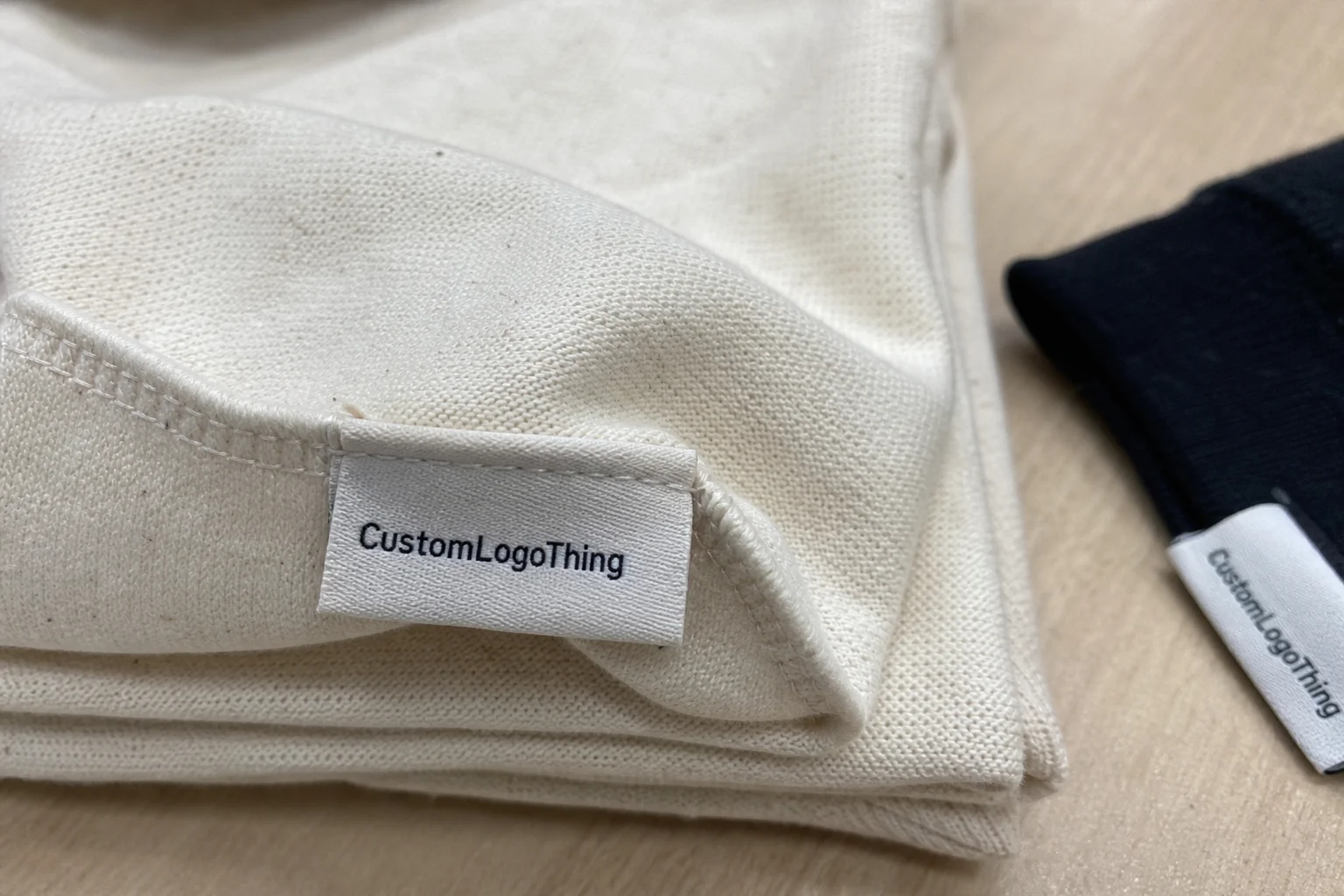
Recycled Polyester Woven Labels are fabric labels made from recycled PET yarns. They are used for brand identity, size marking, care information, fiber content, and compliance details, depending on how the garment is constructed and where the label will sit. You will see them as neck labels, side-seam labels, hem tags, fold-over brand labels, and combination labels that carry both branding and wash instructions.
The appeal is practical. Buyers want a label that looks premium, reads clearly, and stands up to laundering, but they also want material choices that support sustainability goals. A recycled polyester woven label can deliver that balance without giving up the tight detail and cloth-like finish that many fashion and activewear brands prefer over printed labels.
That said, recycled does not automatically mean equal performance across the board. Yarn source, loom settings, weave density, and finishing quality all influence the result. A label that feels soft and sharp in one sample lot may come back slightly different in another if the supplier does not control the process carefully. For buyers, the spec matters just as much as the recycled claim.
A good woven label has to do three jobs at once: identify the brand, survive use, and feel appropriate for the garment it is sewn into.
That balance is why labels are often compared the same way buyers compare trims, hang tags, or packaging components. The material is only one piece of the decision. The real question is whether the final label supports the product story without creating comfort issues or production problems.
How recycled polyester woven labels are made and finished
The process starts with recycled polyester being converted into yarn, then woven on looms into narrow label fabric. After that, the label is cut, folded, heat-sealed, laser-cut, or otherwise finished depending on the style ordered. A flat label for a side seam and a folded neck label do not leave the machine the same way, and finishing choices affect comfort, edge quality, and sewing efficiency.
Weave density matters. A finer warp-and-weft construction allows sharper logos, smaller text, and cleaner transitions between colors. That is especially useful when the brand mark has thin lines or the care copy sits close to the edge. A looser weave can still work for bold graphics, but fine typography starts to blur when the label is too small for the design.
Common finishing styles include the following:
- End fold for sewing the short ends into seams.
- Center fold for neck labels and hanging loops.
- Miter fold for a more finished corner treatment.
- Flat sew-on labels for side seams, hems, and exterior branding.
- Loop labels for hanging or decorative applications.
Woven labels differ from printed labels in a meaningful way: the design becomes part of the fabric structure instead of sitting on top of it. That usually improves wash resistance and abrasion performance, which is why woven constructions remain standard for many premium garments and workwear lines. The tradeoff is that the artwork has to be simplified enough to fit the weave.
Hand-feel is another practical check. A label worn at the neckline should not scratch, curl, or feel overly rigid against the skin. Edge fray resistance matters too, especially when the label is exposed at the seam or sewn into garments that will be laundered often. If a label feels stiff in hand before it is sewn in, it rarely improves later.
Key factors to compare: material quality, durability, and certification
When evaluating a recycled polyester Woven Labels Supplier, start with the recycled-content claim itself. Ask what percentage is recycled, what source material is used, and whether the supplier can provide documentation. Some buyers are satisfied with a simple statement on the quote, while others need traceability records or production paperwork for internal compliance checks.
Durability should come next. Woven labels are typically durable because the design is built into the cloth, but performance still depends on yarn quality, weave density, and how the label is finished and sewn into the garment. A well-made recycled polyester label should hold up through repeated washes without fuzzing badly, fading unevenly, or curling at the corners.
Comfort is not optional for many categories. A heavy, structured label may work in outerwear or rugged workwear, yet it can feel too firm for premium basics or children’s apparel. For garments worn close to the skin, buyers should compare label stiffness and edge softness before locking in a full run.
Certification and traceability matter too, especially when sustainability language appears on packaging, hang tags, or product pages. Depending on the program, buyers may ask for recycled-content verification, factory documentation, or supply-chain records that back up the claim. If the label is sold into retail or wholesale channels, a clean paper trail can prevent awkward questions later.
For brands that care about the wider material chain, it helps to understand the standards ecosystem around recycled content and packaging. The EPA recycling resources are a useful reference point for recycled-material language, while FSC remains relevant when garment packaging includes paper inserts, hang tags, or cartons that also carry sustainability claims.
| Label consideration | What to ask | Why it affects the result |
|---|---|---|
| Recycled content | What percentage is recycled, and can it be documented? | Supports sustainability claims and brand consistency. |
| Weave density | Can the supplier handle small text and fine logos at your size? | Improves sharpness and readability. |
| Hand-feel | Will the label sit against skin or inside a seam? | Determines comfort and irritation risk. |
| Wash durability | How does the label behave after repeated laundering? | Protects appearance and function over time. |
| Traceability | Is documentation available for internal review? | Helps with brand, retail, or compliance requirements. |
One more practical point: a label that performs beautifully on denim may feel too rigid for a lightweight tee. Matching the label spec to the garment category is half the job, and buyers who skip that step often pay for it later in complaints, rework, or inconsistent production.
Recycled polyester woven labels supplier process, timeline, and production steps
The ordering flow is usually straightforward, but the details decide whether the job runs smoothly. It begins with artwork review, then size and construction selection, followed by sampling or digital proofing, approval, production, finishing, and shipment. A reliable recycled polyester woven labels supplier should explain that sequence clearly and flag the points that need approval before the loom starts.
Delays usually happen for predictable reasons. The most common ones are logo changes after proof approval, unclear Pantone targets, missing care copy, or late decisions about backing and attachment style. If the artwork is still “almost final,” production rarely feels smooth. Finalizing the file early saves more time than chasing an urgent revision after the run is already queued.
For standard woven label orders, production can move fairly quickly once the proof is approved. Highly detailed multi-color labels, specialty folds, or orders that require sample approval first can take longer. In many cases, buyers should expect roughly 12 to 15 business days from proof approval to shipment for standard jobs, though factory load and customization level can push that longer. Rush jobs can be faster, but only if the spec is simple and the supplier has available capacity.
Here is the kind of information that should be ready before requesting quotes:
- Vector artwork in AI, EPS, or editable PDF format.
- Finished label size and fold style.
- Quantity needed for the run.
- Backing preference, if any.
- Placement method, such as neck seam, side seam, or hem tag.
- Any care-content or size copy that must appear on the label.
If the label needs to coordinate with broader garment packaging, keep the spec sheet aligned with other trims and printed pieces. That way the woven label, hang tag, and retail pack speak the same visual language. A full-service supplier such as Custom Labels & Tags can be useful during the planning stage, and for brands building out the full presentation, Custom Packaging Products often become part of the same buying conversation.
Cost, pricing, MOQ, and what actually changes the quote
Pricing for woven labels is driven by more than size. The main cost drivers are label dimensions, weave complexity, number of colors, recycled-yarn quality, fold style, and any extra finishing such as heat cutting, adhesive backing, or special packaging. A larger, multi-color label with tiny text costs more than a simple one-color brand tab, and that difference becomes obvious once the spec is broken down.
MOQ exists for a reason. Loom setup, yarn allocation, and machine programming take time, so suppliers spread those fixed costs across a minimum run. Smaller orders can still be done, but the unit price often rises because those setup costs are divided among fewer pieces.
As a rough market reference, a very basic recycled polyester woven label may land around $0.04-$0.09 per unit at higher quantities. A more detailed label with multiple colors, fold work, or special finishing may move closer to $0.10-$0.20 or more per unit depending on volume. For smaller custom jobs, the quote can look much higher because setup is carrying the weight of the order. Exact pricing depends on the spec, but those ranges help buyers spot whether a quote is in the right neighborhood.
To compare quotes fairly, the spec has to match line by line. Confirm the same size, quantity, fold, colors, backing, and recycled-content claim. If one supplier quotes a 20 mm fold-over label and another quotes a 15 mm flat label, you are not comparing the same product. That mistake happens more often than people admit.
Watch for hidden variables too. Rush production can add cost. Split shipments can add freight. Very fine typography may require a higher-detail weave. Even packaging for the labels themselves can shift the price if the buyer wants them sorted, counted, or bagged in a specific way.
| Quote factor | Low-impact choice | Higher-cost choice |
|---|---|---|
| Artwork | Bold logo, 1-2 colors | Fine text, multiple colors, small detail |
| Size | Compact brand tab | Larger care-content panel |
| Finish | Simple cut or end fold | Center fold, miter fold, or specialty finishing |
| Volume | Higher quantity | Small custom order |
| Timing | Standard production window | Rush turnaround or split delivery |
Step-by-step: how to source the right label spec for your garments
Start with the garment, not the label catalog. Everyday basics, premium fashion, activewear, kids’ apparel, and outerwear all need slightly different label behavior. A soft tee neck label should feel lighter than a work jacket label, and that changes how thick the weave should be and how the label should be folded or sewn.
Then decide what the label needs to do. Is it brand-only, size-only, care-content combo, or a multi-panel label? Space is always tighter than it looks on paper, so trying to pack too much information into a small woven label usually hurts legibility. If compliance is involved, the copy should be finalized before the proof stage, not guessed later.
Performance priorities come next. Some brands care most about softness. Others need high detail, low fray, and strong wash resistance. Some want a textured look that reads as more fashion-forward. There is no single best answer; there is only the best fit for the garment and the customer wearing it.
Ask for a sample or digital proof before the mass run, especially if the logo uses thin lines or the typography is small. What looks crisp on screen can become crowded once it is woven into a 15 mm or 20 mm label. A sample can expose problems that would be expensive to fix after production.
Finally, confirm how the label will be attached. Sewing margin matters. Placement matters. If the label is meant to be visible as a brand accent, the edge finish needs to look deliberate. If it is meant to disappear into the seam, the label can be simpler and more functional. That attachment plan is part of the spec, not an afterthought.
For buyers building a wider packaging program, keep the label brief aligned with related garment packaging or shipping materials such as Custom Poly Mailers. Consistent artwork, color use, and logo treatment reduce the risk of a collection feeling stitched together from different design systems.
Common mistakes buyers make when ordering sustainable woven labels
The most expensive mistake is treating the label as a last-minute detail. A woven label can be approved too late, which forces the design team to compress text, switch fold styles, or accept a simpler spec than the garment really needs. That usually shows up later as a mismatch between the product and its trim package.
Another common issue is overloading the label with information. Buyers sometimes try to fit branding, size, care instructions, country of origin, and legal content into a space that was only designed for one or two functions. The result is usually dense, hard-to-read copy. When the label gets too busy, the premium feel disappears.
Color expectations cause problems as well. On woven labels, color is affected by yarn availability and weave structure, so a Pantone match may be close rather than exact. Some shades translate beautifully in yarn; others read differently once woven at small scale. If your brand is strict about color, ask for proofing before approving the full run.
Comfort issues also come from the wrong construction choice. A stiff label may be acceptable on an outer shell, but the same spec can irritate consumers if it sits against the neck of a lightweight tee. Buyers often focus on appearance first and discover comfort issues only after fit testing or sample wear. That is too late.
Finally, many teams fail to compare equivalent quotes. One supplier may include backing, another may not. One may quote a flat label, another a folded label. One may be using recycled yarn with documentation, another may be making a looser claim. The cheapest quote is not always the best value when the spec is different.
Expert tips and next steps before you request quotes
Use the garment category to set the label’s performance target. Lightweight basics need softness and readability. Activewear often needs durability and low irritation. Workwear can tolerate a stiffer label if the hand-feel still makes sense for the fabric weight.
Keep the artwork honest to the weaving process. Thin serifs, tiny copy, and highly detailed gradients usually look better in print than in weave. A simpler design is often stronger because it stays readable after washing and abrasion. In woven labels, restraint usually wins.
Request the supplier’s sampling and approval flow up front. A clear proof stage saves time and reduces disputes over color, size, and fold orientation. If the supplier cannot explain how changes are handled before production, the order is likely to become more expensive later.
Buyers should also ask how the labels are packed. Bulk-packed labels are usually cheaper, while individually sorted or bagged labels add labor and cost. That may sound minor, but it matters when production teams need labels matched by colorway, size run, or style code.
There is a final practical check that many teams skip: sewability. Even a good-looking label can become a headache if the edge thickness interferes with automated sewing or if the fold creates bulk in a tight seam. A short sample run is often the cheapest insurance policy in the process.
FAQ
What makes a recycled polyester woven label different from a standard polyester woven label?
The main difference is the yarn source. Recycled polyester woven labels use recycled PET content, while standard polyester labels typically rely on virgin material. Performance can be similar, but only if the recycled yarn and weave quality are controlled carefully.
Can recycled polyester woven labels be used on skin-contact garments?
Yes, but hand-feel matters. For neck labels and children’s apparel, ask for a softer finish, a lighter weave, or an attachment method that keeps the label out of direct contact where possible.
How long does production usually take?
Standard jobs often take about 12 to 15 business days after proof approval. More complex labels, sample requirements, or peak-season loading can extend that timeline.
What affects the price the most?
Size, weave detail, color count, fold style, quantity, and finishing options. Recycled-content documentation can also add requirements if the buyer needs traceability paperwork.
What should I send a supplier first?
Final artwork, size, quantity, fold style, backing preference, attachment location, and any required care or size copy. A complete spec reduces revision cycles and makes quotes easier to compare.
Is recycled polyester always softer?
No. Softness depends on yarn quality, weave density, and finishing. Recycled content alone does not determine hand-feel.
For brands that treat trims as part of product quality rather than a box to tick, the label becomes a small but revealing test of supplier discipline. The best recycled polyester woven labels supplier is the one that can match the garment’s needs, document the material claim, and keep the final label consistent from proof to production. That consistency is what buyers remember, because it is what customers touch every time they wear the garment.