Choose the Right Pet Treat Carton Inserts Material Guide
pet treat carton inserts material guide starts with a simple packaging truth: the smallest paper component often decides whether a carton still feels tight, tidy, and credible after it has been handled a dozen times. If the insert flexes too much, the product shifts, gaps open up, treats rattle, and the pack starts losing its shape long before it reaches the shelf or the customer’s kitchen counter.
That matters whether the carton holds soft chews, crunchy bites, sample pouches, or a mixed-format gift assortment. A well-chosen insert keeps the product centered, protects printed surfaces, limits scuffing, and reduces the chance that flavor oils migrate into the board before the carton has finished its journey. For a brand team, that level of detail is usually what separates a carton that merely looks finished from one that feels genuinely considered and trustworthy.
Pet Treat Carton Inserts Material Guide: Why a Small Part Can Save a Whole Launch
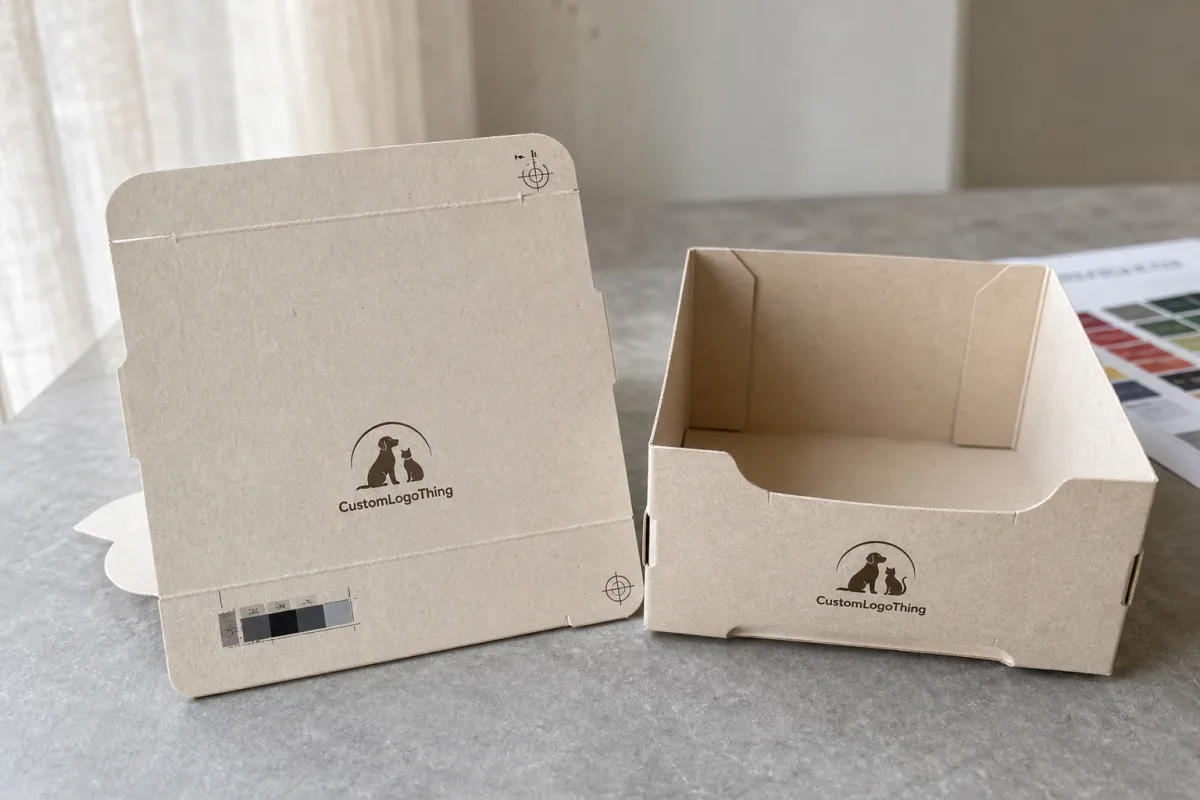
From a packaging buyer’s point of view, the pet treat carton inserts material guide is less about paper categories and more about avoiding downstream headaches. A retail carton can look polished at the proof stage and still fail during restocking, distribution, or even a single rough parcel ride if the insert is too light, too flexible, or cut to the wrong geometry. The outer carton carries the branding; the insert quietly protects the margin, the presentation, and the confidence behind the launch.
Picture a small dog treat carton sitting on a shelf with clean graphics, a matte finish, and a neat die-cut window. In the hand, it feels orderly and premium. Then the same pack goes through a warehouse, gets stacked two layers deep, rides in a delivery carton, and is touched by several people before it reaches the shopper. That is the point where the pet treat carton inserts material guide stops being a theory exercise and starts acting like a real production tool.
In actual use, the insert has to do four jobs at once: hold the treats in place, preserve presentation, reduce abrasion, and tolerate the product’s chemistry. Treats with oils, fats, crumbs, or moisture can stain or soften weaker board. Even a well-printed carton can lose shelf appeal if the insert shifts and creates noise or visible deformation. Once that happens, the package feels cheaper than the brand intended, even if the print quality is excellent and the structure looked fine in a flat sample.
The outer carton gets the attention, but the insert is usually the part that decides whether the pack still feels polished after a week of real handling.
A strong pet treat carton inserts material guide also keeps teams from making a common mistake: choosing a material by appearance alone. A crisp white SBS sheet may print beautifully, but if the product is heavy or oily, that same sheet can be the wrong choice unless the thickness, scoring, or surface finish is adjusted. A natural kraft insert may look a little less glamorous on shelf, yet it can deliver the stiffness, sustainability story, and cost balance that a launch really needs.
That is usually where a lot of launches either save money or lose it. The insert is small, but the decision touches conversion cost, product damage, line speed, and customer perception. A good spec makes the carton feel tight and intentional. A weak one lets the whole pack feel loose, even if the branding is excellent and the print is on point.
Pet Treat Carton Inserts Material Guide: How Materials Behave in Real Use
The best pet treat carton inserts material guide compares material behavior, not just material names. Paperboard, SBS, kraft paper, corrugated cardboard, and laminated board each bring different strengths, and the right answer depends on how the pack is filled and how it travels afterward. Two inserts can look nearly identical on a spreadsheet and behave very differently once the carton is full and the treats start pressing against the walls.
SBS paperboard is often selected for premium retail presentation because it gives a bright, clean print surface and a sharp visual finish. It works well for lighter pet treat packs, sample sizes, and cartons where the insert needs to disappear visually while still holding its shape. A typical range might be 18 pt to 24 pt, although the best caliper depends on slot depth, panel size, and how tightly the product fits. The pet treat carton inserts material guide should treat SBS as a presentation-first option, not a universal answer.
Kraft paper and kraft-based board bring a different character: more natural, a little less polished, and often easier to position as part of a recycled or low-ink brand story. For brands using recycled materials or a higher percentage of post-consumer waste, kraft can support the message without looking flimsy. The tradeoff is that kraft grades vary widely, and not every kraft board has the same stiffness or surface consistency. A light kraft sheet can look responsible and still collapse under load if the fold design is too ambitious.
Corrugated cardboard, especially micro-corrugated or E-flute, is usually the stronger choice when the product has real weight, fragile edges, or long shipping routes. It adds cushioning and compression resistance, which matters if the carton moves through e-commerce fulfillment or a club store environment where packs get piled and handled repeatedly. For many teams, this is where the pet treat carton inserts material guide becomes essential specification work.
Surface finish matters too. A smooth coated sheet can resist scuffing and reduce the chance that flavor oils mark the board, while an uncoated board may absorb more quickly and show wear sooner. For oily treats or freeze-dried products with dusting, a light aqueous coating or laminate can improve performance. That said, a heavier coating is not always the right answer, especially if the brand wants a recyclable or biodegradable packaging story that stays believable. The coating and adhesive system need to support the sustainability claim, not undermine it.
There is also the practical matter of fold memory and caliper recovery. If a carton insert has to spring open after die-cutting and folding, a stiffer sheet can hold geometry better, but only if the score lines are set correctly. Too much stiffness without proper scoring leads to cracking. Too little stiffness leads to sagging. A solid pet treat carton inserts material guide always asks how the board behaves after compression, not just how it looks in a flat sample.
For shipping abuse, I like to think in terms of real test conditions rather than abstract claims. If the pack is going through parcel networks, ask about ISTA drop and vibration behavior and consider compression performance in the spirit of ASTM D642. For fiber sourcing and responsible forest materials, ISTA and FSC both provide useful reference points when the spec needs to align with actual standards instead of marketing language. Those are reference points, not a substitute for your own filled-pack testing, because a lab result that ignores your exact product geometry can still miss the real failure mode.
I once reviewed a sample run where the board itself was technically fine, but the score depth was just a hair off. The carton looked crisp on the table, then the insert started to flare at the fold after a few pack-outs. Nobody had done anything wildly wrong; the spec just needed a little more honesty about how the board would behave after it was worked by hand. That sort of thing is why a practical pet treat carton inserts material guide is worth the time.
Key Factors That Drive the Right Insert Specification
A serious pet treat carton inserts material guide starts with product data. Weight, shape, texture, oil content, and breakage risk all influence the board choice. A 40-gram sample pouch does not need the same insert as a 250-gram resealable chew pack, and a brittle biscuit-style treat behaves differently from a soft meat chew that compresses slightly under pressure. If those differences get ignored, the insert spec can miss the real load case by a wide margin.
Shipping distance changes the equation quickly. A carton that moves only from the filling line to a local shelf may survive with lighter stock, while a pack that travels through regional distribution or parcel delivery often needs more stiffness and better edge protection. Humidity matters as well. In a humid warehouse, lighter board can absorb moisture and lose caliper, which is why the pet treat carton inserts material guide has to address not just board grade but the environment it will live in before the consumer sees it.
Retail display time changes the pressure on the structure too. A pack sitting on shelf for six weeks needs better scuff resistance than a short-run promo carton that sells through quickly. If the carton will be opened and closed during merchandising, the insert should resist repeated flexing without tearing around the scores. For premium launches, buyers often want the insert to feel invisible in use while still staying structurally dependable after multiple touches.
Sustainability goals can narrow the shortlist fast. Some brands want an FSC certified board, some want a higher recycled content, and some want both. Others want a clean story around recycled materials but still need print quality that supports strong shelf impact. That is where the pet treat carton inserts material guide needs to stay honest: not every recycled board has the same stiffness, and not every natural-looking stock is automatically better for the environment if it creates rejects or returns. Waste is waste, whether it happens in production or after the customer opens the box.
Fill method is easy to overlook. If the carton is packed by hand, the insert can tolerate a little more friction, but if the pack runs on a semi-automatic line, the geometry has to guide the product in cleanly and consistently. A design that is technically correct on paper can still cause line jams if the pockets are too tight or if the fold sequence fights the operator’s hands. The best pet treat carton inserts material guide always asks how the insert will be assembled at speed.
Here is a practical comparison that many buyers find useful:
- Light retail treats: 18 pt to 20 pt SBS or similar paperboard for a cleaner appearance and easier print matching.
- Natural look and recycled story: kraft paperboard with enough caliper to hold the product without a soft feel.
- Heavier or fragile packs: micro-corrugated or laminated board for higher compression resistance.
- Oily or greasy treats: coated or laminated surfaces that resist staining and slow moisture transfer.
Finally, remember that the insert must fit the pack-out method, not only the final product dimensions. A carton measured on a bench can behave differently once you account for compression from the lidding flap, the lock style, and the natural variation in filled product size. That is why the pet treat carton inserts material guide should always be read alongside a real sample, not only a spec sheet.
Process and Timeline: From Spec Sheet to Production Steps
A useful pet treat carton inserts material guide does not stop at material selection; it also explains the production path. Good insert work usually begins with a rough concept, then moves into dieline development, sampling, fit testing, proofing, production setup, and final pack-out. The most efficient projects are the ones where the converter gets exact dimensions early and is not left guessing about insert depth, product weight, or barrier needs.
The first step is usually a specification review. That means giving the converter the treat dimensions, the carton internal size, the expected fill weight, and any special concerns such as grease migration, powder shedding, or moisture sensitivity. If the brand wants a premium unboxing feel, that should be stated too. A smart pet treat carton inserts material guide treats the brief as both a technical document and a brand document.
- Concept and rough dieline: 1 to 2 business days if the geometry is straightforward and the product dimensions are clear.
- Sample cut and fit check: often 2 to 5 business days, depending on board availability and how complex the folds are.
- Revision round: usually another 2 to 4 business days if slot width, score depth, or lock tabs need adjustment.
- Final prepress approval: commonly 1 to 2 business days once artwork, cut lines, and notes are locked.
- Production run: often 10 to 15 business days after approval for standard work, longer if finishing is more involved.
Lead time usually stretches when teams make structural changes late, switch coatings after sampling, or wait too long to respond to fit feedback. The most common delay I see is not press time; it is decision time. If the insert spec is still moving while production is trying to lock the board and tooling, schedule pressure climbs fast. A disciplined pet treat carton inserts material guide should encourage early decisions, not just good intentions.
To shorten turnaround, send exact product samples if you can, not just dimensions. Product tolerance matters. A treat that measures 60 mm at its widest point on one sample may measure 63 mm on another, and that difference can change the fit of the pocket or retaining slot. If the pack needs a grease barrier, say so at the beginning. If the brand wants an FSC certified base sheet or a specific recycled content target, include that in the first brief. The cleaner the brief, the less back-and-forth later.
One more practical point: sample approval should include real pack-out, not just flat-sheet inspection. The insert should be built with the exact product, the exact carton, and the actual filling method whenever possible. That is the fastest way to see whether the spec behaves like a real package or only like a nice idea on paper. A solid pet treat carton inserts material guide always rewards test packs before full production.
Cost, Pricing, and MOQ for Custom Carton Inserts
The pricing side of a pet treat carton inserts material guide is where buyers can save real money or accidentally pay twice. Insert cost depends on board grade, thickness, print coverage, coating, die complexity, and how many pieces absorb the setup expense. A simple die-cut insert in a standard board can be quite efficient at scale, while a more complex structure with windows, locks, or barrier finishing can push the unit price up quickly.
MOQ matters because setup costs do not shrink just because the order does. When a converter has to make a die, set the press, calibrate scores, and run make-ready sheets, those fixed costs are spread across the run. That is why 1,000 pieces can look expensive per unit while 5,000 or 10,000 pieces bring the cost down sharply. A practical pet treat carton inserts material guide should help you judge whether the unit price makes sense relative to the damage risk it prevents.
| Material option | Best fit | Typical spec | Relative unit cost at 5,000 units | Notes |
|---|---|---|---|---|
| SBS paperboard | Premium retail packs, lighter treats | 18 pt to 24 pt | $0.11-$0.22 | Clean print surface; good when presentation matters more than cushioning. |
| Kraft paperboard | Natural look, recycled story, midweight packs | 18 pt to 24 pt | $0.10-$0.20 | Works well for brands emphasizing kraft paper, post-consumer waste, or a lower-ink design. |
| Micro-corrugated board | Heavier packs, shipping protection | E-flute or similar | $0.16-$0.32 | More cushioning and compression resistance; common where corrugated cardboard performance matters. |
| Laminated board | Oily treats, premium finishes, barrier needs | Board plus coating or laminate | $0.18-$0.36 | Helps resist staining and scuffing; verify recyclability claims before using it as a sustainability message. |
Those numbers are not universal, of course. Print coverage, special coatings, tight tolerances, and complex die lines can move them higher. Still, they give buyers a grounded starting point for comparing quotes instead of sorting by the lowest number alone. The best pet treat carton inserts material guide compares apples to apples: same board, same quantity, same finishing, same pack-out assumptions.
One overlooked cost driver is rework. If an insert is too loose, too tight, or too soft, the true expense shows up later as damaged goods, slower packing, or customer complaints. A slightly stronger material can look pricier on the quote and cheaper on the P&L. That is especially true if the carton has to survive long shelf time or parcel shipping. For many brands, the right pet treat carton inserts material guide is the one that protects the launch, not the one that trims a few cents and creates downstream losses.
MOQ should also be read in context. A converter may quote a low minimum for a simple insert but require a higher threshold for custom finishes or unusual board grades. If a supplier cannot explain how tooling, setup, and waste allowance affect the number, the quote is not complete enough to compare. Good quoting, like good packaging, is transparent.
Common Mistakes When Choosing Pet Treat Carton Inserts Material Guide Options
The most common mistake in a pet treat carton inserts material guide is choosing stock that looks premium in a sample folder but fails in a filled carton. Flat-sheet beauty does not tell you how the board behaves once the product presses against it. If the insert arches, shifts, or tears at the score after packing, the shelf result will never match the proof room result.
Another frequent issue is underestimating oily or fatty treats. Grease migration can soften some boards, blur printed areas, and create dark stains that make the carton look old long before it should. If the product is rich in oils, the insert material, coating, and storage conditions all need attention. A careful pet treat carton inserts material guide will never treat grease resistance as a side note; it belongs in the core design.
Over-engineering is just as real. I have seen teams specify a heavy insert because they fear damage, only to create a carton that is expensive, stiff to assemble, and unnecessary for the actual load. More board is not always better. If the product is light and the shipping route is gentle, the better answer may be a well-scored SBS insert or a simpler kraft structure rather than an oversized corrugated build. The smartest pet treat carton inserts material guide balances protection, cost, and assembly speed.
Another oversight is skipping the real pack-out test. A carton insert should be tested with the actual product, the actual carton, and the actual shipping method. Tabletop fit is useful, but it is not enough. A sample that looks perfect on a bench can behave differently after vibration, compression, or a cold-to-warm temperature swing. If your launch is moving through retail and parcel channels, that kind of test is part of responsible specification, not a luxury.
It also helps to avoid vague sustainability language. Saying “eco-friendly” is not the same as proving that the board is FSC certified, made from recycled materials, or suitable for a credible biodegradable packaging claim. Buyers and consumers are more informed now, and they can spot hand-wavy claims quickly. A clean pet treat carton inserts material guide should keep the language tied to the actual fiber source, finish, and end-of-life behavior.
- Do not approve a material before testing with filled product weight.
- Do not ignore grease transfer or moisture absorption in storage.
- Do not choose a stiff board that cracks on the score lines.
- Do not assume a low MOQ is a better value without checking setup and waste.
Expert Tips and Next Steps for the Right Insert Spec
One of the best habits in a pet treat carton inserts material guide is asking for sample packs in two board grades, not one. Compare them side by side with the product inside, then check edge crush, fold quality, and how firmly the treat stays seated after a few minutes of handling. The difference between “looks fine” and “holds up” is usually easy to feel by hand.
I also recommend testing a few abuse scenarios before locking the spec. A short vibration test, a few controlled drops, and a temperature swing between cool storage and warm handling can expose weaknesses faster than any paper discussion. If the insert starts to relax, curl, or print through the carton walls, you have learned something valuable before production. That is exactly why a pet treat carton inserts material guide should be used early, not after the carton is already committed.
Document everything cleanly: product dimensions, pack weight, desired finish, sustainability goals, carton internal size, and any compliance needs for retail or shipping. That way, quoting stays accurate and revisions stay focused. If you want a premium feel, say so. If you want a lower-cost recyclable build, say that too. The better the brief, the better the converter can steer you toward the right stock, whether that ends up being SBS, kraft paper, or corrugated cardboard.
Here is the practical path I would follow on a real launch:
- Start with the product, not the carton artwork.
- Choose two material options from the pet treat carton inserts material guide shortlist.
- Build samples in the exact product size and carton size.
- Check fit, retention, and scuff resistance under handling.
- Confirm the sustainability claim matches the board and finish.
- Lock the spec only after the sample performs in real use.
If you want the cleanest launch path, request samples, compare two materials, and confirm fit before production starts. That is the simplest way to protect shelf presentation, shipping performance, and budget at the same time. The right pet treat carton inserts material guide does not just tell you what paper to buy; it helps you choose a spec that survives the full journey from filler to shopper.
So the practical takeaway is this: decide the material from the product risk first, not from the artwork second. Start with weight, grease level, shipping route, and how the carton will be handled, then ask for two material samples that reflect those realities. If the insert passes a filled-pack test, stays tidy after vibration, and still supports the brand story honestly, you have the right spec.
What is the best material for pet treat carton inserts?
The best choice in the pet treat carton inserts material guide depends on treat weight, grease level, shipping distance, and how premium the pack needs to feel. Paperboard often works well for lighter cartons, while corrugated or laminated options are better for heavier or more fragile formats. The safest answer is always a real sample test with the actual product.
Are paperboard inserts strong enough for oily pet treats?
They can be, but only if the board grade and surface finish are chosen carefully in the pet treat carton inserts material guide. Oily treats often need a heavier stock, a coated surface, or a laminate that resists staining and softening. Before approval, check for grease migration, edge warp, and print smudging after the pack sits for a while.
How do I choose between SBS, kraft, and corrugated for carton inserts?
SBS is usually chosen for a clean print surface and a premium look, kraft for a more natural story, and corrugated for added cushioning and compression strength. A good pet treat carton inserts material guide will ask which matters most: appearance, sustainability, or protection. Samples in all three materials make the decision much easier.
What affects pet treat carton insert pricing and MOQ?
Board thickness, coating, print coverage, die complexity, and setup time all affect price in the pet treat carton inserts material guide. MOQ matters because tooling and press setup costs are spread across the run, so smaller quantities usually carry a higher unit cost. Always compare quotes with the same assumptions so the numbers are fair.
How long does it take to produce custom pet treat carton inserts?
Timeline depends on whether the structure is already approved or still needs sampling and revision, which is why the pet treat carton inserts material guide should be paired with exact measurements early. Simple runs can move in a few weeks from brief to production, while complex geometry, special coatings, or multiple proof rounds add more time. Early clarity keeps the schedule steady.
For a launch that needs to feel polished, protect the treats, and stay on budget, the pet treat carton inserts material guide is one of the smartest documents you can put in front of your converter. Get the measurements right, test the board in a real pack-out, and choose the insert material that supports the product instead of fighting it. That is how a small paper component helps the whole carton perform.

