Pet treat soft touch poly mailers Bulk Order Planning looks simple until the spec sheet starts exposing tradeoffs. The finish, film gauge, seal strength, and print method all affect how the mailer looks, ships, and holds up in volume. If one of those is underspecified, the result is usually either wasted spend or avoidable damage.
For pet treat brands, the mailer is not just a shipper. It is the first physical touchpoint, and it shapes how customers judge the rest of the order. A soft-touch surface can make a parcel feel more intentional than a glossy basic mailer, which matters for subscription programs, sample drops, limited launches, and DTC orders where presentation is part of the product value.
The better starting point is use case, packout, and shipping environment rather than unit price. A mailer can be inexpensive and perfectly suitable. It can also be premium-looking and still fail in transit. The goal is to choose a spec that works at scale without constant rework, replacement, or customer-service cleanup.
If you are comparing options across Custom Packaging Products, Custom Poly Mailers, and broader Wholesale Programs, the key question is whether the mailer can be repeated cleanly across production runs. That is the difference between a one-off sample and a dependable bulk program.
Why soft-touch mailers change the buyer perception fast
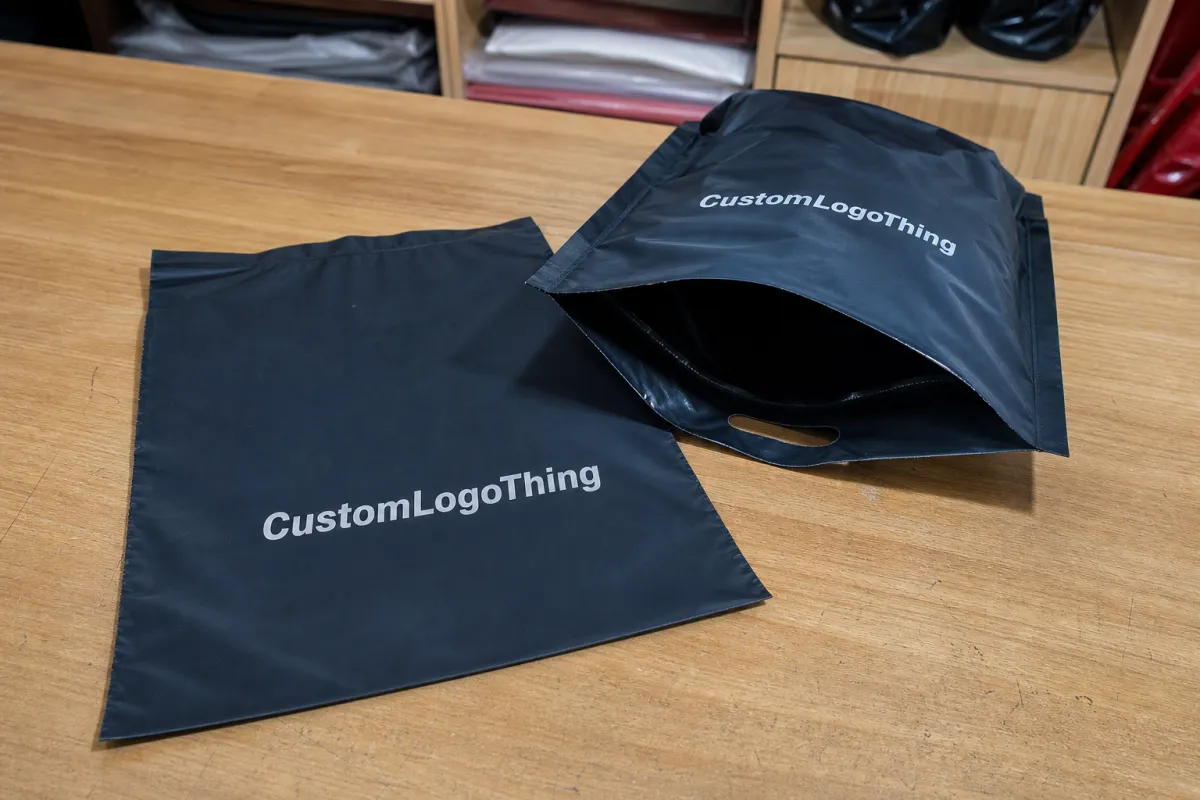
Texture gets read before copy. A matte, velvety surface usually signals more care than a reflective mailer that shows scuffs and fingerprints immediately. In pet treats, that first tactile cue can make a fairly ordinary shipping event feel more deliberate and more aligned with the brand.
That perception matters because the outer package sets expectations for the product inside. If the mailer arrives dented, thin, or visibly worn, customers often assume the same shortcuts were taken elsewhere. That assumption is not always fair, but it affects satisfaction and repeat purchase behavior.
There is also a practical cost side. A small damage rate can become expensive once it scales across a large run. On a 12,000-unit order, even a 1.5% problem rate means 180 replacements, plus labor and delay. A premium finish does not help if the seam splits or the print scuffs before it reaches the customer.
Soft-touch mailers tend to be strongest where the outer package is part of the experience:
- Subscription pet treat programs where repeat perception matters.
- Sample kits that need a stronger premium cue than a plain poly bag.
- Seasonal launches where the outer pack supports a campaign look.
- Retail-to-DTC fulfillment where presentation and handling both matter.
Material and finish choices that protect treat shipments
Soft-touch is only one layer of performance. The film structure underneath, seam quality, and print adhesion determine whether the mailer survives shipping. If those elements are weak, the finish becomes decoration rather than protection.
Most buyers should start with three checks: film thickness, surface treatment, and seal strength. For pet treat shipping, a common working range is roughly 2.5 to 4 mil, depending on pack weight and route severity. Lighter sample packs can often work at the lower end. Heavier bundles or kits with inserts usually need more body to resist puncture and stretch.
Surface treatment also matters. Soft-touch coatings improve hand feel and visual consistency, but they still need to hold up against rubbing, stacking, and parcel handling. Ask how the print performs after contact with other cartons, not just in a clean proof photo. If the finish smears or scuffs too early, the premium effect disappears fast.
Seal strength is another common failure point. A self-seal adhesive that looks fine in a sample can still fail under compression or during rough handling. For heavier loads, reinforced side seams, a wider seal margin, or a tear strip may be worth the added cost. Those features are especially useful when the mailer goes directly to consumers rather than moving only inside a warehouse.
Food-contact questions should be handled carefully. The mailer is usually an outer shipper, not the direct food-contact package. The treat pouch or primary pack carries that responsibility. Buyers should confirm the outer mailer declaration separately from the pouch, inks, and coatings so compliance is not mixed together by mistake.
Useful features to ask about:
- Self-seal adhesive that stays closed through standard parcel handling.
- Tear strip for clean opening without knife damage.
- Reinforced seams for heavier treat loads or multi-item kits.
- Corona or surface treatment to improve ink adhesion.
- Opaque film that hides contents and improves presentation.
For a more structured validation approach, the ISTA testing standards and the FSC framework are useful reference points. They do not replace supplier testing, but they help buyers ask better questions about transport performance and sourcing.
Sizing and spec details buyers should lock in first
Size should be based on the finished, filled pack dimensions, not the front panel alone. Teams often discover too late that the pouch is thicker after filling, zippering, and adding an insert or header. Once that happens, the seal allowance shrinks and the fit can become too tight.
A good sizing brief includes the actual pack profile. Confirm the final dimensions after filling, the approximate thickness, and whether the contents shift in transit. A mailer that is too tight can stress the seal and increase the chance of splitting. One that is too loose lets the pouch move around, which increases abrasion and makes the parcel look sloppy.
Before requesting a quote, lock these details:
- Finished pack dimensions including thickness after filling.
- Film gauge and puncture-resistance target.
- Seam width plus side-seal or bottom-seal construction.
- Artwork dimensions, bleed, and safe area.
- Barcode and address panel placement if the pack passes through scan points.
Artwork should be submitted as a proper flat layout, not only a mockup. That reduces proofing time and avoids avoidable revision cycles. If the brand uses PMS colors, share those early and expect some shift in appearance on soft-touch stock compared with gloss or uncoated surfaces. That is normal and should be planned for, not discovered late.
Logistics details also matter. Case pack, carton count, and pallet configuration affect warehouse handling, especially at volume. If the line is automated, confirm that the mailer feeds, folds, and seals cleanly on the equipment already in use. A small slowdown per unit becomes a real bottleneck once the run is live.
Pricing, MOQ, and quote drivers that move unit cost
Unit cost moves with a predictable set of levers: size, film thickness, print complexity, finish type, adhesive upgrades, and volume. Add one change and the quote moves. Add several, and the budget can shift faster than expected. Buyers who only compare the lowest piece price often miss setup, sampling, and freight, which is where landed cost can change most.
MOQ should be treated as a planning constraint, not a penalty. A higher minimum usually spreads setup and production cost, which lowers unit cost. That only helps if demand is real. If the brand is still testing sizes or running several SKUs with uncertain volume, a smaller MOQ can be the better choice even when the unit price is higher. Overstock in the wrong size is not savings.
For a working expectation, many buyers see custom printed soft-touch poly mailers in a broad range of roughly $0.35 to $0.90 per unit at moderate volume. Smaller runs, heavier gauge film, specialty inks, or more complex structures can push above that. Large repeat orders can reduce cost, but only if the spec stays stable from run to run.
Use a quote comparison like this:
| Quote Element | What It Usually Covers | Why It Changes Cost | Buyer Check |
|---|---|---|---|
| Ex-works unit price | Production cost per mailer | Moves with volume, gauge, and print complexity | Ask which spec assumptions were used |
| Setup or plate charges | Artwork prep and press setup | Higher with more complex print methods | Confirm whether it is one-time or repeated |
| Sample cost | Pre-production proof or strike-off | Can add time and expense before approval | Ask whether it is credited on the order |
| Freight | Air, sea, or domestic delivery | Can rival production cost on smaller orders | Compare transit time and total landed cost |
| Tooling or die charges | Custom structure or cut-size setup | Relevant for true custom dimensions | Confirm whether the tool is reusable for reorders |
Cost is easier to control when the program is standardized. One mailer size across several SKUs, fewer artwork changes, and a forecast based on actual demand all help keep the quote and the reorder path cleaner.
Process and timeline from proof to shipment
The fastest projects start with the least vague briefs. The supplier needs the finished size, quantity, artwork, ship-to destination, and finish requirements before the quote is finalized. From there, the process should move through a clean sequence: brief, spec confirmation, quote, artwork proof, sample review, production, inspection, packing, and freight booking. If the order skips around, the timeline usually slips.
Lead time is affected most by artwork complexity, sample revisions, and whether the job requires a new structure or an uncommon color match. A straightforward reorder can move quickly. A first run with multiple print layers and a fresh seal structure needs more verification. That is not friction for its own sake; it is production reality.
Fast approvals help. A flat file sent early reduces proof loops. Clear PMS targets reduce color disputes. Confirming freight details before production starts avoids the common problem of finished goods waiting for a booking decision. Small details often decide whether the order hits the calendar or misses it.
Typical timing for a well-run order looks like this:
- Proof approval: 1-3 business days when artwork is ready.
- Sampling: 3-7 business days depending on structure and print method.
- Production: often 12-15 business days after approval for a straightforward run.
- Freight: varies widely and can exceed production time on ocean or cross-border lanes.
Reorders should get easier. Once the size, artwork, and material spec are locked, the supplier should be able to reuse approved settings and reduce unnecessary back-and-forth. That repeatability matters in pet treat Soft Touch Poly Mailers Bulk Order Planning because launch calendars are fixed and packaging delays are usually avoidable.
What a reliable supplier should prove before you commit
Good suppliers prove capability with repeatable output, not hopeful language. Ask for the spec sheet, sample photos, and an inspection note that covers film gauge, seal strength, print registration, and acceptable color tolerance. If the supplier cannot explain how they control variance from one run to the next, the quote is not strong enough to trust.
Change control is important too. If artwork shifts, the size changes, or a finish gets upgraded, the buyer should know exactly what must be reapproved. That avoids the situation where a warehouse receives the wrong version and the launch team discovers the error after inventory is already in motion.
"We want the mailer to look premium, but we need the same result every reorder." That is the right brief. Design matters. Consistency matters more.
It also helps to ask how small defects are handled. A partner who catches print drift, weak sealing, or color mismatch early is usually more valuable than one who only promises the lowest price. Tiny differences are easy to ignore on a sample and expensive to ignore at scale. A 2 mm shift may not ruin a package, but it can still make a whole run look inconsistent.
Support matters for brands with multiple pack sizes. Reorder accuracy, file retention, and quick responses protect seasonal windows. If the supplier keeps approved files organized and understands prior settings, they are helping the operation instead of just processing an order. That saves more time than a discount ever will.
For terminology and process context, the Packaging Association resource library is a useful reference. It will not choose the supplier for you, but it helps keep the conversation grounded.
Next steps to lock in a clean bulk order
Before asking for pricing, gather the finished treat pack size, target quantity, artwork files, ship-to ZIP code or port, and any finish requirements that are non-negotiable. That short list does more for pet treat soft touch poly mailers Bulk Order Planning than a long meeting full of opinions. If the spec is incomplete, every supplier will quote a different assumption and the comparison gets noisy fast.
Ask for a written spec confirmation rather than a casual approval email. The document should identify the film type, size, gauge, seal style, print method, and finish. That keeps design, operations, and procurement aligned before production starts and gives the team a clean reference if changes are requested later.
Then compare landed cost, lead time, and reorder flexibility side by side. A lower unit price only helps if freight and approval timing stay under control. The best option is usually the one that protects the launch calendar and makes the next reorder predictable. Saving a fraction of a cent is not useful if the shipment arrives too late to matter.
The cleanest path is simple: request a sample, approve the proof, and schedule the first run around actual demand instead of optimistic volume. That is how the packaging stays controlled and the mailer becomes part of a repeatable operating system instead of a one-off gamble.
How do I size pet treat soft-touch poly mailers for a bulk order?
Use the finished, filled pack dimensions instead of the flat label size. Include seal allowance, header space, and any insert or padding thickness. It also helps to confirm the size against your shipping method so the mailer works for both fulfillment and carrier handling.
What affects the unit cost of soft-touch pet treat mailers most?
Order volume, custom size, film gauge, and print complexity are the biggest drivers. Freight, setup charges, and sample approvals can move landed cost quickly. Standardizing sizes and artwork usually lowers cost more reliably than shaving quality.
What MOQ should I expect for custom printed pet treat mailers?
MOQ depends on print method, size, and whether the mailer is a standard or custom structure. Higher print complexity and specialty finishes usually require larger minimums. Ask for MOQ by SKU so launch planning and reorders can be handled separately.
How long does the proof-to-shipment process usually take?
Timeline depends on artwork approval, sample review, and production load. Fast approvals and locked specs shorten turnaround the most. Freight time can exceed production time, so confirm both before you commit.
Can I reorder the same pet treat mailers without restarting setup?
Yes, if the size, artwork, and material spec stay unchanged. Reorders move faster when the supplier retains approved files and production settings. Ask what triggers a new setup charge so repeat runs stay predictable.


