The fastest way to misread a beanie quote is to stare at the pom-pom and ignore everything else. The fluffy top looks like the obvious cost driver. It usually is not. In a pet treat pom pom Beanies Unit Cost Review, the real swings come from knit structure, decoration, packaging, and quantity tier. The pom is rarely the villain. The spec sheet is.
That matters because pet treat brands use these beanies in more than one way. Sometimes they are giveaway pieces for a launch. Sometimes they are a retail add-on. Sometimes they sit inside a bundle and need to look better than their price suggests. Each use case changes the target margin. A beanie that works for a promo table can fail on a shelf, and a retail-ready version can be overpriced for a freebie. Same silhouette. Different economics.
The practical job here is simple: separate the visual choices from the pricing noise, then quote the item as it will actually ship. That sounds basic. It is also where most bad buys start.
Buyers do not usually overpay for a pom-pom. They overpay for vague specs.
Why Buyers Miss the Real Cost Signal on Pom-Pom Beanies
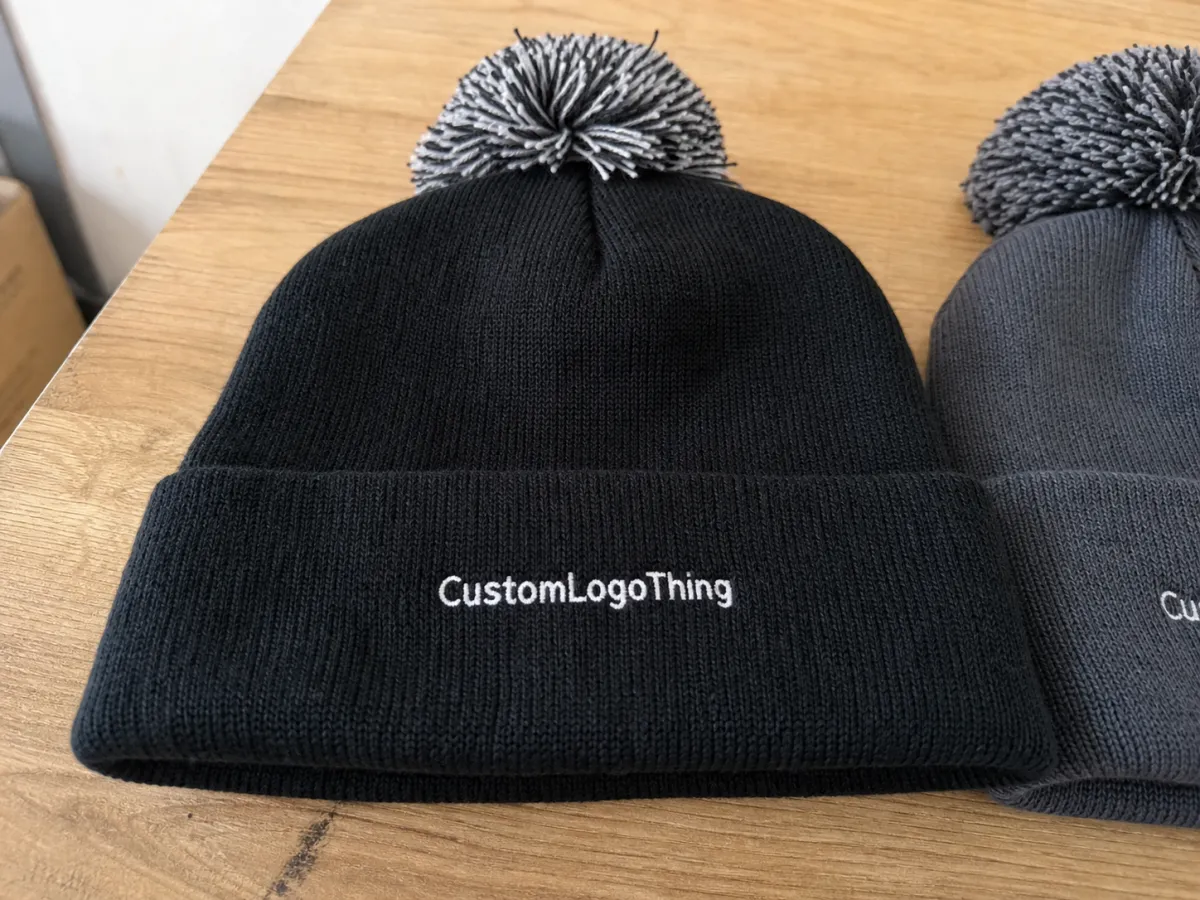
People tend to anchor on the most visible part of the product. The pom gets attention because it is cute, seasonal, and easy to describe. The problem is that it is often a low-impact cost item. A standard acrylic pom may only add a few cents. Change the yarn blend, add denser embroidery, switch to a more complex knit pattern, or ask for premium finishing, and the quote moves faster than the pom ever will.
That is why a beanie that looks “heavier” on paper is not automatically a better deal. Sometimes it is. Sometimes it is just more yarn. More yarn is not a business strategy. If the extra density does not improve shelf appeal, warmth, or perceived value, it is just cost sitting in the product.
The use case also changes how the buyer should read the quote. A promo item can stay simple and still do its job. A retail item needs cleaner edges, tighter finish control, and a stronger brand cue. A bundle item sits in the middle. It needs enough polish to photograph well, but it still has to fit the budget that made the bundle possible in the first place. Those differences matter more than people want to admit.
There is another common mistake: comparing quotes by stitch count alone. Stitch count matters. So does gauge. But a quote with a lower stitch count can still be more expensive if it uses a custom patch, a difficult color run, or a packaging setup that eats labor. The cheapest number on the page is not always the cheapest finished item. That sounds obvious. Then the invoices arrive.
Most buyers get better results when they define the product role before they ask for price. Is this a retail piece, a seasonal promo, or a bundled add-on? If the factory knows the answer, it can build toward the right ceiling instead of guessing at one. That one decision often saves more money than aggressive back-and-forth over pennies.
Product Details That Make These Beanies Retail-Ready
A retail-ready beanie has to work fast. It has to read clearly on a rack, on a shelf, or in a product photo. The item has seconds to signal brand identity and seasonality. If it looks generic, buyers hesitate. If it looks overworked, the same thing happens. The sweet spot is not mystery. It is restraint with intent.
Several build details control that outcome. Knit gauge changes the texture and visual weight. Cuff height determines how much branding space you really have. Pom style changes the silhouette; a dense yarn pom reads fuller and usually feels more finished than a loose one. Label method shifts the perceived price tier. Color blocking can sharpen the design or make it feel busy. None of those choices is cosmetic in the cheap sense. They all change how the finished piece is read.
Woven labels tend to look clean and efficient. Embroidery pushes the item closer to premium merch. Woven patches sit somewhere in the middle, especially when the logo has detail that would get muddy in thread. Knit-in branding can look sharp too, but it needs the artwork to be simplified early. You do not get to cram a complex logo into a small cuff and then act surprised when it turns fuzzy.
For pet treat brands, the brand tone matters too. Warm colors, soft texture, and a playful label often work better than an aggressive sports-merch look. That does not mean everything has to be cute. It means the finish should match the product category. A beanie tied to a pet treat line needs enough charm to feel giftable, but enough discipline to avoid looking like a random craft fair leftover.
This is where a pet treat Pom Pom Beanies unit cost review becomes a merchandising exercise, not just a procurement one. A slightly better label or a cleaner cuff may lift the retail story enough to justify a modest price increase. On the other hand, adding a flashy detail that nobody notices is just expensive clutter. There is a difference. Buyers can feel it in the quote.
Specs to Lock Before You Ask for a Quote
Vague requests create vague pricing. If the brief says “custom beanie” and nothing else, the quote will reflect assumptions you may not like. Lock the dimensions, yarn blend, stitch count, cuff depth, pom attachment, and decoration method before asking for numbers. A beanie that is 8.5 inches tall with a 3-inch cuff is not the same as one that is 10 inches tall with a folded cuff and a different trim finish. Small dimensional changes affect material use and labor. That is not theory. That is how the cut and sew line works.
Decoration should be decided early. Embroidery, woven label, woven patch, and knit-in colorwork all create a different finish and a different cost structure. If the logo must sit centered on the cuff, say so. If it needs to sit lower for visibility in packaging photos, say that instead. Revisions after proofing cost time, and time is not free even when nobody writes it on the invoice.
Packaging needs the same discipline. Will the beanies ship bulk-packed in polybags? Folded with a hangtag? Packed in a custom carton? Will you need size stickers, barcode labels, or an insert card? Those items are easy to ignore because they do not change the hat itself. They do change labor, material consumption, and carton count. If your program requires paper inserts, ask for FSC-certified stock where appropriate; the certification system and chain-of-custody framework are documented at fsc.org.
Size grading deserves a decision too. A one-size adult promotional run is usually straightforward. Mixed retail programs or club-store assortments can be different. Even a small change in crown depth, cuff fold, or seam allowance can affect fit and waste percentage. For packaging that will move through ecommerce or retail distribution, ask whether the supplier can align the shipping configuration with a recognized transit-test approach such as ISTA. The standards are available at ista.org.
Request a sample photo or pre-production sample whenever color match, label placement, or pom density affects selling value. That is not indulgent. It is control. One approved sample is cheaper than three rounds of “just to confirm” emails, and a lot cheaper than fixing the wrong run.
Pricing, MOQ, and Pet Treat Pom Pom Beanies Unit Cost Review
This is the part buyers actually care about, even if they pretend not to. A useful pet treat Pom Pom Beanies Unit Cost review should split the number into material, labor, setup, decoration, packaging, and freight. If a supplier gives only one total, the comparison is incomplete. Factory price matters. Landed cost matters more. A beanie that looks cheap at origin can become expensive after carton charges, local delivery, and import fees land on the file.
For a typical custom run, the price usually moves in tiers. Small runs of 300-500 pieces often land somewhere around $3.20-$6.50 per unit, especially if the design includes custom labels or presentation packaging. Around 1,000 pieces, a simpler spec may move closer to $2.40-$4.80. At 3,000 pieces or more, the range can improve further, sometimes into the $1.80-$3.60 band, depending on yarn choice, stitch density, and decoration method. These are working ranges, not promises. Still, they are close enough to keep a buyer from chasing fantasy pricing.
| Build option | Typical cost effect | Best use case | Buyer note |
|---|---|---|---|
| One-color knit with woven label | Lowest baseline | Promo giveaways, launch kits | Clean, practical, and easy to control |
| Two-color jacquard with embroidered patch | Moderate uplift of about $0.25-$0.70 | Retail merch, team-style branding | Better perceived value, more labor |
| Custom hangtag, fold, and polybag | About $0.12-$0.35 added | Seasonal bundles, gift sets | Packaging can lift shelf appeal quickly |
| Branded box or presentation wrap | About $0.30-$0.90 added | Ecommerce, club-store, premium kits | Freight and packing labor usually rise too |
Setup charges deserve their own line. Embroidery digitizing often sits in the $25-$60 range. New label or patch tooling can run from roughly $30 to $150, depending on the build and the supplier’s policy. If a quote claims setup is free, ask where the cost went. Sometimes it is folded into the unit price. Sometimes it reappears in packaging, sampling, or proofing. The number did not vanish. It just moved.
MOQ is another place where buyers get sloppy. A low MOQ can be useful for launch testing, but it usually pushes the unit cost up because setup is spread across fewer pieces. That is normal. A buyer who wants a pilot order should expect a pilot-order price. The mistake is assuming small run pricing should behave like bulk pricing. It will not. Not unless someone is hiding the math.
Quantity is the main lever, but not the only one. Simplifying packaging can save more than changing thread color. Reducing logo placements often saves more than shaving a stitch or two. That is why a serious pet treat Pom Pom Beanies Unit Cost review compares tiers side by side. One line item does not tell the story. The whole build does.
Process and Timeline: From Artwork to Delivery
Production timing starts after approval, not after the first message. Buyers often treat the inquiry date like the clock start. Factories do not. The real schedule usually begins once artwork, quantity, colors, packaging, and payment terms are locked. Before that, the job is still moving through decision points.
The normal sequence is quote, artwork proof, sample or photo approval, revisions if needed, production, quality control, and shipping. Seasonal work makes the schedule tighter. A straightforward run might finish in about 12-15 business days after approval, but that is only for a simple build with stable materials and a clear queue. Add custom labels, a color match requirement, or a busy factory calendar, and the timeline stretches. Nobody likes that answer. It is still the truth.
Three things most often slow the job down. First, custom packaging, because it adds packing steps and another material approval. Second, color matching, because dyed materials need to be checked against the reference under controlled conditions. Third, artwork changes after proofing, which trigger another round of correction. If the buyer keeps those variables fixed early, the order tends to move faster and with fewer surprises.
For retail or ecommerce programs, ask whether the supplier can provide carton labeling support, final inspection photos, and transit validation. Those details matter more than they look like they should. A low-cost beanie is a bad value if it arrives with damaged cartons, mispacked sizes, or visible shade variation across the same order. Quality control should cover logo placement, pom attachment, size consistency, and inside finish. Soft goods hide a lot of sins until the box opens.
Also ask the supplier how they measure lead time. From proof approval? From deposit receipt? From final art sign-off? Different teams use different clocks. If the answer is fuzzy, the timeline is fuzzy. That usually means trouble later, not sooner.
Why Direct Manufacturing Protects Margin and Consistency
Direct manufacturing protects margin because it removes extra reseller layers. Every layer wants something. Usually markup. Sometimes also interpretation, which is worse. Once a quote passes through multiple desks, the buyer loses visibility into where the price came from and who owns the production details. That makes comparison shopping harder and corrections slower.
Consistency is the bigger win over repeat orders. The first production run can look fine through an indirect channel. The second or third is where the cracks show: a pom that shifts size, a label that creeps off-center, a yarn tone that no longer matches the approved sample. Those differences are subtle on paper and obvious in hand. Buyers who order soft goods regularly know this pain well. One bad repeat run can erase the savings from a cheap first order.
Quality checkpoints should be non-negotiable. Check logo placement. Check pom attachment. Check cuff folding and seam finish. Check size consistency across cartons. If the item carries hangtags, verify spelling and barcode readability. If the program uses paper inserts, confirm the stock and finish before mass production. If the shipment needs specific transit handling, ask for carton photos or an ISTA-aligned approach. None of that is glamorous. It is how you avoid paying twice.
Direct manufacturing also shortens the correction cycle. Questions about thread choice, label material, or fold method do not have to pass through a chain of people who are all politely guessing. The answer comes back faster, and the quote reflects the actual build instead of a summarized version of it. That is why a well-run pet treat pom pom Beanies Unit Cost review is really about control. Cost control, yes. But also build control, which is what keeps the next order from drifting.
Next Steps to Request an Accurate Quote
If you want a quote that means something, send the full brief in one message. Include artwork, target quantity, preferred colors, ship-to location, and the date you need stock in hand. Add reference photos if you have them. If the logo has exact placement rules, say so. If the product has a hard budget ceiling, say that too. Hiding the budget until the last round is a waste of everyone’s time.
Ask the supplier to separate unit cost, setup, sample, packaging, and freight. That gives you a clean comparison and makes margin math easier. Request at least two price tiers. A 500-piece quote and a 2,000-piece quote will tell you more about the savings curve than one middle number ever will. If the pricing barely changes between tiers, setup overhead is probably too high. If the drop is sharp, bulk pricing is doing real work.
It also helps to ask for the quote in the same structure you plan to buy: product cost, packaging cost, transit cost, and exclusions. That keeps the decision grounded in the final landed number, not the prettiest line on the page. A focused pet treat pom pom beanies unit cost review should end with a simple question: does the final landed cost support the sell-through, giveaway value, or bundle margin you actually need?
That is the standard that matters. Not a shiny quote. Not a big promise. A product that looks right, ships right, and still leaves room for profit.
What drives the unit cost of pet treat pom pom beanies the most?
Quantity is usually the biggest lever, followed by decoration and packaging. Yarn blend, color count, and setup complexity can move price more than the pom itself. Small runs feel setup-heavy because the fixed costs are spread across fewer units.
What MOQ should I expect for custom pom-pom beanies?
MOQ depends on color count, decoration, and whether the build uses standard or custom trim. A simple knit pattern can support a lower starting quantity than a complex jacquard or a custom patch. Ask for tiered pricing so you can see the difference between a pilot run and a full production run.
How long does production take after proof approval?
Lead time should be counted from proof approval, not from the first inquiry. Sample revisions, custom labels, and peak-season workload are the most common reasons the schedule stretches. For a straightforward order, about 12-15 business days is a realistic working range before freight.
How can I lower cost without making the beanie look cheap?
Keep one premium brand element and simplify the rest. Use a clean decoration method, limit unnecessary color changes, and avoid packaging extras that do not improve sell-through. Usually the best savings come from trimming low-visibility details, not from flattening the whole design.
What should I send for the most accurate quote?
Send artwork, target quantity, color preferences, ship-to ZIP or port, and the date you need stock in hand. Include references for logo placement, packaging style, and any must-have specs so the quote matches the real build. If you already know your cost ceiling, state it early.

