For retail florists, Clear Zipper Bags are mainly a practical packaging choice. They help keep stems contained, reduce shifting during handling, and protect bouquets from moisture and abrasion while still letting the customer see the product. In day-to-day shop use, that means less rework for staff and a cleaner handoff at checkout or delivery.
They also affect how quickly a bouquet sells. Customers can judge color balance, bloom size, and fullness without opening the pack, which is useful for same-day orders, sympathy pieces, subscriptions, and gift bouquets that need to look finished immediately. If you are planning larger replenishment, the Wholesale Programs page is useful for reorder structure, and the FAQ covers common order questions before you request a quote.
Clear Zipper Bags for Florists Order Guide
The best way to use a buying guide for florist zipper bags is to start with the bouquet, not the bag name on the supplier sheet. A sleeve that looks correct on paper can compress ribbon loops or press on petals once the arrangement is packed and handled several times. In practice, a slightly larger bag with the right build often performs better than a tight fit that looks neat only in a catalog.
That fit decision also affects pricing perception. Clear packaging makes the bouquet easy to inspect, so it helps premium arrangements justify their price. That is especially useful for roses with filler, mixed seasonal bunches, and gift pieces where the finish is part of the value. When the packaging supports the product instead of hiding it, staff spend less time repacking and explaining what is included.
"If the bouquet looks compressed before checkout, the packaging failed, even if the film itself is technically strong."
Once a shop settles on one or two reliable specs, packing becomes faster and more repeatable. That matters during weekends, holidays, and delivery rushes, when queue pressure and short cut-off times leave little room for manual adjustments. A clear zipper bag should support the workflow, not add another step.
Why Clear Zipper Bags Change Bouquet Presentation
Fresh flowers are sensitive to temperature shifts, condensation, and handling. Clear Zipper Bags help by creating a visible boundary around the arrangement without hiding the product. That gives the bouquet a more finished retail look and keeps the shape intact long enough to move from display to checkout to delivery.
The visual effect is often stronger than buyers expect. A bouquet in a clean, clear bag usually reads as more premium than the same bouquet in a loose sleeve, especially when the wrap paper is carefully folded and the stems are long. The customer sees order and control, which matters in a gift purchase.
There is a labor benefit too. Staff do not need to keep retightening wraps or rescuing arrangements that shift while standing upright in a display bucket. In a shop with repeated handoffs, that saves time throughout the day and reduces damage before the bouquet reaches the customer.
Bag Formats, Closure Types, and Bouquet Fit
Bag format is the first specification that can make an order work or fail. Flat zipper bags suit small hand-tied bouquets, single-flower gifts, and compact retail bunches. Gusseted bags are better for fuller arrangements because they create side volume and reduce pressure on petals. Reinforced bottoms are useful for heavier mixed-stem sets, boxed floral gifts, or arrangements that include water tubes and accessory cards.
Closure choice matters as much as shape. A standard zip is usually enough for a simple retail handoff. A double zip gives more security if the bag will be reopened during assembly or inspection. Tamper-evident features are less common in floristry, but they can make sense for corporate gifts, bridal orders, or delivery routes with multiple handoffs.
Bouquet fit depends on usable internal dimensions. Finished bouquet width, ribbon flare, and stem bundle diameter matter more than the outer carton size printed on the supplier sheet. A long-stem bouquet may still need extra shoulder width because the wrap fans out near the bloom head. Ask for internal width, gusset depth, and usable height, not only nominal size.
- Flat zipper bags for slim retail bouquets and single-flower gifts.
- Gusseted zipper bags for fuller mixed arrangements and premium hand-ties.
- Reinforced-bottom bags for heavier stems, boxed sets, and delivery orders.
- Double-zip or secure-close styles for longer transit or higher-value pieces.
Wrong format creates predictable problems: wrinkling at the corners, trapped condensation, a sloppy silhouette, and a poor opening experience. For florists, that lowers the perceived value of the bouquet even if the film itself is clear and durable.
Specifications That Matter Before You Quote
Before you ask for pricing, lock down the specifications that affect performance. Film thickness is the first one. Many florist buyers land somewhere in the 60 to 100 micron range depending on bouquet weight and handling distance. Thinner film can work for light retail bundles, but heavier arrangements usually need more body and puncture resistance.
Clarity comes next. Good clear film should keep the bouquet visible without looking cloudy or greasy. Ask how the supplier measures haze and whether the film includes anti-fog treatment. That matters when bouquets move from cool storage into warmer air, where condensation can build quickly. Ventilation holes, micro-perforation, and anti-slip finishes are not always required, but they can help in humid stores or refrigerated runs.
Seal strength should be tested, not assumed. Zipper quality is one of the first places cost-cutting shows up. A bag with a neat-looking seal that opens too easily is a problem for delivery work. Ask for samples that can be opened and closed several times, not just one perfect demo closure at the sales desk.
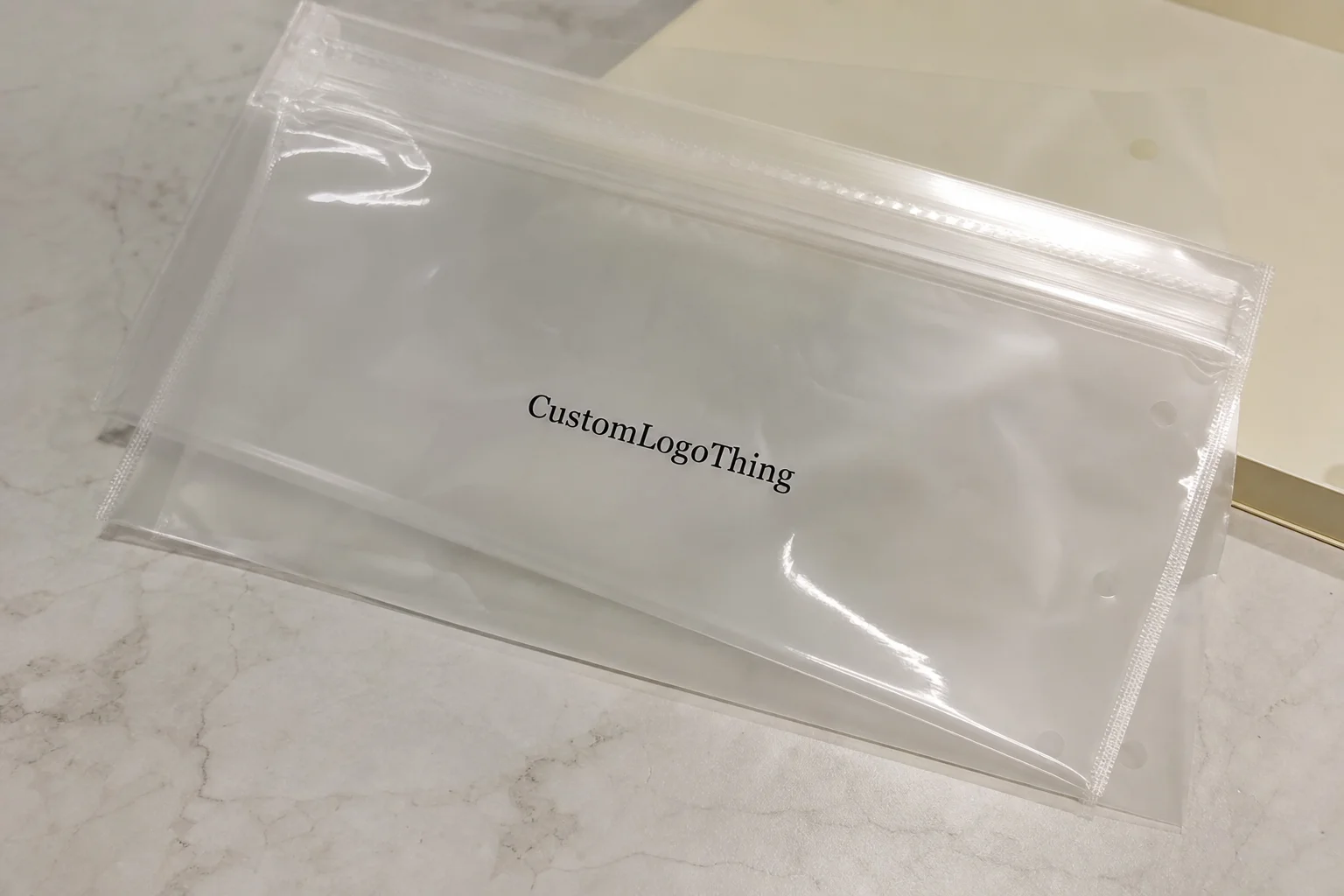
Print specifications need the same discipline. Logo size, ink coverage, and placement all affect the final look. On clear film, a one-color mark often reads cleaner than a dense multi-color block. Transparent branding areas can preserve visibility, while printed panels can frame the arrangement. The right choice depends on how much of the bouquet you want visible at first glance.
Ask for a dimension drawing and sample photos against an actual bouquet build. Catalog measurements alone are not enough. A bag that fits a test stem bundle on paper can still fail once ribbon, foliage, and a water source are added. For shipping or transit stress, many buyers use testing language aligned to ISTA procedures. If recycled paper inserts, sleeves, or carton components are part of the order, FSC certification may matter for the paper-based pieces.
Cost, Pricing, and MOQ Factors That Move the Quote
Price moves with a small number of variables. Size is the obvious one. Material thickness, zipper style, print coverage, and reinforcement also affect unit cost. So does the amount of setup required for a custom size or printed layout. A simple stock bag usually prices lower than a bespoke format, but stock only works if the bouquet actually fits it.
For planning, Clear Zipper Bags are often around $0.08-$0.18 per unit for stock-style bags in higher volumes, and roughly $0.18-$0.35 per unit for custom sizes or printed florist packs at mid-range quantities. Those numbers move with bag size, thickness, and artwork coverage. Freight can shift the landed cost more than buyers expect.
| Bag Type | Typical Use | Common Spec Range | Indicative Unit Cost |
|---|---|---|---|
| Flat zipper bag | Small retail bouquets, single-stem gifts | 60-70 micron, minimal print | $0.08-$0.14 |
| Gusseted zipper bag | Mixed bouquets, fuller hand-ties | 70-90 micron, optional logo print | $0.14-$0.24 |
| Reinforced-bottom bag | Heavier stems, boxed floral sets | 90-100 micron, stronger closure | $0.22-$0.35 |
MOQ is the other lever. Stock items often allow lower minimums, which is useful for testing the format or buying for one season. Custom sizes and printed runs usually require a higher threshold because tooling, setup, and color matching need to be spread across more units. A smaller MOQ can be the better commercial choice if it avoids dead inventory and lets you test demand first.
Ask for quotes in a fixed format: exact size, thickness, print coverage, quantity tier, and destination. Without that, comparisons get messy fast. A cheaper ex-factory quote can become the more expensive option once freight, sampling, and rework are included. Compare total landed cost, not just factory price.
Production Steps, Lead Time, and Delivery Windows
A clean production process reduces surprises. It usually starts with specification confirmation, then artwork review, then sample approval, mass production, quality check, and shipment. The order can move quickly if the buyer is decisive. It slows down when sizing changes, artwork files are incomplete, or sample approval comes back late.
For stock bags, lead time can be short enough to cover urgent replenishment. For custom print and custom dimensions, expect a longer window because there is more setup to approve and more places where errors can enter the job. A practical planning range is often 12-15 business days after proof approval for standard custom runs, with shipping added on top. Larger orders or more complex print setups can take longer.
Most delays come from avoidable issues: the artwork file is wrong, the buyer has not confirmed the exact bouquet dimension, or a sample is revised after production has already started. Ask for a dated production schedule that includes sample timing, mass-production start, and estimated dispatch date before the PO is released.
Logistics planning matters too. Wedding season, holidays, and local delivery spikes can create narrow inventory windows. If the shop depends on one format for most bouquets, reorder timing should follow actual sales velocity, not a rough guess. For packaging buyers, safety stock is insurance against losing presentation quality during peak weeks.
Clear zipper bags for florists work best when the production calendar is treated like a retail calendar. If the order timing does not match your busiest periods, the spec may be right but the delivery window is wrong.
What Separates a Reliable Supplier from a Cheap One
Low price is easy to quote. Reliable quality is harder. The supplier you want should be able to state the film type, thickness tolerance, closure style, and print limits without hedging. They should also be willing to send samples, explain the proofing process, and confirm whether the same spec can be repeated on the next reorder without drift in size or color.
Factory-direct sourcing is usually cleaner for repeat buyers because it reduces the number of handoffs. That gives better visibility on where the margin sits and where the risk sits. Broker-style sourcing can still work for smaller programs, but it adds a layer between the buyer and the plant. For florist packaging, that can be expensive if the bouquet needs tight tolerances and quick reorders.
Look for operational signals, not marketing language. Do they provide dieline support? Do they return artwork checks quickly? Do they send production photos or batch references? Can they explain color matching on clear film in plain terms? Those answers tell you more than a polished sales page. Consistent zipper performance, accurate dimensions, and repeatable print placement matter more than a low headline quote.
If the supplier also supports Wholesale Programs, ask how they handle reorder continuity. Better vendors keep previous specs on file, which cuts approval time and lowers the chance of accidental changes. That is especially useful for florists who need the same bag across multiple locations or seasonal collections.
Reliability also shows up in how a supplier handles small problems. A serious packaging partner flags issues early, explains the fix, and keeps the schedule visible. That behavior is worth more than a discount that disappears once the run begins.
Order Checklist and Next Steps for Florist Buyers
If you are ready to buy, use a tight checklist and keep the brief specific. The best orders are the ones that leave little room for interpretation. Measure the finished bouquet, not only the stems. Decide whether you need flat, gusseted, or reinforced construction. Confirm the closure type. Set the print requirement. Then match the quantity to seasonal demand rather than ordering to a vague annual average.
- Finished bouquet width, depth, and height
- Bag format and closure type
- Film thickness target
- Print area, ink count, and logo placement
- MOQ target and reorder forecast
- Delivery address and required in-hand date
- Sample approval deadline
Send the quote request with those details in one message. That keeps the supplier from quoting against assumptions. Then compare each offer against the same spec set. If one quote is cheaper, check whether the bag is thinner, the print is lighter, or the freight assumption is different. Most pricing confusion disappears once the quote format is standardized.
Ask for a sample or detailed spec sheet before final approval. Test the bag with a real bouquet, not an empty one. Check how the zipper closes, whether condensation forms, and whether the bouquet still looks premium after being carried, set down, and reopened. That test tells you more than a sales sample ever will.
The final decision should be simple: choose the supplier whose sample, schedule, and quote all match the way your shop actually sells flowers. That is the practical value of a clear zipper bag buying guide. It turns a packaging purchase into a controlled decision instead of an aesthetic gamble.
What size clear zipper bags for florists should I order for standard bouquets?
Measure the finished bouquet, not only the stem length, because ribbon, wrap paper, and greenery add width. The best fit gives enough clearance to protect the bloom head without letting the bouquet slide around inside the bag. Ask for a dimension drawing and test one sample with an actual bouquet before you commit to volume.
Can clear zipper bags for florists be custom printed with a logo?
Yes, most suppliers can print a logo, brand name, or short message on the bag. Confirm the printable area, color limits, and artwork file format before you request a quote. On clear film, a proof is worth asking for because legibility can change once the print sits over flowers and ribbon.
What is the usual MOQ for florist zipper bag orders?
MOQ varies by size, material, and whether the bag is stock or custom. Stock items often have lower minimums than custom dimensions or printed runs. Ask for tiered pricing so you can see the cost impact of moving from a test order to a full seasonal buy.
How long does production usually take after approval?
Lead time depends on whether the order needs custom artwork, special sizes, or a new setup. After sample approval, production and shipping timing should be stated in writing. Build extra time into your calendar before holidays and wedding season, because demand can slow dispatch more than buyers expect.
Are clear zipper bags for florists suitable for humid or refrigerated storage?
They can be suitable if the film thickness and seal quality are right for the storage environment. Ventilation, anti-fog behavior, and closure strength matter when flowers move between temperature zones. Test the bag under your real storage and delivery conditions before committing to a large order, especially if your bouquets spend time in coolers or vehicles.