For clubs that need speed, visibility, and fewer handout mistakes, the Clear Zipper Bags for sports clubs order guide is not a niche topic. It is a practical buying tool. A clear bag lets staff verify contents at a glance, which matters more than outer packaging polish when volunteers are sorting registration kits, snack packs, first-aid items, merch bundles, or travel essentials under time pressure.
That visibility sounds simple, but it changes the workflow. Opaque packaging can look neat on a shelf, yet it creates extra handling during distribution. Clear Zipper Bags reduce that friction. Staff can confirm sizes, separate categories, and catch missing items before the bags leave the table. Over dozens or hundreds of kits, the time saved becomes real.
The same logic applies to reorders. Once a club settles on one bag format, season two gets easier because the spec is already proven. No one has to debate the dimensions again, and no one has to explain why the zipper failed on the last run. Good packaging is not just a container. It is part of the operating system.
For buyers comparing vendors, the target is straightforward: choose a bag that protects the contents, fits the workflow, and avoids costly reprints later. Size, film thickness, closure style, and print setup all affect the final result. That is where a clear buying framework matters.
For clubs that also care about material sourcing or shipping durability, third-party references such as FSC and ISTA can be useful when checking supplier claims and transport assumptions. They do not replace product testing, but they give buyers a better baseline for comparison.
Why Clear Bags Improve Club Distribution and Reorders
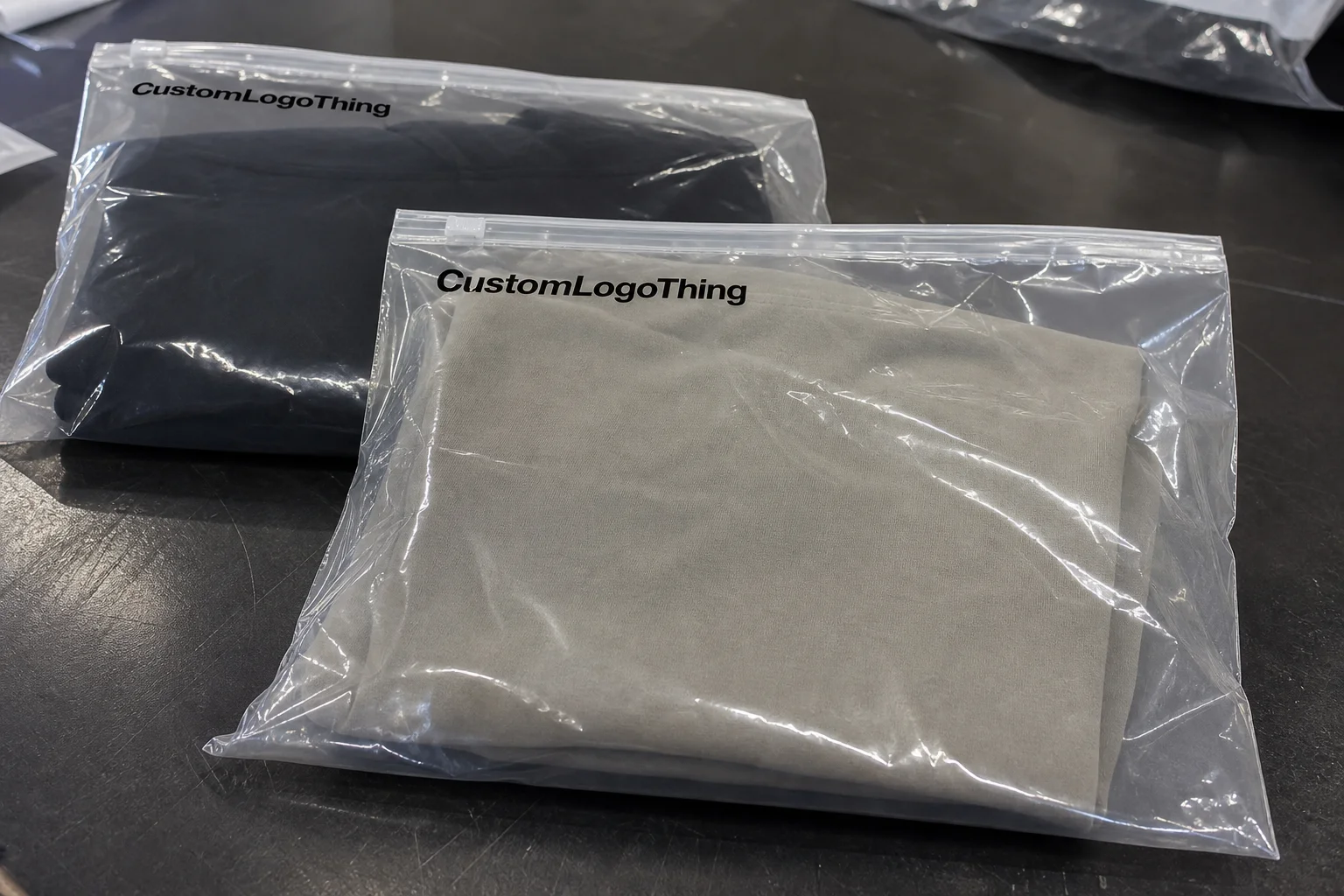
Clubs do not usually buy packaging for decoration first. They buy it because the packaging needs to make distribution easier. Clear Zipper Bags do that in a direct way: the contents are visible before the bag is opened. A registrar can spot a missing wristband, a coach can confirm the right division, and a volunteer can sort bundles without opening each one.
That matters in settings where speed and accuracy both matter. Registration desks, tournament check-ins, end-of-season handouts, and team travel prep all reward packaging that removes uncertainty. A clear bag lowers the number of small decisions staff have to make. Fewer decisions means fewer mistakes.
Practical uses tend to cluster around the same categories:
- Registration kits with forms, wristbands, and schedules
- Snack packs and small support items
- First-aid supplies that need fast identification
- Merch bundles with shirts, lanyards, and inserts
- Travel packs organized by age group or team role
Clear bags also simplify inventory checks after the event. If a club needs to see what went out, what came back, and what needs to be restocked, transparency helps. That is not a decorative advantage. It is a control mechanism.
Reorders benefit in a quieter way. Once the club standardizes one bag format, every follow-up order becomes faster. The team already knows the size, the zipper style, and the label placement. The supplier can reuse the same artwork and measurements. That cuts down on approval cycles and reduces the risk of spec drift between seasons.
One caution: clear does not mean universal. If the bag will contain sensitive paperwork, heat-sensitive goods, or items that should not be visible during transport, a transparent pack may not be the right answer. The format solves a visibility problem, not every packaging problem.
Bag Types, Sizes, and Closure Options That Fit Club Use
Most club buyers can narrow the decision quickly once they match the bag to the job. Flat zipper bags work well for low-profile items like forms, tickets, wristbands, and small accessory packs. They are usually the cheapest option and the easiest to store in bulk. Gusseted bags are better when the contents have more depth, such as folded apparel, mixed giveaway items, or bundled kits. Slider closures are a better fit when the bag will be opened and resealed frequently.
Size should follow the item, not the budget alone. A bag that is too small gets overstuffed, which can split seams and make the zipper harder to close. A bag that is too large looks wasteful and may cost more in freight because of wasted space. The useful range is usually narrower than buyers expect.
| Format | Best Use | Typical Buyer Tradeoff | Relative Cost |
|---|---|---|---|
| Flat zipper bag | Forms, tickets, wristbands, accessories | Lowest bulk, limited expansion | Lowest |
| Gusseted zipper bag | Kits, merch bundles, mixed handouts | More capacity, slightly higher material use | Mid |
| Slider closure bag | Frequent open-and-close use | Better convenience, higher unit price | Higher |
| Thicker reusable bag | Travel packs, storage, repeated handling | Best durability, less cost efficient for simple giveaways | Highest |
Material choice matters as much as shape. Polyethylene remains the common base because it is flexible, lightweight, and cost-efficient. Higher-gauge film gives a better hand feel and better resistance to stress, especially if the bag will be handled many times. For simple event giveaways, a heavy film may be unnecessary. For club travel packs or repeated storage, it can be worth the extra unit cost.
Useful extras should have a clear purpose. Tamper-evident seals help if distribution has to be controlled. Hang holes are useful for retail-style display or pegboard handling. Vent holes may make sense for specific packed items. White write-on panels help when coaches, parents, or staff need to label age groups, names, or stations by hand. The strongest spec is usually the one that removes manual work later.
There is a practical limit here. More features are not automatically better. Every added element affects cost, production complexity, or both. The buyer who knows the actual use case usually makes a cleaner choice than the buyer who tries to build in every option at once.
Print Area, Branding, and Club Information That Actually Matters
For club packaging, the most effective print is usually the simplest. Club name, division, size code, event date, and handling instructions often matter more than elaborate decoration. The first job of the print is identification. Brand identity comes after that. If a volunteer can read the bag from a few feet away, the print is doing its work.
One-color printing is often the smartest choice for smaller or mid-size club orders. It is easier to proof, easier to read, and usually cheaper than a crowded full-color layout. Full-color artwork can work, but only when the added detail serves the use case. A logo that disappears in visual clutter does not help anyone. A sponsor block that crowds the layout can make the bag harder to use.
Placement matters too. Logos should not interfere with contents that need to stay visible. QR codes need enough white space around them to scan reliably. If sponsor names are required, they should be separated from operational information so the functional text is still legible in poor light or on a busy event table.
“The best club bag is the one volunteers can sort in seconds and reorder without rewriting the spec.”
Artwork setup affects future production more than many buyers expect. A clean vector logo, a clear bleed area, and a stable print placement reduce the risk of errors on reorders. The file does not need to be complicated. It needs to be organized. Clubs that standardize the artwork stage usually save time every season because they do not have to re-explain dimensions, positioning, or file cleanup.
That is especially true when multiple teams share a common format. If one age group uses the same bag structure as another, the club can adjust only the text that changes. That keeps the brand consistent and makes approval much easier.
For repeat-order programs, it helps to keep one version of the approved proof on file and one version of the print-ready artwork. That small discipline avoids the common problem where the “same” order slowly mutates over time.
Cost, Pricing, MOQ, and Quote Factors for Club Orders
The main price drivers are predictable: bag size, film thickness, closure type, print colors, print sides, and total order quantity. If any one of those changes, the quote changes. That is normal. What surprises buyers is how fast small changes add up. A slightly larger bag, a second print color, or a thicker film can move the price more than expected, especially at lower quantities.
MOQ shapes the economics directly. Smaller orders carry more setup cost per unit because proofing, color setup, and production prep are spread across fewer bags. Larger runs improve the unit rate. For clubs with recurring events, the cleaner move is often to standardize one or two bag specs across teams instead of ordering a different bag for every squad or every season.
As a practical range, stock unprinted bags usually sit in a lower-cost bracket, while custom printed bags with club artwork, heavier film, and a specific closure will cost more. Freight, packaging, and setup charges can matter as much as the bag itself, especially on smaller orders. The landed price is the number that matters. Base unit price alone can hide a bad deal.
A good quote should make the following clear:
- Exact bag dimensions and film gauge.
- Closure type and whether the zipper is standard or slider-style.
- Print method, number of colors, and print sides.
- MOQ, setup cost, and any proofing charges.
- Freight terms, packaging method, and expected delivery date.
That checklist keeps the discussion grounded. A quote that looks low on paper can still be expensive once freight and setup are added. A club buyer needs something more useful than a headline rate. The actual question is whether the bag will arrive on time, match the spec, and be easy to reorder without correction fees.
For recurring programs, consistency often saves more money than a small discount. If the same bag will be reordered every season, the value is in avoiding production errors and keeping the spec stable. That is where a focused ordering approach earns its keep.
Order Process and Lead Time from Proof to Shipment
A clean order process usually follows the same sequence: inquiry, specification review, artwork check, digital proof approval, production, inspection, and shipment. None of those steps is difficult by itself. Delays happen when one step is vague. A missing measurement, an unclear quantity, or an unapproved proof can stall the schedule.
Lead time depends on whether the order is stock or custom. Stock Clear Zipper Bags move faster because the base product already exists. Custom printed runs need more time because artwork, proofing, and production are all part of the job. Seasonal demand matters too. Back-to-school periods, tournament windows, and holiday event runs often extend turnaround.
A club working to a fixed event date should share that deadline early. The date should appear in the first message, not after the quote is issued. The same applies to quantity. If the order might expand after approval, say so. A supplier cannot plan production accurately if the original scope is only half described.
Approvals are where many schedules slip. A proof sent on Monday and reviewed on Thursday can be the difference between a normal shipment and a rushed shipment. Fast proof review is one of the few variables the buyer can actually control.
For food-adjacent items, medical packs, or handouts that need to survive transit, ask how the finished cartons are packed and labeled as well. The bag itself is only part of the journey. The way the cartons are sealed and shipped affects whether the order arrives usable. Shipment standards and transit testing, including ISTA guidance, are worth checking when damage risk matters more than presentation.
In practice, a realistic custom order often needs extra time for proofing and production buffers. Buyers who build that buffer into the schedule usually avoid emergency freight charges, which can erase the savings from a cheaper unit price.
Quality Checks, Reorder Consistency, and Supplier Support
Reliable quality is visible. The zipper should close evenly. The seams should be clean. The film should be clear enough to inspect the contents without heavy distortion. Print placement should match the approved proof. Cartons should be labeled correctly so receiving is simple. These are basic checks, but they separate a dependable supplier from one that only looks competitive on paper.
A sample is the safest way to reduce surprises. A physical sample shows zipper feel, film clarity, seam strength, and print readability before the full run begins. A digital proof confirms text, placement, and artwork dimensions. Used together, they catch the most common mistakes before they become expensive.
Reorder support matters more than many buyers realize. The strongest suppliers keep artwork, measurements, and prior specifications on file. That means the next run can be quoted and produced faster, with fewer corrections and less risk of drifting away from the original setup. For annual programs, that consistency has real value. It protects the club’s appearance and reduces approval time.
There is also a service difference worth recognizing. A quick quote is useful, but it is not enough if the supplier cannot hold a spec over time. For recurring club work, communication, file control, and repeatability matter as much as the initial price. That is especially true when multiple age groups or multiple teams need the same packaging in slightly different forms.
Quality control should be treated as part of pricing, not as an optional extra. A cheap order that arrives with zipper failures or print mistakes is not cheap. It is expensive in a different way, because it creates rework, delays, and leftover stock that no one wants to use.
One simple rule applies across almost every club order: the lowest total cost usually belongs to the supplier that gets the job right the first time.
Next Steps: Send the Right Specs for a Fast Club Quote
If you want a fast and accurate quote, send one complete message with the essentials: bag dimensions, quantity, intended use, preferred closure, print file, and delivery date. Add whether the bags are for team kits, merchandise, food service, or tournament distribution, because the use case changes the recommended spec. A vague request produces a vague quote.
It also helps to say whether the order will repeat. If the club expects to reorder every season, state that up front. That lets the supplier recommend a setup that is easier to duplicate and less likely to create issues later. If multiple teams or age groups are sharing the same base bag, ask for a mockup or digital proof before approval.
Do not compare price alone. Compare lead time, freight, proofing support, reorder consistency, and how clearly the supplier documents the spec. Those items determine whether the bag is actually useful for the club. The strongest decision is usually the one that balances unit cost with operational fit.
The practical version of the Clear Zipper Bags for sports clubs order guide is simple: define the contents, Choose the Right format, confirm the print, and ask for a quote that reflects real use. Clubs that work this way reduce distribution errors, cut down on reprints, and make the next order easier before the first one has even shipped.
What size clear zipper bags work best for sports club orders?
Small flat bags work well for wristbands, tickets, and accessories. Medium and gusseted bags are better for kits, merch, and snack packs. The best size is the one that fits the item without forcing overstuffing or leaving unnecessary empty space.
How does MOQ affect pricing for club bag orders?
Lower quantities usually carry a higher unit cost because setup is spread across fewer bags. Larger runs reduce the per-bag price and usually improve value for recurring club use. Standardizing one spec across teams often helps clubs reach a better MOQ tier.
Can sports clubs add logos or sponsor artwork to clear zipper bags?
Yes. Most buyers add a club logo, sponsor name, or simple identification text. Simple artwork is usually easier to read and cheaper to produce than dense designs. Vector files help the proof stage move faster and reduce cleanup work.
How long does production usually take for custom club bags?
Stock bags move faster than custom printed bags. Artwork approval and quantity both affect final lead time. Seasonal demand can extend turnaround, so clubs should quote early and approve proofs quickly.
What should I send to get an accurate quote for clear zipper bags?
Send dimensions, quantity, closure style, print details, and delivery location. Add the deadline and intended use so the supplier can recommend the right spec. A complete request usually gets a faster and more accurate price.


