Clear Zipper Bags Material and Printing Guide: What Buyers Need to Know First
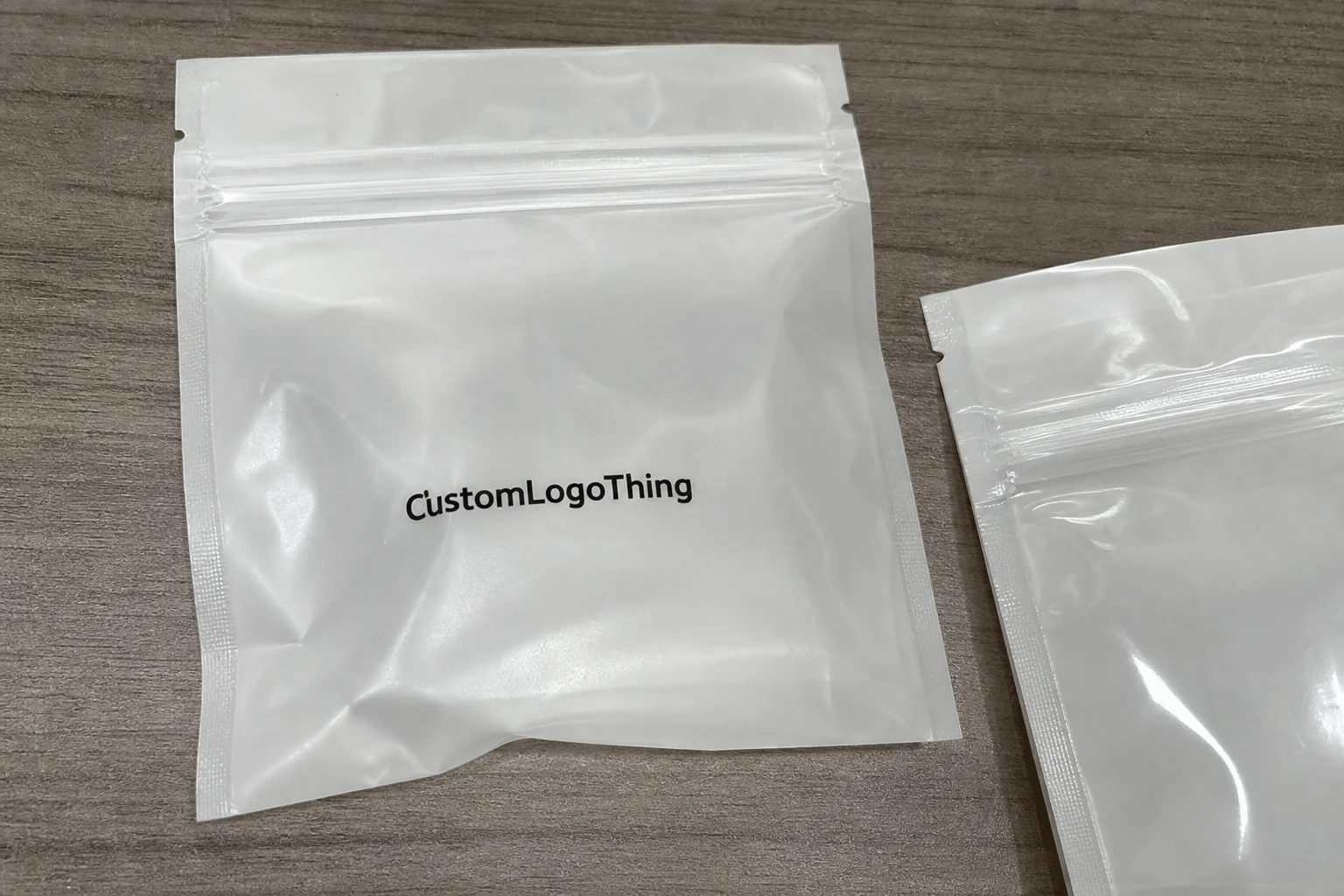
A clear zipper bags Material and Printing guide sounds technical. The buyer problem is simpler, and sharper: a transparent bag can make a product look premium or cheap before anyone touches what is inside. That is a lot of pressure for a film pouch with a zipper track at the top.
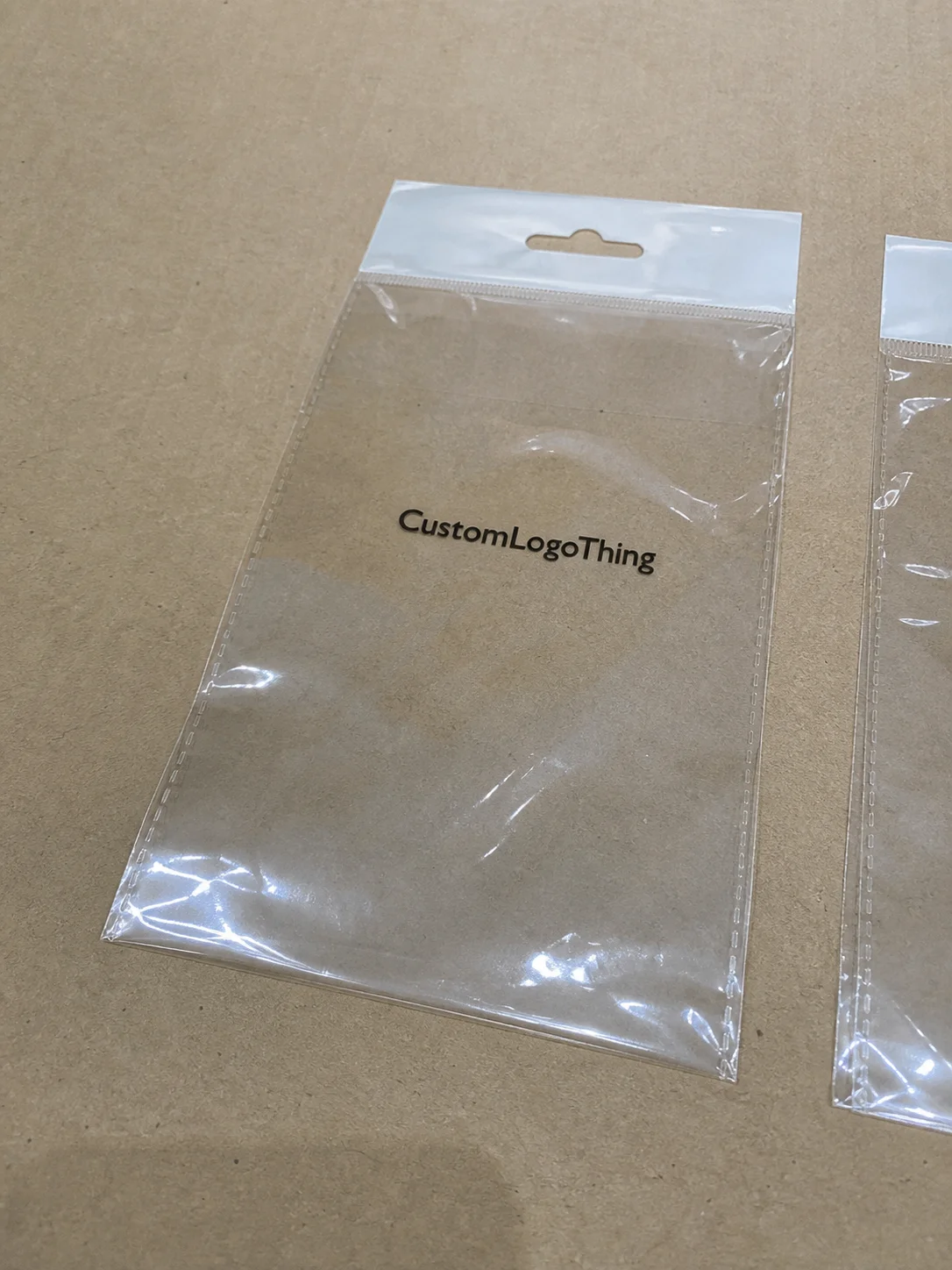
Clear Zipper Bags are reclosable plastic bags made from transparent film, most often polyethylene or polypropylene, with a press-to-close zipper. Some are plain stock bags. Some carry a one-color logo. Others use full-panel printing, hang holes, frosted finishes, tamper-evident seals, or insert cards that do half the branding work before the bag is even filled.
The mistake is treating the bag as a commodity. A 2 mil LDPE bag and a 4 mil high-clarity PP bag may both photograph well, yet feel completely different in a customer’s hand. One bends softly. One snaps and shines. One scuffs in a crowded carton. One makes the zipper feel underbuilt because the film is stronger than the closure.
Picture three buyers. A boutique apparel brand packing socks. A supplement company sending sample sachets. A craft supplier bundling beads, findings, and metal charms. Each one is choosing among stock clear bags with labels, direct-printed zipper bags, and premium frosted or high-clarity formats. Each path changes the cost, minimum order quantity, artwork setup, and production timeline.
This guide covers which film to use, how printing behaves on clear plastic, what drives unit pricing, and how to prepare artwork before production. The clearest option is not automatically the smartest one. Scuff resistance, seal behavior, opacity, barcode readability, retail handling, and pack-out speed can matter more than showroom transparency.
Packaging buyer reality: if the product is visible, the packaging does not disappear. The bag, the insert, the ink, the product color, and even the shadows inside the pack all become part of the design.
What Should the Spec Cover?
A useful clear zipper bags material and printing guide should answer five questions before quoting starts: what material fits the product, what thickness can survive handling, what zipper style matches use, what print method suits the artwork, and what quantity makes financial sense. Miss one, and the project usually pays for it later.
For buyers, the core specification is not “clear bag with logo.” It is the interaction between product and package. A flexible textile behaves differently from a rigid hardware kit. Powder creates different seal risks than paper goods. Dark products change ink contrast. Glossy products can make transparent packaging feel polished; cluttered products can make the same bag look chaotic.
The better spec also separates appearance from performance. Clarity is visual. Gauge is tactile. Zipper strength is mechanical. Print opacity is optical. Barcode scanning is operational. They overlap, but they are not the same decision. A retail buyer may notice shelf presentation first, while a warehouse team may care more about carton rub, closure failure, and scan rates.
Early sampling prevents expensive assumptions. Compare materials in hand. Fill the bag with the real product. Scan the barcode after filling. Open and close the zipper repeatedly. Put several packed units in a carton and move them. A ten-minute test often exposes flaws that a polished digital mockup hides completely.
How Clear Zipper Bag Materials Actually Work
Material selection starts with film behavior. LDPE, or low-density polyethylene, is the common workhorse for flexible zipper bags. It feels soft, resists tearing reasonably well, and handles everyday apparel, stationery, accessories, and light kits without much drama. It is usually a little hazy compared with polypropylene, but buyers often accept that tradeoff because LDPE is forgiving and cost-effective.
HDPE, or high-density polyethylene, is stiffer and more crinkly. It can be useful where strength-to-weight matters, though it is less common for premium retail clear zipper packaging because the hand-feel can read as utilitarian. PP, or polypropylene, is glossier and clearer. It gives a crisper retail look, especially for products where color and surface detail sell the item. The downside: PP can feel less flexible, and certain structures may crack or split more easily under repeated bending.
Specialty laminated films add another layer of decision-making. Laminates can improve stiffness, clarity, puncture resistance, or barrier performance, but they may complicate recyclability. For sustainability claims, ask for documentation. The U.S. Environmental Protection Agency has useful background on recycling and material recovery, but local acceptance still varies by resin, format, and contamination level.
Thickness is usually expressed in mils, where 1 mil equals 0.001 inch. Lightweight 1.5-2 mil bags can work for paper goods, small textile items, or low-risk samples. A 3-4 mil bag is more typical for apparel, small parts, craft kits, or products handled repeatedly in retail. Heavier films may be needed for sharp, dense, or rigid products, though a thicker film alone will not fix a weak zipper track.
That last point gets too little attention. Two bags can look identical online, yet one fails because the zipper profile is the weak link. A standard single-track zipper is fine for many light goods. Reinforced zippers help with repeated opening. Slider zippers add convenience but increase cost and thickness at the top edge. Hang holes, euro slots, and tamper-evident features also change how stress moves through the bag.
Clarity has tradeoffs. LDPE is soft and slightly cloudy. PP is crisp and glossy. Frosted film hides fingerprints and minor rub marks, but reduces full product visibility. For powders, cleaner seals matter. For metal parts, puncture resistance matters. For food-adjacent products, material documentation may matter more than feel. From a packaging buyer’s point of view, the material decision should follow product risk, not just appearance.
Printing Options for Logos, Labels, Barcodes, and Full-Color Designs
Printing on clear film is less forgiving than printing on corrugated cardboard or kraft paper. A brown shipper hides ink limitations. A transparent bag exposes them. If the product behind the film is dark, textured, oily, or multicolored, your logo may look different from one filled bag to the next.
The main decoration options are flexographic printing, screen printing, digital printing, hot stamping, and pressure-sensitive labels. Flexographic printing is common for larger custom runs because it handles repeat production efficiently once plates are made. Screen printing suits bold one- or two-color logos, especially when the design is simple and the buyer wants a heavy ink deposit. Digital printing can help with short runs, variable artwork, or test launches, although film compatibility and ink durability need confirmation before deposits are paid.
Labels are not a compromise by default. A clear stock bag plus a printed label can be the smartest choice for 250, 500, or 1,000 units, particularly if the brand is still testing sizes or product variations. Labels also allow offset-quality printing on label stock, stronger barcode control, and faster artwork changes. The tradeoff is edge visibility, label lift risk, and a less integrated look compared with direct print.
Ink opacity is the technical detail that catches many first-time buyers. Bright colors printed directly on clear plastic may look washed out because light passes through the ink. A white ink underbase often sits behind the color to make it pop. That adds a print station or pass, which can affect cost, registration tolerance, and minimum order quantity.
Registration limits should shape the design. Use simple logos, bold typography, and solid spot colors where possible. Avoid tiny reversed text near the zipper, side seal, bottom gusset, or any area that flexes. A 5-point legal line that works on a paper label may blur, distort, or disappear on a crinkled clear bag.
Barcodes and QR codes deserve their own test. Keep quiet zones clear. Maintain strong contrast. Avoid printing codes across curved, wrinkled, or high-flex areas. Scan the code after the bag is filled, not just on a flat proof, because product color behind the code can reduce readability. Buyers often spend hours debating Pantone matching while giving the barcode one late-stage scan. That order of concern is backwards.
Placement is part brand strategy, part physics. Front-center branding works for simple products. Lower-corner compliance copy keeps the viewing area open. Back-panel instructions can protect the front from visual clutter. Clear bags behave like store windows; every color, insert card, product shadow, and ink choice becomes part of the design system.
Cost, MOQ, and Unit Pricing Factors for Custom Clear Zipper Bags
Cost is driven by material type, film thickness, bag size, zipper style, print colors, print coverage, order quantity, tooling, plate charges, packing requirements, and freight. The list sounds long because it is. A supplier cannot price accurately from “small clear bag with logo” any more than a carton supplier can quote corrugated cardboard without board grade, dimensions, and quantity.
MOQ, or minimum order quantity, depends heavily on the production route. Stock bags with labels may start at a few hundred pieces. Direct-printed custom bags often require higher quantities because setup time, print plates, machine changeover, and waste must be spread across the run. A one-color logo on a standard size might be practical at 2,500-5,000 pieces. A full-coverage multi-color custom size may make more sense at 10,000 pieces or above.
| Option | Typical Use | Common Quantity Range | Approximate Unit Cost Drivers |
|---|---|---|---|
| Stock clear bag plus label | Launches, small batches, seasonal products | 250-2,500 units | Label size, label stock, print method, hand or machine application |
| One-color direct print | Simple logo packaging for apparel or kits | 2,500-10,000 units | Film gauge, bag size, ink coverage, plate or screen setup |
| Multi-color printed clear bag | Retail presentation with stronger brand presence | 5,000-25,000 units | Number of colors, white underbase, registration needs, proofing |
| Custom structure or specialty zipper | Heavier products, hang display, tamper evidence | 10,000+ units | Tooling, zipper profile, film sourcing, testing, packing specs |
Unit cost usually drops as quantity rises, but inventory exposure rises with it. A bag at $0.18-$0.28 per unit for 5,000 pieces can look attractive compared with $0.42-$0.65 at 1,000 pieces, depending on size and print coverage. If the product dimensions change after a packaging redesign, the cheaper run becomes expensive storage.
Some tradeoffs are practical rather than dramatic. A one-color logo may do the job better than full-color coverage if the product itself is visually strong. A clear bag plus insert card can look more premium than a heavily printed bag, especially for apparel or craft items. A standard size can save tooling cost, but a poor fit can make the product slide, bunch, or look undersized.
Hidden charges deserve attention: artwork cleanup, plate fees, proofing, rush production, freight, carton labeling, retail compliance paperwork, and special testing. ISTA transit protocols may also matter if filled bags ship inside master cartons through parcel or retail distribution; the International Safe Transit Association is the reference point many packaging teams use for distribution testing.
To request a quote, prepare dimensions, film type, thickness, quantity, print colors, artwork file, zipper style, pack-out requirement, and delivery deadline. Custom Logo Things’ Manufacturing Capabilities page is a useful starting point if you are comparing direct print, labels, and custom formats. The cheapest bag is often expensive if it scuffs, tears, scans poorly, or makes the product look lower value.
Process and Timeline: From Artwork File to Finished Bags
The cleanest production path follows a simple order: define specs, confirm material, submit artwork, receive a dieline or proof, approve colors and placement, produce, inspect, pack, and ship. Skip a step and the risk moves downstream, usually into money.
Stock bag labeling can be fast, sometimes a few business days after artwork approval if materials are on hand. Fully custom printed production often takes longer, commonly 12-25 business days from proof approval for straightforward runs, with larger or specialty orders taking more time. Timing depends on artwork readiness, film availability, order size, print method, and whether samples are required.
A digital proof confirms placement, size, spelling, barcode position, and basic layout. It does not perfectly prove ink opacity, film sheen, zipper feel, or how transparent plastic behaves once filled. A white logo over an empty digital mockup may look clean; the same logo over a dark blue product may lose contrast.
Samples come in three useful forms. Comparable samples show material and thickness from previous runs. Pre-production samples show the intended construction or print before the full run, though they can add time and cost. Production samples are pulled from the actual run and are useful for final records, retail approvals, or internal quality files.
Quality control should be specific, not ceremonial. Check bag dimensions against the approved tolerance. Open and close the zipper. Look for splitting at side seals and the bottom seal. Rub the print lightly to test scuff resistance. Confirm count per carton, carton labels, and any retail routing requirements. For printed bags, scan barcodes from multiple pulled samples, including filled samples if the code sits over the product view area.
Delays usually come from ordinary things: missing vector logos, unclear Pantone references, changed dimensions after proofing, barcodes that fail scans, late deposits, or unanswered supplier questions about product weight. None of those are exotic. They are routine.
A practical buyer sequence beats a rushed one. Test product fit first. Approve artwork second. Lock the order quantity third. Reversing that order often creates expensive revisions because a half-inch size change can alter the print area, zipper placement, and carton count.
Timelines are not only factory calendars. They are decision calendars. Internal approvals can add more days than production itself, especially if merchandising, compliance, design, and operations all need a say.
Specification Mistakes That Create Expensive Bag Problems
The most common mistake is choosing the bag size from flat product dimensions. A folded shirt that measures 8 by 10 inches on a table may need more room once thickness, trapped air, insert cards, and zipper clearance are included. Interior dimensions matter more than exterior dimensions because the usable space stops below the zipper and inside the side seals.
Product thickness changes everything. Apparel compresses. Rigid kits do not. Hardware can push into corners. Instruction booklets create hard edges. A bag that fits one unit neatly may fail when the product is bundled with a coupon, silica packet, warranty card, or folded kraft paper insert.
Artwork placement causes another cluster of problems. Logos placed too close to the zipper can distort during opening. Low-contrast print may vanish over dark products. Heavy ink coverage on crease points can scuff during shipping, especially if bags rub inside master cartons. If a design needs to survive retail handling, test it as a filled pack, not as a flat sample.
Copying a competitor’s bag is also risky. You can see size and general clarity, but you cannot see resin blend, gauge tolerance, zipper profile, treatment level, or supplier process. A competitor may be using a 3.5 mil film with a reinforced closure while your sample quote is based on 2 mil LDPE. Online photos rarely reveal that gap.
Compliance blind spots can be more expensive than material upgrades. Depending on the product and sales channel, you may need suffocation warnings, recycling marks, country-of-origin language, lot codes, retailer-specific labels, or documentation for food-contact packaging. For paper-based inserts, claims around recycled materials, post-consumer waste, FSC certified stock, or biodegradable packaging should be backed by supplier documentation rather than marketing shorthand.
Overdesigned transparent packaging creates a quieter kind of damage. Too much ink defeats the main reason buyers choose clear zipper bags: product visibility. If the clear area needs to show texture, color, freshness, or quantity, protect that window. A printed bag should frame the product, not compete with it.
- Fill the bag with the real product and check the usable interior fit.
- Close and open the zipper at least ten times.
- Shake the filled bag and inspect stress at the corners and zipper.
- Scan the barcode or QR code after filling.
- View the pack under store lighting, daylight, and warehouse lighting.
- Pack several units in a carton and check for scuffing after movement.
That small diagnostic routine catches more issues than another round of mockups. It keeps the clear zipper bags material and printing guide tied to performance, not just appearance.
Build a Spec Sheet Before You Request Samples
A good spec sheet turns a vague packaging request into a quote-ready project. Start with product dimensions, product weight, desired fit, film preference, thickness target, zipper style, print colors, logo files, barcode requirements, quantity range, delivery date, and shipping destination. Add photos of the product filled in any current packaging if you have them.
Request comparable samples in at least two thicknesses. Photos are poor judges of film feel. A 2 mil and 4 mil bag may look similar on screen, yet the heavier bag can change perceived value immediately. The opposite can also be true; a thicker bag may feel stiff or oversized for a delicate product.
Test with the real product, not a placeholder. Corners, oils, powders, folded textiles, inserts, and product dust all change performance. A powder sample may contaminate the zipper. A metal part may puncture a corner. A folded garment may trap enough air to make the bag look swollen.
Decide what the clear area must accomplish. Does it show texture? Prove freshness? Display color? Reveal quantity? Reduce label clutter? That answer guides how much ink to print, where the logo belongs, and whether an insert card should carry the heavier messaging. For buyers comparing formats, the Manufacturing Capabilities page can help frame the discussion around print method, structure, and quantity.
Before approving anything, compare at least two quote scenarios. One might be a stock bag with a label and insert card. Another might be a direct-printed custom bag at a higher MOQ. The better option is not automatically the cheaper unit price; it is the one that fits the product, protects the brand, scans correctly, and arrives on a timeline your team can manage.
Gather specs, request material samples, confirm artwork requirements, compare two quote scenarios, and approve only after a fit test. A clear zipper bags material and printing guide is most useful before pricing hardens, artwork is locked, and production time has already started to disappear.
FAQ
What is the best material for clear zipper bags with custom printing?
LDPE is a strong default for flexible, everyday clear zipper bags because it is soft, durable, and cost-effective. PP is better when the buyer wants higher clarity, a crisper feel, and a glossier retail presentation. The best choice depends on product weight, puncture risk, desired clarity, print method, and whether the bag must meet retailer, food-contact, or product-specific requirements.
How thick should clear zipper bags be for retail products?
Light products can often use 1.5-2 mil film, while apparel, kits, and parts commonly need 3-4 mil for better handling and perceived quality. Sharp, heavy, or rigid products may need thicker film, a reinforced zipper, or a different structure to prevent punctures and closure failure. Always test thickness with the real product because flat measurements do not reveal stress points.
Can you print full-color designs on clear zipper bags?
Yes, but full-color printing on transparent film needs careful artwork setup and may require white ink behind colors for opacity. Flexographic printing is common for larger production runs, while digital printing or labels may work better for short runs. Designs should account for transparency, product color behind the ink, barcode contrast, and placement away from zipper distortion.
What affects the cost of custom clear zipper bags the most?
Major cost factors include bag size, film thickness, material type, order quantity, print colors, print coverage, zipper style, and setup charges. Higher quantities usually lower unit cost, but they also increase inventory commitment. Artwork changes, rush timing, freight, plate fees, and special compliance labeling can also change the final quote.
How long does the clear zipper bag printing process take?
The timeline depends on whether the buyer uses stock bags with labels or fully custom printed production. Stock labeling may take only a few business days after artwork approval when materials are available. Custom printed runs commonly take 12-25 business days from proof approval, with longer schedules for specialty materials, samples, or complex printing.
Why use a clear zipper bags material and printing guide before ordering?
A clear zipper bags material and printing guide helps buyers connect film type, thickness, zipper style, print method, barcode placement, and quantity before production starts. That reduces the chance of weak closures, poor ink contrast, failed scans, scuffed packaging, and bags that look right online but fail with the real product inside.