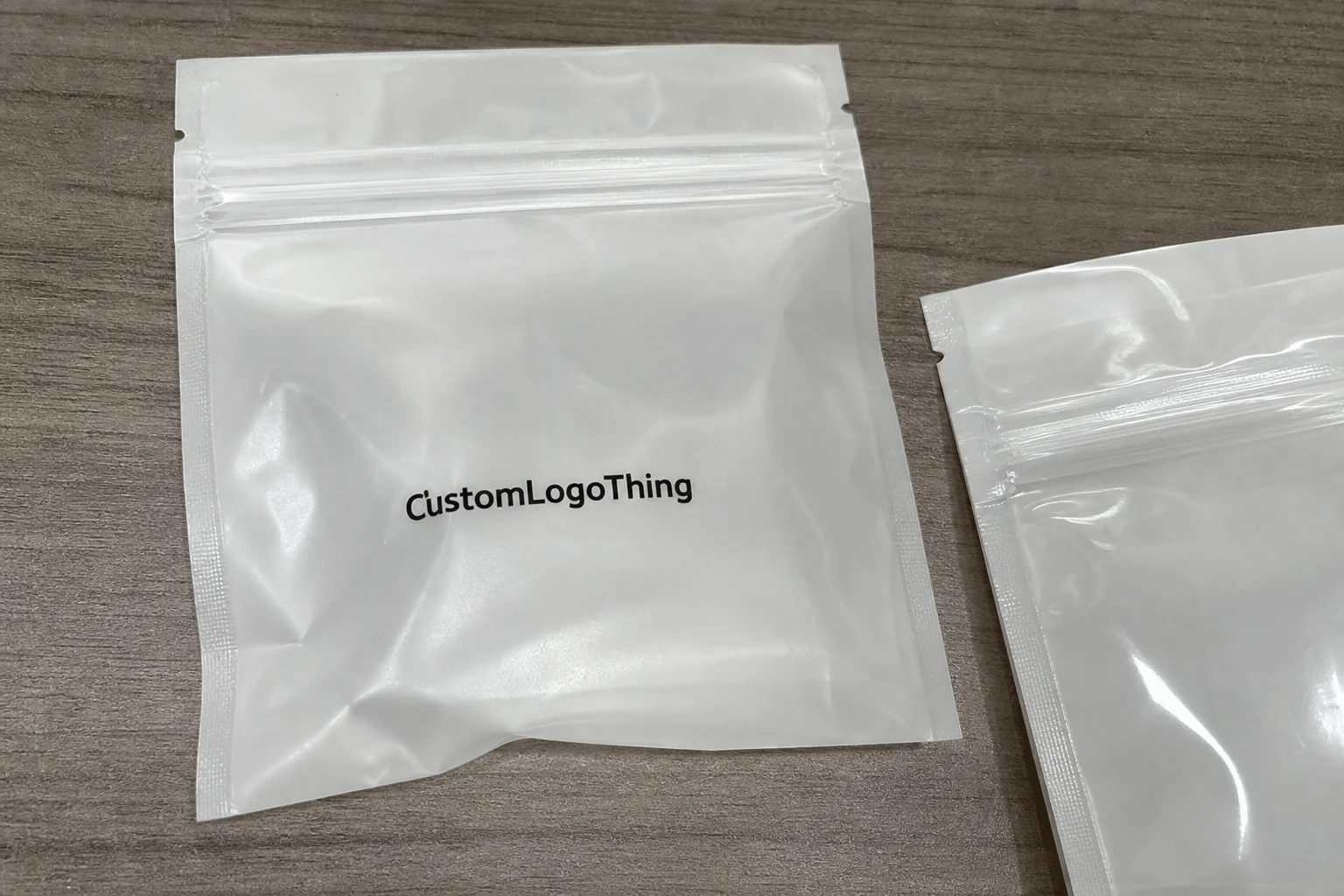
Two OPP header bags can look identical in a product photo. One hangs cleanly on a retail peg for months. The other tears at the slot, prints dull, or arrives with a header that folds like wet paper. Cheap, until it costs you shelf space.
An opp header Bags Factory Quote checklist is not administrative decoration. It is the buyer's way of forcing every supplier to price the same bag: same film, same header, same print, same packing method, same approval path. Without that discipline, a quote comparison becomes theater.
Why OPP Header Bags Look Simple but Quote Badly
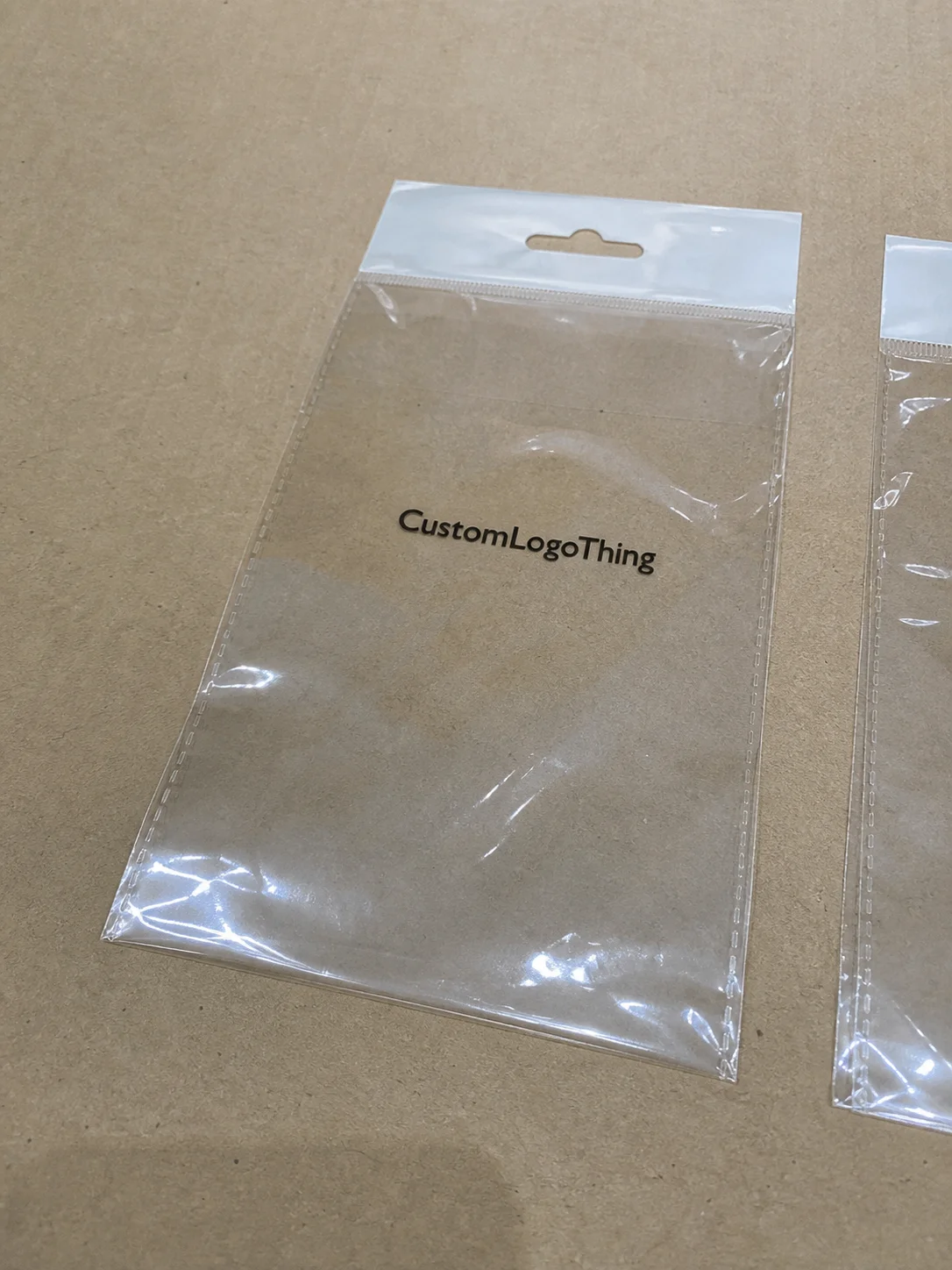
OPP header bags solve a plain retail problem. The customer can see the product, while the header carries the logo, barcode, warnings, size details, country-of-origin mark, and peg hole. That makes them common for stationery, toys, accessories, socks, hardware, cosmetic tools, craft items, small apparel, cables, and replacement parts.
The quoting trouble usually begins with a request like this: "We need clear bags with logo header, maybe 10,000 pcs." A factory can quote that. They can also quote almost anything if the request is vague enough. The number will mean little unless the buyer defines size, film thickness, header construction, printing, adhesive, hang hole, packing method, shipping terms, and approval steps.
For a packaging buyer, the target is not the lowest number in an email. The target is a quote that predicts the finished bag. A buyer comparing 35 micron film against 50 micron film is not comparing suppliers. They are comparing two different products, one of which may fail before anyone opens the retail carton.
A practical quote request sounds different: 120 mm x 180 mm clear OPP bag, 40 micron film, 35 mm printed header, euro slot, self-adhesive flap, two-color print, packed 1,000 per carton, priced at 5,000, 10,000, and 25,000 pieces. See the difference? One request creates guessing. The other creates pricing.
Buyer rule: if two factories quote different thicknesses, print methods, carton packing, or shipping terms, the lower price may only be lower because it excludes the part you actually need.
Product Details Buyers Should Define Before Asking for Price
An OPP header bag is a transparent oriented polypropylene bag with a header section used for branding, hanging display, barcode placement, and product information. The header may be folded, reinforced, printed directly, or paired with a card-style visual area depending on the design and production method.
Common formats include self-adhesive flap bags with printed headers, bottom-sealed bags with reinforced headers, resealable OPP header bags, euro slot header bags, round-hole peg bags, and custom die-cut header styles. For retail header packaging, the hang hole is not decoration. It carries load, so its position, shape, and reinforcement matter.
Measure the packed product, not the naked product. Obvious? Apparently not. Buyers sometimes send the dimensions of a flat sock, then forget the folded cuff, belly band, insert card, and the way soft goods swell once stacked. A useful opp header Bags Factory Quote checklist starts with the item as it will actually sit inside the bag.
For flat items, allow about 3-8 mm extra width. For bulky, soft, sharp-edged, or irregular products, clearance may need to be 10-20 mm or more, depending on fill depth and packing speed. Too tight looks premium until packing staff spend a shift wrestling plastic. Then the "premium fit" becomes slower labor, ripped seals, and uneven shelf presentation.
For a 100 mm wide flat stationery set, a 105-108 mm bag may work. For a 100 mm wide soft accessory with thickness variation, 112-120 mm may be more realistic. Record both product size and target bag size so the supplier is not guessing clearance from a photograph.
Retail details need to be defined early. Give the factory the hang hole location, header height, barcode area, warning text, country-of-origin marks, and suffocation warnings where relevant. If the bag will hang on retail pegs, ask whether the header needs extra stiffness or a reinforced hole. ASTM and ISTA packaging test references can help frame discussions around handling, drop, and transit expectations; ISTA is a useful reference for packaged-product distribution testing.
Finish expectations should be stated plainly: high clarity, glossy surface, clean seals, accurate trim, neat header alignment, and consistent adhesive performance. "Clear OPP" does not tell the factory enough. It barely starts the conversation.
Specifications That Change Film Quality, Print, and Shelf Performance
The main specification fields should include bag width, bag height, usable inner height, header height, flap length, film thickness, sealing style, adhesive type, hang hole type, print colors, packing quantity, and shipping method. A strong checklist puts these fields in front of the supplier before the price is calculated. Guesswork has a habit of becoming invoice language.
Typical OPP film thickness ranges from roughly 25-60 microns. Lightweight stationery, greeting cards, stickers, and craft sheets may use 25-35 micron film. Small apparel, socks, accessories, and cosmetic tools often sit around 35-45 microns. Heavier hardware, cable kits, and sharp-edged items may need 45-60 microns or a different structure if the product is rough on packaging.
There is no magic hidden in the film roll. Thinner film lowers unit cost and shipping weight. Thicker film improves hand feel, tear resistance, and peg display stability. You pay for plastic, printing, and handling. If a supplier says thickness does not matter, that supplier is oversimplifying or hoping you do not ask better questions.
Print choices change cost and appearance quickly. Simple one- or two-color header printing works for budget orders, especially when the logo and barcode are basic. Full-color CMYK gives stronger retail graphics for custom printed OPP bags. Spot colors help with brand consistency. White ink backing is often needed when graphics must look opaque on clear film, because ink printed on transparent film can look weaker than buyers expect.
Artwork should arrive ready for production. Send vector logos, outlined fonts, CMYK files or Pantone references, bleed, safe zones around the hang hole, barcode files, warning text, and dieline instructions. Barcodes should be tested at final size, not judged from a screen preview. A 12 mm tall barcode may scan in one layout and fail in another if contrast, quiet zones, or print gain are ignored.
Flexible packaging has tolerances. Small variations in size, seal position, print registration, trim, and color can occur during production. A practical tolerance might be around +/-2 mm on bag dimensions with slight registration variation on multi-color print, though the acceptable range depends on the machine, layout, film, and job size. Put the tolerance in the quote request before production. Arguing after cartons arrive is a poor quality-control strategy.
| Specification | Common Range or Choice | Buyer Impact |
|---|---|---|
| Film thickness | 25-60 microns | Controls stiffness, tear resistance, clarity feel, and unit cost |
| Header height | 25-60 mm typical | Affects branding space, barcode placement, and peg stability |
| Hang hole | Round hole, euro slot, custom die cut | Determines retail peg compatibility and load performance |
| Print method | 1-2 color, CMYK, spot color, white backing | Changes setup cost, visual quality, and brand consistency |
| Closure | Self-adhesive flap, resealable strip, heat seal | Controls packing speed, tamper feel, and customer opening experience |
Cost, Pricing, and MOQ Factors for Custom Header Bags
Pricing is driven by material thickness, bag size, print coverage, number of colors, plate or setup charges, order quantity, packing method, inspection level, and shipping terms. A strong opp header bags factory quote checklist separates those cost lines instead of letting one mysterious unit price land in your inbox.
MOQ is not one universal number. Simple stock-style OPP header bags may start lower if the factory already runs a similar size and structure. Custom printed header bags often make better economic sense from several thousand to tens of thousands of pieces, depending on size and print complexity. For many buyer projects, 3,000 pieces may be possible but expensive per unit, while 10,000 or 25,000 pieces may show a cleaner cost curve.
Separate fixed and variable costs. Artwork setup, printing plates, sampling, and machine setup are fixed-ish. Film, ink, labor, inspection, cartons, and freight scale with quantity. A $120 plate charge spread over 3,000 bags adds $0.04 per bag before the bag even exists. Spread that same charge over 30,000 pieces and it becomes $0.004 per bag. Math. Annoying, but useful.
Larger runs usually reduce unit cost because setup is spread across more bags. Over-ordering slow-moving packaging can still tie up cash and warehouse space. That is not savings. That is clutter with an invoice.
Quote comparison traps are everywhere. One factory includes plate fees; another hides them. One quotes 30 micron film while another quotes 45 micron. One excludes carton packing. One prices FOB while another gives delivered cost. Apples and oranges dressed as procurement.
Ask for 2-3 quantity breaks: a low test run, a standard reorder, and an annual-volume price. For example, request 3,000, 10,000, and 25,000 pieces. If the product is proven and reorder volume is predictable, ask whether plate fees are one-time costs and how long the factory retains tooling or print files.
| Order Scenario | Typical Quantity | What to Expect | Best Use |
|---|---|---|---|
| Launch test | 2,000-5,000 pcs | Higher unit cost because setup is spread over fewer bags | New SKU, uncertain demand, retail sample run |
| Standard reorder | 10,000-25,000 pcs | Better unit pricing and more efficient production planning | Regular e-commerce or retail replenishment |
| Volume program | 50,000+ pcs | Lower unit cost, stronger carton planning, more freight options | High-volume retail, multi-SKU seasonal programs |
Process and Lead Time from Artwork to Finished Bags
A normal order process is straightforward if the buyer is organized: confirm product dimensions, choose bag style, finalize specifications, submit artwork, receive quotation, approve digital proof, approve sample if needed, start production, inspect, pack, and ship. The fastest orders are boringly organized. Factories move faster when the buyer sends structured specifications instead of a mood board and a prayer.
Quoting can often take 1-3 business days when specs are clear. Artwork checking may take 1-2 business days. Sampling can take about 5-10 business days. Mass production often runs about 10-25 business days after approval, depending on quantity, print workload, machine schedule, and inspection requirements.
Projects slow down for predictable reasons: missing dielines, low-resolution logos, undecided thickness, barcode changes, late compliance text, unclear shipping address, and repeated design revisions after proof approval. A proof is not a rough suggestion. Treat it like the production instruction it is.
Sample choices should match the risk. A digital proof is enough for layout and color placement on simple orders. A plain material sample helps buyers check film feel, clarity, and stiffness. A printed pre-production sample makes sense for retail launches, barcode-critical packaging, tight registration, heavy product, or brand color sensitivity. Production sample retention is smart for future reorders because it gives both sides a physical reference.
Shipping needs early planning. Courier works for samples. Air freight helps urgent launches but can punish margins on bulky cartons. Sea freight is better for larger volume if the timeline allows. Carton dimensions and gross weight matter because landed cost is not just unit price. Freight, duties, destination fees, and storage all count. Boring numbers, real money.
Sustainability claims need caution. OPP is a polypropylene film, but recyclability depends on local collection, labeling, inks, adhesives, and contamination. Environmental claims should be backed by supplier documentation and local rules. The EPA recycling guidance is a practical starting point for understanding claim limits in the U.S. market.
Factory Checks That Separate a Useful Supplier from a Cheap One
Before placing an order, verify factory experience with OPP header bags, printing capability, sealing equipment, quality-control process, export packing, and communication speed. A useful supplier asks questions before quoting. A weak supplier says yes to everything, then fixes the problem by shipping exactly what you accidentally approved.
Quality checkpoints should include film clarity, thickness consistency, seal strength, header alignment, adhesive performance, hang hole position, print registration, color consistency, barcode readability, and carton labeling. For hanging retail products, ask how the factory checks tear resistance around the hole. A euro slot that looks fine on day one may fail after repeated handling if the header is too thin or poorly aligned.
Supplier questions reveal competence fast. Ask what tolerance they use for bag dimensions. Ask how they control header skew. Ask whether they test hang holes under load. Ask how they manage color matching for repeat orders. Ask whether they keep approved samples, print files, and production notes for reorders. Vague answers usually travel with vague production.
Documentation matters for certain products. Food-contact suitability may be relevant for some categories, though not every OPP header bag should be treated as food packaging. Warning-label placement, suffocation statements, material declarations, and packing lists can affect import clearance and retail acceptance. FSC usually applies to paper-based components rather than OPP film, but if your header includes a paper insert or backing card, FSC sourcing may matter for brand or retailer requirements.
Inspection should be practical, not ceremonial. For a simple clear bag order, random checks may focus on dimensions, film thickness, seal integrity, adhesive closure, and carton count. For printed retail bags, add color comparison, registration, barcode scanning, header alignment, and hang-hole position. If the product is heavy or sharp, test the filled bag on the intended peg style before mass approval. A pass on an empty bag is not the same as a pass on a loaded one.
Ask the supplier to state what they will not guarantee. That sounds backwards, but it exposes risk. Some factories cannot hold tight color tolerance across repeat runs without retained ink standards. Some cannot guarantee exact film clarity if they source material run by run. Some will not accept claims unless carton damage is noted at delivery. Better to know before the purchase order is signed.
What Should an OPP Header Bags Factory Quote Checklist Include?
Use this opp header bags factory quote checklist before asking for price. It keeps the conversation practical and stops the supplier from filling in blanks with whatever option makes the quote look lowest.
- Product dimensions when packed: width, height, thickness, bulge, folded edges, insert cards, and sharp points.
- Target bag size: outer width, outer height, usable inner height, and expected clearance.
- Header details: header height, hang hole type, hole position, barcode area, and warning text area.
- Material: OPP film thickness, clarity level, stiffness needs, and any special handling requirement.
- Closure: self-adhesive flap, resealable strip, heat seal, or open-top format.
- Printing: logo files, CMYK or Pantone references, number of colors, white backing, bleed, and safe zones.
- Compliance text: country of origin, suffocation warning, age warning, barcode, SKU, and retailer-specific copy.
- Quantity breaks: low test run, standard reorder, and annual-volume estimate.
- Packing: bags per inner pack, bags per carton, carton label format, and pallet needs if applicable.
- Delivery: destination country, delivery address type, target in-hand date, and preferred shipping mode.
- Quote format: unit price, MOQ, setup fees, sample cost, production lead time, carton details, shipping terms, and payment terms shown separately.
Photos or samples matter, especially if the product is bulky, flexible, sharp-edged, or sold on retail pegs. Packaging decisions made from flat dimensions alone can get expensive fast. A small metal part may need stronger film than its size suggests. A soft fabric product may need more clearance than its weight suggests.
Choose a priority before quoting: lowest unit cost, premium retail look, fastest delivery, stronger peg display, or easiest reorder system. The factory can optimize for one or two. Not all five. Physics remains annoying.
Ask for samples when the product is new, the order is headed to a retail chain, the barcode must scan reliably, the product is heavy or sharp, or the design has tight print registration. A $50-$200 sampling step can prevent a much larger mistake on a 20,000-piece run. Not always required, but often cheap insurance.
The best factory quote is not the prettiest spreadsheet. It is the one that makes the bag, the risks, and the exclusions visible before production starts. Header bags are small, but they sit at the retail interface between product, brand, scanner, peg, warehouse, and customer hand. That is too much work for a vague request.
FAQ
What should be included in an OPP header bags factory quote request?
Include bag width, bag height, header height, film thickness, closure style, hang hole type, print colors, artwork files, order quantity, delivery country, and required in-hand date. Ask the factory to separate unit price, setup fees, sample fees, production lead time, packing details, and shipping terms so the quote can be compared properly. A practical opp header bags factory quote checklist should make every major cost and specification visible.
What is the typical MOQ for custom printed OPP header bags?
MOQ depends on bag size, print method, material thickness, and setup requirements, but custom printed runs usually become more economical at several thousand pieces or more. For small launches, ask for quantity breaks instead of one price. A 3,000-piece run and a 10,000-piece run can have very different unit economics.
How much do custom OPP header bags cost per unit?
Unit cost changes with film thickness, bag size, print coverage, number of colors, quantity, packing method, and freight. Very small orders carry higher setup cost per piece. Request pricing at multiple quantities and confirm whether plate fees, proofing, cartons, and shipping are included. Hidden fees are still fees, just wearing a fake mustache.
How long does OPP header bag production usually take?
A clear quote can often be prepared in 1-3 business days. Sampling may take about 5-10 business days, and mass production often takes about 10-25 business days after artwork and sample approval. Complex printing, large quantities, late artwork changes, and peak factory schedules can extend the timeline.
Can a factory help choose the right thickness for OPP header bags?
Yes. A practical factory should recommend thickness based on product weight, shape, retail display method, clarity needs, and budget. Send product photos, packed dimensions, target use, and sample weight. A structured quote checklist gives the factory enough context to recommend film thickness instead of guessing from a product name alone.