Coffee Roaster Snapbacks MOQ Guide for Bulk Orders
Coffee Roaster Snapbacks MOQ Guide: Start With the Hat Your Customers Will Actually Wear
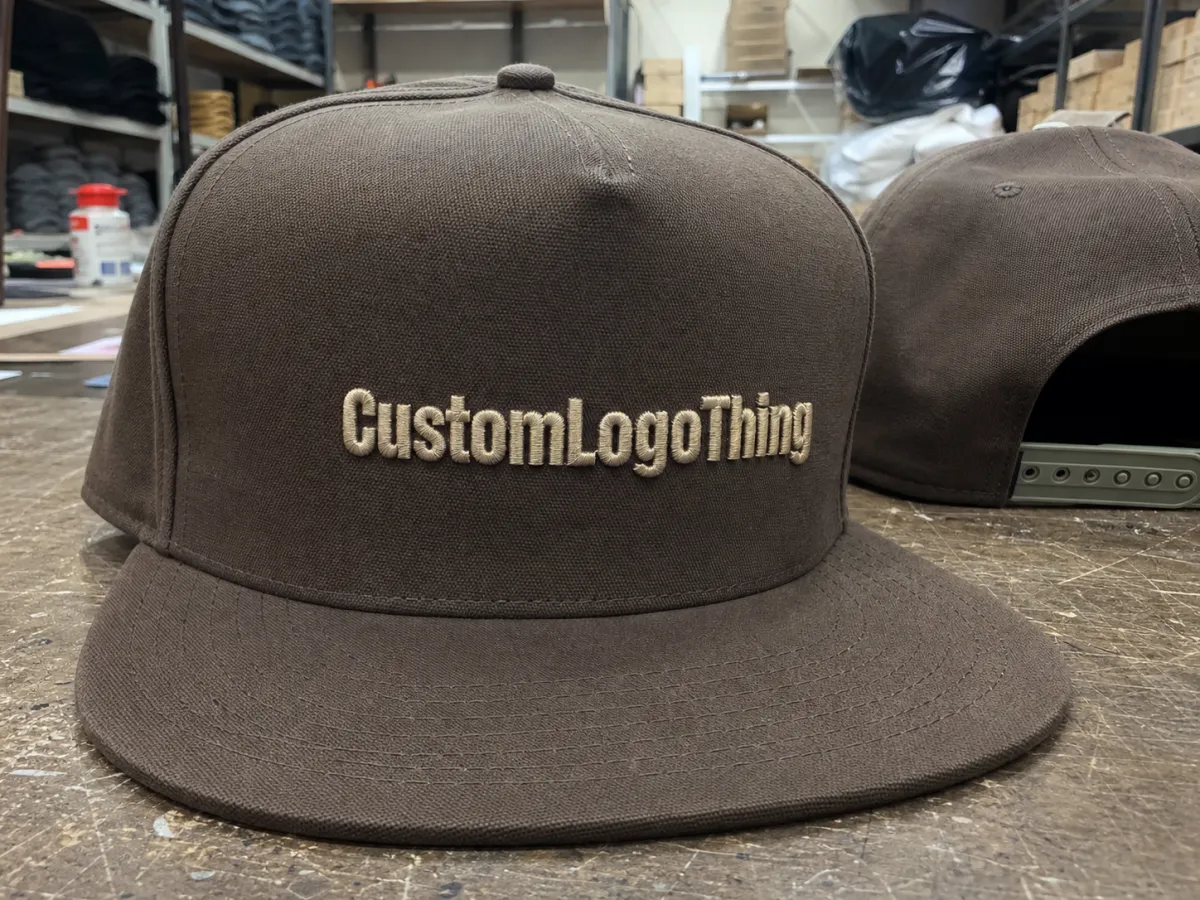
A coffee bag may be empty in two weeks, but a well-made cap can stay on a customer’s head, on a brew bar hook, in a delivery van, or beside a roaster for years. That is the practical buyer problem behind any coffee roaster snapbacks moq guide: the order has to work as merchandise, brand visibility, staff gear, and inventory, all at a quantity your business can realistically sell or use.
Snapbacks fit coffee brands because the shape is useful. The structured crown holds its form on a shelf, the front panel gives a strong surface for a logo, and the adjustable plastic closure covers most adult wearers without the sizing complexity of fitted caps. A flat brim feels more retail-streetwear; a slight curve softens the look for cafe staff and everyday customers.
The best orders usually begin with the wearer, not the decoration method. A cap that feels stiff, flimsy, oddly tall, or visually crowded will not become a favorite just because the logo is correct. Buyers should think through who will wear it: baristas on shift, wholesale reps, regulars buying merch, event teams outdoors, or subscribers receiving a limited add-on.
The same questions come up often before a bulk order: How many caps should we buy? Will the logo stitch cleanly? Is a woven patch better than embroidery? What happens to the real cost after setup, sample charges, packing, and freight? Custom Logo Things helps buyers work through those choices before production, so the cap construction, decoration method, minimum order quantity, and landed cost are aligned before inventory is committed.
Better inputs make better caps. The goal is not to overbuild the most expensive snapback possible; it is to Choose the Right construction and decoration for the brand, the sell-through plan, and the deadline.
How Snapbacks Support Coffee Merch, Staff Uniforms, and Wholesale Branding
One cap style can carry several jobs for a coffee company. It can sit beside retail bags, outfit baristas during busy service, travel with wholesale reps, support a cupping event, or anchor a seasonal roast launch with a colorway pulled from the label system.
Snapbacks also photograph well when the logo scale is handled properly. A bold wordmark, simple crest, or strong icon reads across a cafe, in a market stall, or on social content without asking the viewer to decode tiny origin notes. Coffee packaging can hold fine detail; headwear needs stronger hierarchy.
Compared with other cap styles, snapbacks sit in a useful middle lane. They are more structured than dad hats, more retail-oriented than many basic trucker caps, and usually better for large front embroidery or patches than soft unstructured caps. Trucker caps can be excellent for outdoor events, warm climates, or roastery teams that want more ventilation, but mesh and foam change the brand feel. Dad hats are comfortable and approachable, yet the relaxed front limits patch size and can make detailed embroidery less crisp.
Perceived value comes from small decisions. Cotton twill instead of a thin promotional fabric, a woven label near the snap, a contrast underbrim, custom inside seam tape, or two cap colors tied to espresso and filter roast identities can make the program feel considered. These details are not always expensive, but they should be planned early because they may affect MOQ, price breaks, and production time.
Practical callout: Bulk ordering should not mean chasing the lowest piece price at any cost. A cap that customers buy, staff wear willingly, and your team can reorder consistently is usually the stronger commercial decision.
Snapback Product Details: Crown Shape, Fabric, Closure, and Logo Placement
A standard snapback usually includes a 5-panel or 6-panel crown, structured front, flat or pre-curved brim, plastic snap closure, sweatband, eyelets, top button, and interior seam taping. Those parts sound basic, but each one changes how the finished cap feels and how the logo behaves.
A 5-panel cap gives you one uninterrupted front surface, which helps with large marks, woven patches, leather patches, and simple front badges. A 6-panel cap has a center seam and a classic athletic profile. That seam is not a problem, but it matters if the logo has small lettering, thin lines, or a detailed icon crossing the center.
Fabric selection changes both hand feel and pricing. Cotton twill gives a clean retail finish and pairs well with flat embroidery or woven patches. Polyester blends offer strong color consistency, durability, and shape retention, which can help with staff uniforms. Wool-acrylic blends have a heavier, classic streetwear feel. Mesh-back versions add breathability for roastery floors, outdoor service, summer pop-ups, and delivery teams.
Most adult snapbacks use an adjustable plastic snap, but the fit still varies by crown height and profile. High-profile caps sit taller and give embroidery more presence. Mid-profile caps often feel safer for broad retail use. Low-profile caps can look cleaner on smaller heads, though available blanks and decoration space may be more limited.
Logo placement can stay simple or expand into a more premium program. Common options include centered front decoration, offset front marks, side embroidery, back embroidery above the snap, woven closure labels, underbrim printing, and interior taping. Every extra position can add setup time, handling, and cost, so use additional placements where they support the product rather than filling space.
| Decoration Method | Best Use | Watchouts | Typical Cost Impact |
|---|---|---|---|
| Flat embroidery | Clean logos, bold lettering, simple icons | Very small type and thin lines may fill in | Moderate; stitch count affects price |
| 3D puff embroidery | Large initials, strong wordmarks, block shapes | Fine detail and tight corners do not puff well | Higher due to foam and digitizing |
| Woven patch | Badge designs, small details, multiple colors | Patch size and border shape affect tooling fees | Moderate to higher depending on detail |
| Leather or faux leather patch | Craft look, warm brand feel, tonal designs | Best for simplified debossed artwork | Higher than basic embroidery in many runs |
| Rubber patch | Modern technical look, raised clean shapes | Custom mold costs can affect small orders | Higher upfront setup on custom shapes |
Logo scale causes more trouble than many buyers expect. Coffee plant details, roast curve lines, topographic origin graphics, distressed type, and micro taglines may look beautiful on a 12 oz bag but lose clarity on a curved cap panel. Simplifying before approval is cheaper than discovering the problem after a sample has been made.
Specifications Buyers Should Confirm Before Requesting a Quote
A clear quote starts with choices, not just a logo file. Cap profile, panel count, fabric, decoration method, stitch count, patch size, color count, packing method, and shipping destination all affect cost and timeline. Two mockups can look similar on screen but land at different prices once construction and decoration are confirmed.
Before requesting pricing, prepare the basics: cap profile, 5-panel or 6-panel preference, fabric, main color, brim style, closure type, logo size, logo location, decoration method, quantity, packaging needs, shipping destination, and required in-hands date. If some of those choices are open, say so. A good quote can show a stock cap with flat embroidery, a better blank with a woven patch, and a more customized retail version for comparison.
Standard snapbacks with adjustable closures cover a broad adult range, which is why they work well for cafe merch and staff use. Youth sizing, oversized fits, low-profile crowns, and specialty fits should be stated early because they can narrow the blank selection or move the order into a different production path.
Artwork matters as much as the cap body. Vector files such as AI, EPS, or production-ready PDF are preferred for embroidery and patches. Pantone references, thread color notes, or formal brand color standards help reduce mismatch. If your logo can be simplified for production, clarify what must remain untouched and what can be adjusted for legibility.
For sustainability claims, keep the language factual. If you specify FSC-related packaging, paper hangtags, or printed inserts, reference standards from the Forest Stewardship Council rather than relying on broad environmental wording. The same restraint applies to recycled fabrics or alternative materials: confirm the specification and the documentation before using it in retail copy.
For retail caps, major launches, or designs that must match an existing packaging system, request a digital mockup and consider a pre-production sample or decoration strike-off. A mockup confirms layout. A sample confirms texture, thread behavior, patch edge quality, color, scale, and hand feel.
Labeling can matter too. Fiber content, country-of-origin marking, care labels, barcode stickers, polybag warnings, carton marks, and retail hangtags should be discussed before production starts. If you need broader ordering context, Custom Logo Things also keeps a practical FAQ for common custom product questions.
MOQ, Pricing, and Unit Cost Factors for Coffee Roaster Snapbacks
MOQ means the minimum order quantity needed to produce a custom cap run efficiently. It covers more than the cap body. Material sourcing, decoration setup, digitizing, machine time, operator handling, quality control, packing, carton preparation, and freight coordination all have fixed or semi-fixed costs. A supplier may be able to produce a very small run, but the piece price can climb quickly because setup work does not shrink in the same proportion.
For planning, simple decorated stock snapbacks often sit in a different cost structure than fully custom caps. A stock cap with one front embroidery location may be practical at a smaller quantity. Custom-dyed fabric, special labels, custom patches, underbrim printing, or unique construction usually pushes the minimum higher because materials and setup have to be reserved for that specific run.
Actual price ranges vary by supplier, decoration, freight, and market conditions, but buyers can still build a useful budget. Basic decorated caps are often quoted in the lower-to-mid promotional range at larger quantities, while premium retail-oriented caps with patches, custom labeling, and individual packing can land much higher. Sample charges, digitizing, patch tooling, molds, rush fees, and split shipments may appear as separate line items instead of being hidden in the unit price.
Low unit cost and smart landed cost are not the same thing. A slightly higher cap cost may be better if the product sells faster, looks more premium, avoids decoration problems, and can be reordered with the same specifications. A cheap cap that sits in the back room is not a bargain.
Small trial runs can help a single cafe test merch demand without tying up too much cash. Mid-size quantities often improve unit economics because setup charges spread across more units. Larger runs make sense for multi-location roasters, wholesale programs, subscription inserts, or seasonal drops where demand is already proven.
Common adders include 3D puff embroidery, custom woven patches, leather patch debossing, rubber patch molds, underbrim printing, custom inside labels, hangtags, individual polybags, barcode stickers, split shipments, and rush production. Ask for tiered pricing at two or three quantities. A useful MOQ discussion shows whether ordering more units truly lowers the landed cost enough to justify the inventory.
Production Steps, Lead Time, and Approval Timeline
A typical ordering path runs through inquiry, specification review, artwork check, quote, mockup, sample or strike-off approval, bulk production, quality control, packing, shipping, and delivery. Each stage protects the buyer from a different problem: unclear specs, poor artwork translation, color drift, missed deadlines, or packaging that does not match the sales plan.
Lead time depends on cap type, decoration method, order quantity, factory capacity, sampling needs, and shipping method. A stock-style cap with ready vector artwork and one embroidery location can move faster than a fully custom cap with special colors, labels, patches, samples, and retail packaging. Share the launch date, event date, or cafe opening date before artwork is finalized so the production plan can be built around reality.
Digital mockups are useful, but they are not physical proof. A mockup confirms general layout, placement, and visual balance. A physical sample or decoration strike-off confirms stitch direction, thread density, patch texture, edge finish, color, and scale. For embroidered caps, digitizing may adjust underlay, stitch angle, satin width, fill density, and small details so the design reads cleanly on a curved panel.
Quality control should look beyond whether the logo is present. Check crown shape, panel alignment, brim curve, stitch cleanliness, patch placement, loose threads, snap function, sweatband finish, interior taping, shade consistency, carton count, and packaging condition. For retail orders, inspect hangtag placement, barcode readability, and whether individual bags or stickers match the packing instructions.
Buyers can prevent delays by approving artwork quickly, sending vector files, limiting late color changes, confirming the shipping address, and deciding early whether the order needs retail packaging. If distribution testing or transit durability matters for larger carton shipments, standards from ISTA can help frame packaging expectations for packed goods moving through parcel or freight networks.
Rush work should be discussed early. Some shortcuts are safe, such as simplifying decoration or choosing an available cap color. Others create quality risk, like skipping a needed sample for a complex patch or approving embroidery without checking how thin details will stitch.
Common Ordering Mistakes That Raise Cost or Slow Down Delivery
The first mistake is choosing the decoration before choosing the cap. A logo that works beautifully on a flat structured 5-panel front may not behave the same way on a curved 6-panel cap with a center seam. Start with the surface, then choose the decoration.
The second mistake is underestimating logo complexity. Coffee brands often have rich visual systems: plant illustrations, origin map lines, roast-level icons, tiny coordinates, heritage-style seals, and small taglines. Many of those details need simplification for embroidery or cap patches. Better to adjust the artwork before digitizing than fight it during production.
Another common issue is ordering only the smallest possible quantity without thinking through reorder timing. Selling out can be good news, but not if the next run arrives six weeks after the launch energy fades. If the cap is tied to a seasonal roast, a cafe anniversary, or a wholesale event, compare the MOQ against expected sell-through and the realistic reorder window.
Color mismatch can create frustration, especially for brands with warm neutrals and carefully tuned packaging palettes. Screen colors are not production standards. Use Pantone references, thread charts, fabric swatches, or sample approvals for brand-critical colors. Black, cream, rust, forest green, and warm gray can shift noticeably between cotton twill, polyester blends, embroidery thread, and patch material.
Packaging requests made late can affect both schedule and cost. Hangtags, custom stickers, individual bags, barcode labels, carton marks, and split shipments to multiple cafes all require handling time. If caps need to be divided by location or packed for retail shelves, include that in the first quote request rather than adding it after bulk production is underway.
One more overlooked mistake: ignoring the retail math. A cap with a higher decoration cost may still work if it supports a stronger shelf price, but the margin has to be checked before approval. Think through retail price, staff allocation, giveaway quantity, wholesale use, and launch timing before placing the order. The production choices should support the sales plan, not fight it.
Next Steps to Build a Quote-Ready Snapback Order
To move quickly, prepare a simple brief. Choose the cap style, select preferred fabric and color, decide between embroidery and patch decoration, estimate quantity, gather artwork files, define the delivery deadline, and note packaging or labeling needs. If you have a target retail price, include it. That helps shape the cost conversation without stripping out the details that make the cap sellable.
If you are comparing directions, send both the ideal version and the budget-conscious version. For example, ask for a front woven patch on cotton twill and a simpler flat embroidered option. Or compare a one-color cap against a two-tone cap with a contrast brim. That gives Custom Logo Things enough room to show practical options instead of forcing one answer too early.
After the inquiry arrives, the team can help refine logo sizing, decoration feasibility, cap construction, quantity breaks, sample approach, and production schedule. Ask for tiered pricing, mockup review, and material recommendations before locking the order, especially if the caps will be sold as premium merch rather than handed out casually.
A focused coffee roaster snapbacks moq guide should leave you with enough detail to request pricing, compare options, and move into production with fewer surprises. Bring the logo, quantity target, deadline, and use case; from there, the right cap program is a matter of matching brand standards to production reality.
FAQ
What is a typical MOQ for custom coffee roaster snapbacks?
MOQ depends on cap construction, decoration method, and customization level. A simple embroidered stock-style snapback may have a lower minimum than a fully custom cap with patches, special labels, custom colors, and retail packaging. For planning, request quantity breaks instead of only one minimum, because the jump from a small test run to a larger bulk order can materially change unit cost.
How does a coffee roaster snapbacks MOQ guide help lower unit cost?
A coffee roaster snapbacks moq guide helps buyers understand cost drivers before requesting a quote, including fabric, decoration type, logo complexity, number of locations, packaging, shipping, tooling fees, and setup charges. It also encourages tiered pricing, which shows whether ordering more units meaningfully reduces cost per piece or simply creates inventory risk.
Should coffee roasters choose embroidery, woven patches, or leather patches for snapbacks?
Embroidery works well for clean logos, bold lettering, and simple marks with strong edges. Woven patches are better for smaller details, badge artwork, and multiple colors. Leather or faux leather patches create a warm craft look, but they usually favor debossed or simplified artwork rather than fine color detail.
How long do custom snapbacks take from quote to delivery?
Timeline depends on artwork readiness, sample requirements, decoration method, order size, approval speed, and shipping method. A project with approved vector artwork and a standard decoration path can move faster than a fully custom cap requiring samples, special materials, and retail packaging. Share your event date, launch date, or cafe opening date during the first quote request.
What should I send to get an accurate snapback quote for a coffee brand?
Send your logo files, target quantity, preferred cap color, decoration method if known, delivery location, deadline, and any packaging or labeling requirements. Include the use case too, such as retail merch, staff uniforms, wholesale gifts, or event giveaways. If you are unsure, ask for two or three options and review the FAQ for additional ordering details before approving production.


