A roaster approves a new bag design on Monday, books a launch roast for the following week, and then learns the packaging clock has not really started. The supplier still needs proof approval, deposit, final specifications, material confirmation, and a clean production file. That gap is why coffee roaster zip lock Bags Lead Time catches even organized buyers off guard.
The number casually dropped in an email is rarely the full schedule. Custom printed coffee bags depend on artwork quality, material structure, printing method, zipper style, degassing valve needs, production queue, and freight route. A supplier might say “about four weeks,” but that usually means four weeks after the order is complete enough to enter production. That is a very different calendar than four weeks from the first conversation.
Coffee Roaster Zip Lock Bags Lead Time Is Usually Not What Buyers Think
Coffee packaging is less forgiving than many other product categories. Roasted coffee has a freshness window. Retail launches have delivery dates. Subscription boxes have ship cycles. Wholesale customers do not enjoy hearing that the beans are ready but the bags are still in transit.
A late pouch can turn into emergency blank bags, sticker labels, rushed freight, awkward shelf presentation, and a launch that looks patched together. For a brand charging $18 to $24 for a 12 oz bag, that visual downgrade matters. Packaging is not decoration at that point; it is part of the product promise.
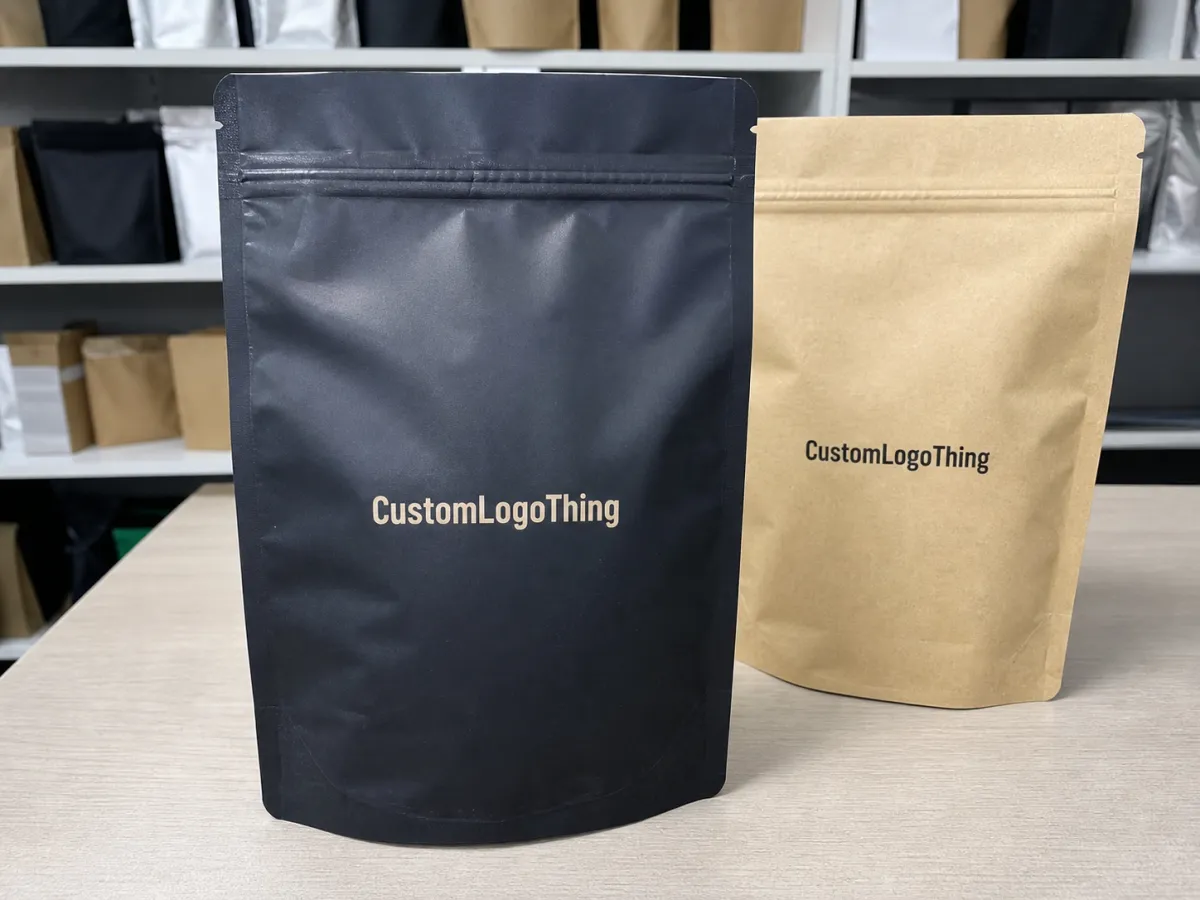
For clarity, this discussion focuses on custom printed plastic zip lock coffee bags, usually stand up pouches or flat bottom pouches. They often include resealable zipper closures, tear notches, degassing valves, and high-barrier films designed to protect aroma, reduce oxygen exposure, and hold up through filling, heat sealing, carton packing, shipping, and retail handling.
Standard custom lead times often sit around 3 to 8 weeks, depending on print complexity, order size, proofing speed, material availability, and shipping method. Repeat orders may land closer to 2 to 4 weeks after proof approval if artwork and materials are already locked. New designs, custom sizes, specialty finishes, recyclable film structures, or overseas freight can push the schedule longer.
Practical rule: coffee roaster zip lock Bags Lead Time is not factory time alone. It includes decision time, proof time, production time, packing time, freight time, and the small delays nobody remembered to budget for.
How Custom Zip Lock Coffee Bags Move From Artwork to Finished Pouches
The workflow is simple on paper and detailed in production. First, the supplier confirms the bag style, size, material, quantity, finish, zipper, valve, and shipping destination. Then prepress sets up or checks the dieline. Artwork is reviewed for bleed, seal areas, barcode placement, color mode, font handling, image resolution, and print limitations.
After that comes the proof. A digital proof can be ready quickly, often within 1 to 3 business days if the files are clean. A physical sample, wet proof, or press proof adds more time, commonly several business days to two weeks depending on the method. Buyers often want physical proofing for good reasons, especially on a first order, but that choice belongs on the calendar from the beginning.
Production may include film preparation, printing, lamination, curing, slitting, pouch converting, zipper application, valve application, tear notch cutting, quality checks, packing, and shipping. Printing is only one part of the job. Lamination cure time, valve sourcing, zipper setup, and pouch forming can each add days, and skipping them is not a real option if the pouch needs to perform.
Digital Printing Versus Plate-Based Printing
Digital printing usually makes sense for lower MOQs, multiple SKUs, seasonal blends, and faster artwork changes. A roaster with five coffees at 500 to 1,000 bags each often benefits from digital because setup is lighter and versioning is easier. Unit cost can be higher, but the cash tied up in unused inventory is often lower.
Rotogravure or other plate-based methods can lower unit cost at higher volume, but setup costs and preparation time are heavier. Cylinders, plates, or tooling may add hundreds or thousands of dollars up front, and the schedule may stretch because the job needs more preparation before it reaches the press. For 10,000 to 50,000 bags, that can be worth it. For a test roast, it usually is not.
Why Coffee Bags Need More Than Pretty Printing
Coffee pouches must handle oxygen, moisture, aroma retention, seal strength, zipper usability, and valve performance. Common fill weights include 8 oz, 10 oz, 12 oz, 1 lb, and 2 lb, and each size changes pouch dimensions, gusset depth, film stiffness, and carton packing. A 12 oz dark roast can need more internal volume than a dense light roast because darker beans are often bulkier.
Standards may enter the discussion too. Transit testing can reference ISTA procedures, while paper-based components or certified paper labels may connect to FSC sourcing. Not every coffee pouch needs formal lab testing, but serious wholesale and retail programs should think beyond how the artwork looks on a screen.
The buyer’s pace matters. Clean artwork and fast approvals can remove several days from the schedule. Missing barcodes, last-minute roast names, RGB images, unoutlined fonts, and committee feedback do the opposite. Production partners can move quickly only after the order is clear enough to run.
Timeline and Production Steps That Affect Turnaround
Simple repeat orders can move faster, often around 2 to 4 weeks after proof approval. New custom printed coffee bags commonly require 4 to 8 weeks, especially if the order includes a new material structure, multiple SKUs, valves, matte finish, or freight that crosses borders. That range is normal, not dramatic.
Quoted production lead time usually starts after artwork approval, deposit, final specifications, and material confirmation. If a buyer spends two weeks debating matte black against soft-touch black, that is not factory delay. It is decision time, and it still consumes the launch schedule.
The biggest timing variables include SKU count, custom size, material structure, zipper type, degassing valve requirement, matte or gloss finish, spot effects, order volume, seasonal demand, and freight method. Air can save days. Ocean can save money. Domestic freight can reduce customs risk. None of these choices is magic; each one trades time, cost, flexibility, and certainty.
| Order Type | Typical Timing After Approval | Best Fit | Main Tradeoff |
|---|---|---|---|
| Repeat digital order | 2-4 weeks | Small to mid-size reorders with approved artwork | Unit cost may be higher than large traditional runs |
| New digital custom pouch | 3-6 weeks | Multiple SKUs, seasonal blends, lower MOQ needs | Material and finish options may be more limited |
| New plate or cylinder-based run | 5-8+ weeks | Higher volumes with stronger cost control per unit | Higher setup cost and less flexibility after approval |
| Rush short run | 1-3 weeks when available | Launch coverage or emergency stock | Higher freight cost and fewer customization choices |
Proofing deserves its own line on the calendar. A digital proof is fast and useful for layout checks, but it does not always show exact material feel, opacity, color shift, or shelf presence. A physical sample can be worth the wait for first-time orders, especially if color accuracy, kraft-look film, metallic ink, soft-touch matte, or valve placement matters.
Shipping is the quiet troublemaker. Domestic production can reduce uncertainty and shorten freight windows. Overseas production can deliver better unit economics at volume, but transit time, customs clearance, port delays, and inland freight all enter the math. If the retail launch date is firm, build the packaging calendar backward from the date bags must be in your building, not the date production is expected to finish.
Cost, MOQ, and Pricing Tradeoffs for Custom Coffee Pouches
Price is driven by size, material structure, print method, number of colors or print coverage, finish, zipper, valve, order quantity, and freight. A plain resealable stock bag and a matte custom printed valve pouch are not the same product, even if both technically hold coffee. One is a container. The other has branding, barrier, sealing, and retail requirements built into it.
Digital printed custom pouches may support lower MOQs, sometimes in the hundreds or low thousands per design. Traditional print methods often make more sense at several thousand units or more because setup costs spread across the run. The right answer depends on how stable the product line is, how many SKUs are active, and how much cash the roaster wants sitting in boxes of empty bags.
For planning, small custom pouch runs might land around $0.35 to $0.90 per bag depending on size, quantity, and features. Mid-volume runs can move closer to $0.18 to $0.45 per bag. Larger runs may go lower, but only if the specifications, freight, and setup economics cooperate. These are broad ranges, not promises. A universal price without specifications is not a serious quote.
Add-ons change the number. Degassing valves, rounded corners, hang holes, pocket zippers, recyclable or mono-material films, kraft-look finishes, soft-touch matte, metallic inks, spot gloss, and custom sizes all affect cost. Some also affect coffee roaster zip lock Bags Lead Time because they require extra sourcing, setup, curing, or quality checks.
Freight belongs in the landed cost, not in a surprise column later. A cheap unit price looks less attractive after rush air freight is added. Ask for total delivered cost at two or three quantity tiers, such as 1,000, 3,000, and 5,000 units per SKU. That comparison shows the actual cost curve instead of forcing the buyer to guess from a single line item.
Key Specs to Lock Before You Ask for a Lead Time
A reliable lead time requires reliable specifications. If the supplier does not know the bag size, quantity, material, print method, finish, zipper, valve, and ship destination, the timeline is educated fog. You may get a range, but not a delivery date you can confidently plan around.
Prepare the basics before requesting a quote: bag style, fill weight, pouch dimensions, barrier requirement, zipper type, degassing valve placement, print coverage, finish, number of SKUs, quantity per SKU, artwork status, and required delivery location. Add the required in-hand date. Not the dream date. The real date when bags need to be available for filling.
Size needs more thought than many buyers give it. A 12 oz coffee bag is not one universal dimension because bean density, roast level, desired shelf shape, and headspace all vary. Dark roasts are often bulkier. A flat bottom pouch may display beautifully but cost more than a stand up pouch. A narrow pouch may look elegant and then slow the filling workflow all afternoon.
Artwork readiness matters just as much. Vector logos, embedded or outlined fonts, high-resolution images, correct dielines, barcode placement, roast date area, regulatory text, and color references all determine whether prepress is smooth or painful. Use CMYK or supplier-approved color references, and check barcode quiet zones before the file moves toward production.
Material choice affects freshness and timing. High-barrier plastic films protect aroma well and are widely used for roasted coffee. Recyclable or mono-material structures can be a good option, but they may have different stiffness, seal behavior, availability, cost, and lead time. The EPA recycling guidance is useful for broad context, although local recyclability still depends on collection and processing systems. Packaging claims need care.
If speed is the priority, choose standard sizes, available films, common valve placements, and fewer finishes. If shelf impact is the priority, accept that special structures, soft-touch matte, or metallic details may add time. Speed, customization, and low cost can sometimes fit together, but not always. Packaging still has to respect materials, machines, curing windows, and freight schedules.
Step-by-Step Guide to Ordering Without Blowing the Schedule
- Confirm the deadline. Work backward from the date bags must be in your building, not the date production is supposed to finish. Add at least 1 to 2 weeks of buffer for new orders.
- Choose the format and size. Base it on actual coffee fill, shelf display, carton packing, and filling workflow. A pouch that looks good in a mockup still has to close, seal, and stand properly.
- Request a quote with complete specs. Include quantity tiers, number of SKUs, finish, zipper, valve, material preference, ship-to location, and whether it is a new design or reorder.
- Review artwork on the correct dieline. Check zipper clearance, valve location, seal areas, barcode readability, compliance panels, and roast date marking space.
- Approve proofs quickly but not carelessly. Assign one decision-maker. Committee proofing is one of the easiest ways to lose a week.
- Confirm production start requirements. Make sure deposit, signed proof, final quantity, shipping address, and carton labeling instructions are complete.
- Track real milestones. Ask for updates at proof approval, production start, completion, and shipment. Daily nudges do not make machines run faster.
For first orders, it is better to spend one extra day reviewing the dieline than lose three weeks correcting a preventable issue. A valve placed too low, a zipper too close to the top seal, or a barcode wrapped around a gusset can turn into a costly problem because the error is multiplied across every bag in the run.
If the launch is tight, ask about a split strategy. A small short-run digital batch or temporary stickered bag can cover the first roast while the main custom run is produced properly. It is not glamorous, but it is often better than paying panic freight on the full order. That approach can protect both the launch date and the budget.
Common Mistakes That Add Days or Weeks to Bag Orders
Mistake 1: treating lead time as starting from the first quote. It usually starts after proof approval and payment requirements are complete. A quote is not a production slot. It is a conversation with numbers attached.
Mistake 2: sending incomplete artwork. Missing fonts, RGB colors, low-resolution images, unclear dielines, and mystery barcodes create avoidable prepress delays. A clean file can save 2 to 5 business days on a busy schedule.
Mistake 3: changing specs after quoting. Switching from no valve to valve, gloss to matte, or standard size to custom size can change pricing, availability, and production steps. It can also reset the quote.
Mistake 4: ordering too close to roast or launch dates. Coffee brands often plan beans, labels, photography, email campaigns, and wholesale sheets, then remember the actual bag near the end. That is usually expensive.
Mistake 5: ignoring SKU count. Five flavors at 1,000 units each is not always the same as one design at 5,000 units. More SKUs mean more artwork checks, setup complexity, press organization, packing separation, and quality control points.
Mistake 6: forgetting freight risk. If bags are needed for a firm retail launch, build in buffer time or choose faster shipping from the start. Last-minute air freight is the packaging version of a parking ticket: avoidable and irritating.
Mistake 7: reordering only when shelves are nearly empty. Set a reorder trigger based on weekly usage plus supplier lead time plus safety stock. If the roastery uses 500 bags per week and the realistic schedule is 6 weeks, reorder before inventory drops near 3,500 to 4,000 bags. The math is plain, and it works.
How to Get a Reliable Quote and Delivery Date
To get a useful quote, send the supplier a tight checklist: bag style, size or fill weight, quantity per SKU, number of designs, material preference, finish, zipper type, valve requirement, artwork status, delivery location, and required in-hand date. Add any carton labeling, pallet, or retail routing requirements if wholesale delivery is involved.
Ask three direct questions. First, when does the quoted lead time officially start? Second, what can delay this specific order? Third, what faster options exist if the date is tight? Good suppliers can answer those questions without pretending every order is easy.
Request both standard and rush options if timing matters. The best buying decision may be a standard custom run for the main inventory plus a smaller short-run batch for launch coverage. It may cost more per unit on the small batch, but it can prevent a full-order freight emergency.
Order samples before committing to a large run, especially for new sizes, new roasts, new valves, recyclable structures, or a switch from stand up pouches to flat bottom pouches. A sample can prevent an expensive pile of bags that almost work. “Almost” is not a useful packaging specification.
Build a reorder rhythm after the first run. Track weekly bag usage, set a reorder point, keep approved artwork organized, and place reorders before inventory drops below one full lead-time cycle. If you want an accurate coffee roaster Zip Lock Bags lead time, bring complete specifications, real dates, and fast proof decisions. That is how you get a delivery date worth planning around.
FAQ
What is the average coffee roaster zip lock bag lead time?
For new custom printed orders, plan around 4 to 8 weeks after proof approval, depending on material, print method, quantity, valves, and shipping. Repeat orders with approved artwork and available materials may move faster, often around 2 to 4 weeks. Ask when the supplier's lead time officially starts, because it usually does not start at the first quote.
Can coffee roaster zip lock pouches be rushed?
Yes, but rush options depend on available film, production capacity, print method, and freight route. Digital printing, standard sizes, and fewer SKUs usually give the best chance of a faster turnaround. Rush air freight can solve timing problems, but it can also damage the budget if used as a planning strategy.
Do degassing valves increase lead time for zip lock coffee bags?
They can, especially if the valve type, placement, or material compatibility needs extra confirmation. Standard valve placements on common pouch sizes are usually easier to schedule than unusual custom layouts. If freshness is critical, do not remove the valve just to save a few days without checking how the coffee will behave after packing.
How early should a coffee roaster reorder custom zip lock bags?
Set a reorder point based on weekly bag usage plus the supplier's full lead time plus at least 1 to 2 weeks of safety stock. For example, if you use 500 bags per week and the realistic lead time is 6 weeks, reorder before inventory drops near 3,500 to 4,000 bags. Reorder earlier before seasonal spikes, new retail launches, or packaging changes.
What information is needed to quote custom coffee zip lock bags accurately?
Provide bag style, size or fill weight, quantity per design, number of SKUs, material preference, finish, zipper, valve requirement, artwork status, delivery location, and required in-hand date. Ask for quantity breaks so you can compare unit cost, MOQ, timeline, and freight tradeoffs before buying.

