A Pantone number can be technically correct and still look wrong once it lands on colored kraft. Brown, black, dyed, and recycled kraft papers are not neutral. They pull color warmer, duller, darker, or flatter than the same ink would look on white coated stock.
That is why a colored kraft bag pantone proof checklist matters. It keeps the approval process grounded in the real bag, not just a nice-looking mockup. A useful checklist asks whether the ink, paper tone, handle, finish, folds, and construction actually work together before production starts.
Colored Kraft Bag Pantone Proof Checklist: What It Really Confirms
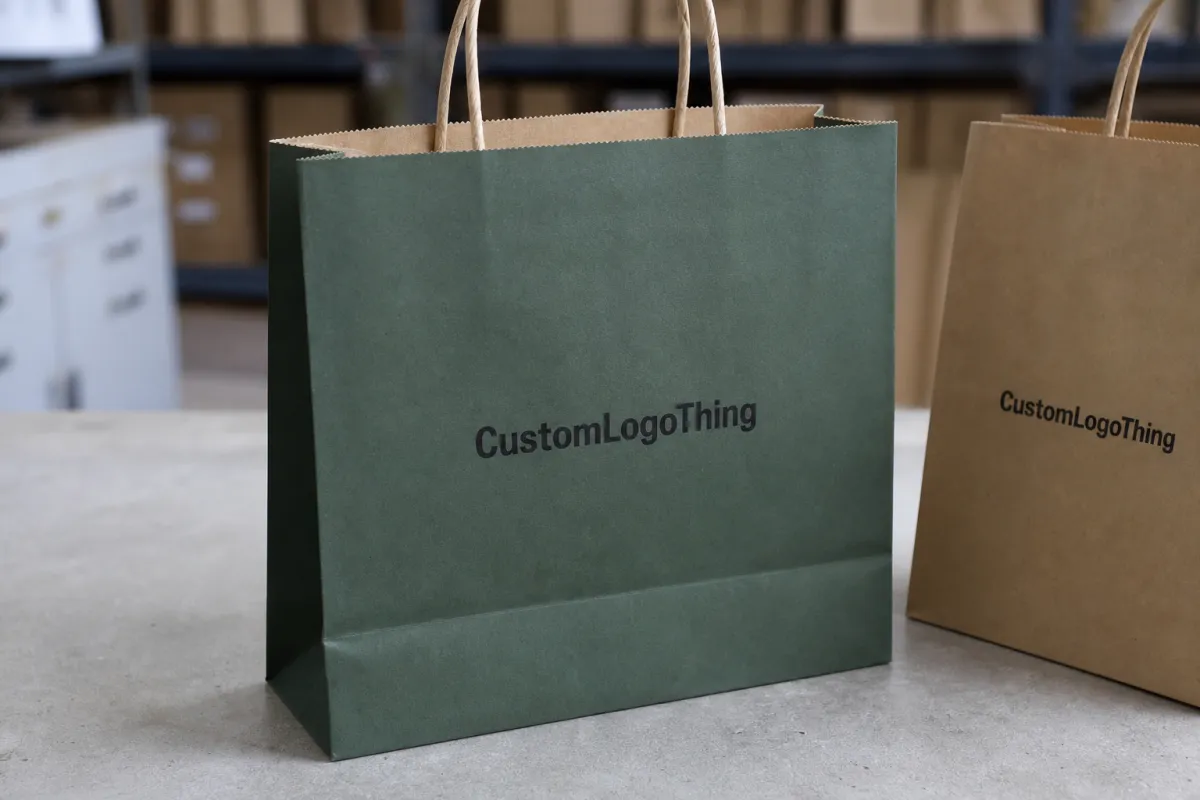
A proof is not a promise that every finished bag will match perfectly under every light. It is a controlled checkpoint. It shows what has been reviewed, what can still shift, and what the production team should target as closely as the material and process allow.
In custom paper bag work, “proof” can mean a few different things. A digital PDF checks layout, spelling, scale, dieline position, and panel placement. A Pantone drawdown shows how one ink looks on the actual stock. A paper swatch confirms the kraft shade, texture, and coating. A physical pre-production sample pulls all of it together: print, handle, folds, glue areas, gussets, finish, and hand feel.
If the brand color only looks right on a monitor, the bag is not ready for approval.
That sounds blunt, but it matches how bags are made. A logo that looks crisp on a flat PDF can shift once the top fold is formed, the side gussets open, or the handle reinforcement sits behind the panel. Large solid areas can also dry back differently on absorbent kraft than they looked while the ink was still fresh.
The checklist should keep artwork approval separate from print behavior. Buyers often approve the file because the logo is centered and the copy is correct, then get surprised when the yellow is too quiet on brown kraft or a pale green nearly disappears on black stock. Those are not layout issues. They are material, ink, opacity, and lighting issues, and they need to be solved before the run starts.
A good approval process does not ask the buyer to think like a press operator. It just creates enough shared evidence to cut down expensive surprises: the exact kraft color, the target Pantone values, the print method, whether white ink is needed, the finish, the acceptable variation, and the specific sample or drawdown used as the reference.
How Pantone Proofing Works on Colored Kraft Paper Bags
Pantone is a reference system, not a shield against how paper behaves. Coated and uncoated Pantone books help create a common language, but the final color still depends on the paper surface, ink film thickness, absorbency, finish, and curing conditions.
On white coated paper, a red or blue has a clean base under it. On colored kraft, the paper tone pushes through many inks. Natural kraft warms and mutes cool colors. Black kraft can swallow pale colors unless white ink is printed first. Dyed kraft can throw off a color in ways that are hard to predict because the paper already carries its own tone before the ink is added.
Different proof types answer different questions, so buyers need to know what they are looking at. A PDF proof is good for copy, placement, proportions, bleed, and dieline fit. It is not reliable for color approval on colored kraft. A drawdown is much better for judging one ink on the selected stock, though it does not show the full bag. A physical sample is the strongest approval tool when the project has tight brand color, dark paper, heavy coverage, foil, embossing, lamination, or a retail launch where presentation matters.
Print method changes the result too. Flexographic printing is common for larger runs and repeat orders because it is efficient once set up. Screen printing can lay down a heavier ink film, which helps when opacity matters on dark kraft. Offset and digital printing can work for certain bag formats or shorter runs, but they still need to be judged on the actual paper. None of them should be approved from an RGB mockup alone.
White ink underbase deserves early attention. If the design uses light yellow, orange, pale blue, pink, mint, or any other bright color on brown or black kraft, the underbase can be the difference between a readable logo and a weak mark that sinks into the fiber tone. It adds cost and registration work, but adding it late causes more trouble than deciding on it during proofing.
Review the full bag, not just the logo. Check the front and back panels, gussets, top fold, bottom panel, handle area, and any reinforcement patch. A bag can look fine when lying flat and still show a placement issue once it is opened, filled, and carried. If responsible sourcing is part of the brief, paper certification can be handled during material approval; FSC guidance is available at fsc.org.
Key Factors That Change Pantone Color on Colored Kraft Bags
The paper is the first variable. Natural brown kraft, black kraft, bleached kraft, dyed kraft, and recycled-content kraft all affect color differently. Even within brown kraft, one batch may look warmer, grayer, or more fibrous than another. That kind of variation can be normal, especially with recycled fiber, but the buyer should see it before approval, not after cartons are packed.
Paper weight matters too. Many retail kraft bags sit somewhere around 120gsm to 250gsm, depending on size, structure, and expected carry weight. Heavier paper often feels more substantial and holds shape better, but texture can still soften fine type or thin strokes. If the artwork has delicate lines, small reversed text, or a narrow symbol, the file may need more contrast or thicker strokes to print cleanly.
Ink opacity is the next pressure point. Transparent or semi-transparent spot colors can look good on lighter natural kraft because the paper adds warmth. The same colors can fail on dark or heavily dyed stock. More opaque ink, a double hit, or a white underbase may be needed, but each choice affects production. A double hit can slow drying and complicate registration. An underbase needs careful alignment so white edges do not show around the color.
Finish changes how the color reads. Matte lamination can make a printed color feel softer and denser. Gloss coating can make it look brighter, though it may also make the bag feel less natural. Varnish, aqueous coating, foil stamping, embossing, debossing, and spot UV all change reflectivity and shadow. A color approved before finishing may not look the same after finishing, so premium bags are best judged as finished objects whenever possible.
Lighting gets ignored too often. A proof checked under cool office LEDs may not match the same proof under daylight, a warm boutique fixture, or a warehouse lamp. Review color under consistent neutral lighting, with the proof dry and clean. On absorbent kraft, drying and curing can shift the final look slightly, especially in large solid areas.
Coverage changes how people read the color. A small logo may still work if the tone is a little muted; a large flood print shows every shift, streak, fiber mark, and density change. Large solids on kraft are possible, but they need realistic expectations about texture and consistency. If the goal is a flat, perfectly smooth field of color, kraft is not the easiest place to get it.
Packaging references such as packaging.org can help buyers understand broader material and packaging standards, but the final decision still comes down to the real paper, the real ink, and the way the whole bag looks in hand.
Production Steps and Timeline from Proof to Finished Bags
Most bag projects move in a similar order: artwork review, paper selection, proofing, sample approval, production, finishing, packing, and shipment. The exact timeline changes with the print method, bag size, paper stock, and how many revisions the artwork needs.
The first step is file cleanup. The supplier checks the logo, fonts, image resolution, dieline, bleed, safe area, and panel placement. If the artwork is not print-ready, this is where delays start. It is faster to fix spacing or vector issues at this stage than after a physical sample has already been made.
Next comes paper confirmation. The buyer approves the kraft color and weight, then decides whether the job needs white ink, a special coating, or a different construction. This is the stage where many projects slow down, because the design that looked simple on screen may need a different print setup once the paper is chosen.
After that, the supplier prepares a proof or sample. A digital proof is usually quick. A printed drawdown or pre-production sample can take longer because it has to be made on the real stock with the real inks and real setup. If a sample needs to be revised, the timeline stretches again, especially when color or structure changes are involved.
Once the proof is approved, production can begin. At this point, late changes are expensive. Moving a logo by a few millimeters or switching ink density after the job has started can create waste and rework. That is why it helps to settle the practical details early instead of treating approval as a formality.
Finishing and packing come last. Lamination, coating, foil, handles, and reinforcement all need to be checked before shipment. A bag that passes the color check can still fail if the handle placement is off or the fold is inconsistent, so the final inspection should cover both print and structure.
Cost, Pricing, and MOQ Details Buyers Should Check Before Approval
Price usually follows a few simple levers: paper type, size, print complexity, color count, finishing, and order quantity. Colored kraft often costs more than plain unprinted stock once the job includes an underbase, special handling, or a tight brand color target.
The minimum order quantity can also change the decision. Small runs are easier to approve and replace, but the unit cost is higher. Larger runs lower the unit price, yet they make the approval step more important because a mistake multiplies across the whole order. It is worth asking where the break point sits before signing off on the proof.
Buyers should also ask what is included in the quote. Some suppliers include one digital proof and one sample; others charge separately for revised samples, special inks, or matching a specific Pantone on dark kraft. Shipping, customs, and packaging for the final goods can add more than people expect, especially when the bags are bulky.
White ink, heavy solids, and premium finishes often change pricing more than the logo artwork itself. A simple one-color print on natural kraft can stay relatively efficient. A light logo on black kraft with a white base, foil accent, and matte lamination is a different job entirely. The earlier those choices are confirmed, the less likely the quote will move later.
It also helps to ask about acceptable variation. Paper is a natural material, so small color shifts, fiber marks, or texture changes may be normal. A supplier should be able to say what is considered within spec and what would trigger a remake. If that answer is vague, the buyer is taking on more risk than they probably realize.
Step-by-Step Proof Checklist Before You Sign Off
Start with the artwork. Check spelling, logo shape, panel placement, bleed, and safe area. Make sure the mark is not too close to a fold, handle, gusset, or glue zone. If the bag opens in a way that changes how the design is seen, confirm that the layout still works when assembled.
Then review the color target. Confirm the Pantone reference, the paper shade, and whether the print is meant to match the swatch exactly or just stay within an agreed range. On colored kraft, “close enough” can mean very different things to different people, so the target should be spelled out clearly.
Check the print method next. Ask whether the sample was made by flexo, screen, offset, or digital print, because each method behaves differently. If the production method differs from the sample method, the final result may shift, even when the artwork stays the same.
Look at opacity and underbase. Pale colors on dark kraft need special attention. If a white base is part of the build, confirm how it sits under the color and whether any edges are visible. If the design depends on a very thin line or small reversed text, make sure the line still holds up at production size.
Inspect the finish and structure. Confirm whether the bag is matte, gloss, coated, laminated, or uncoated. Check the handle type, reinforcement, fold quality, and bottom construction. These details are easy to overlook when everyone is focused on the logo, but they are often the first things customers notice in use.
Finally, compare the sample against a neutral light source and a real-world use case. Hold it at arm’s length. Look at it flat and assembled. If the bag is meant for retail, try to judge it the way a shopper would, not just the way a designer would on a desk. If something feels off in that setting, it usually deserves one more round before approval.
Common Mistakes That Cause Color Reprints or Delays
One common mistake is approving color from a monitor. Screens are useful for layout, but they do not predict how ink will sit on kraft. A logo can look sharp on a laptop and still end up dull or muddy on the actual bag.
Another mistake is forgetting that the paper itself has a color. Buyers sometimes pick a Pantone based on white stock, then keep the same target when the bag moves to brown or black kraft. That usually leads to disappointment, because the substrate changes the way every ink behaves.
Small text and thin lines cause problems more often than people expect. They can fill in, disappear, or break apart on textured kraft. If the design depends on delicate detail, it needs to be tested on the real stock instead of being trusted from a clean PDF.
Late requests for white ink or a second print hit the schedule hard. Those changes affect setup, plate making, alignment, drying, and cost. If the design needs them, they should be part of the initial proof, not a last-minute fix.
Mixing up proof types also causes trouble. A buyer may think a PDF is a color match, when it is really only a layout check. A supplier may assume the buyer understands that a drawdown is limited to one print pass. When the expectations are not aligned, the approval gets messy fast.
Finally, some orders stall because nobody agrees on what “acceptable variation” means. Kraft paper is not a laboratory surface. It has texture, fiber movement, and shade differences. If the project needs a very tight match, say so early and ask what level of control is realistic for the chosen material and budget.
Next Steps for Sending Files and Approving Your Bag Proof
Before sending artwork, package the files cleanly. Include the editable source file, outlined or embedded fonts if needed, linked images, the dieline, the exact Pantone callouts, and any notes about underbase, finish, or print sequence. If the brand has a reference sample, send a photo and describe which part of it should be matched.
It also helps to write the approval rules in plain language. Say what must match exactly, what can vary slightly, and what would trigger a remake. If the bag is going to multiple markets, note whether the approval is for one launch country or for all regions at once.
Ask for a proof on the actual paper whenever color matters. That is the easiest way to see whether the design holds up on the selected kraft. If the first sample looks off, request the change before production starts. A small delay at this point is usually cheaper than a warehouse full of bags no one wants to ship.
When the proof looks right, sign off with the final version number and date. Keep the approved file, the sample photo, and the supplier’s confirmation together. When the order lands later, that record makes it much easier to confirm whether the result matches what was approved.
FAQ
Can I approve Pantone color from a PDF proof?
Use a PDF for layout and placement, not final color. On colored kraft, the paper changes how the ink reads, so a physical proof or drawdown is the safer approval step.
Why does the same Pantone look different on brown kraft and black kraft?
The paper tone is doing part of the color work. Brown kraft warms and dulls many shades, while black kraft can absorb lighter colors unless white ink is used underneath.
Do I always need white ink on colored kraft bags?
No. It depends on the artwork and the paper. Light or bright colors on dark kraft usually need a white underbase, but some darker logos can print fine without it.
What is the best proof type for a retail launch?
A physical sample is the strongest option when presentation matters. It shows color, structure, finish, and handling together instead of testing only one part of the job.
Why do some bags look slightly different even when the proof was approved?
Paper, ink absorption, finish, curing, and lighting all move color a little. A good proof reduces the surprise, but it cannot remove every natural variation in kraft production.
How do I avoid delays on a colored kraft order?
Lock the artwork early, confirm the paper and print method before sampling, and approve the proof only after checking color under neutral light and in the bag’s actual form.


