Buyer Fit Snapshot
| Best fit | compare custom biodegradable mailer options for packaging buyers comparing material specs, print proof, MOQ, unit cost, freight, and repeat-order risk where brand print, material, artwork control, and repeat-order consistency matter. |
|---|---|
| Quote inputs | Share finished size, material target, print colors, finish, packing count, annual reorder estimate, and delivery region. |
| Proofing check | Approve dieline scale, logo placement, barcode or warning zones, color tolerance, and any recyclable or compostable wording before bulk production. |
| Main risk | Vague material claims, crowded artwork, or missing packing details can create delays even when the unit price looks attractive. |
Fast answer: Compare Custom Biodegradable Mailer Options: Film, Closure, Print, and Fulfillment should be specified like a repeatable production item. The safest quote includes material, print method, finish, artwork proof, carton packing, and reorder notes in one written spec.
What to confirm before approving the packaging proof
Check the product dimensions against the actual filled item, not only the sales mockup. Ask for tolerance on folds, seals, hang holes, label areas, and retail display edges. If the package carries a logo, QR code, warning copy, or legal claim, reserve that space before decorative graphics fill the panel.
How to compare quotes without losing quality
Compare board or film grade, print process, finish, sampling route, tooling charges, carton quantity, and freight assumptions side by side. A lower quote is only useful if the supplier can repeat the same color, closure quality, and packing count on the next order.
Compare Custom Biodegradable Mailer options with a tester's eye, not a brochure's tone. That is the only honest way to shop them. A mailer can sound eco-friendly on paper and still fail in rain, peel at the seal, or arrive so battered that the brand story gets lost before the customer opens the order. From a packaging buyer's point of view, that is not a sustainability win; it is a return label waiting to happen.
Biodegradable does not mean one single thing, and that is where most buyers get caught. Some structures are genuinely compostable under defined conditions. Others break down only under industrial processing. A few are made with recycled content and are marketed with green language that sounds better than the technical reality. If you compare custom biodegradable mailer options by performance, certification, print quality, and shipping behavior, the picture gets much clearer.
For apparel, lightweight accessories, subscription kits, and fragile goods, the right answer changes fast. A soft hoodie is not asking for the same protection as a glass cosmetic vial. A small accessory order may favor a slimmer, lower-cost format. A moisture-sensitive bundle may need a stronger barrier and a better seal than the most natural-looking alternative. That is why the strongest comparisons are practical ones, built around real shipment conditions and not just package branding.
I have seen teams make the same mistake more than once: they compare a pretty sample in a conference room, approve it, then learn later that the mailer wrinkles in humidity or scuffs in a packing bin. The sample looked good because it lived a quiet life. Shipping is a different animal, and honestly, it does not care much about mood boards.
Quick Answer: Compare Custom Biodegradable Mailer Options
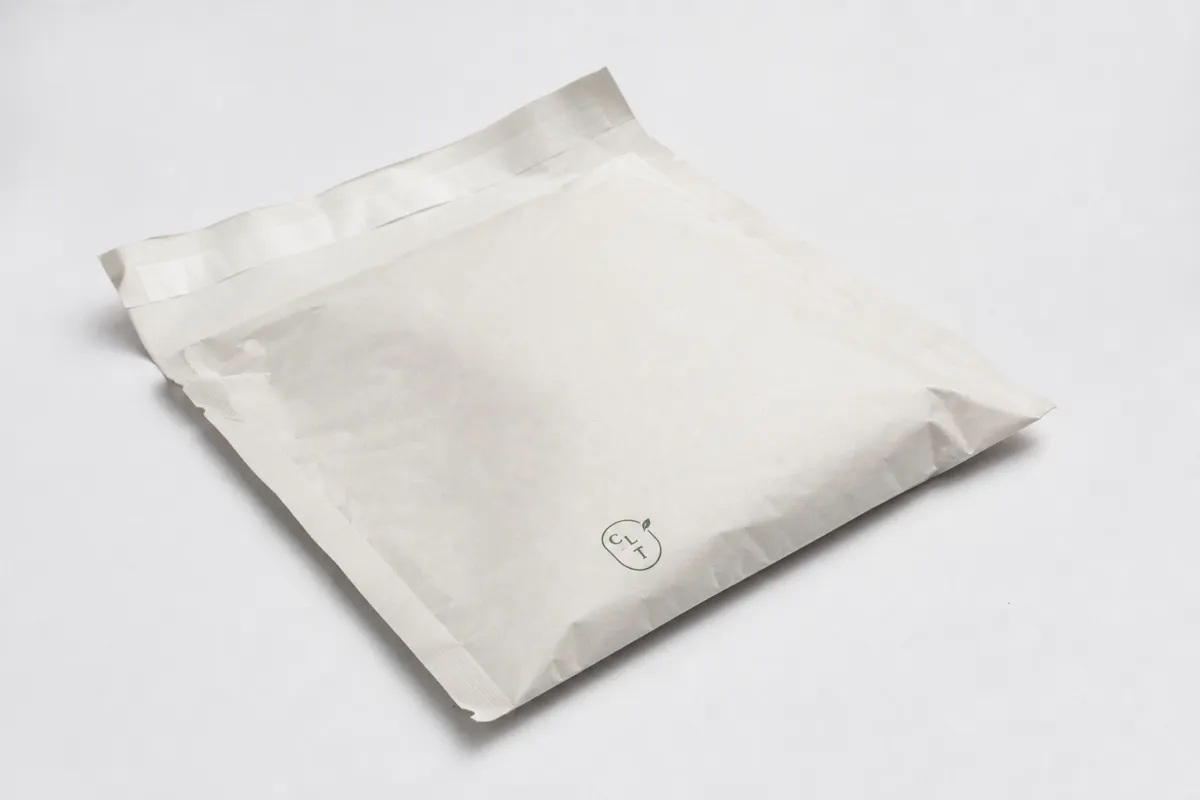
If you compare custom biodegradable mailer options only by the marketing claim on the front, you will miss the real tradeoffs. In practice, the stronger approach is to judge them by three things: how they ship, how they print, and how they fail. A mailer that looks beautiful but tears at a corner is a problem. A mailer that survives transit but arrives with smeared ink is also a problem. The best choice is the one that protects the product while still matching the brand promise.
Here is the core thesis: compare custom biodegradable mailer options by real-world performance, not by eco language alone. The right structure depends on the item, the route, and the customer expectation. Apparel brands often lean toward paper or recycled-content formats because they feel aligned with branded packaging and retail packaging aesthetics. Compostable film can make more sense for moisture exposure or rougher distribution lanes. Hybrid builds sit in the middle when a brand wants a cleaner story without giving up too much strength.
There is also a hidden cost many buyers miss. If the package fails, the original sustainability claim becomes secondary to replacement shipping, customer service time, and lost confidence. That is why I always tell teams to compare custom biodegradable mailer options against the damage rate they can tolerate, not just the price sheet they want to see. If your product packaging must survive conveyor friction, wet porches, or automated packing lines, the mailer choice becomes an operations decision as much as a marketing one.
If the package does not survive transit, the green claim never gets a chance to matter.
The quick answer for most brands is this: choose paper mailers for clean presentation and lower complexity, compostable film for better moisture behavior, recycled-content mailers for value and availability, and hybrid constructions for products that need a bit more structure. Then request samples, test them with actual product weight, and compare custom biodegradable mailer options under the same shipping conditions. That is the only comparison that consistently tells the truth.
And yes, there is a place for recycled-content mailers even if the brief says "biodegradable" in bold type. If the customer only needs a lower-impact package and not a strict end-of-life claim, recycled content can be the smartest commercial answer. The trick is being clear about the claim Before You Order a pallet of something that kind of sounds right but does not quite match the brief.
Top Options Compared When You Compare Custom Biodegradable Mailer Options
When buyers compare custom biodegradable mailer options, four groups usually dominate the conversation: paper mailers, compostable film mailers, recycled-content mailers, and hybrid structures. They look similar from a distance. Up close, they behave very differently. One may print beautifully but hate moisture. Another may seal reliably yet cost more. Another may be the easiest to source but weaker in perceived eco value. The job is not to find a perfect material. The job is to match the tradeoff to the order profile.
| Option | Typical Use | Common Unit Cost | MOQ Range | Main Strength | Main Watch-Out |
|---|---|---|---|---|---|
| Paper mailers | Apparel, soft goods, light accessories | $0.22-$0.55 each | 3,000-10,000 units | Strong shelf appeal and easy print clarity | Moisture sensitivity and lower stretch |
| Compostable film mailers | Orders exposed to rain, handling, or dense fulfillment | $0.28-$0.75 each | 5,000-20,000 units | Better seal and tear behavior | End-of-life claims need certification and local processing |
| Recycled-content mailers | High-volume general e-commerce | $0.18-$0.42 each | 2,500-10,000 units | Value and easier sourcing | May not satisfy a strict biodegradability brief |
| Hybrid or layered builds | Premium kits, heavier sets, fragile inserts | $0.35-$0.90 each | 5,000-15,000 units | Balanced look and durability | Can creep toward higher freight and thicker pack profiles |
Paper mailers are often the first stop for brands that already care about packaging design. They photograph well. They feel intentional. They pair naturally with custom printed boxes and other branded packaging elements, especially if the brand wants the mailer to look like part of a larger unboxing system. Their weakness is physical reality. Paper can scuff, crease, and absorb moisture faster than many buyers expect, especially on long routes or in humid regions.
Compostable film mailers sit on the opposite side of the tradeoff chart. They usually offer better stretch, stronger seals, and more forgiving transit behavior. For product packaging that needs to survive a rougher route, that matters. The catch is that compostability claims are not all equal. Ask for the exact certification, the test standard, and the disposal guidance in writing. A package may be compostable under ASTM D6400 or D6868 conditions but still be useless in a local system that does not accept it.
Recycled-content mailers are the quiet workhorse. They often win on availability and unit economics. They can be a smart bridge for brands that want better material choices without taking on the cost or performance risk of specialty compostable films. They are not always the best story for brands that want a pure biodegradability message, but they can be a very practical answer when compare custom biodegradable mailer options is really code for "what works, what is in stock, and what will not wreck margin."
Hybrid builds deserve more attention than they usually get. In many quoting rounds, they are the least glamorous line item, yet they solve real problems. A layered structure can improve puncture resistance, tighten the hand feel, or give the mailer a more premium look without jumping into a heavier shipping format. For brands that sell subscriptions, small gift sets, or accessory bundles, that middle path is often the cleanest one.
To compare custom biodegradable mailer options responsibly, I would also look at how they run through a fulfillment line. Do they cling to machinery? Do the seals hold when the packing station moves quickly? Does the opening tear cleanly for the customer, or does it shred and look cheap? These details sound small. They are not. They are where the package either reinforces or weakens the whole purchase experience.
One more commercial point: compare custom biodegradable mailer options with the same lens you would use for custom printed boxes or any other branded packaging asset. The material should support the product and the brand, not fight them. If the mailer feels inconsistent with the rest of the product packaging, customers notice. They may not use the technical language, but they feel the mismatch immediately.
Detailed Reviews to Compare Custom Biodegradable Mailer Options
Paper mailers: best for visual clarity, not wet weather
Paper mailers usually make the strongest first impression. That is why so many retail packaging teams like them. Print can look sharp, muted tones feel premium, and the tactile surface supports package branding in a way plastic-like films often cannot. If your brand voice is natural, minimal, or editorial, paper can be the easiest format to align with.
My honest take is that paper mailers are the most convincing option when the shipment is dry, the item is soft, and the brand wants the package to look refined rather than tactical. They are especially good for folded apparel, socks, journals, and flat accessories. The downside shows up fast when weather turns against you. Even moderate moisture can weaken the surface and make the mailer feel tired before it reaches the customer.
If you compare custom biodegradable mailer options for apparel, paper often comes out near the top because the product itself is forgiving. A shirt does not need the same barrier performance as a brittle cosmetic item. That said, the mailer still has to survive sorting and a few handling events. Ask for tear-strength data, not just a design proof. If a supplier can provide testing references or drop-test guidance, even better.
Paper also tends to reward careful print planning. Heavy ink coverage can change the feel of the surface, and some uncoated papers drink up color a little differently than buyers expect. I have watched a design that looked crisp on screen come back softer in production, which is not necessarily bad, but it does need to be approved with open eyes. If the brand cares about exact color, build that into the review process early.
Compostable film mailers: strongest for seal integrity and handling
Compostable film mailers usually perform better under stress. They have more give, better puncture resistance, and a stronger seal profile when the construction is done well. That matters on routes where parcels are compressed, stacked, or exposed to moisture. If you compare custom biodegradable mailer options for subscription kits or small multi-item orders, this format can reduce the odds of transit damage more than paper.
The trouble is not the performance. The trouble is the claim. Buyers often assume "compostable" means the same thing everywhere. It does not. Some films are suited to industrial composting only. Some need specific conditions. Some brands use the word biodegradability loosely, which creates a compliance headache later. For a buyer, the better question is not "Does it sound eco?" It is "What is the exact standard, and what happens after disposal?"
That is where authority matters. The EPA has useful guidance on sustainable materials management at EPA sustainable materials resources, and the packaging test world uses defined procedures for shipment durability. If you are comparing custom biodegradable mailer options for anything that will be sold online, ask whether the supplier references transit testing that aligns with ISTA methods. Claims are cheap. Evidence is better.
From a practical buyer's point of view, compostable film often wins when failure cost is high. If a wet return-to-sender, a scuffed label, or a split seam creates real expense, the stronger film can justify its higher price. I would not use it as a default for every brand. I would use it where the route is rough enough that a thinner, prettier option would become false economy.
There is a second benefit that gets overlooked: the material can help packing teams move faster if the seal is consistent and the film feeds well. Small efficiency gains matter when orders scale. If a line operator has to fight the mailer every few seconds, the labor cost adds up, and suddenly the "cheaper" option is not cheaper at all. That is one of those details people skip until they are staring at the production report.
Recycled-content mailers: value-driven and easier to source
Recycled-content mailers are usually the easiest to buy at scale. Lead times are often shorter. MOQs can be friendlier. Pricing is usually easier to defend in a margin-sensitive category. If you compare custom biodegradable mailer options and your real issue is speed-to-market with acceptable sustainability credentials, recycled content may be the most commercial answer.
That does not make them the best fit for every brand story. Some buyers need an explicit biodegradability narrative because their audience expects it, or because the rest of the product packaging is built around that promise. In that case, recycled-content mailers may feel too broad or too generic. Still, they can be a smart step up from virgin plastic, and they usually integrate well with custom packaging products already on the shelf.
They also behave predictably in production. That predictability is valuable. When a supplier already knows how to print, cut, and seal the material, the odds of a rough launch go down. If you are comparing custom biodegradable mailer options across multiple categories, recycled-content versions often become the control sample, the one that tells you whether the more ambitious option is actually worth the extra spend.
Another reason brands end up here is plain operational sanity. If the team needs a format that can be sourced again in six months without starting over from scratch, recycled-content mailers often make the most sense. They are not flashy. They are not trying to be. They just show up, do the job, and usually do it without a lot of drama. That has value, even if it does not sound glamorous in a deck.
Hybrid or layered builds: the middle ground with fewer compromises
Hybrid builds are where a lot of serious packaging conversations end up. A layered paper structure with a protective lining. A mailer with recycled content plus a reinforced closure. A format that looks natural on the outside but behaves more like a tougher shipper inside. These are not the cheapest choices, but they often balance durability and presentation in a way that feels commercially sensible.
When compare custom biodegradable mailer options becomes a discussion about premium kits, cosmetics, or fragile accessories, hybrid structures deserve more weight. They can improve the opening experience without forcing the brand into a larger mailer or a heavier box. That matters because shipping cost scales quickly with dimensions, and once a package grows, the bill can grow faster than the material upgrade itself.
I like hybrid builds for brands that want the mailer to participate in the full package story. If the brand already uses custom printed boxes for part of the line and wants the mailer to look equally deliberate, a layered structure can help. It can also reduce the visual gap between product packaging and shipping packaging, which is a subtle but real detail in package branding.
Still, hybrids are worth testing hard. Sometimes they look premium in a mockup and then feel too stiff, too heavy, or too expensive once production starts. The only reliable answer is sample testing under actual product weight. If you compare custom biodegradable mailer options on appearance alone, hybrids may look like a winner. If you compare them on total landed cost, the answer may change.
In my experience, this is the category where people are most likely to say, "That looks great, but I am not sure we need it." Sometimes that hesitation is right. Sometimes it is just the team reacting to a slightly higher quote. The test is simple: if the added structure prevents damage or raises the perceived value enough to support a higher basket size, the line item starts to make sense.
Cost, Pricing, MOQ, and Quote Differences
Price is where many comparisons go sideways. A cheap-looking mailer can become expensive once print setup, thickness upgrades, adhesive changes, and shipping weight get added back in. When you compare custom biodegradable mailer options, ask for quotes in a format that shows the full picture: size, material grade, print coverage, closure style, MOQ, and freight assumptions. If the supplier cannot give that level of detail, the quote is not useful yet.
In practical terms, the lowest unit cost often comes from the material that is already easiest for the factory to run. That means recycled-content mailers can be cost-friendly, paper can sit in the middle, and compostable film can move higher depending on certification and thickness. Hybrid structures usually sit at the premium end because they mix materials or processing steps. The exact numbers vary, but the pattern holds often enough to matter.
| Factor | What It Changes | Why It Matters |
|---|---|---|
| Material grade | Strength, feel, and print behavior | Higher grades usually raise cost but reduce failure risk |
| Print coverage | Ink usage and setup complexity | Full-bleed branding costs more than a one-color logo |
| Size and gusset depth | Material yield and freight efficiency | Small changes can shift unit price and shipping rate |
| Closure style | Seal quality and customer experience | Peel-and-seal tends to be easier, but not always cheaper |
| Certification requirements | Proof, documentation, and sourcing constraints | Written compliance can increase lead time and minimum order volume |
MOQ is another place where buyers get surprised. Fully printed, fully custom biodegradable mailer options usually require higher minimums than stock-adjacent products. Paper mailers and recycled-content formats may give you more entry points, especially if the supplier already holds base materials in standard sizes. Compostable film and hybrid structures often need more volume to justify setup, testing, and print runs.
Here is the simplest way to request a useful quote: send the product dimensions, the average packed weight, the monthly order volume, the shipping profile, and the exact sustainability claim you want in writing. If you need FSC-certified paper, say so. If you need a compostability standard, say that too. If you want the supplier to support Custom Packaging Products across multiple formats, ask whether the same print system can also support other product packaging needs later. The more specific the brief, the cleaner the quote.
For brands comparing custom biodegradable mailer options against Custom Poly Mailers, price gaps can be misleading. Poly may look cheaper at first glance, but the comparison is incomplete unless the buyer weighs brand fit, product protection, and customer perception. A lower unit cost is not a win if the package underperforms or conflicts with the rest of the sustainability story.
It also helps to ask for a landed-cost view, not just a per-piece figure. Freight, rework, waste, and replacement sends can quietly change the math. A quote that looks attractive before the first shipment can get a lot less charming once the team has to reorder damaged stock or rush a second run. That is where a lot of packaging budgets get nicked, one small assumption at a time.
Production Process, Timeline, and Lead Time
Production is where the romantic version of packaging meets the real one. When you compare custom biodegradable mailer options, ask how the order actually moves through the system. A strong supplier should be able to describe the workflow clearly: artwork review, structural confirmation, sample or proof build, material sourcing, printing, conversion, curing or drying, inspection, and final packing. If that sequence sounds fuzzy, the timeline usually will be too.
For standard custom runs, the cleanest projects often move in about 10-15 business days after proof approval. More complex orders can stretch to 15-25 business days, especially if the material is nonstandard, the design uses multiple inks, or the supplier must source a custom grade first. Stock-adjacent recycled-content mailers may move faster. Compostable film with third-party checks may move slower. That is normal.
The biggest timeline risk is not always printing. It is materials. If the factory has to source a specific paper weight, a certified compostable film, or a glue system that matches the closure spec, lead time can change quickly. Add custom sizing, and the schedule can slip again. That is why buyers should compare custom biodegradable mailer options early, before launch dates get fixed and customer orders are already forecast.
Samples are not a courtesy. They are the cheapest insurance in the process. I would never skip them. A sample lets you see whether the print reads correctly, whether the seams align, whether the closure opens the way you expect, and whether the mailer still feels right after a packing cycle. If you need proof that the shipment can take abuse, align the test with packaging industry standards and ask the supplier whether their protocol tracks with ISTA-style transit assumptions.
For any brand that has experienced shipping complaints before, one sample is not enough. Order at least three if the supplier offers them in different constructions or print setups. Then test them with real product. Load them with the same items your warehouse ships. Run a drop, a vibration check, and a seal pull. That small pilot will tell you more than a polished sales deck ever will.
There is also a production nuance many teams miss. Print detail can look clean on a proof and softer on a final substrate, especially on recycled or uncoated materials. So when you compare custom biodegradable mailer options, ask how the supplier handles color shift, registration tolerance, and finish consistency. A package that looks premium in a mockup but dull in a live run can damage the perceived value of the order.
One detail I keep coming back to is curing and drying time. It sounds minor until a stack of finished mailers is packed too early and the ink marks, or the adhesive needs longer to settle. That kind of hiccup is not dramatic, but it does cause avoidable headaches. A supplier that talks openly about those steps usually understands the process better than one that promises an unrealistically fast turnaround with no caveats.
How to Choose the Right Mailer for Your Product
The easiest way to choose is to stop thinking in categories and start thinking in failure modes. What is most likely to go wrong? Tear? Water exposure? Scuffing? Poor presentation? A weak seal? Once you identify the biggest risk, the right option becomes more obvious. That is the kind of logic that works far better than asking which material sounds greenest.
When I compare custom biodegradable mailer options for apparel, I prioritize flatness, presentation, and seal reliability. For small accessories, I care more about puncture resistance and whether the package still looks tidy after handling. For subscription kits, I pay extra attention to opening behavior because the unboxing experience matters more. For fragile products, I want structure first, eco story second, because damage creates waste faster than a slightly heavier mailer ever will.
- Product weight: Heavier items need more tear strength and closure security.
- Surface sensitivity: Scuff-prone items need smoother interior behavior and less abrasion.
- Moisture exposure: Rain, humidity, and route length change the best material choice.
- Brand presentation: If package branding is part of the sale, print and finish matter more.
- Fulfillment speed: Automated lines favor formats that feed and seal consistently.
The strongest packaging buyers compare custom biodegradable mailer options with the same discipline they apply to other product packaging choices. They ask how the format fits with the rest of the system. Does it sit well next to the rest of the branded packaging? Does it support the same color language as the custom printed boxes? Does it make the shipping experience feel deliberate rather than improvised? Those details show up in customer reviews, even when customers never mention the mailer directly.
Testing should include a short pilot, not just a desk review. A practical checklist looks like this: pack the live product, press the seal, shake the package, run a basic drop test, expose one sample to moisture, and inspect it after transit. For brands with distribution across multiple regions, a good pilot will also include different climatic conditions. A mailer that works well in a dry warehouse can behave differently in humidity.
If the team wants a more structured filter, compare custom biodegradable mailer options using a simple scorecard:
- Durability: Did the mailer arrive intact after handling and transit?
- Brand fit: Does it match the tone of the website and the rest of the packaging?
- Cost: Is the landed unit price still acceptable after print and freight?
- Compliance: Are the claims backed by certifications or written guidance?
- Speed: Can the supplier meet launch timing without risky shortcuts?
That scorecard is boring. It is also useful. Brands that use it tend to make better long-term choices. Brands that skip it often end up reordering sooner, which quietly raises total cost. The point is not to choose the greenest-sounding option. The point is to choose the one that fits the product, the route, and the customer's expectation without creating avoidable waste.
If your product lineup changes often, build the scorecard around the worst-case item, not the nicest one. A mailer that works for a flat T-shirt might fail completely for a thicker bundle or a boxed accessory. One spec can cover several SKUs, but only if it is chosen with enough headroom. That bit of caution saves rework later, and it keeps the team from having to explain why the "same" package suddenly behaved differently.
Our Recommendation and Next Steps
If you want the shortest honest recommendation, here it is: compare custom biodegradable mailer options by use case, not by ideology. Paper is often the best-looking choice for apparel and soft goods. Compostable film is stronger when moisture or route stress matters. Recycled-content mailers offer the best value bridge for many brands. Hybrid builds make sense when the shipment needs a more premium or protected feel.
There is no universal winner. That is the real answer. A brand with light apparel and low weather exposure may never need the more technical structure. A brand shipping kits, add-ons, or fragile pieces probably cannot afford a weak seal or thin wall. The right choice is the one that survives the actual route, not the one that sounds best in a meeting.
My recommendation is to request three samples and compare custom biodegradable mailer options under the same conditions. Pack the same item. Use the same sealing method. Send them through the same process. Then score them for damage rate, print quality, customer feel, and landed cost. If one sample is clearly better across all four, the decision is easy. If not, the supplier should be able to adjust the structure or print spec before you place the first real order.
Then move in this order: collect the product dimensions, confirm monthly volume, ask for MOQ and lead time, request certification details in writing, and run a small pilot batch. If the pilot performs well, scale gradually. That is the safest path for brands that care about product packaging, package branding, and actual shipment performance more than optimistic claims.
For teams using Custom Logo Things, the practical next step is not to chase the greenest-sounding option. It is to compare custom biodegradable mailer options against your current packaging setup, then see where the material, print, and lead time line up best with your launch schedule. If the mailer fits the product, the route, and the budget, it will do its job quietly. That is usually the best sign of all.
The smartest packaging teams do not ask which option sounds greenest. They ask which one keeps the product intact, the brand consistent, and the waste stream honest.
Before placing the first production order, compare custom biodegradable mailer options against shipment data, not just marketing claims, and let the sample results decide. That single step catches most of the expensive mistakes before they start.
How do I compare custom biodegradable mailer options for apparel orders?
Test tear resistance, seal strength, and scuffing after a full packing cycle. Choose a structure that keeps shirts or soft goods clean and flat without adding unnecessary thickness. Check whether the mailer still looks premium after handling, because first impressions matter on apparel orders.
Are all custom biodegradable mailer options truly compostable?
No, some are compostable only under industrial conditions and others are biodegradable in a broader, less useful sense. Ask for certifications and written end-of-life guidance instead of relying on loose sustainability language. Confirm whether local waste systems can actually process the material you choose.
What MOQ should I expect when I compare custom biodegradable mailer options?
MOQ usually rises when you move from stock styles to fully printed, custom-sized builds. Paper and recycled-content formats may offer more flexible entry points than specialty compostable films. Always compare MOQ alongside unit cost, because a lower minimum can still be more expensive overall.
How long is the lead time for custom biodegradable mailers?
Lead time depends on whether the supplier has standard materials in stock or must source a custom grade. Printed, custom-sized orders usually take longer because artwork, sampling, and conversion all add steps. Build in extra time if you need certification checks, multiple SKUs, or color-matched branding.
Which custom biodegradable mailer option is best for fragile products?
Fragile items usually need more structure than a basic mailer, so look for padded or reinforced builds. If moisture is a risk, choose the option with the strongest barrier performance rather than the greenest-sounding label. For breakable goods, test with inserts and real transit conditions before scaling up.

