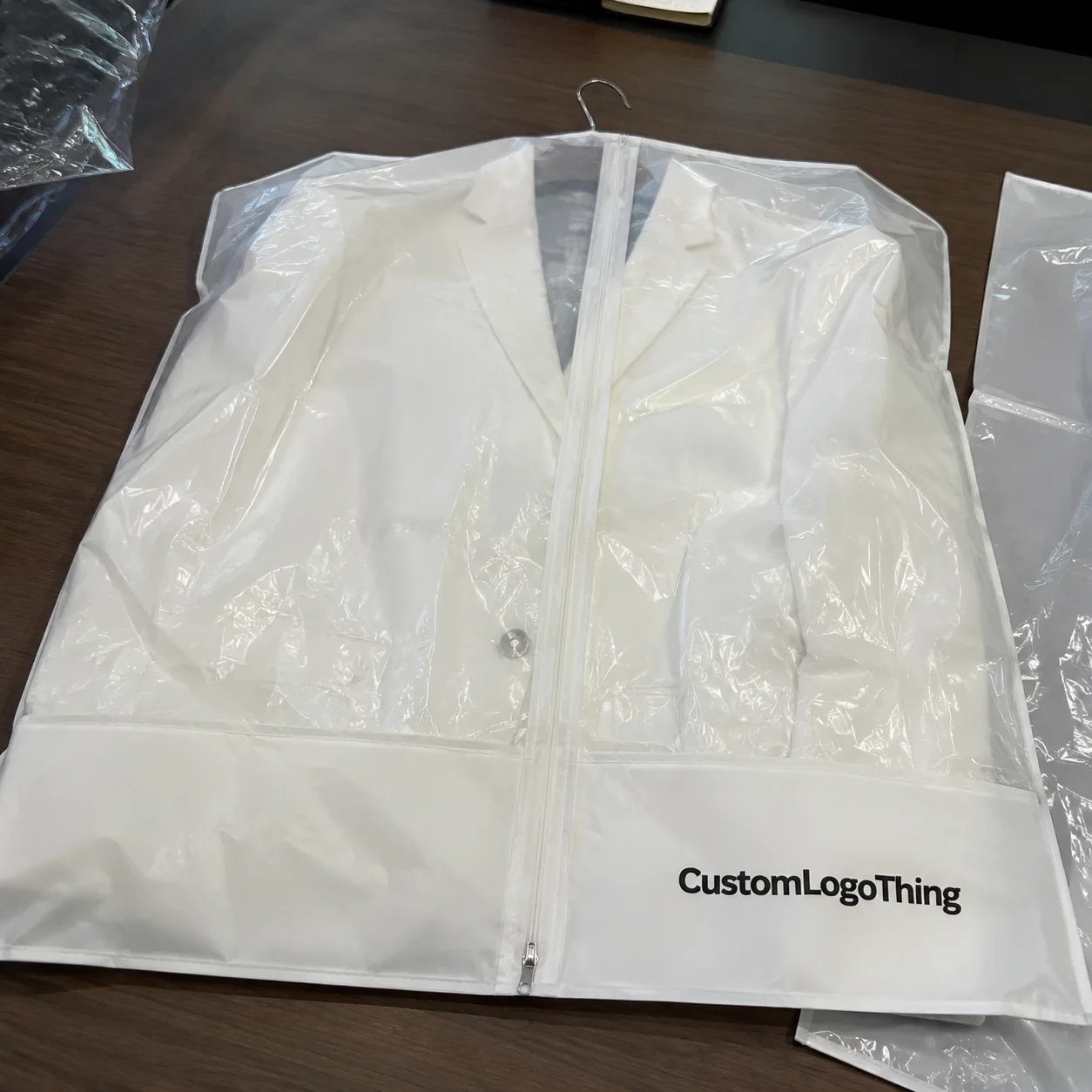
Buyer Fit Snapshot
| Best fit | Compare PLA vs PBS Packaging projects where brand print, material claims, artwork control, MOQ, and repeat-order consistency need to be specified before quoting. |
|---|---|
| Quote inputs | Share finished size, material target, print colors, finish, packing count, annual reorder estimate, ship-to region, and any compliance wording. |
| Proofing check | Approve dieline scale, logo placement, barcode or warning zones, color tolerance, closure strength, and carton packing before bulk production. |
| Main risk | Vague material claims, crowded artwork, missing packing details, or unclear freight terms can make a low unit price expensive after revisions. |
Fast answer: Compare PLA vs PBS Packaging: Costs, Uses, and Tradeoffs should be specified like a repeatable production item. The safest quote records material, print method, finish, artwork proof, packing count, and reorder notes in one written spec.
Production checks before approval
Compare the actual filled-product size with the drawing, then confirm tolerance on folds, seals, hang holes, label areas, and retail display edges. Reserve space for logos, QR codes, warning copy, and material claims before decorative graphics fill the panel.
Quote comparison points
Review material grade, print process, finish, sampling route, tooling charges, carton quantity, and freight assumptions side by side. A quote is only useful when the supplier can repeat the same color, closure quality, and packing count on the next order.
Compare PLA vs PBS Packaging: Costs, Uses, and Tradeoffs
Buyers ask me to compare pla vs pbs packaging like they are choosing between paint swatches. Cute. Packaging does not care about your mood board. The real differences show up in heat resistance, sealing behavior, shelf life, stiffness, and whether the pack still looks decent after it gets shoved through filling, stacking, freight, and retail handling. PLA usually gives you sharper clarity and a cleaner premium look. PBS usually gives you more flex and a little more mercy when the line or the truck is not feeling cooperative. That is the part people miss when they stop at the compostability claim.
Compare PLA vs PBS Packaging: Quick Answer for Buyers
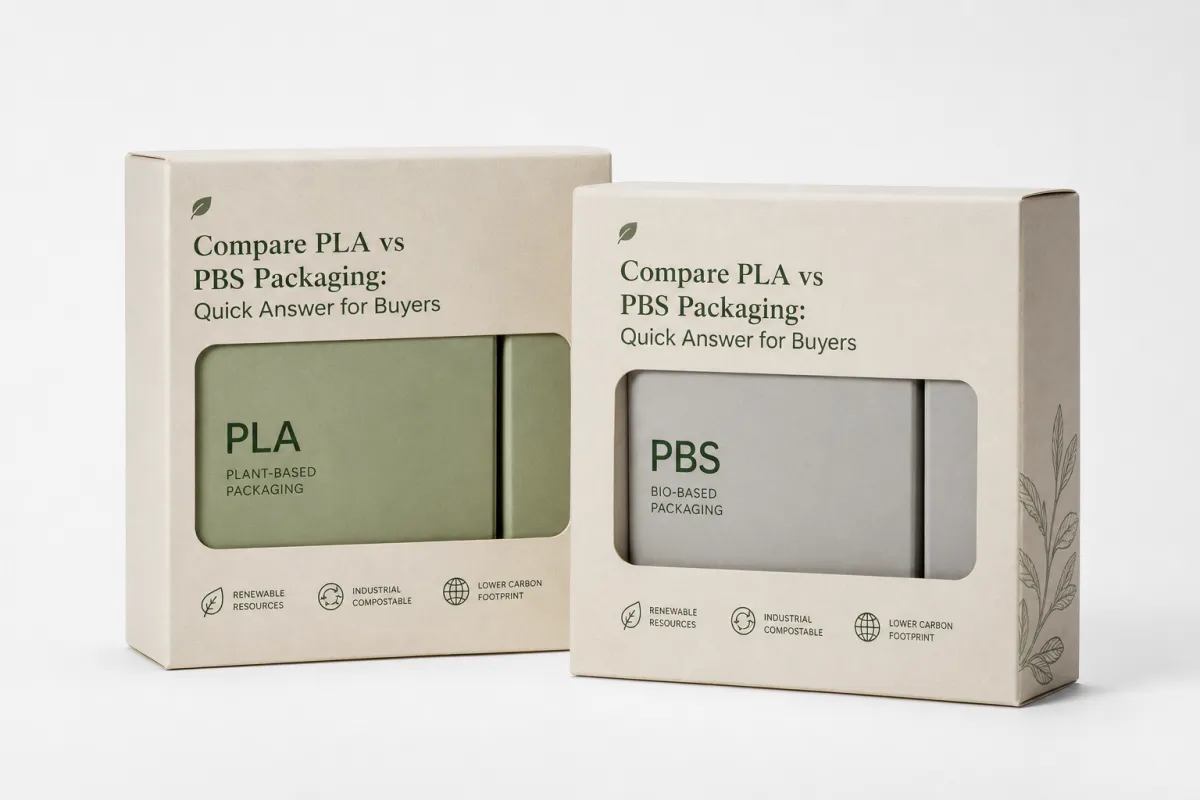
If you need the short version, compare pla vs pbs packaging by asking three things: how hot the product gets, how rough the distribution path is, and how much the shelf display matters. PLA usually wins when you want high clarity, crisp presentation, and a more rigid feel in chilled or room-temperature packs. PBS usually wins when the format needs a little more bend, better impact tolerance, or fewer tantrums during stacking and transport. That is the practical split, no matter what a polished quote deck tries to imply.
From a packaging buyer's perspective, compare pla vs pbs packaging is not an abstract sustainability exercise. It is a line-fit question. A chilled dessert cup, a produce tray, and a retail insert all stress the material differently. If your product sits cold, stays dry, and gets handled once or twice, PLA can fit neatly. If the pack gets compressed, flexed, or tossed into secondary packaging, PBS usually earns its place faster than people expect. And yes, I have watched that exact mistake turn into a very expensive reprint.
Here is the blunt buyer lens I use when I compare pla vs pbs packaging for an actual project:
- Best for cold items: PLA, especially when clear presentation matters and shelf time is short.
- Best for semi-flexible formats: PBS, especially when the pack needs more give.
- Best for short-run testing: whichever material fits your current tooling with fewer line adjustments.
- Best for premium presentation: usually PLA, because clarity and gloss make branded packaging look sharper.
One more reality check. Compare pla vs pbs packaging with the actual temperature, load, and shipping path in hand. Not with a wish list. I have seen buyers pick the prettier material and then act surprised when lids warp, seals misbehave, or the product looks tired after one distribution cycle. That is not a material flaw. That is a bad-fit problem. Packaging is boring only if it is doing its job.
If the package cannot survive filling, stacking, and shipping, compostable is just a nice word on a broken box.
For teams building retail packaging or food-service product packaging, the decision usually narrows to presentation versus forgiveness. PLA is the sharper dresser. PBS is the one that handles a messy commute better. Neither deserves blind loyalty. The right pick comes from how the product behaves in the real world, not how the sample looks under perfect lighting.
Top PLA vs PBS Packaging Options Compared
When buyers compare pla vs pbs packaging, they usually start with clamshells, trays, cups, lids, inserts, and blister-style packs. Good instinct. Format changes the behavior. A rigid tray does not stress a resin the same way a thin lid does, and a display insert is not judged the same way a takeaway cup is judged. The format matters just as much as the polymer name on the quote.
PLA tends to shine in clear clamshells, sealed cups, and retail packaging where the product needs to be seen without distraction. It photographs well. It shows off the item. It makes branded packaging look more deliberate, which is why so many Custom Printed Boxes and clear insert systems pair nicely with it. PBS, by contrast, usually feels softer and more forgiving in trays, lids, and inserts that need flex without cracking. If a pack is likely to get pinched, stacked, or shipped through a rougher route, PBS often looks less fragile in practice.
To compare pla vs pbs packaging by format, keep these common uses in mind:
- Clamshells: PLA is often chosen for clarity; PBS is better when closure stress or impact is a concern.
- Trays: PLA looks crisp for display; PBS usually handles flex and stacking better.
- Cups and lids: PLA can work well for cold drinks and desserts; PBS helps where sealing and handling are rougher.
- Inserts: PLA gives a cleaner shelf look; PBS can reduce breakage during insertion and shipment.
- Blister-style packs: Both can work, but compare pla vs pbs packaging against sealing behavior and tooling fit before assuming anything.
| Format | PLA tends to fit | PBS tends to fit | Typical buyer note |
|---|---|---|---|
| Clamshells | Clear display, cold items, premium retail look | Rough handling, tighter closures, more flex | Pick based on crack risk and shelf appearance |
| Trays | High-clarity presentation, short shelf time | Stacking, transport, repeated handling | Compare stiffness versus drop tolerance |
| Cups / lids | Cold foods, desserts, lighter sealing demand | More forgiving lid behavior and flex | Check temperature and seal window first |
| Inserts | Showcase fit, visual order, clean branding | Shock absorption, reduced cracking | Look at transit, not just appearance |
| Blister-style packs | Sharp presentation and stiffness | Better stress tolerance in some builds | Tooling and seal performance matter a lot |
Compare pla vs pbs packaging with your actual fill line, not a generic spec sheet. A material can look excellent in a sample photo and still be a pain when it has to run fast, stack neatly, and survive freight. Packaging design is supposed to support the product, not hand operations a new problem. If you are still deciding on retail-ready presentation, our Custom Packaging Products can give you a cleaner starting point than guessing from a resin name alone.
For teams building branded packaging around a seasonal launch or a limited run, the best format is often the one that reduces risk first. The option that looks green on paper is useless if it drives rejects or damage. That is just expensive optimism, and it happens more than anyone likes to admit.
Detailed Reviews of PLA vs PBS Packaging Performance
To compare pla vs pbs packaging properly, you need to look at performance in the conditions that actually matter. Heat is first. PLA can lose shape sooner under warm-fill or hot-holding conditions, which is why it usually feels safer in chilled or room-temperature applications. PBS generally gives you more thermal forgiveness and better flex, but it is not a free pass for hot-food abuse. If the product is warm enough to soften a lid in transit, the material is already losing the fight.
Sealing and machinability are the next two checks. On a tuned line, PLA often gives a crisp, clean result, especially when the equipment is already set up for it. PBS can behave well too, but some lines need extra adjustment on seal temperature, dwell time, or forming conditions. That is where compare pla vs pbs packaging turns into a production question instead of a brochure question. A pack that seals cleanly at 20 pieces per minute and falls apart at 60 is not a win. It is a headache with a compostable label.
Barrier performance matters, but buyers should stay realistic. Neither PLA nor PBS should be treated like a miracle barrier film. Moisture resistance, grease resistance, and aroma control depend on the full structure, not just the resin. If the product is oily, fragrant, or sensitive to drying out, you may need coatings, laminations, or a different build entirely. For that reason, I always tell clients to compare pla vs pbs packaging with the full product system in mind: fill, seal, shipping, display, and end-of-life claims.
Durability is where PBS often earns respect. It usually tolerates more bending and handling abuse, which can reduce cracked corners, brittle lids, and ugly scuffs. PLA can look beautiful, but it may show wear sooner in a rough distribution chain. If you are shipping through multiple handoffs, loading into tight secondary packs, or stacking cartons high, PBS often gives you more breathing room. That does not make it better in every case. It just makes it less delicate in the wrong environment.
For appearance, PLA usually wins the beauty contest. It tends to photograph better, show the product more clearly, and feel more premium in transparent retail packaging. PBS can still look good, but it usually reads as softer and less glass-like. If your package branding depends on crisp shelf presence, compare pla vs pbs packaging with a close eye on scuffs, haze, and how the pack looks after it has been handled a few times. A pristine sample and a real retail unit are not the same thing.
For shipping and transit, I trust the same basic discipline used in ISTA-style testing and packaging validation. If you want a broader standards reference, the ISTA test methods library is a sensible place to start, and the Sustainable Packaging Coalition is useful for material context and claim discipline. Neither one replaces practical testing on your own product. They just keep the conversation grounded.
Here is the plain truth: if you compare pla vs pbs packaging only by what the sample looks like on a desk, you are missing half the job. The package has to work after vibration, compression, and a bit of abuse. That is where expensive surprises usually show up. I have seen more than one “perfect” sample become a mess the second it hit a real freight lane.
Compare PLA vs PBS Packaging Price Comparison and Cost Drivers
Price gets discussed badly in packaging. Buyers ask for resin cost and stop there. That is not a real quote. To compare pla vs pbs packaging on cost, you need raw material, converting, tooling, freight, samples, test cycles, and the cost of rejects if the line runs poorly. The cheapest material can turn into the most expensive option once rework and damaged shipments enter the chat.
For simple thermoformed or formed formats at common production volumes, I usually see rough pricing like this: PLA in the range of $0.08-$0.18 per unit at 5,000-10,000 pieces, and PBS in the range of $0.09-$0.20 per unit for similar builds. That is before freight, taxes, and certification work. Small runs push both materials up fast because setup and labor overhead do the real damage. If you only need a few thousand units, compare pla vs pbs packaging with a healthy dose of skepticism around the first quote.
Here are the main cost drivers I watch:
- Material thickness: A small gauge change can shift unit cost more than buyers expect.
- Tooling: Custom molds or dies can dominate the first order.
- Converting complexity: Tight tolerances, special seals, or print registration add cost.
- Freight: Bulky packaging punishes shipping budgets quickly.
- Testing and samples: Pilot builds and re-samples are real expenses, not optional extras.
- Reject rate: If the material fights the line, labor cost rises and unit economics get ugly.
| Cost Item | PLA | PBS | Buyer takeaway |
|---|---|---|---|
| Raw material | Often slightly lower on basic structures | Can run a touch higher | Do not stop at resin price |
| Line setup | Can be efficient if equipment is already tuned | May need extra tuning on some lines | Setup time can erase material savings |
| Reject risk | Can rise if the pack is heat-sensitive | Often lower in flex-heavy formats | Rejects are real money |
| Tooling | Similar if the format is identical | Similar if the format is identical | Compare tool cost separately |
| Freight | Depends on pack size and nesting | Depends on pack size and nesting | Nested formats can save money |
There is a common trap here. PLA can look cheaper on paper, then cost more in rework if the line runs hot or the pack warps during sealing. PBS can look more expensive upfront, then save money if it reduces cracked parts, handling damage, or customer complaints. That is why I always tell buyers to compare pla vs pbs packaging on landed unit cost, not just the quoted resin price. Landed cost tells the truth. Everything else is just a sales number with better hair.
If you are budgeting custom printed boxes alongside a compostable insert or tray, build the full package stack into the quote. Product packaging is a system. The tray, the outer box, the artwork, and the freight all move together. Our custom printed boxes page is a better comparison point than guessing what the resin alone will do to the budget. For a lot of buyers, compare pla vs pbs packaging only makes sense after the outer pack is priced correctly too.
Lead times matter too. A clean reorder can land in roughly 12-15 business days after proof approval if the format is already set and the supplier has material on hand. Custom tooling or a new structure can stretch that into 3-5 weeks, sometimes longer if compliance questions or sample revisions drag out. If you need to compare pla vs pbs packaging for a launch date, give yourself enough room for one round of testing. Rushed packaging costs more. That part never changes.
How to Choose PLA vs PBS Packaging for Your Product
The easiest way to compare pla vs pbs packaging is to start with product type. Dry goods, chilled foods, fresh produce, retail inserts, and takeaway packaging all push the decision differently. A clear clamshell for berries is a very different job from a tray holding a delicate baked item. One wants visual appeal and cold stability. The other may need more impact tolerance and less brittleness.
Then look at handling conditions. Heat exposure, stacking pressure, shipping distance, and how often the customer touches the pack all matter. A package that lives on a shelf in a controlled store is one thing. A package that rides in a warm truck, gets tossed into a carton, and then sits near a doorway is another thing entirely. If you compare pla vs pbs packaging without that context, you are buying a sample, not a solution.
Compliance and claims deserve a calmer brain than most marketing teams bring to the table. Industrial compostable is not the same as home compostable, and a nice icon does not prove the claim by itself. Ask for certificate numbers, test standard details, and the exact format that was certified. If a supplier cannot tell you what is actually approved, that is a red flag. For food-contact packaging and sustainability claims, buyers need proof, not a mood board.
I like to use a simple scoring framework when clients need to compare pla vs pbs packaging quickly:
- Appearance: Does the pack show the product cleanly and support package branding?
- Performance: Will it hold shape, seal well, and survive transit?
- Cost: What is the landed unit cost at your real volume?
- Sustainability story: Do the claims match the certificates and local disposal reality?
- Production risk: How much line tuning, testing, or reject risk does it create?
If you want a practical shortlist, I would use this rule of thumb: PLA for cold, clear, presentation-led builds; PBS for flexible, handling-heavy, or slightly tougher applications. That simple split will not solve every job, but it keeps you from making the classic mistake of choosing the prettier spec sheet. To compare pla vs pbs packaging well, you want fewer surprises after launch, not a prettier quote file.
When the product is still being shaped, packaging design should work with the item instead of forcing it into a bad compromise. That is where branded packaging and retail packaging decisions tie into material choice. A strong material choice helps the brand look intentional, not improvised. If you are still at the concept stage, start with a sample request tied to the product, not wishful thinking.
PLA vs PBS Packaging Process and Timeline: From Quote to Samples
Good packaging projects are boring in the right way. To compare pla vs pbs packaging without wasting time, the process should move in a clean sequence: brief, spec review, quote, sample build, testing, artwork approval, production, and freight. Skip a step and you usually pay for it later. Packaging does not reward shortcuts; it invoices them.
Most delays happen in the same few places. Dimensions are unclear. Compliance questions show up late. A mold needs changes after the first sample. Someone decides the material should swap after the artwork is already approved. That is where lead time turns into a moving target. If you want to compare pla vs pbs packaging in a disciplined way, lock the dimensions first and make the supplier confirm what is fixed versus what can still change.
Lead time often differs by format and inventory position. One resin may be easier to source in the exact thickness you need, while the other may need more machine tuning. In practical terms, a straightforward sample cycle can take 7-10 business days. A custom build with tool adjustments can stretch toward 2-4 weeks for samples and then another 12-20 business days for production after approval. That is normal. The problem is not the timeline. The problem is pretending there is no timeline.
Before you commit, run a pilot. A real pilot, not a hand-wave. Check seal performance. Check stacking. Check the way the package looks after a few days of handling. Check whether the lid pops, the tray flexes, or the product shifts. That is how you compare pla vs pbs packaging with useful data instead of marketing language. If the pilot fails, you just saved yourself a larger mistake. If it passes, you can move with a lot more confidence.
For buyers assembling a launch kit, I also recommend comparing the packaging with the rest of the product stack. If the outer carton, insert, and presentation layer are being ordered together, visit our product packaging options before you finalize the resin choice. It is easier to match material behavior to the outer design than to patch the problem later.
In a normal project, I would expect this flow:
- Day 1-2: Brief and dimensional review.
- Day 3-5: Quote and initial material recommendation.
- Day 6-12: Sample build or prototype prep.
- Day 13-18: Customer testing, revisions, and claim checks.
- Day 19-30: Production approval and full run, depending on volume.
If your launch window is tight, that sequence can feel slow. It is still faster than fixing a flawed package after retail complaints start rolling in. That is the part people do not budget for, and then they act shocked when it shows up anyway.
Our Recommendation: What to Test Before You Order
My recommendation is simple. Compare pla vs pbs packaging against your actual product conditions, not against a generic sustainability claim sheet. Order two sample builds if you can. Put them through heat checks, drop tests, stacking tests, and a short shelf display test. Then look at them again after a week of handling. A material that looks great on day one but fails in transit is not a serious option.
Ask for the exact certificates, MOQ, unit price at your target volume, and lead time before you make the call. If a supplier is vague about food-contact approval or compostability certificates, stop and get the details. If the line operator says one material runs cleaner than the other, listen. Production staff usually care less about marketing and more about whether the equipment behaves. That makes them useful, which is rare and refreshing.
If you need a decision path, use this:
- Shortlist one PLA sample and one PBS sample.
- Test both with the real product at the real fill temperature.
- Check transport performance, not just shelf appearance.
- Compare landed unit cost, not resin cost alone.
- Choose the one that gives fewer surprises.
That last point is the one that matters. Compare pla vs pbs packaging by the number of headaches it removes, not by how clever the spec sheet sounds. For many brands, the winning option is the one that protects the product, supports the branding, and does not create drama on the line. If you want help building a cleaner branded packaging setup, our Custom Packaging Products page is a sensible place to start.
One more practical note: neither PLA nor PBS deserves a blanket “best” label. The right answer depends on product temperature, distribution stress, retail presentation, and the exact format. That is why a buyer who really wants to compare pla vs pbs packaging should test both, not assume the greener-sounding option is the better business choice. Sustainability claims are useful only when the package still works after a real trip through the supply chain.
Is PLA or PBS packaging better for hot food?
PLA is usually the first one to check for heat limits because it can deform sooner under warm-fill or hot-holding conditions. PBS is often the safer pick when the package needs more flexibility and a little more thermal forgiveness. Always test with your actual product temperature, not the lab fantasy version. I have seen a “hot-safe” claim fall apart the moment a lid sat under a heat lamp.
Can I compare PLA vs PBS packaging for compostability claims?
Yes, but only after you verify what standard the supplier is actually certifying against. Industrially compostable is not the same as home compostable, and a label alone does not prove performance. Ask for certificate numbers, test standard details, and the exact format being certified. If the supplier gets fuzzy here, I get skeptical fast.
Which is cheaper, PLA or PBS packaging?
The cheaper option depends on format, order size, and how much setup or rework your line needs. PLA can look cheaper in raw material terms, but PBS may win if it reduces rejects or handling damage. Compare landed unit cost, not just resin price. The quote sheet is not the bill.
Does PBS packaging hold up better than PLA in transit?
Often yes, especially when the pack needs more flex instead of stiffness. PLA can be more brittle in rough distribution, while PBS usually tolerates more bending and handling abuse. Run drop, compression, and vibration tests before deciding. Transit is where packaging tells the truth.
What should I ask for before I place a PLA or PBS order?
Ask for samples, unit pricing at your target volume, minimum order quantity, and exact lead time. Request proof of any compostability or food-contact claims and confirm the packaging format matches the certificate. Make sure the supplier confirms how the material behaves on your filling line and in your shipping conditions. If they cannot answer those questions cleanly, that is your answer.
Bottom line: if you need to compare pla vs pbs packaging for a real launch, start with the product, the line, and the shipping path. The better choice is the one that keeps the package looking sharp, protects the product, and fits your budget without nasty surprises. That is how you choose packaging that actually earns its keep.