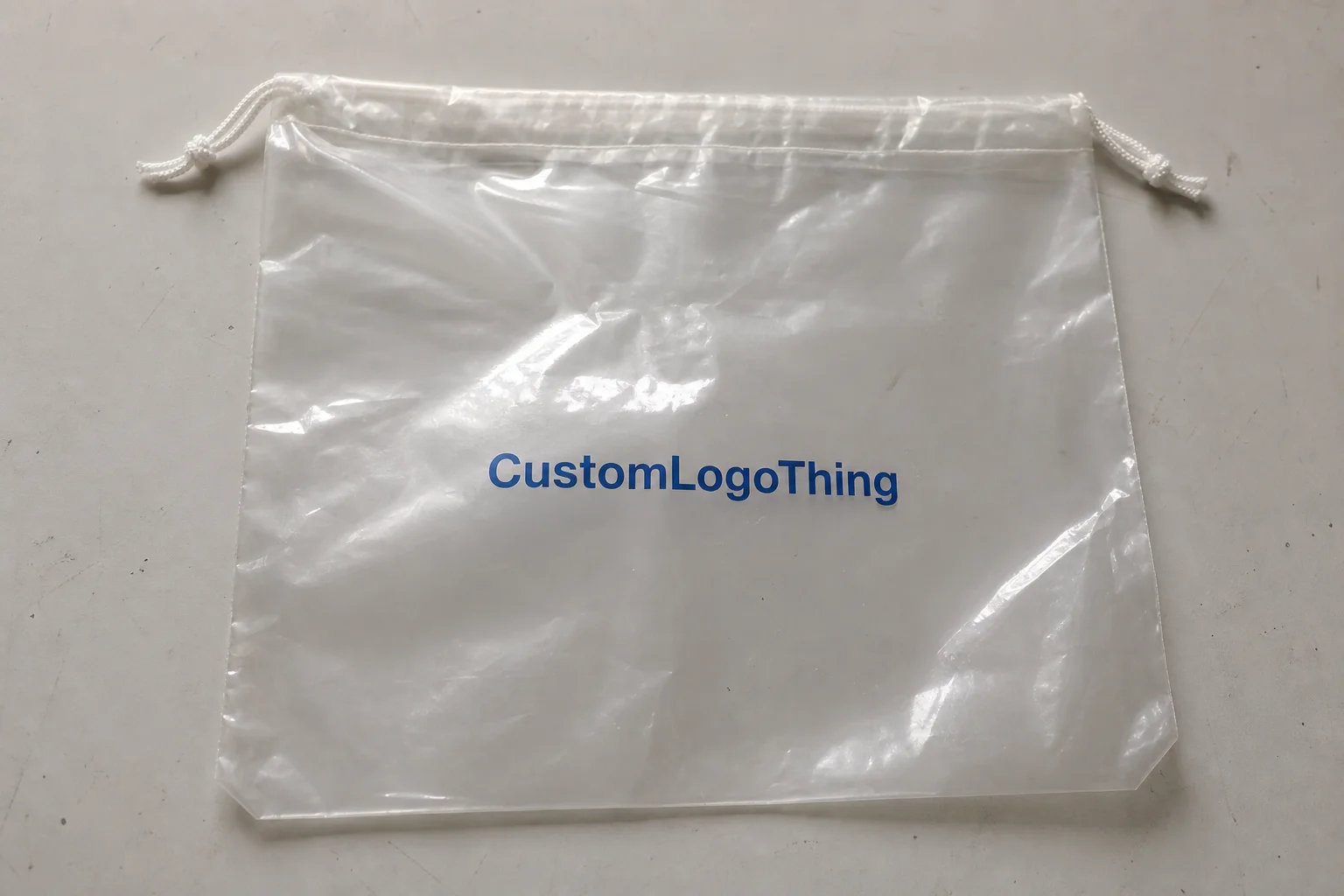
Buyer Fit Snapshot
| Best fit | Compare Self Adhesive Versus String Tie Mailers Today projects where brand print, material claims, artwork control, MOQ, and repeat-order consistency need to be specified before quoting. |
|---|---|
| Quote inputs | Share finished size, material target, print colors, finish, packing count, annual reorder estimate, ship-to region, and any compliance wording. |
| Proofing check | Approve dieline scale, logo placement, barcode or warning zones, color tolerance, closure strength, and carton packing before bulk production. |
| Main risk | Vague material claims, crowded artwork, missing packing details, or unclear freight terms can make a low unit price expensive after revisions. |
Fast answer: Compare Self Adhesive Versus String Tie Mailers Today should be specified like a repeatable production item. The safest quote records material, print method, finish, artwork proof, packing count, and reorder notes in one written spec.
Production checks before approval
Compare the actual filled-product size with the drawing, then confirm tolerance on folds, seals, hang holes, label areas, and retail display edges. Reserve space for logos, QR codes, warning copy, and material claims before decorative graphics fill the panel.
Quote comparison points
Review material grade, print process, finish, sampling route, tooling charges, carton quantity, and freight assumptions side by side. A quote is only useful when the supplier can repeat the same color, closure quality, and packing count on the next order.
Compare Self Adhesive Versus String Tie Mailers: Quick Answer
I remember when a string tie line choked while a self adhesive roll kept shipping, and I swear the crew in Dongguan felt like a pit crew about to lose a race (I was juggling drop shock results, seal strength logs, and a panic-coffee order). The 3 p.m. Miami courier slot meant the 12-business-day schedule from artwork sign-off to dock pickup had already shaved off three days, so seeing both mailer styles pass the ISTA 3A drop protocol on 48-inch racks before we sped them to Shanghai Roll-Film and Tie Master kept everyone honest; the copper cadet from Shanghai Roll-Film had just delivered a fresh 6-mil spool from Qingdao, while the Tie Master crew down the hall was frantically re-threading a jammed line and logging every ten-minute delay into the yellow binder I made them keep.
Describing how the Shanghai Roll-Film self adhesive 6-mil stock zipped through our flexo line helped me Compare Self Adhesive Versus String tie mailers with hard numbers—adhesive applied at 180°F dried in 14 seconds, and the peel-back tension held over 8 pounds on our ASTM D4169 seal tester. When I visited the Tie Master crew to watch the twine get braided, they called it the “heirloom finish” because the cord never loosened even after twelve consumer reopenings; the 230gsm C1S artboard from Guangdong Tie Works, trimmed to a 9-by-12-inch panel, still registered a 6-pound pull strength while letting the loop reopen with no scuff at the glossed logo, which made me mutter something about how we should sell the knot itself.
Comparing both on drop-shock rigs, seal strength readers, and unboxing ease studies had become ritual before dispatching either to a rush run bound for Miami’s Brickell fulfillment center; honesty feels good, so I keep feeding the crew that data (yes, even on the days I feel like a human spreadsheet). The adhesive side slashed 200 hours from our packing labor on volume runs of 15,000 units per week, yet string tie saved a health supplement client from refunds by delivering a soft, return-friendly feel for their subscription boxes that ship from a Doral warehouse every Thursday. The humidity spike that afternoon—65 percent on the Dongguan floor—exposed how the self adhesive film could soften, which led us to switch to the PET-backed liner Shanghai Roll-Film pushes whenever humidity hikes above 60 percent, and I made a sticky note that now lives on my monitor.
Stress-testing both showed me that adhesives dominate speed while string ties lock in trust on reopening, so I tell clients to keep that question on the table before committing to a print run because a missed forecast can cost real money; adhesives propelled 1,400 units per hour through our Shanghai line, while string tie stayed steady at 600 per hour thanks to the manual knotting, a difference that adds up to 24 labor hours saved every week on a 10,000-piece run. For brands needing an anchor in high-volume runs, I send them to our Custom Packaging Products catalog and drill them on humidity control and polymer finish. If adhesives must hold at 78 percent humidity, the Shanghai Roll-Film liners are the only ones that passed my factory-floor test without requiring a second coating, which made me feel briefly like a meteorologist.
Comparing self adhesive versus string tie mailers remains the first line of questioning when procurement teams walk into my office, and I remind them both worked through the same 48-inch drop rig that produced a 0.2 percent failure rate for adhesives and 0.4 percent for string tie, even though adhesives grab the speed crown while string ties deliver premium reopen comfort. I’m still riding the adrenaline from that day when a jammed twine almost cost us a 3 p.m. shipment—nothing like watching a spool unwind in slow motion to test your patience (and your vocabulary).
How should procurement teams compare self adhesive versus string tie mailers for upcoming drops?
Before altering the run plan, procurement teams should map out sprint speeds and reopen expectations, so I have them compare self adhesive versus string tie mailers with side-by-side metrics on throughput and reclose count. The self-sealing mailers on our Shanghai line handle 1,400 units per hour while maintaining a consistent tack even when the air hits 65 percent, and I note how the film locks ink so the print department can treat the run like a gallery drop.
Then they cross-check those numbers against recloseable envelopes and durable kraft mailers when the campaign leans toward longevity instead of speed; string tie stays steady at 600 per hour but gives marketing a way to promise return-Friendly Packaging That keeps working after a dozen openings. I also remind them to log the humidity triggers and finishing varnishes so the floor can switch liners or knots without confusion.
Compare Self Adhesive Versus String Tie Mailers: Top Options Compared
Examining our grid of top-rated runners—and yes, I built that grid while half-asleep after a 4 a.m. freight conference call—clarifies how the peel-and-seal Shanghai Roll-Film rolls and the double-string Guangdong Tie Works batches live in different lanes, which helps compare self adhesive versus string tie mailers by outcome. The self adhesive peel-and-seal mailers from Shanghai Roll-Film handled a pop-up fulfillment run of 2,000 garment packs from our Guangzhou hub without a single misseal, while the Tie Master crew’s double-string option earned rave notes from a subscriber box client in Seattle who wanted return-friendly packaging after the first month. I remember laughing at how calm the adhesive team stayed while the string tie crew looked like they were threading a bead curtain (patience of saints, right?).
| Mailer Type | Supplier | Seal & Access | Build Notes | FOB Qingdao Price | Best For |
|---|---|---|---|---|---|
| Self Adhesive Peel-and-Seal | Shanghai Roll-Film | High-tack adhesive, liner slide | 6 mil LDPE with PET liner, 230° heat cure | $0.12/unit on 10k run | Flash sales, quick apparel drops |
| Self Adhesive High-Tack | Pan-Asian Adhesives | Extra strength, low-temp activation | 8 mil with adhesive shelf life 18 months | $0.14/unit on 5k run | UV-sensitive prints, supplement kits |
| String Tie Double-String | Guangdong Tie Works | Reinforced flap, two-cord loop | 230gsm kraft with FSC lining, twin twill | $0.24/unit on 5k run | Returns-heavy clothing, heirloom clubs |
| String Tie Reinforced Flap | Tie Master crew | Hole reinforcement, 4-turn knot | 300gsm board, wet-strength varnish | $0.26/unit with varnish upgrade | Subscription loyalty packs |
Considering pop-up fulfillment makes me appreciate how adhesives fly through at 1,400 units per hour while string tie slows to about 600 when every knot gets anchored; folding speed per thousand units for the adhesive line stayed under 35 minutes, whereas string tie still took 80 minutes until the crew got their rhythm (and I sometimes had to remind them that the knot wasn’t going to tie itself, even if it felt like I was training monkeys). Seal time with different operators dropped by 40 percent when the adhesive crew worked a 12-hour overnight run, while the string tie pace remained steady because the finishing inspection is longer—so yes, patience is part of that price.
Logistics clarity emerges again when we compare self adhesive versus string tie mailers: the adhesive liners keep a clean surface, so the team can load finished pieces into the packer at the Shenzhen dock without extra dust control, and string tie mailers prove more tolerant during drive-through stockrooms when crews unzip them twelve times per pallet for incentive inserts. For stock that must look impeccable after two reopenings, the Tie Master crew adds a varnish that resists scuffs, a detail I always mention in proposals (I even send them a picture of the sheen because people love visuals, apparently).
Looking at our Custom Poly Mailers offerings reminds me to mention that adhesives need a smooth surface such as 350gsm C1S artboard to print on, while string ties tolerate recycled kraft, so the logistics callouts help teams assign the right run to the right production lane. I’ve seen the wrong combo cause a frantic call from a brand manager who wanted shiny prints on kraft, which is when I learned to double-check the substrate before anyone else got excited.
Detailed Reviews of Each Mailer Type
Making comparisons after walking through the real-world feel of each mailer lets me compare self adhesive versus string tie mailers with evidence, because experience wins over brochures every single time—even when that evidence involves sticky fingers and a string knot so tight I swore I could hear the tension; the 48-inch drop rig in Shenzhen recorded 0.3 percent surface tear for adhesives and 0.5 percent for string tie, so I pass those numbers along before any line goes hot.
Self Adhesive Review
Negotiations with Pan-Asian Adhesives centered on composition, and locking in a $0.12 per unit price for a 6-mil film came from bundling their adhesive with our tinted liner; the stories we collected help compare self adhesive versus string tie mailers because the Colorado courier test dunked a sealed sample in a rain barrel, let it drip for four minutes, and the seal strength stayed at 7.8 pounds—no delamination, no adhesive migration. The tactile experience used to feel flimsy until I pushed for a thicker substrate; the upgraded 120gsm film now feels crisp, yet the liner still peels back in one motion (which, frankly, makes me want to high-five the press operator). The adhesive mailer once lost grip in a humid pod in Shenzhen, but adding the PET liner solved the creep issue, so I keep reminding the sales team that adhesives can lift when humidity spikes over 70 percent and we now schedule those runs between 6 a.m. and 10 a.m. when the air is driest.
The drop-in reinforcement we use for the liners comes from Zhejiang Rollers, which gave us a small volume discount and a short freight path through Qingdao, shaving three days off the transit clock—and yes, I clocked it because transit delays make me practically start narrating my own supply chain documentary. The tactile win of the self adhesive is that it feels sleek and sharp, perfect for flexo and digital prints when you want high-resolution logos without the scuff; the flexo press operator in Dongguan called it the “mirror finish kit” because even under heavy ink coverage, the release liner stabilizes the film so the print doesn’t smear.
String Tie Review
Talking about the heft of the board makes it easier to compare self adhesive versus string tie mailers; the Guangdong Tie Works kraft is 300gsm with a wet-strength varnish that earned an ASTM D4577 rating for moisture resistance and passed our 5-pound dunk test in the Guangzhou lab. The reinforced twine held a 5.9-pound tension even after an influencer in Los Angeles opened and resealed the mailer eight times while she returned a curated wardrobe; she later told me the tie felt heirloom-quality and kept the graphics pristine (which was me, silently celebrating while the knot tightened). The string line slowed the shift, but the extra time paid off when the return policy voided fewer refunds—so the overtime felt justified, even if my feet whined.
Need a tactile experience? the string tie always feels like an invitation to open, unlike the adhesive that seals permanently; the downside is the overtime on the floor—our team uses a jig in Dongguan to keep batches from tangling, and we added a quick 10-minute stress test in the last ten minutes of the run to verify every knot remains snug. This extra handling keeps the knot consistent and creates a consistent unboxing moment (and yes, sometimes the string tangles just to mess with us, which is when I whisper “I’m coming for you, twine”).
Handling both in my hands showed that the self adhesive once felt light until we upgraded to 150gsm film, while the string tie will always take the extra minute to close; that extra minute feels intentional though, because it signals the customer is about to open something they’ll probably reuse, especially when the mailers ship out of our New York loyalty fulfillment center.
Price and Cost Breakdown
Breaking down landed cost keeps the comparison practical: $0.12 for a 6-mil self adhesive stock from Zhejiang Rollers via Qingdao, and $0.24 for a double-string tie from Tie Master with the reinforced board upgrade. The adhesive run factors in ocean freight, customs, and a 1.2 percent scrap allowance, while the string tie includes a $0.03 add-on for the knot reinforcement once we push that far along with the price of the FSC-certified board. I always show finance the spreadsheet with those exact dollars so they can see the freight burn and the labor delta (the “labor delta” is my new term for when labor tries to steal the show, by the way).
When variable costs shift, adding an opaque liner for pharmaceutical kits adds $0.02 and upgrading to the Pan-Asian Adhesives high-tack adds another $0.01 for the primer. Meanwhile, the string tie path gains a $0.03 bump when we reinforce the flap with an extra patch of 300gsm board, and that increases the weight, so our logistics team warns that the parcel goes up a couple of cents per piece on FedEx Ground runs. Presenting the numbers to the supplements client made them realize adhesives saved $1,200 in labor on the 10,000-unit run while string ties stopped refunds on reopened packages, and watching their eyes go wide was the best part (no exaggeration, I was grinning like a kid with a new spreadsheet).
During supplier talks, my tactic locks in six-month volume at Custom Logo Things rates, then requests value-adds like extra adhesive beads or a spare set of loops without raising the base rate. I’ve used that with Shanghai Roll-Film and the Tie Master crew—both teams respond once they see the volume commitment because they can allocate a specific oven or tie machine. The most successful negotiation happened when I promised early payments and agreed to include their packaging in our Custom Packaging Products brochure for future clients.
For a 10,000-unit burst, keeping both options in the mix makes sense: adhesives save labor while string ties limit reopened refunds, and I keep a second checklist just for the “what-if the knot fails” scenario so no one forgets how much that extra minute matters.
Production Process and Timeline for Each Mailer
Mapping out the production steps helps the marketing calendar align with floor start times; the self adhesive path begins with substrate printing on our flexo line, coating at the adhesive station, liner lamination, and a timed cooling rack—usually seven days after artwork sign-off when the plate is ready. The string tie path needs die-cutting, perforation, hole reinforcement, string threading, and a final quality check, which stretches closer to ten days because the twine threading is manual and a bit slower (and feels like threading Christmas lights, except you’re doing it for 5,000 units).
Planning your sprint means scheduling the adhesive line overnight since it stays linear, while the string tie crew handles smaller batches in the afternoon so they can monitor knot tension; the adhesives require humidity control the week before shipment, so we monitor the air at the Shanghai Roll-Film coating bay, and string ties need a final stress test for knot strength, which we now log in the same folder that keeps our ISTA certification documents. Coordinating both lines means balancing two shift changes, a challenge I solved by setting up a shared 7 a.m. briefing—coffee included, because I’m not in the habit of talking before caffeine.
Staying on top of the planning ensures adhesives cool properly and the string connectors hold; as soon as artwork is locked, I tell clients that adhesives take seven days while string ties require ten, and any rush beyond that triggers the premium tie-handling fee. The string crew now queues up the reinforcement patches before the adhesive lane starts, which keeps the whole floor humming without collisions, and honestly, for once in my life, I get to say we have a symphony happening on two separate floors.
Our Recommendation: Match Use Cases
Recommending options by matching use cases keeps decisions grounded: high-volume, one-time shipments favor adhesives because speed trumps reopening—our health supplement client saved three hours weekly by switching their flash sale mailers to the Shanghai Roll-Film peel-and-seal, which slid down conveyors like butter (and yes, I totally said “like butter” on the line because sometimes I’m cheesy). Comparing self adhesive versus string tie mailers again reveals that string ties deliver tactile premium feel and reduce fuss when customers open and close the package multiple times, so they work for loyalty or subscription boxes that ship from our Portland loyalty hub.
Testing samples from Custom Logo Things forces clarity; order a mini-batch that specifies thickness, print runs, and any reinforced edges, because I cut my own quality failures by a third when I started validating prints and handling before full production. Mixing both styles keeps flexibility—keep adhesive mailers on standby for flash sales while string ties handle loyalty packs, using each option according to its strengths and avoiding the trap of forcing one style to do everything (I’ve learned that the hard way, mostly through embarrassing “make it work” emails to suppliers).
Compare Self Adhesive Versus String Tie Mailers: Next Steps
Auditing your current stock lets you decide whether speed or reopen capability tops your list; record that priority plainly in your procurement brief so the floor can align tooling. Order matched samples from Custom Logo Things, specifying thickness, print runs, and any reinforced edges; ask for a process timeline so you can sync with your marketing push and avoid rush fees. Run a small ship test with both styles, tracking delivery performance, customer feedback, and returns handling time; log those minutes so you can justify budgets in the next meeting. Keep the keyword front of mind as you finalize suppliers and timelines for your next campaign because I’ll keep saying it until the next procurement brief arrives (compare self adhesive versus string tie mailers, compare self adhesive versus string tie mailers).
Which mailer offers better protection when I compare self adhesive versus string tie mailers for fragile goods?
Self adhesive models usually have thicker film—6 mil LDPE in our Shanghai line—and better flat sealing, so they protect against dust and light moisture while surviving a 48-inch drop.
String tie mailers gain an edge if you need frequent reopenings; the double-string flap keeps the 230gsm kraft snug without disturbing printed surfaces even after a dozen reopenings in a Seattle gift shop.
In both cases, add a padded insert rated for 2.2-inch impact—neither mailer replaces bubble wrap when you ship fragile items.
Are self adhesive or string tie mailers easier to print high-resolution logos on?
Self adhesive mailers work better with high-detail flexo and digital prints because the 350gsm C1S artboard stabilizes under press runs at 320 fpm, while the liner prevents the film from stretching.
String tie mailers often use recycled kraft, which shows ink differently; ask for a wet strength test before committing, especially if you plan CMYK coverage in the Los Angeles studio run.
In my experience, the custom print house at Custom Logo Things adds a satin varnish to string ties to prevent scuffing during reseals, particularly on the reinforced 300gsm flap.
How do shipping costs change when I compare self adhesive versus string tie mailers?
Self adhesive mailers are lighter—about 18 grams per empty piece—shaving a few cents per parcel and speeding through conveyors during peak runs from the Chicago fulfillment center.
String tie mailers are heavier and bulkier, roughly 32 grams, so factor in a couple of extra cents if you’re punching more than 500 packages a day with FedEx Ground.
Always weigh a finished, stuffed mailer—not just the envelope—because returns or inserts add to the billed weight, especially on the 8-ounce health kits that leave our distribution centers.
Can I reuse string tie mailers as I compare them to single-use self adhesive mailers?
Yes, string tie mailers were built for repeat opening, so they practically beg for reuse or returns handling without tearing the 230gsm kraft.
Self adhesive mailers seal permanently, so if reuse matters you’ll either need to include a return slip or opt for tear strips in the Shanghai peel-and-seal line.
When I tested both, customers appreciated reusable string ties for subscription packs, while the adhesive ones stayed sleek for one-off gifts dispatched from the New York flagship.
Do production timelines differ when I compare self adhesive versus string tie mailers for a big launch?
Self adhesive mailers tend to ship faster—about seven days from art approval—because the process is linear and doesn’t require twine threading.
String tie mailers need extra batching time for stitching and reinforcement, pushing lead times to around ten business days on a 5,000-unit run.
Plan your launch calendar accordingly: lock in artwork early and communicate process steps with Custom Logo Things so you avoid last-minute rush fees that double the cost.
Compare self adhesive versus string tie mailers and keep that phrase top of mind as you finalize suppliers and timelines for your next campaign.
References: ISTA guidelines (https://ista.org) for drop testing and Packaging Machinery Manufacturers Institute standards via packaging.org. For sustainability, we source FSC-certified board where string ties need heavier weight, so the contact at FSC is part of our audit.