Guests notice packaging before they notice the amenity inside it. Not every time, but enough to matter. That is why frosted Zipper Poly Bags for Hotel groups material comparison comes up so often in sourcing reviews. A simple kit looks more deliberate when it lands in a soft, translucent bag with a clean zipper line, whether the contents are toiletries, a robe tie, or a welcome card.
From a buyer’s point of view, the real job is not making the bag pretty. It is getting a construction that packs quickly, survives handling, and stays consistent across multiple properties without wrecking the budget. Packaging has a way of looking cheap right when you needed it to look expensive. Very considerate of it.
For hotel groups, the bag also has to fit the operation. Housekeeping teams need something easy to fill. Purchasing needs predictable pricing. Brand teams want the same look across properties. Those goals overlap, but not always nicely.
Why frosted zipper bags feel premium in hotel amenity packaging
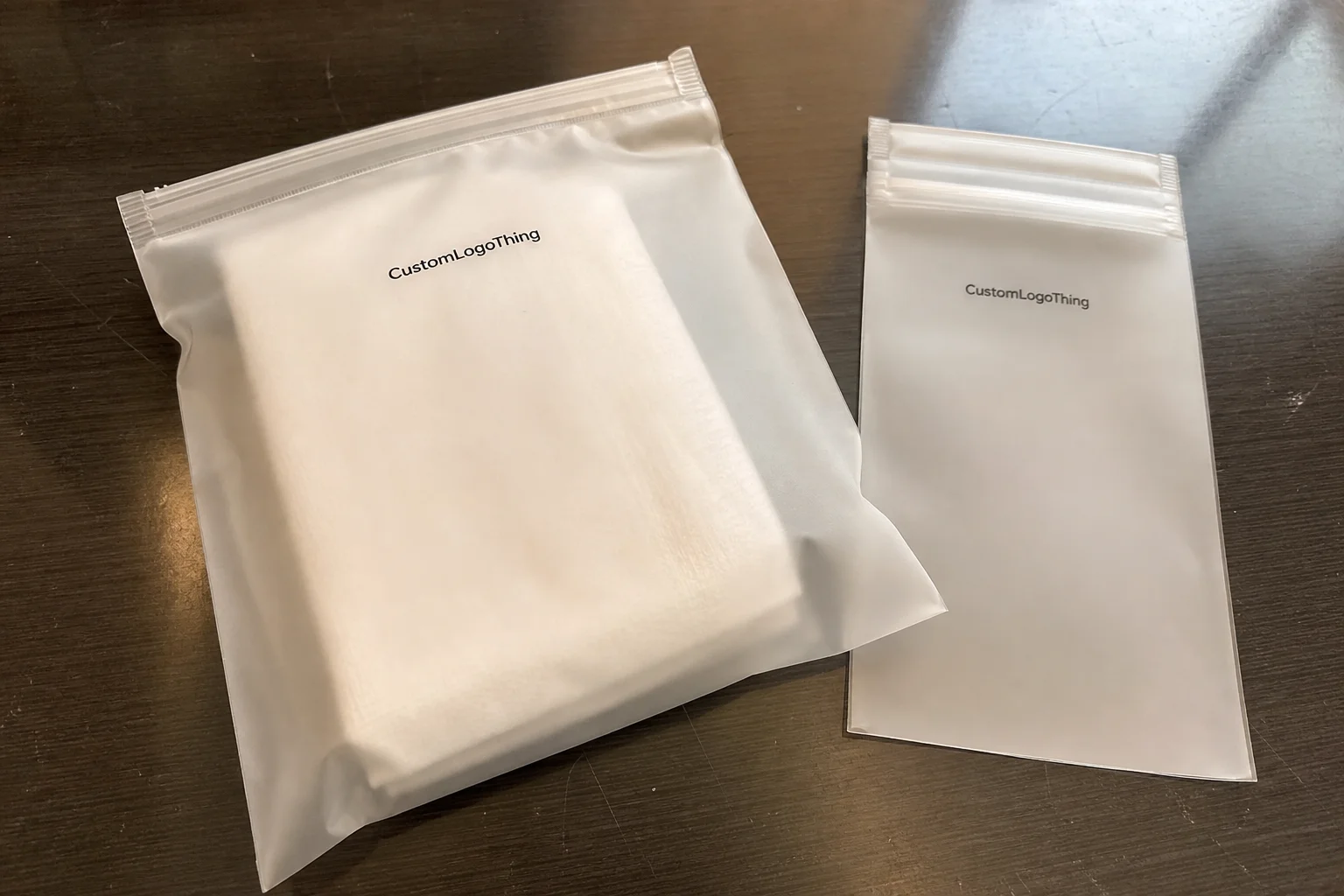
Presentation does a lot of heavy lifting in hotel packaging. A frosted bag diffuses light, softens the view of the contents, and gives the whole item a calmer, more composed look than a plain clear poly bag. On a lobby counter, in a spa basket, or inside a guest room, that can be enough to shift the impression from basic to considered.
Frosted Zipper Poly Bags are usually made from polyethylene-based film or a related poly structure with a resealable zipper closure at the top. The frosted effect can come from the resin blend, surface texture, or film processing. The result is that semi-opaque finish buyers like for amenity kits and branded giveaways.
It also hides minor scuffs better than glossy film. That matters more than people admit. Hotel packaging gets handled, stacked, repacked, and moved around. A softer finish is often more forgiving once the bag leaves the packing table.
For hotel groups, repeatability is the real advantage. One core bag spec can work across several properties, which keeps the brand image steady while simplifying replenishment. Staff can pack the same way every time instead of adjusting to different packaging types across locations. Small thing. Big relief.
That is why the phrase Frosted Zipper Poly Bags for hotel groups material comparison is really a sourcing question, not just a style question. Buyers are weighing look, feel, zipper reliability, and material behavior. LDPE, HDPE, CPP, and laminated builds all perform differently once the bag is filled and handled.
And the best-looking bag is not always the best operating choice. If the contents are heavier, if the environment is humid, or if guests are likely to reuse the bag, the film and zipper need to match those realities. A luxury look with weak closure performance is just expensive disappointment.
How frosted poly film and zipper closures actually work
The frosted look is not magic. It is controlled light diffusion. Instead of reflecting sharply like a glossy clear film, the surface scatters light, which makes the package look softer and more refined. That finish can be useful in hospitality because it reduces the visual noise of minor handling marks.
The zipper matters just as much. A good resealable zipper has consistent interlocking tracks, decent closure tolerance, and enough stiffness to align cleanly during packing. If the track is sloppy, staff spend more time fighting the closure, and the guest may get a bag that feels cheap even if the contents are fine.
Film structure changes the bag’s behavior.
- Soft films drape better around amenity kits and folded items.
- Stiffer films stand up more cleanly on a shelf or in a tray.
- Thicker structures usually feel sturdier, but they do not automatically look more premium.
None of those is universally better. The right answer depends on what the bag needs to do after it leaves the packing line.
Print performance is another area buyers underestimate. Frosted surfaces can reduce contrast slightly, so tiny type, thin lines, and low-contrast logos may not pop the way they do on smooth clear film. If a property wants a QR code, a fine serif logo, or pale metallic artwork, the ink build and underprint should be planned early.
Most Frosted Zipper Poly Bags are presentation and organization packaging, not high-barrier food structures. So the buyer should think about dust control, basic moisture resistance, and appearance first, then match the material to the contents. Expecting food-grade barrier performance from a hotel amenity bag is how specs get weird fast.
“A zipper bag can look premium on screen and still feel ordinary in hand. The sample is where the truth shows up.”
Material comparison: LDPE, HDPE, CPP, and laminated options
For hotel programs, material selection usually comes down to four paths: LDPE, HDPE, CPP, or a laminated/multilayer build. Each has a different hand feel, visual result, and cost profile once it is frosted and printed.
| Material | Feel and appearance | Typical use case | Buyer watch-outs |
|---|---|---|---|
| LDPE | Soft, flexible, forgiving hand feel; premium frosted appearance when finished well | Amenity kits, welcome packs, guest-use bags | Can feel less crisp than harder films |
| HDPE | Lighter, rustly, more structured; clean but less plush | High-volume, cost-sensitive programs | May read as less upscale unless print and finish are controlled |
| CPP | Crisper, smoother visual punch, better print presence | VIP kits, spa retail, elevated welcome packaging | Less soft in hand than LDPE |
| Laminated / multilayer | Best for specialized performance, premium print, or added protection | Luxury programs, special contents, stronger branding needs | Higher cost and often longer lead time |
LDPE is often the most balanced choice for hotel amenity bags. It gives a soft hand feel, decent visual consistency under a frosted finish, and zipper operation that tends to be forgiving for staff packing hundreds or thousands of kits. If the goal is premium presentation without drifting into specialty pricing, LDPE is usually the first sample to request.
HDPE is lighter and usually more economical, which matters on large rollouts. The tradeoff is a crisper, rustlier feel that some buyers read as less luxurious. If the artwork is strong and the finish is consistent, it can still work well for properties prioritizing volume and cost discipline over softness.
CPP gives a cleaner visual presentation and a bit more stiffness. That helps logos stand out and can make the package feel more intentional, especially when the contents are neatly arranged. It fits programs where branding presentation matters more than a drapey hand feel.
Laminated or multilayer constructions are the most flexible from a performance standpoint. They can improve print quality, add strength, or support special requirements, but they also raise costs and can stretch lead times because of extra production steps. For a luxury hotel group, that may be worth it. For a basic guest amenity bag, it may be overbuilt.
One practical way to approach this is tiering. A standard room amenity can use a cost-efficient LDPE structure, while a spa or VIP kit can justify a higher-end CPP or laminated option. That keeps the brand consistent without forcing every bag to carry the same cost.
Some hotel buyers compare these structures against broader presentation packaging too, especially when they want a similar branded look across guest shipments and in-room items. That can include Custom Packaging Products as well as formats like Custom Poly Mailers. If your brand uses corrugated cardboard for shipping and kraft paper for retail inserts, the frosted bag becomes the softer presentation layer inside a larger system.
Key factors that change pricing, MOQ, and unit cost
Pricing for frosted zipper poly bags is driven by a few variables, and small spec changes can move the quote more than buyers expect. Size, film thickness, zipper type, print coverage, and special features all add up across a run of thousands of pieces.
As a practical range, a simple custom frosted zipper bag for hotel use might land around $0.08-$0.18 per unit at higher quantities for a straightforward size and one-color logo. More complex builds with thicker film, better printing, or special closures can move into the $0.18-$0.40 per unit range or higher, depending on volume and setup.
Minimum order quantities matter too. Larger hotel groups can usually get better unit pricing by consolidating orders, but mixed-property programs get messy if every location wants a different size or logo version. One base construction with small artwork changes is usually easier to buy and easier to replenish.
These are the usual cost drivers:
- Bag dimensions: larger bags use more resin and more material per unit.
- Thickness/gauge: heavier film can improve feel and puncture resistance, but it also raises cost.
- Zipper style: upgraded tracks or stronger closures cost more than standard zippers.
- Print coverage: one-color logos cost less than full-color graphics or large print areas.
- Special features: gussets, hang holes, tear notches, and shaped pouches add complexity.
Artwork handling is another hidden cost. If the frosted surface needs a white underprint to keep a logo readable, that adds a print step. Fine typography can require extra proofing. QR codes need extra attention too, because a slightly soft edge can make scanning unreliable even when the mockup looked fine.
Buyers should look at total program cost, not just the bag line item. A slightly higher-priced bag that speeds packing, reduces rework, and improves guest presentation can end up cheaper over a property rollout than a bare-minimum option that creates friction at the packing table.
For groups with sustainability messaging, there is also the broader packaging story. Some hotel programs pair poly packaging with recycled materials, FSC certified paper inserts, or post-consumer waste content elsewhere in the amenity program. That does not make the frosted zipper bag biodegradable. It does, however, help the overall package system feel more intentional and less random.
Process and timeline: from artwork approval to delivery
The production path is simple on paper. The delays usually come from decisions changing halfway through. It starts with final dimensions and material confirmation, then moves into artwork prep, proofing, sample approval, mass production, inspection, and shipment. If any step shifts late, the schedule slips. Predictably. Almost offensively so.
For custom hotel packaging, a simple stock-style customization can move faster, while a fully custom bag with a special film structure or a very specific zipper can take longer. A practical timeline is often 12-15 business days from proof approval for simpler jobs, with more complex builds stretching beyond that depending on materials and quantity.
The fastest procurement teams come in with editable vector artwork, final dimensions, and a clear choice of LDPE, HDPE, CPP, or a laminated option. If the spec is still fluid after sampling starts, the schedule usually turns into a back-and-forth marathon nobody asked for.
Physical samples are especially useful for frosted zipper poly bags for hotel groups material comparison because screen mockups never fully show opacity, zipper feel, or how the logo behaves against frosted film. A bag can look refined in a PDF and then feel too muted in hand. Or the logo can look bold on screen and disappear once printed on textured film.
Basic quality checkpoints should include zipper alignment, seal integrity, print registration, and how the bag holds shape with the actual contents inside. If the order is for guest-facing packaging, even a small defect rate matters because staff notice it first and guests notice it second. That is not a good order of operations.
For shipping and handling checks, the ISTA test methods can be useful if the program needs packaging to survive transit and distribution. And if the hotel group is making environmental claims anywhere in the packaging program, the EPA is a useful reference point for waste and materials guidance.
Common mistakes hotel buyers make when comparing materials
The biggest mistake is chasing the lowest price without checking zipper performance. A bag that saves a fraction of a cent but jams during packing or opens too easily after closure can cost more in labor and complaints than it saves on paper. Or on plastic, in this case. The irony is not subtle.
Another mistake is approving artwork only from a screen mockup. Frosted film changes contrast, and light-colored print can disappear faster than expected. Small type is especially risky. If the hotel logo includes thin strokes, the production team may need to thicken lines or add a backing layer to keep it readable.
Thickness alone is not a complete comparison. Gauge tells you something, but not everything. Two bags with the same thickness can feel very different if the resin blend, zipper quality, or structure changes. One may resist puncture better, while another simply looks better on a shelf.
Supply-chain timing gets overlooked too. Standard poly film is usually easier to source than a specialty laminated structure, and that difference can affect the whole procurement calendar. If a hotel group needs bags for a seasonal opening or a brand refresh, lead time matters as much as the printed appearance.
Inconsistent specs across properties create another problem. If one hotel gets a slightly different zipper feel, a different print position, or a different shade of frosted opacity, the program stops feeling intentional. Standardization usually matters more than squeezing every last penny out of a single property order.
Finally, some buyers compare samples without loading them with actual contents. That is a mistake. A bag that handles a lightweight card kit beautifully may struggle with heavier toiletries or a shaped gift set. Real use beats theory every time.
Expert tips for choosing the right bag for every property type
For economy-focused properties, prioritize dependable zipper function, decent film strength, and a clean but not overly complicated print spec. In that segment, the bag has to work hard and cost responsibly, because the guest is still judging the presentation even if the amenity itself is modest.
For lifestyle or luxury hotels, the bar moves higher. A softer LDPE feel, better print clarity, and a more muted frosted finish usually read as more refined. If the package is part of a spa set or VIP welcome, the bag should feel like it belongs with the rest of the guest experience, not like an afterthought.
Test the bag with real contents. Toothbrush kits, folded stationery, spa samples, charger cords, and small branded gifts all behave differently inside the same bag. Weight changes how the zipper closes. Shape changes how the bag sits on a tray or shelf. If the sample only works empty, it does not count.
Hotel groups also do well when they standardize one core bag spec and vary only the artwork by property or sub-brand. That approach helps purchasing, reduces confusion in replenishment, and keeps the visual system aligned. If every location gets a different material, the program becomes harder to control very quickly.
Quality checks should cover zipper alignment, seal integrity, print registration, and whether the frosted finish looks even across the batch. You do not want a premium bag that looks custom only from a distance. Up close, details matter: straight print, clean closure, no wrinkles at the seal, and a finish that feels deliberate rather than generic.
Some groups also pair these bags with paper-based inserts or outer cartons made from FSC certified paperboard, especially when the wider packaging system includes corrugated cardboard shipping cartons or kraft paper sleeves. That broader mix can support branding goals without forcing every component to be the same substrate.
Next steps for specing and ordering with confidence
Start with the contents. The bag should be built around the item, not the other way around. List the dimensions, expected weight, whether the bag will be displayed or just stored, and whether guests are likely to reuse it after checkout.
Then compare two or three materials side by side using the same artwork. That is the fastest way to judge frosted opacity, stiffness, zipper feel, and overall presentation without getting distracted by unrelated design differences. If possible, review physical samples with the actual hotel contents inside.
Prepare an internal decision sheet that includes MOQ, target unit cost, zipper style, artwork details, and a preferred delivery window. That makes approval easier, especially when procurement, operations, and brand teams all need to sign off on the same spec.
If you are still narrowing the options, ask for a proof review and a real sample run before mass production. That small step can save trouble later, especially when frosted zipper poly bags for hotel groups material comparison is being used to decide between a softer LDPE feel and a crisper CPP or laminated structure.
Once the bag spec is locked, finalize artwork quickly so the schedule does not drift. In hotel packaging, consistency wins. The right material, the right closure, and the right print spec can turn a simple amenity bag into packaging that feels intentional every time a guest sees it.
What material is best for frosted zipper poly bags for hotel groups?
LDPE is often the best all-around choice because it balances softness, flexibility, and a premium frosted feel. CPP can be a better fit if the hotel wants a crisper appearance and stronger print presentation. The right answer still depends on the contents, budget, and how often the bag will be handled or reused.
How does frosted finish change the look of hotel branding on zipper bags?
The finish diffuses light, so the bag looks softer and more upscale than plain clear film. That said, fine text and light-colored logos may need stronger contrast or a white underprint to stay readable. The effect is especially useful for amenity kits because it makes the presentation feel cleaner.
What affects the price of custom frosted zipper poly bags most?
Size, film thickness, print coverage, zipper style, and special features like gussets or hang holes are the biggest drivers. Larger quantities usually reduce unit cost, while full-color graphics or special laminate structures raise pricing. Sample revisions and delayed approvals can add time as well.
How long does production usually take for custom hotel zipper bags?
Simple customization can move fairly quickly once artwork and dimensions are finalized. Special materials, multilayer builds, and multiple proof rounds usually extend the timeline. The most efficient path is to approve the spec first, then move into sampling and production without changing the basics midstream.
Can hotel groups use one bag spec across multiple properties?
Yes, and many do. One core bag size and material can improve cost control, simplify replenishment, and keep branding consistent. Small artwork variations can still allow each property or sub-brand to feel distinct without changing the entire construction.


