Buyer Fit Snapshot
| Best fit | compostable courier bags wholesale for packaging buyers comparing material specs, print proof, MOQ, unit cost, freight, and repeat-order risk where brand print, material, artwork control, and repeat-order consistency matter. |
|---|---|
| Quote inputs | Share finished size, material target, print colors, finish, packing count, annual reorder estimate, and delivery region. |
| Proofing check | Approve dieline scale, logo placement, barcode or warning zones, color tolerance, and any recyclable or compostable wording before bulk production. |
| Main risk | Vague material claims, crowded artwork, or missing packing details can create delays even when the unit price looks attractive. |
Fast answer: Compostable Courier Bags Wholesale: Specs, Pricing & MOQ should be specified like a repeatable production item. The safest quote includes material, print method, finish, artwork proof, carton packing, and reorder notes in one written spec.
What to confirm before approving the packaging proof
Check the product dimensions against the actual filled item, not only the sales mockup. Ask for tolerance on folds, seals, hang holes, label areas, and retail display edges. If the package carries a logo, QR code, warning copy, or legal claim, reserve that space before decorative graphics fill the panel.
How to compare quotes without losing quality
Compare board or film grade, print process, finish, sampling route, tooling charges, carton quantity, and freight assumptions side by side. A lower quote is only useful if the supplier can repeat the same color, closure quality, and packing count on the next order.
If you are replacing plastic mailers, compostable courier bags wholesale is usually the first search buyers run. It is also the first place they get vague answers. The real question is not whether the bag sounds eco-friendly. The real question is whether it survives shipping, prints cleanly, and lands at a unit cost that does not chew through margin.
That is the buying problem, stripped down. Most teams do not need a sustainability sermon. They need a bag that protects soft goods, holds a seal, looks professional, and fits into an actual packaging strategy without making fulfillment miserable.
Compostable Courier Bags Wholesale: Why They Beat Basic Mailers
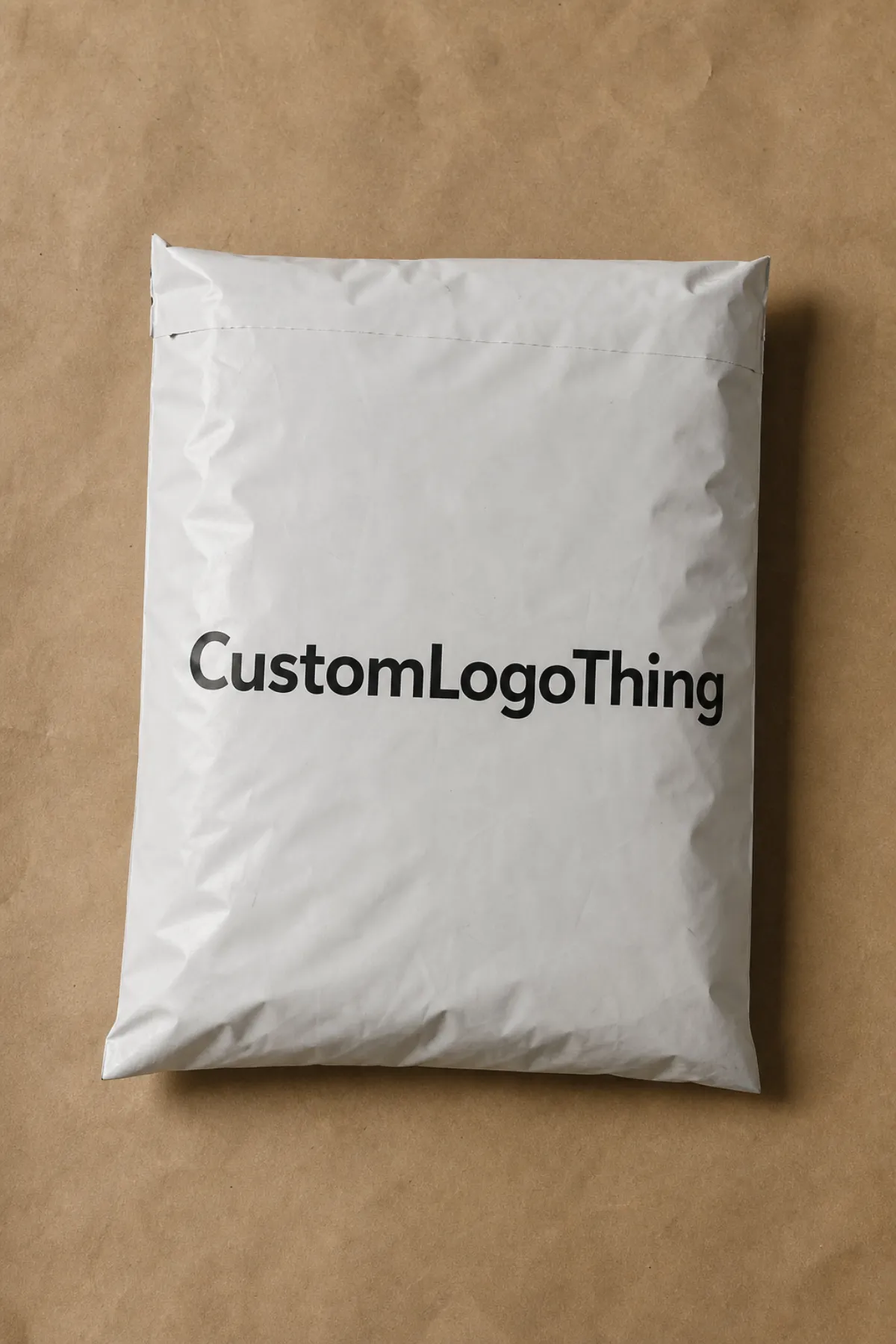
Most parcels do not need a box. They need a mailer that can handle abrasion, rain, conveyor handling, and the occasional rough drop without looking flimsy or failing at the seal. That is the lane where compostable courier bags wholesale makes sense. You are swapping out virgin plastic mailers, but you are also cutting the old habit of overpacking soft goods just because it feels safer.
These bags fit apparel, accessories, subscription kits, folded soft goods, and small direct-to-consumer parcels. If the product is light, flexible, and not easily crushed, a well-made compostable courier bag can do the job with less material than a box-and-fill setup. That matters for shipping cost, warehouse speed, and the amount of waste your operation sends out the door. Fewer layers. Less mess. Faster packing.
Bulk sourcing matters for a boring reason: it saves money and keeps supply steady. One-off packaging orders always look fine on a spreadsheet until you need a reorder in a hurry, need to match a previous print run, or have to explain why the outer packaging changed again. Wholesale buying gives you repeatable branding, predictable replenishment, and a cleaner path to a packaging program that does not fall apart the moment volume grows.
There is another upside buyers miss. Once the size, closure style, and print layout are locked, the whole fulfillment process gets easier. The packing team knows what to grab. The customer sees the same brand presentation every time. The reorder cycle becomes routine instead of a scramble. Not flashy. Just effective.
The cheapest quote is often the one that forgot freight, setup, or a real seal test. Packaging buyers usually learn that after the first delayed shipment, which is not a fun lesson.
Use this category with a clear lens: durability, certification, size range, closure style, and lead time matter more than generic sustainability claims. A compostable mailer that tears in transit is not green packaging. It is a complaint waiting to happen.
From a packaging buyer’s point of view, the best compostable courier bags do three things at once:
- Protect the product with enough tear resistance and seal strength for the route it will travel.
- Carry branding that feels intentional, not crowded or noisy.
- Support a disposal claim that can be documented, not just hoped for.
That last point matters. Buyers do not need decorative language. They need packaging that matches the claim, the market, and the post-use guidance customers will actually see. For a useful baseline on packaging terminology and sustainability guidance, the Sustainable Packaging Coalition at packaging.org is a solid reference.
Product Details: What You Are Actually Buying
“Compostable courier bag” sounds simple until you start comparing supplier quotes. In practice, you are usually buying a flexible shipping bag made from a compostable film blend, often with a self-seal adhesive strip, opaque construction, and optional print. The important part is not the name on the quote. It is the material structure, the certification claim, and the way the bag behaves under real transit conditions.
It helps to separate compostable from the other words sellers like to blur together. Recycled mailers use recovered material, but they are not automatically compostable. Biodegradable is a loose term that says very little unless it is tied to a specific test standard. Oxo-degradable is not the same thing at all, and it should not be treated like a legitimate end-of-life solution for packaging. That one causes more confusion than it should.
For wholesale buyers, the most common structures are straightforward:
- Opaque courier bags for privacy and clean presentation.
- Self-seal closures for fast packing and consistent closure pressure.
- Tamper-evident strips for customer confidence and return handling.
- Printed or unprinted finishes depending on whether you want a branded look or a lower-cost stock run.
The best-fit use cases are soft and non-fragile products: shirts, leggings, scarves, small gift items, lightweight kits, and accessories. These bags are a poor match for sharp edges, liquid leakage, heavy point loads, or items that need rigid crush protection. Could they be engineered for tougher jobs? Sometimes. Should you assume they are suitable by default? No.
Branding is useful, but only if it does a job. A simple logo, a size mark, a return instruction, or a QR code to your return portal can improve the customer experience without turning the bag into a billboard. Too much print coverage can raise cost and make the bag look busy. Too little print and it looks like a commodity. There is a middle ground, and that is usually where the smartest wholesale order lands.
Do not ignore the proof behind the claim. A proper supplier should be able to support the compostable claim with certification and documentation that matches the market you are selling into. Some markets care about ASTM D6400, others look for EN 13432, and some buyers need market-specific documentation before they will approve a launch. If your bag is going into a shipping program with testing requirements, an ISTA reference point is useful too. The International Safe Transit Association at ista.org is a practical place to understand transit testing expectations.
The packaging claim should also match the disposal guidance. If the customer is told to compost it, the material and label language need to support that instruction. If local composting access is limited, do not pretend the bag magically solves waste. Honest packaging language beats fancy sustainability theater. The EPA’s composting resources at epa.gov are useful for understanding the basics of compostable end-of-life pathways.
One more thing: buyers often ask whether a compostable mailer is automatically “zero waste.” It is not. It can be part of a zero waste packaging program, but only if the full system makes sense: right-sized bag, efficient packing, sensible returns flow, and proper disposal guidance. Otherwise, it is just a better bag, which is still worth buying.
Specifications That Matter Before You Order
The spec sheet is where a good packaging decision gets made. The problem is that too many buyers read only the price line and skip the rest. That is how you end up with a mailer that is a few millimeters too small, a little too thin, or just weak enough to fail after a rough parcel route.
The details that actually change performance are predictable. You want to look at dimensions, film thickness, load capacity, seal strength, tear resistance, opacity, and water resistance. If a quote does not give you those numbers, ask. If the supplier cannot answer, keep moving.
Choosing the Right size is not just about product dimensions. You need to account for folding method, label placement, and the air trapped inside the bag after the product is loaded. A folded sweatshirt in a 250 x 350 mm mailer is not the same as a flat tee in the same size. The first may bulge, stretch the seal, and look underpacked. The second may fit with room to spare. Packaging geometry matters more than most teams want to admit.
Thickness is not everything, but it is not nothing either. A slightly thicker film can improve puncture resistance and reduce stretching at the seal, but over-specifying thickness raises cost and sometimes makes the bag stiffer than you want. There is a tradeoff. If you are shipping very light products, you usually do not need a heavy film. If you are shipping bulkier folded goods, a little more material may save you from split seams and damaged returns.
Water resistance also deserves a real conversation. A courier bag is not a dry bag for a kayak. It should resist ordinary moisture, drizzle, and handling in damp conditions, but you should not sell it as waterproof unless the spec and testing support that claim. A good bag can survive rain during a normal delivery route. That is different from surviving a soak test, and those are not the same thing.
Before you approve a bulk run, ask for practical performance checks. A spec sheet tells you the numbers. A sample tells you whether those numbers matter to your packing team and your customers. The most useful checks are simple:
- Drop handling to see whether the seal pops or the corners split.
- Scuffing to check how the surface looks after abrasion in transit.
- Humidity exposure to see if the film behaves differently in a warm warehouse.
- Transit vibration to test whether packed items shift enough to stress the seal.
- Repeated handling so you know if the adhesive strip still performs after the bag is touched more than once.
ASTM and EN compostability standards address the material claim, but they do not replace shipment testing. A bag can pass compostability requirements and still fail a parcel route. That is why buyers should ask both questions: “Will it compost under the right conditions?” and “Will it survive the delivery chain?” They are different tests.
There are several custom spec options worth considering if you want the bag to work harder for your operation:
- Dual adhesive strips for returnable shipping workflows.
- Perforation choices if you need easier opening without a knife.
- Carton pack size that matches your warehouse layout and packing speed.
- Print layout rules to keep logos, barcodes, and instructions in the safe zone.
- Opaque finish level if product privacy matters for retail presentation.
Sample testing should always happen with real products, not test weights in an empty bag. That sounds obvious until you see how many teams skip it. Pack the actual item, close the bag the actual way, ship it through your normal route, and inspect the result. That is the test that tells you whether the spec is good or just impressive on paper.
Pricing & MOQ: What Wholesale Buyers Should Expect
Pricing for compostable courier bags wholesale is driven by a short list of variables, and none of them are mysterious. Size, film thickness, print colors, certification requirements, packaging format, and carton configuration all move the number. So do order quantity and destination. A quote that ignores those factors is not a quote. It is a placeholder.
MOQ logic is equally straightforward. Stock or near-stock bags can often start at lower quantities because the supplier does not need to absorb much setup cost. Custom printed compostable courier bags wholesale orders usually need a higher minimum to justify artwork preparation, plate setup, and production scheduling. If you are asking for a custom size, a custom print, and a special certification package, the minimum will climb. That is not a supplier trick. It is how production economics work.
Here is the mistake most buyers make: they compare unit price before they compare setup cost, freight, and landed cost. That is how a “cheap” quote turns into a more expensive order once the pallet reaches your warehouse. Compare the full landed cost, not the headline number. Otherwise you are just doing theater with spreadsheets.
| Option | Typical MOQ | Unit Price Range | Setup Cost | Lead Time | Best Fit |
|---|---|---|---|---|---|
| Plain stock-style compostable courier bags | 1,000-5,000 pcs | $0.12-$0.28 | Low or none | 7-15 business days | Testing, short runs, fast replenishment |
| Single-color printed bags | 5,000-10,000 pcs | $0.18-$0.35 | Moderate | 12-20 business days | Branded ecommerce shipments |
| Custom size with multi-color print | 10,000-25,000 pcs | $0.25-$0.45+ | Higher | 15-25 business days | Scaled retail and recurring DTC volume |
Those ranges are not promises. They are the kind of practical bands buyers use to sanity-check a quote. A small bag with light print and modest certification demands may sit near the low end. A larger bag with heavier film, more coverage, and special pack requirements will sit higher. Freight, duties, and any packaging inserts can move the final number again.
Ask for tiered pricing at several breakpoints. Ten thousand, twenty-five thousand, and fifty thousand pieces usually show you where the real value sits. Sometimes the jump from one tier to the next is worth it. Sometimes it is not. But you cannot see that without the tiers laid out side by side.
There is also a simple rule that keeps buyers honest: compare like for like, or the quote conversation turns into nonsense very quickly. Same size. Same thickness. Same print colors. Same closure. Same certification. Same destination. If those pieces do not match, you are not comparing price. You are comparing unrelated products with the same label.
For teams building a green packaging strategy, landed cost often matters more than unit cost. A slightly more expensive bag that reduces damage, speeds packing, or avoids a second fulfillment touch can be cheaper in practice. That is especially true for subscription kits and apparel brands with repeat orders. The cheapest packaging is not the lowest unit price. It is the option that works consistently without hidden costs.
If you want a structured wholesale quote with those variables already separated, our Wholesale Programs page is the quickest place to start.
Process and Lead Time: From Quote to Delivery
The buying process should be boring. When it is not boring, something is missing. A clean order usually follows the same sequence: request quote, confirm specs, approve sample, review artwork, start production, pass QC, and ship. Each step exists for a reason. Skip one, and the risk shows up later as a delay, a reprint, or a bag that does not match the packing method.
Sampling is usually the fastest step. If the spec is simple and the bag is a standard size, a sample can often move quickly. Production is where timing stretches, especially when custom artwork, special claims, or busy factory scheduling enter the picture. A realistic wholesale timeline after proof approval is often 12-20 business days for production, with shipping time added on top depending on the lane.
Delays usually happen for the same few reasons:
- Missing or unclear dielines.
- Last-minute logo changes.
- Unclear compostability claim language.
- Samples approved before the real packing test is done.
- Size changes that show up after the artwork is already set.
That last one is common. “We meant a slightly different size” sounds harmless until the print area, seal position, and packed-product fit all need to be adjusted. Then the schedule slips, the art has to be revised, and everyone discovers that packaging is not a place where vague memory performs well.
Approval checkpoints prevent expensive mistakes. You want to confirm the following before production starts:
- Final dimensions and film thickness.
- Print file and artwork placement.
- Certifications and claim language.
- Closure type and adhesive strip position.
- Carton pack quantity and shipping destination.
Factory scheduling matters too. Large runs need a clean slot, and more complex print jobs can move slower than plain stock orders. If your launch date is fixed, build buffer time for proofing and transport. That sounds like obvious advice, but it saves people all the time because deadlines have a nasty habit of appearing earlier than expected.
Here is the short prep list that makes a quote request useful on the first pass:
- Product dimensions and packed weight.
- Target quantity and backup quantity.
- Printed or plain bag preference.
- Destination country and delivery window.
- Artwork file, if you already have it.
Send that information, and the supplier can usually tell you whether the bag should be a stock size, a custom size, or something in between. That is the difference between a quote that helps and a quote that just occupies your inbox.
Why Choose Us for Compostable Courier Bags Wholesale
At Custom Logo Things, the value is not hype. It is consistency. Wholesale buyers do not need poetic sustainability language. They need bags that show up on spec, print cleanly, and keep showing up that way on repeat orders. That is the actual job.
We help buyers avoid the most common mistake in this category: under-specifying the bag and then paying for it later in damaged goods, return complaints, or packing delays. A bag that is too small slows fulfillment. A bag that is too thin can split. A bag with weak print layout can look off-brand. None of those problems is rare. They are just expensive if nobody catches them early.
The support buyers usually want is practical:
- Sizing guidance based on real product dimensions and fold style.
- Artwork placement support so logos and text stay readable.
- Certification document checks to match the market claim.
- Shipping guidance so freight and packaging are not guessed at the last minute.
- Reorder continuity so the second run matches the first run.
Real QC matters more than a nice sales pitch. A wholesale packaging program fails slowly, not all at once. The first batch is fine. The second batch is a little different. The third batch forces someone to stop the line and figure out why one side seal feels weaker. That is why buyers should care about repeatability from the start. The goal is not just to buy compostable courier bags wholesale once. The goal is to buy them again without rebuilding the spec from scratch.
We also pay attention to the packaging standard around the bag, not just the bag itself. That means carton counts that fit your warehouse, print layouts that do not crowd the safe zone, and claim language that does not cause a compliance headache later. This is the dull work that protects the launch.
For brands scaling volume, that consistency makes a bigger difference than most teams expect. A stable mailer spec simplifies procurement, keeps the packing line moving, and helps you avoid product-page confusion when customers receive the same outer packaging every time. Small thing. Big operational payoff.
If you are comparing a new run against an existing mailer, bring the actual dimensions, the artwork, and a finished sample of the product. That is how the quote gets grounded in reality instead of guesswork.
Next Steps: How to Place the Right Wholesale Order
Before you ask for a quote, shortlist three things: product dimensions, target order quantity, and whether you need printed or plain bags. That alone removes most of the back-and-forth. If you can add destination and delivery window, even better. You will get a cleaner quote and fewer surprises.
A sample pack or pilot order is still the smartest move. Test the seal strength. Test the fit. Test the way the bag behaves after transit. A packaging decision based on theory is how brands end up replacing a second packaging system in six months. A pilot gives you real data, and real data usually saves money.
Choose one primary size and one backup size. That is far more useful than chasing a mythical perfect bag. Real product ranges shift. Fashion seasons change. Kit contents change. If you have a backup size already approved, the next reorder becomes much easier.
Ask for a tiered quote that shows:
- Unit cost at each volume tier.
- Setup cost, if any.
- Freight and destination charges.
- Estimated production time.
- Any certification or documentation cost.
That is how you compare suppliers without getting sold a fantasy. A low unit price can still be the wrong choice if it comes with high setup, bad freight, or weak performance. A slightly higher unit price can be a better deal if it reduces damage, speeds packing, and avoids rework. Packaging is full of those tradeoffs.
Before launch, confirm the sustainability claims and disposal language one more time. Match the market, match the certification, and match the artwork. If the bag is going into a composting claim, the documentation should support it. If the claim is only about the material and not the full disposal pathway, say that clearly. Clean language beats overreach every time.
Once those boxes are checked, move from sample to production and lock in compostable courier bags wholesale with a spec sheet the team can actually repeat. That is the point. Not a pretty quote. A packaging system that works.
Frequently Asked Questions
Are compostable courier bags wholesale options suitable for all e-commerce products?
No. They work best for soft, light, non-fragile goods such as apparel, accessories, and small kits. They are not the right choice for sharp, heavy, or leak-prone items unless the bag is engineered for that load. Always test the bag with your actual product and packing method before placing a bulk order.
What MOQ should I expect for compostable courier bags wholesale orders?
Stock or near-stock bags can often be ordered at lower quantities. Custom printed compostable courier bags wholesale runs usually need a higher MOQ because setup and print preparation have real costs. Ask for tiered pricing so you can see where the unit cost drops enough to justify a larger order.
How do I compare compostable courier bags pricing from different suppliers?
Compare the same size, thickness, print colors, closure type, and certification level. Then add freight, duties, packaging, and any setup costs before judging the final price. Request landed-cost quotes at multiple volume tiers so you can compare real value, not just the lowest headline number.
What certifications should I ask for before buying in bulk?
Ask for the certification that matches your target market and composting claim, not a vague promise. Request material declarations and test reports so the claims are documented, not decorative. Confirm the disposal guidance and print language match the certification exactly.
How long does a wholesale order usually take?
Sampling is usually the fastest step, but production takes longer once artwork and specs are locked. Custom printing, special certification checks, and busy factory periods can extend the timeline. Build in buffer time for artwork changes and final approval so the order does not slip.
The fastest way to avoid a bad buy is simple: lock the size, test one sample with the real product, and compare landed cost across the same spec before you sign off on production.


