Buyer Fit Snapshot
| Best fit | Compostable Packaging Bulk Order projects where brand print, material claims, artwork control, MOQ, and repeat-order consistency need to be specified before quoting. |
|---|---|
| Quote inputs | Share finished size, material target, print colors, finish, packing count, annual reorder estimate, ship-to region, and any compliance wording. |
| Proofing check | Approve dieline scale, logo placement, barcode or warning zones, color tolerance, closure strength, and carton packing before bulk production. |
| Main risk | Vague material claims, crowded artwork, missing packing details, or unclear freight terms can make a low unit price expensive after revisions. |
Fast answer: Compostable Packaging Bulk Order: Specs, Pricing, Process should be specified like a repeatable production item. The safest quote records material, print method, finish, artwork proof, packing count, and reorder notes in one written spec.
Production checks before approval
Compare the actual filled-product size with the drawing, then confirm tolerance on folds, seals, hang holes, label areas, and retail display edges. Reserve space for logos, QR codes, warning copy, and material claims before decorative graphics fill the panel.
Quote comparison points
Review material grade, print process, finish, sampling route, tooling charges, carton quantity, and freight assumptions side by side. A quote is only useful when the supplier can repeat the same color, closure quality, and packing count on the next order.
Compostable packaging bulk order decisions usually show up after the easy fixes are gone. The brand is growing, the warehouse is feeling cramped, and everyone is tired of placing tiny replenishment orders that chew up time. On paper, a larger order can look like a bigger spend. In practice, the opposite often happens once freight, storage, breakage, repeat approvals, and rush fees are counted. That is the part people miss when they look only at unit price. A compostable packaging bulk order is not just a packaging purchase; it is a supply-chain decision with direct effects on margin, compliance, and throughput.
I have watched buyers chase the lowest quote and then spend weeks untangling the fallout. Wrong size. Weak seal. Color drift. Delayed approvals. The invoice was lower, sure, but the real cost kept climbing. That is usually how the conversation changes. Fast-moving teams stop asking, “What is the cheapest bag?” and start asking, “What structure can we buy in volume without creating more work?” That shift changes the economics more than most people expect.
From a practical standpoint, the first questions are mechanical, not marketing-driven. How heavy is the product? How rough is the route? Does the pack need moisture resistance, oxygen barrier, puncture protection, or just enough strength to survive handling? What composting infrastructure exists in the destination market, if any? Those answers shape the spec, and the spec shapes the quote. A compostable packaging bulk order works best after product behavior, branding needs, and disposal claims are already clear. Otherwise, you are kind of guessing with nicer language.
Why a compostable packaging bulk order pays off faster than you think
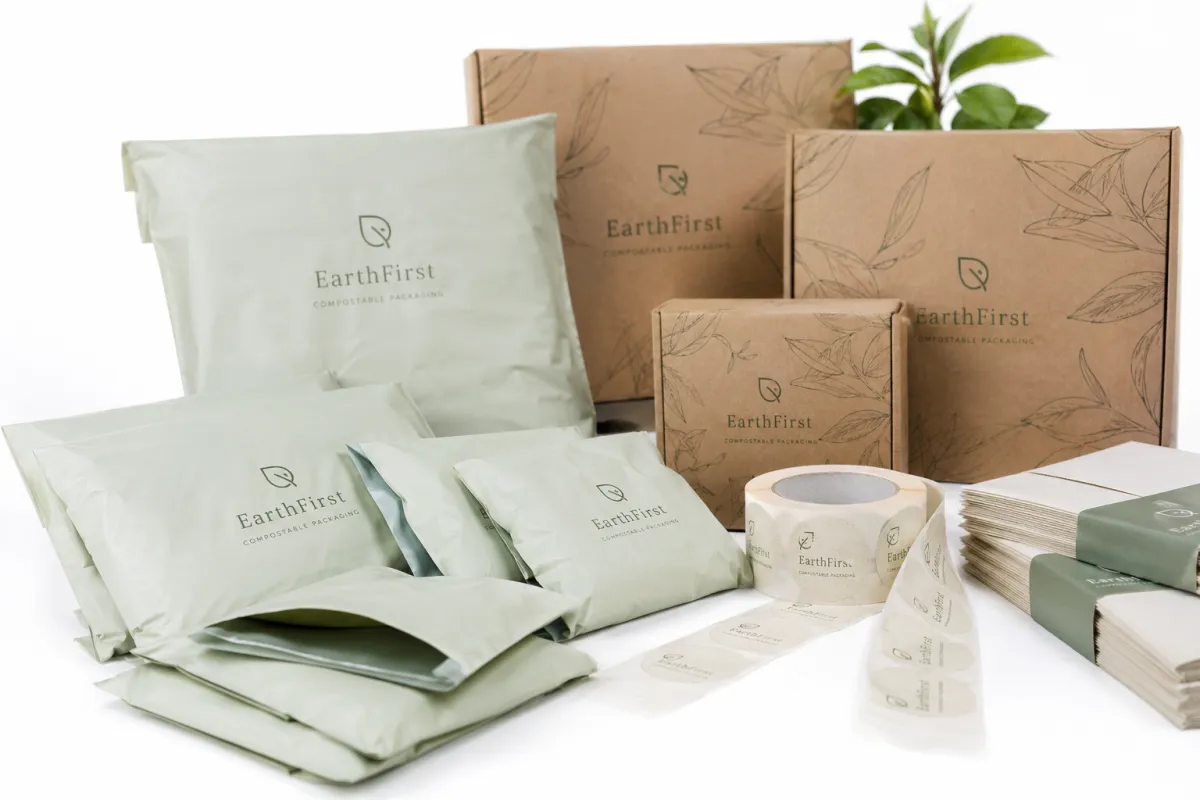
A compostable packaging bulk order often pays back sooner than expected because the cost is not confined to the line item on the invoice. The hidden drag sits around it: stock counts, emergency buys, extra approvals, artwork revisions, and the labor tied up in small runs that never quite match each other. If a brand ships 5,000 to 50,000 units a month, those frictions stack up quickly. Over a quarter, they can outweigh the difference between a cheap stock pack and a better planned compostable structure.
The comparison is pretty straightforward. Small-batch purchasing feels safer because the cash outlay is lower. It also tends to bring higher unit prices, weaker freight terms, and more artwork changes. A compostable packaging bulk order does the opposite. It concentrates the work into one planned run, lowers per-unit cost, and gives operations a repeatable spec. That is a stronger operating model for branded packaging, product packaging, and retail packaging.
One mistake keeps repeating in buyer conversations: the pouch price gets compared while the total process cost gets ignored. A compostable packaging bulk order cuts vendor calls, shortens internal decision cycles, and makes the next reorder more predictable. Those are not soft gains. They show up in labor hours, fewer delays, and less pressure on launch dates. If the team is always scrambling for the next carton, the packaging system is already costing more than it should.
- Lower unit cost: larger runs spread setup costs across more pieces.
- Cleaner inventory: one spec is easier to store than three near-matches.
- Fewer disruptions: a compostable packaging bulk order reduces repeated quoting and proofing.
- More consistent branding: package branding stays stable across product cycles.
The compliance piece deserves real attention too. Eco-friendly claims only matter when they can be substantiated. If a buyer wants compostability language on shelf-ready packaging, the format should tie back to a test standard, a material declaration, and a clear disposal pathway. A compostable packaging bulk order becomes more than a marketing purchase at that point. It becomes a controlled production decision. That is where procurement, brand, and operations finally stop talking past one another.
A low quote on the wrong film is not savings. It is deferred waste, and it usually comes back as damage, complaints, or a rushed reorder.
Carbon impact is not automatic. It can improve, or it can get worse. A well-matched compostable packaging bulk order may reduce excess material, lower fill weight, and improve shipping density if the structure is engineered properly. A pack that is too heavy, too thick, or oversized weakens the environmental case fast. The best bulk programs begin with real product measurements, not a mood board full of green language.
One more practical layer matters: the buyer should know the end-use environment before placing a compostable packaging bulk order. A mailer for dry apparel does not need the same barrier profile as a food-adjacent pouch. A subscription kit does not face the same abuse as a retail shelf display. Match the structure to the transit conditions, and the economics usually improve too. That is not glamorous, but it is how the numbers hold up.
Compostable packaging bulk order product options and use cases
The range of formats available in a compostable packaging bulk order is broader than many teams expect. Common requests include compostable mailers, pouches, wraps, sachets, labels, liners, and protective inserts. Each one solves a different problem. A mailer protects a shipped unit. A pouch protects a fill. A liner isolates a component. A label carries branding and traceability. A compostable packaging bulk order should start with the function, then move to appearance.
Materials matter just as much. Plant-based blends, certified compostable films, molded fiber, paper-based structures with compostable coatings, and certain starch-based laminates all behave differently. Some suit dry goods. Some work better for branded packaging that needs stronger shelf appeal. Some belong in internal wrap applications rather than retail packaging. Treating them as interchangeable usually costs twice: once for the wrong material, then again for the replacement run. I have seen that happen more than once, and it is never cheap.
Industrial compostability and home compostability are not the same claim. That distinction matters in a compostable packaging bulk order because disposal conditions determine whether the promise is credible. Industrial composting typically needs controlled heat, moisture, and microbial activity. Home composting is slower and much less consistent. If the pack is certified only for industrial systems, that should be stated plainly. Vague language helps nobody, and buyers can get stuck defending claims they never should have made.
Use case drives the structure:
- E-commerce shipping: compostable mailers, padded wraps, and protective inserts that survive parcel handling.
- Retail display: pouches and sleeves that support visual merchandising and package branding.
- Food-adjacent applications: liners, sachets, and barrier structures that need tighter compliance control.
- Subscription kits: mixed-format kits where consistency and fast pack-out matter.
- Promotional packaging: lighter-weight options that prioritize presentation and lower material use.
In a compostable packaging bulk order, the details that change branding performance are usually small but decisive: matte versus gloss, window size, zipper closure, tear notch, heat-seal compatibility, and ink coverage. A fully printed pouch may look impressive, but if the closure fails during transit, the branding problem turns into an operations problem. Packaging design should be reviewed alongside seal performance and shelf behavior, not after it. That is the boring part of the work, and it saves the most money.
For buyers comparing Custom Printed Boxes with flexible formats, the calculation is not always obvious. Boxes can be easier to stack and label. Flexible compostable structures can be lighter and use less board or fiber. A compostable packaging bulk order should be judged on product fit, shipping density, and consumer experience rather than material preference alone. The right answer depends on what the package actually has to do, not what looks good in a mockup.
If the application is still undecided, the broadest starting point is to compare Custom Packaging Products against the product weight and transit route. For volume programs, the buying logic stays similar whether the final structure becomes a pouch, a mailer, or an insert: match the material to the job, then scale it.
What should you confirm before a compostable packaging bulk order?
A useful compostable packaging bulk order starts with clean specs. Without them, the quote may look attractive but be built on assumptions the buyer never intended. The minimum data set is simple: dimensions, thickness or GSM, closure style, print colors, load weight, and shipping method. If the team cannot define those five or six inputs, the quotation will be broad, and broad quotes tend to hide trade-offs.
Performance requirements need the same discipline. Does the pack need moisture resistance? Puncture strength? Oxygen barrier? Odor control? Shelf-life protection? A compostable packaging bulk order can cover a lot of ground, but not every compostable structure performs the same way. A buyer who asks for both a high barrier and a fully home-compostable structure may be asking for conflicting properties. That tension should be discussed early, not after proof approval. Otherwise the project drifts into compromise mode without anyone naming it.
Documentation matters. For any compostable packaging bulk order, procurement teams should request the certification documents, the material declaration, and the exact standard used for the claim. In the U.S., buyers often reference ASTM D6400 or D6868 depending on the format. In Europe, EN 13432 is widely recognized. If the pack includes paperboard, FSC chain-of-custody can still be relevant for the paper component. The point is not to collect papers for show. The point is to verify the claim behind the claim.
For broader terminology and material context, packaging.org is a useful reference point. For distribution testing and transit confidence, ISTA provides standards that many packaging teams use to understand drop, vibration, and compression risk. A compostable packaging bulk order should pass both the sustainability filter and the distribution filter. If it fails either one, rework gets expensive quickly.
Artwork quality affects approval time and price too. Low-resolution files, excessive ink coverage, tiny reverse text, and unclear die-line references create back-and-forth. Adhesive selection can matter as well, especially on labels and some hybrid structures. A compostable packaging bulk order with heavy coverage may need more setup or a slower proof cycle than a one-color run. That is normal. It just needs to be priced honestly. Good suppliers do not pretend those variables are free.
Here is a simple spec checklist procurement teams can use before quoting a compostable Packaging Bulk Order:
- Product dimensions: finished size, fill weight, and any overfill allowance.
- Material target: film, paper-based, molded fiber, or hybrid.
- Barrier needs: moisture, oxygen, aroma, or puncture resistance.
- Print requirements: colors, coverage, varnish, finish, and brand marks.
- Compliance records: certifications, declarations, and target market rules.
- Freight assumptions: destination, pallet preference, and ship window.
If those details are set, a compostable packaging bulk order quote becomes much sharper. If they are not, the buyer may still get a price, but not a reliable one. The best quotes reveal constraints early. That saves time and protects margin later. It also reduces the chance of awkward calls after approval, which nobody enjoys.
Compostable packaging bulk order pricing, MOQ, and unit economics
Price in a compostable packaging bulk order is driven by a handful of variables that matter more than most buyers expect: material type, size, print complexity, certification requirements, and run length. A simpler structure with fewer colors usually costs less than a fully custom printed pack with a specialized barrier layer. A larger run can improve unit economics, but only if the spec is stable and the forecast is accurate.
Minimum order quantity is not one fixed number. It changes by format. Stock items may start at a few hundred pieces. Semi-custom runs often sit in the low thousands. Fully custom programs usually move higher because setup, material minimums, and print approvals have to be absorbed somewhere. A compostable packaging bulk order is most efficient when the buyer chooses the right tier for the business stage, not the fanciest option available.
Buyers often overpay in predictable ways. They place repeated short runs. They rush production. They add unnecessary print colors. They change dimensions after proof approval. Each of those moves raises the per-unit cost of a compostable packaging bulk order. None looks dramatic on its own. Together, they can turn a decent spec into a poor one. The invoice still arrives looking tidy, but the operating budget feels it later.
To compare quotes correctly, use landed cost per unit rather than factory price alone. Freight, import handling, warehousing, and any special documentation should be counted. A quote of $0.22 per unit can become a very different number once ocean freight, customs work, and pallet storage are added. A good compostable packaging bulk order quote should make those components visible, not bury them in fine print.
Typical budget planning might look like this for a compostable Packaging Bulk Order:
| Format | Typical MOQ | Indicative unit price | Best fit | Main trade-off |
|---|---|---|---|---|
| Stock compostable mailer | 500-1,000 units | $0.18-$0.32 | Fast replenishment and lighter branding needs | Limited custom print and size choices |
| Semi-custom printed pouch | 3,000-5,000 units | $0.24-$0.48 | Retail packaging and subscription programs | Moderate setup and proofing time |
| Fully custom barrier structure | 8,000-20,000 units | $0.16-$0.41 | Stable high-volume product packaging | Higher tooling, stricter approval, longer lead time |
Those ranges are directional, not universal. A compostable packaging bulk order for a small pouch with one-color print will price differently from a large mailer with heavy ink coverage or a specialty insert. Still, the table gives procurement teams a useful lens: compare formats by MOQ, print load, and actual application, not only by sticker price. If you compare only the sticker price, you are almost guaranteed to miss the expensive part.
Storage needs to be part of the math. A larger compostable packaging bulk order lowers the unit price only if the team can store and use it efficiently. If the forecast is fuzzy, inventory can sit too long and crowd out cash flow. If the usage rate is steady, the savings can be meaningful. That is why unit economics should be reviewed alongside demand planning, not after it. The warehouse will tell the truth pretty quickly.
For some buyers, a better path is to split the purchase into two versions: one optimized for the lowest cost and one optimized for premium presentation or stronger barrier performance. That approach lets the team compare performance without guessing. It also reduces the chance that a single compostable packaging bulk order gets overloaded with conflicting goals. One spec cannot always be cheapest, strongest, and prettiest all at once. Someone has to admit that.
Compostable packaging bulk order process and timeline
The process for a compostable packaging bulk order is simple on paper, but each step has a pressure point. It usually starts with the inquiry, then moves into specification review, sample or proof approval, production scheduling, quality control, packing, and shipment. If any of those steps are weak, the entire timeline becomes less predictable.
Realistic lead times depend on the order type. Stock or near-stock items can move faster because there is less artwork work and less setup. A fully custom compostable packaging bulk order can take longer because material sourcing, print alignment, and quality checks all need time. For many custom runs, 12-15 business days from final proof approval is reasonable for production alone, with freight time added on top. Some projects move faster, some slower. The difference is usually spec clarity and how quickly the buyer can approve the proof.
Delay points repeat for a reason. Incomplete artwork. Unclear size specs. Late approval comments. Changes after materials have already been purchased. Each one creates friction in a compostable packaging bulk order. Each one can push a launch date. The most reliable buyers keep comments tight, use one approver, and lock the spec before the order enters production. It sounds obvious, but that discipline is rare enough to matter.
That matters even more for branded packaging tied to a campaign launch. A new product packaging rollout may have a marketing date, a warehouse receiving date, and a retail ship date. If the packaging misses one of those windows, the launch slips or the team ships with a temporary substitute. Neither outcome is ideal. Build a buffer around the launch and the risk drops. The buffer is boring, but it works.
A strong supplier should communicate milestones clearly:
- Proof approval date: the point where artwork and size are locked.
- Production start: when material and print are released to line.
- Inspection point: quality review before packing or palletizing.
- Shipping confirmation: tracking, pallet count, and estimated arrival.
For products that need distribution testing, a compostable packaging bulk order should be checked against the kind of transit it will actually face. A lightweight mailer might only need a simple drop review. A heavier retail pack may need more structured ISTA-style testing. A supplier that understands that difference is less likely to oversell the packaging and more likely to keep the program stable. That is the kind of judgment buyers should ask for up front.
The most disciplined buyers map the timeline backward. If inventory must arrive before a seasonal demand spike, the order date should be set with enough slack for artwork approval, production, transit, and receiving. That is how a compostable packaging bulk order becomes a supply tool instead of a rush job. It sounds simple because it is, but only if someone does the math before the calendar gets crowded.
Why choose us for a compostable packaging bulk order
At Custom Logo Things, the value in a compostable packaging bulk order is operational reliability. That means consistent specifications, repeatable quality, and clear documentation that procurement teams can file without chasing the supplier for missing details. A buyer should not have to decode the quote line by line just to understand the material or the finish.
We pay attention to the parts that usually create risk: raw material availability, print control, artwork review, and the performance gap between a sample and a production run. A compostable packaging bulk order should not surprise the buyer after approval. If a structure needs a different closure, a different thickness, or a different finish to function properly, that should be flagged early. That approach protects the customer and the schedule. It also keeps the order from becoming a cleanup project.
Support matters after the first order too. A strong compostable packaging bulk order program includes reorder planning, so the next run does not start from zero. That is where wholesale programs are useful. They make repeat buying cleaner and reduce the chance that each order becomes a separate negotiation. For teams scaling volume, the Wholesale Programs page is the natural next stop.
We also make it easier to compare packaging paths without getting trapped in a single format too early. If the project may move between flexible pouches, mailers, or other retail packaging structures, the right starting point is often to review the full set of Custom Packaging Products. That helps the buyer compare cost, appearance, and usage before committing to one direction. Sometimes the best answer is not the first one that sounds sustainable.
For teams that need clarification on lead times, artwork, or order flow, the FAQ page is a practical reference. It answers the questions that often slow a compostable packaging bulk order: what information is needed, how samples work, and what affects pricing. Clear answers save time. So does a supplier that gives direct ones.
What should a buyer verify before placing a compostable packaging bulk order with any supplier? Three things: technical data, certification records, and the order management process. If the supplier can show those clearly, the purchase becomes easier to defend internally. If they cannot, the buyer is taking on avoidable risk.
That is why our position is simple. A compostable packaging bulk order should be priced with real inputs, quoted with visible assumptions, and delivered with enough control that the next reorder is easier than the first. Anything less is just packaging theater.
Next steps for a compostable packaging bulk order
If the goal is a useful quote, send the supplier the numbers that actually change the build: dimensions, target quantity, product weight, material preference, print details, and destination address. Include the launch date, too. A compostable packaging bulk order becomes far easier to price when the supplier can check production capacity against a real deadline.
It also helps to request two options. One should be optimized for lowest unit cost. The other should be optimized for premium presentation or stronger barrier performance. That comparison shows where the trade-offs sit and gives the buyer a stronger basis for internal approval. A compostable packaging bulk order should not be approved by guesswork if two clean options are available.
Ask for samples or a printed proof before final approval. That is the quickest way to check fit, seal quality, ink clarity, and whether the package branding reads the way it should on the shelf or in the parcel. A buyer who skips proofing saves a few days and risks weeks later. That is usually a poor trade, no matter how tight the schedule feels.
Before issuing the purchase order, confirm certification documents, lead time, and freight terms. Those details decide whether the order fits the compliance file and the receiving schedule. Once those items are locked, the path is clear. Approve the specs, confirm the timeline, and place the compostable packaging bulk order with confidence.
The clearest takeaway is simple: lock the spec before you lock the quantity. For a compostable packaging bulk order, that means confirming the disposal claim, the performance requirements, the artwork, and the freight assumptions before money changes hands. Do that, and the order is much more likely to ship on time, hold up in transit, and make the next reorder easier instead of messier.
FAQ
What is the minimum compostable packaging bulk order for custom printing?
MOQ depends on format, material, and print method. Stock items can start lower than fully custom orders, while a custom compostable packaging bulk order usually requires a higher minimum because setup, plates, and material thresholds have to be covered. The fastest way to get a real number is to share dimensions, print colors, and the intended use case.
How do I verify that compostable packaging in bulk is truly certified?
Ask for the certification document, the material data sheet, and the exact standard used for the claim. A compostable packaging bulk order should state whether it is certified for industrial composting, home composting, or both. If the seller says only “eco-friendly” without a standard or test record, that is not enough for procurement or compliance review.
What affects compostable packaging bulk order pricing the most?
Material type, size, print coverage, barrier level, and order volume are the biggest drivers. Shipping, storage, and special compliance documentation can also change the landed cost. In many cases, removing one print color or resizing the pack slightly will reduce the total cost more than expected in a compostable packaging bulk order.
How long does a compostable packaging bulk order usually take?
Stock items move faster because there is less proofing and setup work. Custom orders take longer because artwork approval, production scheduling, and quality checks all add time. The most reliable timeline comes from confirmed specs, approved artwork, and a fixed ship date for the compostable packaging bulk order.
What do you need from me to quote a compostable packaging bulk order?
Send dimensions, quantity, product weight, material preference, print details, and destination address. Include your target launch date so the supplier can check feasibility against production capacity. If you have reference samples or packaging photos, add those as well so the quote matches the application more closely.
A well-planned compostable packaging bulk order is not just a sustainability decision. It is a cost, timing, and quality decision that affects how the product ships, how the brand looks, and how much friction the team faces on the next reorder. Set the specs clearly, verify the documentation, and the buying process becomes far simpler.


