Buyer Fit Snapshot
| Best fit | Compostable Product Stickers Bulk projects where brand print, material claims, artwork control, MOQ, and repeat-order consistency need to be specified before quoting. |
|---|---|
| Quote inputs | Share finished size, material target, print colors, finish, packing count, annual reorder estimate, ship-to region, and any compliance wording. |
| Proofing check | Approve dieline scale, logo placement, barcode or warning zones, color tolerance, closure strength, and carton packing before bulk production. |
| Main risk | Vague material claims, crowded artwork, missing packing details, or unclear freight terms can make a low unit price expensive after revisions. |
Fast answer: Compostable Product Stickers Bulk: Specs & Pricing should be specified like a repeatable production item. The safest quote records material, print method, finish, artwork proof, packing count, and reorder notes in one written spec.
Production checks before approval
Compare the actual filled-product size with the drawing, then confirm tolerance on folds, seals, hang holes, label areas, and retail display edges. Reserve space for logos, QR codes, warning copy, and material claims before decorative graphics fill the panel.
Quote comparison points
Review material grade, print process, finish, sampling route, tooling charges, carton quantity, and freight assumptions side by side. A quote is only useful when the supplier can repeat the same color, closure quality, and packing count on the next order.
Compostable product stickers bulk are not just a sustainability signal. They are a practical packaging decision, and the practical part matters a lot more than most people expect. A sticker has to print cleanly, survive handling, stay put on the intended surface, and still fit the brand story without feeling like a last-minute add-on. The little things are the ones that cause the headaches: curling edges on cold cartons, smudged ink on kraft mailers, or a label that looks fine in a mockup and then behaves badly on the pack line. That is the sort of problem that makes a packaging team lose patience fast.
Custom Logo Things works at that intersection of design, materials, and production behavior. Compostable product stickers bulk only make sense when all three line up. If the adhesive is wrong for the surface, or the finish clashes with the package texture, or the size was chosen for the art instead of the actual panel, the project gets kinda shaky before it even leaves prepress. The goal is a sticker that supports the package, not one that asks the rest of the system to compensate for it.
For brands building lower-waste packaging programs, the conversation usually includes repeat orders, dependable pricing, application speed, and what the final construction says about the brand's values. If the broader packaging mix also includes Custom Labels & Tags or recurring replenishment through Wholesale Programs, a bulk sticker plan can help keep the whole setup organized instead of scattered across a dozen one-off orders.
Why Compostable Product Stickers Bulk Solve Real Packaging Friction
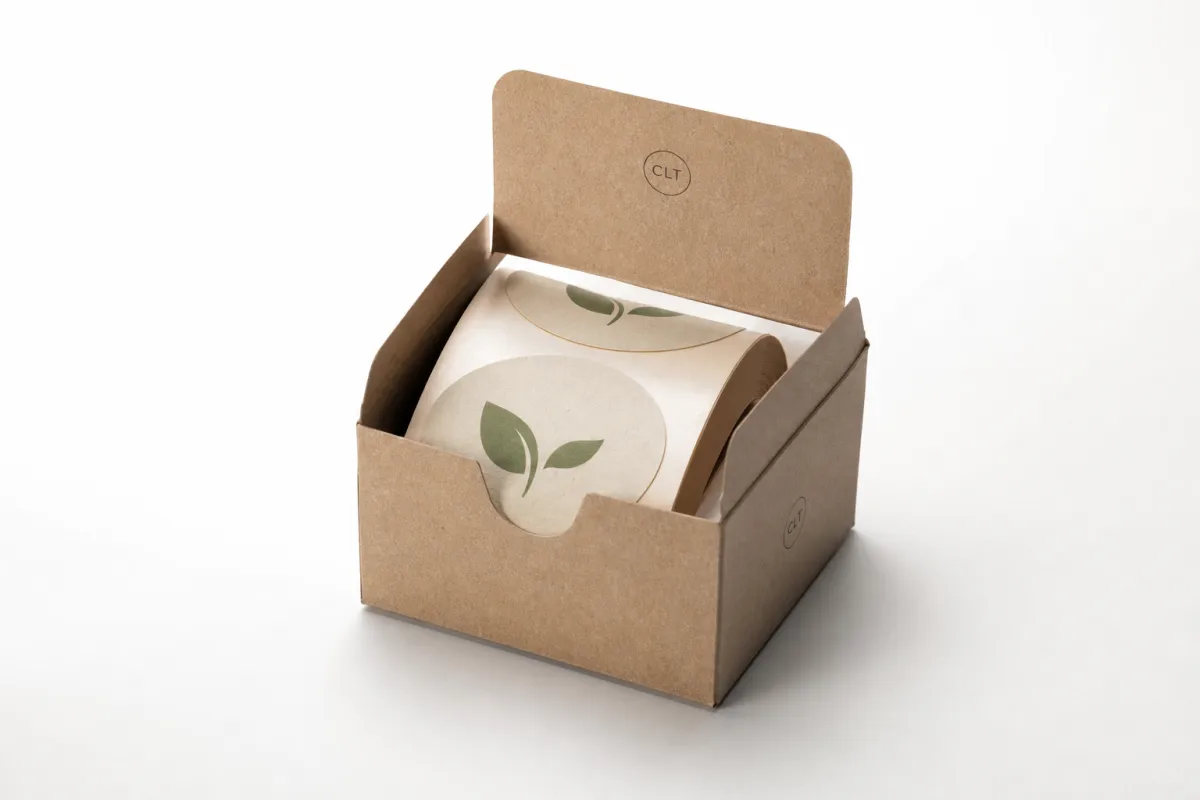
Compostable product stickers bulk solve a packaging problem long before they solve a marketing one. A label has to survive storage, printing, application, shipping, and customer handling while still matching the waste-reduction message the brand wants to communicate. That means the right starting point is the package itself: surface type, temperature, moisture exposure, and how the sticker will actually be applied.
The smallest label can create the biggest slowdown. I have seen teams lose time because a sticker lifted on a chilled bottle, refused to release cleanly from the liner during hand application, or smeared on a mailer after a little abrasion in transit. None of those failures are dramatic on their own, but they add up. They create rework, waste, and a quiet sense that the packaging is fighting the operation instead of helping it.
Bulk ordering changes the economics in a useful way. Brands that run the same SKU month after month, or roll out seasonal packaging across several regions, usually benefit from compostable product stickers bulk because the construction stays more consistent and the unit price becomes easier to predict. Reorder continuity matters just as much as the first quote. A label that performs the same way on the third run as it did on the first saves real money, even if the spreadsheet only shows a small difference at the top line.
The sustainability story is strongest when the full structure matches the claim. Face stock, adhesive, and liner all matter, and they have to be selected with the end-of-life message in mind. Buyers and regulators are paying closer attention to what "compostable" actually means, so vague wording is not a good idea. If the material build supports a compostable or lower-waste claim, say that clearly and accurately; if it does not, do not stretch the language to make the marketing line sound prettier.
A sticker that fails in production is not a sustainability win. It creates waste, slows the line, and makes the next order harder to trust.
Not every compostable product stickers bulk program belongs on every package. A dry carton has different needs than a refrigerated bottle. A hand-applied label behaves differently from one running through an applicator. Matching the construction to the real use case first saves the brand from paying for a material that looks responsible but does not actually fit the job. That is the part many teams miss at first.
For packaging teams trying to reduce complexity without giving up shelf presence, compostable product stickers bulk can lower friction in three ways: they support repeat ordering, they reinforce the sustainability message, and they keep the package family aligned with the larger packaging system. Used well, they are not decorative extras. They are working components.
Compostable Product Stickers Bulk Materials, Adhesives, and Print Options
Material selection comes first because it determines how the sticker behaves before anyone sees the printed artwork. Compostable product stickers bulk can be made from compostable paper stocks, plant-based film alternatives, or certified compostable face materials, and each option suits a different environment. Paper-based constructions often fit dry retail goods, wellness jars, and cartons nicely, while film-style alternatives can offer more flex or a bit more moisture tolerance where that extra resilience is needed.
Adhesive choice is where many buyers underestimate the job. A permanent adhesive is often the safer route for shipping cartons, retail jars, and packages that need to hold through repeated handling, while a lighter removable tack may be better for temporary promotions or internal logistics. For compostable product stickers bulk, the adhesive also has to be checked against the surface itself, because glass, coated paperboard, kraft fiber, and flexible pouches all respond differently. A label can look perfect on one surface and behave stubbornly on another.
Cold-chain performance deserves real attention. If the sticker is going onto refrigerated packaging, condensation and temperature change can alter how the adhesive sets. A sample that looks great on a room-temperature table might not survive an actual cooler. In food and beverage packaging, that difference is not small. It can decide whether the label stays clean through display, transport, and store handling or whether it starts peeling before the product even reaches the shelf.
Printing choices are usually straightforward, but finish still changes the feel of the final piece. Full-color process printing helps with illustrations, gradients, and shelf impact, while spot color can keep a logo crisp and help control print costs. Matte and satin finishes often suit compostable product stickers bulk better than a heavy gloss, especially when the brand wants a more natural presentation or a softer tactile feel. Gloss is not wrong by default, but it should be chosen for a reason, not out of habit.
Artwork can influence the construction too. Heavy coatings, metallic effects, and certain laminate layers may change how the label is perceived in a compostable program, or may push the build away from the intended end-of-life pathway. That is why the printer should review the visual goal and the sustainability claim before approval. A clean spec sheet will usually save more money than a pretty mockup that cannot be produced the same way twice.
For brands that care about paper sourcing, FSC language can matter as well. A paper face stock with responsible fiber sourcing may strengthen the broader package story, even if the sticker itself is not meant to be the hero of the compostability conversation. That is one reason compostable product stickers bulk should be matched to the full packaging plan instead of chosen in isolation.
From a procurement standpoint, it helps to think in three layers:
- Face stock: the visible material customers touch and see.
- Adhesive: the layer that decides whether the label stays on the pack.
- Liner and format: the release system that affects application speed and waste.
That structure may sound basic, but it is the difference between a sticker that supports eco-friendly packaging and one that creates a line issue. For compostable product stickers bulk, the best material choice is usually the one that meets the package requirement with the fewest extra layers and the cleanest production behavior.
For technical teams that want a broader packaging reference point, resources like packaging.org can help connect material decisions with performance and sustainability language. The more the team understands the build, the easier it is to order the right label the first time instead of trying to repair the spec later.
Compostable Product Stickers Bulk Specifications: Sizes, Finish, and Performance
Before any quote can be trusted, compostable product stickers bulk need a clear specification sheet. Size, shape, roll core, spacing, unwind direction, and delivery format all need to be defined. If those details stay loose, the supplier has to guess, and guessing gets expensive once production starts.
Label size affects more than appearance. A larger sticker uses more material, changes application speed, and may require a wider unwind path on the applicator. Smaller labels can be cheaper per piece, but they may be harder to handle if the type is dense or the barcode needs a generous quiet zone. Compostable product stickers bulk work best when the dimensions are built around the actual package panel instead of around an arbitrary artboard.
Finish matters in two ways: how the sticker looks and how it holds up. A matte finish often cuts glare and reads nicely on natural paperboard, while a satin finish can give the logo a little more lift without feeling overly coated. If the package will be handled often, scuff resistance becomes important, especially on mailers, cartons, and retail packs that may rub against other items during shipping.
Performance should always be tested on the actual surface. Glass, coated board, kraft mailers, and flexible pouches all create different adhesion behavior, and the best answer usually comes from a real sample on the real package. For compostable product stickers bulk, that check matters far more than a screen proof, because a screen proof cannot tell you how the adhesive behaves after eight hours in a cooler or three days in a delivery tote.
There are also production details that only show up once the job is moving. Hand application is forgiving, but it still needs a consistent liner and a clean kiss-cut. Automated labeling often requires tighter roll tolerances, consistent unwind direction, and stable spacing so the machine can feed without drifting. That is why the spec sheet should mention the application method every time. If you leave that out, you're asking for avoidable trouble.
A useful prepress checklist for compostable product stickers bulk includes the following:
- Exact dimensions and corner style.
- Roll or sheet format, plus core size if rolled.
- Barcode placement, quiet zone, and required contrast.
- Bleed, trim tolerance, and safe area for text.
- Package surface type and temperature range.
- Proof format, color reference, and approval contact.
That level of detail reduces surprises and helps the supplier quote more accurately. In bulk programs, small ambiguities can multiply into cost and schedule issues. A label that is only "about 3 inches wide" is too loose for repeat production. A label that is "3 x 2 inches, 0.125-inch corner radius, 1-inch core, 0.125-inch gap, unwind from the top" is far easier to price and produce correctly.
Buyer expectations should stay realistic on storage life too. Some compostable product stickers bulk orders are meant for immediate use, while others sit in inventory for weeks or months before application. Heat, humidity, and sunlight can change how the adhesive ages, so storage conditions should be part of the specification, not an afterthought. If the labels need to stay stable in inventory, ask about recommended storage limits and likely shelf life during quoting.
For distribution-heavy programs, it is smart to think about transit performance in the same breath as shelf performance. If labels go onto shipping cartons or e-commerce mailers, testing against rough handling standards is wise, and groups like ISTA provide a useful framework for understanding how vibration, drop, and compression affect packaging. A sticker that survives the press is not automatically ready for the parcel network.
In short, compostable product stickers bulk perform best when size, finish, and line behavior are specified together. A label is not just a graphic. It is a working part of the package, and working parts deserve precise instructions.
Compostable Product Stickers Bulk Pricing, MOQ, and Quote Structure
Pricing for compostable product stickers bulk depends on several moving parts, and order size is only one of them. Material type, print coverage, finishing, die cutting, roll configuration, and adhesive complexity all affect the final number. Two projects with the same quantity can land in very different cost bands if one uses simple one-color art on a standard roll and the other uses full-color coverage on a more demanding compostable construction.
MOQ usually reflects setup economics. A small custom job still needs prepress, press setup, finishing, and packing, so the supplier has to spread those fixed costs across the order. That is why higher minimums often reduce unit cost, but they also increase inventory commitment. For compostable product stickers bulk, the best MOQ is the one that supports both pricing efficiency and storage comfort.
When buyers compare quotes, the unit price alone is not enough. One quote may include proofing, Custom Die Cutting, and basic packaging, while another may separate those items into line charges. Shipping cartons, repeat order setup, and any special handling for compostable materials should also be confirmed. The cleanest quote is the one that shows what is included and what is not, with no soft edges.
| Option | Typical Use | Estimated Unit Cost at 5,000 Pieces | Notes |
|---|---|---|---|
| Compostable paper stock, simple color work | Dry retail boxes, jars, and mailers | $0.04 - $0.09 each | Good for clean branding and lower ink coverage |
| Plant-based film alternative, full-color print | Wellness, food, and shelf-ready packaging | $0.06 - $0.13 each | Better visual depth, usually higher material cost |
| Certified compostable construction with custom die cut | Programs with stricter sustainability language | $0.08 - $0.16 each | More specification control, often more prepress review |
| Roll labels for dispensing equipment | Higher-volume hand or machine application | $0.05 - $0.12 each | Roll format can improve application speed and consistency |
Those ranges are directional, not universal. A small label with a simple logo may fall at the low end, while a larger, richly printed label with special finishing will sit higher. The point is not to chase the cheapest sticker on paper; the point is to compare compostable product stickers bulk by total packaging value. If a slightly higher-cost label reduces waste, avoids relabeling, and keeps the line moving, it is usually the better buy.
Tiered pricing is one of the most useful tools in a bulk project. Ask for quotes at launch quantity, mid-volume replenishment, and best unit-cost volume so the team can decide whether to split the first order or commit to a larger run. That gives finance, operations, and brand management a shared view of the tradeoff between cash outlay and unit savings. It also keeps the conversation honest, which is something buyers appreciate more than polished sales talk.
There is a subtle difference between a low sticker price and good sticker economics. Compostable product stickers bulk should be judged by the cost of the entire job, including time on the pack line, percentage of rejects, and the chance the labels need to be reordered sooner than expected because the build was not strong enough for the real use case. A lower quote that creates relabeling is not really lower.
Best practice: compare at least two or three volume tiers, ask whether proofing and tooling are included, and confirm the exact construction before approving the final number. That simple habit keeps bulk sticker buying more predictable and makes it easier to plan future replenishment.
For brands that buy repeatedly, a supplier who supports Wholesale Programs often makes quote consistency and reorder clarity much easier to manage. Compostable product stickers bulk are simpler to control when the file history, specs, and production assumptions stay organized from the beginning.
Compostable Product Stickers Bulk Process and Lead Time
The production process for compostable product stickers bulk usually follows a predictable sequence: inquiry, specification review, artwork check, material recommendation, proof approval, production, finishing, packing, and shipment. That may sound routine, but each step has a job to do. A clean file package and a clear application brief often shorten the timeline more than anything else.
Lead time depends on what the job asks the press to do. If the material is standard and already in stock, the order can move faster than a fully custom compostable build that needs special sourcing or additional approval. Print complexity matters too. A one-color label with basic cutting is usually quicker than full-color work with multiple finishes, tight registration, or barcode testing.
For many programs, a realistic schedule after proof approval lands in the 12-15 business day range, though it can stretch if the order needs a new material source, a detailed die, or a revision round. Rush orders are possible in some cases, but they work best when the artwork is final and the specification is already clear. Compostable product stickers bulk do not like uncertainty, and production calendars do not either.
Sampling helps reduce risk. Material swatches are useful for comparing feel and appearance, but a production proof is better when the package needs real-world performance. If the label will face condensation, friction, or curved surfaces, a physical sample on the actual package is the safest route. That small check can prevent a very expensive reprint later.
A buyer should also know what a good file package looks like. Vector art, correct dielines, Pantone references when needed, embedded fonts or outlined text, and barcode data set at the proper size all help the job move cleanly. Compostable product stickers bulk with incomplete artwork often spend more time in prepress than in print, and that delay can push a seasonal launch into an awkward window.
Schedule planning should connect the sticker run to the rest of the packaging timeline. If cartons, pouches, and mailers are arriving on different dates, the label order should be timed so the finished stickers are ready when the package line is ready. That coordination avoids rushed freight, warehouse clutter, and the annoying moment where every component is in the building except the one the line needs most.
There is also a practical sustainability angle to lead time. A rushed reprint often costs more in freight and waste than a planned job with a steadier schedule. Compostable product stickers bulk are easier to manage when the buyer sets proof deadlines early and leaves enough room for a realistic production window.
Good project flow usually looks like this:
- Confirm package surface, storage condition, and application method.
- Send artwork, size, and quantity targets together.
- Review material options before approving the final spec.
- Approve proof only after the real package sample checks out.
- Lock delivery timing against packaging arrival and launch date.
That approach keeps compostable product stickers bulk from becoming a last-minute scramble. It also creates a steadier buying rhythm for recurring programs, which is exactly what most brands want once they move beyond the first test run.
Why Choose Us for Compostable Product Stickers Bulk Projects
Custom Logo Things is a strong fit for compostable product stickers bulk projects because packaging buyers need more than a print vendor. They need a team that understands how labels behave on real packages, how repeat orders stay consistent, and how to balance sustainability goals with line performance. That practical view matters far more than polished product language.
We focus on the details that prevent expensive mistakes. Trim tolerance, bleed, barcode contrast, adhesive behavior, and roll configuration all sound technical, but each one affects whether the sticker works cleanly in production. Compostable product stickers bulk should be reviewed as a working packaging component, not just as a graphic surface. That is where prepress support and clear communication earn their keep.
Another advantage is straightforward material guidance. Some projects need a paper-based construction that supports green packaging language without overcomplicating the build. Others need more attention to moisture, scuff resistance, or storage conditions. The right recommendation is not always the fanciest one. It is the one that runs cleanly, holds on the package, and keeps the reorder path simple.
What buyers usually value most:
- Responsive quoting with clear assumptions.
- Practical guidance on adhesion and material fit.
- Repeat-order consistency for ongoing SKUs.
- File review that catches issues before production.
- Honest feedback about what a compostable label can and cannot do.
That last point deserves emphasis. A supplier should be able to say plainly when a construction is not the right fit for a cold chain, a textured carton, or a highly abrasive transit path. That kind of honesty builds trust, reduces returns, and protects the brand's sustainability claims. Compostable product stickers bulk work best when the supplier is willing to be precise instead of vague.
There is also value in consistency across repeat runs. Color drift, size variation, or adhesive changes can create problems that do not show up until the second or third order. A supplier who keeps organized records and understands the original approval path makes future replenishment much easier. For brands that grow quickly, that stability can matter as much as the first quote.
If the project expands beyond stickers into labels, tags, or broader packaging programs, the connection with Custom Labels & Tags gives the brand a cleaner way to align its package family. And when the buy becomes recurring, Wholesale Programs can support a more disciplined purchasing rhythm for compostable product stickers bulk and related items.
From a buyer's point of view, the best supplier is the one that helps the packaging line stay calm. That means fewer surprises, clearer specs, and a label that behaves the same on the tenth run as it did on the first. For compostable product stickers bulk, that reliability is the real value.
Next Steps for Compostable Product Stickers Bulk Orders
If you are ready to quote compostable product stickers bulk, start by gathering the basics: label size, total quantity, package surface, storage condition, artwork files, and whether the stickers will be hand applied or run through equipment. Those details let the supplier recommend the right construction instead of guessing from a generic description.
It also helps to send a sample of the actual package or at least a sharp photo of it. A kraft mailer, a coated carton, and a glass jar can all look simple on screen, yet they behave very differently in production. Compostable product stickers bulk become much easier to spec when the supplier can see the surface, feel the texture, and understand the handling environment.
Ask for two or three price tiers so you can compare launch volume, replenishment volume, and the best unit-cost level for planning. That makes the decision clearer for finance and operations, and it helps the brand avoid overcommitting to inventory that may sit too long. Bulk buying should support flexibility, not take it away.
Confirm proof timing, delivery target, and any sustainability wording before the job starts. If the package will mention compostability, zero waste, or a broader eco-friendly packaging claim, make sure the wording is accurate and consistent with the actual material build. Compostable product stickers bulk should support the message, not create a compliance or credibility problem later on.
One practical rule helps on almost every order: match the sticker to the package first, then match the design to the sticker. That sequence keeps the job grounded in real packaging conditions and avoids the common trap of trying to force a visual concept onto a construction that cannot support it.
Once those details are locked, compostable product stickers bulk become a straightforward production job instead of a guessing game, with the right mix of cost, performance, and timeline control. The clearest takeaway is simple: define the surface, the temperature, and the application method before you ask for price, because those three details usually decide whether the project runs cleanly or turns into avoidable rework.
What are compostable product stickers bulk made from?
They are usually built from compostable or plant-based face stocks paired with adhesives chosen for the intended package surface. The exact construction depends on whether the label needs to perform on dry retail packaging, chilled goods, or shipping cartons. A good supplier should confirm whether the full label structure, not just the printed face, fits the compostable claim the brand wants to make. For compostable product stickers bulk, that construction review is the difference between a label that sounds sustainable and one that actually supports the package program.
Do compostable product stickers bulk stay stuck on refrigerated packaging?
Some do, but cold surfaces and condensation change how adhesive behaves, so the material has to be selected for that environment. It is best to test the label on the actual carton, bottle, or pouch before placing a large order. If the package will move through a cold chain, mention that early in the quote process so the adhesive recommendation matches the real use case. Compostable product stickers bulk can work in chilled settings, but only when the spec is built around the temperature and moisture conditions.
What MOQ should I expect for compostable product stickers bulk?
MOQ varies by size, print method, and material, but custom bulk sticker jobs often require a minimum that supports press setup and finishing. Higher volumes usually lower the unit cost, so the best MOQ is the one that balances inventory comfort with pricing efficiency. Ask for tiered pricing so you can compare launch quantity versus replenishment quantity before you commit. That approach makes compostable product stickers bulk easier to budget and easier to reorder.
Can compostable product stickers bulk be printed in full color?
Yes, many compostable sticker programs can be printed in full color, depending on the material and finish chosen. Keep in mind that heavy ink coverage, coatings, or special effects may change the construction or affect compostability claims. If color fidelity matters, request a proof and confirm how the colors will read on the chosen stock. Compostable product stickers bulk can still look sharp and branded; they just need the right material and finish match.
How should I store compostable product stickers bulk before use?
Store them in a cool, dry place away from direct sunlight and excess humidity. Keep rolls or sheets in their original packaging until they are needed so the adhesive and face stock stay stable. If the labels will sit in inventory for a long time, ask about shelf life and recommended storage conditions during the quote stage. Compostable product stickers bulk are easiest to manage when the warehouse conditions are part of the plan from the beginning.

