Buyer Fit Snapshot
| Best fit | compostable retail carry bags wholesale for packaging buyers comparing material specs, print proof, MOQ, unit cost, freight, and repeat-order risk where brand print, material, artwork control, and repeat-order consistency matter. |
|---|---|
| Quote inputs | Share finished size, material target, print colors, finish, packing count, annual reorder estimate, and delivery region. |
| Proofing check | Approve dieline scale, logo placement, barcode or warning zones, color tolerance, and any recyclable or compostable wording before bulk production. |
| Main risk | Vague material claims, crowded artwork, or missing packing details can create delays even when the unit price looks attractive. |
Fast answer: Compostable Retail Carry Bags Wholesale: Pricing, Specs should be specified like a repeatable production item. The safest quote includes material, print method, finish, artwork proof, carton packing, and reorder notes in one written spec.
What to confirm before approving the packaging proof
Check the product dimensions against the actual filled item, not only the sales mockup. Ask for tolerance on folds, seals, hang holes, label areas, and retail display edges. If the package carries a logo, QR code, warning copy, or legal claim, reserve that space before decorative graphics fill the panel.
How to compare quotes without losing quality
Compare board or film grade, print process, finish, sampling route, tooling charges, carton quantity, and freight assumptions side by side. A lower quote is only useful if the supplier can repeat the same color, closure quality, and packing count on the next order.
Compostable retail carry bags wholesale sounds simple until a bag splits at checkout, a cashier reaches for a replacement, and the customer walks out with a packaging problem instead of a clean handoff. I have seen that happen more than once, and it always costs more than the buyer expected. The loss is not just the bag itself. It is the labor, the delay at the register, the awkward recovery, and the brand damage that lingers after the transaction is over.
For a packaging buyer, compostable retail carry bags wholesale is not a feel-good phrase. It is a sourcing decision tied to strength, repeatability, print quality, storage stability, and whether the supplier can keep every shipment on spec. One store can shrug off a bad lot. A chain with multiple locations cannot. Once a weak bag enters daily use, the problem shows up fast in complaints, damaged goods, and extra work for store teams that already have enough to juggle.
The upside is real, though. A well-built compostable retail carry bags wholesale program gives stores a consistent look, a clearer waste story, and fewer headaches around disposal. It also makes purchasing easier over time. Once the size, thickness, handle type, and print setup are settled, reorders stop feeling like guesswork. That kind of predictability matters a lot more than the buzz around the word compostable.
Before I ask for pricing, I like buyers to compare six details: material, size, thickness, certification, MOQ, and lead time. Leave one of those out and the quote gets fuzzy pretty fast. A cheap bag is not actually cheap if it lands late, fails a load test, or cannot support the environmental claim printed on the carton. That is the kind of mistake that makes a procurement team go back to square one.
“If the bag fails at checkout, the sustainability story ends right there.” That blunt version is not fancy, but it is true.
The value of compostable retail carry bags wholesale sits in total cost control, not just unit price. You are buying a repeatable package for daily use, not a one-off sample that looks nice under good lighting. That means the bag should arrive on time, unpack cleanly, carry the intended load, and hold up through normal store handling without drama. A buyer who matches the spec to the real use case usually gets better long-term value than the one chasing the lowest number on the page.
For retailers trying to move away from conventional plastic without making operations messy, compostable retail carry bags wholesale can work well if the spec is handled with care. The real work happens before the order: understand the material, verify the standard, and lock the print before anyone starts negotiating price. That approach keeps surprises out of the first shipment and out of the reorder cycle too.
Compostable Retail Carry Bags Wholesale Product Details
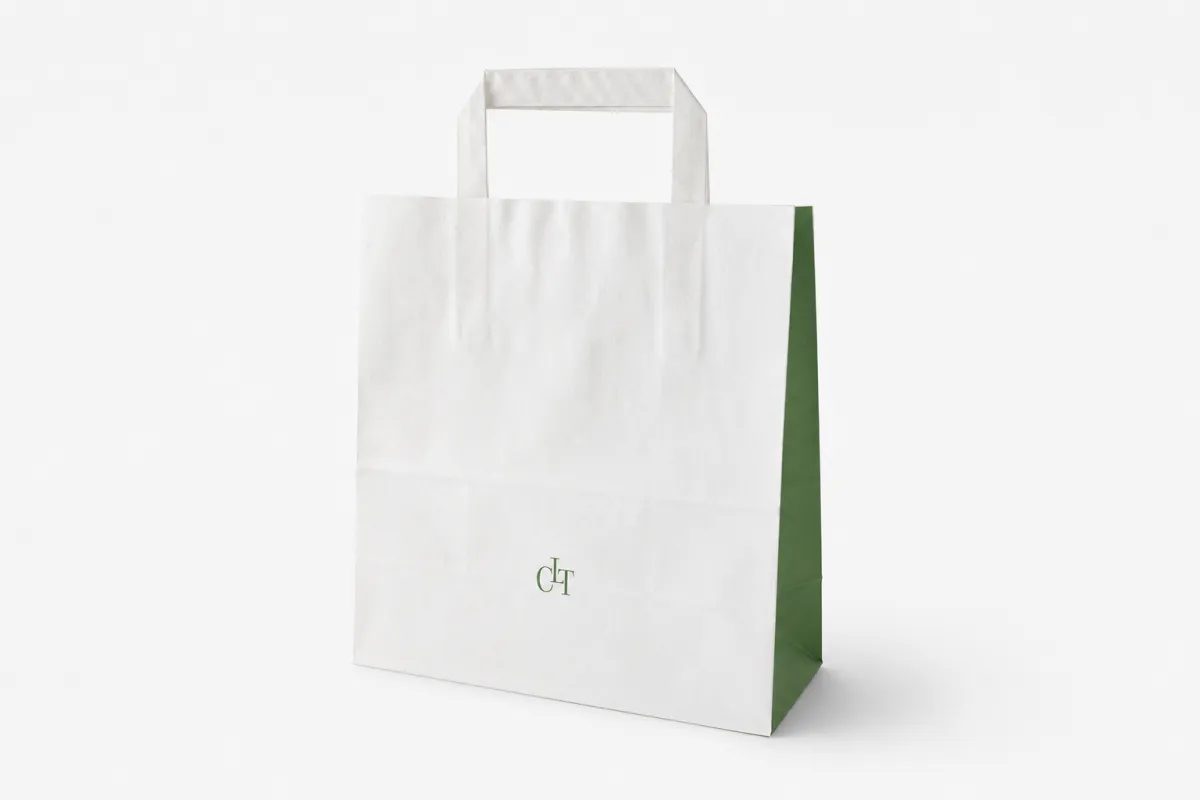
Most compostable retail carry bags wholesale orders fall into a few material families. The most common are PLA blends, starch-based films, and PBAT blends. Each behaves a little differently in production and in use. PLA can work well in certain structures, although it often feels stiffer and less forgiving in the hand. Starch-based films can be attractive from a cost angle, but consistency can vary more than many buyers expect. PBAT blends usually offer better flexibility and tear resistance, which is why they show up often in bags that need real carrying strength and not just a nice-sounding label.
Paper-based hybrids are another option, especially in premium retail. A paper outer with a compostable liner or coating can give a polished shelf presentation while still fitting a compostable program, but only if the structure is certified and the adhesive system is right. A paper bag is not automatically the better choice. Weak handles, poor lamination, or a coating that undermines the claim can wreck the whole package. Buyers asking for compostable retail carry bags wholesale should always confirm which parts are compostable, which parts are paper, and what standard supports the claim.
Bag style matters just as much as the base material. Retailers usually choose from T-shirt bags, loop-handle bags, patch-handle bags, and flat carry bags. Apparel stores often prefer loop-handle or patch-handle formats because they look cleaner and print with more precision. Grocery and convenience buyers often lean toward T-shirt styles or reinforced loop-handle versions because those loads can be less forgiving. If you are ordering compostable retail carry bags wholesale for mixed retail, the handle style should match the heaviest item a customer is likely to toss in without thinking twice.
Customization is where the buying decision turns practical. Size, gusset, handle length, print coverage, ink type, and finish all affect cost and performance. A simple one-color logo on a white or natural bag is usually easier to control than a full-coverage design with tight registration. If your brand depends on crisp graphics, ask how the artwork affects the compostability claim. Some inks are fine. Some coatings are not. It depends on the structure and the documentation behind it. That is not a detail to wave away. It is the sort of detail that keeps a reorder from turning into a correction.
For a practical inquiry, gather these items before you talk numbers on compostable retail carry bags wholesale:
- Dimensions in width, gusset, and height.
- Thickness target in microns or mils.
- Color, print count, and artwork format.
- Intended use: apparel, gifts, groceries, convenience, or mixed retail.
- Compostability standard: industrial, home, or both if applicable.
- Packing format per inner pack and carton.
- Any food-contact, odor, or storage requirements.
One detail buyers miss a lot: biodegradable is not the same as compostable. The two terms do not mean the same thing, and suppliers should not treat them as interchangeable. If a supplier cannot tell you whether the bag is industrial compostable, home compostable, or simply marketed as biodegradable, slow the process down. For compostable retail carry bags wholesale, vague language is a risk, not a feature.
For standards, many buyers ask for ASTM D6400 or ASTM D6868 in the United States, while paper-based structures may also involve FSC paper sourcing if the buyer wants documented paper inputs. That paper trail supports the claim without forcing the procurement team to guess. For a broader reference point on material language and packaging terminology, Packaging-related industry resources can be useful while you shape the spec.
Materials, Specifications, and Performance Checks
With compostable retail carry bags wholesale, the spec sheet matters more than the sales line. Thickness, film structure, and seal quality do the real work. A bag can look premium and still fail the moment a customer drops in a pair of shoes, a candle, and a small return item at the same time. That is why I push buyers to ask for a usable spec, not just a product name.
Start with the basics: microns or mils, load rating, bag dimensions, bottom seam strength, side seam strength, and a recommended fill weight. For apparel retail, a lighter bag in the 20-35 micron range may be enough if the handles are built well. For heavier convenience or grocery use, you may need 35-60 microns or more, depending on the blend and structure. A reinforced bag can carry more at the same thickness, but only if the seal and handle attachment are done properly. If a supplier cannot talk about carry weight in plain language, that should trigger a second look.
Print is another place where buyers get surprised. A single-color logo is usually easier to control, cheaper to run, and less likely to create registration headaches. Full-coverage artwork, dense solids, and metallic effects can add setup complexity and may limit some compostable claims. Ask whether the artwork sits on the film, in the ink layer, or on a separate coating. Ask how tight the print tolerance is. If the bag is for a retail chain with strict brand standards, a tiny shift in logo placement can turn a good order into a reprint. That is not drama. That is packaging math.
Quality checks separate a usable compostable retail carry bags wholesale order from a troublesome one. I look for four things: drop testing, tear resistance, seal inspection, and visual consistency. If the supplier can provide test data or sample evidence, even better. If they can explain how the bag behaves under a typical retail load, that gives you a stronger read on the product. For transit and carton handling, references like ISTA are useful because packaging does not just need to look good. It needs to survive the route from warehouse to shelf.
Environmental performance belongs in the spec too. Ask for compostability certification and ask which standard applies. Industrial compostable and home compostable are different claims with different testing paths. If food contact matters, request that explicitly. If the bags will sit in a hot back room or a humid stock area, say so. Climate affects some compostable materials more than people expect. Long storage, heat, and humidity can change stiffness and seal behavior. A bag that performs well in a dry test room may behave differently in a warm receiving area, and that is normal. Ignoring it is not.
For buyers trying to fit packaging into a circular economy plan, a simple test helps: does the bag support real disposal behavior in your market, or is it only an attractive label? Good compostable retail carry bags wholesale programs can support lower environmental impact and cleaner end-of-life handling, but only when the material, certification, and local waste stream line up. Without that match, the result is just green packaging language with weak execution.
One practical rule keeps decisions grounded: match the bag to the store environment. Apparel stores, gift shops, and cosmetics counters usually need lighter, cleaner-looking bags with polished print. Grocery and convenience stores need grip, seam strength, and more resistance to puncture. Compostable retail carry bags wholesale is not one product category. It is a range of choices, and the right one depends on load, moisture, and how rough the average shopper is with packaging. Pretty does not equal durable, and every buyer has learned that the hard way at least once.
Compostable Retail Carry Bags Wholesale Pricing and MOQ
Pricing for compostable retail carry bags wholesale comes down to six main drivers: material choice, bag size, thickness, print complexity, certification, and order volume. Carton configuration and freight terms matter more than many buyers expect too. A quote that looks inexpensive per unit can become costly once packing, tooling, and shipping are added. That is why total landed cost is the number to compare, not the first line on the page.
As a planning range, simple stock-size unprinted bags can sometimes land around $0.06-$0.12 per unit at larger quantities, depending on structure and market conditions. Custom printed loop-handle bags might sit around $0.09-$0.18 each for mid-size runs. Heavier-duty or more complex branded bags can move into the $0.14-$0.28 range or higher. Paper-based hybrid bags, especially with premium finishes, can climb further. These are reference numbers, not fixed prices. If a quote sits far outside them, ask why before you celebrate or panic.
MOQ follows the same logic. Stock sizes usually allow lower entry quantities, sometimes 5,000 to 10,000 pieces depending on the supplier. Custom sizes often need 10,000 to 20,000 pieces or more. Multi-color printing, special handles, and thicker films can push the minimum higher. If you are testing a new format, low MOQ is attractive. If you already know the bag will repeat across stores, a slightly higher MOQ may give you better unit economics and a cleaner reorder path.
Here is the tradeoff most buyers face: the cheapest first order is not always the smartest order. A lower MOQ can help test the market, but it can also bring weaker pricing, less stable production priority, and more risk if a fast reorder is needed. For compostable retail carry bags wholesale, I would rather see a buyer choose a spec that can be repeated cleanly than squeeze the first quote by a few cents and create supply headaches later. That is a kind of false economy that gets ugly after the first replenishment cycle.
| Option | Typical MOQ | Indicative Unit Price | Best For | Watch-Out |
|---|---|---|---|---|
| Stock-size unprinted compostable bag | 5,000-10,000 | $0.06-$0.12 | Fast replenishment, basic retail use | Limited branding and fewer size choices |
| Custom one-color printed loop-handle bag | 10,000-20,000 | $0.09-$0.18 | Apparel, boutique, gift retail | Setup fees and artwork approvals |
| Heavy-duty multi-color PBAT blend bag | 20,000-50,000 | $0.14-$0.28 | Convenience and grocery loads | Higher print cost and thicker film expense |
| Paper-based hybrid with compostable liner | 5,000-20,000 | $0.18-$0.40 | Premium retail and gifting | Moisture sensitivity and folding marks |
Ask every supplier what the quote includes. A proper compostable retail carry bags wholesale quote should show unit price by tier, plate or cylinder fees if relevant, sample charges, carton details, freight terms, and any testing or certification costs. If those items are missing, the quote is incomplete. That does not always mean the supplier is weak. It means you do not yet know the full number.
Compare like for like too. Same size. Same thickness. Same print coverage. Same carton count. Same certification level. I have seen buyers compare a plain unprinted stock bag against a fully printed custom bag and act surprised that the prices did not match. Of course they did not. That is not a quote comparison. That is two separate products pretending to be one.
If you need help lining up different sizes and print setups, our Wholesale Programs page is a useful starting point before you request final numbers. It saves time, and time is usually what gets burned when a team approves vague specs and then asks for “one more revision.”
Production Process, Timeline, and Lead Time
A clean order process makes compostable retail carry bags wholesale easier to buy and easier to repeat. The usual flow is simple: inquiry, quote, sample, artwork approval, production, quality control, packing, and shipment. When that sequence is clear, problems get caught early. When it is not clear, the order drifts until somebody in operations notices a mismatch right before delivery. That is the expensive way to learn a lesson.
Sampling usually takes several business days, sometimes longer if the bag has custom printing or a special handle. Production often starts after the proof is signed off, and then the clock depends on quantity, machine scheduling, and the current factory load. For many wholesale runs, a typical production window can land around 12-15 business days after approval for simpler orders, while larger or more complex jobs may need more time. Freight changes the final delivery date more than buyers expect. Air and sea never tell the same story.
Most delays come from a few repeat problems: unclear dimensions, late artwork changes, missing certification requests, or a slow sample approval. The fix is boring but effective. Use one spec sheet, one approved proof, and one sign-off point before the factory runs the full order. That reduces back-and-forth, and it also reduces the chance that somebody in marketing decides the logo needs to move two millimeters after production starts. Two millimeters sounds small until you print 20,000 bags.
For reorders, the lead time is usually better if the spec is already locked. That is one reason businesses with multiple stores like compostable retail carry bags wholesale programs. Once the bag is approved, reorder speed improves and there is less room for drift. A chain store does not want a different shade of green or a slightly different handle length every time a purchase order goes out. Consistency is not flashy. It is profitable.
Buyers planning a store opening, seasonal launch, or promotion deadline should ask for a production calendar up front. Not a vague promise. A calendar. Put the sample date, proof approval date, production start, QC window, and shipment method in writing. If a supplier cannot provide that roadmap, you are not dealing with a supply partner yet. You are dealing with a guessing game. That works for a raffle, not for packaging.
One more operational note: carton packing format affects receiving speed. If bags are packed in neat inner packs with clear carton counts, warehouse teams move faster. If the cartons are sloppy, overfilled, or unlabeled, the receiving line slows down. This is where compostable retail carry bags wholesale either saves labor or adds it. Good packaging is not only about the bag. It is also about the box it arrives in.
Why Choose Us for Compostable Retail Carry Bags Wholesale
We keep the buying side practical. Compostable retail carry bags wholesale should be about consistent specs, clear communication, and orders that show up the way they were approved. No mystery materials. No vague claims. No last-minute “close enough” behavior. Buyers need a supplier that treats retail packaging as a repeatable system, not a one-off decoration job.
What matters most is quality control. Stable thickness, clean sealing, reliable handle construction, and print that stays where it should. That is what protects reorder consistency. It also cuts down on expensive mistakes. A supplier that catches a spec issue before production starts saves more money than one who smiles politely and fixes nothing until the cartons are already packed. That is not service. That is damage control.
We also focus on documentation that helps procurement and receiving teams move faster. For compostable retail carry bags wholesale, that means material specs, certification support, test reports where available, artwork proofing, and carton labeling that makes sense in a warehouse. The less your team has to decode at receiving, the better. Clean paperwork is underrated because it does not look exciting. It just keeps the order moving.
Retail buyers also need help Choosing the Right bag style. Apparel, groceries, gift items, and mixed merchandise do not all need the same structure. A bag for folded tees is not the same as a bag for produce and impulse goods. We help sort that out early so you do not overbuy strength you do not need or underbuy strength you absolutely do need. There is no prize for ordering the wrong bag with a pretty logo on it.
If you are trying to line up a chain rollout, use compostable retail carry bags wholesale as a practical part of your green packaging plan, not a decorative one. The best result is a bag that works on the floor, not just in a presentation. That is where the business value shows up: fewer complaints, fewer reprints, less waste handling, and better repeatability across locations.
Honestly, most buyers do not need a packaging lecture. They need a supplier who can turn a spec into a repeat order without drama. That is what we aim to do through our Wholesale Programs, and it is what keeps buyers from having to babysit every order cycle.
Next Steps: Get a Quote and Lock Specs
If you are ready to buy compostable retail carry bags wholesale, start with a short, clean spec sheet. Keep it practical: intended use, size, thickness target, print needs, quantity, and target delivery date. If you can add the compostability standard and carton packing format, even better. The clearer the brief, the fewer surprises later.
Order a sample or sample pack before the full run. That is not extra caution. That is normal purchasing discipline. A sample lets you check hand feel, seam strength, handle comfort, print sharpness, and how the bag behaves with your actual products inside. The difference between a nice-looking mockup and a reliable retail bag can be a few details that only show up when someone loads it with real merchandise.
Then compare at least two quotes using the same spec. Same material. Same size. Same print. Same carton count. Same certification expectation. Otherwise the comparison is noise. For compostable retail carry bags wholesale, a low price line can hide a weak structure or missing documentation, and that is how buyers end up paying twice. Once for the first order. Again for the correction.
Before you approve production, confirm certification, packaging format, and freight terms. Ask whether the product is industrial compostable or home compostable. Ask how it should be stored. Ask whether the supplier can support the claim with documentation that makes sense to your team and, if needed, to your market. It is easier to ask these questions now than to explain a mislabeled bag later.
A simple decision path works best: shortlist the right size, approve the material, confirm MOQ, and lock the production schedule. That gets you from interest to purchase without wasting time on decorative detail. It also helps your team stay focused on the business result: a bag that performs, fits the brand, and supports the compostable retail carry bags wholesale program you actually need.
Compostable retail carry bags wholesale is worth buying when the spec is honest, the material is matched to the load, and the supplier can deliver consistently. Build the spec sheet first, get samples in hand, and lock the details before you place the full order. That is the cleanest path to a bag that does the job instead of just looking the part.
What is the typical MOQ for compostable retail carry bags wholesale?
MOQ usually depends on whether the bag is a stock size or a fully custom run. Lower MOQs are more common for simple prints and standard dimensions. Custom sizes, heavier films, and multi-color artwork usually increase the minimum. For compostable retail carry bags wholesale, a buyer should expect the minimum to move with print setup and material complexity.
How do I compare compostable retail carry bags wholesale pricing fairly?
Compare the same size, thickness, material, and print setup from each supplier. Ask whether the quote includes tooling, samples, packaging, and freight. Look at total landed cost, not just the unit price on the first line. That is the only clean way to judge compostable retail carry bags wholesale pricing without getting fooled by a low headline number.
Are compostable retail carry bags wholesale options strong enough for groceries?
Some are, but the load rating has to match the use. Ask for thickness, seal strength, and recommended fill weight before ordering. Heavy grocery use often needs a different spec than apparel or gift retail. A grocery buyer should treat compostable retail carry bags wholesale as a performance decision first and an environmental choice second.
What documents should I ask for before ordering compostable retail carry bags wholesale?
Request compostability certification, material specification, and test data if available. Confirm whether the bag is industrial compostable or home compostable. Ask for artwork proof, carton details, and shipping terms before production starts. For compostable retail carry bags wholesale, paperwork is not decoration. It is risk control.
How long does a compostable retail carry bags wholesale order take?
Sampling usually happens first, then production starts after artwork and spec approval. Lead time changes with order size, print complexity, and current factory load. Freight method matters too, so air and sea shipping will not land on the same schedule. If you need compostable retail carry bags wholesale for a store opening, ask for the full timeline before you approve the order.

