Corporate gifting logo patch Beanies Material Sample guide is really a buying checklist in disguise. The logo matters, but the sample has to prove the beanie feels good, holds shape, and survives packing, wear, and review by people who care about details.
Corporate Gifting Logo Patch Beanies Material Sample Guide
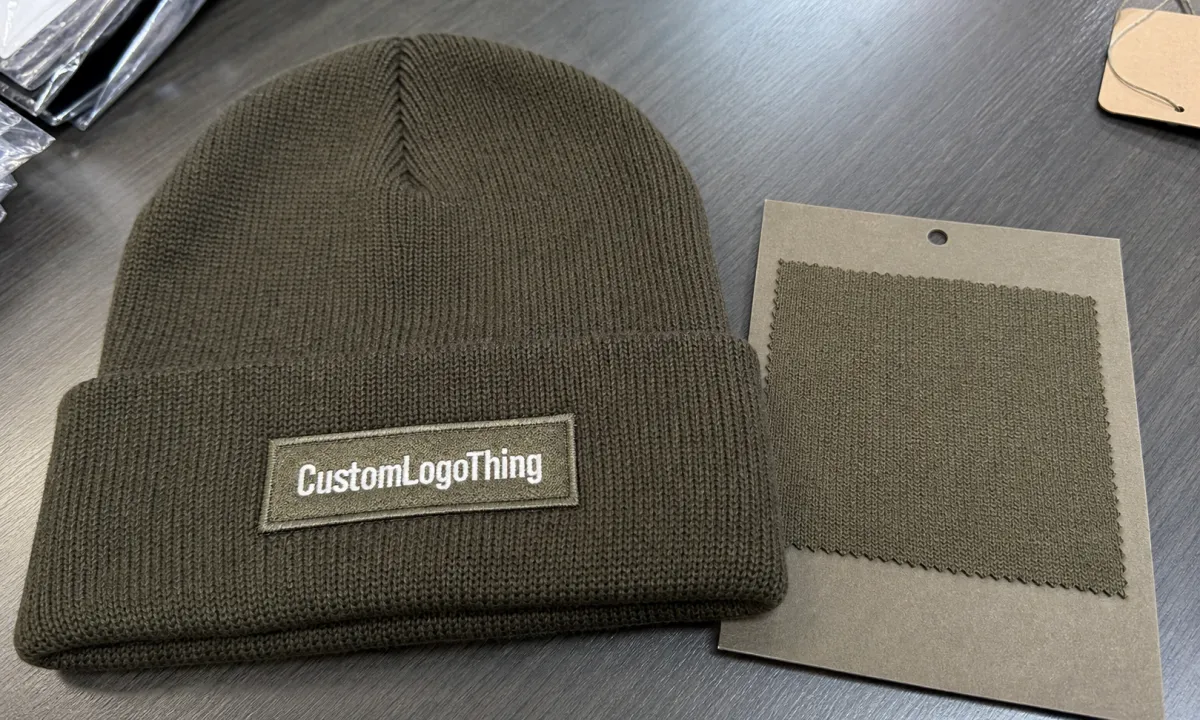
A sample should answer one question fast: will this feel like a gift people actually wear? That depends on fabric handfeel, knit density, stretch recovery, patch construction, and how the parts work together. A sharp logo on a poor body still reads as a weak product.
What is the point of a polished patch if the beanie feels cheap in hand?
The most useful sample is the real beanie body with the exact patch method attached. Flat swatches hide the problems that show up on a cuff or crown. A patch that looks neat on a table can buckle once the knit stretches. A soft yarn can feel premium until the backing makes the front panel stiff.
Corporate gifting adds another test: the item is judged in the box, in the hand, and on the head. Packaging can improve the presentation, but it cannot fix a beanie that feels thin, itchy, or badly shaped. The sample needs to hold up at each stage.
A good sample does more than show the logo. It shows whether the final gift will still look worth keeping after shipping, handling, and the first wear.
That is why the review should stay practical. Check the body material first, then the patch, then the seams and finish. Make sure the beanie feels warm enough, soft enough, and structured enough to survive freight and repeated wear. If those basics do not line up, the order will feel off even when the artwork is correct.
How Logo Patch Samples Shape the Final Beanie
Knit gauge changes the way a patch sits and reads. A tighter 12-gauge beanie gives the logo a flatter surface and usually a cleaner appearance. A looser 7-gauge knit has more texture and movement, which can make edges look less precise once the hat is worn. Buyers often miss that because the sample sits flat during review. Hats do not live flat.
Patch type also affects appearance and cost. Sewn-on patches are usually easiest to approve because they read cleanly and hold up well. Woven labels are lightweight and subtle. Embroidered patches add texture, but they can crowd small logos or fine lines. Leather-style patches feel more refined. Silicone patches look modern and performance-oriented.
There is no universal best choice. The right option depends on the audience and the brand tone. Executive gifts often work better with a restrained patch. Field teams or outdoor campaigns can handle something more technical. If the logo needs to be read from a distance, the sample has to prove legibility beyond close-up viewing.
Why approve a mockup that looks fine on screen and then discover the patch pulls when the cuff is stretched?
One common failure is approving a mockup that looks fine in a file and then discovering the patch pulls when the cuff is stretched. That turns a clean logo into a puckered one, which is exactly the kind of small defect that makes a beanie feel cheap.
Because of that, the sample should be worn and handled, not just viewed. Pull it, fold the cuff, stretch the crown, and photograph it in natural light. If the mark still looks centered and balanced after that, it has a better chance in production.
| Patch Method | Look and Feel | Typical Sample Feedback | Best Use | Approx. Cost Impact |
|---|---|---|---|---|
| Sewn-on patch | Classic, durable, lightly tactile | Usually approved fastest because the edges stay clean | Team gifts and general corporate gifting | Low to moderate |
| Woven label | Flat, lightweight, subtle | Works well for understated branding | High-volume programs | Low |
| Embroidered patch | Textured, traditional, visible thread relief | Best for bold logos with limited fine detail | Winter events and casual retail-style gifts | Moderate |
| Leather-style patch | Premium, structured, more polished | Usually chosen when the gift needs a cleaner, executive feel | Client gifts and leadership kits | Moderate to high |
| Silicone patch | Smooth, contemporary, athletic | Often preferred for outdoor or performance-forward branding | Active or field-facing campaigns | Moderate to high |
Material Choices That Change Comfort and Perception
Fabric choice is where the sample starts to justify its cost. Acrylic is the default for a reason: it is warm, predictable, and usually the most budget-friendly option. It also takes color well, which helps when the brand needs a specific shade.
Wool blends feel more substantial and often read as more premium in hand. They drape better and trap heat well, but the tradeoff is cost and, for some wearers, itchiness. If the audience includes sensitive skin or the beanie may be worn indoors, rough wool blends can be a problem.
Cotton blends are softer and lighter. They work for mild weather or for recipients who want something less heavy on the head. They are not the warmest choice for real winter use, so they usually fit lifestyle programs better than cold-weather use cases.
Recycled yarns matter because many brands need a sustainability story that is visible in the item itself. Recycled polyester and recycled acrylic can be practical if the rest of the kit supports the same message. Recycled inserts, simple packaging, and clear material notes make the story more believable.
Patch material changes perception as much as the yarn. Matte faux leather looks polished. Woven patches feel lighter and less formal. Silicone signals sport or utility. None is better in the abstract; each sends a different message.
There are also a few durability questions that belong in the review.
- Pilling shows up faster on lower-grade acrylic after repeated wear.
- Stretch recovery matters because a beanie that loses shape looks tired quickly.
- Itch factor matters more than many buyers expect, especially with coarse wool.
- Color consistency can drift between dye lots if the spec is not locked early.
For client gifting, softer handfeel and cleaner presentation often matter more than maximum warmth. For internal events or field staff, comfort and durability usually beat luxury cues. That split keeps the sample review focused on the actual use case instead of aspirational language.
Process, Lead Time, and Approval
The process is simple on paper: request the spec, confirm the artwork, review the sample, and approve production. In practice, delays usually come from missing details.
Start with the basics: beanie style, fiber content, patch method, logo file, target quantity, packaging requirements, and delivery date. If the artwork is fuzzy or in the wrong format, the supplier has to guess about line thickness and spacing. That is how small issues become avoidable delays.
Color matching creates another round of friction if Pantone references are not locked early. Patch size matters too. A logo that is only a few millimeters too large can throw off the balance of the hat. Bigger is not always better, especially on a cuffed beanie where oversized branding can overwhelm the body.
Lead times vary, but rough ranges help with planning. A basic material swatch may take 3-7 business days. A custom prototype often needs 7-12 business days. If the patch is detailed or the build is unusual, allow more time. Revision rounds can add another 2-5 business days. Once the sample is approved, standard production for a simple corporate order often lands around 12-20 business days.
That is just production time. Freight can extend the calendar, and corporate gifting usually has a fixed event date. Holiday drops, onboarding kits, trade-show runs, and incentive programs all compress the timeline, so the sample has to arrive early enough to leave room for one more tweak if needed.
Is there any value in a perfect sample if it misses the event window?
Cost, MOQ, and Quote Drivers
Cost follows complexity. Simple acrylic bodies with a small sewn patch usually stay near the bottom of the range. Premium yarns, layered patch methods, mixed finishes, and custom packaging all push the quote upward. The supplier is not just charging for material; they are pricing labor, setup, and risk.
MOQ matters because sample approval can expose whether the order is realistic at scale. A design that looks elegant at 50 units may become expensive at 500 if the patch method requires a lot of hand work. That is why the sample should be viewed as a cost signal, not only a visual check.
Packaging is another line item that buyers often underestimate. A simple polybag is cheap. A branded belly band, hangtag, or rigid presentation box changes both perception and budget. For gifting programs, that extra spend can make sense if the unboxing moment matters.
The highest quotes usually come from stacked decisions. Custom dye. Special patch construction. Individual packaging. Tight turnaround. Each choice is reasonable on its own, but together they create a quote that feels much heavier than the original brief.
Smart buyers ask where the money is going. If the answer is mostly visible quality, the order is probably justified. If the cost comes from avoidable complexity, the sample should trigger a simpler revision before production starts.
Common Mistakes When Reviewing Samples
One mistake is treating the sample like a color proof only. The beanie is a product, not a print sheet. Touch, stretch, and wear tests reveal more than a quick visual approval ever will.
Another mistake is focusing on the logo and ignoring the body. A perfect patch on a poor knit still lands badly. The opposite is also true: a great fabric can forgive a smaller logo, but it cannot rescue a sloppy application.
Buyers also get trapped by indoor lighting. Artificial light can flatten texture and hide puckering. Natural light usually tells the truth faster.
Do not skip the wear test.
Size assumptions cause trouble too. A beanie that looks balanced on a sample card can feel oversized or cramped on an actual head. The same logo may read perfectly at one scale and awkwardly at another, which is why the sample should be evaluated on a person whenever possible.
Finally, some teams approve too quickly because they are under time pressure. That can be expensive. A rushed yes often becomes a batch of goods that looks acceptable in isolation but wrong as a gift.
Practical Approval Rules That Save Orders
Keep the approval checklist short and concrete. Confirm the fabric, patch method, color, size, packaging, and deadline. If any one of those items is unclear, the sample is not ready yet.
Use photos from multiple angles. Front, side, top, cuff stretched, cuff folded, and head-on views all catch different issues. A beanie that photographs well from one angle may still fail when the logo shifts under tension.
Save one reference sample if the order is large. That way the production team has a physical benchmark for stitch density, patch placement, and overall shape. Small inconsistencies are easier to catch when there is a standard sitting beside the new pieces.
Document the approval in writing. A clear note prevents later confusion about whether the finish, color, or logo placement changed after the sample stage.
When in doubt, simplify. A cleaner build is easier to reproduce, easier to gift, and easier to defend if questions come up after delivery.
FAQs
What should I check first in a beanie sample? Start with the fabric handfeel, then inspect the patch attachment, stretch recovery, and overall shape. Those four checks catch most issues before production starts.
How long does a custom sample usually take? Basic swatches often arrive in under a week, while custom prototypes usually need one to two weeks. Complex patch work or revision rounds can extend that timeline.
Which patch method feels most premium? Leather-style and well-finished sewn-on patches usually read as the most polished. The best choice still depends on the brand tone and the intended audience.
Can I use one sample for multiple colors? Sometimes, but not always. Color can affect perception, edge contrast, and even how visible a patch appears, so every major colorway should be reviewed with caution.


