Corporate Gifting Poly Mailers Cost: Buyer's Guide
Corporate gifting poly mailers cost is not just a unit price. It also includes print setup, freight, and the labor saved when a gift ships in a flat format instead of a carton. For apparel, notebooks, welcome kits, and event swag, that can make a real difference in both budget and presentation.
The better question is what the full shipment costs once the item is packed, branded, and delivered. For a buyer, that means looking at size, film, decoration, minimums, and lead time together rather than treating the mailer as a standalone purchase.
If your program also uses cartons, inserts, or other components, it helps to compare the mailer against the rest of the kit. You can review broader Custom Packaging Products alongside the mailer format so the spec stays consistent.
Why branded mailers can lower gift-pack spend
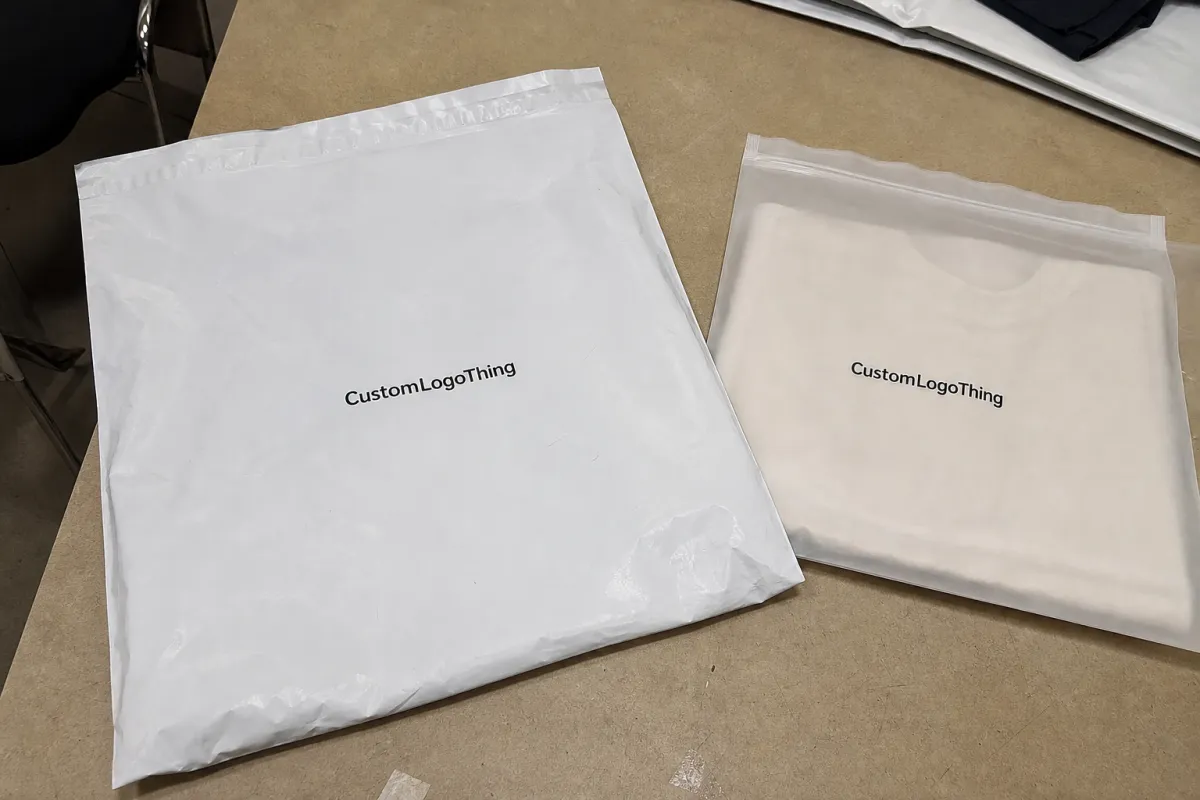
Poly mailers work best when the gift is flat, light, and easy to seal. A folded shirt, hoodie, notebook, or small swag bundle moves quickly through fulfillment in a mailer, and that speed often matters more than a small difference in unit price.
The outer mailer is also the first branded surface the recipient sees. For corporate gifting, that matters because a clean logo and a well-sized package make the shipment feel deliberate instead of improvised. That is especially important for employee welcome kits and client gifts, where presentation is part of the message.
There is also a shipping advantage. Flattening the pack-out reduces dimensional weight pressure and can lower carrier charges on light items that would otherwise ship in a box with unused space. For that reason, corporate gifting poly mailers cost should be judged against the landed cost of the whole program, not just the printed bag.
A mailer that saves a little on purchase price but adds packing time or repacking is rarely the cheaper option.
The most efficient programs start with the item, the destination mix, and the pack-out method. If the mailer fits the gift cleanly and the closure is reliable, the process is simpler. If the mailer is oversized, thin, or visually off-brand, the savings tend to disappear in waste and extra handling.
- Flat gifts: apparel, folded textiles, notebooks, and printed collateral usually fit best.
- Mixed kits: items with hard edges or uneven shapes may need a heavier film or a tighter size match.
- Repeat shipments: monthly, quarterly, or event-based drops benefit most from standardization.
If you are comparing mailer formats for branded gifting, browse Custom Poly Mailers to see how structure and print choices affect both presentation and shipping.
Material and print specs that shape the final look
Film thickness is one of the first choices that affects both performance and feel. A lighter-gauge mailer can work for soft goods and low-risk contents, while a heavier film usually gives a firmer hand, better opacity, and more confidence on mixed shipments.
Opacity matters more than many teams expect. A translucent bag may be acceptable for internal use, but it can weaken the premium feel of a gift program if the contents show through. Opaque film helps maintain brand consistency when the contents vary slightly from shipment to shipment.
Print method changes both appearance and budget. One-color branding is usually the most economical option, especially when the logo is simple and the order volume is steady. Multi-color artwork increases setup complexity, and full-surface graphics raise ink coverage and production controls. If the goal is a clean branded presentation rather than an illustrated outer bag, restrained print often gives the best balance of cost and impact.
Functional details matter just as much as decoration. A self-seal adhesive should close cleanly, a tear strip can improve opening, and tamper evidence can matter on higher-value kits. Recycled-content options, tear resistance, and handling durability all affect how the mailer performs in transit, so buyers should review the package as a shipping item, not only as a print surface.
Dimensions deserve close attention. The mailer should fit the packed item with enough room for a proper seal, but not so much slack that the finished package looks loose. That is especially important in gifting, because an overfilled or sloppy-looking mailer can make the whole program feel less polished than intended.
- 2.5 mil to 3 mil film: common for lighter garments and general swag.
- Heavier gauges: useful for samples, mixed contents, or sharper-edged items.
- Matte or glossy finish: choose based on the brand look and the level of scuff resistance you need.
- Custom sizes: useful when the gift has a consistent fold or kit format.
For teams weighing material choices, the EPA recycling guidance is a practical reference point when comparing film content, disposal expectations, and broader packaging policy.
Corporate gifting poly mailers cost, MOQ, and quote drivers
Here is the part most buyers want first: corporate gifting poly mailers cost varies because size, film gauge, print coverage, and quantity all pull the number in different directions. A small run with simple branding may look inexpensive on paper, while a larger order with heavier film can be a better value at scale.
The most useful way to think about pricing is by cost per piece and landed cost. Unit cost tells you what the product itself costs, but it does not show freight, packaging, or the expense of getting the order to the right location. On lightweight programs, shipping can be as important as the mailer.
MOQ, or Minimum Order Quantity, depends on how the mailer is built. Standard stock sizes usually support lower minimums, while custom dimensions, special colors, and more complex artwork tend to push the MOQ upward. Reorders can price differently from first runs because tooling, plate work, and proofing are already in place.
Setup charges and tooling fees are common on printed packaging. Some suppliers roll them into the bulk price, while others list them separately. Either way, they affect the quote, so a clear request that states quantity, dimensions, number of print colors, and delivery target will produce a tighter answer than a vague ask for branded mailers.
| Mailer option | Typical MOQ | Typical cost per piece | Best fit | Common quote drivers |
|---|---|---|---|---|
| Standard stock size, 1-color print | 500-1,000 | $0.28-$0.55 | Apparel drops, internal kits, simple branding | Quantity, print area, freight, setup charges |
| Custom size, heavier film | 1,000-3,000 | $0.45-$0.80 | Mixed contents, better opacity, tighter fit | Film gauge, tooling fees, custom dimensions |
| Full-surface graphics or multiple colors | 3,000+ | $0.70-$1.20 | High-visibility campaigns and premium gifts | Ink coverage, color count, proofing, freight |
Those ranges are directional, not fixed. A buyer requesting 5,000 pieces of a standard-size mailer with simple branding may get stronger pricing than a team ordering 750 custom-sized pieces with the same art. The real quote depends on the exact spec stack, and the supplier should be able to break it down clearly.
Shipping should be quoted separately or explained clearly in the landed cost. A mailer sent to one fulfillment center is not the same as a program split across multiple offices or employee home addresses. That changes cartons, freight class, and delivery timing, which is why the lowest unit price is not always the cheapest program.
For larger branded kits, compare mailers alongside the other components so the budget lands in one place instead of drifting across multiple vendors. Consistent reorder pricing also matters, because corporate gifting usually moves in waves rather than one clean annual purchase.
For transit standards and handling expectations, the International Safe Transit Association is a useful reference. Even a simple mailer should be judged against drops, compression, and real shipping conditions.
Process, proofing, and turnaround from artwork to delivery
The production path is straightforward when the spec is clear. First, collect dimensions, quantity, print details, and the ship date. Then prepare the artwork, convert the logo to the right format, and review a digital proof. After approval, the order moves into production, packing, and freight booking.
Artwork issues are a common source of delay. Low-resolution logos, incorrect color values, missing bleed, or unclear placement notes can send a proof back for correction. The cleaner the file, the faster the proof cycle, and the less likely the schedule slips.
Lead time should be split into proofing time, production time, and transit time. Buyers sometimes hear "two weeks" and assume that means delivery, but that phrase may only describe manufacturing after approval. A realistic schedule might include one to three business days for proofing, eight to fifteen business days for production, and two to five days for transit.
Rush work is possible, but only if the spec is already locked and the artwork is ready to approve quickly. If the size is still under review, the print layout is not final, or the address list keeps changing, a rush request loses value before production begins.
Here is a simple workflow that keeps projects moving:
- Confirm item dimensions and packed weight.
- Choose the film gauge and closure style.
- Provide print-ready art or clean vector files.
- Review the digital proof carefully, including copy and placement.
- Approve only after shipping details and timing are final.
For buyers comparing corporate gifting poly mailers cost against broader packaging options, the main way to protect timing and price is to lock the spec early. Every revision after the proof stage can affect both, especially on custom dimensions or multi-color branding.
What to expect from a supplier built for repeat gifting runs
Repeat gifting programs expose weak suppliers quickly. If the color shifts from run to run, the size tolerance changes, or the material feel is inconsistent, the campaign starts to look patchy. A supplier built for repeated orders should protect consistency so the second and third shipment match the first closely.
That matters most for onboarding kits, event follow-ups, and seasonal client mailers. These projects often roll out in batches, which means the next order may happen weeks or months later with a different team member owning the file. Good recordkeeping saves time in those situations.
A solid vendor keeps the dieline, print specs, proof history, and reorder notes organized so the buyer does not have to reconstruct the job from scratch. That lowers risk on future runs and makes it easier to compare reprint pricing against the original order.
Packaging guidance is another sign of a supplier worth relying on. If the vendor can tell you whether the current size is too loose, whether the seal could be stronger, or whether the print area should shift for better brand visibility, that saves money and reduces the chance of a reprint.
Sample confirmation matters too. A physical sample can answer questions about opacity, flap closure, and how the package holds shape once filled. For recurring orders, the supplier should also help forecast reorder points so the team does not run out of branded mailers right before a launch or internal event.
For teams comparing multiple packaging formats, start with the intended use and match the format to the job. A mailer built for apparel does not need the same structure as a carton, and a box intended for premium kits does not need to behave like a shipping sleeve.
If you are also sourcing broader kit components, review Custom Packaging Products with the mailer spec so the whole package feels consistent from the first touch through delivery.
What to send before requesting a final quote
A clean quote request should make the supplier do less guessing. Send the packed item dimensions, target quantity, print artwork, preferred film thickness, and needed ship date. If you already know whether this is a first run or a reorder, say so up front.
It also helps to ask for a landed-cost view instead of just a product quote. The most useful response will separate the mailer cost, print setup, freight, and any special handling. That breakdown lets you compare suppliers on equal footing instead of trying to decode mixed numbers.
Before the quote is finalized, confirm the following:
- Dimensions: packed item size, not just the unfilled product size.
- Quantity: first run volume and expected reorder volume if the program repeats.
- Decoration: number of colors, coverage area, and any special finish.
- Timeline: proof approval date, production window, and delivery deadline.
- Ship-to details: one location or multiple destinations.
That checklist saves time. The quote gets tighter, the proof gets approved faster, and the order stays closer to budget. For most buyers, that is the real value of managing corporate gifting poly mailers cost with a little discipline instead of treating it like a generic packaging purchase.
Once the spec is locked, move straight into proof review and scheduling. Waiting too long after the quote opens the door to changes that affect both timing and price, and those changes usually show up when the campaign is already committed.
How much do corporate gifting poly mailers cost per unit?
Unit cost depends most on size, film thickness, print coverage, and quantity, so the same design can price differently at 500 pieces versus 5,000. The most useful quote is a landed-cost quote that includes freight, because shipping can matter as much as the mailer itself on lightweight programs.
What MOQ should I expect for branded corporate gifting mailers?
MOQ usually rises when the project uses custom sizing, multiple print colors, or special film choices, while standard sizes often support lower minimums. If you plan repeat orders, ask whether the first run and reorder minimums differ so you can forecast the program accurately.
Which specs matter most for employee welcome kit mailers?
Focus first on correct dimensions, seal strength, and opacity so the contents fit cleanly and the package arrives looking polished. Then choose print coverage and film gauge based on whether the kit is apparel-only, mixed merchandise, or includes sharper-edged items.
How long does a custom poly mailer order take to produce?
Timing usually breaks into proof approval, production, and transit, so the shortest path is always a ready file and a fast proof signoff. Rush production is more realistic on standard specs than on new sizes or complicated art, which may need more review before the line can start.
Can I use recycled or eco-focused materials for corporate gifting mailers?
Yes, but the best choice depends on content weight, branding needs, and the appearance you want when the package reaches the recipient. Ask for material options side by side so you can compare feel, durability, printability, and budget before approving the final build.
Corporate gifting works best when the packaging does more than hold the item. It should fit the gift properly, print cleanly, ship efficiently, and repeat without surprises. If you treat the cost as a full program decision instead of a single unit price, you are much more likely to land on a mailer that protects budget and still feels polished in the recipient's hands.


