Private Label Caps minimum order quantity is one of those topics that sounds simple until the quote lands. Then the real math shows up. Blank cap cost matters, sure, but decoration, setup, labeling, and packing usually drive the first-order economics. A buyer trying to launch a retail style, test a seasonal drop, or outfit a team needs a quantity that keeps risk manageable without turning the program into a compromise.
The trick is not chasing the lowest unit price in isolation. A small run can be smart if it protects cash flow, keeps storage light, and gives you room to learn what actually sells. A bad cap order is expensive even when the invoice looked fine. The unsold inventory never gets easier to explain.
Most buyers run into the same problem: they ask for a quote before the spec is stable. Then the supplier prices one decoration method, the art changes, the closure changes, and the minimum changes with it. The result is confusion that feels avoidable because it is. A cleaner spec usually gives you a better answer than a bigger spreadsheet.
Why Small Cap Orders Can Still Deliver Strong Margins
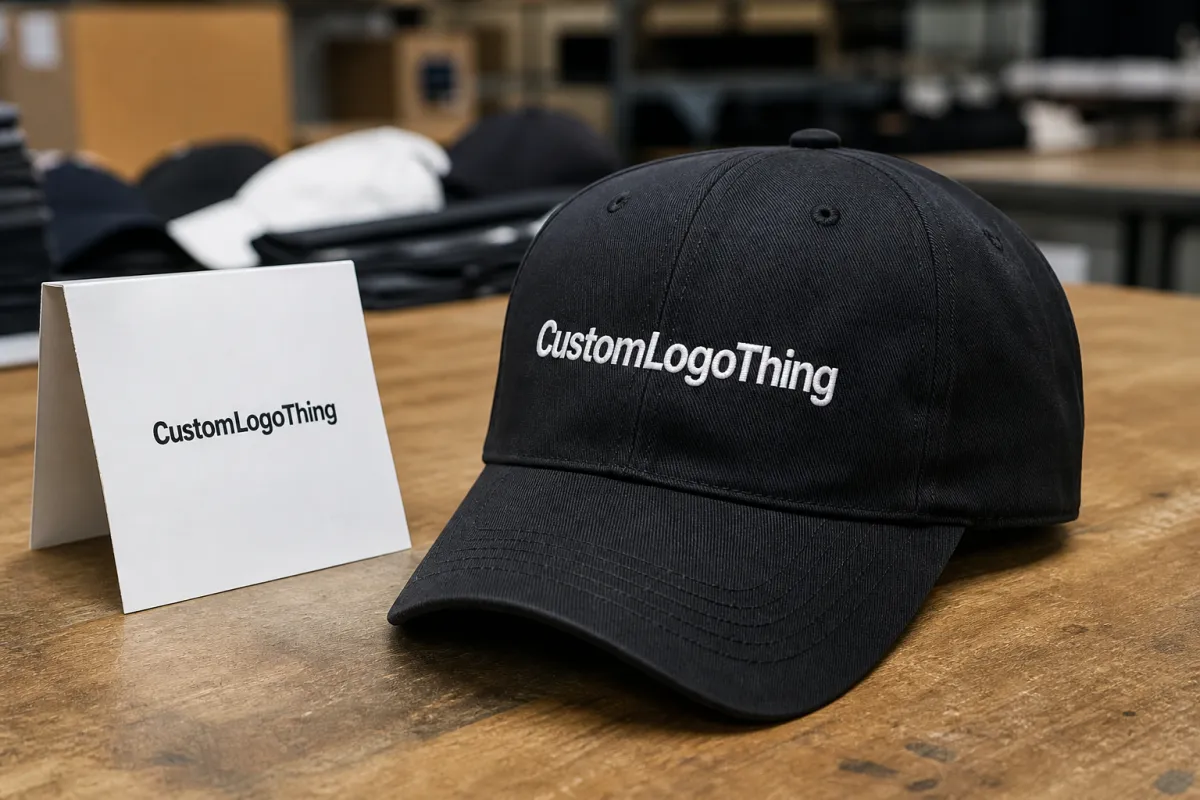
People assume small cap orders are automatically inefficient. Sometimes they are. More often, the order is just carrying the real cost of setup that a bigger run would spread out. Digitizing embroidery, building a woven patch, setting up inside labels, packing individual polybags, and confirming color matches all take time. Those steps do not disappear because the quantity is lower.
That is why Private Label Caps minimum order quantity is less about one universal factory rule and more about how the program is built. An in-stock blank with simple embroidery can often support a lower minimum than a fully custom cap with special trim, custom labeling, and retail-ready packing. The more custom the build, the more the production floor wants enough volume to justify the setup.
There is a practical buyer-side view here. A small first order makes sense when you are testing sell-through, validating a new design, or confirming that the cap looks as good in person as it did in mockup form. It also makes sense when the order is tied to a date-sensitive event and you would rather have the right style in a smaller amount than the wrong style in a warehouse.
Margins can still work on lower quantities if the product has the right retail position. A cap that supports a stronger selling price can absorb a better decoration package. A promo cap with a thin margin usually cannot. That is not a moral issue. It is just production math.
Small first orders feel expensive only until you compare them with dead stock, rushed reorders, and the cost of fixing a design after it is already in circulation.
There is also a hidden cost in waiting too long. If a launch misses its window, the cheapest unit price in the world does not save the campaign. A modest order that lands on time and sells through cleanly is often the better buy.
Choosing the Right Cap Style for Your Program
The cap profile shapes how the logo reads. That sounds obvious until a buyer puts the same artwork on three different bodies and wonders why only one of them looks right. A structured dad hat, a five-panel cap, a trucker, and a washed vintage style all carry different visual weight. Crown height, front panel stiffness, brim shape, and closure type change the whole feel.
For most private label programs, buyers tend to narrow the field into a few useful groups. Structured dad hats hold embroidery well and often feel more retail-ready. Five-panel caps give a broad front panel, which helps with bold graphics and patch work. Trucker caps bring airflow and a familiar promotional look. Performance caps are lighter, cleaner, and better for active wear. Washed or unstructured styles feel softer and more casual, but they do not behave the same in decoration.
Channel matters. Retail shelves reward polish. Event programs reward speed and a controlled cost. Staff uniforms reward comfort and repeat wear. If the cap is going into a premium merch lineup, the style has to look intentional from five feet away and still hold up when someone picks it up. If it is for a field team, the logo can be simpler, but fit and durability suddenly matter more than aesthetic theory.
One rule saves a lot of grief: match the logo complexity to the cap structure. Fine detail usually belongs on a flatter front panel with enough stability to hold the stitch cleanly. A simple bold mark can go almost anywhere. 3D puff embroidery needs enough front support to stand up properly, which means soft caps are usually a poor choice. It can be done. It just often looks worse than the mockup promised.
Style should be locked before the art file is finalized. Otherwise, the logo may be designed for one surface and forced onto another. That is how good artwork starts looking stubborn.
Build Specs That Affect Fit, Decoration, and Durability
Once the style is chosen, the spec sheet starts doing real work. Buyers should confirm fabric composition, panel count, crown depth, visor construction, sweatband detail, and closure hardware before asking for a final quote. These details affect fit and price more than most first-time buyers expect. A metal buckle feels different from a plastic snap. A flat visor does not carry the same retail impression as a gently curved one. A low-profile crown changes logo placement fast.
Fabric choice matters for both production and wear. Cotton twill is familiar, easy to sew, and works well with embroidery. Polyester blends help with color consistency and moisture handling. Mesh-backed caps reduce weight and improve airflow, but they also change seam construction and the way decoration sits on the front. If the cap will be worn daily, the sweatband deserves attention too. A cheap inner band tends to show its weakness quickly.
Decoration choices change both the look and the MOQ. Embroidery is durable and clean, but dense stitch counts can make a soft cap pucker or sit oddly. Woven patches can hold finer detail and give the front panel a more controlled surface. Printed patches can reduce complexity when the art uses more color or a gradient. Inside branding matters if the goal is a true private label piece rather than just a cap with a logo slapped on it.
If you are building a coordinated product line, labels and tags matter more than people admit. A woven size label, inside brand label, or hang tag can make the cap feel like part of a complete retail program instead of a one-off promo item. Pairing the cap with Custom Labels & Tags can tighten that presentation without adding a lot of weight to the spec.
Fit needs a real check, not a hand-wave. One-size-fits-most is a useful phrase, but it does not guarantee a good fit range. Strapbacks generally allow a more premium adjustment feel. Snapbacks are familiar and practical. If the audience includes a wider range of head sizes, ask for actual closure range and tail length. Bulk at the back is the kind of thing customers notice when the cap is already on their head.
For production conversations, ask for measured details rather than vague descriptions. Front panel height, approximate decoration area, fabric weight, and closure type all help narrow the quote and reduce surprises. If shipping is part of the discussion, packaging and transit performance matter too. Cap cartons that crush easily can ruin an otherwise clean order. If the goods are moving through distribution centers or parcel carriers, ask how they are packed, not just how they are stitched.
Private Label Caps Minimum Order Quantity and Pricing
Private Label Caps minimum order quantity is usually shaped by decoration method, color count, fabric availability, and packing requirements. There is no single industry number that fits every case. A plain embroidered cap on an in-stock blank can often start lower than a custom patch program with special inside labeling and retail packing. Two quotes can look similar on the surface and still lead to very different minimums underneath.
The cleanest way to read pricing is to break it into parts. Start with the blank cap. Add decoration setup. Add embellishment labor. Add any custom labels, tags, or packaging. Then look at what happens at different quantity tiers. That breakdown usually tells you more than the final unit price alone.
Some setup costs are small but not trivial. Embroidery digitizing may be modest on a simple logo and more expensive when the stitch count climbs. Patch tooling and sample approval can add a separate step. Inside labels and custom inserts are not huge line items by themselves, but they do force the order into a more controlled production path. That is where the MOQ often moves.
| Cap option | Typical setup | Indicative unit cost | Best fit |
|---|---|---|---|
| Simple embroidered dad hat | Low-to-moderate digitizing, one logo location | $3.20-$5.80 at 300-500 pieces | Retail test, staff rollout, branded basics |
| Five-panel cap with woven patch | Patch production plus application labor | $4.10-$7.25 at 300-500 pieces | Merch drops, streetwear, stronger branding |
| Trucker cap with printed patch and custom label | Patch print, sewing, inside labeling | $4.50-$8.00 at 500+ pieces | Promotional retail, event programs, lifestyle resale |
| Performance cap with minimal decoration | Lower stitch count, lighter finishing | $3.60-$6.50 at 300-500 pieces | Sports, outdoor staff, travel and utility wear |
Those ranges are working estimates, not promises. Change the decoration, change the price. Add polybags, hang tags, carton labels, or custom inserts, and the landed cost moves again. Use fewer thread colors, one clean logo location, and standard packing, and the order usually becomes easier to run.
There is a smarter way to think about value. A slightly higher unit cost on a smaller launch may be worth it if it reduces storage, avoids dead stock, or keeps you from reworking a design that should never have made it to production. The best Private Label Caps minimum order quantity is the one that fits the sales plan, not the one that only looks cheap in isolation.
For buyers planning retail resale, the reorder math matters as much as the first invoice. If the first run sells through, a clean replenishment is worth more than shaving a few cents off the launch order and ending up with an awkward quantity that never repeats well.
Production Steps, Timeline, and Lead Time Expectations
A normal cap order follows a pretty fixed path: artwork review, cap selection, proofing, material reservation, decoration, finishing, packing, and inspection. Nothing glamorous there. The trouble starts when the buyer changes the art after proofing or sends a logo file that needs half a day of cleanup. That is how a straightforward order turns into a calendar problem.
Most delays happen before production begins. Missing Pantone references, unclear patch dimensions, fuzzy vector files, or late changes to the closure type can stall the order while everyone waits on approval. A one-color embroidered logo on an in-stock cap moves faster than a multi-step private label build with custom trims and inside labels. The spec has to be stable before the schedule is real.
As a planning baseline, proof or sample turnaround is usually separate from bulk production. A pre-production sample can take several extra business days if the order includes patch work, custom labels, or unusual packing. After approval, a common bulk lead time sits somewhere around 12-20 business days, but that is still conditional on the decoration load, raw material availability, and the supplier queue. If a launch has a hard date, build in a buffer. It is cheaper than rushing the wrong order.
Packaging deserves its own check. A cap can leave production looking perfect and still arrive crushed if the cartons are weak or overpacked. Master carton count, bagging preference, and shipping conditions affect the final result more than most buyers expect. If you need the product to survive distribution center handling, ask for transit-friendly packing, not just retail-friendly presentation.
Lead time and private label caps minimum order quantity usually move together. A more detailed build often needs a bit more time because there are more parts to coordinate. A simpler cap can move faster. That said, speed only exists when decisions stop changing. That part is on the buyer, no matter how convenient it would be to blame the factory.
What a Reliable Private Label Cap Partner Should Confirm
A dependable supplier does more than accept the order. It checks the artwork, confirms the cap body, flags decoration limits, and documents the spec clearly enough to repeat it later. That matters because a cap program usually needs a reorder more than once. If the first run is undocumented, the second run becomes a guessing game.
Good communication is easy to spot. You should get written specs, mockups that match the actual build, and direct answers about what the chosen cap can handle. A curved front panel may not present every decoration style cleanly. A low-profile cap may not leave enough room for large embroidery. A useful partner says that early instead of promising to force a bad fit through production.
Quality control should cover the obvious points and the annoying ones. Check stitch alignment, patch placement, logo centering, inside label consistency, closure hardware, seam finish, and carton labeling. A surprisingly large share of cap complaints are not about the logo itself. They are about crooked placement, weak stitching, or a closure that feels cheaper than the sample.
If the order is going into wholesale, repeatability matters. The first production run should be documented well enough to reproduce the next one without a long explanation. That is where Wholesale Programs become useful, because replenishment only works when the spec is clear and the supplier knows what must stay fixed.
Packaging is another quiet failure point. Caps can look flawless on a sewing table and arrive flattened if the carton spec is poor. A serious partner asks about master carton counts, bagging, transit path, and whether the product is going direct to a customer, a warehouse, or a distributor. That conversation saves time later. Usually a lot of time.
The best supplier recommendation is not always the cheapest one. Sometimes the right answer is to simplify the decoration, reduce custom packaging, or adjust the cap body so the order ships cleaner and reorders faster. That is practical experience, not a sales pitch.
Next Steps to Quote, Approve, and Place the Order
Before asking for a quote, gather the basics: cap style, target quantity, decoration method, logo files, color references, packaging needs, and delivery location. If the cap is part of a broader brand rollout, include the intended retail price or channel. That gives the supplier context for choosing a build that actually fits the economics.
A tiered quote request is worth the extra minute. Ask for pricing at a test quantity, a standard run, and a larger quantity. That gives you the break points and shows where the unit cost drops versus where inventory exposure starts to climb. It also reveals whether the true sweet spot is the smallest run or one tier higher.
After the quote, ask for a proof or sample once the spec is locked. Then check the details that tend to cause trouble: logo placement, thread color, patch placement, label position, seam alignment, and any custom packaging element. If something looks off, fix it before bulk production starts. That pause is cheap. Rework is not.
A practical order path is simple: choose the style, confirm the build, compare quantities, approve the proof, and release production with one clear delivery window. If you need a place to sanity-check the setup questions first, the FAQ page is a useful starting point.
What is a typical private label caps minimum order quantity?
There is no single number that applies to every cap. A simple embroidered cap on an in-stock body can often start lower than a fully custom build with patches, inside labels, and special packing. In practice, common working minimums tend to land somewhere around 100-300 pieces for simple programs and 300-500 pieces or more for more customized private label builds, but the spec sheet decides the real answer.
Why does the MOQ change between embroidered and patched caps?
Embroidery and patch programs use different setup steps, equipment, and finishing labor. Embroidery usually needs digitizing and stitch approval. Custom patches add another production stage and another layer of review. If the patch is detailed or requires extra sewing, the supplier often needs more volume to make the order efficient.
How can I lower the unit cost on private label caps?
Keep the decoration area efficient, use one or two core colors, and avoid packaging extras that do not add value. Ordering at a quantity tier that crosses a production break point can also help more than forcing the smallest possible run. The cheapest quote is not always the best landed cost once packing and freight are included.
How long does private label cap production usually take?
Lead time depends on sample approval, decoration complexity, and raw material availability. A clean file set and fast proof approval usually help more than any production shortcut. A simple cap can move faster, while a custom build with labels, patches, or specialty packing generally needs more time.
What should I send for an accurate private label cap quote?
Send the cap style, estimated quantity, logo artwork, decoration method, color choices, and any labeling or packaging requirements. If you have a target retail price or channel, include that too. It helps the supplier suggest a build that fits the program instead of forcing the program to fit the quote.

