Buyer Fit Snapshot
| Best fit | Corrugated Box MOQ for Ecommerce projects where brand print, material claims, artwork control, MOQ, and repeat-order consistency need to be specified before quoting. |
|---|---|
| Quote inputs | Share finished size, material target, print colors, finish, packing count, annual reorder estimate, ship-to region, and any compliance wording. |
| Proofing check | Approve dieline scale, logo placement, barcode or warning zones, color tolerance, closure strength, and carton packing before bulk production. |
| Main risk | Vague material claims, crowded artwork, missing packing details, or unclear freight terms can make a low unit price expensive after revisions. |
Fast answer: Corrugated Box MOQ for Ecommerce: Pricing and Process should be specified like a repeatable production item. The safest quote records material, print method, finish, artwork proof, packing count, and reorder notes in one written spec.
Production checks before approval
Compare the actual filled-product size with the drawing, then confirm tolerance on folds, seals, hang holes, label areas, and retail display edges. Reserve space for logos, QR codes, warning copy, and material claims before decorative graphics fill the panel.
Quote comparison points
Review material grade, print process, finish, sampling route, tooling charges, carton quantity, and freight assumptions side by side. A quote is only useful when the supplier can repeat the same color, closure quality, and packing count on the next order.
Corrugated Box MOQ for ecommerce is not a cute little purchasing detail. It hits cash flow, damage rates, and inventory risk all at once. A box quote can look great until setup charges, tooling, freight, and the next reorder show up with their own opinions. The real goal is not chasing the lowest unit price. The real goal is buying the right quantity for how fast you actually sell.
That sounds simple. It rarely plays out that way. Ecommerce teams get squeezed into tiny test runs, then find out the box is too small, too flimsy, or too expensive to repeat. Other teams overbuy because the per-piece number looks prettier at scale, then spend the next six months staring at pallets while the product changes underneath them. The right MOQ protects margin and keeps orders moving without turning the warehouse into a cardboard museum.
If you need a broader packaging starting point, our Custom Shipping Boxes page is a useful place to compare structures, and our FAQ covers common proofing and ordering questions.
A low MOQ only helps if the box still fits the product, survives parcel handling, and leaves room for a sane reorder.
Corrugated Box MOQ for Ecommerce: Why Small Orders Get Expensive Fast
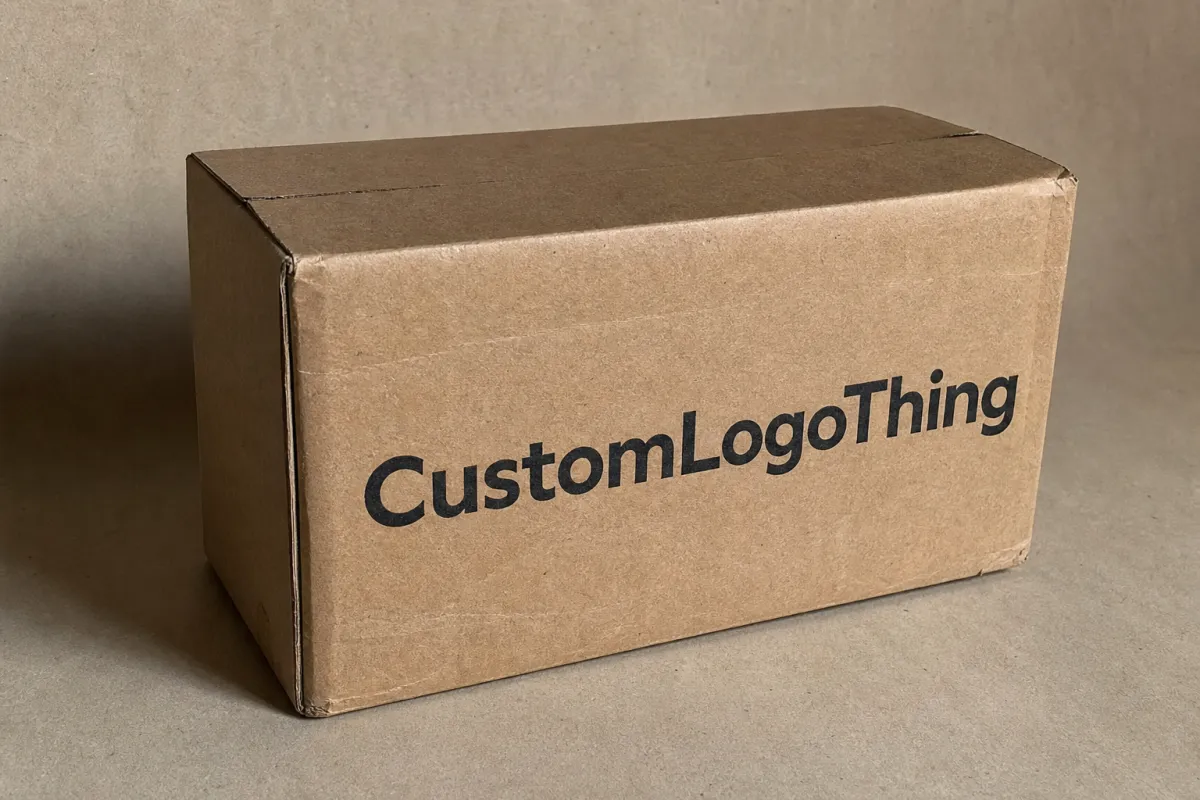
The cheapest quote on paper often becomes the most expensive move in practice. Small runs of custom corrugated packaging carry more labor per unit, more prepress work, and more changeover time for the plant. That is why a 300-piece order can cost a lot more per box than a 3,000-piece order, even if the carton looks identical on the spec sheet. Machines do not care that your launch date is on fire. They still need setup, cutting, printing, folding, and packing time.
Ecommerce brands run into trouble with tiny orders for three reasons. First, the work gets fragmented fast. One SKU needs a small mailer, another needs a deeper shipper, and a third needs an insert. Second, the production costs are stubborn. Tooling fees, die charges, plate costs, and setup charges do not shrink just because the order is small. Third, the wrong box creates costs that never show up in the quote. Extra void fill, higher breakage, and manual repacking all chew through margin.
Low MOQ is not the enemy. Sometimes it is the smartest move in the room. If you are testing a new product, a seasonal bundle, or a size that may change after the first sales cycle, a smaller run keeps you from sitting on dead inventory. A box that costs 10 percent more per piece can still be the cheaper decision if it saves you from a $2,500 stack of cartons that no longer fit the SKU. Unit cost matters. So does the cost of being wrong.
Timing matters too. Stable ecommerce brands usually have repeat demand and can support higher quantities. Early-stage brands usually cannot. A sensible corrugated box MOQ for ecommerce should match where the product is today, not where someone wishes it were. If the item is still changing, keep the order flexible. If the spec is locked and the volume is predictable, push toward larger runs and better piece pricing.
Here is the practical split I use with buyers who need a starting point, not a fantasy:
- Test launch: 100 to 300 units, usually digital print or a simple unprinted build.
- Pilot run: 500 to 1,000 units, enough to check fit, shipping damage, and reorder behavior.
- Established SKU: 2,000 to 5,000 units or more, where bulk pricing starts to matter.
That is not a law of packaging. It depends on shipping speed, storage space, print method, and whether the box is only a shipper or part of the brand experience. A subscription box with inserts behaves differently than a plain RSC carton shipping a heavy bottle. The logic still holds: match the MOQ to demand and to the cost of getting it wrong.
There is one more wrinkle people ignore until it bites them. If the product is likely to change in the next 60 to 90 days, a larger MOQ can lock you into a spec that no longer fits the line. I have seen that happen with cosmetics, supplement kits, seasonal food launches, and fragile home goods. The carton was fine. The product evolved. The boxes did not.
Box Specs That Decide Whether Your MOQ Works
Internal dimensions come first. Always. Ecommerce packaging lives or dies on fit, not on the outer size printed in a spec sheet. Two boxes can share the same footprint and perform very differently once the product goes in, especially if one uses thicker board or a different flute profile. If the product rattles, the box is too big or the insert plan is off. If it bulges, the carton is undersized and will punish your freight bill and your customers.
Flute selection is one of the easiest places to overspend or under-spec. Single-wall corrugated works for a lot of ecommerce shipments. It is usually the right call for apparel, light hardgoods, subscription items, and many bundled sets. Double-wall makes sense when the contents are heavier, fragile, or stacked in storage. If the carton has to survive longer transit lanes or rougher parcel handling, thicker board can reduce crush and complaints. That said, heavier board also adds weight and cost. Stronger is not automatically better.
Common strength specs include 32 ECT, 44 ECT, and burst strength ratings such as 200# or 275#. ECT matters when stacking and compression are the issue. Burst strength matters when puncture and rough handling are the problem. For ecommerce, the right spec depends on how the carton moves through your operation. A light DTC shipper does not need the same build as a carton that sits on pallets and then gets dropped onto conveyor lines. If you want to get more serious about it, ask for testing aligned with ISTA protocols. That cuts down on guesswork.
Style choice changes MOQ economics too. A regular slotted container, or RSC, is usually the least complicated and often the cheapest to produce. Mailer boxes and tuck-top styles look better for unboxing, but they can bring more cutting complexity and more setup sensitivity. Custom inserts, partitions, and dividers add protection, but they also add tooling and labor. If your product is fragile, odd-shaped, or sold in bundles, those extras may be worth every penny. If not, they can push the order into annoying territory for no real gain.
In practice, the right spec set can lower total cost even if the box quote is higher. A carton that saves 10 cents in board but causes breakage is not saving anything. A slightly stronger box that removes two layers of void fill can also save pack-out time. For ecommerce, that matters. Labor costs money. Damage claims cost money. The smallest box with the thinnest board is not automatically the smartest answer.
One practical check helps a lot: pack three real samples, not one. Use the product as it ships, with inserts, tape, labels, and any protective material your team actually uses. Then shake the carton, tilt it, and look for movement. If the product moves during that test, it will move in transit. Maybe not every time. Enough to matter.
Materials, Print, and Structure for Ecommerce Shipping
Kraft board and white board solve different problems. Kraft gives a clean, natural look and usually hides scuffs and dust better during warehouse handling. White board gives you a brighter print surface and sharper color reproduction, which matters if the carton is part of the brand presentation. If you are shipping straight from a fulfillment center and the box is mostly a protective shipper, kraft often makes more sense. If the unboxing moment matters, white board can justify the extra spend. Neither is universally better. Each one just fits a different job.
Print method matters just as much as board color. Flexographic printing is often the smarter choice for larger runs and simpler artwork. It handles bulk pricing better because the setup cost spreads over more units. Digital printing is usually easier for lower MOQ orders because it avoids the same plate commitments and can support faster proof cycles. The tradeoff is that digital pricing can climb fast if you want heavy coverage, multiple colors, or variable artwork. Nice graphics do not come free just because the file looks polished on screen.
Coatings and finishes should earn their keep. A moisture-resistant coating can make sense if cartons are exposed to humid storage, chilled environments, or long transit. Scuff resistance matters if the box gets handled repeatedly or stacked in fulfillment. A retail-ready finish is useful when the carton does double duty as a display or gift box. If the box is only for shipping, over-finishing it is wasteful. No one needs a gallery piece for a product headed to a porch.
Inserts and dividers deserve their own conversation. Fragile items, glass bottles, cosmetic kits, electronics, and subscription bundles often need internal support. The insert can be paperboard, corrugated, molded pulp, or a mixed build. Each option changes MOQ, tooling fees, and assembly time. A simple corrugated divider may be cheaper to produce than a custom insert tray. A molded pulp system might reduce damage on fragile items but require a higher minimum. The right choice depends on the product, not on some vague premium packaging label.
Channel strategy changes the build too. DTC shipping often needs a box that looks good on the way in and survives the way out. Marketplace fulfillment may care more about efficiency and carton standardization. Subscription programs often want repeatable pack-outs, predictable insert placement, and enough visual consistency to make the customer trust the shipment. Warehouse handling also matters. If your team packs hundreds of orders a day, small structural improvements can save real time. If you are shipping from a low-volume operation, simpler is usually smarter.
Material sourcing matters as well. A carton spec that looks fine on paper can behave differently if the liner stock changes, the mill switches sources, or the board has a higher recycled fiber mix than expected. That does not make the carton bad. It just means consistent sourcing is part of the spec, not an afterthought. Buyers who reorder the same box six months later and get a different crush performance usually learn that the hard way.
When board, print, and structure are chosen well together, the result is not just a nicer carton. It is a lower total landed cost. That includes shipping, storage, repacking, and claims. A well-built box can beat a cheaper quote because it protects the rest of the process from avoidable losses.
Cost, Pricing, MOQ: What Actually Changes the Unit Cost
Buyers ask for a "price per box" all the time, but that number means very little without the full spec. The real unit cost is built from board grade, size, print complexity, die-cutting, tooling fees, insert requirements, and freight. Even the same design can price differently depending on board source, delivery location, and how crowded the production window is. Two quotes can both be competitive and still have nothing to do with each other.
The MOQ changes the unit cost curve in a predictable way. Smaller quantities usually carry a higher cost per piece because setup is spread across fewer units. Larger quantities lower the unit cost because more cartons absorb the same fixed charges. That part is basic math. The trap is assuming the lowest per-box price is always the best buy. If you have to store eight months of inventory or redesign the box before you use it all, the "cheap" order turns into a storage bill with corrugate wrapped around it.
Here are the pricing traps I see most often:
- Hidden dieline work: Some quotes assume the structural drawing already exists. If it does not, expect design or prepress charges.
- Color matching: Exact Pantone matching can add cost, especially on lower runs or difficult board colors.
- Freight assumptions: A quote that excludes shipping is not a full landed cost. A pallet rate and a parcel rate are not the same thing.
- Plate or tooling costs: Flexo plates, cutting dies, and custom insert tools can shift the economics fast.
- Minimums on ink or board purchase: Some factories price below what the order actually costs them to run, then recover the margin elsewhere.
For planning purposes, a realistic range is better than fake certainty. These numbers are broad on purpose, and they assume standard Ecommerce Shipping Boxes with typical print and basic handling requirements. A bigger carton, heavier board, full-coverage print, or a custom insert can move any of them.
| MOQ Band | Typical Use | Approx. Unit Cost Range | What Usually Drives the Price |
|---|---|---|---|
| 100-300 units | Prototype, product launch, fit test | $1.10-$2.50 per box | Setup charges, digital print, short-run labor, freight |
| 500-1,000 units | Pilot production, early demand validation | $0.65-$1.20 per box | Moderate setup spread, simpler print, basic tooling |
| 2,000-5,000 units | Stable SKU, repeat reorder, better bulk pricing | $0.28-$0.70 per box | More efficient run time, lower cost per piece, better material buy |
| 10,000+ units | High-volume fulfillment, standard program | $0.18-$0.45 per box | Scale efficiency, lower print cost, stronger board purchasing power |
These ranges are broad for a reason. Box size, board grade, print coverage, insert complexity, and shipping location can move the numbers a lot. A small mailer with one-color print will not price like a large double-wall carton with custom inserts and a full-coverage finish. The only honest comparison is matched specs.
That means every quote request should include the same details across vendors:
- Exact internal dimensions.
- Board grade and flute type.
- Print method and color count.
- Insert or divider requirements.
- Delivery terms and ship-to location.
Compare those side by side, or the pricing is basically theater. A box at $0.42 and a box at $0.38 do not mean much if one includes a die-cut insert and the other does not. The real comparison is total landed cost, not the lowest line item.
For brands that need board certification or environmental claims, ask for documentation early. If you need FSC-certified material, verify chain-of-custody status with FSC. If sustainability targets matter, do not assume anything. Ask. Paperboard sourcing and recycling language are often messier than the sales sheet makes them look.
One more pricing reality: freight can erase a good quote faster than most people expect. A pallet shipment may be the right move for a 5,000-unit run, while a smaller launch order may be cheaper to ship in partials depending on destination and receiving setup. A clean unit price does not help if the freight lane is ugly.
Process, Timeline, and Lead Time From Quote to Delivery
Good packaging work follows a clear sequence. If that sequence gets rushed, the order usually pays for it later. The normal flow is inquiry, spec confirmation, artwork review, sample approval, production, quality control, and freight booking. Skip a step and you usually get an expensive surprise. The plant can only produce what it has actually approved.
Quote turnaround is usually the easy part. The hard part is getting complete specs. If the dimensions are vague, the board grade is missing, or the print file is not ready, the timeline stretches. Accurate quoting depends on real data. If you send partial information, you get partial pricing, which is not very useful when inventory is sitting on the clock.
Lead time varies by structure and print method. A simple digital short run can often move faster, sometimes around 7 to 12 business days after proof approval, depending on workload and freight. Custom printed runs with cutting dies, inserts, or more elaborate finishing often need 15 to 25 business days or more. Add transit. Add artwork revisions. Add the time your team needs to approve the sample. That is usually where the schedule slips.
Most delays come from the same few places:
- Unclear dimensions: A 1/8-inch mistake can mean a bad fit or a costly redraw.
- Artwork revisions: Color adjustments, bleed issues, and logo placement can add days.
- Sample approval lag: Waiting a week to sign off on a proof can push the ship date a week.
- Insert changes: A tray or divider adjustment is rarely just a tiny adjustment in production terms.
- Peak freight windows: Carrier congestion can add transit time even when the factory is on schedule.
If you want to shorten turnaround, send the right package up front. That means exact product dimensions, target ship method, estimated monthly volume, board preference, print details, and whether the box needs inserts or special finishing. The cleaner the brief, the less back-and-forth. Packaging teams do not enjoy guessing. Factories do not enjoy guessing either. Guessing is how the schedule gets weird.
For ecommerce brands, it also helps to define the decision rule before quoting. Is the box for launch validation? For the first three months of sales? For a seasonal campaign? Each answer points to a different MOQ and a different timeline. A launch box should prioritize speed and flexibility. A mature SKU can prioritize unit cost and bulk pricing. That is how you avoid overbuying or under-ordering because the conversation started with price instead of demand.
One more point: lead time is not just factory time. It includes proofing, sourcing, production, packing, and transit. Buyers who only ask for "production time" often get surprised later. Ask for the whole schedule. Then everyone is using the same clock.
For more on packaging standards and test methods, many teams use the resources at ISTA to understand parcel testing and handling expectations. That matters if the product is fragile or if damage claims are already a headache.
Why Choose Us for Ecommerce Corrugated Boxes
We keep the process practical. No fake certainty. No pretending every box should be ordered in massive volume just because the per-piece price looks prettier on a spreadsheet. The better question is whether your corrugated box MOQ for ecommerce matches your product life cycle, storage space, and reorder rhythm. That is the point we stay focused on.
For most ecommerce buyers, the value is in straight answers. If a carton needs a stronger board grade, say so. If a lower MOQ costs more per box but saves you from dead stock, say that too. If the design is too ambitious for the budget, simplify it before it turns into a production problem. That kind of advice saves money because it prevents bad decisions early. Packaging is full of expensive almost-right choices.
A good supplier should do more than quote a number. The useful work is in the details that keep the order from turning sideways:
- Spec guidance: Choosing the right internal size, flute, and board grade without overbuilding the carton.
- Clear quotes: Matching the same dimensions, print coverage, and delivery terms so the numbers mean something.
- Sampling: Moving fast on samples or pre-production proofs so the fit issue gets caught before the run.
- Reorder consistency: Keeping the same carton spec stable so your warehouse does not get surprised later.
- Damage reduction: Recommending structures that protect the product instead of just looking good on the proposal.
That matters for DTC brands, subscription programs, and marketplace sellers alike. A box that works once and then changes without warning is a problem. Ecommerce teams need repeatability. They need the next shipment to feel like the last one, not like a new experiment.
If you are comparing structures now, our Custom Shipping Boxes page is a sensible starting point. If your team has the usual questions about artwork, proofs, or order setup, our FAQ will get you through the basics without a lot of noise.
And yes, freight coordination matters too. A good supplier should help you think through pallet counts, warehouse receiving, and whether the final shipment belongs on truck freight or in smaller cartons. That kind of detail is boring until it costs money. Then it gets interesting fast.
The best suppliers also tell you when not to overcustomize. If a standard mailer or an unprinted shipper solves the problem, that answer is worth hearing. Fancy packaging is only useful if it improves the product's journey or the customer's experience. If it just adds cost, it is decoration with a freight bill.
Next Steps to Lock In Your Corrugated Box MOQ
Start with the product, not the box. Write down the exact item dimensions, weight, shipping method, and how much protection it actually needs. Then decide whether the carton is meant for launch, seasonal demand, or a steady replenishment cycle. That one decision shapes the MOQ more than almost anything else.
Next, ask for two or three quote options at different quantity levels. A 300-unit option, a 1,000-unit option, and a 3,000-unit option can show you the cost curve quickly. You will see where the unit cost drops, where freight starts to matter, and whether lower inventory risk is worth the higher piece price. Do not accept one quote and call it research. That is just one number in a nicer font.
Before you approve anything, request a sample or pre-production proof. That matters even more for inserts, tight-fitting cartons, fragile products, or any design with print alignment near folds and edges. Once the box is on the line, changes cost more. A sample catches fit issues, assembly problems, and print mistakes while they are still cheap to fix.
Ask for a quote that separates the moving parts. Board. Print. Die. Inserts. Freight. Setup charges. Tooling fees. If the supplier cannot show those components, it gets harder to compare options or negotiate sensibly. Transparent quoting is not a perk. It is the only way to make a good purchasing decision.
Then choose the order size that protects the business. That may be the smallest run that gets you through launch. It may be a mid-size pilot that lowers bulk pricing without loading the warehouse. Or it may be a larger production order because the SKU already sells predictably and the box spec is locked in. The right answer depends on demand, not on a generic rule.
If the goal is the right corrugated box MOQ for ecommerce, the next move is simple: compare spec-matched quotes, confirm the landed cost, and choose the lowest-risk order size that still gives you a usable unit cost. That is the boring answer, which usually means it is the correct one.
One last practical filter helps: if you cannot explain why a higher MOQ will be used within the product's shelf life or sales window, do not place it. That is the cleanest way to avoid buying packaging for a business case that does not exist.
FAQ
What is a typical corrugated box MOQ for ecommerce orders?
It depends on size, print method, tooling, and whether inserts or special finishing are involved. Lower-MOQ digital runs can work for launches, while higher-volume flexo orders usually need more units to make sense. The best MOQ is the smallest quantity that still gives you a usable unit cost and enough stock for sales velocity.
How does corrugated box MOQ for ecommerce affect unit cost?
Smaller runs usually cost more per box because setup and production time are spread across fewer units. A lower MOQ can still save money overall if it reduces storage, waste, damage, or cash tied up in inventory. The real comparison is total landed cost, not just the price printed on the quote.
Can I get custom printed boxes at a low MOQ for ecommerce?
Yes, but print complexity matters a lot. Simple one-color or digital print usually supports lower MOQs better than full-coverage or multi-color artwork. If branding is light and the product is early-stage, start with a simpler print spec to keep the order practical.
What details should I send to get an accurate quote?
Send exact product dimensions, desired box style, board strength needs, print requirements, and target quantity. Include shipping method, warehouse location, and whether the box needs inserts or special finishing. Incomplete specs lead to vague pricing, and vague pricing is how projects go sideways.
How long does production usually take after approval?
Lead time depends on whether the order is a simple stock-style build, a custom printed run, or a more complex structure with inserts. Artwork approval and sample signoff can move the schedule faster or slower than the plant itself. Ask for a timeline that separates proofing, production, and freight so you know where the clock is running.
Should I choose a higher MOQ if the per-box price is lower?
Only if the inventory fits your sales cycle and storage plan. A lower unit price is not a win if the boxes sit in the warehouse too long, the product changes, or the carton spec has to be revised before you use the stock. The smart move is the order size that balances cash, space, and reorder timing.