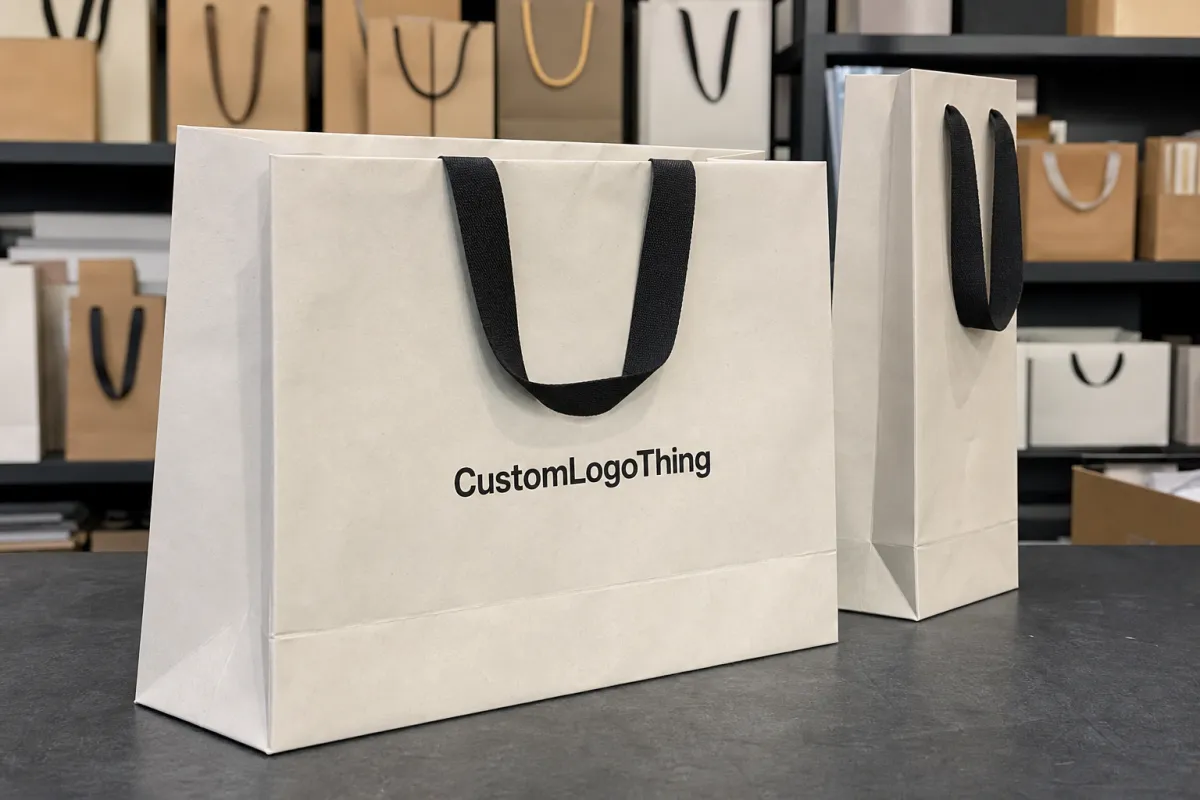
Cosmetics Twisted Handle Paper Bags Material Thickness Guide
Paper bag thickness is not just a line on a spec sheet. For cosmetics, it shapes hand feel, handle comfort, shelf presentation, and whether the bag survives a short retail trip without looking tired.
Two bags can show the same GSM and still perform differently. One may feel rigid and premium because the board structure is better. Another may sag or scuff because the coating, fold pattern, or handle reinforcement is weak.
Why trust one number?
Buyers get a better result when they review the full construction instead of relying on a single metric. Thickness matters, but so do the folds, the glue, the coating, and the way the handle is anchored.
Thickness also affects cost control. The bag has to carry jars, boxed sets, or gift bundles without failing, yet it still has to fit the brand image and stay within freight and MOQ limits. The right spec balances those pressures without overbuilding for the job.
A bag can look expensive in a mockup and still feel flimsy once product goes inside.
Why thickness matters for cosmetics paper bags
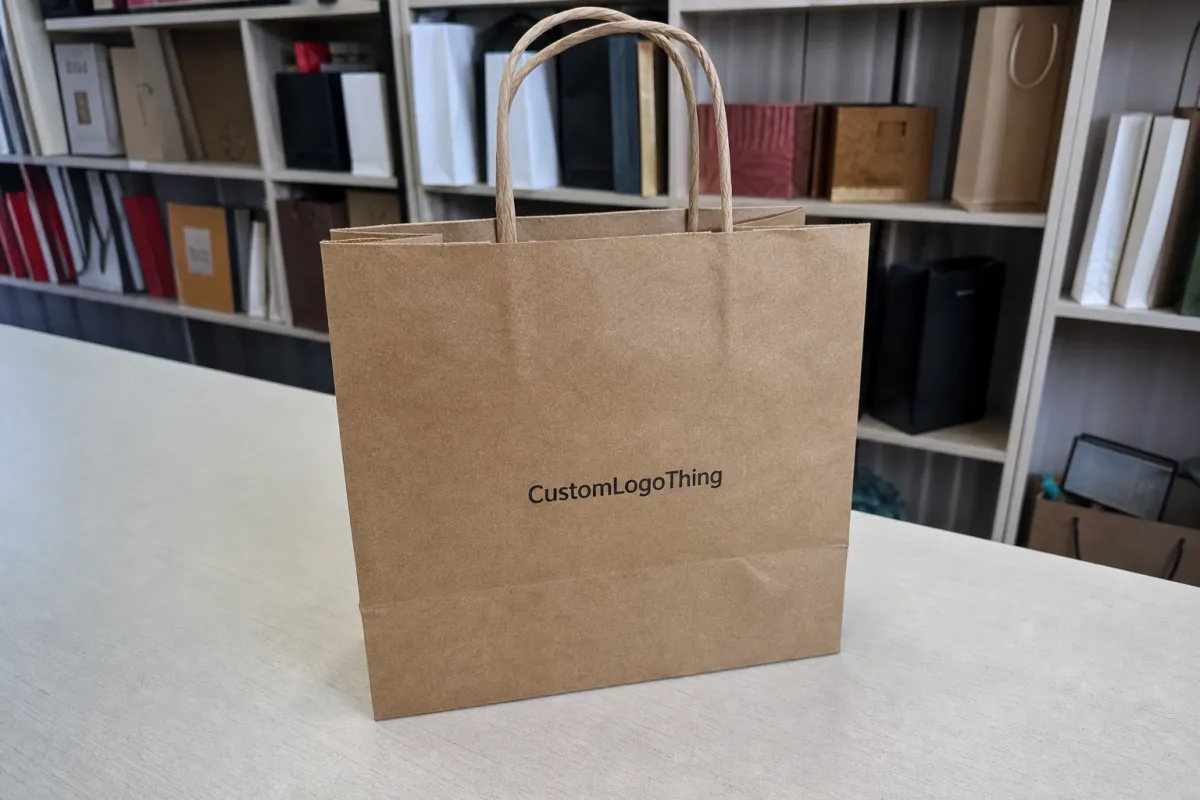
Cosmetics packaging is unforgiving in a small way. The products are often dense, compact, and made of glass, heavy cream jars, or rigid cartons. That means the bag does not just hold volume; it carries concentrated weight. A lightweight bag may work for samples or sachets, but the same spec can fail quickly with a heavier retail kit.
At point of sale, thickness changes the story fast. A thin bag wrinkles easily and can make a good product feel cheaper than it is. A properly built bag stands straighter, holds the gusset shape, and gives a cleaner impression at checkout.
One common mistake is buying by item count instead of filled weight. Three small items can stress a bag more than one larger carton if the load shifts unevenly at the handle. The base seam matters as much as top-edge stiffness.
If the bottom flexes too much, the bag starts leaning before the customer leaves the store. That is a small failure, but it reads like a big one.
Overbuilding is also a risk. Thicker is not automatically better. Too much board can make the bag bulky, harder to fold, and more expensive to ship, and it can also feel stiff in a way that clashes with a softer beauty brand. The best spec is the one that meets load, look, and handling needs without adding unnecessary cost.
GSM, caliper, and board structure
GSM measures paper weight per square meter. Caliper measures thickness. They are related, but not identical. Higher GSM often means more fiber and a sturdier feel, but it does not guarantee better crush resistance or better print behavior. Fiber blend, coating, and board make-up all change the result.
For buyers, the useful way to think about it is simple:
- Kraft paper gives a natural look, decent tear resistance, and a lower-cost option for cleaner cosmetic lines.
- Coated paper handles sharp print, solid color blocks, foil, and fine typography better than rough stock.
- Wrapped board or laminated board adds rigidity and a more box-like feel, which supports premium presentation but raises cost and weight.
Twisted handles are popular because they are economical and recyclable, but the anchor area needs reinforcement. That top section fails first if the load is heavy or the fold is weak. A doubled top fold, a reinforced mouth strip, or a stronger glue zone can do more for performance than a small increase in body-paper GSM.
The finished bag is a system. The paper skin, fold lines, side gussets, bottom insert, and handle anchoring all work together. A thinner sheet with a smarter structure can outperform a heavier sheet with weak construction.
That is why the construction details matter as much as the paper spec. Finish matters too, because matte softens the look, gloss sharpens color, and soft-touch lamination adds luxury while changing cost and recycling claims.
None of these finishes is universally better; each solves a different problem. Sample the actual substrate before you commit.
| Construction | Typical feel | Best use | Main trade-off |
|---|---|---|---|
| 120-170gsm kraft paper | Light, flexible, natural | Samples, minis, promo kits | Lower crush resistance, softer premium feel |
| 180-250gsm coated paper | Smoother, firmer, cleaner edges | Skincare retail, gift sets, mid-market beauty | Higher cost, more sensitive print setup |
| 300gsm+ wrapped board | Very rigid, luxury feel | Prestige launches, heavy sets, gifting | More freight weight, higher MOQ pressure |
If recycled content matters, confirm what kind. Post-consumer waste content, FSC certified stock, and recycled kraft are not the same thing, and they do not all print the same way. Tight registration and rich solids can expose weak fiber structure fast, so a sample on the actual substrate is the only reliable check.
What actually drives bag performance
Thickness is only one part of performance. Product shape, finish, and storage conditions all change how the bag behaves. A short, dense kit loads the bottom differently from a tall bottle set. Glass jars shift weight downward and can stress the seam when the bag is set down hard. A loose multi-item bundle can rattle and wear through a weak insert board.
Gusset width is one of the most overlooked details. Too narrow, and the contents fight the bag. Too wide, and the bag can look boxy or unstable. The right width depends on the product footprint, not just the bag size printed on the spec sheet.
What happens when the load shifts? The answer is usually hidden in the base insert. If the insert is too thin, it adds weight without real support, and the bag fails in use instead of in testing.
Humidity matters more than many teams expect. Paper that seems crisp in a sample room may soften in a warm stockroom or during a long transit route. Lamination can improve scuff resistance, but it can also change folding behavior.
A bag that looks perfect in a studio photo may crease badly after one shipment if storage conditions are ignored. For fragile items, the best improvement is not always thicker paper; sometimes it is a better base board, a stronger handle anchor, or a slightly deeper gusset that keeps the load centered.
If you want a third-party reference point for durability testing, ISTA test methods are useful when bags travel inside cartons before the customer sees them: ista.org.
Cost, MOQ, and unit price
Thicker stock usually costs more, but the unit price story is never that simple. Heavier paper, reinforcement, coating, foil, and specialty printing all add production steps. That raises the quote. On the other hand, a weak bag can create tears, returns, repacking, and reprints, which are costs that rarely show up in the first invoice.
MOQ usually rises with complexity. A basic kraft bag with one-color print is easier to run in smaller quantities. Add lamination, foil stamping, embossing, custom handles, or more rigid board, and the order typically needs more units to absorb setup cost.
| Spec direction | Typical unit cost impact | MOQ behavior | What you gain |
|---|---|---|---|
| Lighter kraft, simple print | Lowest | Lower barrier to start | Good for samples and promotional programs |
| Mid-weight coated paper, reinforced handle | Moderate | Mid-range MOQ is common | Better print, better carry performance |
| High-rigidity board, luxury finish | Highest | Largest MOQ pressure | Premium feel and stronger shelf impact |
That trade-off is where many projects get stuck. Teams want luxury cues, low freight, and small runs, but the spec usually rewards only two of those at once.
If the campaign is short, choose the simplest structure that still protects the product. If the bag becomes part of the brand experience, invest in the finish and reinforcement that customers will actually touch.
Production process and timeline
Production starts with the substrate choice, then moves through print proofing, cutting, folding, gluing, handle attachment, and packing. Each step can change the final feel. A beautiful print sample does not guarantee a strong production run if the board score is off or the glue line is inconsistent.
Lead time depends on more than paper availability. Custom finishes, special handles, and complex structures add setup time. A standard bag may move quickly, while a luxury build needs extra checks before the order is locked.
Ask for a preproduction sample if the project is important. It is the closest way to catch handle pull issues, weak folds, or coating problems before the full run starts. That small delay often prevents a larger delay later.
Printing order matters too. Dense colors, foil, and embossing interact in ways that can surprise a team reviewing only a flat proof. When the finish and structure are both premium, the factory needs more room to sequence the work cleanly.
Plan backward from launch day. Freight, customs, and warehouse receiving can all stretch a tight schedule. A realistic timeline leaves room for revision, because revision is cheaper before production than after it.
Common buying mistakes
The biggest mistake is equating thickness with quality. A heavy bag is not automatically stronger, and a thin one is not automatically weak. The real measure is how the board, coating, handles, and base work together under load.
Another mistake is approving a sample without testing it with real products. Empty bags can hide problems. Once the jars, boxes, or gift items are inside, the weight distribution changes, and the weakness shows up fast.
Some buyers also forget the brand side of the decision. A premium skincare line may need more rigidity and a softer finish, while a clean-label brand may prefer a lighter natural stock. The wrong surface can make the right product feel off.
Finally, do not ignore the supply chain. A spec that looks perfect in a short run can become difficult if the factory has to source uncommon board, handle cord, or lamination in a repeat order. Reorderability matters.
Build a spec you can reorder
Start with the product, not the paper. Measure the filled size, the weight, and the way the contents sit inside the bag. Then choose a structure that supports those realities instead of guessing from a template.
Keep the spec clear. Write down GSM or caliper, paper type, finish, handle style, reinforcement points, and target MOQ. If a future buyer can read the spec and place the same order, the design is working.
One small rule helps a lot: test the exact combination you plan to reorder. Paper, finish, and handle can behave differently when they are separated, but they only matter together.
In beauty packaging, that is the real win. The best bag feels light in the hand, stays straight on the counter, and carries the product without drama.
FAQ
What GSM is best for Cosmetics Paper Bags? It depends on the product weight and the finish. Light promotional items may work in the 120-170gsm range, while premium retail sets often need a heavier coated paper or wrapped board.
Do twisted handles need reinforcement? Yes. The handle anchor is one of the first places to fail, so a reinforced mouth strip, stronger glue zone, or doubled fold often improves performance more than a small GSM increase.
Can recycled paper still look premium? Absolutely. The key is choosing the right grade and testing print on the actual substrate. Recycled content, coating, and finish all change the final appearance.
Should I choose matte or gloss? Choose matte for a softer, more restrained look. Choose gloss when you want color depth and brighter shelf impact, but expect it to show scuffs more easily.
How do I avoid reordering problems? Lock the exact construction in writing and keep the sample that approved it. A clear spec is the cheapest insurance you have.