Two cuffed beanies can sit side by side in a catalog and still behave like different products once they are worn, folded, packed, washed, and shipped. One snaps back after being stretched because it uses a tighter 1x1 or 2x2 rib knit on a 5-gauge to 7-gauge flat knitting machine. Another sags because it was knitted looser, with less stitch density and a softer acrylic or acrylic-wool blend. One keeps the logo neat on the ribbed cuff. Another twists the artwork by a few millimeters and starts to look tired before the cartons even leave the warehouse. That is the reason a cuffed beanie supplier comparison guide matters: it separates what the camera shows from what the knit actually does.
For most buyers, the question is not only price. It is whether the hat fits the audience, stays consistent across repeat orders, and feels right for retail shelves, winter kits, fan merch, or event giveaways. In practical sourcing terms, a standard custom run often starts around 300 to 500 pieces, with basic embroidered cuffed beanies commonly landing at about $2.50-4.00 per unit at 500 MOQ, depending on yarn, stitch density, and decoration. A serious cuffed beanie supplier comparison guide keeps its eye on specs, control, sample quality, and communication speed, because those are the pieces that decide whether a low quote stays low.
Buyers get caught fastest when they trust resemblance too quickly. Similar photos. Similar colors. Similar product names. Then the sample arrives and the cuff is deeper than expected, the rib is looser than the mockup suggested, or the logo sits 3-5 mm off the fold and suddenly reads wrong. A well-built cuffed beanie supplier comparison guide makes that kind of mistake much harder to repeat, especially when it forces the seller to confirm gauge, cuff height, yarn blend, and decoration method before sampling.
The sections that follow break the order down the way a buyer actually experiences it: first the spec, then the sample, then production, Cost, Lead Time, and the small details that tend to create the biggest headaches. A useful cuffed beanie supplier comparison guide is not about finding a perfect supplier. It is about finding the one whose process is predictable enough to trust.
What a Cuffed Beanie Supplier Comparison Guide Really Reveals
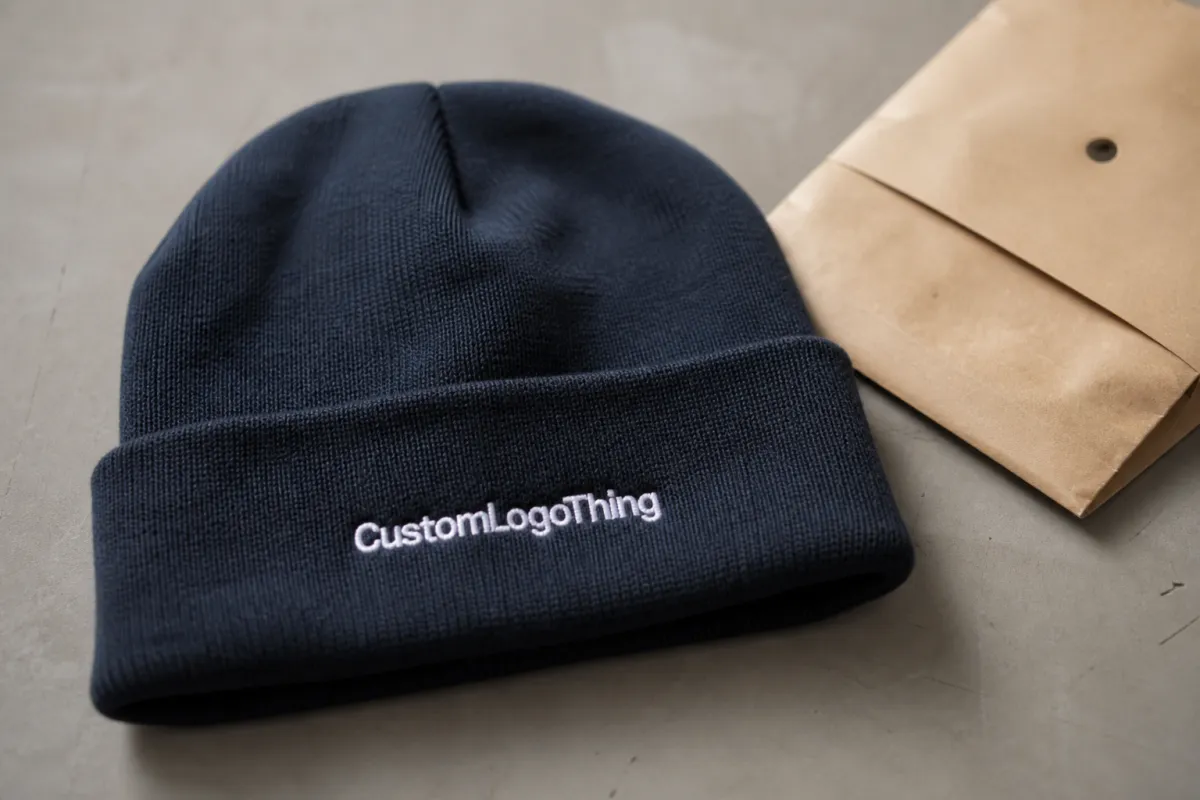
A useful cuffed beanie supplier comparison guide starts with a plain truth: a product shot can hide a lot. Two beanies may share the same silhouette on screen and still wear differently in real life. One uses a loose gauge and stretches quickly. Another uses a denser knit and sits closer to the head, with more warmth and a firmer outline. Cuff height, rib elasticity, and yarn twist change the fit in ways that become obvious the second the sample goes on.
Buyers usually compare more variables than they realize. Material content matters, but so do yarn count, stitch density, rib structure, seam finish, and whether the chosen decoration method actually suits the fabric. A good cuffed beanie supplier comparison guide helps untangle those layers so the conversation moves from "Which one looks nicer?" to "Which one will actually serve the customer?"
That distinction matters because the same beanie spec can fill very different roles. Retail programs often want a softer hand feel, tighter color control, and cleaner packaging. Promotional runs usually care more about unit price and dependable output. Winter kit orders often value warmth and shape retention above polish. A cuffed beanie supplier comparison guide should not pretend those jobs are interchangeable.
Comparing by end use is one of the strongest habits a buyer can build. A beanie that sits in a store must look finished from five feet away and hold up under close inspection. A hat for an event can tolerate a little more variation, but the logo still has to read cleanly and the cuff has to recover after being folded. A serious cuffed beanie supplier comparison guide keeps those use cases separate instead of forcing one construction to fit every order.
Buyer reality: the cheapest-looking option on a screen is not always the cheapest product in the carton. Knit density, sampling, freight, and rework can move the real cost faster than most first quotes admit.
Any solid cuffed beanie supplier comparison guide should answer three basic questions. Can the supplier make a sample that mirrors bulk production? Can they explain technical tradeoffs without hiding behind vague language? Can they reproduce the same result across seasons and reorder cycles? If one of those answers is weak, the quote deserves a second look.
How Cuffed Beanie Suppliers Turn Specs Into Samples and Production
A strong cuffed beanie supplier comparison guide should also map the path from inquiry to carton. The process usually looks simple: the buyer sends a brief, the supplier checks whether the request is feasible, a sample is made or adapted, revisions happen if needed, and the approved version becomes the production standard. That sounds tidy. Real factories are not that tidy, because one change in cuff depth or knit tension can shift fit, warmth, decoration placement, and cost at the same time.
Suppliers translate words into machine settings. "Relaxed fit" means one thing to a marketer and another to a knitter. "Premium hand feel" could mean a softer acrylic blend, a wool blend, or a denser stitch depending on the mill. A useful cuffed beanie supplier comparison guide pushes buyers to spell out fit target, cuff style, yarn choice, logo method, color reference, packaging needs, and quantity tiers in language the factory can actually produce. If the buyer wants organic content, GOTS is relevant for the fiber and processing chain; if the fabric is recycled, ask whether GRS applies to the yarn and finished product.
Sampling matters because it is the first real test of the hat. A typical sample workflow includes a tech-pack review, yarn confirmation, knit or blank-body development, logo proofing, and a pre-production revision if the first sample misses the mark. Many programs charge a sample fee of about $25-75 per style, with embroidery digitizing often adding $35-120 depending on stitch count and complexity. A cuffed beanie supplier comparison guide earns its keep at this stage, because it turns guesswork into evidence before the order multiplies.
Once the sample is approved, production moves through yarn sourcing, knitting, finishing, trimming, inspection, and packing. The order of those steps matters. Yarn becomes a bottleneck if the shade is not in stock. Knitting slows if the gauge is too tight for the yarn. Decoration can stretch the timeline if embroidery is dense or a patch needs heat application. A standard custom order often runs 18-22 business days after sample approval, while busy-season orders can stretch to 25-35 business days. A cuffed beanie supplier comparison guide is useful because it shows buyers where time is actually being spent.
- Inquiry: the buyer shares artwork, quantities, target date, packaging notes, and any fit or hand-feel references.
- Feasibility review: the supplier checks whether the yarn, color, and decoration can be produced at the requested MOQ, usually 300-1,000 pieces for a custom cuffed beanie program.
- Sampling: a sample confirms size, cuff behavior, logo placement, and overall look, with one revision round common on first-time artwork.
- Approval: the buyer signs off on the reference sample, color swatches, and any approved artwork proof.
- Bulk production: knitting, linking, washing or steaming, decoration, trimming, inspection, and packing follow the approved standard.
- Shipment: cartons are prepared for domestic freight or export, depending on the order.
One detail that often gets overlooked in a cuffed beanie supplier comparison guide is where the sample came from. Some samples are built from scratch against the buyer's brief. Others are stock bodies with a custom logo added. That is not automatically a problem, but the buyer should know which sample is being judged. A stock-body sample can hide the real cost or timing of true custom production, especially if the bulk order needs a different yarn lot, a different rib height, or a new label construction.
Buyers who also care about packaging, labeling, or shipping durability should ask whether the supplier understands carton pack-out standards and transit testing expectations. Organizations like ISTA publish test methods that help teams think about how products behave in shipment, while the Packaging School is a useful reference for broader packaging fundamentals. A thoughtful cuffed beanie supplier comparison guide follows the product all the way to the box, not just to the sample table.
Materials, Stitching, and Decoration Factors
Material choice is where a lot of beanie comparisons go off the rails. A cuffed beanie can be made from 100 percent acrylic for a lower price point, a wool-acrylic blend for more warmth and a slightly softer drape, or recycled polyester blends when the program needs a sustainability story. If the claim is organic, GOTS matters. If the yarn or finished hat is built from recycled content, GRS is the certification to ask for. For skin-contact comfort and dye safety, OEKO-TEX Standard 100 is one of the most relevant checks, especially when the beanie will be worn directly against the forehead.
Stitch structure matters almost as much as fiber. A 1x1 rib gives a cleaner, tighter appearance and better recovery, while a 2x2 rib can feel a little softer and more forgiving. The gauge of the knitting machine changes the whole product: 3-gauge builds faster and bulkier, 5-gauge is common for midweight custom beanies, and 7-gauge can deliver a finer, more retail-ready finish. The right cuffed beanie supplier comparison guide should ask which machine will be used, because the answer affects warmth, stretch, and the final hand feel.
Decoration is another place where small decisions change the final hat. Flat embroidery works well for simple logos on a stable cuff. Puff embroidery adds dimension but needs enough knit density to support the raised threads. Woven patches can look sharp and allow more color detail, but they add a step and can feel stiffer on a soft beanie. Heat-transfer labels are fast and inexpensive, but they usually suit lightweight promotional runs more than premium retail programs. A buyer comparing suppliers should ask for the exact decoration method, stitch count, and placement tolerance, ideally within 3 mm for logo alignment on the cuff.
Construction details also affect longevity. A secure linking seam at the crown is better than an obvious bulky join. Cleanly trimmed yarn tails reduce pilling and loose-thread complaints. Steam-setting or light blocking helps the hat return to its intended shape after knitting. The best suppliers will also confirm whether the seam allowance, cuff fold, and label position stay consistent from sample to bulk, because repeatability is what keeps reorder programs from drifting.
Inspection checkpoints should be concrete, not vague. Good programs check raw yarn lot, color shade under D65 light, knitting gauge, body measurements before and after steaming, cuff depth, logo placement, loose threads, seam strength, and carton count. Many buyers ask for AQL 2.5 for major defects and 4.0 for minor defects on finished goods inspection. A practical cuffed beanie supplier comparison guide makes those checkpoints visible before production starts, not after a shipment is already late.
Cost, MOQ, and Quote Details
Price is easiest to compare, which is exactly why it is so easy to misuse. A basic cuffed beanie with standard acrylic yarn, a simple rib knit, and one-color embroidery can often land in the $2.50-4.00 per unit range at 500 MOQ. Move to 1,000 pieces and the price may fall closer to $2.10-3.30 per unit. At 3,000 pieces, some factories can quote roughly $1.65-2.60 per unit if the design stays simple and the yarn color is in stock. A more complex structure, recycled content, woven patch, or custom woven label can push the number higher.
MOQ is not just a number on a quote. It changes how the factory schedules yarn, how much setup time they need, and whether the decoration line is economical. A small MOQ of 100-200 pieces is possible on some stock-body programs, but once the request moves to custom yarn color, branded woven label, or fully made-to-order knit, 300-500 pieces is a more realistic starting point. Higher-value retail runs may sit at 1,000 pieces or more because the supplier is balancing machine time, yarn allocation, and finishing labor.
Quotes should separate the parts clearly. Yarn, knitting, embroidery or patch application, label insertion, sample cost, packaging, and freight should not be hidden inside one number. A good supplier will also say whether the quote includes one round of sample revision, whether embroidery digitizing is free or billed separately, and whether a custom hangtag or polybag insert adds a per-unit charge. A buyer reading a cuffed beanie supplier comparison guide should treat a quote with too few line items as a warning sign, not a convenience.
Freight can change the comparison just as much as the unit price. A beanie is not heavy, but cartons add up fast, and the move from air to ocean can swing landed cost by a large margin. If the order is urgent, air freight may be worth it despite the premium. If the schedule allows 25-40 days on water, the landed price often improves enough to justify a longer lead time. The correct comparison is always landed cost per unit, not factory price alone.
Some programs also need compliance paperwork before they can buy. WRAP and BSCI are common social compliance references for factories, while OEKO-TEX Standard 100, GRS, and GOTS can support material and chemical claims. If a supplier cannot provide current certificates, scope numbers, or audit status, the buyer should not assume the claim is valid. A rigorous cuffed beanie supplier comparison guide treats certification as document-based, not verbal.
Process, Timeline, and Lead Time
After sample approval, the clock starts for real. A typical timeline for a custom cuffed beanie is 3-7 business days for initial sample development, 2-5 business days for sample revision if needed, and 18-22 business days for bulk production once the approved sample and artwork are signed off. Add 3-7 more days if the order needs custom labels, special packaging, or a new yarn dye lot. The fastest orders are the ones where the buyer already knows the cuff height, color reference, and decoration placement before the first inquiry.
Production usually moves in a fixed sequence. Yarn is received and checked against the approved shade. The knitting machine is set for the target gauge, commonly 5-gauge or 7-gauge for cuffed beanies. Bodies are knit, linked, and steamed or washed to stabilize the shape. Decoration is applied after the body is prepared, then every piece is trimmed, measured, and checked before packing. If any step slips, the rest of the line feels it. A cuffed beanie supplier comparison guide is most valuable when it shows those dependencies clearly.
Inspection should happen more than once. Inline checks catch obvious issues like broken stitches, uneven cuff depth, or logo placement drift. Final inspection catches carton count, label accuracy, and packaging defects. For larger runs, a pre-shipment inspection using AQL sampling is a smart safeguard, especially when the order includes multiple colorways or a tight retail launch date. In practice, the best suppliers are the ones that can explain what they check, who checks it, and what happens when a defect is found.
If the buyer needs seasonal timing, it helps to plan backward from delivery, not from the purchase order date. A winter campaign that needs stock in hand by early October should usually lock the sample by late July or early August, because fabric or yarn delays, artwork revisions, and freight bookings can all add days. A strong cuffed beanie supplier comparison guide turns that calendar pressure into a planning tool instead of a last-minute scramble.
Common Buyer Mistakes
One common mistake is comparing quotes without checking whether the suppliers are offering the same construction. A 5-gauge acrylic beanie with flat embroidery is not the same product as a 7-gauge wool blend with a woven patch and custom label. Another mistake is accepting "one sample" as enough proof. If the first sample is made from a stock body, the buyer still needs to confirm how the real bulk program will differ.
Buyers also get burned when they skip the tolerance discussion. Cuff depth, logo placement, and finished dimensions should all have a target range. If the supplier cannot state a tolerance, the buyer is effectively accepting surprise variation. That is risky for retail programs where the beanie must sit consistently across a display table or e-commerce assortment.
Another frequent error is treating certification claims as decorative language. If a listing says OEKO-TEX Standard 100, GRS, WRAP, BSCI, or GOTS, the buyer should request the current certificate or scope document. Certifications matter, but only if they apply to the right factory, product category, and material.
The last mistake is underestimating communication speed. A supplier that answers clearly within a day or two during sampling often saves more money than a supplier with a slightly lower quote but slow response times. A cuffed beanie supplier comparison guide should rate responsiveness, not just price, because slow approvals can cost a seasonal order the window it needed.
Reading Samples, References, and Proofs
Start by checking the sample against the spec, not against memory. Measure cuff height, crown depth, body width, and stretch recovery. Confirm the logo is centered and sits within the agreed placement window, usually within 3-5 mm for a cuff placement. Check the hand feel in daylight and under indoor light, because yarn shade can shift more than expected between environments.
Ask the supplier for a pre-production proof before bulk begins. That proof should show the final logo layout, label size, thread colors, and packaging notes. For embroidered designs, ask for stitch count and backing type. For woven patches, ask for edge finish and merrow color. For printed or heat-applied elements, ask how the decoration will hold up after folding and light abrasion.
Do not ignore the inside of the beanie. Seams should be flat enough that they do not press uncomfortably against the head. Loose yarn tails should be trimmed cleanly. Labels should be placed where they will not scratch or wrinkle. These are small details, but they are exactly the kind that separate a decent sample from a repeatable production standard.
A practical cuffed beanie supplier comparison guide also asks for photos of the bulk production line, not just marketing images. Straight shots of knitting bodies, embroidery stations, steaming, trimming, and final packing are useful because they show whether the factory really handles the process in-house or relies on a chain of subcontractors. Clear process evidence is often more useful than polished sales language.
Next Steps
Make the shortlist with the spec, not with the homepage. Send every supplier the same request: yarn content, gauge, cuff height, target fit, decoration method, quantity tiers, packaging details, and required certifications. Ask for separate pricing at 300, 500, and 1,000 pieces so the cost curve is visible. Request sample timing, bulk timing, and what happens if the first sample needs revision.
Then compare the answers side by side. Look for the supplier that gives exact numbers, not just confident language. If one quote says "fast lead time" and another says "18-22 business days after approval," the second one is usually more useful. If one supplier can confirm OEKO-TEX Standard 100 or GRS scope and another cannot, that matters too. A strong cuffed beanie supplier comparison guide helps buyers reward precision.
Once the shortlist is in place, move quickly on sample approval. Winter headwear sells on timing as much as on quality, and the best program in the world is still a problem if it lands after the season. The buyers who win usually are not the ones who chase the lowest quote. They are the ones who ask the clearest questions and lock the cleanest process.
FAQ
What is a realistic MOQ for a custom cuffed beanie?
A realistic MOQ is often 300-500 pieces for a custom knit with standard decoration, though some stock-body programs can start lower and more complex retail programs may need 1,000 pieces or more.
How much does a custom cuffed beanie cost?
For a basic acrylic cuffed beanie with simple embroidery, expect about $2.50-4.00 per unit at 500 MOQ, with lower pricing possible at higher quantities and higher pricing for more complex materials, labels, or packaging.
How long does production take?
Initial samples often take 3-7 business days, sample revisions another 2-5 business days, and bulk production commonly takes 18-22 business days after approval, excluding freight.
Which certifications matter most?
GOTS is relevant for organic fiber programs, OEKO-TEX Standard 100 is useful for chemical and skin-contact safety, GRS applies to recycled content claims, and WRAP or BSCI are common social compliance references.
What should be checked in a final inspection?
Check gauge, cuff depth, color consistency, embroidery placement, loose threads, seam finish, label accuracy, carton count, and packaging condition, ideally using a defined AQL standard.


