A cuffed beanie leaves very little room for sloppy decisions, which is why it rewards exact specs. For cuffed Beanies for Streetwear Brands, the difference between a clean release and a forgettable one usually comes down to cuff depth, yarn quality, knitting gauge, and branding that works with the knit instead of fighting it.
Streetwear buyers want a beanie that looks deliberate in photos, holds its shape on-head, and feels easy to wear. That means the real job is not just design. It is turning a concept into a production spec a factory can follow without guessing. In practice, that means locking in yarn composition, cuff height, stitch density, label placement, and a target measurement tolerance before bulk knitting starts.
Cuffed Beanies for Streetwear Brands: What Actually Sells
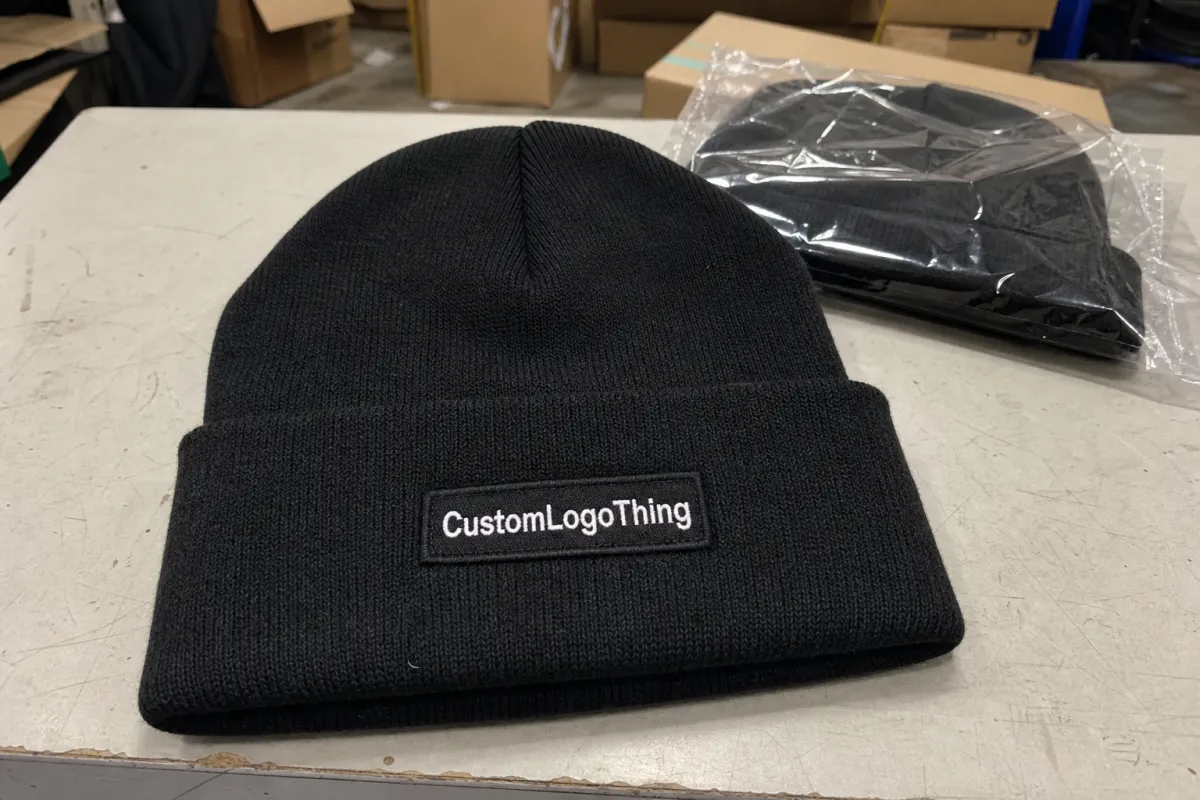
The cuff is the best place for branding, but only if the mark fits the knit scale. A compact woven patch, restrained embroidery, or a small badge usually looks more considered than a large graphic stretched across ribbing. The texture is already doing visual work, so the artwork should stay disciplined. A common production-friendly logo size is about 4-6 cm wide for woven patches or 2.5-4.5 cm high for embroidery on a cuff that measures 7-8 cm tall when folded.
The styles that move fastest usually share three traits: they hold a clean silhouette, photograph well in normal light, and do not need constant adjustment. If a beanie looks sharp in a studio but collapses outdoors, it is weaker than it seems. A 2x2 rib or tight 1x1 rib usually keeps its shape better than a loose, open knit, especially when the yarn is acrylic or acrylic-wool blend at a mid-weight gauge.
Most streetwear collections do better with one clear point of view than with several competing ideas in one product. A strong logo placement, a restrained color story, and a fit that lands between snug and slightly relaxed are usually enough. For most drop programs, the winning colors are still the easiest ones to repeat: black, heather gray, navy, forest, and off-white. If the brand wants a louder seasonal color, one accent color can be enough without turning the beanie into a novelty item.
A sample that only looks good from a distance is still a weak sample.
That matters because accessories sit close to outerwear, tees, and bags in a drop. If the beanie looks too casual, too shiny, or too flimsy, it breaks the collection story. A clean cuff edge, even rib tension, and a logo that stays readable after stretching are what make the piece feel intentional instead of promotional.
How the Cuff, Yarn, and Knit Weight Change the Read
Cuff depth changes both brand space and silhouette. A cuff around 6-8 cm usually leaves enough room for a clean mark without crowding the fold. Go shallower and the logo can feel cramped. Go deeper and the beanie reads more controlled, but it may sit lower on the forehead and feel heavier on smaller heads. For a standard cuffed beanie, a total body height of 22-25 cm and a folded cuff width of 7-8 cm is a practical starting point for most streetwear programs.
That is why fit and branding are tied together. A strong logo still looks wrong if the cuff forces it into an awkward corner. Most factories will knit a first sample with the cuff slightly longer than target, then trim the spec after measuring the folded silhouette, because a 0.5 cm difference in cuff height can change how the art lands.
Yarn choice affects handfeel and structure. Standard acrylic is common because it keeps cost under control and is easy to source in repeatable colors. A wool blend usually feels better and sits cleaner, but it raises price and can become itchy if the blend quality is poor. A tighter knit gauge gives the hat more body, while a loose knit can stretch out faster and lose that crisp profile. For a more premium hand, brands often move from basic acrylic to a 70/30 acrylic-wool blend or a recycled polyester blend that can support a GRS-certified claim if the fiber chain is documented.
Color choices do more than fill a palette. High-contrast branding pops, but tonal combinations can look more premium if the knit is dense and the finish is clean. Black on black often sells well because it feels quiet and versatile. Gray on charcoal usually reads polished. If the brand wants a textured premium look, ask the factory whether the yarn is solution-dyed or piece-dyed, because that can change both color depth and cost.
The most useful sample checks are boring ones. Ask for cuff height in centimeters, body height from hem to crown, knit density or gauge, stretch recovery after wear, and logo scale relative to the fold. “Medium” and “regular” do not help once production starts. A good spec should also call out measurement tolerances, such as +/-0.5 cm on cuff height, +/-1 cm on body height, and clear placement tolerances for embroidery or patch alignment.
| Spec | Practical target | Why it matters |
|---|---|---|
| Cuff height | 6-8 cm | Leaves enough room for branding without crowding the fold |
| Body height | 22-25 cm | Controls slouch, warmth, and how the beanie sits on the head |
| Yarn | 100% acrylic or wool blend | Sets the handfeel, price point, and wash behavior |
| Knit gauge | Mid to tight rib knit | Improves structure and reduces a limp, cheap-looking finish |
| Branding size | Fits within cuff width with breathing room | Keeps the logo readable instead of forced |
| Measurement tolerance | +/-0.5 cm cuff, +/-1 cm body | Prevents minor knitting drift from turning into a fit problem |
Cost, MOQ, and Unit Price Drivers
Cost is shaped by quantity, yarn type, decoration method, and how many setup steps the design needs. The lowest quote is often the one that leaves out a finishing step or assumes a stripped-down construction. That can work for a test run, but it is a bad sign if the price is low because the factory quietly removed the details that make the product feel finished. For a basic cuffed beanie with embroidery, a realistic quote at 500 MOQ is often around $2.50-$4.00 per unit, depending on yarn, stitch density, and whether packaging is included.
MOQ is usually driven by setup. Simple embroidered beanies can often start around 100-300 pieces per color. Custom yarn dyeing, knit-in graphics, jacquard patterns, or special trim packages can push that higher. The more custom inputs the order needs, the less friendly the minimum becomes. If a factory is knitting multiple colors in one design, it may also require a color minimum by shade, not just by total order size.
Typical bulk pricing ranges look something like this, although market swings and order volume can move them fast.
| Option | Typical bulk unit price | MOQ pressure | Best use case |
|---|---|---|---|
| Simple rib knit with embroidery | $2.50-$4.00 | Low to moderate | Small logo, fast repeat orders, cleaner margin |
| Rib knit with woven patch | $2.90-$4.60 | Moderate | Sharper edges and a slightly more premium read |
| Knit-in jacquard logo | $3.60-$6.20 | Higher | Bold brand graphics and collection-led drops |
| Wool blend with premium label and packaging | $4.80-$8.50 | Moderate to high | Elevated handfeel and higher retail positioning |
Those numbers are not fixed. A 500-piece order with one embroidery location can price very differently from a 150-piece run with custom labels, branded tissue, and special folding instructions. Packaging alone can matter more than expected if the factory is doing each unit individually. If you want retail-ready packing, ask whether the quote includes polybagging, size stickers, hangtags, insert cards, and carton labeling, because those steps are often priced separately.
Ask what is included before comparing quotes. A number that looks cheap may exclude sampling, polybags, woven labels, hangtags, or carton packing. If the supplier is not clear about what is inside the price, the final invoice can drift upward in small increments that are easy to miss until the order is already approved. A clean quote should show sample cost, sample freight, bulk unit price, decoration setup, and any packaging surcharge separately.
There is also a sourcing side to packaging. If the brand wants retail-ready inserts, ask whether the paper stock is FSC-certified. If the product is shipping in mixed channels or direct to consumer, transit testing becomes more relevant. Standards such as ISTA package testing give a useful reference point for how much abuse packaging should survive. For paper goods, FSC-certified paper options are worth checking early, not after the design is locked. If the beanie itself uses certified materials, ask for GOTS for organic cotton trims, OEKO-TEX Standard 100 for safety-tested textile components, and GRS if recycled yarn content is part of the claim. For social compliance, WRAP or BSCI documentation is a reasonable request before bulk approval.
Production Process and Turnaround Timeline
Production starts with artwork, measurements, yarn selection, and a spec sheet the factory can follow without translating it three different ways. If those inputs are loose, the sample round slows down immediately. A practical tech pack should include front and back views, cuff dimensions, body height, yarn composition, stitch type, logo size, label placement, color references, packaging notes, and a clear approval date.
For a straightforward custom beanie, the factory may only need a logo file, color references, cuff measurements, and a target quantity. For a knit-in graphic or multi-part trim package, the brief needs more precision. Exact placement, thread shades, and construction notes matter because small mistakes are easy to hide in accessories and hard to correct later. If embroidery is involved, the factory usually needs a digitized file and thread color references before it can confirm stitch count and stitch direction.
Sampling should happen before bulk production. A useful sample checks cuff depth, logo placement, stitch quality, stretch recovery, and how the beanie behaves under different lighting conditions. A hat can look clean in studio light and flat in daylight. A solid sampling flow usually includes a first prototype, comments from the brand, a revised pre-production sample, and then bulk approval once the measurements and decoration are locked.
Fast feedback from the brand saves more time than any rush promise from the factory.
Typical timing is often 7-14 business days for sample development and 15-30 business days for bulk production after sample approval. For a more standard run, many brands should expect 18-22 business days from approved sample to packed bulk if the yarn is in stock, the art is simple, and the colorway is not being specially dyed. If the order needs yarn sourcing, lab dips, or custom packaging, the timeline can stretch by another week or more.
A practical production sequence looks like this: yarn booking, knitting on circular or flat knitting machines, linking or seaming, trimming loose threads, blocking or shaping, embroidery or patch application, washing if required, final pressing, label attachment, folding, polybagging, and carton packing. The machines and finishing steps matter because each one can change the final handfeel and silhouette.
Inspection checkpoints should happen more than once. The usual checkpoints are incoming yarn review for color and count consistency, first-off inspection after the first 20-30 pieces, in-line checks for stitch tension and dimensions, and final inspection before packing. If you want a standard quality reference, ask for AQL 2.5 for major defects and 4.0 for minor defects, plus a measurement sheet showing cuff height, body length, and logo placement on a sample-size basis.
How to Spec the Beanie Before You Approve a Sample
A good spec sheet removes guesswork. Start with the basics: material, knit gauge, cuff height, body height, logo method, color code, label type, and packaging. If the beanie uses embroidery, include the exact artwork size in millimeters and whether the decoration sits centered, offset, or on the left/right side of the cuff. If it uses a woven patch, define the patch shape, border color, and edge finish.
For yarn, be specific. “Acrylic” is not enough if you care about handfeel. Ask for 100% acrylic, acrylic-wool blend, recycled polyester blend, or another exact composition, then request a yarn card or lab swatch before bulk. If the brand wants a softer touch, a brushed acrylic or a wool blend can help. If the goal is a cleaner, more structured silhouette, tighter rib knitting usually matters more than adding extra weight.
Sampling should follow a short but disciplined path. First, approve the tech pack. Second, approve the yarn swatch or color card. Third, review the first physical sample. Fourth, confirm any revisions on a pre-production sample. Fifth, sign off on measurement and decoration before bulk cutting or knitting expands the order. If the factory proposes skipping the pre-production sample, ask why.
For compliance, request certificates only where they fit the product. GOTS is relevant when the beanie or trim contains certified organic cotton. OEKO-TEX Standard 100 is useful when you want safety-tested textile components, including yarns, labels, or patches. WRAP and BSCI are social compliance references, not product quality guarantees, but they can help when the brand needs factory-level due diligence. GRS matters if the yarn contains recycled content and the supply chain can be documented.
| Spec item | What to write | Example detail |
|---|---|---|
| Material | Exact fiber composition | 100% acrylic or 70/30 acrylic-wool blend |
| Knit construction | Rib type and gauge | 2x2 rib, mid-gauge, tight tension |
| Cuff | Folded cuff height | 7.0 cm folded, +/-0.5 cm tolerance |
| Decoration | Method and size | Woven patch, 45 mm wide, centered on cuff |
| Labeling | Placement and type | Woven side label at left seam, 1.5 cm x 4 cm |
| Packaging | Retail or bulk packing | Folded with size sticker, single polybag, 50 pcs per carton |
Common Mistakes That Make a Beanie Look Cheap
The first mistake is choosing a yarn that looks shiny in person or on camera. Some low-grade acrylics catch light in a way that makes the surface look thin, even when the knit is dense. If the target is premium streetwear, ask for a matte or low-sheen yarn and check it in both daylight and indoor light.
The second mistake is overbranding. A large logo, a patch, a side label, and a woven tab all fighting for space can make the piece feel busy. One strong branding element is usually better than three small ones that compete for attention. If you want more than one mark, make sure one is clearly primary and the others sit quietly in support.
The third mistake is under-specifying the fit. If the beanie is too shallow, it rides up. If it is too tall, it slouches in a way that can look accidental rather than intentional. Even a 1 cm difference in crown height can alter the final look, especially on smaller heads or with a deeper cuff.
The fourth mistake is skipping inspection until the end. By the time a bad batch is packed, it is expensive to sort out. Check the yarn lot, cuff symmetry, logo position, loose threads, and seam strength during the process, not only on the final carton sample. Ask the factory to confirm thread trimming, seam reinforcement, and measurement checks before packing starts.
The fifth mistake is assuming all samples represent bulk perfectly. A sample can be hand-finished and look cleaner than production. That is why a pre-production sample, made with the actual bulk yarn, labels, and decoration method, is the version that matters most.
Expert Tips to Improve Sell-Through and Margin
Keep the first color run tight. A small capsule of 2-4 colors usually gives better inventory control than launching eight at once. Black, heather gray, and one seasonal color often cover most of the demand without overextending cash flow.
Build the product around repeatability. If the design can be produced with standard yarn counts, a common rib structure, and one decoration method, your reorder price usually stays more stable. That matters more than adding one extra feature that only improves the beanie slightly.
Use packaging to support the brand, not to rescue the product. A well-folded beanie with a clean size sticker and a simple insert often sells better than a flashy pack on a mediocre hat. If the presentation is important, keep the fold instruction in the tech pack so the factory does not improvise the final look.
Protect margin by clarifying the quote early. Ask for separate prices for sample fees, embroidery digitizing, label setup, special hangtags, and carton marking. If the order is likely to repeat, ask the factory to hold the same yarn and decoration spec for a re-order so the second run does not need fresh development charges.
If the program needs stronger compliance, ask for the relevant documents at the quote stage, not after approval. That is the point where the factory can still confirm whether GOTS, OEKO-TEX Standard 100, WRAP, BSCI, or GRS paperwork exists for the actual materials and production line involved.
Next Steps Before You Request a Quote
Before you request pricing, prepare a short spec packet: reference images, target retail price, target MOQ, color count, decoration method, logo size, material preference, and packaging requirement. The more precise the brief, the faster the factory can return a quote that is actually usable.
For a first run, it helps to prioritize one primary objective. If the goal is lower cost, keep the construction simple and reduce the number of custom inputs. If the goal is premium perception, spend on the yarn handfeel, the knit density, and the finishing details that show up in-hand. If the goal is reorder speed, stick to the most repeatable materials and avoid custom dyeing.
When the sample arrives, inspect it like a buyer would. Check the fold line, the cuff symmetry, the logo centerline, the stitch consistency, the handfeel, and the stretch recovery. Measure it flat, then stretch it lightly and see whether the shape snaps back cleanly. A strong sample should survive both a close inspection and a quick look in a mirror.
If you want the cleanest first order, ask the supplier to confirm the timeline in writing: sample lead time, approval window, bulk lead time, and packing date. A clear schedule makes it easier to keep the drop on track and avoid rushed compromises at the end.
FAQ
What is a good MOQ for custom cuffed beanies?
A practical starting point is 100-300 pieces per color for simple embroidery, with some basic programs pricing most comfortably at 500 MOQ if you want a better unit rate and fewer setup compromises.
How much should a simple custom beanie cost?
At 500 MOQ, a simple cuffed beanie with embroidery often lands around $2.50-$4.00 per unit, depending on yarn, knit density, label setup, and packaging.
How long does production take?
Sample development is often 7-14 business days, and bulk production is commonly 18-22 business days after sample approval when materials are ready and the design is straightforward.
What certifications matter most?
Use GOTS for certified organic cotton components, OEKO-TEX Standard 100 for tested textile safety, GRS for recycled fiber claims, and WRAP or BSCI when you need social compliance documentation.
What should I inspect on the sample?
Measure cuff height, body height, logo placement, stitch density, seam quality, stretch recovery, loose threads, and overall symmetry before approving bulk.
What is the easiest decoration method to control?
Small embroidery or a woven patch is usually easier to repeat consistently than a complex knit-in graphic, especially on a short run with a tight timeline.

